
Switch to cleaning products certified by Good Environmental Choice Australia (GECA) or the EU Ecolabel to immediately reduce your workplace’s chemical load by up to 80% while maintaining hospital-grade cleanliness standards. Every commercial space in Australia currently cleaned with conventional products releases volatile organic compounds that linger for hours, affecting indoor air quality and employee wellbeing, but green janitorial services eliminate these risks entirely.
Evaluate potential cleaning partners by requesting their complete ingredient disclosure sheets, not just safety data sheets, because genuinely eco-friendly providers will transparently share every component in their formulations. Australian businesses transitioning to green cleaning report 30% fewer staff sick days within the first six months, translating to measurable productivity gains that offset any perceived cost differences.
Prioritize services using microfibre technology and HEPA-filtered vacuums instead of chemical-heavy solutions, as these mechanical methods remove 99% of particles without introducing toxins into your environment. Melbourne’s Pixel Building and Sydney’s One Central Park have demonstrated that green cleaning maintains premium presentation standards while achieving 5-star Green Star ratings.
Implement a phased transition starting with high-touch areas like kitchens and bathrooms where chemical exposure is most concentrated, allowing your team to experience immediate health benefits while building confidence in eco-friendly methods. The Australian commercial cleaning sector has matured significantly, offering sophisticated green solutions that rival conventional services in effectiveness while protecting our unique environment and the people who work within it daily.
The Hidden Cost of Traditional Commercial Cleaning
What’s Actually in Those Industrial Cleaners?
Walk down the cleaning supplies aisle of any Australian commercial supplier, and you’ll find bottles promising sparkling results. But what’s hiding behind those bright labels often tells a different story for our health and environment.
Many traditional commercial cleaners contain phosphates, which sound harmless enough until they wash down our drains and into waterways. These chemicals fuel algal blooms in our rivers and coastal areas, choking marine life and disrupting ecosystems from the Great Barrier Reef to local creeks. It’s a problem that hits particularly close to home given Australia’s unique and fragile aquatic environments.
Then there’s ammonia and chlorine bleach, staples in conventional cleaning cupboards. These harsh chemicals release volatile organic compounds (VOCs) that linger in indoor air, triggering respiratory issues and headaches among cleaning staff and building occupants. For Australian workers spending hours in enclosed spaces, this daily exposure adds up.
Synthetic fragrances might make spaces smell “clean,” but they’re often cocktails of undisclosed chemicals linked to allergic reactions and hormone disruption. Equally concerning are alkylphenol ethoxylates (APEs), found in many degreasers and all-purpose cleaners. These persistent pollutants accumulate in our environment and have been shown to interfere with wildlife reproduction.
The reality is, what we use to clean our offices and facilities doesn’t just disappear. It flows into our communities, our waterways, and ultimately back to us. Understanding these ingredients is the first step toward making choices that protect both the people in our buildings and the extraordinary Australian environment beyond them.
The Ripple Effect on Australian Waterways
Every day, thousands of Australian businesses mop floors, wipe surfaces, and sanitise facilities without realising where those cleaning chemicals end up. The answer might surprise you: many flow directly into our stormwater drains, which don’t pass through treatment plants. Instead, they travel straight to our waterways, carrying harmful substances that accumulate in our rivers, bays, and coastal ecosystems.
Consider Melbourne’s Port Phillip Bay or Sydney Harbour. These cherished waterways receive runoff from countless commercial buildings, each contributing small amounts of phosphates, chlorine bleach, and synthetic surfactants. While individual contributions seem negligible, the cumulative effect is devastating. These chemicals disrupt the delicate pH balance of aquatic environments, reduce oxygen levels, and contaminate the food chain from microscopic organisms upward.
The Great Barrier Reef Marine Park Authority has identified land-based runoff, including cleaning chemicals, as a significant threat to reef health. Meanwhile, Perth’s Swan River system faces ongoing challenges with nutrient pollution, partly attributed to phosphate-rich cleaning products entering stormwater systems.
Marine life bears the brunt of our cleaning choices. Fish experience reproductive problems, native seagrass beds struggle to survive in chemically altered waters, and filter feeders like oysters accumulate toxins. Even our beloved dolphins and sea turtles face increased health risks in contaminated habitats.
The encouraging news? Every business that switches to genuinely green cleaning products becomes part of the solution. By choosing biodegradable, phosphate-free alternatives, Australian companies can protect the waterways that define our coastal lifestyle while maintaining impeccably clean facilities.
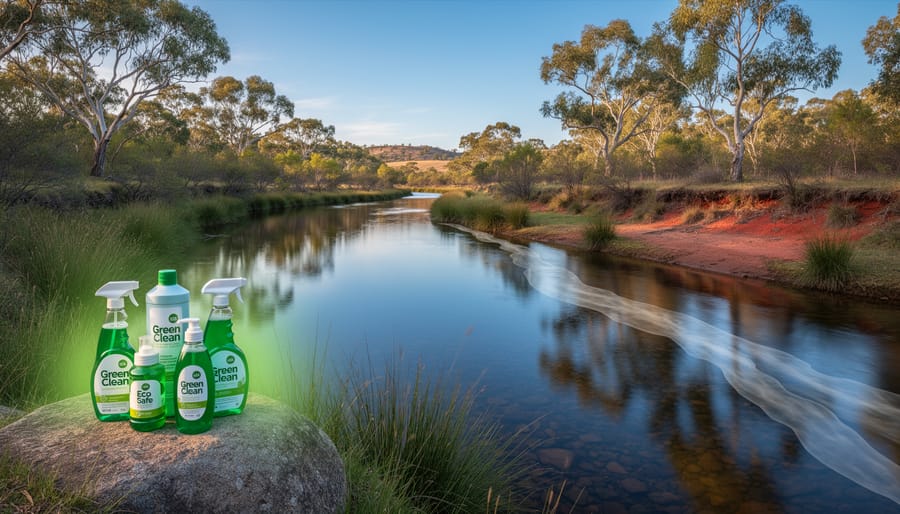
What Makes Commercial Cleaning Truly ‘Clean Green’
Beyond the ‘Green’ Label: Certifications That Matter
Navigating the world of eco-claims can feel overwhelming, but several trusted certifications help Australian businesses cut through the greenwashing. When choosing green service providers, look for these meaningful credentials.
Good Environmental Choice Australia (GECA) stands as Australia’s only independent, not-for-profit ecolabelling organisation. Their certification examines products throughout their entire lifecycle, from manufacturing to disposal. Cleaning products bearing the GECA tick have met rigorous environmental and health standards specific to Australian conditions.
The Global GreenTag certification provides another reliable benchmark, assessing products against international sustainability criteria while considering local environmental impacts. It’s particularly valuable for verifying low-toxicity cleaning solutions and sustainable practices.
For broader business practices, look for cleaning companies holding ISO 14001 certification, which demonstrates commitment to comprehensive environmental management systems. This international standard ensures companies actively monitor and reduce their environmental footprint.
The Australian Made, Australian Grown logo also matters when sourcing locally-produced cleaning products, reducing transportation emissions while supporting our economy.
Don’t hesitate to ask potential cleaning partners about their certifications during the vetting process. Legitimate green cleaning companies proudly display these credentials and can explain exactly what they mean. Remember, a single certification label doesn’t tell the whole story. The most trustworthy providers combine multiple accreditations with transparent practices, detailed ingredient disclosure, and regular third-party audits. These certifications represent real commitments to environmental responsibility, not just marketing spin.
The Non-Toxic Toolkit: What Green Cleaners Use
Walk into the storeroom of a professional green cleaning service, and you’ll find a toolkit that looks remarkably different from traditional janitorial supplies. Instead of harsh chemical warnings, you’ll see products featuring botanical extracts, plant-derived surfactants, and biodegradable formulations that break down naturally without harming Australian waterways.
At the heart of green commercial cleaning are plant-based cleaners derived from ingredients like eucalyptus oil, tea tree extract, and citrus peels. These aren’t just feel-good alternatives – they’re scientifically formulated to tackle commercial-grade grime. Australian green cleaning companies often use surfactants made from coconut and corn rather than petroleum-based chemicals, delivering powerful cleaning action while remaining gentle on both people and the planet.
Microfibre technology has revolutionised the industry too. These specially designed cloths trap dirt and bacteria at a microscopic level, reducing the need for chemical disinfectants by up to 99 percent when used correctly. Combined with steam cleaning systems that sanitise using superheated water vapour, many surfaces can be thoroughly cleaned without a single chemical spray.
For tougher jobs, professional green cleaners turn to hydrogen peroxide-based solutions and enzymatic cleaners that literally digest organic matter. These products break down into water and oxygen, leaving no toxic residue behind. Even traditional concerns like mould are now managed with thymol (derived from thyme oil) and other botanical antimicrobials.
The shift to concentrated products has also reduced packaging waste significantly. Many Australian green cleaning services now use dilution systems where a single litre of concentrate produces 50 litres of cleaning solution, dramatically cutting plastic use while maintaining professional-grade effectiveness. This practical approach demonstrates that sustainability and performance aren’t competing priorities – they’re perfectly compatible partners in modern commercial cleaning.
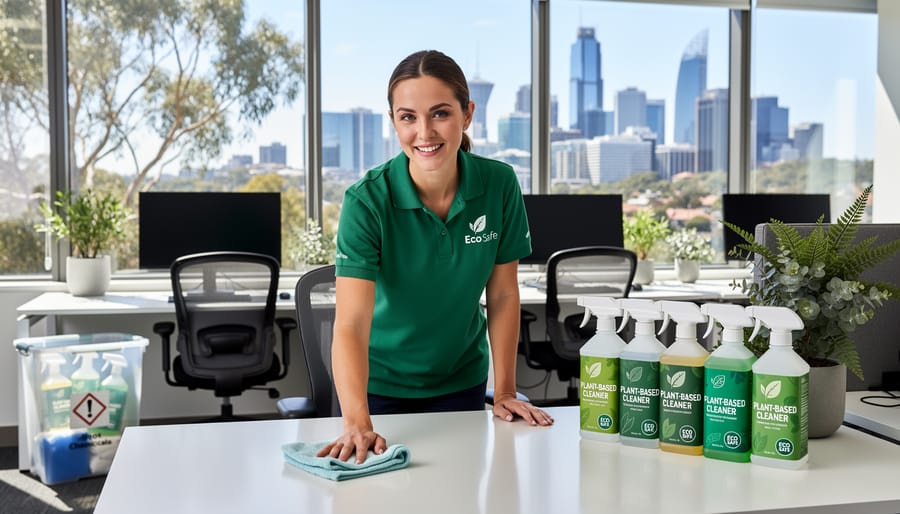
Real Benefits for Australian Workplaces
Healthier Teams, Better Productivity
The connection between workplace cleanliness and employee wellbeing runs deeper than most Australian business owners realize. When your cleaning company switches from harsh chemical products to non-toxic alternatives, you’re not just making an environmental choice—you’re investing directly in your team’s health and your bottom line.
Traditional cleaning products release volatile organic compounds (VOCs) into indoor air, triggering headaches, respiratory irritation, and allergic reactions. A Melbourne-based accounting firm discovered this firsthand when they transitioned to green cleaning practices and saw sick days drop by 23% within six months. Their staff reported fewer instances of eye irritation, breathing difficulties, and chemical sensitivities that had previously sent them home.
Improved indoor air quality creates a ripple effect throughout your workplace. When employees aren’t constantly exposed to ammonia fumes, chlorine bleach, and synthetic fragrances, they experience better concentration, reduced fatigue, and enhanced cognitive function. This translates to measurable productivity gains that often surprise business leaders making the switch.
For team members with asthma, allergies, or chemical sensitivities—conditions affecting millions of Australians—non-toxic cleaning practices can be genuinely transformative. These individuals no longer dread Monday mornings when strong chemical odors permeate the workspace after weekend cleaning sessions.
The evidence is compelling: healthier indoor environments foster healthier, more engaged teams. And when your people feel better, they perform better, creating a workplace culture where everyone thrives.
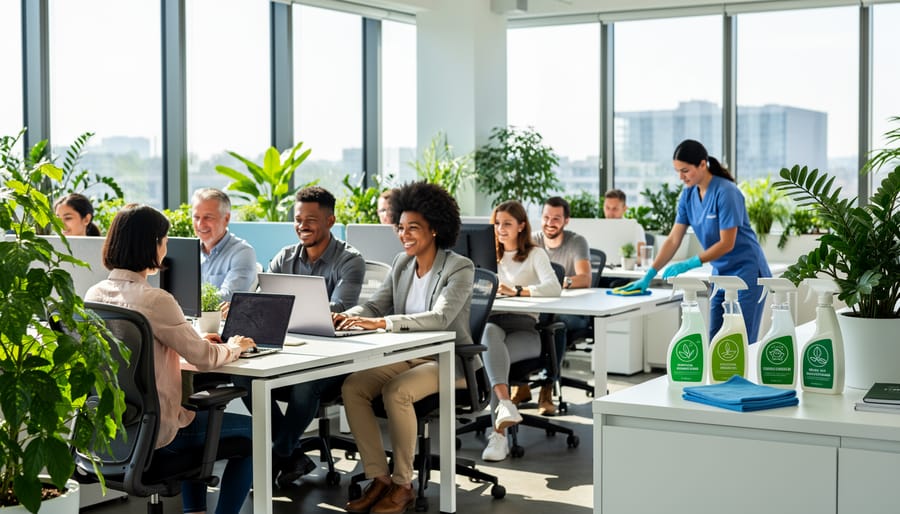
Meeting Australia’s Environmental Targets
Australia’s environmental ambitions are ambitious and essential. From reducing carbon emissions by 43% by 2030 to achieving net-zero by 2050, businesses play a crucial role in meeting these targets. Green commercial cleaning might seem like a small piece of the puzzle, but collectively, it creates significant impact.
When your business chooses eco-friendly cleaning services, you’re directly supporting national sustainability goals. Traditional cleaning products contribute to air and water pollution, releasing volatile organic compounds that harm both indoor air quality and our precious waterways. By switching to green alternatives, you’re reducing this chemical burden while protecting the Great Barrier Reef and other vulnerable ecosystems that define our Australian identity.
This commitment extends beyond compliance to genuine business sustainability. Many Australian states have introduced their own environmental frameworks, and green cleaning helps tick multiple boxes simultaneously. It demonstrates corporate social responsibility to stakeholders, employees, and customers who increasingly expect businesses to lead on environmental issues.
The beauty of green cleaning is its accessibility. Whether you operate a small Melbourne cafe or manage a Sydney office tower, this practical change creates measurable results. You’re not just meeting targets on paper; you’re actively participating in Australia’s environmental journey while creating healthier spaces for your community.
The Financial Case That Surprises Most
Let’s tackle the elephant in the room: many Australian businesses assume green cleaning costs more. Here’s what actually happens when you crunch the numbers.
While eco-friendly products might carry a slightly higher upfront price tag, the long-term savings tell a different story. Commercial properties switching to green cleaning typically see reduced waste management costs, as concentrated products mean less packaging and fewer deliveries. One Melbourne office complex reported a 30% reduction in their chemical purchasing budget within the first year simply by using concentrated, refillable solutions.
The health benefits create genuine financial impact too. Fewer harsh chemicals means reduced workplace sick days and lower workers’ compensation claims. Australian businesses using green cleaning methods have reported healthier indoor air quality, which research links to improved employee productivity and fewer respiratory complaints.
Don’t overlook tax incentives either. The Australian Tax Office offers various deductions for businesses investing in environmentally sustainable practices. Some states provide additional rebates for green building certifications, which often include sustainable cleaning requirements.
The real surprise? Most businesses find green cleaning becomes cost-neutral within 12-18 months, then starts generating savings. It’s an investment in your people, your property, and ultimately, your bottom line.
Finding the Right Green Cleaning Partner in Australia
Questions to Ask Before You Sign
Before partnering with a commercial cleaning company, vetting service providers thoroughly ensures their green credentials match your sustainability commitments. Start by asking what specific cleaning products they use and whether these carry Australian certifications like Good Environmental Choice Australia (GECA) or similar recognised eco-labels. Request to see product safety data sheets if you’re keen to understand ingredients.
Inquire about staff training procedures. Do their cleaners understand green cleaning protocols? Are they trained in proper dilution ratios to prevent chemical waste? Well-trained teams make all the difference between genuine green cleaning and superficial greenwashing.
Waste management practices reveal a company’s environmental dedication. Ask how they handle waste separation, recycling, and disposal. Do they use reusable microfibre cloths rather than disposable products? What happens to cleaning product containers once empty?
Don’t forget to discuss their water conservation strategies and energy-efficient equipment. Do they use HEPA-filtered vacuums to improve indoor air quality? Are their machines certified for energy efficiency?
Finally, request evidence of their environmental commitments. Can they provide case studies from similar Australian businesses? Do they measure and report on environmental outcomes like reduced chemical usage or waste diversion rates? A transparent provider will happily share this information, demonstrating their authentic commitment to clean green practices rather than just marketing spin.
Success Stories from Australian Businesses
Australian businesses across various sectors are already experiencing the tangible benefits of switching to green commercial cleaning, proving that sustainability and spotless results go hand in hand.
Melbourne’s Federation Square made headlines when they partnered with an eco-certified cleaning service in 2022. Within six months, they reported a 40% reduction in chemical-related staff complaints and significantly improved indoor air quality readings. The iconic cultural precinct also saw their waste-to-landfill decrease by 25% through the cleaning company’s innovative recycling program, demonstrating how choosing sustainable business partners creates measurable environmental impact.
Sydney’s Barangaroo South commercial precinct, already committed to carbon neutrality, transitioned to plant-based cleaning products in 2021. Their facilities team noted that tenant satisfaction scores increased notably, with office workers reporting fewer headaches and respiratory irritations. The precinct’s sustainability coordinator highlighted that green cleaning aligned perfectly with their broader environmental goals while maintaining the premium standards expected by corporate tenants.
In Brisbane, a mid-sized accounting firm switched to green cleaning after several employees raised concerns about chemical sensitivities. The transition proved surprisingly seamless, with their cleaning contractor providing staff training at no extra cost. Within three months, sick days decreased by 15%, and the firm proudly features their eco-cleaning commitment in recruitment materials, finding it resonates strongly with job seekers who value workplace wellness.
These real-world examples demonstrate that green cleaning delivers results Australian businesses can measure and celebrate.
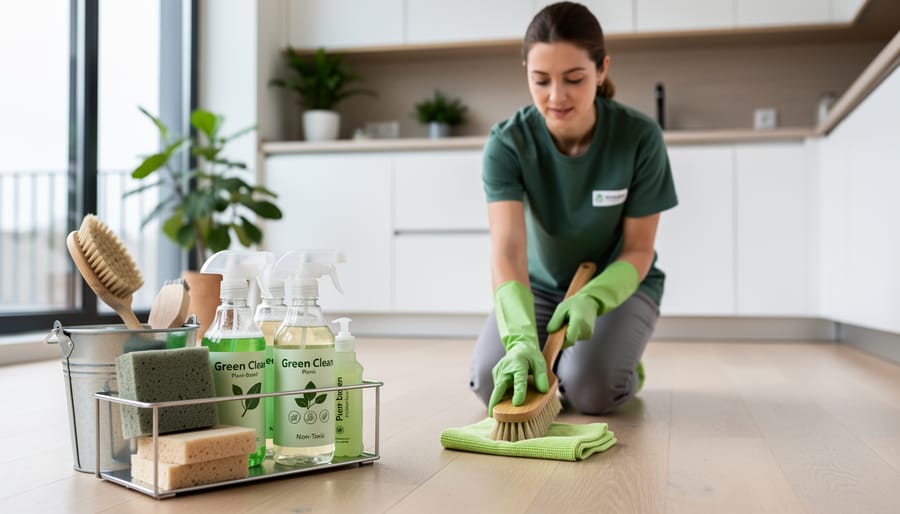
Making the Switch: Your Action Plan
Making the shift to green cleaning doesn’t have to feel overwhelming. With a thoughtful approach, you can transition your workplace smoothly while bringing your team along for the journey.
Start with a pilot program in one area of your facility. Choose a high-visibility space like the main reception or a busy office floor where staff can experience the difference firsthand. This allows you to test products, gather feedback, and demonstrate results before rolling out across your entire operation. Many Australian businesses have found this approach builds confidence and creates internal champions for the change.
Communication is absolutely essential. Your cleaning staff and employees need to understand why you’re making this shift. Share the health benefits, environmental impact, and alignment with your company values. Consider hosting a brief information session or sending out an email that highlights what’s changing and what improvements they can expect. When people understand the “why” behind the change, they’re far more likely to support it.
Work closely with your chosen green cleaning provider to ensure a smooth handover. Discuss expectations around cleaning schedules, product preferences, and any specific concerns unique to your workplace. Request a walkthrough where they can identify areas needing special attention and demonstrate their methods.
Measuring success keeps everyone accountable and motivated. Track metrics like staff satisfaction through quick surveys, reduction in sick days, improved indoor air quality readings, and waste reduction figures. Document any cost savings from reduced water usage or longer-lasting equipment. These tangible results validate your decision and provide compelling evidence when other Australian businesses ask about your experience.
Set up regular check-ins with your provider during the first three months. Address any hiccups quickly and celebrate wins with your team. Remember, you’re not just changing cleaning products; you’re contributing to a healthier workplace and a more sustainable future for Australian communities. That’s worth sharing and celebrating.
The time to embrace clean green commercial cleaning isn’t tomorrow—it’s today. Every Australian business that makes this shift contributes to something far greater than pristine office spaces. You’re joining a growing movement that’s actively protecting our waterways, preserving the Great Barrier Reef, reducing air pollution in our cities, and safeguarding the health of cleaning staff, employees, and clients who walk through your doors each day.
The collective power of Australian businesses choosing green cleaning practices creates ripples that extend throughout our communities. When you prioritize environmental responsibility, you’re not just meeting a trend—you’re demonstrating leadership that inspires suppliers, competitors, and customers to reconsider their own choices. Your decision supports local companies developing innovative eco-solutions, reduces chemical exposure for vulnerable populations, and helps ensure Australia’s natural beauty remains intact for future generations.
The good news? Making the transition is more accessible than ever, with certified green cleaning services available across the country and proven financial benefits that strengthen your bottom line while protecting our environment.
Start your clean green journey today. Research certified providers in your area, request consultations, and take that first step toward a healthier workspace and a healthier Australia. Together, we’re cleaning up more than just floors—we’re building a sustainable future.