
Add cycling sessions between your weekly runs to build cardiovascular endurance without the repetitive impact that breaks down muscle tissue and stresses joints. Research from the Journal of Strength and Conditioning shows cyclists-turned-runners maintain comparable aerobic fitness while significantly reducing injury rates compared to run-only training programs.
Incorporate low-intensity cycling on your recovery days to flush metabolic waste from tired leg muscles while maintaining training momentum. The circular pedaling motion increases blood flow to your quads, hamstrings and calves without the eccentric loading that comes from footstrike, allowing active recovery that actually speeds muscle repair rather than adding stress.
Replace one weekly run with a high-intensity interval cycling session to develop the same fast-twitch muscle recruitment and VO2 max improvements you’d gain from track work, but with zero ground impact. Australian runners particularly benefit from this approach during summer months when heat makes road running risky, and commuting by bike for cycling for sustainability doubles as practical cross-training.
Use cycling to maintain fitness during injury recovery periods when running aggravates existing conditions. The non-weight-bearing nature of cycling lets you preserve hard-earned aerobic capacity and leg strength while injured tissues heal, preventing the devastating fitness losses that typically accompany enforced running breaks. Studies demonstrate that runners who substitute cycling during injury return to their previous pace 40% faster than those who rest completely.
The Science Behind Cycling’s Running Benefits

Building Aerobic Capacity Without the Impact
Cycling offers runners a powerful pathway to build cardiovascular fitness while protecting joints from the repetitive impact of logging extra kilometres on the road. When you hop on a bike, your heart and lungs work just as hard as during a run, developing the aerobic engine that powers your running performance. The beauty lies in how cycling increases your VO2 max—your body’s ability to use oxygen efficiently—without the pounding that can lead to stress fractures or chronic injuries.
Australian runners are discovering this gentle yet effective approach, particularly during our scorching summer months when the thought of another long run feels overwhelming. A solid 90-minute ride can deliver similar cardiovascular benefits to a lengthy run, allowing you to build that crucial endurance base without adding wear and tear to ankles, knees, and hips.
The science backs this up beautifully. Research shows cycling develops slow-twitch muscle fibres and strengthens the heart’s pumping capacity, both essential for distance running. You’re essentially expanding your aerobic capacity in a way that translates directly to faster race times and improved stamina. Plus, choosing to cycle for both training and transport around your local community means you’re simultaneously working toward personal fitness goals and reducing your carbon footprint—a win that benefits both your performance and our shared environment.
Strengthening Your Running Muscles Differently
While running primarily relies on hamstrings and calves for propulsion, cycling creates a beautiful counterbalance by emphasizing your quads, glutes, and hip flexors. This complementary muscle development is like cross-training that happens naturally with every pedal stroke, particularly beneficial for Australian runners who might commute by bike before their evening run.
When you cycle, your quadriceps work through a full range of motion during the downward pedal stroke, building strength that supports knee stability during running’s impact phases. Meanwhile, your glutes engage powerfully to drive the pedals, developing the hip extension strength that runners often neglect but desperately need for efficient stride mechanics.
The beauty of this different muscular emphasis is injury prevention. Many runners in our community develop imbalances from repetitive single-sport training, leading to common issues like runner’s knee or IT band syndrome. By strengthening muscles from a different angle through cycling, you’re essentially giving your running muscles supportive teammates. Your hip flexors, which lift your knees during both cycling and running, gain endurance without the pounding impact.
Think of it as building a more resilient running foundation while simultaneously reducing your carbon footprint during your commute. It’s performance improvement that serves both your personal goals and our shared environment.
Active Recovery That Actually Works
When you’re pushing hard in your running training, your muscles need time to repair and adapt. Here’s where many Australian runners are discovering something counterintuitive: gentle cycling sessions can actually speed up recovery better than lounging on the couch.
Active recovery works by promoting blood flow through fatigued muscles without adding impact stress. When you spin easy gears on a bike, you’re essentially flushing out metabolic waste products while delivering fresh oxygen and nutrients to tired leg muscles. Think of it as giving your body a gentle reset between those tough interval sessions or long Sunday runs.
The beauty of cycling for recovery is that it’s genuinely easy. Unlike recovery runs where you might unconsciously push the pace, it’s simple to keep your effort genuinely light on two wheels. Aim for flat routes around your local area, keep your cadence smooth, and treat it as moving meditation rather than training.
Many runners across Melbourne, Sydney, and Brisbane are now combining their recovery rides with practical errands, cycling to the shops or meeting friends for coffee. You’re ticking off your active recovery while reducing your carbon footprint. It’s a small shift in thinking that supports both your running goals and creates healthier, more sustainable communities.
Practical Ways to Integrate Cycling Into Your Running Routine
The Weekly Training Blueprint
Finding the right balance between running and cycling transforms your training while building sustainable habits. Here’s how Australian runners at different levels can structure their week to maximise benefits.
For recreational runners focused on general fitness, start with three runs weekly and add two cycling sessions. Monday might include an easy 5km run, Wednesday a 45-minute moderate cycle commute to work, Thursday a tempo run, Saturday a longer 60-minute bike ride exploring local trails, and Sunday your weekly long run. This pattern lets you build aerobic fitness without excessive impact while reducing your carbon footprint through active transport.
Competitive runners aiming for performance gains need more structure. Consider four quality runs paired with two strategic cycling sessions. Place harder bike workouts on recovery days between intense running sessions. For example, after Tuesday’s interval training, Wednesday’s 90-minute steady cycling flush out fatigue while maintaining cardiovascular conditioning. Your weekend might feature Saturday’s long run followed by Sunday’s active recovery spin around your neighbourhood.
Those recovering from injury benefit most from cycling’s low-impact nature. Initially replace 50-75 percent of running volume with cycling, maintaining effort levels rather than distance equivalents. A runner sidelined with shin splints might cycle four times weekly at conversational intensity while carefully reintroducing two short runs. This approach preserves fitness whilst healing occurs.
Remember, cycling to training sessions or errands counts as legitimate cross-training. Many Australian runners discover their best recovery happens during their sustainable commute, proving environmental choices and athletic performance complement each other beautifully.
Commute Your Way to Better Running
Your daily commute can double as quality training mileage while reducing your carbon footprint. Australian cities like Melbourne, Sydney, and Brisbane are expanding their cycling infrastructure, making bike commuting increasingly practical for runners looking to build aerobic base without additional impact stress.
Start by treating your commute as easy recovery rides—aim for a conversational pace where you could chat with a fellow cyclist. A typical 10-kilometre urban commute translates to roughly 30-40 minutes of low-intensity cross-training, equivalent to about 5-6 kilometres of easy running in cardiovascular benefit without the repetitive impact. Over a work week, that’s potentially 100 kilometres of supplementary training.
Smart route planning makes all the difference. Use dedicated bike paths along waterways or through parks where available—many Australian councils provide excellent cycling maps showing quieter routes. The Capital City Trail in Melbourne or Sydney’s harbour foreshore paths offer safer, more enjoyable alternatives to traffic-heavy roads.
Consider the practical aspects too: many workplaces now offer end-of-trip facilities with showers and secure bike storage. This aligns perfectly with green commuting strategies that benefit both your running performance and the environment. Pack running clothes in panniers rather than a backpack to maintain better cycling posture and reduce shoulder strain that could affect your running form.
When to Choose the Bike Over Running Shoes
Learning to recognize when your body needs the bike instead of the pavement is a skill that’ll serve you well throughout your running journey. Think of cycling as your training ally, ready to step in when conditions aren’t ideal for pounding the roads.
During those scorching Australian summers or wild weather days, hopping on the bike keeps your cardiovascular fitness ticking over without the repetitive impact of running in challenging conditions. Many runners across Melbourne and Sydney are discovering this practical approach, combining their training goals with sustainable transport choices for their daily commute.
If you’re nursing a niggling injury or experiencing unusual soreness, cycling offers a perfect way to maintain fitness while giving those running-specific muscles a breather. The reduced impact allows recovery while keeping your aerobic engine humming along nicely.
Heavy training blocks also benefit from strategic bike sessions. When you’re already logging high weekly mileage, substituting one or two runs with cycling helps manage overall stress on your joints whilst building endurance. Similarly, during your taper before a big race, easy cycling sessions maintain fitness without the wear and tear of running.
Listen to your body’s signals. Persistent fatigue, joint discomfort, or simply needing variety are all valid reasons to choose two wheels over two feet. This flexibility in your training approach supports both your running goals and our collective journey toward more sustainable daily habits.
The Environmental Impact: Your Training Miles with a Purpose
Carbon Savings From Swapping Four Wheels for Two
Every time you swap your car for your bike during training rides, you’re making a measurable difference. The average Australian car emits around 192 grams of CO2 per kilometre. When a Melbourne runner cycles instead of drives to their weekly 20-kilometre training loop, they prevent approximately 3.8 kilograms of emissions from entering the atmosphere. Over a year of twice-weekly rides, that’s nearly 400 kilograms of CO2 saved.
Consider Sydney’s growing community of runner-cyclists who have replaced their short recovery drive commutes with easy bike rides. A typical 10-kilometre commute by bike instead of car saves roughly 2 kilograms of emissions per trip. That’s 520 kilograms annually if done just five days a week, equivalent to planting about 24 trees. Perth runners training for marathons often incorporate 30 to 40-kilometre Saturday bike rides, with each session preventing up to 7.6 kilograms of emissions compared to driving to a distant running trail.
These individual choices collectively transform our air quality while building your aerobic base. By reducing car emissions through bike-based cross-training, Australian athletes demonstrate how fitness goals and environmental responsibility naturally align, creating healthier bodies and cleaner communities simultaneously.

Beyond Personal Training: Community and Infrastructure Benefits
When you choose cycling as part of your running training regimen, you’re contributing to something much bigger than personal fitness. Across Australian cities, every cyclist on the road helps build momentum for better urban planning and healthier communities.
As more runners integrate cycling into their routines, local councils take notice. Increased bike usage strengthens the case for dedicated cycle lanes, safer intersections, and improved cycling infrastructure benefits that make our streets safer for everyone. Melbourne and Sydney have already seen this positive cycle in action, where growing cycling numbers have prompted major infrastructure investments.
Your decision to cycle-commute to track sessions or use your bike for active recovery rides reduces vehicle emissions and eases traffic congestion during peak hours. Recent studies show that if just 10 percent of short car trips were replaced with cycling, Australian cities could see measurable improvements in air quality and reduced carbon emissions.
This creates healthier training environments for all runners and cyclists. Better air quality means better lung function during those hard interval sessions, while quieter streets with less traffic create safer spaces for outdoor training. You’re not just building your running fitness through cycling; you’re helping build the sustainable, active communities that support long-term health for all Australians.
Making Your Cycling Practice More Sustainable
As you incorporate cycling into your running routine, why not make choices that benefit both your performance and the planet? Australian runners are increasingly discovering that sustainable cycling practices create positive ripples throughout our communities.
Start by maintaining your bike properly. Regular cleaning, timely chain lubrication, and prompt repairs extend your bike’s lifespan significantly, keeping it out of landfill while saving you money. Many local bike shops across Australia offer maintenance workshops where you can learn these skills alongside fellow cyclists, building community connections while reducing your environmental footprint.
When purchasing gear, consider second-hand options or brands committed to sustainable manufacturing. Melbourne, Sydney, and Brisbane have thriving bike co-ops and swap meets where runners-turned-cyclists find quality equipment at reasonable prices. Supporting these local initiatives strengthens our cycling infrastructure and keeps resources circulating within communities.
Take your commitment further by joining cycling advocacy groups working to improve bike paths and infrastructure in your area. Better cycling networks mean more Australians can safely choose bikes over cars for cross-training, commuting, and recreation. Every voice advocating for protected bike lanes and end-of-trip facilities makes active, sustainable transport more accessible for everyone. Your personal fitness journey becomes part of a larger movement toward healthier, more liveable Australian cities.
Real Stories from Australian Runner-Cyclists
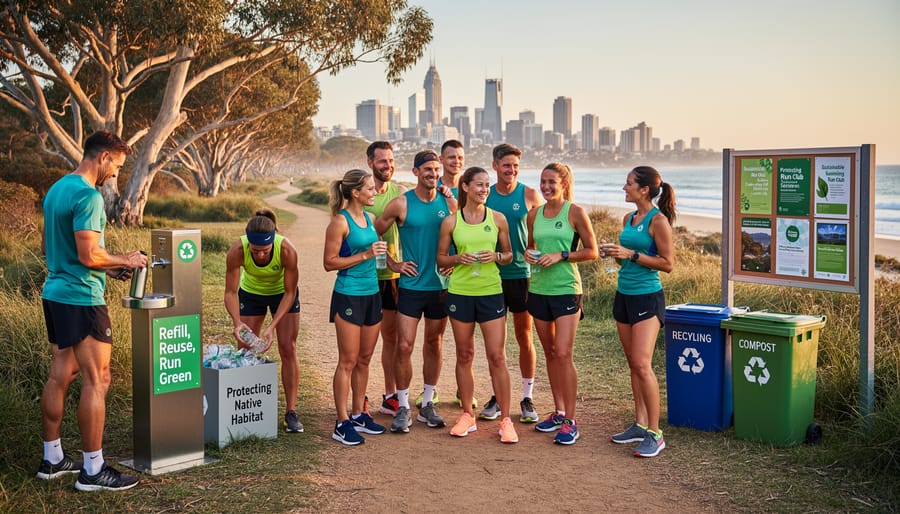
Meet three Australian runners who’ve discovered that two wheels can make you faster on two feet.
Sarah Chen, a Melbourne primary school teacher and recreational runner, struggled with shin splints that threatened to end her goal of completing her first marathon. Her physiotherapist suggested cycling as active recovery between runs. “I was skeptical at first,” Sarah admits, “but after six weeks of replacing one weekly run with a 45-minute cycle commute to work, my shins felt stronger and I actually knocked two minutes off my 5K time.” Beyond the physical benefits, Sarah found an unexpected bonus. “Cycling to school three days a week saves me about $40 monthly in petrol, and I love starting my day knowing I’ve already done something good for my fitness and the environment.”
In Brisbane, 52-year-old tradesman Mark Thompson turned to cycling when his knees protested against high weekly running mileage. “I wanted to keep my fitness up without the constant pounding,” he explains. Mark now cycles to job sites twice weekly and runs three times, a combination that’s helped him maintain his cardiovascular fitness while reducing knee pain. “My running mates thought I was crazy at first, but when I started keeping up with blokes ten years younger on our Sunday long runs, they started asking questions.” Mark’s also noticed his power on hills has improved noticeably. “The cycling really builds your quads and glutes differently than running alone.”
Twenty-eight-year-old Perth runner Emma Wu cycles along the Swan River as cross-training during summer’s peak heat. “Running in 38-degree weather just wasn’t sustainable,” she says. “Cycling creates airflow that keeps you cooler, so I can maintain aerobic fitness without heat exhaustion.” Emma’s found that her cycling habit has extended beyond training. “I’ve started riding to my local parkrun on Saturday mornings instead of driving. It’s become my warm-up, and afterwards, I feel like I’m part of a community that’s actually making a difference.”
Getting Started: Your First Month of Cycling Cross-Training
Starting your cycling cross-training journey doesn’t require a major investment or perfect conditions. Many Australian runners begin with what they already have, whether that’s dusting off an old bike from the garage or borrowing one from a mate to test the waters.
Your first week should feel almost easy. Aim for two 20-30 minute rides on flat terrain, keeping your effort conversational. Think of it as active recovery between your regular runs. Around suburban Melbourne, Sydney, or Brisbane, quieter residential streets or dedicated bike paths provide ideal starting environments without intimidating traffic. Early mornings often offer the calmest conditions and clearest air.
Common concerns usually centre around saddle discomfort and leg fatigue. The discomfort typically eases within two weeks as your body adapts, while choosing padded shorts makes a noticeable difference. If your quads feel heavy during runs initially, you’re likely pushing too hard on the bike. Remember, this isn’t about becoming a cyclist; it’s about supporting your running goals while reducing impact stress.
By week three, gradually increase one ride to 45 minutes while maintaining the second as a recovery spin. Notice how your breathing feels controlled compared to running at similar effort levels. This cardiovascular work without the pounding proves especially valuable during Australia’s harsh summer months when running in afternoon heat becomes challenging.
Consider combining purposeful trips with training. That morning coffee run or weekend errands become opportunities for movement, aligning your fitness routine with sustainable transport choices that benefit both your performance and local community air quality.
Adding cycling to your running routine delivers a powerful double win: you’ll build stronger, more resilient legs while reducing your carbon footprint with every pedal stroke. Whether you’re commuting to work, spinning through recovery rides, or exploring Melbourne’s Capital City Trail network, each cycling session strengthens your running performance and contributes to cleaner air in your local community.
The beauty of this approach lies in its accessibility. Start small by replacing one short car trip each week with a bike ride, or swap a single running session for an easy 30-minute cycle. Many Australian councils are expanding bike infrastructure, making it safer and easier than ever to embrace two-wheeled transport. Join local cycling groups or parkrun communities where fellow runners share insights about integrating bikes into their training schedules.
Beyond personal gains, your choice to cycle creates ripples throughout your community. Every kilometre pedalled instead of driven reduces emissions, eases traffic congestion, and inspires others to consider sustainable transport alternatives. Australian cities are increasingly prioritising active transport, and your participation strengthens the case for better cycling facilities that benefit everyone.
You don’t need expensive equipment or a complete lifestyle overhaul to begin. Dust off that bike in your garage, borrow one from a friend, or explore bike-share schemes available in most capital cities. The journey toward improved running performance and environmental stewardship starts with a single ride. Your legs, your race times, and your planet will thank you.