
Every time you sit in peak-hour traffic on Sydney’s M4 or Melbourne’s Eastern Freeway, you’re witnessing a fundamental truth about modern cities: building more roads doesn’t solve congestion. It simply invites more cars. This paradox sits at the heart of why urban planning and transportation must work together, not as separate disciplines, but as interconnected forces shaping the future of Australian cities.
Right now, transport accounts for nearly 19% of Australia’s greenhouse gas emissions, with private vehicles responsible for the lion’s share. Meanwhile, our cities continue sprawling outward, making car dependency almost inevitable for millions of Australians. The consequences ripple through our communities: longer commutes, deteriorating air quality, reduced physical activity, and neighbourhoods designed around vehicles rather than people.
Yet across Australia, a quiet revolution is reshaping how we think about moving people through cities. From Brisbane’s expanding active transport network to Perth’s innovative transit-oriented developments, communities are proving that accessible, sustainable transport creates more than just efficient movement. It builds vibrant neighbourhoods where people actually want to spend time, where local businesses thrive, and where children can safely ride bikes to school.
The relationship between urban planning and transportation isn’t just about reducing emissions or easing congestion. It’s about reclaiming our cities for people, creating spaces where sustainable choices become the easiest choices, and building communities that enhance rather than diminish quality of life. Understanding this connection empowers you to advocate for better outcomes in your own community, whether you’re a concerned resident, a business owner, or a local decision-maker looking to create meaningful change.
The Hidden Connection Between Where We Live and How We Travel
How Australian Cities Got Hooked on Cars
The story of how Australian cities became so car-dependent begins in the decades following World War II. During the 1950s and 60s, our major cities experienced explosive suburban growth, inspired by the American dream of a quarter-acre block and a family car in every driveway. This period fundamentally reshaped how Australians live, work, and move around.
Melbourne sprawled outward at an astonishing rate, with new suburbs like Broadmeadows and Frankston stretching far beyond the existing tram network. Rather than extending public transport alongside this growth, planners prioritised roads and freeways. Sydney followed a similar path, with the construction of sprawling western suburbs like Penrith and Campbelltown that relied heavily on car access. Brisbane’s post-war development was even more car-centric, with minimal investment in rail infrastructure beyond the original lines.
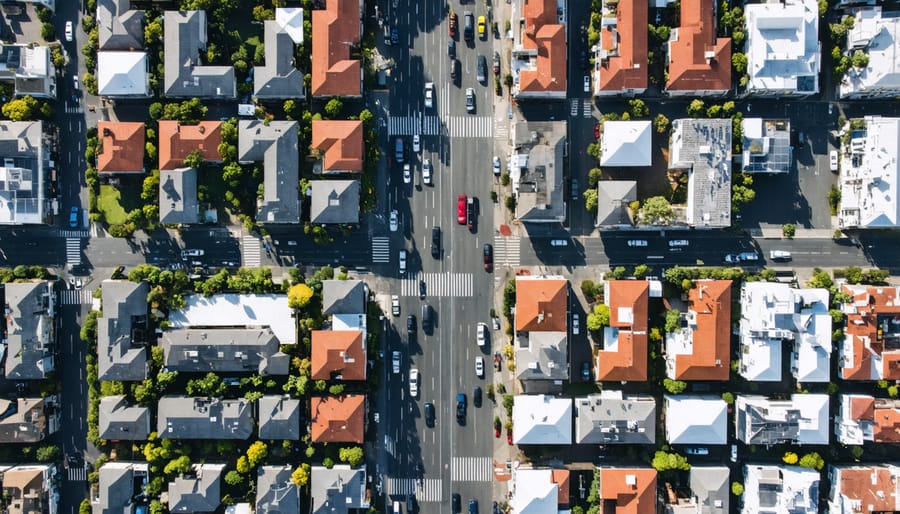
The impact of these decisions still shapes our cities today. Many outer suburbs were built without shops, services, or employment hubs within walking distance, making car ownership a necessity rather than a choice. While inner-city communities might enjoy walkable neighbourhoods and frequent public transport, families in newer suburbs often find themselves driving for every errand.
This wasn’t inevitable. Cities like Melbourne once boasted one of the world’s most extensive tram networks, much of which was dismantled during this car-focused era. Understanding this history helps us recognise that our transport challenges aren’t unchangeable facts of city life, but the result of specific planning choices that we can now choose to reimagine for a more sustainable future.
The True Cost of Car-Dependent Communities
The price tag of car-dependent urban design extends far beyond what we see at the petrol pump. Australian families now spend an average of $18,000 annually on transport costs, with those in outer suburbs often spending significantly more. For many households, this represents the second-largest expense after housing, creating substantial financial pressure that could be redirected toward other priorities.
The environmental toll is equally concerning. Transport accounts for nearly 20% of Australia’s total greenhouse gas emissions, with private vehicles responsible for the majority. In Melbourne and Sydney, daily commuter traffic generates approximately 11 tonnes of CO2 per person annually, contributing significantly to urban air pollution. This isn’t just about global warming; poor air quality directly affects the health of our communities, particularly children and elderly residents.
The health implications run deeper still. Communities built around cars inadvertently design physical activity out of daily life. When people drive everywhere, they miss opportunities for incidental exercise that walking or cycling provides. Australian research links car-dependent suburbs with higher rates of obesity, cardiovascular disease, and mental health issues. The isolation that comes from spending hours alone in vehicles also weakens community connections, affecting our collective wellbeing.
Fortunately, transitioning toward green commuting options offers tangible benefits. Forward-thinking councils across Australia are demonstrating that investing in public transport, cycling infrastructure, and walkable neighbourhoods creates healthier, more affordable, and socially connected communities while dramatically reducing environmental impact.
The Transit-Oriented Development Revolution Happening in Your Backyard
What Makes a Transit-Oriented Community Work
When you step off a train and find yourself surrounded by cafes, parks, workplaces, and homes all within a comfortable walk, you’re experiencing what urban planners call a transit-oriented community. But creating these vibrant, sustainable neighbourhoods isn’t accidental. It relies on four interconnected principles, often called the “4 Ds.”
Density refers to concentrating enough people and activities within walking distance of transit stations. Sydney’s Green Square exemplifies this approach, transforming former industrial land into a high-density neighbourhood where thousands of residents live within 400 metres of train and light rail stops. This critical mass of people makes frequent public transport services viable while supporting local businesses and reducing car dependency.
Diversity means mixing residential, commercial, and recreational uses rather than separating them into isolated zones. When your workplace, grocery store, and favourite restaurant all sit near your home and transit station, you naturally make fewer car trips. Melbourne’s Fishermans Bend development embraces this principle, weaving together apartments, employment hubs, schools, and green spaces within a transit-connected precinct.
Design focuses on creating streets that welcome pedestrians and cyclists, not just cars. Wide footpaths, protected bike lanes, street trees, and activated ground-floor spaces make walking pleasant rather than intimidating. Good design also ensures direct, safe routes between homes and transit stops, eliminating the frustrating detours that discourage public transport use.
Distance to transit represents the final piece. Research consistently shows that people willingly walk about 400-800 metres to reach quality transit. Beyond that threshold, they typically drive instead. Successful transit-oriented communities therefore concentrate development within this walkable catchment, maximising the number of residents who can genuinely live car-free or car-lite lifestyles.
Together, these elements create communities where sustainable transport becomes the natural, convenient choice.
Australian Success Stories You Can Learn From
Australia is proving that sustainable transit-oriented development isn’t just theory—it’s working brilliantly in communities right now. These success stories offer valuable blueprints for creating liveable, low-carbon neighbourhoods across the country.
Green Square in Sydney stands as one of Australia’s most ambitious urban renewal projects. This former industrial area has transformed into a vibrant, pedestrian-friendly precinct centered around its train station. The development prioritises walking and cycling, with 50 kilometres of bike paths connecting residents to shops, parks, and transport hubs. The community has seen a 40% reduction in car dependency compared to similar suburbs, while local businesses report increased foot traffic and stronger neighbourhood connections. Green Square demonstrates that when you design for people rather than cars, everyone benefits.
Melbourne’s Fishermans Bend is reimagining waterfront living through integrated transport planning. This emerging neighbourhood places light rail and cycling infrastructure at its heart, with employment hubs within easy reach of homes. Early results show residents making 60% of trips by public transport, walking, or cycling—a dramatic shift from typical suburban patterns. The project also incorporates extensive green spaces and water-sensitive urban design, creating cooling effects that reduce the urban heat island by up to 2 degrees.
Perth’s Yagan Square precinct showcases how transit hubs can become community gathering places. By connecting multiple transport modes—buses, trains, and cycling routes—within an activated public space, the development has increased public transport use by 25% while creating 1,200 local jobs. The lesson? When communities feel connected and transport is genuinely convenient, sustainable choices become the easy choices.
Building Streets for People, Not Just Cars
The Complete Streets Approach
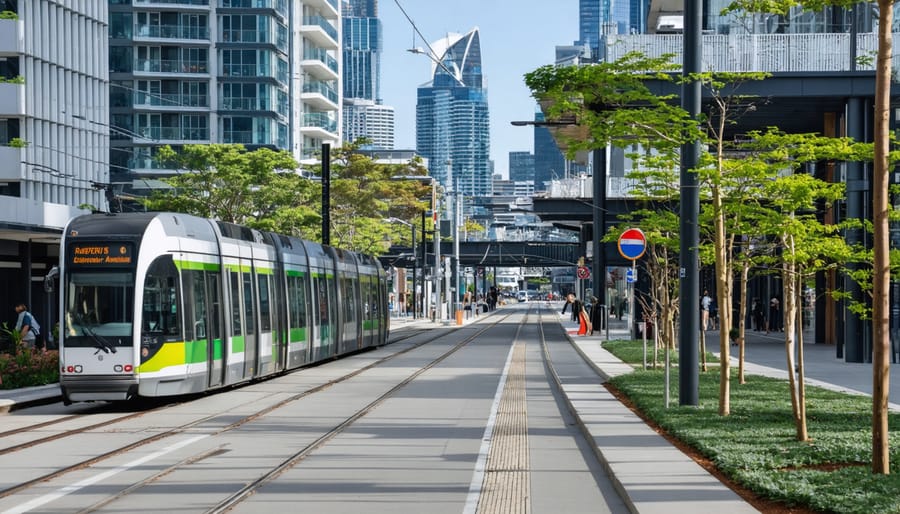
Complete streets represent a transformative shift in how we design our urban spaces. Rather than prioritising cars above all else, these streets are designed for everyone—pedestrians, cyclists, public transport users, older Australians, children, and yes, motorists too. The approach recognises that our streets are public spaces where community life happens, not just traffic corridors.
The benefits extend far beyond traffic flow. Complete streets reduce carbon emissions by making walking and cycling safer and more appealing options. They improve air quality, decrease traffic injuries, and create more vibrant neighbourhoods where people want to spend time. Local businesses often see increased foot traffic, while property values typically rise as streets become more liveable.
Australian cities are already showing what’s possible. Sydney’s George Street transformation removed private vehicles entirely, creating a pedestrian-friendly boulevard served by light rail. The results speak for themselves—increased retail activity, reduced air pollution, and thousands more people choosing sustainable transport daily. Melbourne’s Swanston Street has similarly thrived after prioritising trams, pedestrians and cyclists.
In Brisbane, the Grey Street cycleway demonstrates how dedicated infrastructure encourages people to leave their cars at home. Adelaide’s Pirie Street and Waymouth Street redesigns added wider footpaths, street trees, and protected bike lanes, transforming previously car-dominated corridors into welcoming community spaces.
These examples prove that when we design streets for people rather than just vehicles, everyone benefits—including those who still need to drive.
Making Your Neighbourhood More Walkable and Cyclable
Transforming your neighbourhood into a haven for walking and cycling doesn’t require waiting for massive infrastructure projects. Many Australian communities are proving that strategic, achievable changes can make remarkable differences.
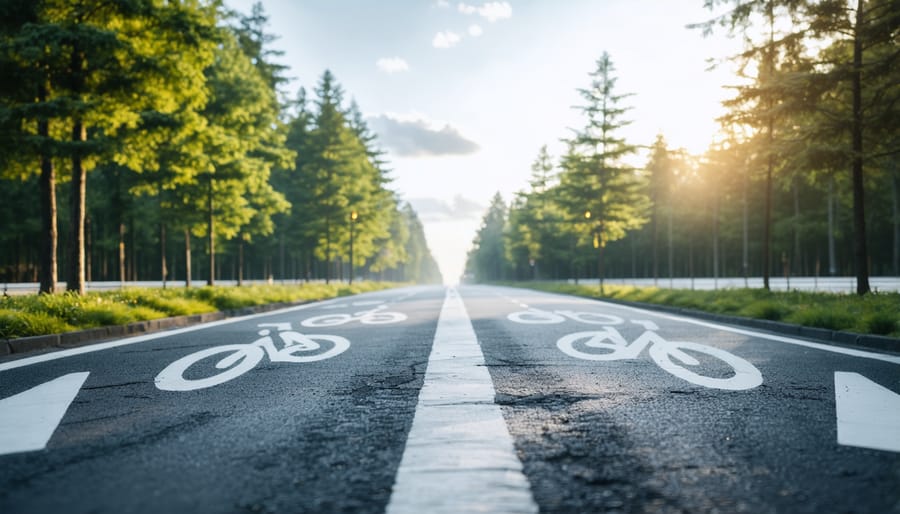
Protected bike lanes represent one of the most effective improvements for encouraging cycling as transportation. Unlike painted lines that offer little real safety, physical separation using bollards, planters, or kerbs creates genuine security for riders of all ages and abilities. Melbourne’s Southbank Boulevard transformation demonstrated this perfectly, with cycling numbers tripling after protected lanes were installed in 2019.
Pedestrian priority zones slow vehicle traffic through design features like narrowed roads, raised crossings, and chicanes. Brunswick’s Sydney Road precinct introduced textured paving and extended footpaths, creating spaces where people naturally feel comfortable walking while still allowing local access for cars. Traffic calming measures like these reduce vehicle speeds without heavy-handed enforcement.
Community advocacy drives many successful projects. Start by documenting problem areas through photos and collecting neighbours’ experiences. Present solutions to your local council with evidence from similar Australian projects. Join or establish bicycle user groups like those operating across Sydney, Brisbane, and Adelaide, which regularly engage with planners.
Small wins matter too. Advocate for fixing broken footpaths, installing bike racks outside local shops, or creating crossing points on busy roads. Perth’s community-led ‘walking school bus’ initiative combined advocacy with action, ultimately securing safer crossings and footpath improvements around multiple schools. Your voice, combined with others, creates the momentum that reshapes neighbourhoods into genuinely people-friendly places.
How Smart Land Use Policies Shape Sustainable Cities
Mixed-Use Development: Living, Working, and Playing in One Place
Imagine stepping out of your apartment, grabbing a coffee from the café downstairs, walking to your office in the next building, and meeting friends at the local park after work—all without needing a car. This is the reality of mixed-use development, an urban planning approach that’s transforming Australian communities and slashing transport-related emissions.
Mixed-use precincts combine homes, workplaces, shops, and entertainment in walkable neighbourhoods. By reducing the need for lengthy commutes, these developments naturally encourage walking, cycling, and public transport use. When everything you need is within a 15-minute walk or ride, the car stays parked.
Barangaroo in Sydney exemplifies this approach beautifully. The waterfront precinct weaves together residential towers, office spaces, restaurants, and parklands, all connected by pedestrian-friendly pathways and excellent ferry and train links. Similarly, Melbourne’s Docklands has evolved into a thriving mixed-use hub where thousands live and work without daily car dependency.
Brisbane’s Newstead is another success story, transforming from industrial wasteland into a vibrant community where breweries sit alongside apartments and creative workspaces, all accessible via bikeway connections.
These precincts don’t just reduce traffic congestion—they create stronger communities. When your neighbours are also your colleagues or fellow café regulars, social connections flourish naturally. For Australian cities facing urban sprawl challenges, mixed-use development offers a sustainable path forward that puts people, not cars, at the centre.
The Battle for Better Zoning Laws
Here’s the thing about Australian zoning laws: many were written when the Holden was king and corner shops were considered a neighbourhood nuisance. These outdated regulations have locked us into car-dependent sprawl, mandating wide roads, large setbacks, and separating homes from shops and services.
But the tide is turning. Forward-thinking councils across Australia are rewriting the rulebook. The City of Sydney has embraced mixed-use zoning in areas like Green Square, allowing apartments, cafes, and workplaces to coexist within walking distance. Brisbane City Council is reducing minimum parking requirements in well-connected suburbs, recognizing that mandating car spaces actually encourages driving and inflates housing costs.
In Melbourne’s inner north, the City of Yarra has introduced 20-minute neighbourhood planning, ensuring residents can access daily needs without jumping in the car. Meanwhile, Fremantle Council in Western Australia has pioneered “activity corridors” where higher-density housing clusters around public transport routes.
The beauty of zoning reform is that everyday citizens can influence it. Most councils hold regular planning meetings where community members can advocate for walkable, mixed-use development. By attending these sessions or submitting feedback during public consultation periods, you’re helping shape a less car-dependent future for your neighbourhood. Local action creates the blueprint for broader change.
Public Transport That Actually Gets People Out of Their Cars
The First and Last Mile Problem
You’ve decided to embrace using public transport, but there’s a catch: how do you actually get to the station? This is what transport planners call the first and last mile problem, and it’s one of the biggest barriers preventing Australians from ditching their cars.
The challenge is real. If your nearest bus stop sits two kilometres from home with no footpath, you’ll likely drive instead. When public transport doesn’t seamlessly connect to our doorsteps, even the best train network falls short.
Australian cities are rising to meet this challenge with creative solutions. Melbourne’s bike-share schemes have placed thousands of bicycles within reach of train stations, while Brisbane’s CityCycle program helps commuters bridge that crucial gap. Perth is leading with walkable neighbourhood redesigns, adding shaded pathways and pedestrian-friendly crossings that make the journey to transit hubs pleasant rather than punishing.
Feeder bus services are transforming suburban accessibility too. Sydney’s on-demand bus trials in outer suburbs connect residents to major transport hubs, operating like shared ride services that respond to real-time demand through smartphone apps.
These innovations work because they acknowledge a simple truth: sustainable transport isn’t just about trains and buses. It’s about creating an integrated system where every journey segment flows naturally into the next, making car-free living genuinely convenient for everyday Australians.
Why Buses Deserve Better
Buses often get overlooked in transport conversations, yet they’re the workhorses of sustainable urban mobility across Australia. While trains grab headlines and bike lanes spark debates, buses quietly carry millions of commuters daily with remarkable efficiency and minimal environmental impact, especially as cities transition to electric buses.
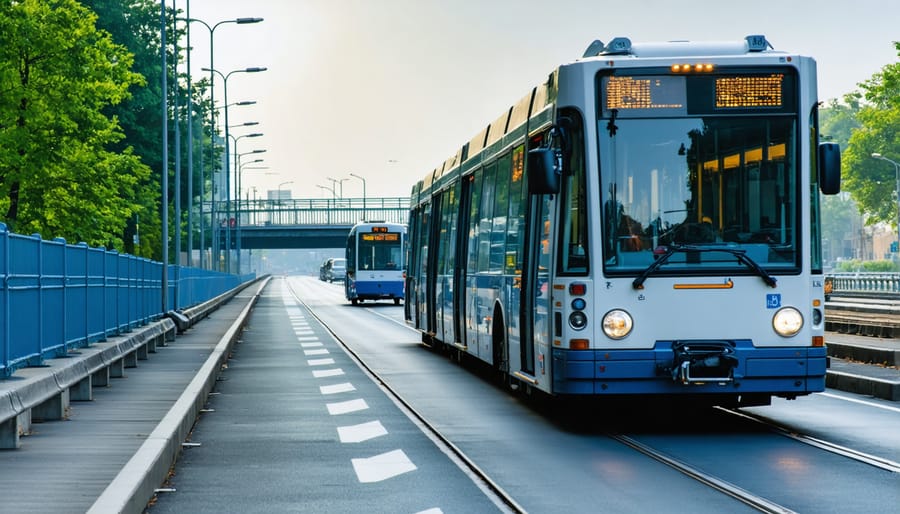
The transformation potential is enormous. Brisbane’s busway network demonstrates how bus rapid transit can rival rail for speed and reliability, moving 16,000 passengers per hour through dedicated lanes. When buses get priority at traffic lights and their own road space, journey times plummet and reliability soars, attracting car users who previously dismissed public transport.
Adelaide’s recent bus network redesign shows what’s possible when we rethink routes around frequent, direct services rather than meandering local connections. By creating a grid of routes running every 15 minutes, patronage increased significantly without adding more buses.
The beauty of bus improvements lies in their affordability and flexibility. Unlike rail projects requiring decades and billions, bus priority measures deliver results within months at a fraction of the cost. Protected bus lanes, signal priority, and all-door boarding can double service speeds overnight, making sustainable transport genuinely competitive with private cars for everyday journeys.
What You Can Do to Shape Your City’s Transport Future
You have more power to shape your city’s transport future than you might think. Every voice counts in creating the sustainable, connected communities we need, and there are practical ways to make yours heard right now.
Start by engaging with your local council’s planning processes. Most Australian councils hold public consultations on transport infrastructure projects and urban development plans. Sign up for council newsletters, attend community meetings, and submit feedback during exhibition periods. The Infrastructure Australia website provides information about major projects in your state, while your council’s website lists local initiatives seeking community input.
Join or support advocacy groups making real change across Australia. Organizations like Bicycle Network, Living Streets Aotearoa, and local walking and cycling groups actively campaign for better infrastructure. The Heart Foundation’s Healthy Active by Design initiative works with communities to create walkable neighbourhoods. Many groups offer citizen science opportunities, like conducting walkability audits or counting cyclists, which provide councils with valuable data to support change.
Businesses can lead by example too. Implement workplace travel plans that encourage staff to use public transport, cycling, or carpooling initiatives. Partner with local government on pilot programs or contribute to bike-parking infrastructure around your premises.
At home, model sustainable transport choices within your community. Walk or cycle for short trips, use public transport when possible, and talk with neighbours about shared mobility solutions. These everyday actions create visible demand for better infrastructure.
Connect with groups like Sustainable Communities Australia or your local environmental collective to amplify your impact through collective action. Together, we’re building cities designed for people, not just cars—one conversation, one council submission, one journey at a time.