
Every time you bite into a lamb chop or tuck into a steak at your local Australian barbecue, you’re consuming the energy equivalent of roughly ten vegetarian meals. This stark reality stems from a fundamental principle of physics: energy is lost at every step up the food chain. When cattle graze on Queensland pastures or feedlots, they convert only about 10% of the plant energy they consume into meat—the rest powers their metabolism, movement, and body heat. For us Australians, where livestock farming accounts for significant greenhouse gas emissions and strains our already precious water resources, understanding this energy inefficiency matters more than ever. The benefits of vegetarian diet extend beyond personal health to encompass genuine environmental stewardship. By choosing plant-based foods, we’re essentially eating closer to the sun’s original energy source, bypassing the inefficient animal intermediary. This isn’t about guilt or radical change—it’s about recognising that our everyday food choices ripple through ecosystems, water systems, and climate patterns across our sunburnt country, and that together, we hold the power to create meaningful impact through informed decisions.
The Energy Journey: From Paddock to Plate
Every meal on your plate carries an invisible energy footprint, tracing back through a complex journey from farm to fork. This ’embodied energy’ includes everything from the fuel used to power farm machinery and produce fertilisers, to the electricity required for refrigeration and transport. Think of it like the ripple effect when you toss a stone into water – each step in food production creates expanding circles of energy use.
In Australia’s agricultural landscape, this energy journey takes dramatically different paths depending on whether we’re growing vegetables or raising livestock. Plants harness energy directly from the sun through photosynthesis, storing it in their leaves, roots, and fruits. When we eat these plants, we’re tapping into energy that’s just one step removed from its solar source.
Animal agriculture, however, adds multiple extra layers to this energy chain. Livestock don’t create their own energy – they consume plants (or other animals) to grow and develop. Australian cattle, for instance, spend years converting grain and pasture into meat, burning most of that plant energy simply to maintain their body temperature, move around, and perform basic life functions. Only a fraction actually transforms into the beef we eventually consume.
This fundamental difference in energy pathways explains why communities across Australia are increasingly exploring plant-forward eating. Understanding this energy journey helps us make choices that lighten our environmental impact while still enjoying delicious, nourishing meals.
The 10:1 Rule That Changes Everything
What This Means for Australian Agriculture
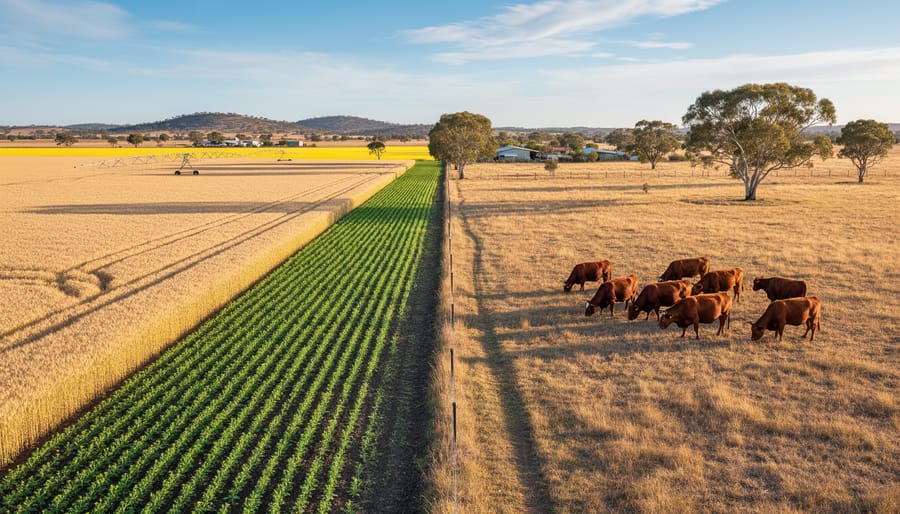
Here in Australia, these energy principles translate into significant resource implications. Our livestock sector currently occupies approximately 53% of our continent’s landmass, with cattle farming alone requiring vast tracts of grazing land across Queensland, Northern Territory, and Western Australia. Consider this: producing one kilogram of beef in Australian feedlots requires around 15 kilograms of grain and up to 15,000 litres of water when accounting for feed crop irrigation and animal consumption.
The Murray-Darling Basin, our food bowl, faces ongoing water security challenges while simultaneously supporting intensive livestock operations. Each time we choose plant-based proteins over meat, we’re essentially reclaiming those energy losses. A local example brings this home: community gardens in Melbourne’s inner suburbs now produce enough vegetables to feed dozens of families using just a fraction of the water and land equivalent meat production would demand.
Australian grain farmers are increasingly recognizing this shift too. Some are now diversifying into legume crops like chickpeas and lentils, feeding both domestic demand for plant proteins and export markets, while using considerably less water per calorie produced than livestock operations.
Feed Conversion: The Hidden Energy Drain
Land Use and Energy Implications
The connection between livestock farming and land use reveals a significant energy story that hits close to home for Australians. Raising animals for food requires vast tracts of land, not just for grazing but for growing feed crops. In Australia, where approximately 50% of agricultural land supports livestock, this translates to enormous energy inputs. Consider the irrigation systems pumping water across drought-prone regions, the diesel-powered machinery cultivating feed crops, and the fertilisers manufactured through energy-intensive processes.
Each hectare dedicated to feed production demands ongoing energy investments. Irrigation alone accounts for a substantial portion of agricultural energy use, particularly challenging in our water-scarce climate. Tractors, harvesters, and transport vehicles consume fossil fuels, while synthetic fertilisers require natural gas for production. When you compare this to growing crops directly for human consumption, the difference becomes striking. Plant-based foods need the same land just once, eliminating the inefficient middle step of feeding animals.
For Australian communities already grappling with water scarcity and rising energy costs, reducing meat consumption represents a practical pathway toward more efficient resource use. By choosing vegetarian options, we collectively lighten the load on our land and energy systems.
Water: The Liquid Energy We Often Forget
When we think about energy efficiency in our food system, water might not immediately spring to mind. Yet here in Australia, where water is our most precious resource, understanding the energy-water connection reveals another compelling reason why plant-based diets make environmental sense.
Every drop of water that flows from our taps has an energy story behind it. From pumping groundwater to the surface, treating it to drinking standards, and delivering it through vast pipeline networks, our water infrastructure consumes enormous amounts of electricity. In regions relying on desalination plants, like Perth and parts of Adelaide, the energy intensity becomes even more pronounced. Heating water for agricultural processes adds another substantial energy demand to the equation.
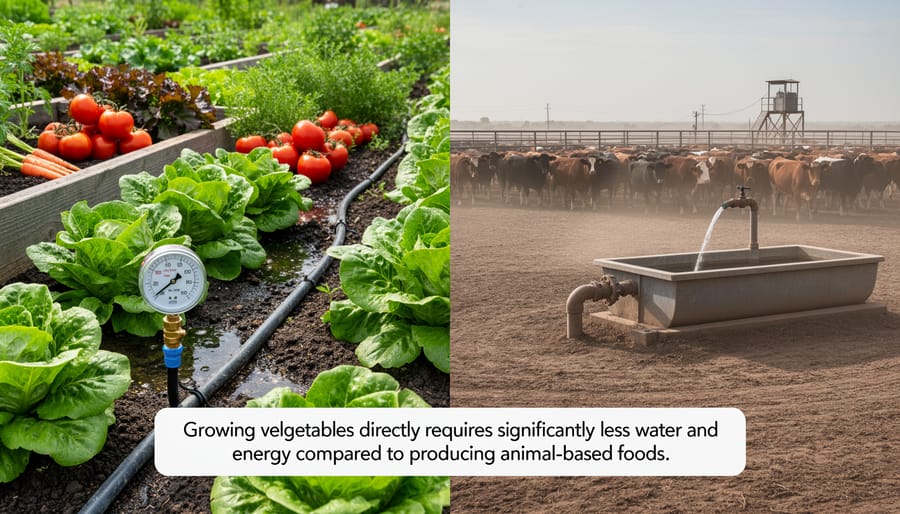
The water requirements for producing different foods vary dramatically. Growing a kilogram of vegetables typically requires around 300 litres of water, while producing a kilogram of beef demands approximately 15,000 litres. That’s a fifty-fold difference. When you multiply these figures by the energy needed to extract, treat, and transport that water, the energy gap widens considerably.
Australian farmers understand these challenges intimately. During our recurring droughts, irrigating crops becomes an energy-intensive necessity, but livestock farming faces even greater water demands. Cattle need water not just for drinking, but also for growing the grain and pasture they consume throughout their lives.
Communities across Australia are pioneering water-wise approaches that reduce this energy burden. South Australian market gardens using drip irrigation systems, Victorian permaculture farms capturing rainwater, and Queensland growers implementing solar-powered water pumps demonstrate how plant-focused agriculture can dramatically reduce the energy footprint of our water usage. By choosing more plant-based meals, we’re not just saving water; we’re saving all the energy that brings that water to our food production systems.
Beyond the Farm Gate: Processing and Transport
Once food leaves the farm, the energy story continues through processing, storage, and transport. Here’s where the gap between plant and animal products often widens considerably.
Animal products face unique challenges that demand substantial energy inputs. Meat requires intensive refrigeration throughout its entire journey, from abattoir to processing facility, through distribution networks, to retail cold storage. In Australia’s warm climate, maintaining these unbroken cold chains consumes enormous amounts of electricity. Similarly, dairy products need consistent refrigeration, while eggs require climate-controlled environments to prevent spoilage.
Processing meat involves energy-intensive operations like slaughtering, cutting, packaging, and often freezing. These facilities run massive refrigeration systems around the clock. Compare this to many plant foods: dried beans, lentils, grains, and nuts can be stored and transported at ambient temperatures, requiring minimal energy beyond initial processing.
Transportation amplifies these differences. Refrigerated trucks, known as “reefers” in the industry, consume significantly more fuel than standard freight vehicles. When you consider that Australian cattle stations in remote regions might be thousands of kilometres from processing facilities and markets, the transport energy costs multiply.
Fresh vegetables and fruits do require some refrigeration, but many plant proteins like legumes, tofu ingredients, and whole grains travel without temperature control. Even when refrigeration is needed for fresh produce, the duration is typically shorter than for animal products, which must remain chilled from processing through to consumption.
This infrastructure reality means choosing plant-based proteins can reduce the energy footprint of your meals well before they reach your kitchen, supporting Australia’s transition toward more efficient food systems.
The Ripple Effect: Energy Savings Across the System
Australian Success Stories
Across Australia, communities are proving that plant-forward eating delivers real environmental results. Melbourne’s Fawkner Primary School transformed their canteen menu to predominantly vegetarian options, cutting their food-related energy footprint by an estimated 35% while introducing students to delicious, sustainable meals. The initiative sparked conversations in households across the suburb, creating a ripple effect of awareness.
In Byron Bay, the Earth Cafe operates as a fully plant-based venue, sourcing 80% of ingredients from local growers within a 50-kilometre radius. This approach minimises transport emissions while supporting regional farmers, demonstrating how dietary choices and local economies can strengthen each other.
Corporate Australia is joining the movement too. Sydney-based tech company Atlassian introduced Meatless Mondays across their offices, eliminating approximately 2,500 kilograms of carbon emissions monthly. Staff reported feeling energised by the change, with many continuing plant-based eating at home. These examples show that whether you’re a school, small business, or individual household, shifting toward vegetarian options creates measurable energy savings while building stronger, more sustainable communities.

Making It Work in Your Kitchen
Transitioning to a more energy-efficient diet doesn’t mean overhauling your entire kitchen overnight. Many Australian households are discovering that small, consistent changes create meaningful environmental impact while keeping meals delicious and satisfying.
Start with “Meatless Mondays” to ease into plant-based eating without pressure. This simple weekly commitment reduces your energy footprint by roughly 15% while giving you space to experiment with new recipes. Try swapping your usual spag bol for a hearty lentil version, or explore chickpea curries that showcase similar textures and flavours you already love.
Building meals around local seasonal produce maximizes both energy efficiency and taste. Right now, Victorian zucchinis, Queensland sweet potatoes, and Tasmanian pumpkins are abundant and require minimal energy for transport and storage. Community farmers’ markets connect you directly with growers who can share preparation tips and seasonal recipes.
Stock your pantry with Australian-grown staples like lentils, chickpeas, and beans. These protein powerhouses store well, cook quickly, and deliver exceptional nutrition per energy unit invested. A well-stocked pantry means you’re always ready to prepare satisfying vegetarian meals.
Address concerns about protein by remembering that combining different plant foods throughout the day provides complete nutrition. Australians have successfully adopted meat-reduced diets while maintaining active lifestyles, from Byron Bay surfers to Melbourne office workers.
Every plant-based meal you choose creates ripple effects through our food system. When thousands of households make similar choices, we collectively reduce agricultural energy demand, preserve water resources, and demonstrate market demand for sustainable options. Your kitchen genuinely becomes part of Australia’s energy solution, one delicious meal at a time.
The evidence is clear: choosing plant-based meals represents one of the most direct ways we can reduce our energy footprint. From the fundamental laws of energy transfer through trophic levels to the tangible realities of water usage and land management across Australian farms, vegetarian diets consistently emerge as the more efficient choice. Every meal becomes an opportunity to align our values with our actions.
What makes this particularly empowering is that change doesn’t require perfection. Whether you’re ready to embrace a fully vegetarian lifestyle or simply keen to incorporate more plant-based meals throughout your week, every choice contributes to Australia’s broader sustainability goals. Communities across the country are already demonstrating this shift, with local initiatives making plant-forward eating more accessible and enjoyable than ever.
The path forward is both individual and collective. Start where you feel comfortable: perhaps designate one or two meat-free days each week, explore local farmers’ markets for seasonal vegetables, or connect with community groups championing sustainable food systems. Your journey toward more energy-efficient eating doesn’t have to be solitary. Together, we’re building a more sustainable future, one thoughtful food choice at a time. The power to make a difference sits right on your plate.