
Choose water-based acrylic fabric paints certified with low or zero VOC ratings from Australian retailers like Eckersley’s or Spotlight, checking labels for compliance with European EN71 toy safety standards. Test paints on scrap fabric first, washing thoroughly before use to remove any manufacturing residues that could interact with paint chemistry.
Create your own nontoxic fabric paint by mixing high-quality acrylic non-toxic products with textile medium at a 2:1 ratio, ensuring the base paint contains no formaldehyde, heavy metals, or phthalates. This DIY approach gives you complete control over ingredients while reducing packaging waste and costs significantly.
Prevent paint runoff from contaminating Australian waterways by containing your workspace with drop sheets and disposing of rinse water through greywater systems or allowing it to evaporate before discarding solids in general waste. Small quantities of dried, nontoxic paint pose minimal environmental risk compared to liquid waste entering stormwater drains.
The Australian textile crafting community faces a unique challenge. While we embrace creativity through fabric painting for children’s clothing, community art projects, and small business ventures, conventional fabric paints often contain harmful chemicals that leach into our skin during wear and enter waterways during washing. These toxins accumulate in marine ecosystems already under pressure from climate change and urban development. Yet switching to nontoxic alternatives doesn’t mean compromising on vibrancy, durability, or artistic expression. By understanding what makes fabric paint safe, sourcing Australian-available options, and adopting mindful application practices, you can protect your family’s health and our precious environment while continuing the creative work that brings colour and connection to our communities.
The Hidden Dangers Lurking in Conventional Fabric Paints
What Makes a Fabric Paint ‘Toxic’?
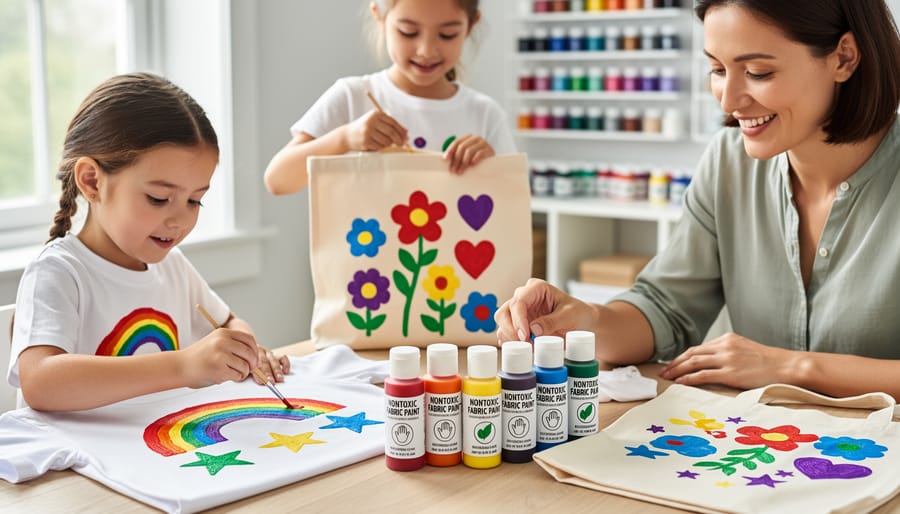
Understanding what lurks in conventional fabric paints helps you make safer choices for your creative projects and our Australian environment. Many standard fabric paints contain volatile organic compounds (VOCs), heavy metals like cadmium and lead, phthalates, and formaldehyde-based binders. These chemicals can release harmful fumes during application and washing, potentially affecting respiratory health and waterways when they enter our wastewater systems.
In Australia, fabric paints fall under regulations managed by NICNAS (National Industrial Chemicals Notification and Assessment Scheme), now part of Industrial Chemicals. The Australian Competition and Consumer Commission (ACCC) also ensures products meet mandatory safety standards. However, not all harmful ingredients require prominent warnings, which means reading labels becomes your first line of defence.
When examining labels, look for specific red flags including “use in well-ventilated areas,” warnings about skin contact, or listings of chemical solvents like toluene and xylene. Products marketed as “AP Certified” (Approved Product) or “non-toxic” should meet stricter safety standards, but these terms aren’t always regulated uniformly.
The good news? Growing awareness across Australian communities means safer alternatives are becoming more accessible. By understanding what makes conventional fabric paints problematic, you’re already taking an important step toward protecting your household and contributing to cleaner waterways. The key is choosing paints with clear ingredient lists showing water-based formulas, natural pigments, and certifications from recognised bodies. Together, our informed choices create ripples of positive change throughout Australia’s creative and environmental communities.
The Real Cost to Australian Waterways
Every time we rinse fabric paint from brushes or wash newly painted items, we’re making a choice that ripples through Australia’s waterways. Conventional fabric paints contain heavy metals, plasticisers, and synthetic chemicals that don’t simply disappear down the drain. These residues flow through our wastewater systems, and while treatment plants filter out some contaminants, many persist and eventually reach our rivers, estuaries, and oceans.
For Australian marine ecosystems already facing pressure from climate change and pollution, this additional chemical burden matters deeply. Microplastics from acrylic-based paints accumulate in sediments where filter feeders like oysters and mussels concentrate toxins, which then travel up the food chain. Studies have shown heavy metals from art supplies affecting aquatic life in urban waterways around Sydney, Melbourne, and Brisbane.
The good news? Our community of conscious creators is growing. By choosing nontoxic fabric paints and implementing simple practices like using paint water responsibly or allowing sediments to settle before disposal, we’re protecting the Great Barrier Reef, our local beaches, and the countless species that depend on clean water. Each mindful choice contributes to healthier waterways for future generations of Australians.
What Makes Fabric Paint Truly Nontoxic
Australian Certifications That Actually Matter
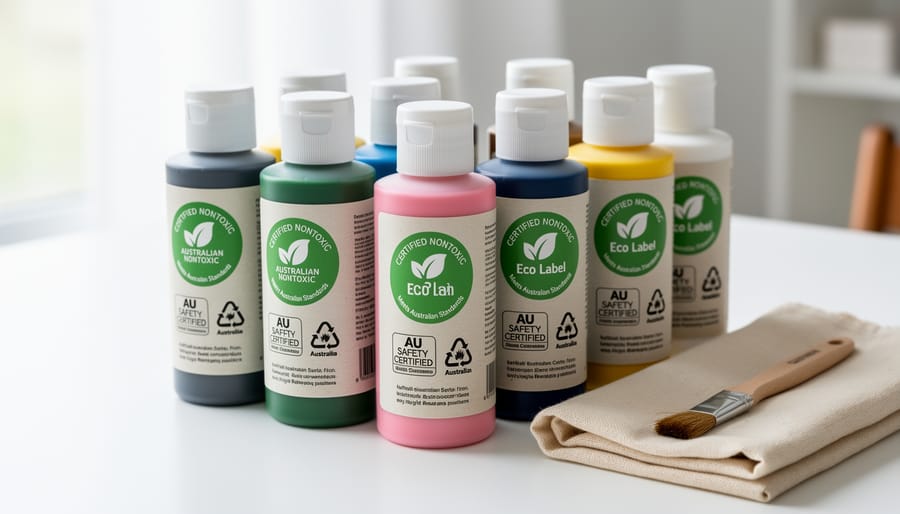
When shopping for nontoxic fabric paint in Australia, look for products certified by internationally recognized standards like GOTS (Global Organic Textile Standard) or OEKO-TEX Standard 100, both available to Australian consumers. These certifications test for harmful substances and ensure manufacturing meets strict environmental criteria. The Australian Made certification, while excellent for supporting local businesses, doesn’t specifically verify nontoxic claims, so pair it with chemical safety certifications.
To navigate greenwashing concerns, verify claims by checking certification numbers on manufacturer websites. Trustworthy eco-labels include the EU Ecolabel and Nordic Swan, which assess entire product lifecycles including wastewater impact. Australian retailers increasingly stock certified brands, particularly through specialty eco-stores and online marketplaces focused on sustainable crafting.
Community tip: Connect with local sustainable craft groups on social media where members share verified nontoxic product recommendations specific to Australian availability. Many crafters test products and share certification details, creating a collective knowledge base that helps everyone make safer choices. Remember, genuine certifications require independent verification, so if a product claims to be nontoxic without displaying recognized certification marks, contact the manufacturer directly for transparent ingredient information before purchasing.
Natural Ingredients That Actually Work
The shift toward nontoxic fabric paint has sparked genuine innovation in natural ingredients, proving that safety and performance can absolutely go hand in hand. Australian makers and conscious crafters are discovering that plant-based solutions often outperform their chemical-laden counterparts.
At the heart of effective nontoxic fabric paints are plant-based binders like acacia gum, derived from Australian wattles, and modified cellulose from sustainably sourced wood pulp. These natural polymers help pigments adhere to fabric fibres just as effectively as synthetic acrylics, while remaining completely biodegradable. Melbourne-based manufacturer Derivan has pioneered formulations using these binders, creating paints that wash beautifully and maintain vibrant colour without releasing microplastics into our waterways.
Natural pigments have come remarkably far from the chalky, faded options of the past. Earth pigments like ochres, siennas, and umbers sourced from Australian soils provide rich, lasting colours. For brighter hues, pigments derived from vegetables, fruits, and minerals offer impressive lightfastness when properly heat-set. Turmeric creates stunning golds, beetroot produces deep magentas, and spirulina delivers brilliant blues. Several Australian companies now stabilise these pigments with plant-based fixatives, ensuring they survive multiple wash cycles.
The real game-changer is how these ingredients work together. Innovative formulations combine natural thickeners like guar gum or agar with plant oils that improve flow and flexibility. Some Australian producers add eucalyptus or tea tree extracts as natural preservatives, eliminating the need for harsh antimicrobials.
What makes this particularly exciting for our community is the transparency. Unlike conventional brands guarding proprietary formulas, many nontoxic producers openly share their ingredient lists, empowering consumers to make truly informed choices. This openness reflects the collaborative spirit driving Australia’s sustainable crafting movement forward.
Where to Find Nontoxic Fabric Paint in Australia
Australian Brands Leading the Way
Australian makers and parents are fortunate to have locally-produced nontoxic fabric paint options that don’t compromise on quality or environmental values. These homegrown brands understand our unique needs and are making waves in the sustainable crafting movement.
Leading the charge is Derivan, a family-owned Australian company operating since 1964. Their Matisse range includes fabric paints certified to strict international safety standards, free from heavy metals and formulated with water-based, low-VOC ingredients. What sets Derivan apart is their commitment to transparent ingredient disclosure and their ongoing investment in safer formulations right here in Sydney.
Educational Colours, another Australian manufacturer, has built its reputation on child-safe art supplies. Their fabric paints are specifically designed for school and home use, meeting Australian safety standards while remaining completely washable and nontoxic. This Melbourne-based company actively works with educators across the country to ensure their products support creative learning without health concerns.
Smaller Australian makers are also stepping up. Brands like Bonify Studio create plant-based fabric dyes and paints using Australian botanicals, turning sustainability into storytelling through colour. These artisan producers often share their knowledge through workshops, building community around safer crafting practices.
When choosing Australian brands, look for certifications like GECA (Good Environmental Choice Australia) or products meeting AS/NZS ISO 8124 safety standards. Supporting local manufacturers not only reduces transport emissions but strengthens our community of conscious creators who prioritise both artistic expression and environmental responsibility.
Budget-Friendly Options for Community Groups
Community groups across Australia are discovering that nontoxic fabric painting doesn’t have to strain tight budgets. Schools and community centers can access affordable options through several pathways designed specifically for educational and collective initiatives.
Start by exploring bulk purchasing cooperatives where multiple organizations pool orders to secure wholesale pricing on quality nontoxic paints. Groups like Reverse Garbage in Sydney and Brisbane, along with The Bower Reuse and Repair Centre, offer discounted art supplies including eco-friendly paints to registered community organizations and schools.
Many Australian councils run environmental education grants that support sustainable art programs. Contact your local council’s sustainability or community grants officer to inquire about funding for nontoxic art supplies. The federal government’s Sustainable Schools program has also funded numerous fabric painting workshops using safe, water-based paints.
For smaller budgets, consider DIY options using food-grade ingredients like flour, natural pigments, and vinegar as fixatives. These recipes work wonderfully for community projects and cost a fraction of commercial alternatives.
Planet Ark’s education team offers free resources connecting schools with suppliers who provide environmental education discounts. Additionally, reaching out directly to Australian nontoxic paint manufacturers often yields community pricing or donation programs for registered nonprofits. Building these relationships strengthens local sustainable networks while making creative expression accessible to everyone.
DIY Nontoxic Fabric Paint Recipes
The Basic Recipe Every Australian Maker Should Know
Creating your own nontoxic fabric paint at home is surprisingly simple and uses ingredients you can find at most Australian supermarkets or craft stores. The most reliable base recipe combines one cup of white PVA glue (look for low-VOC options at Bunnings or Officeworks) with half a cup of water and natural food colouring or earth pigments for tinting. For a thicker consistency perfect for screen printing, reduce the water slightly.
Australian makers have had excellent success sourcing natural pigments from suppliers like The Australian Pigment Company or even using beetroot powder and turmeric from Woolworths for vibrant, earth-friendly colours. The beauty of this recipe is its flexibility—you can adjust the ratio based on whether you’re painting t-shirts or canvas totes.
While this homemade paint won’t have the same longevity as commercial options without heat-setting, many crafters in our community report their creations lasting through multiple gentle washes when properly cured. The trade-off is knowing exactly what’s going onto your fabric and, eventually, into our waterways. This recipe works beautifully for kids’ craft projects, market stall samples, or testing design ideas before investing in larger quantities of commercial nontoxic paints.
Natural Pigments from Your Garden
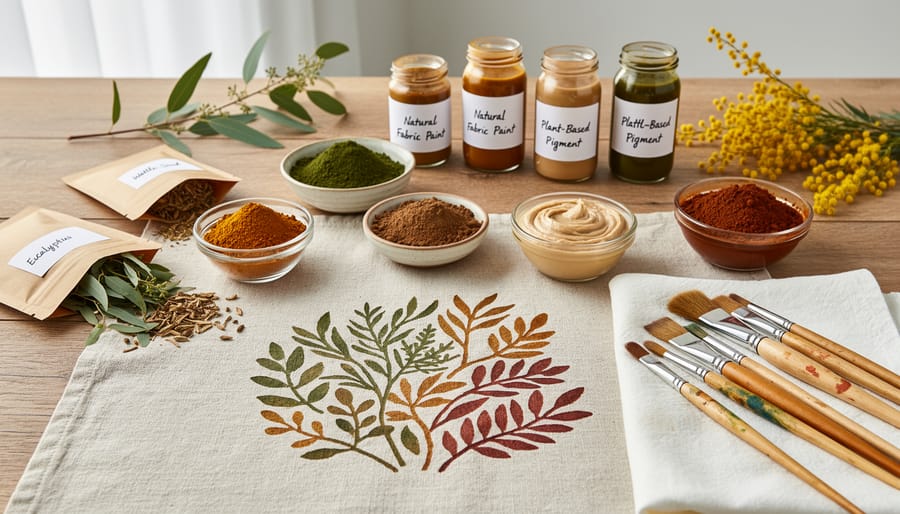
Your backyard and kitchen can become a vibrant colour workshop for creating natural fabric dyes. Australian gardens offer brilliant pigment sources: eucalyptus leaves produce rusty oranges and greys, while golden wattle flowers create sunny yellows. Nearby, native hibiscus blooms gift deep pinks and purples.
Don’t overlook kitchen scraps either. Onion skins yield rich golds, beetroot tops create earthy pinks, and avocado stones surprisingly produce dusty rose hues. Even your compost bin holds potential pigments waiting to be extracted.
To create these natural paints, simmer plant materials in water for 30-60 minutes, strain the liquid, then mix with a natural binder like gum arabic or cornstarch. This connects beautifully with sustainable gardening practices, transforming what might become waste into creative materials.
While natural pigments create softer, more earthy tones than commercial paints, they tell a story unique to your local environment. Community gardens across Australia are increasingly hosting natural dye workshops, sharing knowledge about native plants and their colour properties. This approach reduces packaging waste, chemical exposure, and strengthens connections between gardening, creativity, and environmental stewardship. The colours may fade over time, but that gentle impermanence reminds us of nature’s cycles.
Making Nontoxic Fabric Paint Work for Your Projects
Getting brilliant results with nontoxic fabric paint is absolutely achievable when you understand a few key techniques. Australian crafters and small business owners are discovering that eco-friendly options can match or even exceed the performance of conventional paints, while keeping our waterways safer.
The secret to durability lies in proper heat-setting. After your design dries completely (usually 24 hours), place a clean cloth over the painted area and iron for 3-5 minutes on the fabric’s highest safe setting. This process bonds the paint molecules to the fibres, creating washfast designs that last through countless laundry cycles. For items you can’t iron, like shoes or thick canvas bags, some Australian makers have success using a hairdryer on high heat for 10-15 minutes, though results vary.
Different fabrics respond uniquely to nontoxic paints. Natural fibres like cotton, linen, and hemp absorb plant-based and water-based paints beautifully, creating soft, flexible designs. For synthetic blends, apply thinner layers and allow longer drying time between coats. Many Melbourne-based textile artists recommend testing on fabric scraps first, especially when working with commercial projects.
Application technique matters enormously. Use quality brushes or sponges, and build coverage gradually with thin layers rather than one thick coat. This prevents cracking and maintains the fabric’s natural drape. When stencilling, use minimal paint on a nearly dry brush to avoid bleeding under edges.
For washing, turn garments inside out and use cold water for the first few washes. While properly heat-set nontoxic paints withstand regular washing, gentle care extends their life. Community groups across Sydney and Brisbane report excellent longevity when following these methods, proving that choosing safer options doesn’t mean compromising on quality. Your creative projects can be both beautiful and kind to our environment.
Supporting Australia’s Sustainable Textile Movement
When you choose nontoxic fabric paint, you’re joining a vibrant movement of Australians reimagining how we create, consume, and care for textiles. Your decision ripples outward, supporting local businesses, reducing chemical pollution in our waterways, and inspiring others in your community to explore safer alternatives.
Across Australia, innovative artists and small businesses are leading the charge toward nontoxic practices. Melbourne-based textile studios have begun hosting natural dye workshops, teaching participants to create stunning colours from eucalyptus leaves, wattle bark, and food scraps that would otherwise go to waste. In Brisbane, several screen-printing collectives exclusively use water-based, low-VOC inks, proving that professional-quality results don’t require harmful chemicals. These pioneers demonstrate that sustainable creativity isn’t about compromise—it’s about innovation.
Choosing nontoxic paints directly supports Australia’s circular economy. When garments painted with nontoxic materials reach the end of their life, they can be composted or recycled without contaminating soil or water systems. This stands in stark contrast to conventional fabric paints, which can release heavy metals and persistent chemicals during disposal. By embracing sustainable living practices in your creative work, you’re helping build systems where resources stay in use longer and waste becomes a design flaw of the past.
Community workshops and events provide wonderful opportunities to connect with like-minded Australians. Libraries, neighbourhood houses, and environmental centres regularly host fabric painting sessions focused on nontoxic methods. The Sustainable Living Festival in Melbourne, Earth Day events across Sydney, and countless local maker markets feature demonstrations and discussions about safer textile practices.
Your choice matters. Every nontoxic painted cushion cover, every naturally dyed tote bag, every workshop attended sends a clear message: Australians want beauty without compromise, creativity without contamination.
Making the switch to nontoxic fabric paint is genuinely easier than you might think, and the rewards extend far beyond your individual projects. When Australian makers choose safer, sustainable alternatives, we collectively protect our waterways, reduce chemical pollution, and support local businesses committed to environmental innovation. Every jar of nontoxic paint represents a conscious choice that ripples through our communities.
The beauty of this transition lies in its simplicity. Whether you’re painting school banners in Brisbane, creating custom textiles in Melbourne, or running a small craft business in regional areas, choosing nontoxic options doesn’t mean compromising on quality or creativity. These sustainable purchasing decisions demonstrate that environmental responsibility and artistic expression work hand in hand.
We encourage you to share what you’ve learned with fellow crafters, educators, and makers in your circles. Host a workshop, mention it at your local craft group, or simply chat about it over the fence. When we share knowledge, we multiply impact.
Remember, transformative environmental protection doesn’t always require grand gestures. Sometimes it starts with something as simple as reading a paint label, asking better questions, or choosing Australian-made nontoxic supplies. Your small change today contributes to the healthier, more sustainable Australia we’re all working toward together.