
Every morning across Australian suburbs, automatic sprinklers drench thirsty lawns under the midday sun, half the water evaporating before reaching the soil. Petrol-powered mowers roar to life, maintaining perfectly manicured grass that demands constant feeding with synthetic fertilizers that leach into our waterways. Garden beds burst with exotic species requiring extraordinary care while native birds search elsewhere for habitat and food.
This is unsustainable landscaping, and it’s costing us far more than our weekend hours and water bills.
Traditional landscaping practices consume approximately 40% of household water in Australian cities, contribute significantly to urban heat islands, and strip local ecosystems of the biodiversity they desperately need. The combination of resource-intensive maintenance, chemical dependence, and ecological disconnection creates landscapes that work against both our environment and our quality of life.
Yet most Australian gardeners inherited these practices without questioning them. The verdant lawn seemed synonymous with home ownership. The neat hedge rows appeared simply proper. The colorful exotic blooms felt more impressive than humble native flowers.
Understanding what makes landscaping unsustainable isn’t about assigning blame. It’s about recognizing that we can make different choices, ones that transform our gardens from environmental liabilities into thriving, low-maintenance havens that support local wildlife, conserve precious water, and strengthen our connection to Australia’s unique landscape. The shift begins with identifying exactly which practices need rethinking.
What Makes a Landscape Unsustainable?
Unsustainable landscaping might sound technical, but chances are you’ve seen it in action across Australian neighbourhoods. Picture those perfectly manicured lawns that stay emerald green even during summer water restrictions, or gardens where nothing seems to grow without weekly trips to the hardware store for fertilisers and pesticides. These are telltale signs of landscapes working against nature rather than with it.
At its core, unsustainable landscaping refers to gardening and land management practices that deplete natural resources, harm local ecosystems, and require constant inputs to maintain. In the Australian context, this becomes particularly problematic given our unique climate challenges and precious water resources.
Excessive water consumption sits at the top of the list. Traditional European-style lawns and exotic plants that evolved in wetter climates demand irrigation levels that simply don’t match our rainfall patterns. That thirsty kikuyu lawn might look appealing, but it’s guzzling water that many Australian regions can’t spare, especially as droughts become more frequent.
Chemical dependency is another red flag. Gardens requiring regular applications of synthetic fertilisers, herbicides, and pesticides create a cycle of dependence while contaminating our waterways and soil. These chemicals often run off during heavy rains, eventually reaching the Great Barrier Reef and other sensitive ecosystems.
Poor soil health often goes unnoticed until plants struggle. Compacted, lifeless soil stripped of organic matter and beneficial microorganisms needs constant feeding to support plant life. Healthy Australian soils should teem with life, not require artificial life support.
Loss of biodiversity transforms our gardens into ecological deserts. When neighbourhoods replace native vegetation with monoculture lawns and exotic ornamentals, local birds, insects, and small animals lose critical habitat. This disconnection from our natural heritage means fewer honeyeaters, blue wrens, and native bees visiting our yards.
Climate inappropriateness ties these issues together. Planting species suited to England or California in Perth, Melbourne, or Brisbane means fighting against local conditions rather than embracing them. The result? Higher maintenance, greater resource consumption, and landscapes that struggle rather than thrive.
The True Cost of Thirsty Lawns and Exotic Plants
The Water Crisis Hiding in Plain Sight
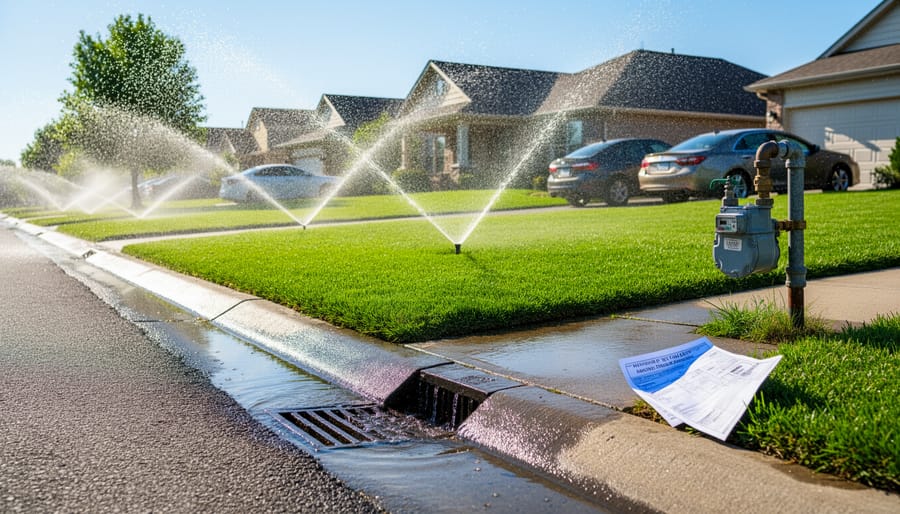
Every time you turn on the sprinkler to keep that emerald-green lawn vibrant, you’re part of a story that’s unfolding across Australia. The average Australian household uses about 100,000 litres of water outdoors each year, with lawns consuming up to 40% of residential water in some cities. That’s roughly 40,000 litres annually just to maintain what is essentially a monoculture of thirsty exotic grass species.
Consider this: a typical 200-square-metre lawn in Perth requires approximately 200,000 litres of water per year to stay green through summer. In Melbourne, popular exotic ornamentals like hydrangeas and azaleas can demand up to 10 litres per square metre weekly during peak periods. These figures become particularly troubling when we examine Australia’s water scarcity issues, which are intensifying with each drought cycle.
Brisbane experienced severe water restrictions during the Millennium Drought, when dam levels plummeted to below 20%. Adelaide relies heavily on the Murray-Darling Basin system, already stretched beyond sustainable limits. Yet during these same periods, many gardens continued demanding enormous water allocations to maintain landscapes designed for England’s climate, not ours.
The municipal strain becomes clearer during summer peaks. Sydney Water reports that outdoor water use can jump to 60% of total household consumption during hot months, placing enormous pressure on infrastructure and reservoirs. When thousands of households simultaneously water non-native lawns and exotic plants requiring daily irrigation, treatment plants work overtime and water storages deplete faster.
This isn’t about blaming gardeners who simply want attractive outdoor spaces. Rather, it’s recognising that our conventional landscaping choices, inherited from cooler, wetter climates, simply don’t match Australia’s reality. The good news? Understanding this mismatch is the first step toward creating gardens that thrive without draining our precious water resources.
When Your Plant Choices Work Against Local Ecosystems
When you choose plants without considering your local environment, you’re inadvertently creating a landscape that demands constant battle rather than working with nature. It’s a pattern playing out across Australian gardens, where well-meaning plant choices often create cascading problems for our unique ecosystems.
Non-native invasive species have become one of our continent’s most pressing environmental challenges. Take lantana, originally introduced as a garden ornamental, which now smothers over 4 million hectares of Queensland and northern New South Wales, choking out native vegetation and providing poor habitat for wildlife. Similarly, fountain grass might look attractive swaying in the breeze, but it’s transformed vast areas of northern Australia, increasing fire intensity and frequency while displacing the native grasses our wildlife depends upon.
Traditional monoculture lawns present another hidden cost. These green carpets of introduced species like couch or kikuyu offer virtually nothing to native birds, insects, or small mammals searching for food and shelter. They’re essentially ecological deserts requiring constant mowing, watering, and chemical treatments just to survive in conditions they weren’t designed for.
The disconnect deepens when we select plants based purely on aesthetics rather than ecological fit. A rainforest species struggling in Adelaide’s dry climate or a desert plant drowning in Melbourne’s winter rains creates a cycle of intervention, chemical dependency, and resource waste.
The encouraging news? Shifting toward native plant selections that actually belong in your region breaks this cycle, creating landscapes that support local wildlife while practically maintaining themselves.
Chemical Dependency: The Fertiliser and Pesticide Trap
Many Australian gardens have unknowingly become trapped in a cycle of chemical dependency, where synthetic fertilisers and pesticides seem like the only way to maintain that picture-perfect lawn or thriving garden bed. But this addiction comes at a significant cost to our environment, communities, and the unique ecosystems we’re so lucky to call home.
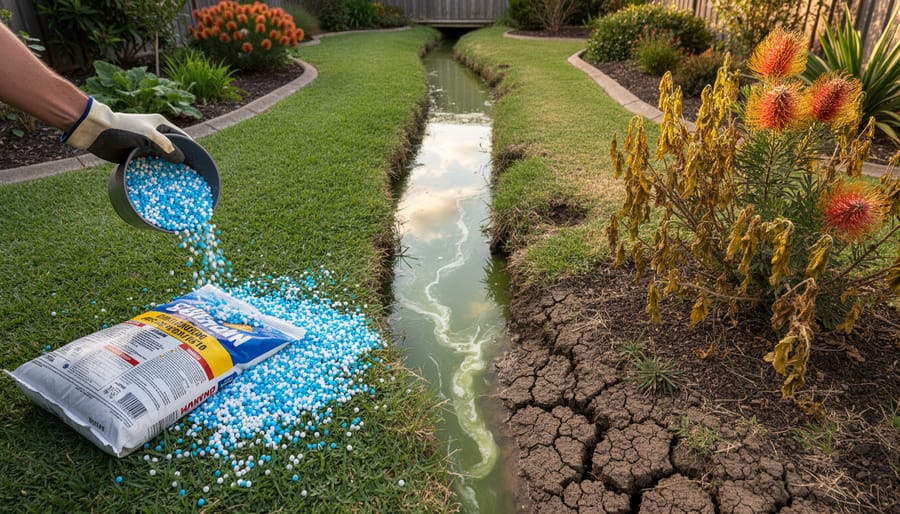
When we regularly apply chemical fertilisers to our landscapes, we’re essentially creating dependent plants with shallow root systems that can’t fend for themselves. These synthetic products might deliver quick greening results, but they bypass the natural processes that build resilient, living soil. The real trouble starts when rain arrives. Those excess nutrients don’t stay put—they wash into our stormwater systems, eventually finding their way into creeks, rivers, and coastal waters.
For Australians, this issue hits particularly close to home. Agricultural and urban runoff containing nitrogen and phosphorus is a major contributor to the declining health of the Great Barrier Reef. These nutrients fuel algal blooms that smother coral and create dead zones where marine life struggles to survive. While large-scale agriculture bears significant responsibility, residential gardens collectively contribute to this problem across Queensland and beyond.
The impact of pesticides extends even further. Australia’s native bees, butterflies, and other beneficial insects face serious threats from common garden chemicals. These creatures are essential pollinators for our food crops and native plants, yet a single application of certain pesticides can devastate local populations. Birds, lizards, and frogs that feed on insects also suffer, either from direct poisoning or loss of their food sources.
Below ground, the situation is equally concerning. Chemical inputs accelerate soil degradation, killing the beneficial microorganisms, earthworms, and fungi that create healthy, living soil. Without these tiny workers, soil becomes compacted and lifeless, requiring even more chemical intervention to produce results—a vicious cycle that’s tough to break.
There’s also the human health dimension. Children and pets playing on chemically treated lawns face exposure to substances linked with various health concerns. Many councils and schools across Australia are now transitioning to organic land care practices, recognising that protecting community wellbeing starts with the ground beneath our feet.
The encouraging news? Breaking free from chemical dependency is entirely possible by improving soil health through organic matter, choosing resilient native plants, and embracing natural pest management. Your garden can thrive without compromising waterways or wildlife.
Hard Landscaping Problems: Concrete, Pavers, and Runoff
Drive through any Australian suburb and you’ll notice something striking: vast expanses of concrete driveways, paved patios, and brick courtyards dominating front and back yards. While these hard surfaces might seem practical and low-maintenance, they’re creating environmental challenges that ripple far beyond individual properties.
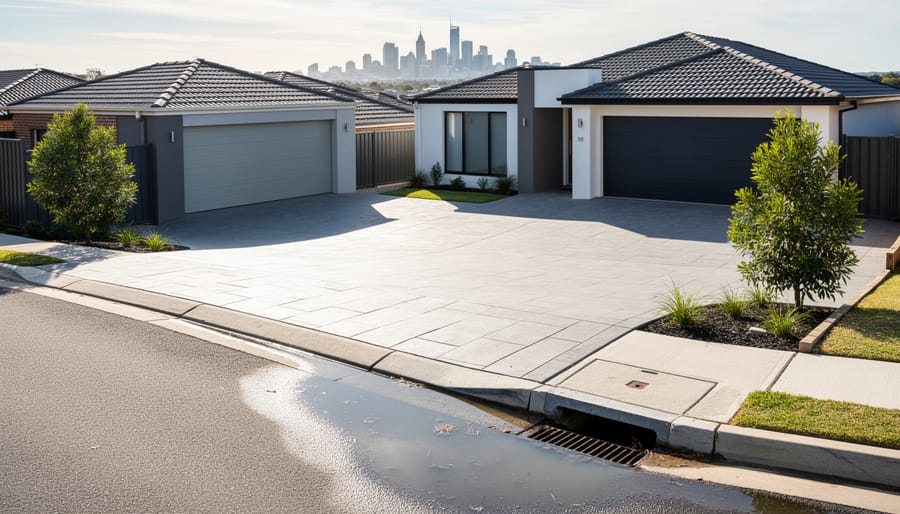
When rain falls on concrete and pavers, it can’t soak into the ground naturally. Instead, it rushes across these impermeable surfaces, picking up pollutants like oil, fertilisers, and debris before flooding into stormwater drains. This isn’t just a minor inconvenience. Cities like Brisbane and Sydney have experienced increasingly severe flooding events, with urban development and excessive hard landscaping reducing the ground’s natural capacity to absorb water. During heavy downpours, our drainage systems become overwhelmed, contributing to flash flooding in streets and homes.
The problem extends beyond flooding. Those sun-baked concrete surfaces absorb and radiate heat, intensifying the urban heat island effect that makes Australian summers even more unbearable. Studies show that suburbs with extensive paving can be several degrees hotter than areas with more vegetation and permeable surfaces. This means higher air conditioning costs, increased energy consumption, and greater strain on our electricity grid during peak demand.
Many Australian councils are now recognising these issues. Melbourne Water, for instance, encourages residents to reduce impervious surfaces on their properties, while some local governments offer rebates for installing permeable paving or rain gardens that help manage stormwater naturally.
The good news is that transforming your landscape doesn’t mean abandoning hardscaping entirely. Permeable pavers, gravel paths with planted borders, and strategically placed gardens can provide the functionality you need while allowing water to filter back into the soil. Even replacing a portion of your concrete with garden beds creates positive change. Small modifications across thousands of properties collectively make a significant difference in reducing runoff, cooling our suburbs, and protecting our waterways from pollution.
Recognising Unsustainable Practices in Your Own Garden
The Warning Signs Checklist
Your landscape is trying to tell you something. The question is, are you listening? Recognising the warning signs of unsustainable landscaping is your first step toward creating a thriving outdoor space that works with nature, not against it.
Start by walking through your garden with fresh eyes. Those constantly brown patches that demand reseeding every season? They’re a clear signal your lawn species isn’t suited to your soil or climate conditions. Many Australian gardens struggle with exotic grass varieties that simply weren’t designed for our conditions.
Next, consider your watering routine. If you’re dragging out the hose or running sprinklers several times a week just to keep plants alive, that’s a red flag. Sustainable landscapes shouldn’t require constant irrigation once established.
Take note of pest problems too. Reaching for chemical sprays on a regular basis indicates your garden ecosystem is out of balance. In healthy landscapes, beneficial insects and birds handle most pest control naturally, which brings us to another vital sign: silence. If your garden lacks birdsong and you rarely spot bees, butterflies, or ladybirds, something’s missing.
Check your soil by pushing a screwdriver into the ground. If it’s rock-hard or constantly waterlogged, your soil health needs attention. Healthy soil should be friable and well-draining.
Finally, ask yourself honestly: how many hours are you spending on maintenance? If weekend after weekend disappears into mowing, edging, pruning, and treating problems, your landscape design is working against you rather than supporting your lifestyle and the environment.
Calculating Your Garden’s Environmental Footprint
Understanding your garden’s environmental impact doesn’t require a science degree—just a bit of honest observation. Let’s walk through a simple assessment together.
Start with water. Check your last quarter’s water bill and note your usage during warmer months. If you’re running sprinklers daily or your lawn needs constant watering to stay green through an Australian summer, that’s your first clue. A typical suburban lawn can consume up to 10,000 litres weekly during peak periods.
Next, take stock of what’s in your garden shed. Count the bottles of synthetic fertilisers, pesticides, and herbicides you’ve purchased in the past year. Each application doesn’t just disappear—it filters into our soil and waterways.
Finally, consider your green waste. How often do you fill the bin with grass clippings, pruned branches, and fallen leaves? If these materials are heading to landfill rather than becoming compost, you’re missing an opportunity to close the loop.
This isn’t about feeling guilty—it’s about gaining awareness. Many Aussie gardeners inherited these practices without questioning them. Now you’re equipped with information to make different choices, and that’s something worth celebrating.
Making the Shift: From Unsustainable to Sustainable
Transforming your landscape from unsustainable to sustainable doesn’t have to happen overnight, and you’re certainly not alone in this journey. Right across Australia, thousands of gardeners, homeowners and businesses are making this shift, one thoughtful change at a time.
Start by identifying your easiest wins. Perhaps it’s replacing just one section of thirsty lawn with native groundcovers, or swapping chemical fertilisers for homemade compost. These small steps build momentum and confidence. Many Australians begin by focusing on water reduction, installing a simple rainwater tank or upgrading to drip irrigation in one garden bed. Each change teaches you something valuable about working with your local environment rather than against it.
The beauty of transitioning to sustainable garden practices is the incredible support available. Local councils across Australia offer free or subsidised native plant giveaways, composting workshops, and garden rebates. Community gardens provide hands-on learning opportunities where experienced gardeners generously share their knowledge. Online groups dedicated to Australian native plants and permaculture connect you with people facing similar challenges in your climate zone.
Consider creating a three-year transition plan. Year one might focus on reducing water use and chemical inputs. Year two could tackle biodiversity by introducing native species that support local wildlife. By year three, you might establish food production areas or expand habitat corridors. This gradual approach prevents overwhelm and allows your garden ecosystem to adapt naturally.
Remember, perfection isn’t the goal. Even converting half your landscape creates meaningful environmental benefits. Your neighbours will notice the thriving birdlife, the reduced maintenance, and yes, the lower water bills. Before long, you might inspire a ripple effect throughout your street. Change starts with one willing gardener, and that gardener is you.
Recognising unsustainable landscaping practices in your garden is genuinely the first step toward creating meaningful environmental change. If you’ve identified some of these issues in your own outdoor space, you’re already ahead of the curve. Rather than feeling overwhelmed, see this as an opportunity to join a growing community of Australians reimagining what our gardens can be.
Across our sunburnt country, from suburban backyards to commercial properties, people are discovering that sustainable landscaping isn’t about sacrifice. It’s about working with our unique climate, supporting native ecosystems, and creating resilient spaces that thrive with less intervention. The water you’ll save, the wildlife you’ll attract, and the reduced maintenance you’ll enjoy are just the beginning.
Whether you’re planning a complete garden transformation or starting with small changes like reducing lawn areas or replacing exotic plants with native alternatives, every step matters. Your garden can become part of the solution, contributing to healthier waterways, supporting pollinators, and building climate resilience in your local area.
Ready to transform your landscape? Start exploring sustainable practices today and discover how rewarding environmental stewardship can be.