
Seal gaps around windows and doors with weatherstripping or gap filler foam to prevent up to 25% of heated or cooled air from escaping – a common issue in mobile homes where pre-fabricated construction often creates more air leaks than brick-and-mortar houses. Install reflective insulation underneath your mobile home’s floor, targeting the area where Australian mobile homes lose most of their energy, and you’ll notice immediate temperature improvements while cutting cooling and heating costs by hundreds of dollars annually.
Replace ageing single-pane windows with double-glazed alternatives or apply window insulation film as an affordable interim solution, particularly effective during Australia’s extreme summer heat when mobile home metal frames conduct outdoor temperatures directly inside. Add insulation batts to your roof cavity, aiming for at least R3.5 rating in temperate zones or R6.0 in colder regions, dramatically reducing the greenhouse effect that turns mobile homes into ovens during summer.
Mobile home owners across Australia are discovering that strategic energy upgrades don’t require massive renovations. Your mobile home’s unique construction – lightweight materials, metal frames, and raised foundations – creates specific thermal challenges that differ from traditional housing, but these same characteristics make improvements faster and more cost-effective to implement.
Understanding where your energy dollars disappear matters. Mobile homes typically consume 30-40% more energy per square metre than conventional homes, yet most owners can slash this figure through targeted improvements. Australian communities from coastal Queensland to inland Victoria are proving that mobile home living and energy efficiency aren’t mutually exclusive, with many residents achieving remarkable comfort improvements while reducing bills and environmental impact simultaneously.
Why Mobile Homes Lose Energy Faster Than Traditional Houses
If you’ve ever noticed your mobile home feeling like an icebox in winter or an oven in summer, you’re not alone. Across Australia, mobile home residents face a common challenge: these homes simply weren’t designed with energy efficiency as a priority. Understanding why can help you tackle the problem effectively.
The core issue lies in the construction itself. Unlike traditional brick or weatherboard homes with substantial wall cavities and insulation, mobile homes typically feature thin walls measuring just 50-75mm thick. This minimal thickness leaves little room for insulation, meaning there’s barely a buffer between you and the outside temperature. Whether you’re sweltering through a Queensland summer or shivering during a Victorian winter, that heat (or cold) transfers rapidly through these slim barriers.
Another significant culprit is thermal bridging, a phenomenon where metal frames in mobile home construction create direct pathways for heat to escape. Think of it like a highway for energy loss. Metal conducts temperature extremely efficiently, so when those steel or aluminium frames run from inside to outside your home, they’re essentially draining your heating and cooling efforts straight into the atmosphere. This is particularly problematic in Australia’s diverse climate zones, where temperature extremes put constant pressure on your home’s thermal envelope.
Single-pane windows compound the problem further. While most modern Australian homes now feature double glazing, many mobile homes still rely on basic single-pane glass that offers minimal resistance to heat transfer. On a scorching 35-degree day, these windows radiate heat directly into your living space.
Perhaps the most overlooked issue is what’s happening beneath your feet. Mobile homes are elevated on piers or blocks, creating an underfloor space that’s often completely exposed to wind and weather. Without proper skirting and underfloor insulation, this gap becomes a massive source of energy loss, with cold air flowing freely underneath and sucking warmth straight out through your floor.
The good news? Every one of these vulnerabilities has practical, affordable solutions that Australian mobile home owners are successfully implementing in communities nationwide.
The Biggest Energy Culprits in Your Mobile Home
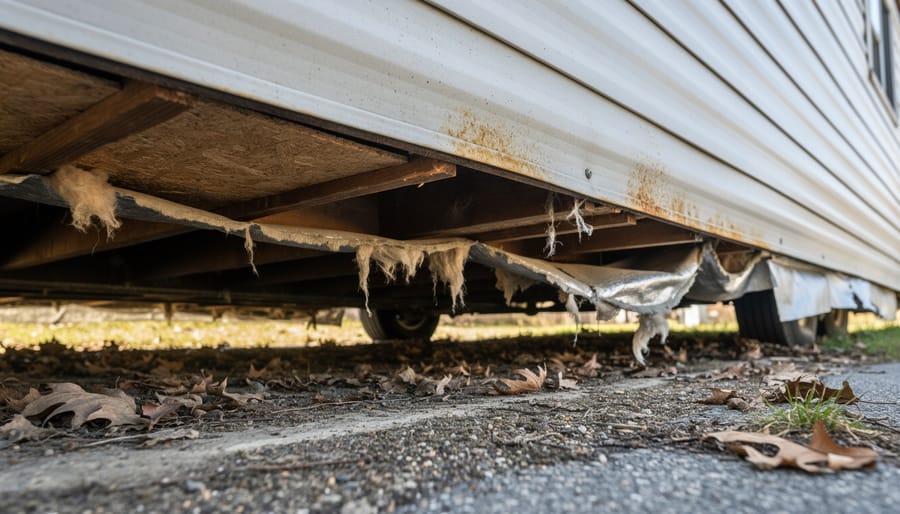
Underfloor Air Leaks and Exposed Underbelly
The space beneath your mobile home might be out of sight, but it shouldn’t be out of mind when it comes to energy efficiency. Many Australian mobile home owners don’t realise that the exposed underbelly is a major culprit for heat loss in winter and heat gain during our scorching summers.
Unlike traditional homes with concrete slab foundations, mobile homes sit elevated with air flowing beneath the floor. Without proper sealing and insulation, this creates what’s essentially an open window to the elements. In cooler regions like Tasmania or the highlands, cold air seeps up through gaps around plumbing and electrical penetrations, while in Queensland’s heat, hot air radiates upward, making your cooling system work overtime.
The good news? Addressing this issue delivers remarkable results. Start by inspecting your underbelly for tears, gaps, or missing insulation. Many mobile homes across Australian caravan parks have degraded belly wrap that needs replacement. Consider installing a proper vapour barrier and ensuring your floor insulation has adequate R-value for your climate zone. Some communities have organised group purchases of materials, making repairs more affordable.
Sealing these leaks typically costs between $500-$2,000 depending on your home’s size, but residents often report 20-30% reductions in heating and cooling costs. That’s money back in your pocket while keeping your home comfortable year-round.
Windows and Doors: Your Temperature Control Weak Points
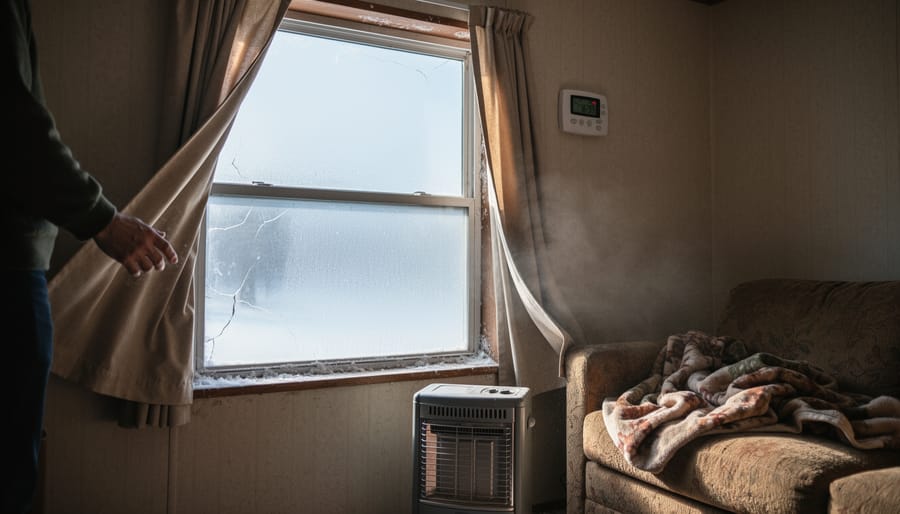
If you’re feeling the chill in winter or sweltering through summer in your mobile home, your windows and doors are likely the culprits. These are the weak spots where your hard-earned heating and cooling dollars literally escape.
Many older mobile homes across Australia still have single-pane windows, which offer minimal insulation against our temperature extremes. Think of them as having holes in your thermal envelope—they simply can’t keep the outside weather where it belongs. You’ll notice this especially on scorching days when the afternoon sun beats through, or during those unexpectedly cold nights when draughts creep in around the frames.
Doors present similar challenges. Gaps beneath exterior doors and worn weather stripping create pathways for air leakage, forcing your heating and cooling systems to work overtime. That whistling sound you hear on windy days? That’s energy wastage you can actually hear.
The encouraging news is that these problems are entirely fixable without breaking the bank. Simple upgrades like replacing perished weather stripping, installing door sweeps, and adding window film can make an immediate difference. For those ready to invest more substantially, double-glazed window retrofits are becoming increasingly accessible for Australian mobile home owners, delivering long-term comfort and savings while reducing your environmental footprint.
Roof and Ceiling Insulation Gaps
Heat naturally rises, and in mobile homes across Australia, this simple principle often translates into significant energy loss through your roof and ceiling. Unlike traditional brick homes, many mobile homes feature thin metal roofing that conducts heat readily, turning your ceiling space into either a heat trap during our scorching summers or an escape route for warmth during cooler months.
The problem is particularly acute in older mobile homes where ceiling insulation may have compressed, shifted, or deteriorated over time. Many were originally fitted with minimal insulation—sometimes just 50-75mm of batts—well below current recommended standards. When you consider that up to 35% of your home’s heating and cooling can escape through an inadequately insulated roof, it’s clear why addressing this gap is crucial for both comfort and reducing energy bills.
The good news? Upgrading ceiling insulation is one of the most cost-effective improvements you can make. Australian mobile home owners in communities from Ballarat to Brisbane have seen dramatic reductions in energy consumption after boosting their ceiling insulation to R4.0 or higher. The investment typically pays for itself within a few years through lower electricity costs, and you’ll notice the difference immediately—cooler summers and warmer winters without constantly running your air conditioner or heater.
Affordable Insulation Solutions That Actually Work
Underfloor Insulation: Wrap Your Home’s Foundation
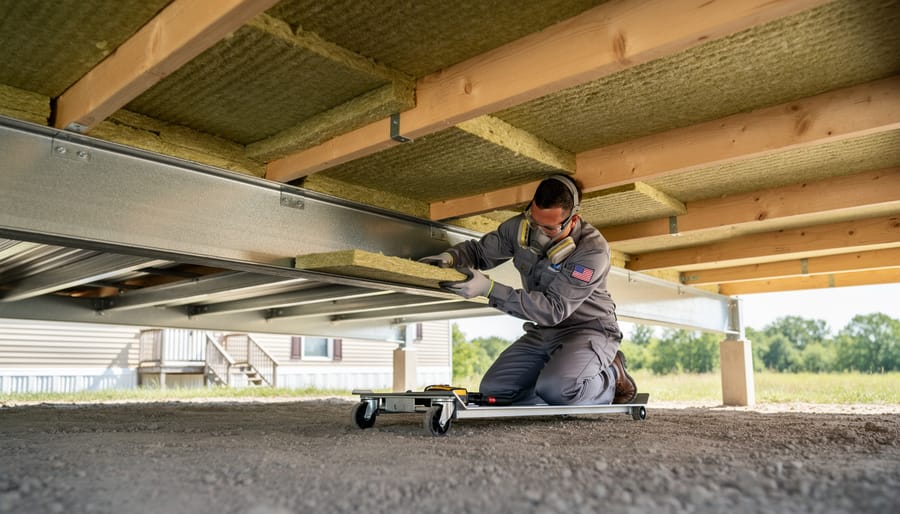
One of the most effective upgrades for mobile homes is underfloor insulation, often called belly wrap. Think of it as giving your home a warm jumper from underneath. Many Australian mobile homes were built with minimal or deteriorating floor insulation, creating cold floors and letting precious heat escape straight into the ground.
The belly wrap system involves installing insulation batts or reflective foil insulation between the floor joists, then wrapping the underside with a protective membrane. For Australian conditions, polyester batts rated R1.5 to R2.5 work brilliantly, paired with reinforced woven fabric as the outer wrap. This combination handles our temperature swings while protecting against moisture and pests.
Material costs typically range from 1,800 to 3,500 dollars for an average mobile home, depending on insulation quality and home size. You’ll find suitable materials at Bunnings, Mitre 10, or specialist insulation suppliers across most regional centres.
Can you DIY this project? It depends on your comfort level working in tight spaces. The job involves crawling beneath your home, so decent ground clearance makes it manageable for handy homeowners. However, many Aussie mobile home owners find it worthwhile hiring local installers who complete the job in one or two days. They understand the unique challenges of mobile home construction and ensure proper ventilation is maintained.
The payoff is immediate. Residents report warmer winter floors, reduced heating bills by 15 to 30 percent, and noticeably improved comfort. Several Victorian and Tasmanian councils even offer rebates for mobile home insulation upgrades, so check your local sustainability programs before starting.
Wall and Ceiling Insulation Retrofits
If your mobile home feels like a sauna in summer or a fridge in winter, you’re not alone. Many Aussie mobile home owners face these challenges, but the good news is that effective insulation retrofits don’t require demolishing walls.
Blown-in insulation offers one of the most practical solutions for mobile homes. Through small access holes drilled into wall cavities, professionals can inject cellulose or foam insulation that fills gaps and voids. This method works brilliantly without removing interior panelling or exterior cladding. Many mobile home owners across Queensland and New South Wales have reported energy bill reductions of 20-30% after this upgrade.
Reflective foil insulation presents another mobile-home-friendly option, particularly suited to our harsh Australian climate. Installing reflective foil barriers in roof cavities or beneath flooring reflects radiant heat away during scorching summers and retains warmth during winter. This lightweight solution won’t stress your mobile home’s structure and can be installed with minimal disruption.
For Australian climate zones, aim for these R-values: walls should reach R1.5 to R2.5 minimum, whilst ceilings benefit from R3.5 to R5.0, depending on whether you’re in tropical Darwin or cooler Tasmania. These targets balance comfort with cost-effectiveness for mobile home construction.
Consider combining methods for maximum impact. One Victorian mobile home community recently organised a bulk-buy arrangement for insulation upgrades, reducing individual costs significantly. Check whether your state offers energy efficiency rebates or low-interest green loans to make these improvements more accessible. Even modest insulation improvements create noticeable comfort differences whilst reducing your environmental footprint.
Skirting Your Mobile Home for Year-Round Comfort
Proper skirting creates a crucial thermal barrier around your mobile home’s base, preventing cold winds from circulating underneath and stealing your warmth during winter months. Without adequate skirting, you’re essentially heating the ground beneath your home rather than your living space – a costly mistake many Aussie mobile home owners unknowingly make.
Australian suppliers offer several skirting materials suited to our climate. Vinyl skirting remains popular for its durability and low maintenance, while corrugated metal provides excellent wind resistance in exposed locations. For the environmentally conscious, recycled composite materials are increasingly available, combining sustainability with performance. Some communities in regional Victoria and New South Wales have successfully organized group purchases of skirting materials, reducing costs while building stronger neighbourhood connections.
When installing skirting, ensure you include ventilation panels to prevent moisture buildup – essential in our humid coastal regions. This simple upgrade typically pays for itself within two years through reduced heating and cooling costs, whilst dramatically improving your home’s comfort year-round.
Sealing Air Leaks: The Fastest Return on Investment
Where Air Leaks Hide in Mobile Homes
Air leaks are the silent energy thieves in Australian mobile homes, and knowing where they hide is your first step toward a more comfortable, efficient home. The good news? These culprits follow predictable patterns, making them easier to track down.
Start your detective work around window frames, where the marriage between frame and wall often leaves gaps that let conditioned air escape. Door thresholds are equally problematic, especially in older mobile homes where settling has created uneven surfaces. Run your hand along these areas on a windy day and you’ll likely feel the telltale draft.
Don’t overlook the less obvious spots. Plumbing penetrations under sinks and behind toilets frequently lack proper sealing, while electrical outlets on external walls can act as tiny wind tunnels. Vent openings for dryers, rangehoods, and bathroom exhausts deserve special attention, as they’re designed to let air through but often lack proper dampers.
Check where your mobile home’s skirting meets the chassis, along ceiling-wall junctions, and around any add-ons like annexes or carports. For a comprehensive understanding of your home’s unique leak patterns, consider scheduling a professional energy assessment to identify issues you might miss.
The Right Materials for Mobile Home Sealing
Choosing the right sealing materials is crucial for mobile homes facing Australia’s temperature swings, from scorching summers in the Northern Territory to frosty Tasmanian winters. The wrong products can crack, shrink, or fail within months, wasting your money and effort.
For exterior gaps and joins, select exterior-grade silicone caulk specifically rated for Australian conditions. Look for products that withstand temperatures from -40°C to 180°C and resist UV degradation. These typically cost between $8-15 per tube, but they’ll outlast cheaper alternatives by years. Brands like Selleys and Sikaflex offer reliable options widely available at Bunnings and Mitre 10.
Weather stripping deserves careful attention too. Self-adhesive foam strips work well for windows and doors, but choose medium to high-density versions (at least 20kg per cubic metre) that won’t compress permanently in our heat. EPDM rubber weather strips handle extreme temperatures better than PVC alternatives and maintain their seal for longer periods.
For larger gaps around plumbing and electrical penetrations, expanding foam designed for mobile applications is essential. Standard foam can over-expand and warp lightweight mobile home panels. Instead, opt for low-expansion foam products that fill spaces without creating pressure damage. Many Australian mobile home communities report success with products like Selleys No More Gaps Expandable Foam.
Before purchasing, check if your local council or community housing group runs bulk-buying programs. Some regional communities have organised collective purchases, reducing costs by up to 30 percent while ensuring everyone accesses quality materials suited to local conditions.
Window and Door Upgrades for Maximum Efficiency
Budget-Friendly Window Treatments
You don’t need to break the bank to keep your mobile home comfortable year-round. Many Australian mobile home owners are discovering simple, affordable window treatments that dramatically reduce energy costs without the expense of full window replacement.
Thermal curtains are your first line of defence, creating an insulating barrier that keeps summer heat out and winter warmth in. Look for curtains with thermal backing or foam-lined options available at most Australian homewares stores. The trick is ensuring they fit snugly to your window frames—even small gaps reduce their effectiveness.
Window film offers another budget-conscious solution that’s perfect for DIY installation. Reflective films can reject up to 80% of solar heat during scorching Australian summers, while low-emissivity films help retain warmth during cooler months. Many hardware stores across Australia stock affordable options starting around $15 per window.
For those particularly drafty single-pane windows common in older mobile homes, consider secondary glazing kits. These create a second layer of protection using clear acrylic sheets or magnetic seals. While slightly more involved than curtains or film, they’re still considerably cheaper than replacement windows and can reduce heat loss by up to 50%. Your local community hardware store often stocks these kits, and staff can guide you through the installation process.
When to Replace Windows and Doors
Knowing when to upgrade your mobile home’s windows and doors can feel overwhelming, but there’s a straightforward way to assess if it’s time. Start by checking for obvious signs: condensation between panes, visible gaps or drafts, difficulty opening or closing, or frames that are warped or rotting. If your energy bills have steadily climbed despite other efficiency improvements, your windows and doors might be the culprits.
The good news? Australia now offers excellent double-glazed and thermally broken options specifically designed for mobile homes. These modern solutions feature lightweight aluminium frames that won’t stress your home’s structure whilst providing superior insulation. Look for products with a WERS (Window Energy Rating Scheme) rating of 4 stars or higher—they’re proven performers in our climate.
Financially, replacement makes sense when repair costs exceed 50% of new window costs, or if you’re spending more than $200 annually on heating and cooling due to drafts. Many Australian mobile home communities have reported payback periods of 5-7 years after upgrading to energy-efficient windows and doors. Check if your state offers energy efficiency rebates through programs like Victoria’s Energy Upgrades or NSW’s Energy Savings Scheme—these can significantly reduce upfront costs and make upgrades more accessible for your household.
Storm Windows and External Shading
External modifications can be game-changers for mobile home comfort, especially during Australia’s scorching summers. Storm windows create an additional insulating barrier that reduces heat transfer, keeping your home cooler without overworking air conditioning systems. Many Australian mobile home owners report temperature drops of up to 5 degrees simply by adding this extra layer of protection.
External shading devices like awnings, shade sails, and outdoor blinds deliver even more impressive results by blocking heat before it reaches your windows. Unlike internal blinds that trap heat inside, external shading prevents solar radiation from penetrating window glass altogether. This is particularly effective on north and west-facing windows that cop the harshest afternoon sun.
Your local mobile home community likely has members who’ve already tackled these upgrades and can recommend reliable installers familiar with mobile home specifications. Consider coordinating with neighbours to bulk-purchase materials or share installation expertise. While these modifications require upfront investment, they typically pay for themselves within two to three summers through reduced cooling costs, making them smart choices for long-term mobile home living.
Smart Heating and Cooling for Mobile Homes
Getting your heating and cooling right makes an enormous difference in a mobile home. Unlike traditional brick homes, mobile homes heat up quickly in summer and lose warmth rapidly in winter, making your HVAC system work overtime if it’s not properly matched to your space.
The first step is ensuring you’ve got the right-sized equipment. Many mobile home owners discover their air conditioner or heater is either too large or too small for their space. An oversized unit cycles on and off constantly, wasting energy and creating uncomfortable temperature swings. Meanwhile, an undersized system runs continuously without ever quite reaching your desired temperature. A qualified technician can perform a proper load calculation specific to mobile homes, accounting for factors like ceiling height, window placement, and your home’s orientation to the sun.
Zoning strategies work brilliantly in mobile homes due to their typically linear layout. Rather than heating or cooling your entire home constantly, consider closing vents in unused bedrooms during the day or installing a zoned system that lets you control temperatures in different areas independently. Some Australian mobile home communities have found that residents save 20-30 percent on cooling costs simply by cooling only the rooms they’re actively using during peak summer months.
Smart heating and cooling systems with programmable thermostats are particularly valuable investments. These let you automatically reduce heating or cooling when you’re away or sleeping, without sacrificing comfort when you’re home.
For Australian conditions, consider evaporative cooling in drier climates or energy-efficient reverse-cycle air conditioners for areas with higher humidity. Mini-split systems are increasingly popular in mobile homes because they don’t require ductwork, eliminating the energy losses that plague many older mobile home heating systems. Ceiling fans also deserve mention as they’re remarkably effective at distributing conditioned air throughout your home’s compact footprint, potentially allowing you to set your thermostat 2-3 degrees higher in summer while maintaining comfort.
Solar Power: Making It Work on a Mobile Home Roof
Solar power represents one of the most exciting opportunities for mobile home owners to slash energy bills while contributing to Australia’s renewable energy future. However, mobile homes do present unique considerations that differ from traditional housing, and understanding these will help you make the smartest choices for your situation.
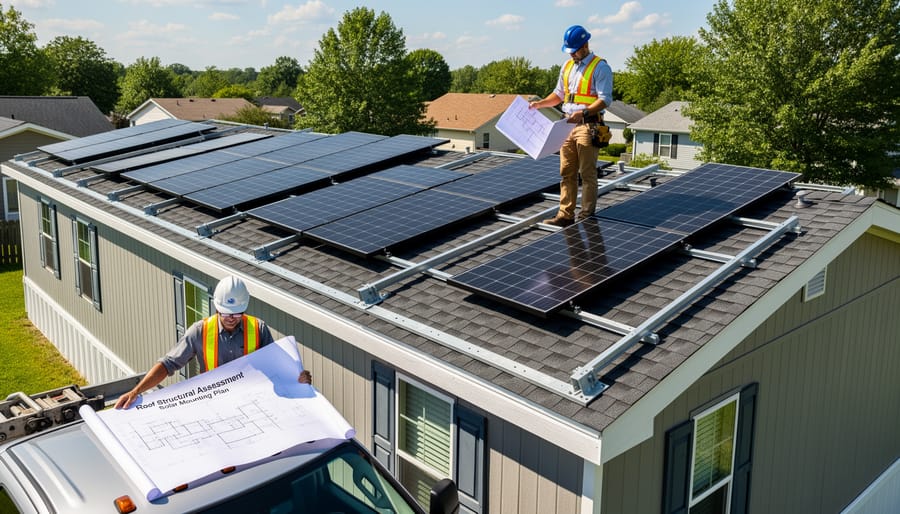
The first question many mobile home owners ask is whether their roof can handle solar panels. This is a legitimate concern. Mobile home roofs are typically lighter-weight than conventional homes and may have different structural specifications. Before installing rooftop panels, you’ll need a professional structural assessment from an engineer familiar with manufactured housing. They’ll evaluate whether your roof can safely support the additional weight, which typically ranges from 10-15 kilograms per square meter for standard panels. Some mobile homes, particularly newer models, are already designed with solar in mind and can accommodate panels without modification.
If your roof isn’t suitable, don’t let that discourage you. Ground-mounted solar systems offer an excellent alternative, especially if you’re on a larger block. These systems can actually be advantageous, as they’re easier to maintain, can be angled optimally for maximum sun exposure, and aren’t limited by roof orientation. Many mobile home owners in regional communities across Queensland, New South Wales, and Victoria have embraced this approach with great success.
Community solar programs are another exciting option gaining momentum across Australia. These schemes allow you to invest in or subscribe to a portion of a larger solar array, receiving credits on your electricity bill for your share of the power generated. This is particularly valuable if you’re in a mobile home park where individual installations aren’t feasible or if you’re renting your land.
The financial support available makes solar more accessible than ever. The federal Small-scale Renewable Energy Scheme provides Small-scale Technology Certificates that significantly reduce upfront costs. State-specific programs like Victoria’s Solar Homes Program and South Australia’s Home Battery Scheme offer additional rebates. Even mobile home owners can access these incentives, though eligibility criteria vary.
Connect with local installers who understand mobile home requirements. They’ll help navigate structural considerations, optimize system sizing for your energy needs, and ensure you claim every rebate available. Going solar isn’t just about individual savings—it’s about joining a growing community of Australians powering a cleaner future.
Financial Help and Rebates for Australian Mobile Home Owners
Making energy efficiency upgrades to your mobile home doesn’t have to strain your budget. Australian mobile home owners have access to a growing range of financial support programs designed to make sustainable living more accessible and affordable for everyone.
At the federal level, the government’s various energy efficiency rebates can help offset the costs of insulation, solar panels, and efficient heating and cooling systems. While eligibility criteria vary, many mobile home owners qualify for these schemes, particularly those on concession cards or in lower income brackets.
State-based programs offer even more targeted support. Victoria’s Solar Homes Program, for instance, provides rebates for solar panel installations and interest-free loans for battery storage. New South Wales offers the Energy Savings Scheme, which delivers financial incentives through accredited providers when you upgrade to energy-efficient appliances or install insulation. Queensland’s Affordable Energy Plan includes additional support for regional communities, where many mobile home parks are located.
The Australian Residential Park Residents Association has been instrumental in connecting mobile home communities with these opportunities. They’ve partnered with local councils and energy providers to organize group-buying schemes for solar installations, making renewable energy more affordable through bulk purchasing power. It’s a brilliant example of community action creating real change.
Low-interest loan schemes through providers like the Clean Energy Finance Corporation make larger upgrades manageable, allowing you to spread costs while immediately benefiting from reduced energy bills. Many mobile home owners find these loans pay for themselves through energy savings within just a few years.
Community organizations like Renew and local Sustainability Groups often run workshops specifically for mobile home residents, offering free energy audits and advice on maximizing available rebates. Don’t hesitate to reach out to your local council too, as many have dedicated sustainability officers who can guide you through application processes and identify programs you might have missed.
Improving your mobile home’s energy efficiency isn’t just about saving money on bills, though that’s certainly a welcome benefit. It’s about creating a more comfortable living space for your family, reducing your environmental footprint, and joining a growing community of Australians committed to sustainable living. Every upgrade you make, whether it’s adding weather stripping to doors or installing solar panels, contributes to a healthier planet while putting dollars back in your pocket.
The beauty of energy efficiency improvements is that you don’t need to tackle everything at once. Start with one manageable project this weekend. Perhaps it’s sealing air leaks around windows or upgrading to LED lighting throughout your home. These small steps create momentum and demonstrate real results on your next power bill. As you experience the tangible benefits of reduced energy consumption and improved comfort, you’ll feel motivated to continue the journey.
For mobile home owners across Australia, the collective impact of these individual actions is remarkable. When entire communities embrace energy efficiency, we reduce strain on the grid during peak periods, lower greenhouse gas emissions, and create a more resilient energy future. Your local council often provides rebates and support programs specifically designed to help homeowners like you make sustainable home upgrades more affordable.
Don’t underestimate the value of connecting with others on this journey. Join online forums, attend community workshops, or chat with neighbours who’ve already improved their mobile homes. Sharing experiences, tips, and even contractor recommendations makes the process less daunting and more rewarding. Your mobile home energy efficiency project isn’t just about your household—it’s about contributing to Australia’s sustainable future, one improvement at a time.