
Every workday, Australian commuters collectively travel over 350 million kilometres, with private vehicles accounting for 76% of these journeys. This daily migration generates approximately 58 million tonnes of carbon emissions annually, making the journey to work one of the most significant contributors to our national carbon footprint. Yet businesses across Sydney, Melbourne, Brisbane, and beyond are discovering that sustainable commuting isn’t just an environmental imperative—it’s a strategic advantage that reduces costs, boosts employee wellbeing, and strengthens workplace culture.
The transformation starts with understanding that sustainable commuting encompasses far more than simply encouraging cycling. It’s a comprehensive approach that includes public transport incentives, carpooling networks, remote work flexibility, electric vehicle infrastructure, and active transport options tailored to your workforce’s unique circumstances. For businesses operating in Australia’s sprawling suburban landscapes, where average commute distances often exceed 15 kilometres, the challenge requires creative solutions that acknowledge our geography while embracing innovation.
The business case is compelling. Companies implementing structured sustainable commuting programs report parking cost reductions of up to 40%, decreased employee stress levels, improved retention rates, and enhanced corporate reputation among environmentally conscious consumers and potential recruits. Meanwhile, employees gain financial savings averaging $2,400 annually per person, reduced commute stress, and improved physical health through increased activity.
This shift isn’t happening in isolation. Australian businesses are building communities around sustainable commuting, sharing rides, coordinating public transport groups, and celebrating collective environmental wins. From Perth’s bike-friendly startups to Melbourne’s tram-pass programs, the movement is gaining momentum. The question isn’t whether sustainable commuting makes sense for your workplace—it’s how quickly you can implement it to capture the benefits already transforming Australian businesses nationwide.
The Real Impact of Australian Workplace Commuting

What Your Daily Drive Actually Costs the Environment
Let’s look at the real numbers behind your commute. Understanding the environmental footprint of different transport choices helps us make informed decisions that align with our values while still getting where we need to go.
A typical Australian commuter driving solo to work in a petrol car generates roughly 4.6 kilograms of carbon dioxide per day, assuming a 20-kilometre round trip. That adds up to over 1,100 kilograms annually, equivalent to flying from Sydney to Melbourne four times. The story shifts dramatically when we explore alternatives suited to our cities and towns.
Public transport slashes emissions by 60-70% compared to single-occupancy vehicles. A train journey produces around 0.1 kilograms of CO2 per kilometre, while buses average 0.08 kilograms per passenger kilometre. When you consider that one full bus can replace 40 cars on the road, the collective impact becomes remarkable.
Cycling and walking remain the champions of zero-emission commuting. Beyond producing no tailpipe emissions, active transport reduces the need for resource-intensive infrastructure and vehicle manufacturing. Even e-bikes, increasingly popular along Australia’s coastal routes and urban centres, generate just 0.02 kilograms of CO2 per kilometre when accounting for electricity use.
The encouraging news is that many Australian workplaces sit within 10 kilometres of employees’ homes, a perfectly manageable distance for cycling or combining public transport with active travel. For those living further out in our sprawling suburbs and regional areas, carpooling can cut emissions by 50-75% depending on passenger numbers, proving that sustainable choices exist across all circumstances.
Beyond Carbon: The Hidden Environmental Costs
When we think about sustainable commuting, carbon emissions often dominate the conversation. Yet our daily journeys impact Australian ecosystems in ways that extend far beyond the exhaust pipe. Understanding these hidden costs helps us make more informed choices for our communities and environment.
Vehicle-dependent commuting creates road runoff pollution that carries oil, heavy metals, and microplastics into our waterways, threatening marine life along our coasts and estuaries. Noise pollution from traffic affects native wildlife behaviour and breeding patterns, particularly in urban fringe areas where development meets bushland.
The sprawling car parks and expansive road networks contributing to our commutes also intensify urban heat islands, making Australian cities even hotter during our increasingly severe summers. This affects not just human health but the survival of urban-adapted wildlife.
Perhaps most significantly, transport infrastructure fragments habitats, creating barriers that prevent native species from moving freely across their traditional ranges. From Sydney’s endangered bandicoots to Melbourne’s possum populations, our commuting choices ripple through local ecosystems.
By embracing sustainable commuting options like cycling, walking, and public transport, we collectively reduce these cumulative pressures on Australia’s unique environment while building healthier, more connected communities.
Building a Sustainable Commuting Policy That Actually Works
Essential Components of an Effective Policy
Creating a workplace sustainable commuting policy that truly works requires more than good intentions—it needs a solid framework that your team will actually embrace. Drawing from successful Australian workplaces, here are the essential components to include.
Start with clear, measurable goals that connect to your broader sustainability commitments. Rather than vague aspirations, set specific targets like reducing single-occupancy vehicle trips by 30% within twelve months or achieving a 50% active transport rate by 2025. These concrete objectives give everyone something tangible to work towards together.
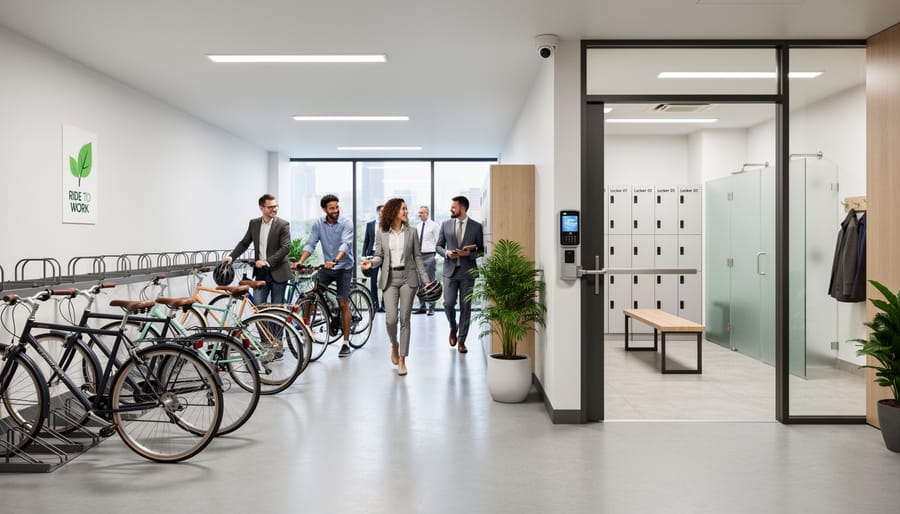
Incentives make sustainable choices the easy choices. Consider what motivates your team—perhaps subsidised public transport passes, secure bike storage with end-of-trip facilities including showers, or a monthly allowance for those who consistently choose green commuting options. Some Australian businesses have found success with a points-based reward system where employees earn recognition for sustainable travel days.
Infrastructure support demonstrates your genuine commitment. This might include partnering with local councils to improve cycling paths near your workplace, installing electric vehicle charging stations, or creating a dedicated carpool matching platform for your team. Melbourne-based companies have shown that providing quality bicycle maintenance stations on-site significantly increases cycling uptake.
Flexibility remains crucial for Australian workplaces where distances can be considerable. Offer hybrid working arrangements that reduce commuting frequency, flexible start times that avoid peak-hour traffic and crowded public transport, and exemptions for employees with caring responsibilities or those living in areas with limited transport options.
Finally, establish clear measurement metrics to track progress and celebrate wins. Monitor participation rates, carbon emissions reduced, cost savings achieved, and employee satisfaction levels. Regular reporting keeps momentum strong and demonstrates the tangible impact your workplace community is making together.

Getting Leadership and Staff Buy-In
Securing support from leadership and staff is essential for any successful sustainable commuting program. Start by building a compelling business case that speaks directly to management priorities. Present clear data on potential cost savings through reduced parking infrastructure, lower employee turnover (studies show workers value sustainability initiatives), decreased sick days thanks to active commuting, and enhanced corporate reputation. In Australia, many councils offer grants and incentives for businesses implementing green transport initiatives, which can significantly offset initial costs.
Schedule a meeting with decision-makers armed with research specific to your organisation’s location. Highlight how companies like Atlassian and Bank Australia have successfully implemented sustainable commuting policies, demonstrating both environmental and financial returns. Include projected carbon reduction figures that align with Australia’s net-zero commitments and corporate ESG reporting requirements.
Once you’ve secured leadership backing, focus on engaging employees from the ground up. Launch an anonymous survey to understand current commuting patterns, barriers to sustainable transport, and preferred incentives. This consultation phase builds trust and ensures your program addresses real needs rather than assumptions.
Consider running a pilot program with willing volunteers before full rollout. Perhaps start with one department testing e-bike subsidies or carpool matching for three months. Collect feedback, measure outcomes, and share success stories through internal communications. This approach allows you to refine the program and create ambassadors who’ll champion the initiative.
Address common concerns proactively. For employees worried about flexibility, emphasise that sustainable commuting policies enhance choice rather than restrict it. Those concerned about time or convenience might appreciate carpooling apps or guaranteed ride-home programs for emergencies. Regional workers facing limited public transport options can explore options like compressed work weeks to reduce commuting frequency.
Sustainable Commuting Options for Australian Workplaces
Public Transport: Making It Work for Your Team
Making public transport the easy choice for your team starts with removing financial and practical barriers. Consider subsidizing or fully covering public transport passes as part of your workplace benefits package. Many Australian cities offer corporate discount schemes, and in states like New South Wales, the Ozone Travel Pass provides significant savings for regular commuters. When businesses invest in transit passes, they’re not just supporting sustainability, they’re showing employees their wellbeing matters.
Flexible start times can transform the commuting experience. By allowing staff to travel during off-peak periods, you’ll help them avoid crowded trains and buses while reducing strain on transport infrastructure. This simple shift often improves work-life balance and reduces stress, creating happier, more productive team members.
Building partnerships with local transport providers can unlock additional benefits. Some councils and transport authorities offer workplace travel programs that include route planning assistance, trial passes, and promotional materials to encourage uptake. Victoria’s TravelSmart Workplace program and Queensland’s TransLink Business Solutions are excellent starting points.
Create a supportive community around public transport use by establishing buddy systems for new users or organizing group commutes. Share success stories from team members who’ve made the switch, highlighting time saved, money kept in pockets, and the satisfaction of contributing to cleaner air for all Australians.
Cycling and Active Transport Infrastructure
Making cycling a viable commuting option starts with the right workplace infrastructure. Australian businesses embracing active transport need to provide secure bike storage facilities—ideally undercover or indoors—to protect bicycles from our harsh sun and occasional downpours. End-of-trip facilities including showers, lockers, and changing rooms transform cycling from a sweaty ordeal into a practical daily choice, particularly important given our warm climate.
Bike-to-work schemes are gaining momentum across Australian cities, with programs like the Bicycle Network’s Ride2Work initiative connecting employers with resources and support. Many organisations now offer salary packaging for bicycles, making quality bikes more affordable for employees. For those facing longer distances or hilly terrain—common challenges in cities like Brisbane or Adelaide—e-bikes have become game-changers, extending feasible cycling distances from 5 kilometres to 15 or more without arriving exhausted.
Safety remains paramount in Australian conditions. Encourage employees to use dedicated bike paths where available, invest in high-visibility gear for early morning or evening rides, and consider offering cycle training programs. Some forward-thinking businesses partner with local councils to advocate for improved cycling infrastructure, creating safer routes that benefit entire communities. When workplaces demonstrate commitment through proper facilities and support programs, cycling becomes not just possible but genuinely appealing for daily commutes.
Carpooling and Ride-Share Programs
Carpooling transforms individual car trips into shared journeys, cutting emissions while building workplace connections. For Australian businesses, establishing effective carpool programs starts with smart matching systems that connect employees living in similar areas. Many organisations use platforms like Liftshare or local community Facebook groups to facilitate these connections, making it simple for colleagues to coordinate their commutes.
Incentivising participation makes all the difference. Designating premium parking spots closer to building entrances for carpoolers creates tangible daily benefits. Some Melbourne and Sydney businesses have seen carpool participation jump by 40 percent after introducing preferred parking alongside fuel cost-sharing arrangements.
Digital platforms streamline the process beautifully. Apps can handle scheduling, route optimisation, and even payment splitting. The City of Adelaide’s Carpooling Program demonstrates how local councils can support these initiatives by providing matching services and promoting participation across multiple workplaces.
Start small by surveying employees about their postcodes and work schedules, then facilitate introductions between potential carpool partners. Consider flexible arrangements for those who occasionally need solo transport. When Newcastle-based manufacturing firm Tomago Aluminium introduced their carpool scheme, they found employees valued the social aspect as much as the cost savings, creating a stronger workplace community while reducing their carbon footprint.
Remote and Hybrid Work Arrangements
The most transformative shift toward sustainable commuting isn’t about changing how we travel—it’s about reducing how often we need to travel altogether. Remote and hybrid work arrangements have proven to be game-changers for Australian businesses committed to cutting their carbon footprint.
Working from home just two days per week can reduce an employee’s annual commute emissions by 40 percent. For a typical Melbourne worker travelling 30 kilometres each way, that’s roughly 1.5 tonnes of CO2 avoided annually—equivalent to planting 70 trees. Multiply that across your entire workforce, and the impact becomes remarkable.
Progressive Australian companies are embracing flexible arrangements like hot-desking, where employees rotate office days, and compressed work weeks that condense full-time hours into fewer days. These approaches maintain productivity while dramatically reducing transport emissions.
The key is measuring your success. Calculate baseline commute emissions using staff surveys about travel distance, frequency, and mode. Then track reductions as policies take effect. Many organisations discover that hybrid models also boost employee satisfaction and reduce office space costs—a triple win for people, planet, and budget. Start by piloting flexible arrangements with willing teams, gather feedback, and scale what works for your workplace culture.
Electric and Low-Emission Vehicle Support
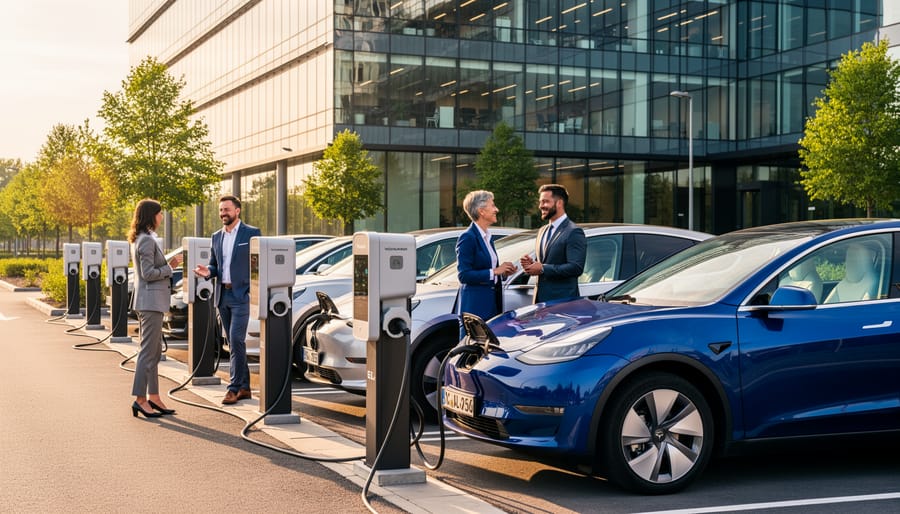
Australian businesses are accelerating the shift to electric and low-emission vehicles, and the infrastructure is rapidly catching up. Installing workplace EV charging stations sends a powerful message about your organisation’s commitment to sustainability while providing genuine support for employees making the switch to electric vehicles.
Many progressive Australian companies are now transitioning their fleet vehicles to EVs, with local success stories emerging from Sydney to Perth. The City of Adelaide, for example, has committed to converting its entire council fleet to zero-emission vehicles by 2030, demonstrating how public sector leadership can inspire private enterprise.
Salary packaging arrangements for EVs have become increasingly popular, allowing employees to lease electric vehicles through pre-tax income under the federal government’s Electric Car Discount. This arrangement can save employees thousands annually while reducing their carbon footprint significantly.
For businesses, the initial investment in charging infrastructure often qualifies for government rebates and incentives. Start by surveying your team to understand current interest levels and future EV purchase plans. Even installing two or three charging points demonstrates commitment and can be scaled up as demand grows. Partner with local councils and business networks to share charging infrastructure costs and create community charging hubs that benefit employees and the broader public alike.
Incentives That Drive Real Behaviour Change
Financial Incentives and Salary Packaging
Financial incentives can transform sustainable commuting from a nice idea into an irresistible workplace benefit. Australian employers have several powerful tools at their disposal to sweeten the deal for eco-conscious commuters.
Transport allowances remain one of the simplest approaches, providing employees with regular payments toward public transport costs. Many organisations partner with transport operators to offer subsidised passes at discounted corporate rates, with some absorbing the full cost as a tax-deductible business expense.
Bike purchase schemes are gaining traction across Australian workplaces. Through salary packaging arrangements, employees can acquire bicycles and safety equipment using pre-tax dollars, effectively reducing the purchase price by their marginal tax rate. Some programs extend to e-bikes, recognising that electric assistance makes cycling viable for longer distances or hillier terrain common in Australian cities.
Electric vehicle salary packaging has emerged as a game-changer, particularly following recent fringe benefits tax exemptions for eligible EVs. Employees can now lease electric vehicles through their employer with significant tax advantages, making EVs more affordable than ever before.
For employers, these incentives often qualify as tax-deductible expenses while simultaneously reducing parking infrastructure costs. The Australian Taxation Office provides specific guidance on fringe benefits treatment, ensuring compliance while maximising benefits for both parties. When positioned as part of a comprehensive sustainable commuting policy, financial incentives demonstrate genuine organisational commitment to environmental responsibility whilst building employee loyalty and satisfaction.
Non-Financial Rewards and Recognition
Not all motivation comes from the wallet. Many Australian workplaces are discovering that creative recognition programs can inspire sustainable commuting habits just as effectively as financial incentives. Consider gamification: transforming your daily commute into a friendly competition. Apps and workplace platforms can track sustainable trips, awarding points and badges that tap into our natural desire for achievement. Melbourne-based companies have reported remarkable engagement when employees see their carbon savings climb weekly leaderboards.
Recognition can also take tangible forms. Reserved parking spots closest to building entrances for carpoolers and cyclists send a clear message about workplace priorities, whilst public acknowledgment during team meetings celebrates individual contributions to collective environmental goals. Some forward-thinking organisations integrate sustainable commuting into wellness programs, recognizing that cycling and walking boost both physical health and reduce emissions.
Perhaps most valued are time-based rewards. Extra annual leave days for consistent sustainable commuters acknowledge the commitment required to change habits. One Brisbane firm offers “green leave” days, allowing employees who’ve logged sustainable trips for six months to enjoy additional time off. This approach works because it respects the effort involved whilst reinforcing the community-wide benefits of individual choices. When recognition feels genuine and aligned with company values, sustainable commuting becomes part of workplace culture rather than just another policy.
Measuring Success and Environmental Impact
Tracking the success of your sustainable commuting initiatives is essential for maintaining momentum and demonstrating genuine environmental progress. Australian businesses have access to excellent tools that make measuring impact both straightforward and meaningful.
Start by establishing baseline metrics before implementing your policy. The National Carbon Offset Standard (NCOS) provides frameworks specifically designed for Australian conditions, helping you calculate emissions from employee commutes. Track key data points including mode of transport, distance travelled, and frequency. Many organisations use simple online surveys quarterly to gather this information from their teams.
For calculating emissions reductions, the Department of Climate Change, Energy, the Environment and Water offers free calculators tailored to Australian transport patterns. These tools convert commuting data into CO2-equivalent measurements, giving you concrete figures to work with. A Melbourne-based consultancy recently discovered their cycling initiative prevented 15 tonnes of CO2 annually, equivalent to planting 300 trees.
Consider using transport management platforms like TravelSmart or Liftango, which automatically track participation rates and environmental savings. These Australian-developed solutions integrate seamlessly with existing workplace systems and generate reports perfect for stakeholder presentations.
When reporting progress, transparency builds trust. Share both wins and challenges with your team through monthly updates, visual dashboards in common areas, or sustainability newsletters. Include stories from employees who’ve embraced the changes alongside the hard data.
Link your commuting program to broader organisational goals. If your business aims to become carbon neutral, demonstrate how commuting reductions contribute to that target. The Clean Energy Regulator’s Climate Active program offers certification pathways that recognise comprehensive efforts including transport initiatives.
Remember, measurement isn’t just about numbers; it’s about celebrating collective action and inspiring continued participation across your workplace community.
Australian Businesses Leading the Way
Right across Australia, forward-thinking companies are proving that sustainable commuting isn’t just good for the planet—it’s good for business too. These trailblazers are showing that with creativity and commitment, any organisation can make a genuine difference.
Melbourne-based software company Envato has become a standout example of workplace sustainability in action. They’ve eliminated free car parking at their Richmond headquarters, instead offering employees subsidised public transport passes and a fleet of shared e-bikes. The result? Over 75% of their 400-strong workforce now commutes car-free, with staff reporting improved wellbeing and higher job satisfaction.
In regional Queensland, Bundaberg Sugar has tackled the unique challenges faced outside major cities. Recognising that public transport options are limited, they’ve invested in a private shuttle service connecting key residential areas to their mill, while also providing secure bike storage and end-of-trip facilities for those who can cycle. They’ve even partnered with local carpool coordination services to help shift workers share rides.
Sydney’s Atlassian has taken an innovative approach by implementing a “commute allowance” that rewards employees for choosing sustainable transport options. Staff track their green commutes through an app and earn points redeemable for everything from coffee vouchers to charity donations. This gamification has sparked friendly competition and genuine behaviour change across teams.
Mining company BHP has extended sustainable commuting to their remote sites through sophisticated fly-in-fly-out arrangements that minimise individual vehicle movements, while their Perth headquarters features premium end-of-trip facilities including showers, lockers, and bike maintenance stations.
Meanwhile, Brisbane City Council leads by example in the public sector, providing staff with free public transport passes and flexible working arrangements that reduce peak-hour congestion. Their success demonstrates that sustainable commuting policies work equally well for large government organisations as they do for private enterprises.
These diverse examples prove that whether you’re urban or regional, big or small, there’s a sustainable commuting solution that fits your workplace.
Overcoming Common Challenges
Let’s be honest: shifting to sustainable commuting in Australia isn’t always straightforward, but understanding the hurdles means we can tackle them together with practical solutions.
Australia’s sprawling urban layout presents our biggest challenge. Cities like Perth, Sydney, and Brisbane stretch across vast distances, making car dependence feel inevitable. However, creative approaches are emerging. Consider carpooling networks that connect colleagues living in outer suburbs, or advocating for your workplace to offer staggered hours that align with public transport schedules. Some Melbourne businesses have successfully partnered with local councils to extend bus routes closer to their offices during peak commuting times.
Limited public transport infrastructure in certain areas requires thinking beyond traditional solutions. If trains and buses aren’t viable, explore micro-mobility options like e-bikes or e-scooters for the last few kilometres, or push for your organisation to provide shuttle services from major transport hubs. Community-based initiatives, such as neighbourhood carpool groups, have flourished across Adelaide and Canberra, proving that grassroots solutions work.
Weather considerations matter too. Australian summers can deter cycling, but simple workplace provisions make a difference. Showers, changing facilities, and flexible start times allow active commuters to avoid the hottest hours. During wet winters in southern states, having backup options like emergency ride-home programs reduces anxiety about cycling or walking.
Cost concerns often surface when discussing e-bikes or public transport passes. Frame this as an investment: calculate annual parking and fuel costs against alternatives. Many employers now subsidise public transport or provide salary packaging for bikes, making sustainable options financially attractive. When presenting changes to reluctant teams, share success stories from similar Australian businesses and start with pilot programs. Small wins build momentum, transforming sceptics into advocates through demonstrated benefits rather than mandates.
The journey toward sustainable commuting isn’t one we take alone. Every time a colleague chooses to cycle, carpool, or catch public transport instead of driving solo, they’re contributing to cleaner air, reduced congestion, and a healthier planet for all Australians. While we’ve explored various policies and strategies throughout this article, remember that there’s no one-size-fits-all solution. A Melbourne office worker’s commute looks vastly different from someone traveling to a Perth industrial site, and that’s perfectly okay.
What matters is taking that first step, however small it might seem. Whether you’re an HR manager drafting your first sustainable commuting policy, a business owner exploring electric vehicle options, or an employee advocating for better bike facilities, your efforts matter. The collective impact of thousands of Australian workplaces making conscious choices creates real, measurable change.
Consider connecting with the growing network of sustainability professionals transforming Australian workplaces across the country. Share your successes, learn from others’ experiences, and celebrate the wins along the way.
As a nation surrounded by natural beauty, we have both the privilege and responsibility to protect our environment. Sustainable commuting policies represent more than cost savings or compliance; they’re an investment in Australia’s future. Start where you are, use what you have, and watch as small changes ripple outward, creating the sustainable workplaces our communities deserve.