
**Transform Your Workspace into a Sustainability Showcase Without Compromising Style or Budget**
Your office furniture choices ripple far beyond your workspace walls. Every desk, chair, and filing cabinet tells a story—of forests preserved or depleted, of toxins released or avoided, of waste created or prevented. For Australian businesses and individuals ready to align their workspaces with their values, the shift to eco-friendly office furniture isn’t just an environmental statement; it’s a practical investment in healthier workplaces and a more sustainable future.
The average office worker spends 1,800 hours annually at their desk, surrounded by furniture that could be off-gassing harmful VOCs, contributing to landfill waste, or perpetuating unsustainable forestry practices. Meanwhile, the Australian commercial furniture industry generates thousands of tonnes of waste each year, much of it perfectly preventable. But here’s the encouraging reality: sustainable alternatives are more accessible and affordable than ever before.
Eco-friendly office furniture encompasses far more than bamboo desks and recycled plastic chairs. It includes FSC-certified timber pieces crafted by local Australian artisans, refurbished vintage finds given new life, modular systems designed for decades of use, and innovative designs using reclaimed materials. These options prove that sustainability and sophistication aren’t mutually exclusive—they’re increasingly inseparable.
Whether you’re outfitting a startup in Melbourne, refreshing a corporate office in Sydney, or creating a home workspace in regional Queensland, the transition to eco-friendly furniture is achievable. This guide will navigate you through understanding genuine sustainability credentials, sourcing quality pieces from Australian suppliers, implementing changes within realistic budgets, and joining a growing community of businesses proving that environmental responsibility enhances, rather than limits, workplace excellence.
The True Cost of Traditional Office Furniture

Materials That Take Centuries to Break Down
When you’re shopping for office furniture, it’s worth knowing what’s lurking beneath those glossy finishes. Most conventional desks, chairs, and storage units rely heavily on particleboard—essentially wood chips and sawdust held together with formaldehyde-based adhesives. These composite boards can take up to 30 years to decompose in landfill, all while releasing harmful chemicals into the environment.
Synthetic foams in chair padding present another challenge. Polyurethane foam, the cushioning in most office seating, persists for centuries without breaking down. As it slowly deteriorates, it releases microplastics into our ecosystems—a particular concern for Australian waterways already under environmental pressure.
Then there’s the plastic components: armrests, drawer pulls, cable management systems, and decorative elements. These petroleum-based materials can take anywhere from 400 to 1,000 years to decompose. Across Australian offices, thousands of chairs and desks are discarded annually, with much of this plastic ending up in our landfills or, worse, our oceans.
The good news? A growing number of Australian manufacturers are responding to this challenge by creating furniture from sustainably harvested timber, natural latex foam, and recycled materials. Making the switch isn’t just about reducing waste—it’s about investing in pieces that honour our environment rather than burden it for generations to come.
The Carbon Footprint of Your Desk Chair
Your trusty desk chair might seem innocent enough, but its journey to your office tells quite a carbon-intensive story. The manufacturing process alone for a standard office chair generates approximately 100-150 kilograms of CO2 emissions – roughly equivalent to driving 600 kilometres in a typical car. When you factor in the materials extraction, assembly, and especially transportation, the numbers climb significantly higher.
Here’s where it hits home for us in Australia: around 95% of office furniture sold domestically is imported, with the majority shipped from Asia. That transoceanic voyage adds substantial emissions to each piece. A single shipping container from China to Sydney generates about 1.5 tonnes of CO2, and when you consider the thousands of containers arriving monthly at our ports, the collective impact becomes staggering.
The materials matter too. Conventional office chairs typically contain virgin plastics, synthetic foams derived from petroleum, and metal components requiring energy-intensive processing. Many also incorporate chemical flame retardants and finishes that release volatile organic compounds during production.
Understanding these numbers isn’t about inducing guilt – it’s about empowering better choices. When we recognise the true environmental cost of our workspace furniture, we’re better equipped to seek alternatives that lighten our collective footprint while supporting local Australian manufacturers who are pioneering greener solutions.
What Makes Office Furniture Truly Eco-Friendly
Sustainable Materials That Actually Work
Walking through Australian offices today, you’ll spot a refreshing shift towards materials that don’t compromise performance for sustainability. These alternatives prove you can have furniture that’s both beautiful and kind to our planet.
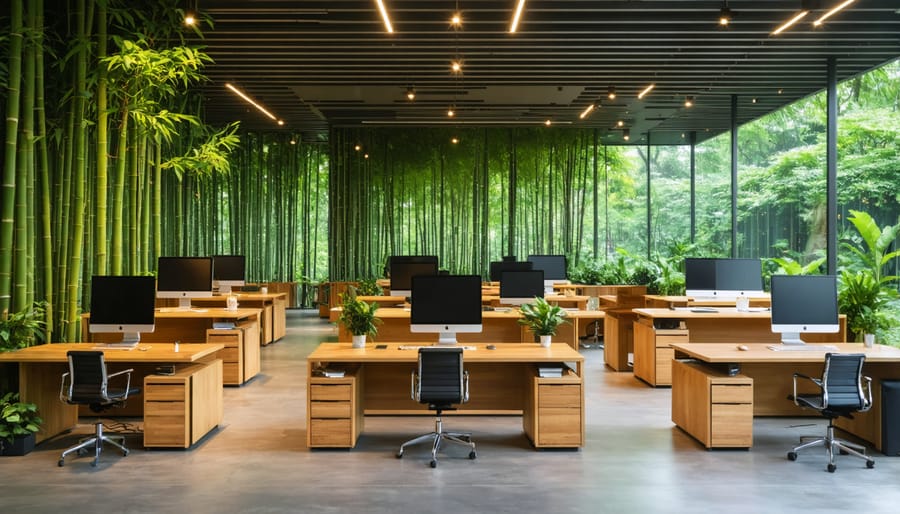
**Bamboo** leads the charge as a powerhouse material. Growing to maturity in just 3-5 years compared to hardwood’s decades, bamboo offers incredible strength whilst regenerating rapidly. Local suppliers now source from sustainable Asian plantations, creating desks and shelving that withstand our harsh climate whilst storing carbon throughout their lifecycle.
**Reclaimed timber** tells a story in every grain. Salvaged from demolished warehouses, old wharves, and deconstructed buildings across Melbourne, Sydney, and Brisbane, this timber gets a second life as stunning conference tables and storage units. You’re not just preventing landfill waste—you’re preserving a piece of Australian history.
**Recycled metals and plastics** have evolved beyond their clunky reputation. Modern manufacturing transforms post-consumer materials into sleek filing cabinets and chair bases that rival virgin materials in durability. Many Australian manufacturers now incorporate ocean plastics and industrial waste, turning environmental problems into practical solutions.
**Natural fabrics** like organic cotton, hemp, and wool provide comfortable, breathable upholstery options. Australian wool, in particular, offers a locally-sourced alternative that supports our farming communities whilst providing naturally fire-resistant, long-lasting comfort.
The beauty of these materials? They perform exceptionally well in real-world office environments whilst significantly reducing your carbon footprint. Many Australian suppliers now offer samples, letting you experience the quality firsthand before committing.
Certifications Worth Looking For
When you’re investing in sustainable office products, certifications are your best friends—they cut through the greenwashing and help you identify furniture with genuine eco-credentials.
**FSC (Forest Stewardship Council)** certification is the gold standard for timber furniture. It guarantees that wood comes from responsibly managed forests that protect biodiversity and worker rights. Look for the FSC logo on desks, chairs, and shelving units—it’s recognised globally and widely available in Australia.
**GECA (Good Environmental Choice Australia)** is our homegrown certification hero. Products bearing this ecolabel meet strict environmental and health standards throughout their entire lifecycle, from manufacturing to disposal. Supporting GECA-certified furniture means backing Australian environmental standards while reducing your carbon footprint.
**Greenguard Gold** certification focuses on indoor air quality, ensuring furniture emits minimal volatile organic compounds (VOCs). This matters enormously in closed office environments where poor air quality affects health and productivity.
To verify these certifications, check manufacturer websites for certificate numbers or scan QR codes on product labels. Australian suppliers should readily provide certification documentation—if they’re hesitant, that’s a red flag. Remember, authentic eco-friendly furniture proudly displays its credentials because these certifications represent significant commitments to environmental responsibility.
Top Eco-Friendly Office Furniture Options for Australian Workplaces
Desks and Workstations
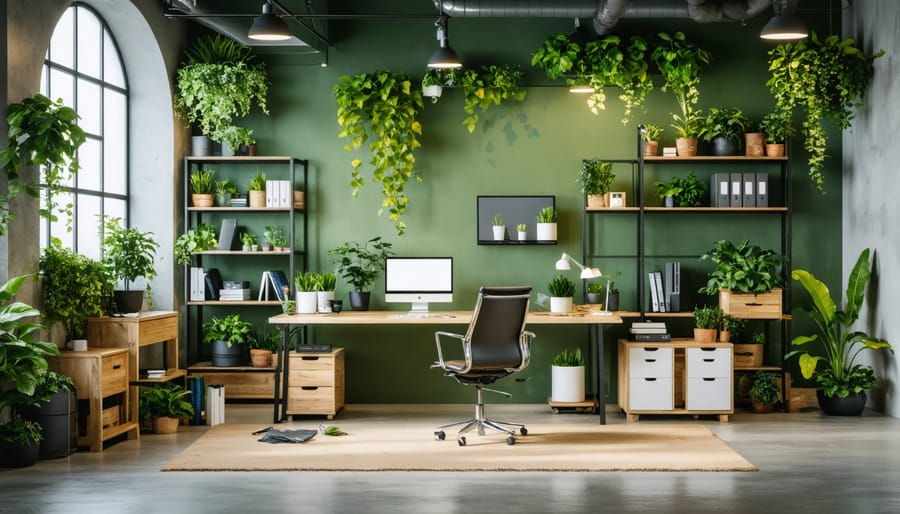
Your desk is the heart of your workspace, so choosing a sustainable option makes a genuine difference to your environmental footprint. Fortunately, Australian suppliers are making it easier than ever to find eco-friendly workstations that don’t compromise on style or functionality.
**Standing desks** with sustainably sourced frames are gaining popularity, typically ranging from $500-$1,500. These height-adjustable options promote wellbeing while many manufacturers now use FSC-certified timber and recycled steel components. Local companies like FlexiSpot and Desky offer models with minimal environmental impact and strong durability warranties.
**Reclaimed timber desks** bring character and sustainability together beautifully. Salvaged from old warehouses, demolished buildings, or retired industrial sites across Australia, these pieces tell a story while preventing perfectly good materials from ending up in landfill. Expect to invest $800-$2,500 for custom pieces that’ll last decades. The natural patina and unique grain patterns mean each desk is truly one-of-a-kind.
**Bamboo alternatives** provide an affordable entry point at $300-$900. This fast-growing grass regenerates quickly without pesticides, making it incredibly sustainable. Modern treatments ensure bamboo desks rival traditional timber for strength and longevity, making them ideal for budget-conscious businesses wanting to make greener choices without sacrificing quality.
Seating Solutions That Support You and the Planet
Your office chair supports you through countless hours of work—why not choose one that supports the planet too? The good news is that ergonomic excellence and environmental responsibility go hand-in-hand these days.
Australian manufacturers are leading the charge with chairs crafted from recycled ocean plastics, reclaimed timber bases, and plant-based foam cushioning. These aren’t compromise products either—many exceed industry standards for back support and adjustability. Look for certifications like Good Environmental Choice Australia (GECA) to ensure your seating investment meets genuine sustainability criteria.
Before buying new, consider the transformation potential of your existing chairs. Melbourne-based social enterprises and local upholsterers are breathing new life into tired office seating using organic fabrics and non-toxic adhesives. This approach not only diverts furniture from landfill but often costs half the price of purchasing new.
When selecting materials, prioritize chairs with replaceable parts—extending product life dramatically reduces environmental impact. Mesh backs made from recycled fishing nets, FSC-certified wooden components, and water-based finishes are increasingly standard features from Australian suppliers who understand that comfort shouldn’t cost the earth. Your team deserves seating that nurtures both their wellbeing and our shared environment.
Storage and Shelving
Smart storage doesn’t have to cost the earth – literally. Australian businesses are discovering that sustainable filing cabinets and shelving units can be both functional and planet-friendly, often with surprising character that adds warmth to workspaces.
Look for storage solutions crafted from FSC-certified timber, which guarantees responsible forest management, or recycled steel powder-coated in non-toxic finishes. Bamboo shelving units are becoming increasingly popular across Australian offices, offering remarkable strength while being a rapidly renewable resource that regenerates without replanting.
Reclaimed timber storage pieces tell their own stories – old floorboards and salvaged hardwood transformed into beautiful filing systems that reduce landfill whilst creating unique focal points. Companies like Worn Store in Melbourne specialise in such pieces, proving that sustainability and style go hand-in-hand.
Consider modular shelving systems that adapt as your needs change, eliminating the waste of replacing entire units. Cardboard filing systems might seem unconventional, but today’s recycled cardboard storage is surprisingly robust and completely recyclable at end-of-life.
Several Sydney co-working spaces have embraced second-hand metal filing cabinets, giving industrial-grade storage a second life whilst supporting circular economy principles. This approach demonstrates that sustainable storage choices benefit both your workspace and our shared environment.
Meeting Room and Breakout Furniture
Collaborative spaces deserve furniture that brings people together while respecting our planet. Australian manufacturers are leading the way with innovative solutions that transform meeting rooms and breakout areas into sustainable hubs of creativity.
Look for modular furniture systems crafted from FSC-certified timber or recycled materials—these adaptable pieces grow with your team’s needs, reducing waste from future refits. Companies like Furnware and Stylecraft produce locally-made conference tables using reclaimed hardwoods and low-VOC finishes, keeping both indoor air quality and carbon footprints low.
For lounge seating, consider pieces upholstered in recycled fabrics or natural materials like organic wool and hemp. Many Australian suppliers now offer modular sofas with replaceable cushions, extending furniture lifespan significantly. Breakout furniture made from recycled plastic or sustainable bamboo provides durability without compromising environmental values.
The beauty of investing in quality collaborative furniture is its ripple effect—when your team gathers around a sustainably-made table, it reinforces your organisation’s commitment to environmental stewardship. These spaces become living examples of how business success and ecological responsibility can coexist. By choosing Australian-made options, you’re also supporting local craftsmanship and reducing transportation emissions, creating a truly circular approach to workplace design.
Australian Businesses Leading the Way
Across Australia, forward-thinking businesses are proving that investing in sustainable furniture isn’t just good for the planet—it’s brilliant for business too.
Melbourne-based architecture firm Six Degrees recently transformed their workspace with furniture from local supplier Remakery, which specialises in upcycling pre-loved office pieces. “We saved 40% compared to buying new, and our team absolutely loves the character each piece brings,” shares operations manager Sarah Chen. The move has become a talking point with clients, often sparking conversations about sustainable design that lead to new project opportunities.
In Brisbane, tech startup CodeCollective partnered with Green Office Solutions to furnish their expanding workspace entirely with certified sustainable materials. Their desks are crafted from reclaimed timber sourced from demolished Queensland buildings, while their chairs feature recycled ocean plastics. Founder James Rodriguez notes that staff retention improved by 25% after the office makeover, with team members citing pride in working for an environmentally responsible employer.
Sydney’s Circular Economy Hub has taken collaboration even further, creating a furniture-sharing network among twelve local businesses. When companies downsize or rebrand, pieces get redistributed rather than discarded. “We’ve kept over 200 furniture items in circulation for three years now,” explains coordinator Emma Wright. “It’s built an incredible sense of community while drastically reducing waste.”
Perth furniture maker Timber Revival deserves special mention for their innovative approach—they train apprentices in traditional craftsmanship while using exclusively salvaged Western Australian jarrah and marri. Their pieces now grace offices across the state, each accompanied by a story card detailing the timber’s origin, creating meaningful connections between businesses and local heritage.
These trailblazers demonstrate that sustainable choices create ripples of positive change—environmental benefits, cost savings, improved workplace culture, and stronger community connections. Their success proves that every Australian business, regardless of size, can make a meaningful difference.
Making the Switch: A Practical Action Plan
Start Small: Priority Pieces to Replace First
You don’t need to overhaul your entire office overnight. Start with the pieces that matter most—your chairs and desks. These workhorses typically contain the most synthetic materials, foam padding, and chemical treatments, making them the biggest environmental offenders in most Australian workplaces.
Task chairs are your first priority. We spend roughly 40 hours a week in them, and they’re often loaded with petroleum-based foams and virgin plastics. Look for certified refurbished models or new chairs with recycled content and non-toxic finishes.
Next, tackle your desks. Older laminate desks can off-gas formaldehyde for years. Consider beautiful reclaimed timber alternatives from Australian suppliers—they’re conversation starters that support local craftspeople while reducing waste.
Storage solutions come third. Filing cabinets and bookcases are perfect candidates for refurbishment. Many Melbourne and Sydney businesses are discovering the character of powder-coated steel cabinets that’ll outlast cheap particle board options by decades. This phased approach keeps costs manageable while delivering immediate environmental benefits.
Budgeting for Sustainable Furniture
While sustainable office furniture may seem like a significant investment upfront, the long-term value tells a different story. Quality eco-friendly pieces typically outlast conventional alternatives by years, reducing replacement costs and minimising waste heading to Australian landfills. Consider that a well-crafted timber desk made from responsibly sourced materials might cost 20-30% more initially, but could serve your business for decades rather than years.
The good news? Financial support is available to help Australian businesses make the switch. The Australian Government’s Energy Efficient Communities Program and various state-based sustainability grants can offset initial costs. Many local councils also offer business incentives for companies adopting greener practices. It’s worth checking with your state’s environmental department about current programs—these opportunities change regularly and could significantly reduce your investment.
When budgeting, factor in the hidden savings: reduced energy costs from thoughtfully designed workspaces, improved employee wellbeing and productivity, and enhanced brand reputation among increasingly eco-conscious clients. Many Australian businesses report that sustainable furniture choices become a talking point that strengthens client relationships and attracts top talent who value environmental responsibility.
What to Do With Your Old Furniture
Before you welcome new eco-friendly pieces into your workspace, let’s ensure your old furniture finds a meaningful second life rather than ending up in landfill.
Many Australian councils offer bulky waste collection services, though donation is often the more sustainable choice. Organizations like The Bower Reuse & Repair Centre in Sydney and CERES Environment Park in Melbourne actively accept office furniture in good condition, redirecting it to community groups, schools, and startups. Salvos Stores and St Vincent de Paul also welcome quality office pieces that can benefit others.
For furniture beyond repair, specialist recycling facilities can break down items into recoverable materials. Check your local council’s responsible disposal options for drop-off points that handle timber, metal, and foam separately.
Consider creative upcycling too—filing cabinets become planters, desks transform into workbenches, and chairs find new life with fresh upholstery. Melbourne’s Reverse Garbage and Brisbane’s The Green Shed offer inspiration and materials for DIY projects.
Many office furniture retailers, particularly those specializing in sustainable options, now operate take-back programs when delivering new pieces. It’s worth asking whether your chosen supplier offers this service—turning your purchase into a circular solution that keeps materials in use and waste to an absolute minimum.
Beyond the Purchase: Maintaining Your Eco-Friendly Investment
Your eco-friendly office furniture represents more than just a purchase—it’s an investment in our planet’s future. Maximizing its lifespan through proper care ensures you extract every bit of environmental value from that initial decision.
Regular maintenance doesn’t require fancy products. Most sustainable furniture thrives with simple, natural cleaning solutions—a mixture of white vinegar and water works wonders on timber surfaces, whilst beeswax polish keeps wood nourished without synthetic chemicals. For upholstered pieces, vacuuming weekly prevents dirt from breaking down natural fibres prematurely.
When damage occurs, resist the urge to replace immediately. Australia’s growing repair movement has spawned community workshops and skilled craftspeople who can breathe new life into worn pieces. Many Melbourne and Sydney suburbs now host “Repair Cafés” where volunteers help fix furniture for free or minimal cost. Local timber suppliers often stock replacement parts for modular furniture, whilst upholsterers can reupholster chairs using recycled or organic fabrics.
Consider implementing a maintenance schedule across your workplace—quarterly checks can catch minor issues before they escalate into replacement scenarios. This proactive approach has helped Brisbane’s Green Office Collective extend their furniture lifespan by an average of seven years beyond manufacturer estimates.
Remember, every extra year you squeeze from your furniture means fewer resources extracted, less manufacturing emissions, and reduced landfill contributions. Your ongoing care multiplies that initial eco-friendly choice exponentially.
Every choice we make in our workspaces ripples outward, contributing to the environmental legacy we’re building together across Australia. By choosing eco-friendly office furniture, you’re not just purchasing desks and chairs—you’re casting a vote for the kind of future you want to see. You’re supporting local manufacturers who prioritise sustainable practices, reducing the demand for fast furniture destined for landfill, and inspiring colleagues and competitors alike to reconsider their own choices.
The path forward is clearer than you might think. Start by assessing what you already have—can pieces be refurbished rather than replaced? When purchasing new items, prioritise certified sustainable materials, locally made options, and furniture designed for longevity. Consider companies offering take-back programs or those committed to becoming a carbon neutral business. These choices collectively transform our commercial spaces into catalysts for environmental change.
Remember, perfection isn’t the goal—progress is. Whether you’re replacing a single desk chair or outfitting an entire office, your decision matters. Australian businesses are already leading the way, proving that sustainability and success go hand in hand. Join this growing community of changemakers today.
Take your first step now. Audit your current office furniture, research one sustainable Australian supplier, or commit to making your next furniture purchase an eco-friendly one. The journey toward a greener workspace begins with you, and the time to start is today.