
That mountain of shredded paper spilling from your home office bin or accumulating in your workplace storage room presents a genuine puzzle. You’ve done the right thing by protecting sensitive information, but now you’re stuck with confetti-like scraps that most Australian councils reject from kerbside recycling bins. The reason is frustratingly simple: those tiny paper fragments jam sorting machinery at recycling facilities and slip through processing screens, contaminating entire batches of recyclable material.
This doesn’t mean your shredded paper is destined for landfill. Across Australia, households and businesses are discovering creative pathways to transform this waste stream into something useful. From composting and pet bedding to partnering with specialist recycling services, practical solutions exist that align with our growing commitment to waste reduction.
The challenge is particularly acute for Australian businesses managing commercial quantities of shredded documents. Office managers, legal practices, and medical centres produce substantial volumes weekly, yet few understand their options beyond general waste bins. Meanwhile, households face their own version of the problem during tax season or after decluttering marathons.
What makes shredded paper management tricky isn’t just the physical format. It’s the gap between our recycling instincts and infrastructure reality. Understanding why conventional recycling fails helps us identify better alternatives. Whether you’re managing a single bag from home or coordinating workplace waste streams, the solutions ahead will help you close the loop on shredded paper responsibly, keeping valuable cellulose fibres in circulation rather than buried in Australian landfills.
Why Shredded Paper Becomes a Waste Management Headache
The Recycling Reality for Shredded Paper
Here’s the reality many Australians discover the hard way: that bag of shredded paper sitting beside your recycling bin is likely heading to landfill, even with the best intentions. While it seems counterintuitive, shredded paper creates genuine headaches for recycling facilities across the country.
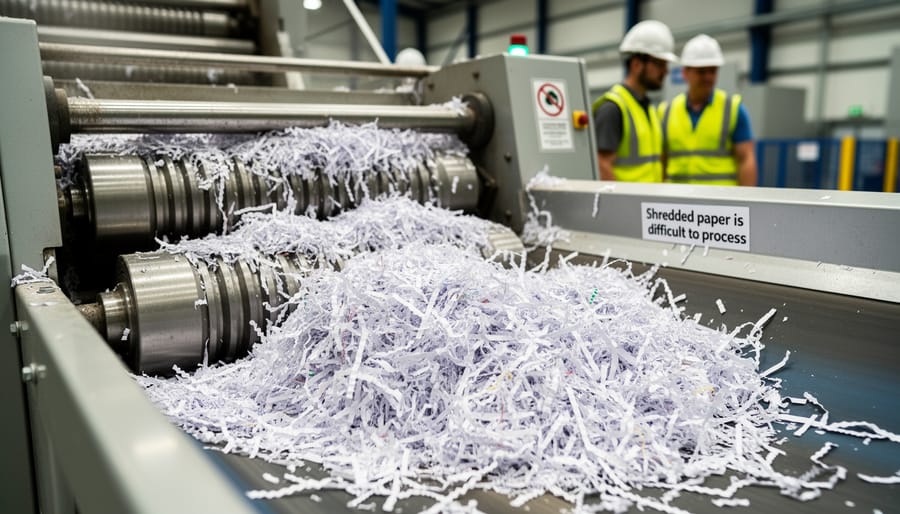
The problem starts with size. Those tiny paper strips slip through sorting machinery designed for full-sized sheets, contaminating other recyclables and jamming conveyor belts. Picture confetti scattered through your recycling load, and you’ll understand why facility operators cringe at the sight of it.
There’s also a quality issue at play. Paper fibres shorten each time they’re recycled, and shredding damages them further. These compromised fibres have limited value in manufacturing new products, making shredded paper less economically viable for recyclers to process. Most Australian councils specifically exclude it from kerbside recycling for these practical reasons.
But here’s the encouraging news: this challenge has sparked creative solutions in communities nationwide. Understanding why shredded paper can’t follow the traditional recycling path opens the door to discovering better alternatives that keep it out of landfill altogether. From composting to creative reuse, there are surprisingly effective ways to manage this material responsibly.
What Australian Councils Actually Accept
Here’s the reality: Australian councils have wildly different approaches to shredded paper, and what works in your suburb might not apply two postcodes over. Most major councils, including those across Sydney, Melbourne, and Brisbane, don’t accept shredded paper in kerbside recycling bins. The culprit? Those tiny paper fragments jam sorting machinery and slip through screens at recycling facilities.
However, there’s good news emerging from some forward-thinking communities. A handful of councils in regional Victoria and South Australia accept shredded paper if placed in paper bags or wrapped in newspaper before going into your recycling bin. The City of Onkaparinga in South Australia even encourages residents to compost shredded paper alongside garden waste.
Your first step is checking your specific council’s website or calling their waste hotline. Look for terms like “problematic recyclables” or download their waste app if available. Some councils operate Resource Recovery Centres where you can drop off shredded paper directly, bypassing the sorting facility issues entirely.
In Perth and Adelaide, community recycling hubs are increasingly accepting shredded paper during specific collection days. Meanwhile, businesses often have different options through commercial waste services. The key takeaway? Don’t assume your neighbour’s council rules apply to yours.
Smart Alternatives to Shredding Everything
Digital-First Document Management
The best solution to shredded paper waste is preventing it in the first place. Australian businesses and households are discovering that reducing paper use through digital alternatives can dramatically cut waste while improving efficiency.
Start by auditing what you’re actually printing. Many of us default to paper when a digital solution works better. Cloud storage platforms like Google Drive, Dropbox, or Australian providers such as MYOB offer secure, searchable document management that eliminates physical filing cabinets. For sensitive documents requiring disposal, consider whether they truly need printing at all.
Businesses can implement electronic signatures through platforms compliant with Australian e-signature laws, removing the need for printing contracts. Digital receipts, online invoicing, and paperless banking are now standard options from most Australian providers.
For households, switching to digital bills and statements is straightforward. Most councils and utility providers offer online access to important documents. Store scanned copies of essential paperwork like warranties and insurance policies in password-protected folders rather than filing cabinets.
When you must print, choose double-sided and use document previews to avoid mistakes. Many Australian workplaces have found that simply removing the default print option from software reduces unnecessary printing by up to 40 percent. These small changes add up, creating less waste to manage while saving money and storage space.
What Really Needs Shredding
Not every document needs shredding, and understanding the difference can save you time while protecting what truly matters. Financial records containing account numbers, tax file numbers, medical documents with Medicare details, and anything displaying your signature or date of birth should always be shredded. Similarly, businesses should shred employee records, client information, and any documents containing sensitive commercial data.
However, that pile of old newsletters, general correspondence without personal details, and already-public information can go straight into your regular paper recycling bin without shredding. Many Australians over-shred out of caution, creating unnecessary waste management challenges for councils and recycling facilities. A simple rule: if a stranger finding the document could harm you or someone else, shred it. If not, recycle it whole.
This mindful approach means less shredded paper entering the waste stream while still protecting your privacy. Before you reach for the shredder, ask yourself whether the information is truly sensitive or simply feels private. This small habit shift makes a significant difference to Australian recycling systems.
Putting Your Shredded Paper to Good Use
Garden and Composting Applications
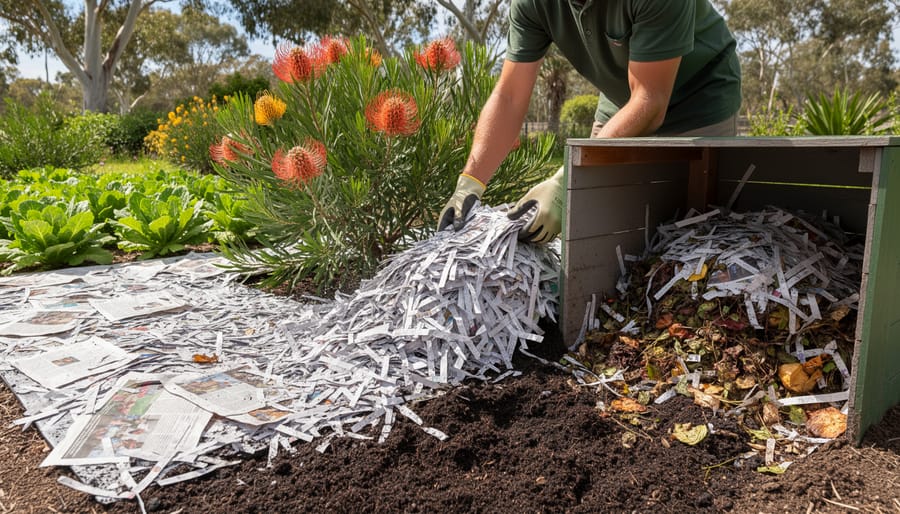
Your Australian garden can transform that pile of shredded paper into something genuinely useful. Shredded paper makes excellent mulch around vegetable beds and native plants, helping retain moisture during our harsh summers while suppressing weeds naturally. Simply spread a 5-8cm layer around your plants, keeping it away from stems to prevent rot.
For composting, shredded paper acts as valuable “brown” material, balancing out nitrogen-rich kitchen scraps. Tear it into smaller pieces if possible, moisten it slightly, and mix it through your compost heap. Your local community garden might also welcome donations for their compost systems.
Here’s the crucial bit: stick to plain white or newspaper. Avoid glossy magazines, coloured paper with heavy ink coverage, or thermal receipts, as these can contain chemicals you don’t want near your vegetables. The Botanic Gardens of Sydney and many councils across Australia recommend plain paper only for garden applications.
Many gardeners in Melbourne and Brisbane community gardens have discovered that shredded paper also makes brilliant worm farm bedding. Your worms will thank you, and you’ll be keeping paper out of landfill while creating nutrient-rich fertiliser for your garden.
Animal Bedding and Pet Care
Shredded paper makes excellent bedding for chickens, rabbits, guinea pigs, and other small animals, giving your waste a genuinely useful second life. Many Australian backyard chicken keepers have discovered that plain, uncoated shredded paper creates comfortable nesting boxes and absorbs moisture effectively in coops. For small pets like hamsters or rabbits, it provides soft, absorbent bedding that’s gentler on their respiratory systems than some commercial options.
However, safety matters here. Stick to plain office paper or newspaper only, avoiding glossy magazines, thermal receipts, or paper with heavy inks, as these can contain chemicals harmful to animals. Never use paper that’s been near cleaning products or food waste. Some pet owners even mix shredded paper with straw or wood shavings to create better absorbency.
While shredded paper works as a short-term cat litter supplement, it’s less effective than purpose-made alternatives. The beauty of this solution is its simplicity. If you’re overwhelmed by bags of shredded paper, local animal rescue centres or community chicken coops often welcome donations, turning your waste into their resource while keeping perfectly good material out of landfill.
Packaging and Storage Solutions
Before you toss that bag of shredded paper, consider its potential as brilliant packaging material. Aussie online sellers are increasingly discovering that shredded paper makes excellent protective cushioning for posted items, replacing plastic bubble wrap and foam peanuts. It’s particularly effective for small businesses shipping delicate products like candles, soaps, or pottery. If you’re planning a house move, shredded paper wrapped around glassware and fragile items provides surprisingly good protection while keeping your environmental footprint light. Many community groups on social media now connect people with excess shredded paper to those who need packaging supplies, creating a perfect circular economy. Local businesses, especially those with regular shredding needs, often welcome the opportunity to pass their shredded paper to crafters or small retailers rather than sending it to landfill. This simple reuse extends the life of the paper and reduces demand for virgin packaging materials across Australia.
Community Sharing Initiatives
Your shredded paper doesn’t have to end up in landfill when local community groups are eager to take it off your hands. Start by reaching out to animal shelters and wildlife rescue centres, which constantly need clean, unbleached shredded paper for bedding and nesting material. Many Australian shelters maintain wish lists on their websites or social media pages. Community gardens and local composting initiatives also welcome shredded paper as a valuable brown material that balances nitrogen-rich greens in compost bins.
Schools often need shredded paper for arts and crafts projects, particularly during creative play sessions with younger children. Contact your neighbourhood primary school or early learning centre to see if they’re interested in regular donations. Facebook community groups and apps like Gumtree frequently have people requesting shredded paper for moving house or packaging fragile items.
Consider starting a collection point at your workplace or apartment building to make donating easier for everyone. This simple act transforms waste into a resource while strengthening community connections. By sharing rather than discarding, you’re participating in a genuine circular economy right in your local area.
Better Shredding Practices for Australian Businesses
Choosing Shredder Settings Wisely
Your choice of shredder makes a bigger difference to the environment than you might think. Strip-cut shredders, which slice paper into long strips, create pieces that many Australian recycling facilities can still process. They’re also perfect for home composting and reuse projects. Cross-cut and micro-cut shredders, while offering better security for sensitive documents, create confetti-like pieces that recycling machinery struggles to handle and composting takes much longer to break down.
Here’s a practical approach many Australian businesses are adopting: use a basic strip-cut shredder for general documents and reserve high-security shredders only for genuinely confidential information. A Melbourne accounting firm recently shared that switching to this two-shredder system reduced their non-recyclable waste by 60 percent while still protecting client privacy.
If you’re purchasing a new shredder, consider models with adjustable settings. Some newer machines let you choose the cut size based on the document’s sensitivity level. For home users dealing with junk mail and old bills, a simple strip-cut shredder paired with creative reuse options often strikes the perfect balance between security and sustainability. Remember, not every document requires maximum security shredding, and being selective helps keep more paper in the circular economy.
Workplace Collection and Storage Systems
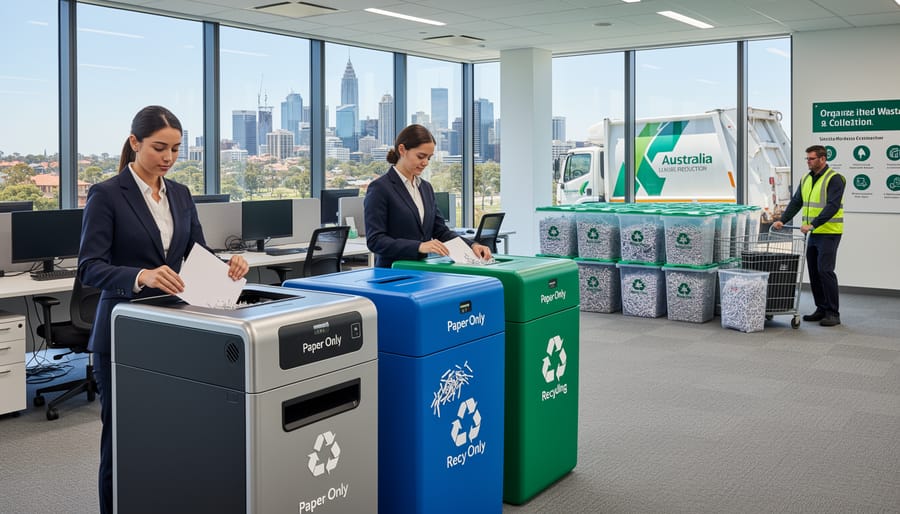
Setting up effective collection systems transforms shredded paper management from frustrating to straightforward. Start by placing clearly labelled bins near shredders—most Australian offices find that bright-coloured containers marked “Shredded Paper for Reuse” boost participation rates significantly. Keep these separate from general recycling bins, as mixing shredded paper with other recyclables contaminates entire batches.
For storage, breathable containers work best. Cardboard boxes or paper bags allow airflow and prevent moisture buildup, which can make shredded paper unusable. Many Melbourne and Sydney businesses partner with local composters or worm farms, delivering accumulated shredded paper monthly. This approach aligns with broader workplace sustainability strategies by creating measurable impact.
Consider designating a “shredded paper champion” who coordinates collection and identifies reuse opportunities within your community. Brisbane office parks have successfully connected with nearby garden centres seeking mulch material, creating circular economy solutions that benefit everyone involved.
Partnering with Specialist Recyclers
If your business generates significant volumes of shredded paper, partnering with specialist commercial recyclers offers a practical pathway forward. Several Australian companies now accept shredded paper, transforming what councils reject into valuable resources. Services like Cleanaway, ResourceCo, and regional operators including Melbourne’s Polytrade Paper collect shredded paper from businesses, processing it into pulp for products like egg cartons and packaging materials.
Costs vary depending on your location and volume, typically ranging from collection-only services to modest per-bin fees. Many providers offer free consultations to assess your needs. When selecting a recycler, look for companies with Australian Packaging Covenant Organisation membership or ISO 14001 environmental certification, ensuring your waste genuinely reaches recycling facilities rather than landfill.
This partnership pairs naturally with preventing waste at the source. Consider switching to sustainable office supplies and implementing digital-first policies. Together, these steps create a comprehensive approach that reduces both environmental impact and long-term disposal costs.
Creating Your Household Shredded Paper Action Plan
The Monthly Shredding Audit
Setting aside just 15 minutes each month to track your shredding habits can reveal surprising patterns and savings opportunities. Start by weighing your shredded paper output or simply counting bags used. Keep a quick log in your phone noting what types of documents you’re shredding most frequently. Many Australian businesses discover they’re printing documents unnecessarily or creating multiple copies out of habit rather than need.
This monthly check-in isn’t about perfection but progress. You might notice you’re shredding entire outdated policy manuals when a simple digital update would suffice, or that certain departments generate significantly more paper waste than others. Share your findings with colleagues or household members to spark conversations about going paperless where practical. Some Melbourne offices have turned their audit results into friendly reduction competitions between teams, cutting their shredding needs by up to 40 percent within six months. The audit helps you understand your baseline so you can celebrate real reductions while identifying smarter document management practices for the future.
Setting Up Your Reuse System
The key to successful reuse is making it effortless. Start by designating a clean, dry storage container near your shredder – a cardboard box or plastic tub works perfectly. Label it clearly so everyone in your household or office knows it’s for clean paper only (no glossy magazines or receipts). Think of this as your shredded paper pantry, ready whenever you need packing material or garden mulch.
For households, a small container under the desk keeps things tidy until you need it. Many Aussie families have discovered that keeping a second container in the garden shed makes composting a breeze. Businesses might consider setting up collection points near staff kitchens for those bringing lunch from home – they’ll appreciate the free packing material for fragile items.
If you’re generating more than you can use, connect with neighbours through local Facebook groups or community noticeboards. Someone nearby is probably selling items online and would love free packing supplies. This simple system transforms what seems like waste into a valuable resource that benefits your local community while keeping paper out of landfill.
Connecting with Local Reuse Networks
Your local community is likely brimming with people who’d love to take that excess shredded paper off your hands. Australia’s reuse networks are thriving digital spaces where one person’s waste becomes another’s treasure, and shredded paper is surprisingly popular for pet bedding, compost material, and packaging needs.
Start with Buy Nothing groups, a global movement with dozens of active Australian chapters organized by suburb. Simply search “Buy Nothing” plus your location on Facebook to find your hyperlocal group. These communities operate on gifting principles, making it easy to offer your shredded paper to neighbours who genuinely need it.
Facebook Marketplace and local community groups are equally valuable. Post a simple “free to collect” listing with a photo, and you’ll often find takers within hours, particularly from small business owners, pet owners, or keen gardeners. Gumtree’s “free stuff” section works brilliantly too, especially in regional areas where community exchange is part of daily life.
The beauty of these platforms? You’re building connections while diverting waste from landfill. One Melbourne office manager found a rabbit rescue that now collects their shredded paper monthly, creating an ongoing solution that benefits everyone involved.
Managing shredded paper waste might seem like a small piece of the sustainability puzzle, but as we’ve explored, these tiny strips add up to make a significant environmental impact. When millions of Australian households and businesses make smarter choices about their shredded paper, we collectively divert tonnes of material from landfill, reduce contamination in recycling streams, and create valuable resources for composting and reuse.
The beauty of this challenge is that solutions exist right now, and they’re accessible to everyone. Whether you’re composting shredded paper in your backyard, connecting with local community gardens, or implementing a comprehensive waste strategy as part of your business sustainability goals, every action counts. We’ve seen inspiring examples across Australia of communities coming together to transform what was once considered waste into something useful, from Melbourne’s thriving garden networks to Brisbane businesses pioneering zero-waste offices.
Australia’s commitment to reducing waste and meeting our national sustainability targets depends on these collective efforts. The National Waste Policy aims to significantly increase our resource recovery rates, and managing shredded paper properly is one achievable way each of us contributes to this vision.
Start with just one change today. Perhaps it’s setting up a dedicated container for shredded paper destined for your compost, reaching out to a local community garden, or reviewing your office’s paper management systems. Small shifts in how we handle shredded paper create ripples that extend far beyond our individual bins, contributing to healthier soils, cleaner recycling systems, and a more sustainable future for all Australians.