
Stand in a jungle and you’ll feel the pulse of Earth’s most ancient theatre—a place where life explodes in layers, from the shadowy forest floor to the sun-drenched canopy 40 metres above. These aren’t just pretty backdrops for adventure films; jungles are the planet’s lungs, storing more carbon than any other terrestrial ecosystem while housing over half of the world’s plant and animal species in just 6% of Earth’s surface.
Yet we’re losing them at an alarming rate—an area the size of a football field disappears every second. For Australians, this matters deeply. Our own tropical rainforests in Far North Queensland share ancestral DNA with jungles worldwide, and our choices ripple across the globe. When we purchase products, vote with our wallets, or share stories about connecting with natural landscapes, we’re either contributing to jungle destruction or becoming part of the solution.
The good news? Engaging meaningfully with jungle landscapes doesn’t require international travel or a biology degree. It starts with understanding what makes these ecosystems irreplaceable—their intricate relationships between species, their role in regulating global climate, and their cultural significance to Indigenous communities who’ve protected them for millennia. From there, practical actions emerge: supporting Indigenous-led conservation, making informed consumer choices, and building connections with our own precious rainforests right here at home. This is your guide to becoming an active participant in jungle conservation, Australian-style.
What Makes Jungle Landscapes Unique
The Living Architecture of Jungles
Imagine standing beneath a jungle canopy and looking up—you’re witnessing one of nature’s most ingenious architectural designs. Jungle landscapes aren’t simply collections of trees; they’re intricate, multi-storey communities where every level pulses with distinct life.
At ground level, the **forest floor** exists in perpetual twilight. Here, decomposers work tirelessly, breaking down fallen leaves and creating the nutrient-rich soil that feeds the entire system. It’s nature’s recycling centre in action—a powerful reminder of how circular systems sustain life.
Above this, the **understory** houses young trees and shade-loving plants, providing shelter for countless insects, reptiles, and ground-dwelling mammals. Think of it as the jungle’s nursery and refuge combined.
The **canopy layer**—often 30 metres high—is where the magic truly happens. This dense ceiling of interlocking branches captures sunlight and becomes home to approximately 70% of jungle species. Birds, primates, and tree-dwelling creatures thrive here, rarely touching the ground below.
Finally, the **emergent layer** sees the tallest trees breaking through—giants reaching 60 metres or more. These titans provide crucial nesting sites for eagles and other apex species.
Understanding this layered architecture helps us appreciate why protecting jungle landscapes matters so profoundly. Each level depends on the others, creating a resilient, interconnected community—much like the sustainability networks we’re building across Australian communities today.
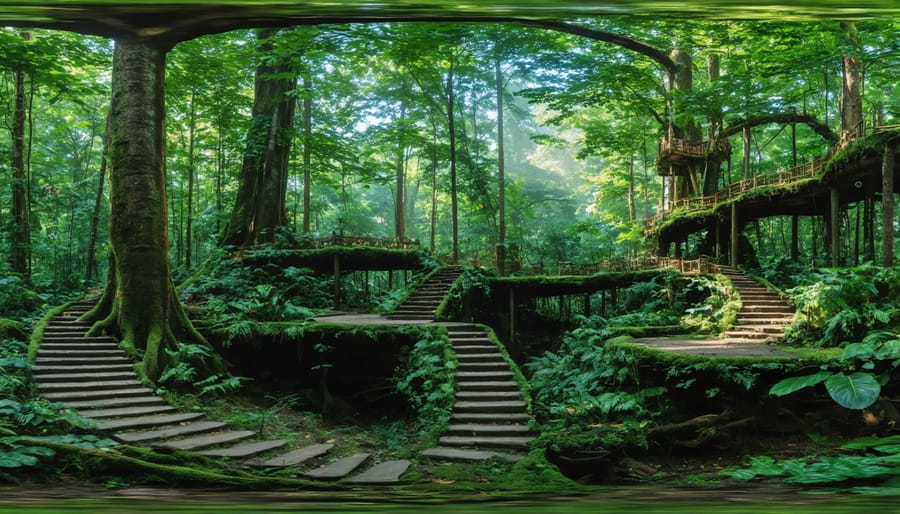
Australia’s Own Jungle Treasures
Right here in Australia, we’re custodians of some of the planet’s most extraordinary jungle landscapes. The Daintree Rainforest in Far North Queensland stands as the world’s oldest continuously surviving tropical rainforest—a living time capsule dating back 180 million years. This ancient ecosystem harbours plants found nowhere else on Earth, including species that reveal what the world looked like when dinosaurs roamed.
Beyond the Daintree, the broader Wet Tropics World Heritage Area protects over 900,000 hectares of irreplaceable biodiversity. Here, you’ll find more primitive flowering plant families than anywhere else globally, making it a crucial living laboratory for understanding plant evolution. The region supports 30% of Australia’s marsupial species and 60% of our butterfly species within just 0.1% of the continent’s land area.
Further north, the Tiwi Islands showcase how Indigenous-led land management creates thriving jungle ecosystems. Traditional burning practices and cultural stewardship have maintained these tropical woodlands for millennia, demonstrating that human engagement with jungle landscapes, when done respectfully, strengthens rather than diminishes these vital environments. These Australian treasures remind us that protecting jungles isn’t just a distant concern—it’s our local responsibility.
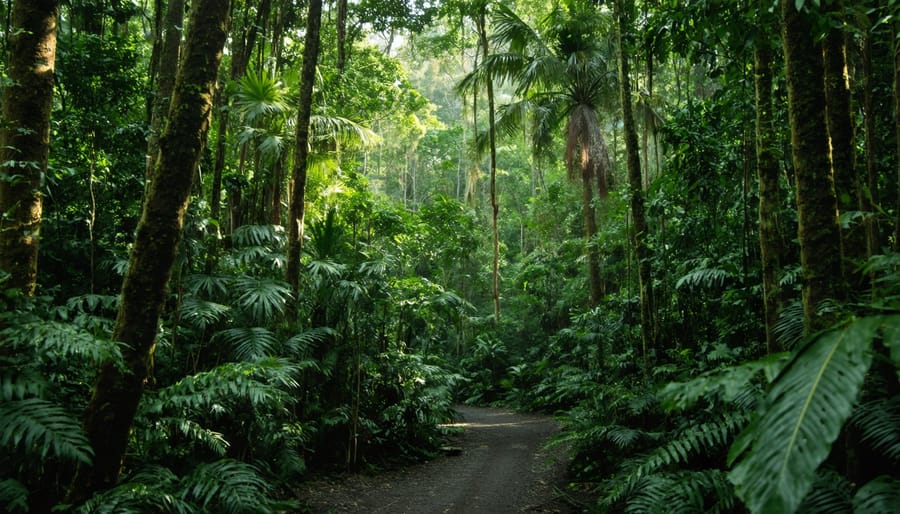
The Environmental Services Jungles Provide
Carbon Storage Champions
Australia’s tropical rainforests are nature’s climate champions, working tirelessly to pull carbon dioxide from our atmosphere and lock it away for centuries. These jungle landscapes store an extraordinary amount of carbon—approximately 1,200 tonnes per hectare in our northern Queensland rainforests, making them among the most efficient carbon sinks on Earth.
Here’s what makes this remarkable: a single hectare of mature rainforest can store as much carbon as the average Australian produces in over 100 years. The Daintree Rainforest alone holds an estimated 70 million tonnes of carbon in its ancient trees, soil, and vegetation—that’s equivalent to taking 15 million cars off our roads for a year.
When we protect these jungles, we’re investing in one of our most powerful climate solutions. Communities across Far North Queensland are already seeing this connection, with local conservation groups partnering with Traditional Owners to safeguard these carbon-storing giants. Each tree preserved, each hectare protected, directly contributes to Australia’s climate resilience. It’s encouraging to know that by supporting rainforest conservation—whether through donations, eco-tourism, or advocating for stronger protections—we’re all part of this essential climate action story.
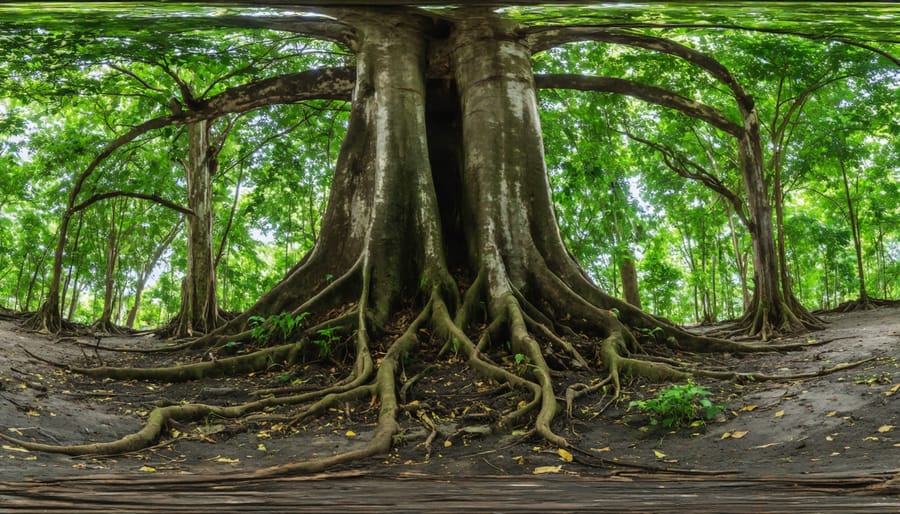
Water Cycle Regulators
Jungle landscapes operate as nature’s sophisticated water management systems, orchestrating rainfall patterns that extend far beyond their borders. These dense ecosystems act as giant sponges, absorbing moisture during wet periods and gradually releasing it throughout drier months—a natural insurance policy that Australian agricultural communities increasingly recognise as invaluable.
The thick canopy and layered vegetation in tropical forests intercept rainfall, allowing water to permeate slowly into the soil rather than rushing across the surface. This process prevents devastating erosion whilst filtering impurities, ensuring cleaner waterways downstream. For regions across northern Australia, maintaining healthy jungle ecosystems means more stable water supplies for farming operations and townships alike.
Consider the local Indigenous communities who’ve understood this connection for millennia—their traditional land management practices work with jungle landscapes rather than against them. When we support rainforest conservation efforts, we’re not just protecting biodiversity; we’re safeguarding the water security that sustains our agricultural sector and urban centres. Recent studies show that even small-scale rainforest restoration projects can significantly improve local watershed health, creating ripple effects that benefit entire regions.
Biodiversity Powerhouses
Jungles stand as Earth’s most species-rich ecosystems, housing roughly half of all terrestrial plant and animal species despite covering less than 6% of our planet’s surface. In Australia, our tropical rainforests—ancient remnants often called “living museums”—shelter extraordinary creatures found nowhere else on Earth. The Daintree Rainforest alone is home to the southern cassowary, tree kangaroos, and the electric blue Ulysses butterfly, each playing irreplaceable roles in their ecosystems.
This remarkable biodiversity isn’t just beautiful—it’s our lifeline. Species-rich jungles demonstrate exceptional resilience, bouncing back from disturbances more effectively than simpler ecosystems. When we protect jungle diversity, we’re safeguarding nature’s capacity to adapt to climate change and environmental pressures.
There’s a deeply practical dimension too. Indigenous communities have long understood that jungle plants hold healing properties, and modern medicine continues validating this wisdom. Over 70% of cancer-fighting drugs originate from rainforest species, yet we’ve barely scratched the surface of potential discoveries. Each species lost could mean losing tomorrow’s medical breakthrough.
By connecting with and protecting these biodiversity powerhouses, Australian communities aren’t just preserving nature—we’re investing in our collective future, honouring Indigenous knowledge, and maintaining the intricate web of life that sustains us all.
Current Threats Facing Jungle Landscapes
The Australian Context
Right here in Australia, our tropical rainforests tell a story that’s both ancient and urgent. Stretching across Far North Queensland and pockets of New South Wales, these precious jungle landscapes face mounting pressures that demand our attention and action.
Land clearing remains one of the most significant challenges, with Queensland losing approximately 395,000 hectares of woody vegetation in 2021-22 alone—much of it neighbouring or fragmenting rainforest corridors. When we clear land for agriculture or development, we’re not just removing trees; we’re dismantling complex ecosystems that have evolved over millions of years and provide habitat for countless species found nowhere else on Earth.
Tourism presents a double-edged sword for our tropical regions. While the Daintree and Wet Tropics World Heritage Area draw visitors who contribute economically and often become passionate advocates, the sheer volume of foot traffic, infrastructure development, and associated waste creates real stress on these fragile environments. Popular boardwalks and viewing platforms require careful management to prevent ecosystem damage.
Climate change intensifies these challenges dramatically. Our northern rainforests increasingly face cyclones of unprecedented intensity, extended drought periods that shouldn’t occur in these typically wet regions, and shifting rainfall patterns that disrupt the delicate balance plants and animals depend upon. Recent extreme weather events have shown us that these aren’t distant future concerns—they’re happening now, reshaping the jungles we’ve long taken for granted and calling us toward immediate, community-driven conservation action.
The Domino Effect
When jungle landscapes degrade, the ripple effects spread far beyond their borders—much like how bushfire smoke from Australia’s east coast can blanket cities thousands of kilometres away. Indigenous communities who’ve stewarded these lands for millennia lose their homes, traditional medicines, and cultural heritage. For context, imagine if the Murray-Darling Basin completely dried up—that’s the scale of disruption jungle communities face when their forests disappear.
The water story hits close to home for Australians who’ve weathered droughts. Jungles act as massive water towers, capturing rainfall and releasing it gradually into rivers that millions depend on downstream. When cleared, that steady flow becomes feast or famine—devastating floods followed by drought. Cities like Brisbane and Sydney rely on healthy catchments; jungle nations face identical challenges but on a larger scale.
Local economies collapse too. Think about regional Australian towns that thrive on tourism—Margaret River’s wineries or the Great Ocean Road’s natural beauty. Jungle communities similarly depend on their landscapes for sustainable tourism, wild foods, and forest products. When degradation sets in, these income streams vanish, forcing families into poverty and often driving further environmental damage as desperate communities exploit remaining resources.
The interconnectedness is undeniable. Australian coffee drinkers, chocolate lovers, and smartphone users are all linked to jungle landscapes through global supply chains. What happens in the Amazon, Congo, or Southeast Asian jungles ultimately affects us all—from climate patterns to biodiversity loss that threatens medical breakthroughs and agricultural resilience.
How Australians Can Engage with and Protect Jungle Landscapes
Visit Responsibly
When you’re ready to immerse yourself in nature within Australia’s precious rainforests, your choices matter tremendously for these fragile ecosystems. Start by selecting tour operators accredited through Ecotourism Australia’s ECO Certification program—this ensures they meet genuine environmental and cultural standards, not just greenwashing promises.
Before booking, ask operators about their conservation contributions and indigenous partnerships. Many Queensland and Northern NSW rainforest tours now collaborate directly with Traditional Owners, offering authentic cultural experiences while supporting First Nations communities. The Daintree region showcases brilliant examples of this respectful eco-tourism in action.
During your visit, embrace sustainable travel practices by staying on designated pathways—wandering off-track compacts soil and damages delicate root systems. Take only photographs and memories, leaving everything from leaves to fallen branches for the forest’s natural recycling processes. Keep noise levels down to avoid disturbing wildlife, and never feed native animals, as this disrupts their natural behaviours.
Consider visiting during shoulder seasons when tourist pressure is lower, and choose accommodation that demonstrates clear environmental commitments. Together, we’re not just visiting these extraordinary landscapes—we’re becoming their active protectors.
Support Conservation Organizations
Several outstanding Australian-based organisations are making real differences in protecting our precious rainforest ecosystems, and they welcome your support. **Rainforest Rescue** stands at the forefront, purchasing and protecting threatened rainforest land across Queensland and New South Wales. Through their Buy Back the Rainforest program, you can directly fund land acquisition—every dollar truly counts toward permanent conservation.
**Australian Rainforest Conservation Society** works closely with local communities to restore degraded rainforest areas, offering both donation opportunities and hands-on volunteer programs where you can get your hands dirty planting native species. Many regional land trusts, like the **Daintree Rainforest Foundation** and **Gondwana Rainforests Foundation**, focus on specific bioregions, allowing you to support areas you may have personally explored.
Beyond financial contributions, consider becoming a member to stay connected with their campaigns and joining local working bees. Many organisations also offer corporate partnership programs—a meaningful way for Australian businesses to demonstrate environmental commitment. Even small monthly donations create sustainable funding streams that enable long-term protection projects. Your involvement, whether through time, resources, or advocacy, directly strengthens the safety net around these irreplaceable jungle landscapes.
Make Jungle-Friendly Choices at Home
Every purchase we make ripples across the planet, often reaching deep into jungle landscapes thousands of kilometres away. In Australia, we’re increasingly connected to tropical rainforests through everyday products—and the good news is that mindful choices can protect these vital ecosystems.
Palm oil production drives massive jungle destruction, particularly in Southeast Asia. When shopping, look for products certified by the Roundtable on Sustainable Palm Oil (RSPO) or consider Australian brands that use alternative oils like macadamia or sunflower. Apps like Palm Oil Investigations help identify palm oil in products while you’re at the supermarket.
Timber and paper choices matter too. Seek FSC-certified products that guarantee responsible forest management, or better yet, support Australian plantation timber from companies like Responsible Wood. When buying furniture, ask retailers about their timber sources—transparency signals commitment to sustainability.
Melbourne’s Ceres Community Environment Park runs workshops on ethical consumption, while Brisbane’s Sustainable Living Festival connects locals with jungle-friendly brands. Small businesses across Australia are championing these alternatives, proving that protecting distant jungles starts with conscious choices in our own communities. Together, we’re creating market demand that makes preservation profitable.
Get Involved in Restoration Projects
Australia’s ancient rainforests need your hands, heart, and commitment—and there are countless ways to make a tangible difference right in your own backyard.
Across Queensland’s Wet Tropics and the Northern Territory’s monsoon forests, community-led restoration projects are bringing degraded landscapes back to life. Organizations like Rainforest Rescue and Greening Australia run regular tree-planting days where volunteers help establish native seedlings, remove invasive weeds, and create wildlife corridors. These aren’t just feel-good activities—your efforts directly contribute to habitat connectivity and species recovery.
Citizen science programs offer another powerful avenue for engagement. Join the Bush Blitz program to document plant and animal species, or participate in FrogWatch to monitor rainforest amphibian populations. Your observations feed into national biodiversity databases, helping scientists track ecosystem health and climate impacts.
Many local Land Care groups coordinate weekend working bees specifically focused on rainforest regeneration. Whether you can commit to monthly volunteering or just one Saturday, every contribution counts. Schools, corporate teams, and families are all welcome—restoration knows no boundaries. By getting your hands in the soil, you’re not just planting trees; you’re investing in the future of Australia’s irreplaceable jungle landscapes and building a community united by environmental stewardship.
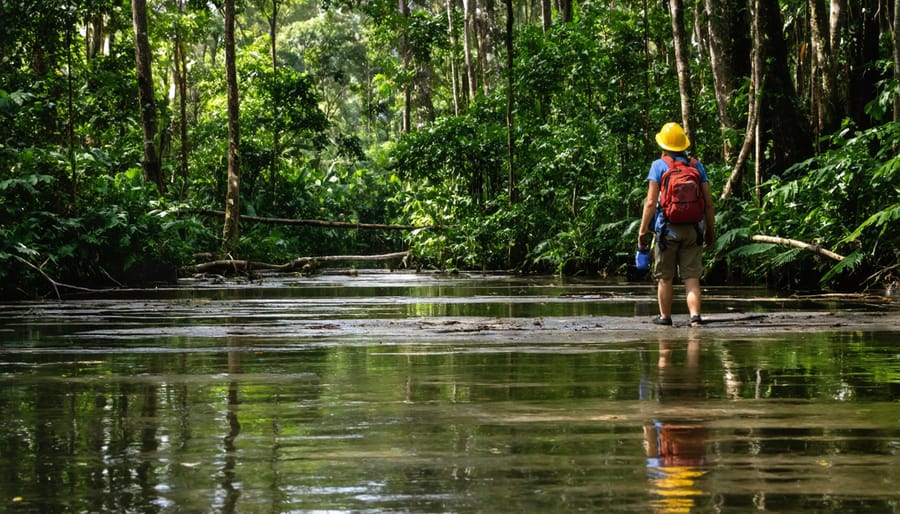
The Connection Between Jungle Health and Sustainable Living
Your Water Use and Jungle Rivers
Every time we turn on a tap in Australia, we’re connected to waterways that eventually flow to the ocean—and many of these reach coastal rainforests and jungle landscapes across our region. The choices we make about water use at home and in business directly impact these precious ecosystems downstream.
When households reduce water consumption through simple actions like shorter showers and fixing leaks, less wastewater enters treatment systems. This means fewer chemicals and pollutants reaching rivers that feed into tropical ecosystems. Australian communities near catchment areas serving northern Queensland’s rainforests have seen remarkable results when local businesses adopt water-efficient practices—reducing runoff that carries nutrients and contaminants into sensitive jungle waterways.
Consider your wastewater too. What goes down our drains—from cleaning products to cooking oils—can travel remarkable distances. By choosing biodegradable products and properly disposing of chemicals, you’re protecting river systems that sustain jungle biodiversity thousands of kilometres away. Many Australian councils now offer rebates for rainwater tanks and greywater systems, making it easier and more affordable to reduce your water footprint while safeguarding the jungle rivers that depend on clean, balanced water flows.
Waste Reduction and Habitat Protection
Every purchase we make ripples through global supply chains, often reaching the world’s most precious jungle landscapes. By embracing waste reduction in our daily lives, we directly ease pressure on these vital ecosystems. Consider the Daintree Rainforest in Far North Queensland—one of Earth’s oldest jungles—where tourism waste and nearby agricultural runoff threaten its delicate balance. When Australian households reduce single-use plastics, choose products with minimal packaging, and compost organic waste, we’re part of a collective force that diminishes demand for resource extraction.
Local initiatives are leading the way. Community groups across Australia run repair cafés and swap meets, extending product lifespans and keeping materials in circulation rather than landfills. In Melbourne and Sydney, zero-waste stores have flourished, proving that conscious consumption can become mainstream. These choices matter because less waste means fewer resources extracted from jungle regions worldwide—whether it’s timber, palm oil, or minerals. By rethinking our consumption patterns and supporting businesses committed to sustainable sourcing, we’re protecting not just Australian wilderness but tropical jungles globally. It’s about recognizing that our everyday actions connect us to these magnificent landscapes, even from thousands of kilometres away.
Jungle landscapes might seem worlds away from Australian shores, but their fate is intimately connected to our own environmental health. The carbon these forests store affects our climate, the species they shelter influence global biodiversity, and the lessons they teach about resilience matter everywhere. The beautiful truth is that distance doesn’t diminish our capacity to make a difference.
Every action counts, whether you’re supporting conservation organizations working on the ground, choosing sustainably sourced products, or sharing knowledge within your community. Australian neighborhoods are already leading inspiring initiatives—from school groups raising funds for rainforest protection to businesses committing to zero-deforestation supply chains. These aren’t just feel-good gestures; they’re creating measurable impact.
And there’s genuine reason for hope. Communities worldwide have successfully protected millions of hectares of jungle through collective action. Indigenous-led conservation has reversed deforestation in regions once considered lost. Species on the brink have rebounded when given space and protection.
Your choices matter more than you might think. Start conversations, support verified conservation projects, make conscious purchasing decisions, and connect with local environmental groups. Together, we’re not just preserving distant landscapes—we’re safeguarding the interconnected web of life that sustains us all. The jungle’s future, and ours, depends on communities like ours stepping forward today.