
Every time you immerse yourself in nature to gather wild mushrooms, berries, or native plants, you’re entering a delicate living system where your actions ripple through countless interconnected species. An ecological forest isn’t simply a collection of trees—it’s a self-regulating community where fungi networks feed nutrients to plants, native animals distribute seeds, and decomposing matter creates the foundation for new growth. Yet across Australian bushlands, well-meaning foragers inadvertently damage these systems daily by overharvesting, trampling regeneration zones, and disrupting wildlife corridors without realizing the long-term consequences.
Understanding how ecological forests function transforms wildcrafting from extractive activity into reciprocal relationship. When you recognize that removing fruiting bodies affects underground mycelial networks, or that harvesting native greens impacts endangered marsupials’ food sources, your basket becomes lighter and your awareness deeper. This shift matters urgently now, as climate stress already challenges our native ecosystems’ resilience. Australian forests face unique pressures—prolonged drought, increased fire frequency, and habitat fragmentation—making responsible foraging practices not merely ethical choices but essential conservation actions.
The good news? Sustainable wildcrafting actually strengthens your connection to Country while protecting it. By learning ecological principles specific to Australian environments, you’ll harvest abundantly without harm, contribute to forest health, and join a growing community of mindful foragers who understand that what we take today determines what thrives tomorrow.
What Makes a Forest ‘Ecological’ (And Why It Matters for Foragers)
The Invisible Web That Keeps Forests Alive
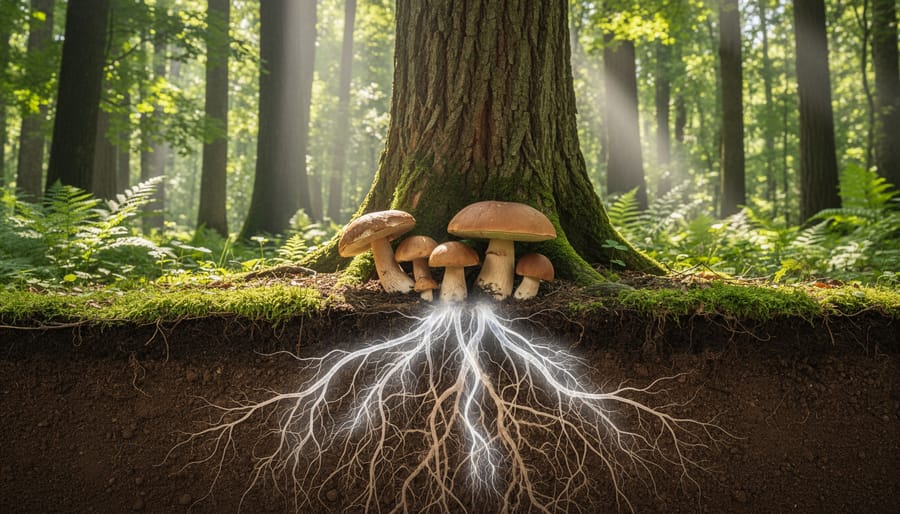
Beneath your feet in Australian forests lies an invisible network as complex as any city’s infrastructure. Scientists call it the “wood wide web”—a vast underground system of fungal threads connecting trees, shrubs, and plants in ways that transform our understanding of forest ecosystems.
These mycorrhizal networks work like nature’s internet. Fungal threads, finer than human hair, wrap around plant roots and extend through the soil, connecting individual plants across entire forest floors. Through these connections, a mature eucalypt can share nutrients with seedlings struggling in its shade. When one plant faces pest attack, it sends chemical warning signals through the network, allowing neighbours to boost their defences before trouble arrives.
Here’s where responsible foraging becomes crucial. When we remove even small amounts of plant material—whether it’s native herbs, mushrooms, or bark—we’re not just taking from one organism. We’re potentially disrupting an entire web of relationships. That handful of forest floor fungi you’ve collected might be the vital nutrient link between an old-growth tree and dozens of surrounding plants. The roots you’ve disturbed while harvesting could sever connections that took years to establish.
In Victoria’s Dandenong Ranges and Tasmania’s ancient forests, researchers have documented how these networks support extraordinary biodiversity. Trees share carbon with understory plants during drought. Older trees, dubbed “mother trees,” actively support younger generations through resource sharing.
This interconnectedness means ecological forests aren’t collections of individual plants—they’re living superorganisms. Understanding this changes everything about how we approach foraging. It’s not about whether we can regrow what we’ve taken; it’s about recognising that every harvest ripples through an intricate system we’re only beginning to understand.
How Wildcrafting Impacts Forest Ecosystems (Even When Done ‘Carefully’)
The Real Cost of That Instagram-Worthy Mushroom Haul
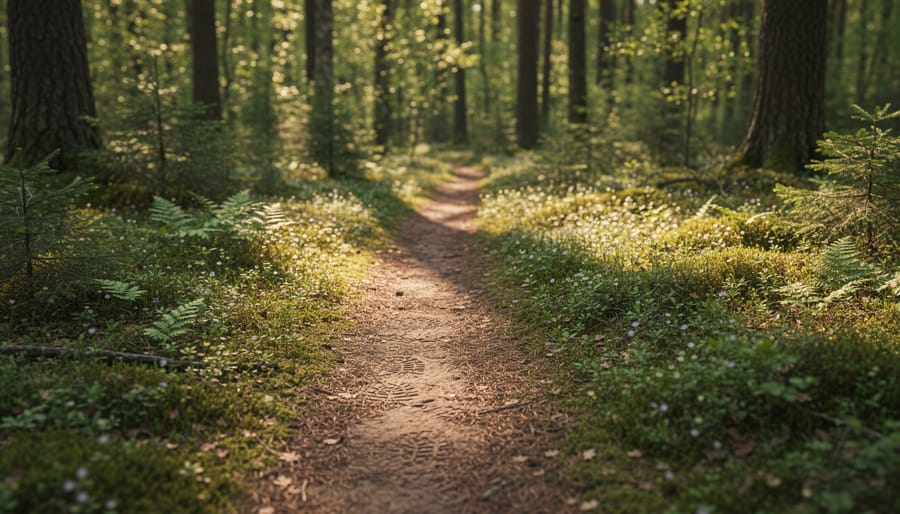
Last autumn, a particularly stunning photograph of golden chanterelles went viral across Australian foraging groups, complete with geotag. Within a fortnight, the once-pristine patch in that Victorian forest looked like a battlefield—soil compacted by dozens of enthusiastic visitors, moss torn away, and the forest floor stripped bare. The mushrooms haven’t returned since.
This story plays out repeatedly across our ecological forests, from the Blue Mountains to Tasmania’s wilderness. Social media has transformed foraging from a quiet, knowledge-based practice into a treasure hunt, where the prize is as much about the perfect photo as the harvest itself. When popular foraging influencers share their finds—often with location details—hundreds of followers descend on sites that evolved to handle perhaps a handful of careful gatherers per season.
The unintended consequences extend beyond trampled ground. Many Instagram-inspired foragers lack the traditional knowledge passed down through generations about sustainable harvesting. They collect immature specimens, pull entire plants instead of cutting them, and ignore seasonal timing that allows forests to regenerate. One Queensland mycologist documented a 73% decline in sought-after species at sites featured in viral posts.
We’re not suggesting you abandon foraging or stop sharing your connection with nature. Rather, consider geotagging regions rather than exact locations, sharing educational content alongside beautiful images, and perhaps keeping some special spots as personal sanctuaries. Our forests need ambassadors, not audiences.
Responsible Foraging Principles That Actually Protect Ecological Forests
The 10% Rule and Why It’s Not Enough on Its Own
You’ve probably heard the “10% rule” for ethical foraging—take no more than 10% of any plant population you encounter. It sounds straightforward enough, but here’s the truth many Australian foragers are discovering: this one-size-fits-all approach doesn’t quite fit our unique landscapes.
The 10% rule emerged from North American wildcrafting traditions, where it served as a reasonable starting guideline for temperate forest ecosystems. The idea is simple: if you only harvest a tenth of what you see, the population can bounce back. But Australia’s ecological forests operate under different rules entirely.
Consider our slow-growing native species like lilly pilly or native ginger. In water-stressed regions or poor soils—common across much of our continent—even 10% harvesting can severely impact populations already struggling with drought, fire recovery, or habitat fragmentation. Meanwhile, some fast-regenerating species in high-rainfall areas might sustainably support slightly higher harvest rates under specific conditions.
This is where nuanced thinking becomes essential. The Daintree Rainforest cooperative in Far North Queensland has pioneered a more sophisticated approach, assessing each species individually. They consider regeneration rates, which can vary wildly between our ancient Gondwanan species and more recent arrivals. They factor in local conditions—has the area experienced recent bushfire? Is the population already stressed by climate impacts? They evaluate species vulnerability, recognizing that some plants produce abundant seed while others reproduce slowly or rely on specific pollinators.
The reality is that responsible foraging in Australian ecological forests requires us to become observers and students of each landscape we enter. It’s about asking questions before we harvest: How resilient is this particular species? What pressures is this ecosystem already facing? Sometimes the right number isn’t 10%—it’s 5%, or 2%, or perhaps it’s choosing not to harvest at all this season.
Reading the Forest Before You Take Anything
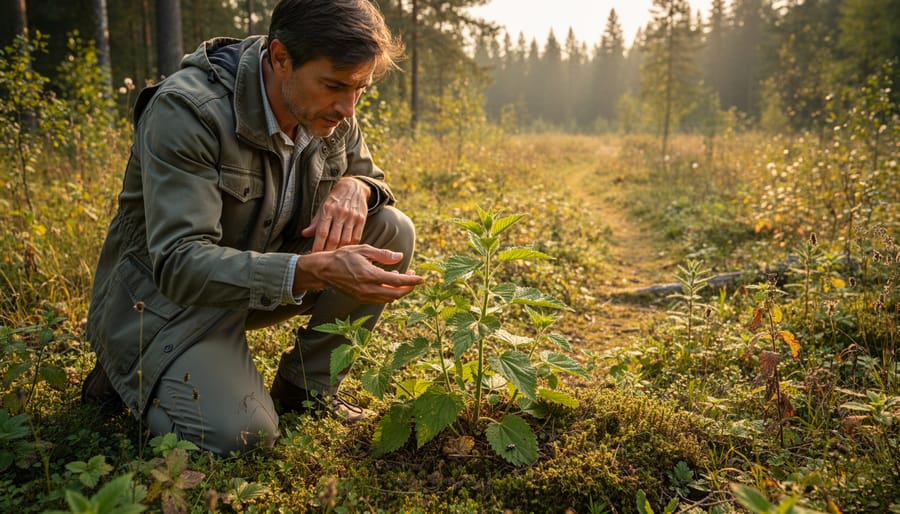
Before you harvest a single leaf or mushroom, take time to truly observe what the forest is telling you. Think of this as reading the landscape’s health report—a skill that connects you more deeply with Country and ensures your foraging leaves ecosystems thriving.
Start by assessing overall vitality. A healthy forest hums with life: diverse plant species at multiple heights, birds calling, insects buzzing, and soil that’s dark and rich with organic matter. Compare this to stressed environments where you might notice sparse undergrowth, exposed soil, dying trees, or an unusual silence. These are red flags that the ecosystem is already struggling and cannot sustain additional pressure from harvesting.
Look closely at the plants you’re considering harvesting. Are they abundant throughout the area, or clustered in just a few spots? Sparse populations suggest vulnerability. Check for signs of stress like yellowing leaves, stunted growth, or pest damage. Healthy plants have vibrant colour, strong stems, and show evidence of successful reproduction through seeds or spreading growth.
In Australian forests, familiarize yourself with threatened species before you forage. Many native plants face pressure from habitat loss and climate change. Resources from your state’s environment department list protected species—carry this information with you. When in doubt, don’t harvest.
Consider seasonal timing too. During drought, bushfire recovery, or after heavy foot traffic, even resilient plants need respite. If an area shows recent disturbance or you notice other foragers have been there recently, move on.
The golden rule: if removing something would be noticeable, the forest cannot sustain that harvest. Your foraging should be invisible to the next person walking through. This mindful approach ensures these precious ecosystems remain abundant for generations while deepening your own connection to the living landscape around you.
Where and When to Forage in Australian Ecological Forests
Understanding where and when to forage in Australian ecological forests requires knowledge, respect, and careful planning. The rewards of wildcrafting are abundant, but only when we approach these precious ecosystems with informed consideration.
Start by identifying public lands where foraging is permitted. In Australia, state forests and some national parks allow limited collection of specific species, but regulations vary significantly between states and territories. Before venturing out, check with your local Parks and Wildlife Service or relevant land management authority. Many protected areas strictly prohibit foraging to preserve vulnerable ecosystems, and fines for violations can be substantial. Always obtain necessary permits where required, and never assume access is granted without verification.
Respecting Indigenous land rights is fundamental to ethical foraging. Many Australian forests sit on Country that has been cared for by Traditional Owners for over 60,000 years. Aboriginal and Torres Strait Islander peoples maintain deep cultural and spiritual connections to these lands, and certain plants hold significant ceremonial importance. Before foraging anywhere, research whether you’re on Indigenous land and understand access protocols. Some communities welcome respectful visitors, while others request that certain areas remain untouched. When in doubt, seek permission and listen to Traditional Owners’ guidance about sustainable harvesting practices.
Private property boundaries must also be respected. Much of Australia’s forested land is privately owned, and trespassing carries legal consequences. Even when land appears unused, always obtain explicit permission from landholders before foraging.
Seasonal timing dramatically affects both your success and your impact. Australian forests follow unique seasonal patterns. Autumn brings mushrooms and native fruits, while spring offers edible flowers and young shoots. Winter provides certain berries and roots, and summer yields leafy greens in cooler regions. Harvesting at peak abundance ensures plants can regenerate effectively. Avoid collecting during drought conditions when ecosystems are already stressed, and never take from areas recently affected by bushfire, as these environments need all available resources for recovery.
Embracing local and mindful exploration means returning to the same areas throughout seasons, building familiarity with their rhythms and needs. This connection transforms foraging from mere collection into genuine ecological stewardship, where you become part of the forest’s story rather than just a visitor taking from it.
Community-Led Initiatives Reshaping Foraging Culture in Australia
Across Australia, passionate communities are transforming how we approach foraging through grassroots initiatives that honour both ecological wisdom and cultural heritage. These groups are proving that sustainable wildcrafting isn’t just possible—it’s a powerful way to reconnect with country while protecting our precious forest ecosystems.
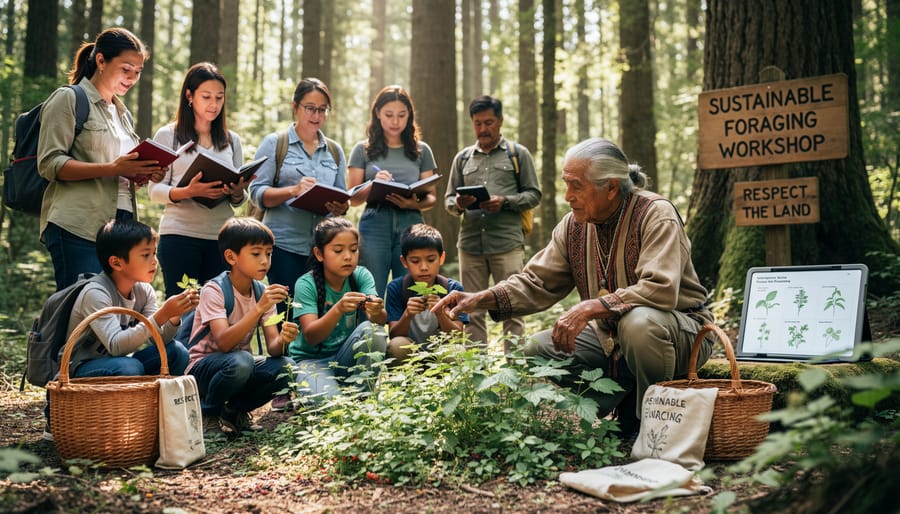
The Yuin people of New South Wales have pioneered the Gulaga Cultural Harvest program, which welcomes visitors to learn traditional plant knowledge directly from Elders. Participants discover how Indigenous Australians have sustainably harvested forest resources for over 60,000 years, using careful timing and selective gathering techniques that actually enhance plant regeneration. This isn’t merely about collecting food—it’s about understanding your relationship with the land.
In Victoria, the Victorian Bush Food Network brings together foragers, ecologists, and farmers to share knowledge and establish ethical harvesting standards. Their community workshops teach identification skills alongside ecological principles, ensuring members understand why leaving the majority of each plant population untouched matters for forest health. One participant, Sarah from the Dandenongs, shares how the network transformed her approach: “I used to fill my basket. Now I take only what I need and spend more time observing the forest’s rhythms.”
Melbourne’s Forage Local collective has created accessible urban foraging walks that demonstrate sustainable practices in action. They’ve developed a “one in twenty” guideline—never harvesting more than five percent from any location—which has become widely adopted across Australian foraging communities.
These initiatives prove that responsible foraging thrives when knowledge is shared openly. By connecting with local groups, you’re not just learning skills—you’re joining a movement that protects ecological forests while celebrating Australia’s incredible botanical diversity. Whether you’re in Brisbane, Perth, or regional areas, there’s likely a community near you ready to welcome new members committed to treading lightly on country.
Creating Your Personal Foraging Code of Ethics
Developing your personal foraging code of ethics transforms good intentions into meaningful action. Think of it as creating a living document that evolves alongside your understanding of Australian forest ecosystems—one that reflects both your values and the specific landscapes you explore.
Start by asking yourself some honest questions: How well do I actually know the species I’m harvesting? Can I confidently identify at least three ecological indicators of a healthy population? What would this forest look like if fifty people foraged here the same way I do? These aren’t meant to discourage you, but to ground your practice in reality. Jenny, a forager from the Blue Mountains, keeps a journal where she tracks these reflections after each outing, noting what she learned and what she’d do differently next time.
Consider establishing personal harvest limits that go beyond legal requirements. Perhaps you’ll commit to taking no more than one in twenty plants, or only foraging in areas larger than a hectare. Maybe you’ll dedicate certain seasons purely to observation, giving yourself permission to simply learn without taking.
Contributing back to forest health completes the circle. Many Australian communities need volunteers for bushcare activities—removing invasive species, planting natives, or monitoring wildlife. Participating in citizen science projects like the Atlas of Living Australia allows your observations to inform conservation efforts. Even something as simple as collecting rubbish during your foraging walks makes a tangible difference.
Commit to ongoing education through workshops, Indigenous-led cultural experiences, or mycology groups. The forests you cherish are generous teachers, but only if we approach them with humility and genuine curiosity. Your ethics code isn’t about perfection—it’s about showing up consistently with respect and accountability, strengthening both your connection to Country and the ecosystems that sustain us all.
The journey toward responsible foraging begins with a simple shift in perspective: seeing ourselves not as harvesters taking from the forest, but as stewards caring for it. When you understand the intricate web of life within ecological forests, every mushroom you gather, every leaf you collect becomes part of a conscious relationship with the land. This isn’t about perfection—it’s about progress and awareness.
Australian forests have sustained Indigenous communities for over 65,000 years through deep ecological knowledge and reciprocal practices. We can honour this wisdom by approaching our own foraging with the same respect and intentionality. Start by sharing what you’ve learned with fellow foragers, local bushwalking groups, or community gardens. Your knowledge ripples outward, creating a culture where sustainable wildcrafting becomes the norm rather than the exception.
Consider joining local conservation efforts or citizen science projects that monitor forest health. These connections strengthen both ecosystems and communities, building networks of people who care deeply about preserving Australia’s unique bushland for future generations.
Remember, every time you forage mindfully—taking only what you need, dispersing seeds, avoiding rare species—you’re actively participating in forest regeneration. Your choices matter. As more Australians embrace this stewardship approach, we create a powerful movement that protects our ecological forests while still enjoying their abundant gifts. Together, we’re not just foraging; we’re cultivating a sustainable future.