
Every kilowatt-hour of solar energy your Australian home generates prevents roughly 0.8 kilograms of carbon dioxide from entering the atmosphere—multiply that across a year, and a typical residential solar system offsets the equivalent of planting 150 mature trees annually. This isn’t abstract environmental theory; it’s the measurable climate impact happening right now on rooftops across suburbs from Perth to Brisbane.
Australian households are uniquely positioned to drive climate action through renewable energy adoption. Our abundant sunshine, falling technology costs, and supportive feed-in tariff schemes mean the average home can transition from climate contributor to climate solution within months, not years.
The urgency is real. Australia’s residential sector accounts for approximately 10% of national emissions, yet we also experience some of the world’s highest solar irradiance levels. This creates an extraordinary opportunity: every home that switches to renewables doesn’t just reduce its own footprint—it strengthens grid stability, lowers energy costs for neighbours, and demonstrates that climate action is both achievable and economically sensible.
Whether you’re in a freestanding house with unlimited roof space or navigating body corporate restrictions in an apartment, renewable options exist for your situation. The transition isn’t about guilt or sacrifice; it’s about harnessing what we already have in abundance—sunshine, innovation, and a growing community of Australians proving that individual action, multiplied across millions of households, creates transformative climate impact.
Why Your Home Energy Choices Matter More Than You Think
The Real Carbon Footprint of Australian Homes
Understanding your home’s carbon footprint is the first step toward meaningful climate action. The average Australian household generates around 7 tonnes of carbon dioxide annually just from electricity use, though this varies significantly depending on where you live.
If you’re in Victoria or New South Wales, your grid still relies heavily on coal-fired power, meaning each kilowatt-hour you use carries a heavier carbon burden. A typical NSW home using 6,000 kWh yearly produces approximately 5.4 tonnes of CO2. Meanwhile, Tasmanian homes benefit from predominantly hydroelectric power, with emissions often 80% lower for the same energy consumption.
South Australia leads the mainland states with over 60% renewable energy in its grid, showing what’s possible when we commit to change. Queensland’s energy mix is gradually improving, but coal still dominates, making rooftop solar particularly impactful there.
Here’s what makes this personal: heating and cooling account for roughly 40% of household energy use, followed by water heating at 25%. These are also your biggest opportunities for emissions reduction through renewable energy adoption. When your Sydney neighbour installs solar panels, they’re preventing around 4 tonnes of CO2 annually—equivalent to taking a car off the road. That’s the power of residential renewable energy in action.
When Thousands of Homes Change, Communities Transform
Across Australia, the momentum of change is building street by street. In Byron Bay, entire neighbourhoods now feed surplus solar energy back to the grid, creating virtual power plants that stabilise local supply during peak demand. The community solar farm initiative in Pingala, New South Wales, has enabled 150 apartment dwellers who couldn’t install rooftop panels to collectively own renewable infrastructure, proving that renters and apartment residents needn’t miss out on the clean energy transition.
In Adelaide’s western suburbs, the Solaris project demonstrates what happens when hundreds of homes coordinate their solar and battery systems. During the 2023 summer heatwave, these connected households reduced grid strain by 40 percent while keeping their own power bills manageable. Similar stories are emerging from regional towns like Yackandandah in Victoria, which aims to become 100 percent renewable-powered through household participation and community investment.
When individual households make the switch, the cumulative effect reshapes our energy landscape. Australia now has over three million solar installations on homes, collectively generating enough clean electricity to power millions of households annually. This grassroots transformation proves that climate action isn’t just about government policy or corporate initiatives. It starts in our homes and spreads through our communities, creating resilient, sustainable neighbourhoods ready for our climate future.
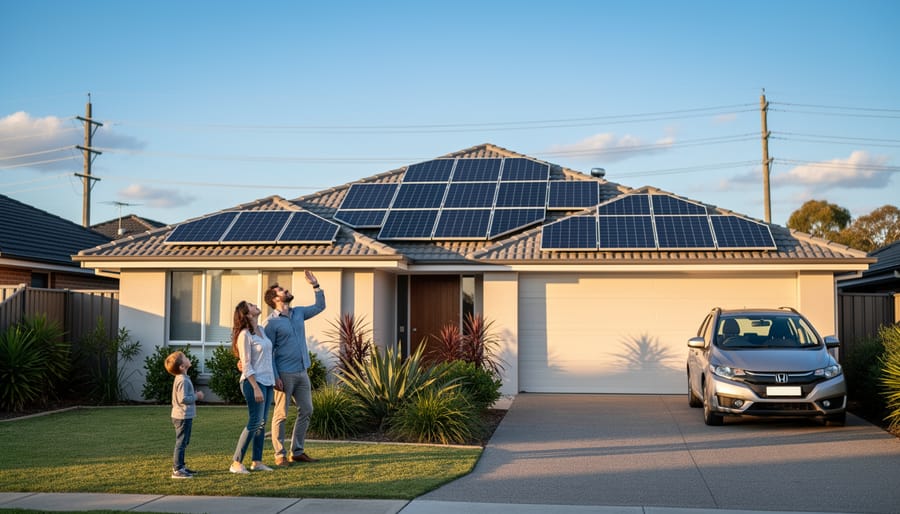
Solar Power: Your Front-Line Climate Solution
How Solar Panels Cut Emissions From Day One
The moment your solar panels connect to the grid, they begin offsetting carbon emissions. Every kilowatt-hour generated means one less produced by fossil fuel power stations, immediately reducing your household’s carbon footprint. For the average Australian home, this translates to preventing approximately 4 tonnes of carbon dioxide entering the atmosphere each year.
Many people worry about the manufacturing carbon debt, and it’s a fair consideration. Solar panel production does require energy, but here’s the encouraging news: most quality panels pay back this carbon debt within 1-2 years of operation. Given that panels typically last 25-30 years, you’re looking at over two decades of clean, guilt-free energy generation.
Over their lifetime, a standard residential solar system prevents around 100 tonnes of CO2 emissions. That’s equivalent to planting more than 2,000 trees or taking a car off the road for 25 years. When you consider the thousands of Australian households already making this switch, the collective impact becomes truly powerful. Your decision to install solar doesn’t just benefit your home; it contributes to a nationwide movement toward cleaner energy, helping Australia meet its climate commitments while building a more sustainable future for our communities.
Sizing Your System for Maximum Climate Impact
Getting the size right matters more than you might think. Too small, and you’ll miss opportunities to slash your carbon footprint. Too large, and you’re potentially overinvesting when those funds could support other community climate initiatives.
Start by reviewing your electricity bills from the past year to understand your consumption patterns. Most Australian households use between 15-20 kWh daily, but your situation might differ. Consider whether you’re home during peak sunlight hours or if you’re exporting most of your solar generation back to the grid.
A 6.6kW system typically suits average households, reducing emissions by roughly 8-10 tonnes of CO2 annually. That’s equivalent to taking two cars off the road. For larger families or homes with electric vehicles, an 8-10kW system might deliver greater climate impact while maximizing solar panel efficiency.
Think about your future needs too. Planning to add air conditioning or switch to electric appliances? Factor in that growth. Many Australians are finding that slightly oversizing their systems now creates flexibility for electrifying everything later, which ultimately achieves deeper emissions cuts.
Export opportunities also matter. While feed-in tariffs have reduced, generating clean energy for your neighbors still contributes to grid decarbonization. Every kilowatt-hour of renewable energy you export displaces fossil fuel generation somewhere in your community.
Balance your investment against your climate goals, but remember that acting now compounds your impact over decades of clean energy generation.
Australian Solar Success Stories
Meet the Johnsons from Bendigo, who installed a 6.6kW solar system in 2021. Within the first year, they’d reduced their household emissions by approximately 4.5 tonnes of CO2 – equivalent to taking a car off the road for nine months. “We were spending around $500 per quarter on electricity,” Sarah Johnson shares. “Now we’re exporting more than we use during summer, and our bills have dropped to under $100.”
Over in Brisbane’s northern suburbs, the Chen family took a different approach. Living in a townhouse with limited roof space, they opted for a smaller 3kW system paired with energy-efficient appliances. Their annual emissions reduction of 2 tonnes might seem modest, but scaled across their entire complex of twelve homes, the potential impact inspired three neighbouring families to follow suit.
The key lesson from both households? Start where you are. The Johnsons recommend getting multiple quotes and choosing quality panels with strong warranties, while the Chens emphasise that even modest systems make a meaningful difference. Both families found local community groups invaluable for sharing installer recommendations and troubleshooting tips.
These stories demonstrate that Australia’s solar revolution isn’t just about individual savings – it’s about collective climate action, one rooftop at a time.
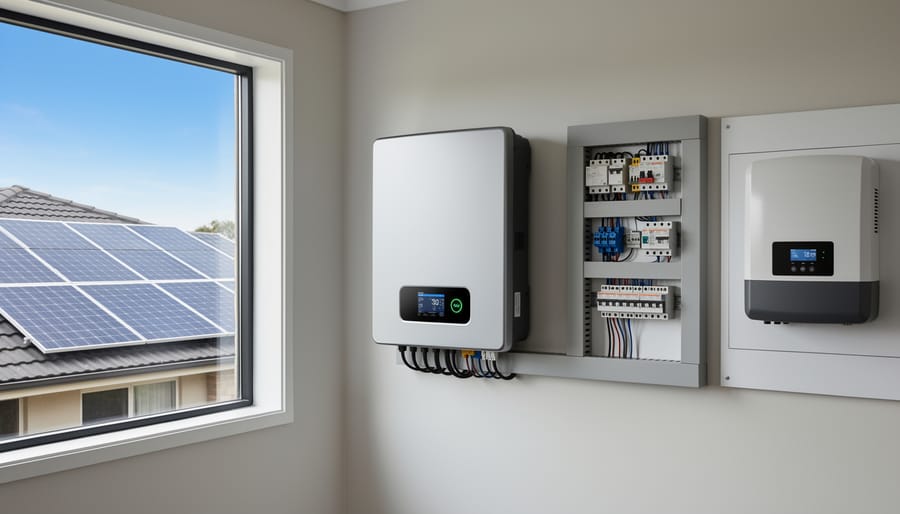
Battery Storage: Amplifying Your Climate Contribution
Why Batteries Make Your Solar Work Harder for the Climate
Here’s the thing about solar panels: they’re brilliant at generating clean energy during the day, but they can’t control when that energy gets used. Without batteries, your excess solar power flows back to the grid during sunny afternoons when electricity demand is relatively low and coal-fired power stations are already throttled back. Meanwhile, when you’re cooking dinner at 7pm and the sun’s set, you’re drawing power from the grid when demand peaks and those same polluting generators are running at full capacity.
This is where batteries become climate champions. They capture your daytime solar surplus and release it during evening peak hours, precisely when the grid’s carbon intensity is highest. In practical terms, every kilowatt-hour your battery supplies during peak times prevents emissions from the dirtiest, most expensive generators that utilities fire up to meet demand spikes.
Australian households with battery systems are already seeing this impact. A recent study found that batteries can reduce household carbon emissions by an additional 30-40% compared to solar panels alone. That’s because you’re not just generating clean energy; you’re strategically displacing the most carbon-intensive power at exactly the right moments.
Think of batteries as timing devices for climate action. They ensure your clean energy makes the biggest possible dent in emissions by targeting those critical hours when the grid needs it most. For Australian homes serious about climate impact, batteries transform solar from a good choice into a genuinely powerful one.
Making the Battery Investment Decision
Deciding whether to invest in a home battery system involves weighing upfront costs against long-term benefits for both your hip pocket and the planet. In Australia, battery prices have dropped significantly over recent years, with typical home systems now ranging from $8,000 to $15,000 including installation, depending on capacity and brand.
The good news is you’re not alone in shouldering these costs. Most Australian states offer rebates and incentives to help make batteries more accessible. Victoria’s Solar Battery Rebate provides up to $1,400 for eligible households, while South Australia’s Home Battery Scheme offers subsidies based on system size. The ACT and Queensland also run programs supporting battery adoption, though availability and amounts vary.
When crunching the numbers, consider that batteries typically pay for themselves over 10 to 15 years through electricity bill savings and potentially selling stored energy back to the grid during peak times. Virtual Power Plant programs in several states can boost your returns by allowing your battery to participate in grid stabilisation.
However, the financial return is only part of the story. Many Australians choose batteries knowing they’re backing up their solar investment and maximising their contribution to climate action. By storing excess solar energy instead of exporting it when the grid may not need it, you’re ensuring cleaner energy powers your evenings and reduces reliance on fossil fuel generation during peak demand.
The decision ultimately balances immediate affordability with your environmental priorities and energy independence goals.
Beyond Solar: Other Home Renewable Options
Solar Hot Water: The Forgotten Climate Champion
While solar panels steal the spotlight, solar hot water systems quietly deliver one of the most effective climate wins for Australian households. Water heating typically accounts for 25-30% of household energy consumption, making it the second-largest source of residential emissions after heating and cooling.
These systems harness the sun’s energy to heat water directly, reducing reliance on gas or electric systems that generate substantial greenhouse gases. In sunny Australia, a well-designed solar hot water system can provide 60-90% of a household’s hot water needs year-round, cutting emissions by approximately 2-3 tonnes annually.
Australian families can choose between flat plate collectors, ideal for temperate climates, or evacuated tube systems that perform brilliantly even on cloudy days. Leading Australian brands like Solahart, Apricus, and Rinnai offer systems tailored to our diverse climate zones.
The beauty of this technology lies in its simplicity and proven track record. Many systems installed decades ago still function reliably today. Combined with federal rebates and state incentives, solar hot water represents an accessible entry point into renewable energy, delivering immediate emission reductions while reducing power bills for years to come.

Heat Pumps and Other Efficient Alternatives
Heat pumps represent one of the most exciting developments in eco-friendly heating alternatives for Australian homes. These clever systems work by transferring heat rather than generating it, using electricity to move warmth from outside air (even on cold days) into your home during winter, and reversing the process for cooling in summer. When powered by rooftop solar panels, heat pumps become a completely renewable solution for year-round comfort.
What makes heat pumps particularly suitable for most Australian climate zones is their exceptional efficiency. For every unit of electricity consumed, they can deliver three to four units of heating or cooling energy. In our temperate to subtropical regions, where extreme cold is rare, they perform brilliantly and can reduce your heating and cooling energy consumption by up to 75 percent compared to traditional systems.
Heat pump hot water systems deserve special mention for Australian households. With hot water typically accounting for around 25 percent of home energy use, switching from gas or electric resistance systems to a heat pump water heater powered by renewable energy creates substantial emissions reductions. Many Australian communities are already embracing this transition, with neighbourhood groups sharing experiences and recommendations.
The technology works seamlessly with solar power systems, and government rebates often apply to both installations. As Australia moves away from gas connections in new developments, heat pumps provide the perfect renewable-powered alternative for heating, cooling, and hot water needs.
Navigating Rebates, Incentives, and Feed-in Tariffs
Making the switch to renewable energy becomes significantly more achievable when you understand the financial support available to Australian households. The good news? Government incentives and rebates can substantially reduce your upfront costs, transforming what might seem like a daunting investment into an accessible reality for most families.
The federal Small-scale Renewable Energy Scheme provides upfront discounts on solar panel systems through Small-scale Technology Certificates. These certificates, calculated based on your system size and location, can reduce installation costs by thousands of dollars. Your installer typically handles this process, applying the discount directly to your quote.
State and territory governments have also stepped up with their own programs. Victoria’s Solar Homes Program offers rebates up to $1,400 for solar panels and interest-free loans, while South Australia provides subsidies for home battery systems. New South Wales residents can access interest-free loans through the Empowering Homes program, making battery storage more affordable. Queensland and the ACT offer similar schemes, with each territory tailoring support to local community needs.
Feed-in tariffs represent another financial benefit worth understanding. When your solar system generates more electricity than you use, the excess feeds back into the grid, and your energy retailer pays you for it. Rates vary significantly between states and providers, ranging from around 5 to 12 cents per kilowatt-hour. Shopping around for competitive feed-in tariff rates can add hundreds of dollars to your annual savings.
To maximize these opportunities, start by checking the eligibility criteria for your state’s programs, as income thresholds and property requirements vary. Many schemes operate on a first-come, first-served basis, so acting promptly matters. The Clean Energy Council website provides comprehensive, regularly updated information about available incentives.
Remember, these programs exist because governments recognize that supporting individual households to adopt renewable energy creates collective climate action. Your decision to investigate these options isn’t just about personal savings; it’s about joining a nationwide movement toward a sustainable energy future. Local community energy groups often share practical application tips and experiences, making the process less overwhelming and more collaborative.
Maximizing Your Climate Impact: Smart Energy Management
Installing solar panels or a home battery is just the beginning of your renewable energy journey. The real magic happens when you learn to use that clean energy strategically, maximising every kilowatt-hour your system generates.
Smart energy management starts with understanding your generation patterns. Australian households with solar typically produce peak energy between 10am and 2pm. This is your golden window for running energy-intensive appliances like washing machines, dishwashers, and pool pumps. Many Aussie families are discovering that simple timing shifts can increase their solar self-consumption from 30% to 60% or more, dramatically reducing grid reliance.
Energy monitoring tools have become game-changers for households serious about climate action. Apps connected to your solar inverter show real-time generation and consumption, helping you spot energy-hungry appliances and adjust usage accordingly. Some systems even send notifications when excess solar is available, prompting you to start that load of laundry or charge your electric vehicle.
Community initiatives across Australia are taking this further. Neighbourhood battery schemes in suburbs from Perth to Melbourne allow residents to store excess solar collectively, while virtual power plants link home batteries to share energy during peak demand. These collaborative approaches amplify individual climate impact through collective action.
Developing energy-saving habits remains crucial alongside renewable technology. Simple actions like switching to LED lighting, improving insulation, and choosing energy-efficient appliances reduce your overall consumption, meaning your renewable system covers a larger proportion of your needs. Smart home integration takes this further, automatically adjusting heating, cooling, and appliance operation to align with solar generation patterns.
The result? Lower emissions, reduced bills, and the satisfaction of knowing you’re making every ray of sunshine count toward climate action.

Renters and Non-Solar Options: You Can Still Make a Difference
Living in a rental or without suitable rooftop space doesn’t mean you’re locked out of the renewable energy revolution. Australian renters and apartment dwellers have several powerful options to support clean energy and reduce their carbon footprint.
The most accessible pathway is purchasing renewable electricity through GreenPower or 100% renewable energy plans from your retailer. This simple switch ensures your household energy consumption is matched with renewable generation, directly supporting Australia’s clean energy sector without any installation required. Many providers offer competitive rates that won’t stretch your budget.
Community solar projects are gaining momentum across Australia, allowing you to buy or lease a portion of a shared solar farm. You’ll receive credits on your electricity bill while supporting renewable infrastructure, making solar accessible regardless of your roof situation.
For those wanting tangible renewable technology, portable solar panels and battery systems offer flexibility. These plug-and-play options can power devices, charge electronics, and even run small appliances. When you move, they move with you.
Don’t underestimate your influence as a tenant. Approach your landlord or body corporate about solar installation, highlighting how it increases property value and can attract environmentally conscious tenants. Some state programs offer incentives specifically for rental properties.
Join community energy cooperatives or local environmental groups that advocate for renewable energy access. Your voice matters in pushing for policies that make clean energy available to all Australians, not just homeowners. Every action counts in our collective climate response.
Every solar panel installed, every energy-efficient choice made, and every conversation started about renewable energy in your home creates ripples that extend far beyond your property line. You’re not just reducing your household emissions—you’re joining a growing movement of Australians proving that climate action begins where we live.
The beauty of residential renewable energy lies in its dual impact. While you’re cutting your power bills and gaining energy independence, you’re also demonstrating to neighbours, friends, and your broader community that sustainable living is both practical and rewarding. These visible choices inspire others, creating momentum that accelerates Australia’s transition away from fossil fuels.
Starting your renewable energy journey doesn’t require a complete home transformation overnight. Begin with an energy audit to understand your consumption patterns. Research solar options suited to your roof orientation and local climate. Connect with community energy groups in your area—these grassroots initiatives provide invaluable support, share experiences, and often negotiate better rates for members through collective purchasing power.
Remember, the urgency of climate change demands action, but that action doesn’t need to be overwhelming. Each step you take matters. Whether you install one solar panel or a complete system, switch to green energy retailers, or advocate for better renewable policies in your community, you’re contributing to the solution.
The time for home energy transformation is now, and the pathway is clearer than ever. Your choices today shape Australia’s climate tomorrow—and that power is quite literally in your hands.