
Stick removable LED strips under kitchen cabinets to slash lighting costs by up to 75% compared to halogen downlights—they peel off without damage when you move. Seal window gaps with transparent weatherstripping tape that reduces heating and cooling bills by 10-25% and leaves no residue on frames. Install smart power boards that automatically cut phantom power drain from appliances on standby, saving the average Australian renter $100-150 annually without touching a single power point.
You’re not powerless over skyrocketing energy bills just because you rent. Across Australia, thousands of tenants are discovering that some of the most effective energy upgrades require zero landlord approval, no wall modifications, and can move with you from lease to lease. These portable solutions are transforming rental properties from energy-draining money pits into comfortable, efficient homes—all while keeping bonds intact.
The reality is that renters face a unique challenge: you’re paying the energy bills for someone else’s property decisions, yet traditional efficiency upgrades seem off-limits. Meanwhile, energy costs continue climbing, and many rental properties remain stuck with outdated fixtures and poor insulation. But here’s what’s changed—a new wave of removable, affordable technologies has emerged that puts control back in your hands.
From thermal curtains that slash heat loss by up to 60% to portable induction cooktops that use half the energy of electric stoves, the options now available don’t just reduce bills—they genuinely improve your quality of life. Even better, many solutions qualify for government rebates and incentives designed specifically for renters, making sustainable living more accessible than ever. Whether you’re working with a $50 budget or ready to invest several hundred dollars, you can create meaningful change starting today.
Why Renters Are Missing Out on the Energy Efficiency Revolution
Across Australia, renters make up roughly 30% of households, yet they’re bearing the brunt of the nation’s energy crisis while being locked out of meaningful solutions. It’s a frustrating paradox: the people most affected by skyrocketing electricity bills are often the least able to do anything about it.
The barriers are real and multifaceted. Many renters assume they simply can’t make changes to their rental property without risking their bond or breaching their lease agreement. There’s a persistent myth that energy efficiency improvements require permanent installations or significant property modifications. Meanwhile, landlords often lack incentive to upgrade properties they don’t personally inhabit, leaving tenants stuck with inefficient appliances, poor insulation, and outdated fixtures that drain both wallets and the environment.
The temporary nature of renting creates another hurdle. Why invest in upgrades when you might move in twelve months? This short-term thinking keeps many renters trapped in a cycle of high energy consumption and mounting bills, watching helplessly as each quarterly statement arrives with increasingly eye-watering figures.
Recent data paints a sobering picture: Australian renters typically pay 30-50% more on energy costs compared to homeowners with energy-efficient upgrades. With electricity prices rising by over 20% in some states during 2023, this disparity has reached crisis levels. Renters are disproportionately affected because they’re living in Australia’s least efficient housing stock, often weatherboard homes or older apartments with minimal insulation and inefficient heating and cooling systems.
But here’s the truth that’s starting to emerge within rental communities across Melbourne, Sydney, and beyond: renters have far more power than they realise. The energy efficiency revolution doesn’t require home ownership. With portable solutions, temporary installations, and a growing understanding of tenant rights, Australian renters are discovering they can take meaningful action without permanently altering their rental property. The question isn’t whether renters can participate in the clean energy transition—it’s how quickly we can share the knowledge that makes it possible.
Australian Incentives and Rebates That Actually Work for Renters
Federal Programs You Can Claim Today
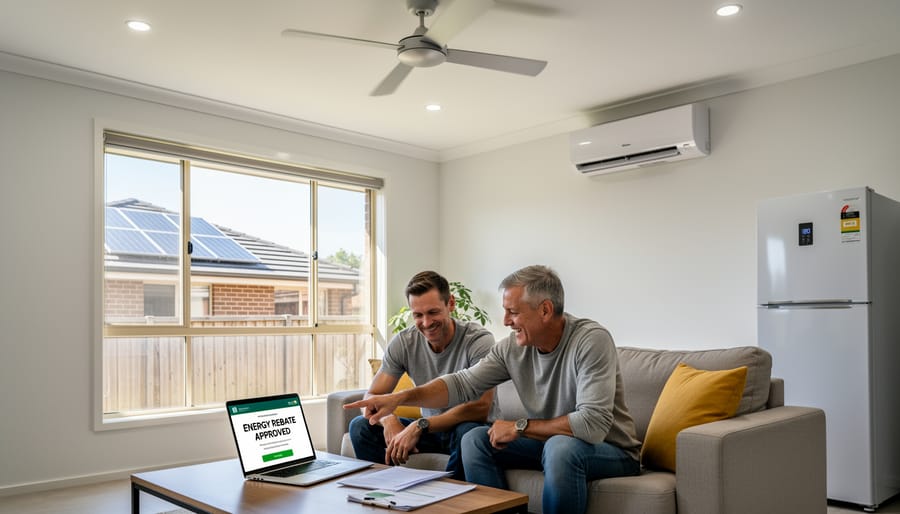
Good news – you don’t need to own your home to access some of Australia’s most generous energy rebates and programs. Several federal initiatives are specifically designed for individuals rather than properties, making them perfect for renters ready to take action on their energy costs.
The Small-Scale Renewable Energy Scheme provides certificates (STCs) for portable solar systems and solar hot water units. While traditionally associated with rooftop installations, these certificates can apply to certain portable solar setups, particularly for renters in separate dwellings like granny flats or relocatable homes. Check with your solar retailer about eligibility – you might be surprised by what qualifies.
The Australian Government’s Energy Bill Relief Fund has been rolled out across states to help households struggling with rising costs. This isn’t technically an upgrade program, but the savings can fund your portable improvements. Eligibility varies by state, so visit Services Australia or your state government website to see if you qualify based on your concession card status or household income.
Many community energy groups also partner with federal programs to offer bulk-buy discounts on portable equipment like efficient heaters, LED lighting kits, and draught-stopping supplies. These community initiatives often include free energy assessments conducted by trained volunteers who understand rental limitations.
When applying for any program, document everything. Keep copies of your rental agreement, utility bills, and correspondence with your landlord. Some programs require proof of residence rather than ownership, making the application process refreshingly straightforward for tenants. Remember, these programs exist because your participation matters – every household counts in Australia’s transition to cleaner energy, regardless of whether you rent or own.
State-by-State Renter Energy Schemes
Good news for Australian renters: you’re not alone in your quest for lower energy bills and a smaller carbon footprint. Governments across the country recognise that tenants deserve access to energy efficiency upgrades, and several states have rolled out programs specifically designed to help.
In New South Wales, the Energy Savings Scheme offers incentives for landlords and tenants, including discounted LED lighting and energy-efficient appliances. The NSW Government’s Energy Switch website provides a comparison tool to help you find the best energy deals, potentially saving hundreds annually without any physical upgrades. Contact Service NSW on 13 77 88 for personalized advice on available rebates.
Victorian renters can tap into the Victorian Energy Upgrades program, which offers discounted or free energy-saving products through accredited providers. The program covers everything from draft stoppers to efficient showerheads. Visit www.victorianenergysaver.vic.gov.au or call 1300 363 744 to find participating providers in your area.
Queensland’s Affordable Energy Plan includes the Home Energy Emergency Assistance Scheme for households experiencing bill stress. While primarily targeting vulnerable households, the program offers interest-free loans for essential appliances through QCOSS. Check your eligibility at www.qgso.qld.gov.au or phone 13 QGOV (13 74 68).
Western Australian renters can access information through the Office of Energy, which maintains updated resources on energy efficiency grants and the Hardship Utility Grant Scheme. Visit www.energy.wa.gov.au or contact them on (08) 6551 4600.
South Australia’s Retailer Energy Productivity Scheme provides rebates on energy-efficient products, with some retailers offering instant discounts at point of purchase. The SA Government’s energysavingscommunity.sa.gov.au portal connects you with local programs and community energy groups who can provide tailored advice.
For Northern Territory and ACT residents, contact your territory’s energy department directly as programs frequently update. The Australian Government’s Energy Rating website (www.energyrating.gov.au) remains an excellent resource regardless of location, helping you make informed choices about portable appliances and upgrades that travel with you.
Portable Energy Upgrades That Pack Up When You Do
Low-Cost Wins (Under $100)
Starting small doesn’t mean sacrificing impact. For under $100, Australian renters can make meaningful changes that trim both energy bills and carbon footprints while staying completely lease-compliant.
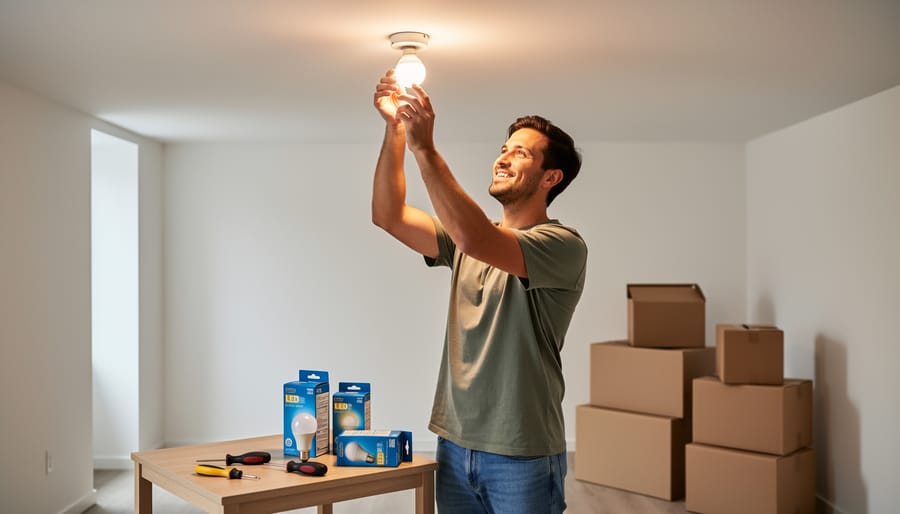
LED bulbs remain the ultimate entry-level upgrade. Swapping just five frequently-used bulbs typically costs $30-50 and can slash lighting costs by up to 80%, saving around $100-150 annually for the average household. They last years longer than traditional bulbs, meaning you’ll likely take them with you when you move.
Smart power boards take the hassle out of vampire power drain, cutting standby consumption from devices that quietly sip electricity even when “off”. At $25-60 each, quality models with scheduling features and smart power management can reduce standby consumption by 10-15%, potentially saving $50-100 yearly depending on your device setup.
Draft excluders might seem old-school, but these simple foam or fabric strips work wonders. For $15-30, sealing gaps under doors and around windows prevents conditioned air escaping, reducing heating and cooling costs by up to 25% in draughty rentals.
Window films offer another portable solution. Removable insulation films ($20-40) create an extra layer of thermal protection during winter, while heat-blocking films reduce summer cooling demands without permanent installation.
Finally, consider portable alternatives to ceiling fans. Pedestal or tower fans with DC motors ($60-90) use minimal electricity while circulating air effectively, reducing air conditioning reliance during milder weather. Many Australian renters report 15-20% cooling cost reductions simply by using fans strategically alongside modest air conditioning use.
Mid-Range Investments ($100-$500)
Ready to invest a bit more in your rental’s energy efficiency? This price range opens up some impressive options that deliver serious long-term savings while remaining completely portable.
Portable air conditioners with inverter technology (from $400) are game-changers for Australian renters facing scorching summers. Unlike window units that require permanent installation, these plug-and-play systems cool efficiently without violating lease agreements. Look for models with high energy star ratings—they’ll pay for themselves through reduced electricity bills within a few seasons.
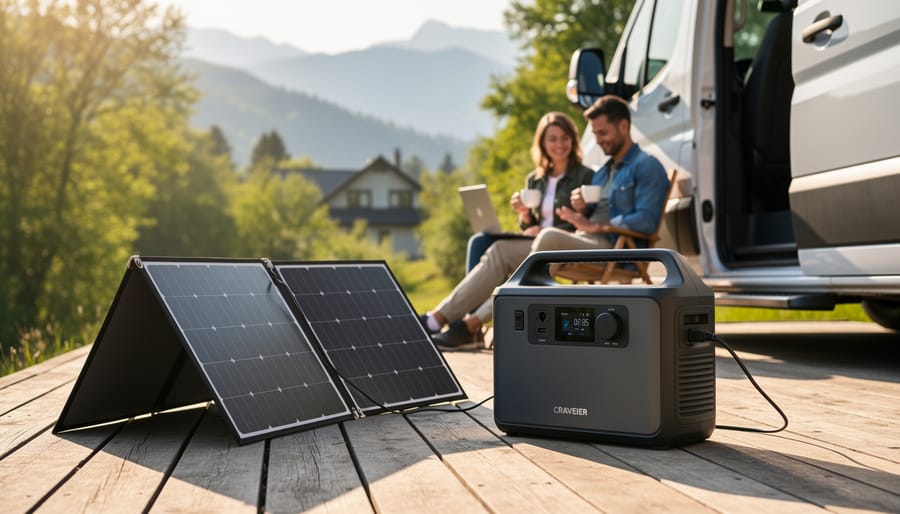
Freestanding solar panels and portable power stations (from $300) are increasingly popular among renters who want renewable energy without rooftop installations. These compact systems can charge devices, run appliances during peak pricing periods, or provide backup power during outages. Many Aussie renters are creating mini solar setups on balconies or in sunny courtyard spaces, building community knowledge about what works best in different rental situations.
Energy monitoring devices (from $100) help identify energy vampires and track consumption patterns in real-time. Similar to smart charging technology used for electric vehicles, these systems optimise when and how you use power, shifting usage to off-peak times automatically.
Plug-in hot water timers (around $150) ensure your electric hot water system only heats during off-peak periods, potentially cutting hot water costs by 30-40 percent. Installation takes minutes and leaves no permanent modifications—perfect for renters wanting immediate savings.
Premium Options for Long-Term Renters ($500+)
For renters committed to long-term sustainable living, premium portable solutions offer substantial energy savings that quickly offset the initial investment while moving with you from property to property.
Portable solar battery systems represent the gold standard for rental-friendly renewable energy. Systems like the Bluetti AC200P or EcoFlow Delta Pro (ranging from $1,500-$3,000) provide genuine off-grid capabilities, powering everything from fridges during peak tariff periods to your entire home office setup. Many Australian renters position these on balconies or near windows with portable solar panels, reducing grid reliance by 30-50% depending on usage patterns. The best part? Your investment travels with you, continuing to deliver returns regardless of how many times you relocate.
Quality portable climate control units have evolved dramatically beyond clunky air conditioners. Modern reverse-cycle units with smart sensors (like Dimplex’s portable heat pumps at $800-$1,200) offer efficient heating and cooling while learning your patterns to optimize energy use. Brisbane renter Sarah calculated her unit paid for itself within 18 months through reduced electricity costs, and she’s now taken it to her third rental property.
Smart home ecosystems transform how you manage energy across rental properties. Investing in comprehensive systems including smart plugs, energy monitors, and automated lighting (typically $500-$800 for complete setup) creates an intelligent network that follows you anywhere. These systems identify energy vampires, automate off-peak usage, and provide detailed consumption data that empowers informed decisions. Australian renters report average savings of 15-25% annually, making these premium options genuinely worthwhile investments in your sustainable future.
Non-Physical Upgrades That Cut Bills Immediately
Sometimes the biggest savings come not from what you install, but from how you use what’s already there. As an Australian renter, you’ve got powerful tools at your fingertips that cost nothing but can slash your bills within weeks.
Start by auditing your energy retailer. Australians lose an estimated $1.7 billion annually by staying with default market offers when better deals exist. Visit Energy Made Easy or Victorian Energy Compare (the government comparison sites for your state) and spend twenty minutes comparing plans. Many renters report savings of $200-400 yearly simply by switching to a more competitive retailer. Focus on flat-rate plans if you’re home during peak hours, or time-of-use tariffs if you can shift energy consumption to off-peak periods.
Next, tackle your mobile, internet, and streaming subscriptions. The average Australian household pays for 2.8 streaming services they barely use. Call your internet provider and ask about retention deals, particularly mentioning competitor offers. Most providers have unadvertised plans reserved for customers threatening to leave. Community members in our network regularly negotiate $15-30 monthly reductions without changing service quality.
Rethink your hot water habits, which account for roughly 25% of household energy use. Dropping shower time by just two minutes saves around 20 litres of hot water per shower. Over a year, that’s approximately $200 saved for a typical household. Switch to cold-water clothes washing, which handles modern detergents brilliantly and reduces energy consumption by up to 90% per load.
Consider your appliance usage patterns. Running dishwashers and washing machines during off-peak hours (typically 10pm-7am) on time-of-use tariffs cuts costs significantly. Learning to optimize energy usage around these windows becomes second nature quickly.
Finally, join community energy-buying groups. Organizations like the Australian Energy Foundation run group-buying programs where renters collectively negotiate better rates. It’s the sharing economy applied to utilities, and it’s completely landlord-approved.
These changes require zero installation, zero landlord permission, and zero upfront investment. Yet they deliver immediate, measurable reductions in your quarterly bills while building sustainable habits you’ll carry forward, wherever you live next.
Navigating the Landlord Conversation
Having an open conversation with your landlord about energy upgrades doesn’t have to feel daunting. In fact, many property owners are increasingly recognising that efficient homes attract better tenants and command higher rental values. The key is framing your request as a partnership opportunity rather than a demand.
Start by researching your rights. Tenancy laws vary across Australia, but generally, you’re entitled to request minor modifications. In Victoria, landlords cannot unreasonably refuse modifications that don’t affect the property’s structure. NSW tenants can make changes without approval if they restore the property when leaving, while Queensland law requires written consent for most alterations. Understanding these nuances strengthens your position.
When approaching your landlord, come prepared with a clear proposal. Email works well as it creates a paper trail. Begin by acknowledging their investment in the property, then present specific upgrades you’re considering. For semi-permanent improvements like LED downlights or draught-proofing, emphasise how these additions increase property value and marketability. Consider offering a split-cost arrangement where you cover installation and materials if they contribute to the permanent fixtures.
Here’s a template approach: “I’m interested in improving the home’s energy efficiency, which would reduce utility costs and increase the property’s appeal to future tenants. I’d like to discuss installing LED lighting throughout at my expense, or perhaps we could share costs for weather-sealing improvements that would remain with the property.”
Document everything in writing, including approval for modifications and agreements about what happens when you move out. Will you restore original fittings? Can you take portable items like smart thermostats?
Remember, landlords benefit from lower vacancy rates and reduced maintenance costs when properties are energy-efficient. Many Australian property investors are part of the same community working toward sustainability goals. By presenting upgrades as a win-win investment rather than a personal preference, you’re far more likely to receive enthusiastic support.
Real Stories: Australian Renters Who Made It Work
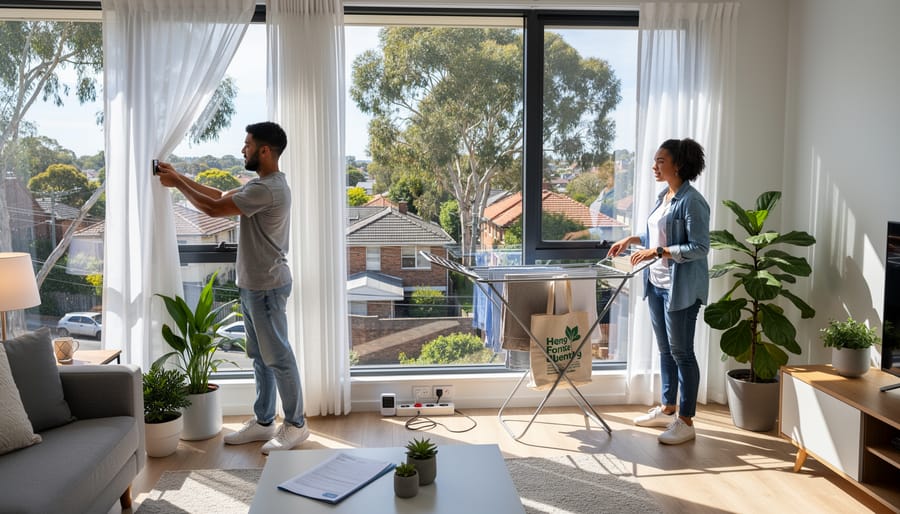
Meet Sarah and Tom, a young couple renting a one-bedroom apartment in Surry Hills, Sydney. Frustrated by quarterly electricity bills hovering around $450, they decided to take action without breaking their lease. Their investment? Just $280 upfront. They started with LED bulbs throughout their flat ($45), added a smart power board to tackle phantom energy loads ($65), installed window film on their west-facing windows ($90), and purchased a portable induction cooktop ($80) to replace their inefficient electric stove. Within the first year, they cut their electricity bills by 32 percent, saving approximately $576 annually. “The window film made the biggest difference during summer,” Sarah explains. “Our air conditioning hardly runs now, and we’re reducing energy costs while staying comfortable.” When they move, everything except the bulbs comes with them.
The Martinez family in Ballarat faced different challenges. With three kids and soaring winter heating costs in their 1970s rental, quarterly bills reached $650. They focused on weatherproofing, investing $340 in door snakes, thermal curtains, and removable window insulation. They also switched to a portable reverse-cycle heater for the main living area. First winter result? A 28 percent reduction in heating costs, saving around $450 annually. “Our landlord was actually grateful,” Maria Martinez shares. “The house stays warmer, and there’s less risk of mould issues.”
University students Jake, Priya, and Mel share a house in Wollongong and took a community approach. They split the $195 cost of a comprehensive upgrade: LED bulbs, a clothesline for their courtyard instead of using the dryer, low-flow showerheads, and fridge seals. Their share house energy bill dropped from $380 to $260 per quarter. The lesson they learned? Start with the basics. “We thought we needed expensive tech,” Jake says. “Turns out, simple changes and just being more conscious as a household made the real difference.”
You have more power to create change in your rental than you might think. Every energy-efficient lightbulb you install, every draft stopper you place, and every conscious decision to choose portable solar panels represents a step toward lower bills and a lighter environmental footprint. These aren’t just small personal wins – they’re part of a growing movement of Australian renters who refuse to let their living situation stand in the way of sustainability.
Think about the collective impact if even a quarter of Australia’s 2.7 million renting households embraced just three simple upgrades. That’s millions of kilowatt-hours saved, countless tonnes of carbon emissions avoided, and a powerful message sent to landlords and policymakers that renters are ready to lead on climate action.
Your first steps don’t need to be overwhelming. Start with the quick wins: swap out your five most-used lights for LEDs this weekend. Next month, measure your windows and order some thermal curtains. Before winter hits, grab a draft stopper for your front door. Each action builds momentum and confidence.
The beauty of renter-friendly upgrades is that they travel with you. Unlike homeowners who invest in fixed improvements, your portable solar panel, your smart power boards, and your energy-efficient appliances become part of your sustainable toolkit for life. You’re not just improving one rental – you’re establishing habits and gathering resources that compound over time.
Connect with local community groups and online forums where Aussie renters share their experiences and tips. You’ll find inspiration, practical advice, and the reassurance that you’re not alone in this journey. Together, we’re proving that meaningful environmental action doesn’t require property ownership – just commitment and creativity.