
Transform your backyard into a functional living space by starting with a clear purpose: whether you need a home office, guest retreat, or creative studio will determine your structure’s size, insulation requirements, and utility connections. Choose sustainable materials native to Australian conditions—recycled timber frames resist our harsh UV exposure better than conventional alternatives, while locally-sourced bamboo and reclaimed steel reduce your carbon footprint by up to 40% compared to imported materials.
Design for climate resilience by orienting structures to capture winter sun and summer breezes, reducing your reliance on heating and cooling systems that account for nearly 20% of household energy consumption. Install rainwater collection systems integrated into your outdoor housing design, providing irrigation and non-potable water use while alleviating pressure on municipal supplies during drought periods.
Outdoor housing represents more than extra square metres—it’s a tangible commitment to sustainable living that addresses Australia’s housing density challenges while preserving your environmental values. From converted shipping containers in Melbourne’s inner suburbs to architect-designed studios in Perth’s coastal areas, Australians are reimagining how we use outdoor space. The movement connects families seeking multigenerational living solutions with young professionals establishing work-from-home boundaries, all united by the desire to build thoughtfully and tread lightly on our land.
This comprehensive guide walks you through eco-friendly materials, passive design principles, and regulatory considerations specific to Australian councils, ensuring your outdoor housing project enhances both your lifestyle and our collective environmental future.
What Is Outdoor Housing and Why Australian Homes Are Embracing It
Outdoor housing has emerged as one of the most exciting trends reshaping how Australians think about their living spaces. Rather than traditional brick-and-mortar extensions that permanently alter your home’s footprint, outdoor housing encompasses versatile structures like studios, granny flats, garden rooms, and outdoor offices that complement your existing property while maintaining a connection to your backyard environment.
Think of outdoor housing as purposeful space that lives outside your main dwelling but functions as a seamless extension of your lifestyle. These structures differ from conventional home additions in their flexibility, construction methods, and environmental integration. Where a traditional extension might involve lengthy council approvals, extensive excavation, and permanent structural changes, outdoor housing solutions often utilise modular or prefabricated designs that minimise disruption and can even be relocated if needed.
Australian homes are particularly well-suited to embracing this trend, and it’s easy to see why. Our famously mild climate across much of the continent means outdoor structures remain comfortable and usable year-round with minimal heating or cooling requirements. The Sunshine Coast grandmother who converted her backyard studio into an art space, or the Melbourne family who built a garden office during lockdowns, are just two examples of Australians reimagining their outdoor potential.
Several converging factors are driving this movement. As housing density increases in our capital cities, homeowners are looking skyward and outward rather than selling up and moving further from employment hubs. Multigenerational living is gaining momentum too, with families seeking dignified, independent accommodation for ageing parents or adult children navigating housing affordability challenges. The work-from-home revolution has accelerated demand for dedicated office spaces that separate professional life from home chaos without requiring a stressful commute.
This shift represents more than just adding square metres. It’s about thoughtfully expanding how we live, work, and connect with both family and nature, all while treading more lightly on our environment through sustainable design choices.
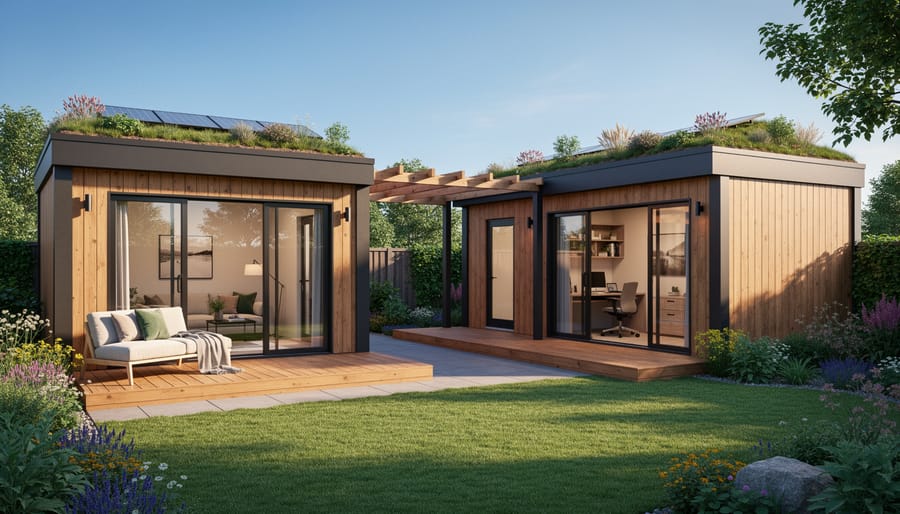
The Environmental Case for Outdoor Housing
Smaller Footprint, Bigger Impact
One of the most compelling environmental advantages of outdoor housing is how much less it demands from our planet. Unlike traditional home extensions that require substantial excavation, foundation work, and material-intensive construction, outdoor structures like studios, cabanas, or garden rooms work with your existing landscape rather than against it. You’re essentially maximising the potential of land you already own, without triggering the urban sprawl that’s becoming a growing concern across Australian suburbs.
Consider this: a typical outdoor studio requires roughly 60 percent less building material than a comparable indoor extension. There’s no need to demolish existing structures, redirect plumbing through concrete slabs, or disturb established garden beds and tree roots. Many Australian families are discovering that their underutilised backyard can accommodate a functional workspace, guest retreat, or creative studio without the environmental cost of knocking down walls or pouring new foundations.
The beauty of this approach is its simplicity. Ground screws or pier foundations create minimal soil disturbance, allowing established ecosystems in your garden to thrive undisturbed. Native plants, beneficial insects, and soil microorganisms continue their important work while your new structure takes shape around them. It’s proof that expanding your living space doesn’t require expanding your environmental footprint.
Energy Efficiency Done Right
Australian outdoor housing offers brilliant opportunities for energy efficiency when designed thoughtfully. Passive solar design is your best friend in our climate – positioning structures to capture winter sun while providing shade in summer through strategic eaves and pergolas dramatically reduces energy consumption. A well-placed outdoor room in Melbourne or Brisbane can maintain comfortable temperatures naturally for much of the year.
Natural ventilation transforms compact outdoor spaces into comfortable retreats. Cross-ventilation through thoughtfully positioned windows and louvres harnesses our coastal breezes, eliminating the need for artificial cooling in many instances. Community member Sarah from Perth reports her studio stays naturally cool by maximising airflow and strategic shading.
Solar panel integration becomes even more practical with outdoor housing, as separate roof spaces provide additional generation capacity without compromising your main home’s aesthetics. The smaller footprint means reduced heating and cooling needs – a compact 20-square-metre studio requires minimal energy compared to a full house addition. Combined with proper insulation and double glazing, you’ll create a space that works with nature rather than against it.
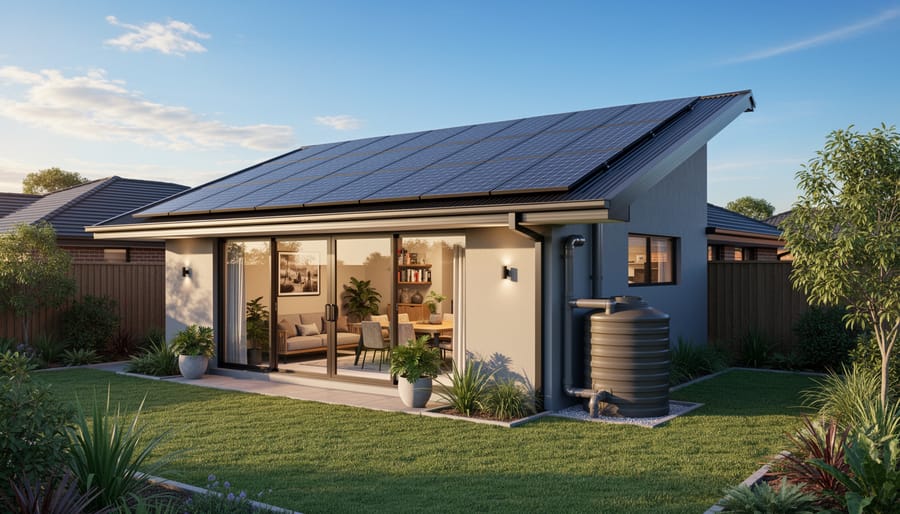
Water-Wise Outdoor Living
Outdoor housing presents brilliant opportunities to reimagine how we manage one of Australia’s most precious resources—water. With many regions facing ongoing drought conditions, integrating smart water systems into your outdoor structures makes both environmental and economic sense.
Consider incorporating greywater system integration into your outdoor living space design. This allows water from showers, laundry, and sinks to irrigate surrounding gardens rather than flowing into the sewer. Many Australian councils now actively support these systems, with some offering rebates for installation. Your outdoor studio or granny flat can include dedicated plumbing that diverts greywater to fruit trees and native plantings, creating a closed-loop system that reduces mains water consumption by up to 40%.
Rainwater harvesting is another perfect match for outdoor housing. Installing tanks alongside your structure captures roof runoff for toilet flushing, laundry, or garden use. The Sunshine Coast’s Green Living Centre demonstrates this beautifully, where their outdoor classroom building feeds a 10,000-litre tank that supplies their entire demonstration garden. These combined approaches transform outdoor housing from simply adding space to actively contributing to household water resilience.
Sustainable Materials and Building Practices for Outdoor Structures
Australian Timber and Recycled Materials
When building your outdoor housing structure, choosing the right materials makes a significant environmental difference right here in Australia. The good news is that sustainable options are more accessible than ever, and many are produced right in our own backyard.
FSC-certified Australian timber stands out as an excellent choice for outdoor structures. The Forest Stewardship Council certification ensures your timber comes from responsibly managed forests where trees are replanted and ecosystems protected. Native hardwoods like spotted gum and blackbutt offer natural durability and weather resistance, perfect for our harsh climate. By selecting locally milled timber, you’re supporting Australian forestry jobs while drastically cutting down on transport emissions compared to imported alternatives.
Reclaimed materials are gaining momentum in the outdoor housing movement, and with good reason. Salvaged timber from demolished buildings, old railway sleepers, or deconstructed structures carries character and history while keeping perfectly usable materials out of landfill. Many Australian suppliers now specialize in architectural salvage, making it easier to source quality reclaimed timber for your project.
Recycled steel framing presents another sustainable option, particularly for larger outdoor structures. Steel can be recycled indefinitely without losing quality, and using recycled content reduces the energy-intensive mining and processing of new materials. Australian manufacturers increasingly offer recycled steel products specifically designed for residential construction.
The environmental benefits extend beyond the materials themselves. Choosing locally sourced options means shorter transport distances, supporting regional economies while reducing your project’s carbon footprint. Many Australian communities now have salvage yards and sustainable timber suppliers, making ethical material choices both practical and achievable for your outdoor housing project.
Low-Impact Building Techniques
When building outdoor housing, the construction approach matters just as much as the materials you choose. Across Australia, forward-thinking homeowners are discovering that low-impact techniques can reduce both environmental footprint and costs while creating comfortable, durable spaces.
Prefabricated and modular outdoor structures have gained popularity in Australian backyards, and for good reason. These buildings arrive partially or fully assembled, dramatically reducing on-site waste and construction time. Many Brisbane and Melbourne manufacturers now offer eco-certified modular studios and granny flats that can be installed within days rather than months. The controlled factory environment means better quality control and less material wastage, with offcuts often recycled into future projects rather than ending up in landfill.
Minimal excavation methods represent another significant win for the environment. Rather than extensive foundation work that disrupts soil ecosystems and requires heavy machinery, consider pier and beam systems or adjustable steel footings. These approaches work particularly well in Australian conditions, allowing structures to adapt to ground movement while preserving existing vegetation and natural drainage patterns.
Choosing the right builder makes all the difference. Look for home builders Sydney and professionals with Green Building Council certifications or membership in sustainable building networks. Ask potential builders about their waste management practices, material sourcing, and experience with green building practices. The best sustainable builders will eagerly share their environmental credentials and discuss how they minimize impact throughout the construction process. Many Australian builders now offer carbon offset programs for construction activities, turning your outdoor housing project into a genuinely climate-positive investment.
Designing Your Outdoor Housing for Australian Conditions
Climate-Responsive Design
Australia’s diverse climate zones demand thoughtful design approaches that work with nature rather than against it. Getting this right means your outdoor housing stays comfortable year-round while using minimal energy.
In tropical northern regions, orientation becomes your best friend. Position your outdoor structure to capture prevailing breezes while minimizing western sun exposure, which brings intense afternoon heat. Overhanging roofs provide essential shade, and cross-ventilation through strategically placed openings keeps air flowing naturally. Consider louvred walls or screens that allow airflow while maintaining privacy.
For temperate zones like Melbourne and Adelaide, the goal shifts to flexibility. North-facing orientations maximize winter sun while summer eaves protect from high-angle rays. Materials with thermal mass, like recycled brick or rammed earth, absorb daytime warmth and release it during cooler evenings, reducing heating needs.
In arid inland areas, thermal performance takes center stage. Thick walls provide insulation against extreme temperature swings, while light-colored roofing reflects harsh sunlight. Many Western Australian communities have embraced these principles, creating outdoor spaces that remain usable even during scorching summers.
The beauty of climate-responsive design is that it’s not about expensive technology. It’s about understanding your local environment and designing accordingly. Your outdoor housing becomes part of the ecosystem, reducing energy consumption while creating genuinely comfortable spaces that feel right for your patch of Australia.
Connecting Indoor and Outdoor Spaces
Your outdoor housing structure doesn’t need to stand alone as an isolated feature. When thoughtfully positioned, it becomes part of a living network that supports both your lifestyle and local wildlife.
Consider creating green corridors by placing your structure where it naturally extends your existing garden spaces. A backyard studio positioned near established native plantings becomes an observation point for local birds and insects, while a garden shed nestled among fruit trees creates functional pathways that encourage daily interaction with your growing spaces.
Australian gardens thrive when outdoor structures work with, rather than against, natural movement patterns. Leave gaps beneath decking for skinks and small mammals, position rooflines to direct rainwater toward garden beds, and incorporate climbing plants on trellises to soften the transition between built and natural elements.
Community gardens across Melbourne and Brisbane demonstrate this integration beautifully, where tool sheds double as teaching spaces and compost bays connect growing areas. These spaces show how outdoor housing can strengthen the relationship between people and environment.
Think about sight lines too. Positioning your structure to frame native plantings or vegetable gardens creates year-round engagement with your outdoor space, encouraging the daily connection that deepens environmental stewardship. When placement considers both human convenience and ecological benefit, everyone wins.
Real-World Applications: How Australians Are Using Outdoor Housing
Home Offices That Reduce Commuting
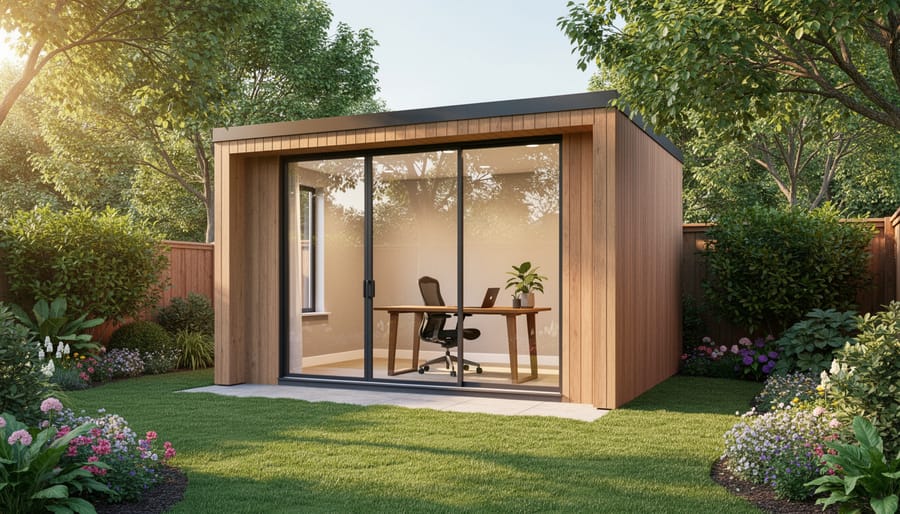
Working from home has never been more popular across Australian suburbs, and outdoor home offices are leading the charge in reducing our carbon footprint. Every day you work from a garden studio or backyard office, you’re eliminating a commute that might have generated 4-5 kilograms of carbon emissions. In Melbourne’s inner suburbs, residents are transforming unused outdoor spaces into productive workspaces, while Brisbane families are embracing prefabricated garden offices that blend seamlessly with native landscaping. The environmental benefits extend beyond transport emissions too. A home office means fewer cars idling in traffic, reduced demand on public infrastructure, and the opportunity to create a workspace powered entirely by rooftop solar panels. Communities in Perth and Adelaide report that garden offices have sparked neighbourhood conversations about sustainability, with many residents sharing design ideas that prioritise recycled materials and natural ventilation. It’s a practical solution that demonstrates how individual choices create collective environmental impact, one eliminated commute at a time.
Multigenerational Living Without Major Renovations
Granny flats offer Australian families a compassionate and sustainable solution for multigenerational living. By creating a self-contained dwelling in your backyard, you can keep aging parents close while maintaining everyone’s independence. This approach dramatically reduces the environmental footprint associated with residential aged care facilities, which require significant energy for heating, cooling, and round-the-clock operations.
Many Australian councils now have streamlined approval processes for complying development granny flats, making the path smoother than extensive home renovations. These compact dwellings typically use fewer resources to build and operate than traditional extensions, particularly when designed with passive solar principles and energy-efficient features.
Beyond environmental benefits, this living arrangement strengthens family connections while reducing travel emissions from frequent visits across town. The proximity means adult children can provide support without the carbon cost of daily commutes to care facilities. Many families find this arrangement enriches their lives, creating opportunities for grandchildren to spend quality time with grandparents while everyone enjoys their own space. It’s a practical example of how sustainable choices can enhance both family wellbeing and environmental responsibility.
Guest Studios and Short-Term Accommodation
When friends and family visit, creating a dedicated guest studio on your property offers a sustainable alternative to traditional hotel stays. These compact outdoor dwellings significantly reduce the environmental footprint associated with commercial accommodation while providing your visitors with privacy and comfort.
A well-designed guest studio needn’t be elaborate. Many Australian families are converting garden sheds or building purpose-made cabins using reclaimed timber, recycled insulation, and energy-efficient windows. Consider incorporating solar panels for power and a rainwater collection system for the bathroom and kitchenette. These features not only minimize environmental impact but also reduce ongoing running costs.
The beauty of short-term guest accommodation lies in its dual purpose. Between visits, your studio can serve as a home office, creative space, or teenage retreat, maximizing its value throughout the year. Local communities across Australia are embracing this approach, with some even participating in home-sharing networks that prioritize eco-certified properties.
By choosing to build sustainable guest quarters, you’re making a meaningful statement about responsible hospitality while creating lasting memories in a space that reflects your environmental values.
Navigating Permits and Regulations the Sustainable Way
Before you hammer the first nail into your outdoor housing project, there’s an essential step that can save you headaches down the track: understanding your local council requirements. In Australia, regulations vary significantly between states and even suburbs, so connecting with your local council early is crucial. Most outdoor structures require a development application or at least a complying development certificate, particularly if you’re planning something substantial like a granny flat or garden studio.
Here’s the encouraging news: many Australian councils are actively supporting sustainable building initiatives. Some offer streamlined approval processes for projects that meet specific environmental standards, making it easier for eco-conscious homeowners to move forward. When preparing your application, highlight the sustainable features of your design, such as water-sensitive urban design elements, solar readiness, or use of recycled materials.
Consider pursuing green building certifications like Green Star or the Living Building Challenge. While these might seem like extra paperwork, they actually provide a clear framework for your project and can increase property value. Plus, some councils offer incentives or fee reductions for certified sustainable builds.
A practical tip from the sustainable building community: engage a designer or builder familiar with both environmental standards and local regulations. They’ll navigate the compliance maze while ensuring your outdoor housing meets energy efficiency requirements, bushfire regulations if applicable, and water management standards specific to your region.
Remember, meeting regulations isn’t just box-ticking. It’s about creating a structure that’s safe, sustainable, and contributes positively to your local environment. Start early, ask questions, and view the permit process as an opportunity to refine your project into something truly special that benefits both your household and the broader Australian community working towards a greener future.
Making It Happen: Your Action Plan for Sustainable Outdoor Housing
Ready to transform your outdoor housing dreams into reality? The journey starts with finding the right partners and resources right here in Australia. Begin by connecting with eco-conscious builders who understand sustainable design. The Australian Sustainable Built Environment Council maintains a directory of accredited professionals, while Green Building Councils in your state can recommend certified builders experienced with environmentally responsible outdoor structures.
When it comes to budgeting, remember that sustainable features often deliver long-term savings that offset initial investments. Start by prioritizing elements with the highest environmental and financial returns: quality insulation, solar-ready roofing, and water collection systems. Many Australian councils offer rebates for sustainable building features, so check your local government website before finalizing your budget. The Clean Energy Council provides up-to-date information on federal and state incentives that can significantly reduce your costs.
Connect with your community through local Landcare groups and sustainability networks. These grassroots organizations often host workshops on sustainable building practices and can connect you with others who’ve successfully completed eco-friendly outdoor housing projects. Their real-world experience is invaluable.
Take your first step this week by requesting quotes from at least three builders with demonstrated sustainability credentials. Ask specific questions about their experience with recycled materials, passive design principles, and energy-efficient installations. Document your conversations and compare not just prices but their commitment to environmental practices.
Join online communities like the ReNew Technology forum or your local Buy Nothing group, where Australians share sustainable building resources and advice. Together, we’re building a future where outdoor living spaces enhance both our lifestyles and our environment.
Creating sustainable outdoor housing isn’t just about adding extra space to your property—it’s about reimagining how we live in harmony with our environment. Every granny flat built with reclaimed timber, every studio insulated with natural materials, and every garden room designed to maximise passive cooling represents a small but meaningful step toward a more sustainable Australia.
The beauty of outdoor housing lies in its versatility. Whether you’re a young family needing a home office that doesn’t compromise your living space, empty nesters wanting to downsize while staying on your land, or someone looking to generate passive income through sustainable rentals, these structures offer solutions that align with both your practical needs and environmental values.
Communities across Australia are already showing us what’s possible. From Melbourne’s laneway housing initiatives to Byron Bay’s eco-studios, Australians are proving that sustainable outdoor living spaces can be beautiful, functional, and kind to our planet. These aren’t just structures—they’re statements about the kind of future we want to build together.
Starting your outdoor housing project might feel overwhelming, but remember: every great change begins with a single decision. Connect with local sustainable builders, explore your council’s regulations, and join community groups passionate about green living. Your outdoor housing project could inspire your neighbours, contribute to Australia’s sustainability goals, and create a legacy of environmental stewardship.
The question isn’t whether you can make a difference—it’s when you’ll begin.