
Start with your local council’s website. Some Australian councils run their own e-bike rebates, but amounts, caps and conditions differ widely from one area to the next, so check the specifics before you buy. Where a program asks you to apply first, do that before you hand over any money. Buying first can rule you out, and eligibility conditions such as proof of residency are the usual place people trip up.
In the interest of transparency, we earn a commission on some purchases made through links on this site.
Where more than one program is on offer, find out whether they can be combined. Some jurisdictions allow stacking, others don’t, and the rules are set by each program. Don’t assume a state scheme and a council rebate will add up until the fine print says so.
Look for programs aimed at your situation too, whether that’s a low-income household or a small business moving delivery work onto electric bikes. Targeted schemes sometimes offer more than general ones, but check who actually qualifies before you plan around them.
Tasmania gives a useful picture of how these programs run. Its $200,000 e-bike rebate scheme offered up to 12% of the purchase price, capped at $500 for standard bikes. More than 100 people received rebates for new e-bikes, and more than $100,000 was still up for grabs. That tells you something: a rebate pool can sit partly unclaimed, but it can also close, and the Tasmanian scheme has now wrapped up. Treat any e-bike incentive program as something with an end date, even if you can’t see it yet.
The wider shift toward sustainable transport solutions is giving more Australians a reason to look at an e-bike, from commuters tired of train delays to parents doing school runs. Many schemes work on a limited budget, so the people who check early and apply early tend to get the savings. Those who wait often find the money has gone.
Why Australia Is Investing in E-Bike Incentives
Australia is at a pivotal moment in reshaping how we move through our cities and communities. As our urban centres grow and climate challenges intensify, local and state governments are turning to e-bike incentive programs as a powerful tool for change. These initiatives aren’t just about saving money—they’re part of a broader vision for healthier, more livable communities.
The environmental case is compelling. Transport accounts for nearly 19% of Australia’s total greenhouse gas emissions, with passenger vehicles being a major contributor. By encouraging Australians to swap short car trips for e-bike journeys, these programs directly support our national commitment to net-zero emissions by 2050. A single e-bike can prevent up to 225 kilograms of CO2 emissions annually when replacing regular car use—small individual choices that collectively create meaningful impact.
Urban congestion is another critical driver. Cities like Sydney and Melbourne are experiencing mounting pressure on road infrastructure, with the average commuter losing precious hours each week to traffic. E-bikes offer a practical solution, particularly for the 40% of car trips under 10 kilometres that could easily be cycled instead. Similar government rebate programs across other sustainable technologies demonstrate how financial incentives can accelerate behavior change.
Beyond environmental benefits, there’s a compelling health dimension. Regular cycling improves cardiovascular fitness, reduces stress, and addresses our growing sedentary lifestyle crisis. E-bikes make cycling accessible to more Australians—including older adults, those with varying fitness levels, or people managing longer commutes—democratizing the health benefits of active transport.
By investing in e-bike rebates, Australian governments are essentially funding multiple wins: cleaner air, quieter streets, healthier communities, and reduced infrastructure strain. It’s about building the sustainable future we want to see, one pedal stroke at a time.
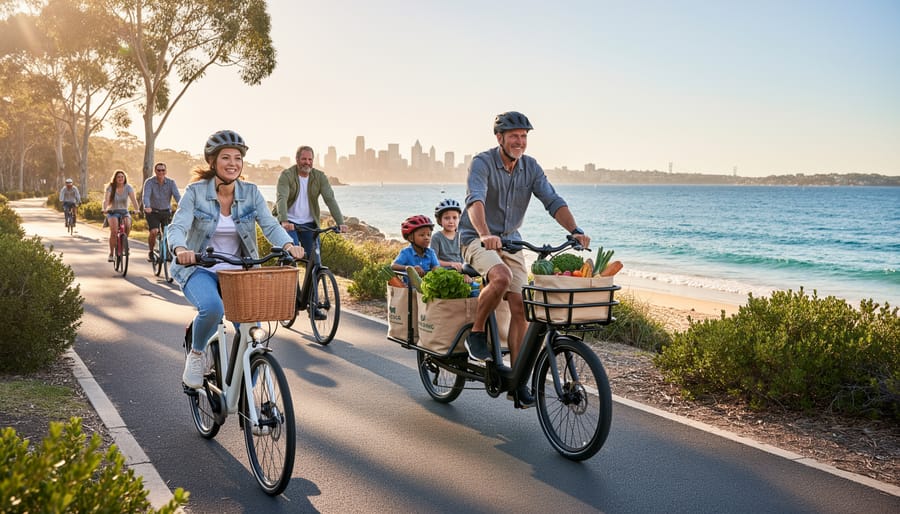
Current E-Bike Rebate Programs Across Australia
State and Territory Government Programs
State and territory governments have run e-bike incentive programs that put real money back in your pocket, and the details differ a lot from one jurisdiction to the next. Much like similar rebate programs helping households move to sustainable energy, these schemes make it easier to swap four wheels for two electric ones. They also tend to be small, capped and short-lived.
Tasmania is a useful example of how these programs play out. Its $200,000 e-bike rebate scheme offered up to 12% of the purchase price, capped at $500 for standard bikes. More than 100 people received rebates for new e-bikes, and over $100,000 of the pool was still up for grabs at one point. The scheme has since wrapped up, so it’s a closed door now, but it shows the typical shape of an e-bike rebate: a percentage of the price with a hard dollar cap, funded from a fixed pot.
Other states and territories have run their own versions, and the amounts, eligibility rules and application windows vary. We haven’t been able to confirm current figures, eligibility requirements or open dates for every jurisdiction, so don’t rely on older numbers you’ve seen quoted elsewhere. Check the relevant state transport, energy or environment department website directly before you buy, and read the fine print on what counts as an eligible bike. Cargo e-bikes in particular are treated differently from scheme to scheme.
The practical lesson from the Tasmanian experience is simple. Rebates like this are funded from a limited pool and can close without much warning, so timing matters. A few habits help:
- Bookmark your state government’s rebate page and sign up for any update alerts it offers.
- Confirm whether the rebate applies before purchase or after, since some programs won’t reimburse a bike you’ve already bought.
- Keep your paperwork ready, including proof of residency, any income details the program asks for, and a retailer quote or receipt.
If no scheme is open in your state right now, it’s still worth checking back. Councils and retailers sometimes run smaller offers of their own, and a closed program doesn’t mean the next one is far off.
Local Council Initiatives
While state programs provide a foundation, many Australian councils are stepping up with their own e-bike initiatives, making sustainable transport even more accessible for local communities. These grassroots programs reflect a genuine commitment to creating cleaner, healthier neighbourhoods.
In Melbourne, the City of Yarra leads the charge with rebates of up to $500 for residents purchasing e-bikes, while the City of Sydney has trialled cargo e-bike share schemes to help families experience electric cycling before committing to purchase. Brisbane’s Lord Mayor has announced plans for a metropolitan-wide e-bike subsidy program launching in 2024, joining councils like Fremantle and Port Phillip that already offer targeted rebates.
Regional councils are equally progressive. The Clarence Valley Council in northern New South Wales provides grants for businesses adopting e-bikes for local deliveries, reducing emissions while supporting the local economy. Similarly, the Sunshine Coast Regional Council offers incentives for community groups establishing e-bike lending libraries.
These initiatives often stack with state rebates, potentially saving you hundreds more. Check your local council’s website or contact their sustainability team directly to discover what’s available in your area. Many councils also host information sessions and trial days where you can test e-bikes before buying, building community connections while exploring your options.
Workplace and Community Programs
More Australian workplaces are embracing e-bike programs as part of their sustainability commitments, creating exciting opportunities for employees. Through salary packaging arrangements, many employers now allow staff to lease e-bikes using pre-tax income, reducing the overall cost by up to 47 percent depending on your tax bracket. Companies like Atlassian and Canva have pioneered these schemes, demonstrating how businesses can support greener commutes while boosting employee wellbeing.
Community co-op programs are also gaining momentum across Australian cities. Organizations like Bicycle Network facilitate group purchasing programs where members access wholesale pricing on quality e-bikes. These initiatives often partner with local bike shops, strengthening community connections while making sustainable transport more affordable. Some councils are establishing bike library programs, allowing residents to trial e-bikes before committing to purchase. If your workplace doesn’t yet offer an e-bike scheme, consider approaching your HR team with information about the tax benefits and environmental impact. Together, we’re building a movement that makes sustainable commuting accessible and practical for everyday Australians.
Special Incentives for Cargo E-Bikes
Cargo e-bikes represent a game-changer for sustainable transport, which is why they receive significantly higher rebates under most Australian incentive programs. These sturdy, versatile bikes can carry children, shopping, equipment, and goods that would typically require a car, making them particularly valuable for families and small businesses looking to reduce their carbon footprint while saving money.
Across Australia, cargo e-bike rebates typically range from $3,000 to $6,000, substantially more than standard e-bike incentives. In Victoria, for example, cargo e-bikes can attract rebates up to $4,000, while New South Wales offers enhanced incentives that recognize their car-replacement potential. The ACT’s Business Energy and Water Savings Program even provides support for businesses investing in cargo e-bikes for deliveries.
Why the extra support? The answer lies in their impressive capability to replace vehicle trips. Studies show that cargo e-bikes can substitute up to 50% of urban car journeys, particularly those involving school runs, grocery shopping, and local deliveries. For a family in suburban Melbourne, this might mean eliminating a second car entirely, saving thousands annually in registration, insurance, and fuel costs while cutting household emissions dramatically.
Small businesses are discovering cargo e-bikes transform their operations too. A Sydney florist recently shared how her cargo e-bike handles local deliveries faster than navigating traffic in a van, while a Brisbane café uses theirs for coffee bean collections and catering deliveries. The operating costs are minimal, parking is simple, and customers love the environmental commitment.
When applying for cargo e-bike rebates, you’ll generally need to demonstrate the bike’s cargo capacity through specifications showing load limits and design features like extended frames, child seats, or cargo boxes. Some programs require proof that the bike will genuinely replace vehicle trips, so documenting your intended use, whether for family transport or business deliveries, strengthens your application.
The investment pays dividends beyond the rebate. Many Australian families report that cargo e-bikes have revolutionized their daily routines, turning stressful car trips into enjoyable rides while teaching children about sustainable choices through everyday action.
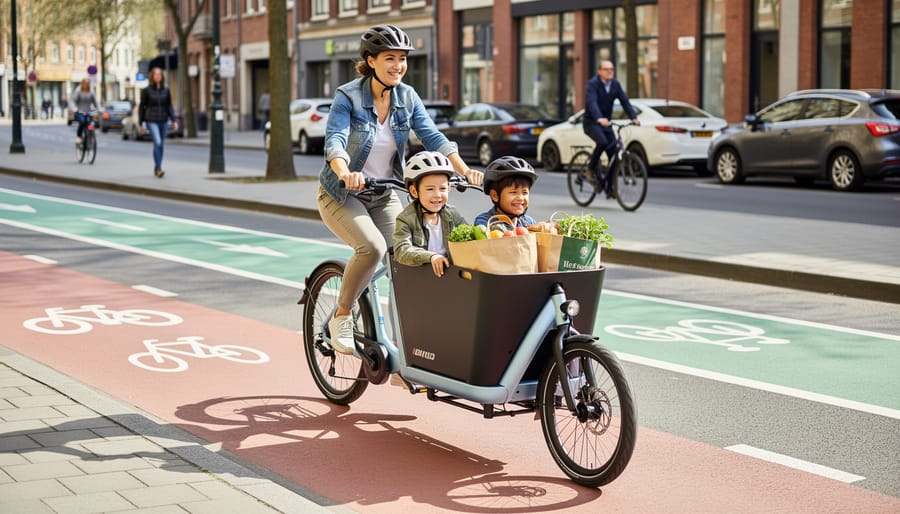
How to Qualify and Apply for E-Bike Rebates
Eligibility Requirements You Need to Know
While each Australian state and territory designs its own e-bike incentive program, most share common eligibility criteria to ensure support reaches those who’ll benefit most. Understanding these requirements helps you determine which programs you qualify for before diving into applications.
Residency is the fundamental requirement across all programs. You’ll need to prove you’re a permanent resident in the state or territory offering the rebate, typically through a current driver’s license or utility bill. Many programs also target specific demographics to maximize environmental and social impact.
Income thresholds are increasingly common, with several states prioritizing households earning below certain limits. These low-income rebate programs recognize that upfront e-bike costs can be prohibitive for families who’d most benefit from transport savings. Concession card holders often receive priority access or enhanced rebates, so keep your Pensioner, Health Care, or Commonwealth Seniors card handy.
First-time buyer requirements prevent double-dipping, ensuring rebates support new e-bike adoption rather than upgrades. Some programs also specify minimum safety standards or approved retailer lists. Age restrictions occasionally apply, though most programs welcome adult applicants of all ages.
Business eligibility varies significantly between commercial fleet programs and individual rebates, so check whether you’re applying as a household or enterprise. The good news? Most Australians keen to switch to sustainable transport will qualify for something.
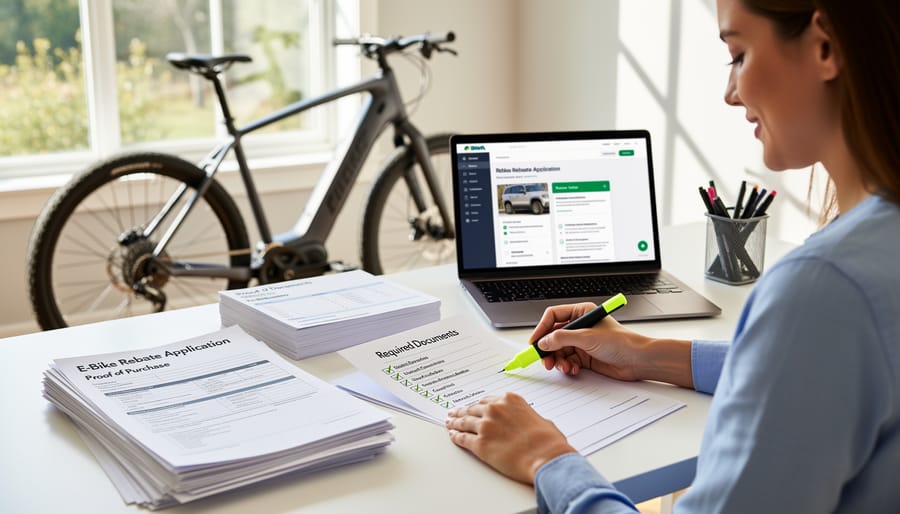
The Application Process Made Simple
Getting your e-bike rebate is easier than you might think, and the reward is well worth the effort. Most Australian programs have streamlined their application processes to make sustainable transport accessible to everyone in the community.
Start by gathering your essentials before you begin. You’ll typically need proof of identity like your driver’s licence, proof of residency showing your Australian address, and bank details for the rebate payment. If you’re a concession card holder, have that ready too as it often qualifies you for higher rebate amounts. Keep your e-bike purchase receipt handy, along with the bike’s specifications showing it meets the program requirements, usually around 250-watt motor capacity and pedal-assist functionality.
The application itself is predominantly online through your state or local council portal. Create an account, fill in your personal details, and upload clear photos or scans of your documents. The form usually takes around 15 minutes to complete. Some councils like those in the ACT or participating Sydney regions also offer in-person assistance at service centres if you’d prefer support through the process.
Timeline expectations vary by location, but most applications receive confirmation within two weeks. The actual rebate payment typically arrives within 4-8 weeks, though peak periods may extend this slightly. You can track your application status through the online portal using your reference number, with email updates at each stage.
Pro tip from the community: apply soon after purchase while everything’s fresh, and don’t wait until program funds run low. Many Australians have found joining local sustainable transport groups on social media helpful for real-time tips and support throughout the application journey.
Maximizing Your Savings: Stacking Incentives and Smart Buying
The real magic happens when you combine multiple incentives to dramatically reduce your e-bike’s upfront cost. Think of it as building blocks of savings, where each rebate, discount, and benefit stacks on top of the others.
Start with your state or territory government rebate as the foundation. In Victoria, for example, that’s up to $1,000 off straight away. Then layer on your local council’s additional rebate if available—some Melbourne councils offer another $200-$300. Next, check if your employer participates in salary sacrifice programs for sustainable transport, which can save you tax on the purchase price. Finally, time your purchase during retailer sales events like end-of-financial-year clearances or Black Friday promotions.
Let’s look at Sarah from Brunswick, who recently saved over $2,400 on her $3,500 cargo e-bike. She received $1,000 from the Victorian government rebate, $300 from her local council, negotiated a $350 retailer discount during stocktake, and saved approximately $800 through her workplace salary packaging arrangement. Her final out-of-pocket cost? Just $1,050 for a quality e-bike that would typically retail at full price.
For businesses purchasing fleet e-bikes, the savings multiply further through instant asset write-offs and GST credits. A Sydney courier service recently equipped five delivery riders with e-bikes, claiming back $9,000 through combined government rebates and tax deductions.
Don’t forget green finance options either—low-interest loans specifically for sustainable purchases can spread costs without sacrificing rebate eligibility. The key is planning ahead: research all available programs in your area, confirm eligibility criteria, and coordinate your purchase timing to capture every possible saving. Your wallet and the planet will thank you.
Real Stories: Australians Who Made the Switch
Meet Sarah from Melbourne’s inner north, who traded her second car for an e-bike through Victoria’s Transport Sustainability Program. “The $1,500 rebate made the decision easy,” she shares. “I now spend 20 minutes cycling to work instead of 40 minutes stuck in traffic. We’re saving $350 monthly on petrol, parking, and car insurance.” Sarah’s two teenage children now ride her old bike, creating a ripple effect of sustainable transport in her family.
In Brisbane, 68-year-old retiree Frank discovered renewed independence after accessing Queensland’s seniors e-bike scheme. “My knee arthritis meant regular bikes were too painful, but the electric assist changed everything. I cycle to the shops three times weekly now, and my doctor’s thrilled with my improved health markers.” The $600 rebate covered half his purchase cost.
Young family, the Nguyens from Western Sydney, combined New South Wales’ family incentive with their local council’s additional rebate, receiving $2,000 off an e-cargo bike. “We’ve replaced 80 percent of our local car trips,” explains father Tom. “School drop-offs, grocery runs, weekend park visits—all by bike now. Our five-year-old loves riding in the front bucket.”
These stories reflect a growing movement across Australia. From coastal commuters to suburban families, Australians are discovering that e-bikes offer more than transport—they’re unlocking healthier, more connected, and environmentally conscious lifestyles while keeping more money in their pockets.
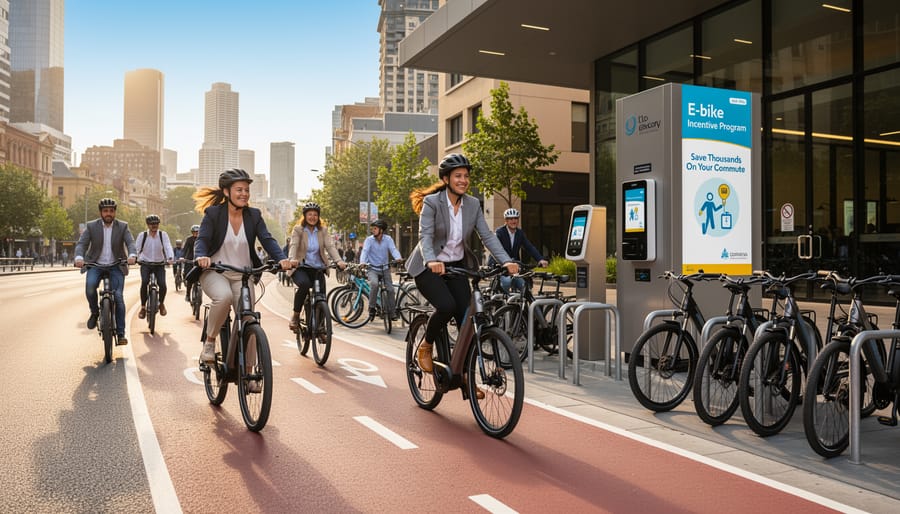
What Happens After You Get Your Rebate
Congratulations on taking this exciting step towards cleaner, more joyful transport! Now the real adventure begins. Start by establishing a simple maintenance routine—check tyre pressure weekly, keep the chain clean, and store your battery at room temperature when not in use. Most Australian bike shops offer e-bike servicing packages, and many state programs include maintenance workshops for rebate recipients.
Safety matters, so invest in a quality helmet, front and rear lights, and high-visibility clothing. Consider joining local cycling groups through Bicycle Network or your state’s cycling advocacy organization—they’re brilliant for route suggestions, social rides, and connecting with fellow e-bike enthusiasts who’ve made the same sustainable choice.
Track your impact to stay motivated. A simple notebook or app can record kilometres traveled and petrol saved. If you’ve replaced car trips, you’re likely saving $50-150 monthly on fuel alone, plus reducing your carbon footprint by approximately 2-3 tonnes annually for regular commuters.
Share your journey with neighbors and colleagues—your experience might inspire their own switch to sustainable transport. Many riders find they’ve become unexpected ambassadors for change, proving that environmental action can be practical, affordable, and genuinely life-enhancing. You’re now part of Australia’s growing community pedaling towards a cleaner future.
The time to embrace sustainable transport is now, and e-bike incentive programs across Australia are making that transition more affordable than ever. By taking advantage of these rebates, you’re not just putting hundreds of dollars back in your pocket—you’re joining a growing community of Australians reducing carbon emissions one pedal stroke at a time. Every e-bike replaces countless car trips, cutting greenhouse gases while improving air quality in our neighborhoods.
These programs won’t last forever, though. Many local councils and state governments operate on limited budgets that can be exhausted quickly as more Australians discover these opportunities. Don’t miss your chance to be part of this transport revolution.
Check what’s available in your area today. Visit your local council website or state government transport page to find current programs, eligibility requirements, and application deadlines. Whether you’re commuting to work, running errands, or simply exploring your community, an e-bike supported by these incentives makes sustainable living both practical and rewarding. Take that first step now—your wallet and the planet will thank you.
Price factors
The sticker price on an e-bike is only the starting point. What an e-bike incentive program actually saves you depends on a handful of variables, and most of them are set before you ever fill in an application.
Start with the percentage and the cap. Tasmania’s $200,000 e-bike rebate scheme offered up to 12% of the purchase price, capped at $500 for standard bikes. That cap matters more than the percentage. On a $2,500 bike, 12% would be $300, so you’d get the full amount. On a $6,000 cargo bike, 12% would blow past the limit and you’d still only receive $500. In other words, the more you spend, the smaller the share you get back.
- Bike type: Standard e-bikes and cargo bikes are often treated differently, so check which category your model falls into before you buy.
- Purchase price: A cheaper bike can return a bigger slice of its cost than a premium one.
- Timing: Funding runs down. Over 100 Tasmanians had claimed rebates on new e-bikes while more than $100,000 remained available, and the scheme has since wrapped up.
- Extras: Helmets, locks, and panniers usually sit outside the rebate, so budget for them separately.
Run your own numbers first. Subtract the likely rebate from the bike’s price, add your accessories, and compare that total against what you’d spend on fuel and parking. Then confirm current terms with your local program before you commit.
Cost breakdown
A rebate only makes sense once you see the full price of owning an e-bike. The sticker price is just the first line.
Here’s how the costs typically stack up in an e-bike incentive program scenario, using the one verified example we have. Tasmania’s $200,000 scheme offered up to 12% of the purchase price, capped at $500 for standard bikes. So a rider buying a bike at or above roughly $4,170 hit the full $500. Anyone paying less got 12% of whatever they spent.
| Cost item | What to budget for |
|---|---|
| Bike purchase | Your biggest cost, and the figure the rebate percentage is calculated on |
| Rebate | Up to 12%, capped at $500 for standard bikes in the Tasmanian scheme |
| Safety gear | Helmet, lights and a lock |
| Servicing | Chain, brakes and tyres wear faster with motor assistance |
| Charging | Small, but not zero |
Don’t forget the timing. Rebates generally arrive after you’ve paid, so you’ll need to cover the full price upfront. Check your local program’s rules before you hand over the cash, because eligibility and process details vary and we can’t confirm them for every scheme.
The sums are encouraging. More than 100 Tasmanians claimed a rebate on a new e-bike, and the program still had more than $100,000 left at one point. Budget for the whole cost of ownership, then treat the rebate as a bonus rather than a plan.
DIY vs pro
Once your rebate lands, you’ve got a choice that affects both your wallet and your ride: do the setup and upkeep yourself, or pay a shop. Neither is wrong. It depends on the job.
Rebates often shave only a slice off the price. Tasmania’s scheme, for example, offered up to 12% of the purchase price, capped at $500 for standard bikes. That’s useful, but it won’t cover a pile of workshop bills, so it pays to know where your own time is worth spending.
Jobs most riders can handle themselves
- Checking tyre pressure and topping up before rides
- Wiping down and lubricating the chain
- Adjusting saddle height and handlebar angle
- Inspecting brake pads for wear
- Charging the battery and storing it away from heat
Jobs worth paying a professional for
- Motor or controller faults, and anything involving the battery pack or wiring
- Hydraulic brake bleeding and wheel truing
- Firmware updates and diagnostics on mid-drive systems
- Cargo bike setup, where load balance and braking matter more
A simple rule: if it’s mechanical and visible, have a go. If it’s electrical or safety-critical, book a shop. Tampering with the drive system can also put your warranty at risk, so check the terms before you pick up a spanner.
Since the e-bike incentive program you used was meant to get you riding more, a shop service once a year is a small price for keeping the bike reliable.