
Organizational sustainability transforms how Australian businesses operate by embedding environmental responsibility into every decision, from the suppliers you choose to the products that arrive at your loading dock each morning. This isn’t about token gestures or one-off initiatives that fade when leadership changes—it’s about building systems that make sustainable choices the default, not the exception.
The journey begins with your supply chain, where procurement decisions ripple outward to affect everything from carbon emissions to community wellbeing. Australian organizations leading this charge are discovering that sustainability and profitability aren’t opposing forces. When Melbourne’s healthcare facilities shifted to suppliers with verified environmental credentials, they reduced waste by 34% while cutting costs. When Sydney’s hospitality sector prioritized local, sustainable procurement, they strengthened regional economies and slashed transport emissions simultaneously.
What separates lasting change from fleeting campaigns is integration. Sustainable organizations don’t create separate “green initiatives”—they weave environmental thinking into procurement policies, supplier contracts, performance metrics, and employee accountability. They measure what matters, from Scope 3 emissions in their supply chains to the lifecycle impact of every purchase order.
For Australian businesses facing increasing stakeholder expectations, regulatory pressures, and climate risks, organizational sustainability offers a competitive advantage. Your customers are asking harder questions about your environmental footprint. Your best talent wants to work for organizations that reflect their values. Your investors are assessing climate risk with unprecedented scrutiny.
The framework ahead provides practical pathways for Australian organizations ready to move beyond greenwashing toward genuine, enduring sustainability—complete with local case studies, regulatory context, and actionable strategies you can implement Monday morning.
What Organizational Sustainability Actually Means
Organizational sustainability isn’t about ticking boxes or launching a flashy recycling program that fades after a few months. It’s the genuine capacity of your workplace to reduce environmental impact over the long haul, woven into the very fabric of how you operate. Think of it as building environmental responsibility into your organizational DNA rather than treating it as an add-on or marketing exercise.
At its core, organizational sustainability means your business makes decisions today that protect tomorrow. It’s evident in your supply chains, procurement policies, daily operations, and workplace culture. When sustainability becomes organizational, it influences everything from which suppliers you partner with to how your team thinks about waste on a Tuesday afternoon.
Let’s be clear about what this isn’t. A one-off tree planting day, while lovely, doesn’t make your organization sustainable. Neither does switching to recycled paper if your procurement team continues buying from suppliers with questionable environmental practices. These isolated gestures, often called greenwashing, create an illusion of environmental commitment without the substance behind it.
True organizational sustainability in the Australian context might look like a Melbourne-based company systematically assessing their entire supply chain for carbon emissions, then working collaboratively with local suppliers to reduce impact together. It’s a Perth business embedding circular economy principles into product design from the start, not as an afterthought. It’s Sydney offices transitioning to renewable energy while simultaneously retraining procurement teams to prioritize environmental criteria alongside cost and quality.
The distinction matters because businesses across Australia are moving beyond performative environmentalism. Your customers, employees, and community increasingly recognize the difference between genuine commitment and clever marketing. Organizational sustainability requires patience, investment, and cultural shift, but it creates resilience. When environmental responsibility becomes part of how you operate, not just something you talk about, you’re building a business capable of thriving in a resource-constrained future while contributing to the collective wellbeing of our communities and planet.
The Foundation: Green Procurement That Sticks

Building Your Green Procurement Policy
Creating a green procurement policy doesn’t require starting from scratch. Many Australian organisations have already paved the way, and you can build on their experience while tailoring an approach that fits your unique context.
Start by establishing clear environmental criteria for purchasing decisions. This means defining what matters most to your organisation: carbon emissions, waste reduction, renewable materials, or ethical sourcing. Melbourne’s RMIT University, for instance, prioritised local suppliers and recycled content when revamping their procurement framework, reducing transport emissions while supporting regional communities.
Next, identify relevant certifications that align with your values. The Good Environmental Choice Australia (GECA) ecolabel helps Australian businesses recognise genuinely sustainable products across categories from cleaning supplies to green office products. For organisations pursuing carbon neutral certification, Climate Active provides a rigorous Australian government-backed standard that demonstrates serious commitment.
Engage your team early in the process. Your purchasing officers and department heads understand daily operational needs and can identify realistic opportunities for change. Brisbane-based Endeavour Foundation found that collaborative policy development led to 40% higher adoption rates compared to top-down mandates.
Set measurable targets with achievable timelines. Perhaps aim for 30% certified sustainable products within twelve months, then increase progressively. Include price thresholds that acknowledge sustainable products may cost slightly more upfront while delivering long-term value through durability and reduced environmental impact.
Document your policy clearly, specifying approved suppliers, certification requirements, and exception processes. Make it accessible and regularly reviewed. Remember, your procurement policy isn’t just paperwork; it’s a practical tool that transforms everyday purchasing decisions into environmental action, creating ripple effects throughout your supply chain and inspiring others in your industry.
Engaging Suppliers in Your Sustainability Journey
Your supply chain is often where the biggest sustainability impact lies – and where the greatest opportunity for positive change exists. For Australian businesses, engaging suppliers in your sustainability journey isn’t just about ticking boxes; it’s about building partnerships that amplify your environmental values throughout the entire product lifecycle.
Start by developing a supplier sustainability questionnaire that asks meaningful questions. Enquire about their energy sources, waste management practices, and whether they hold certifications like Climate Active or B Corp status. Ask Australian suppliers specifically about their water usage strategies – particularly relevant given our drought-prone climate – and how they’re preparing for climate-related risks that might affect their operations.
When vetting potential partners, look for suppliers who can provide transparent data about their environmental footprint. Melbourne-based coffee roasters who can trace beans back to sustainable farms, or Sydney packaging suppliers using genuinely compostable materials made from Australian agricultural waste, demonstrate the kind of commitment worth investing in.
Watch for red flags that signal greenwashing. Vague claims without supporting evidence, reluctance to provide certifications, or sustainability statements that aren’t backed by measurable actions should raise concerns. If a supplier claims carbon neutrality, they should readily explain their methodology and offsetting programs.
Collaboration is key to success. Rather than simply switching to greener suppliers overnight, consider working with existing partners to improve their practices. Share resources, connect them with sustainability consultants, or collaborate on pilot programs. Some Australian businesses have created supplier sustainability forums where partners share best practices and challenges.
Remember that smaller, local suppliers often have lower transport emissions and stronger community ties, even if they lack formal certifications. A family-owned manufacturer in regional Queensland using renewable energy might be a better choice than an internationally certified supplier shipping products from overseas.
Build sustainability criteria into your procurement policies, but remain flexible enough to support suppliers on their own journey. Creating a community of aligned partners strengthens everyone’s commitment and creates ripple effects that extend far beyond your own organisation.
Creating Sustainable Supply Chains That Last
Mapping Your Supply Chain’s Environmental Impact
Understanding your supply chain’s environmental footprint is the essential first step toward meaningful change. Many Australian businesses discover that up to 90% of their environmental impact occurs in their supply chain, making this mapping exercise crucial for authentic sustainability progress.
Start with a baseline assessment of your current operations. The Australian Government’s Supply Chain Sustainability School offers free tools tailored to local businesses, helping you identify emission hotspots, waste streams, and resource consumption patterns. For small to medium enterprises, simplified frameworks like the Carbon Reduction Institute’s supply chain calculator provide accessible entry points without requiring extensive resources or specialist knowledge.
Map your supply chain in layers, beginning with direct suppliers (Tier 1) before expanding to their suppliers (Tier 2 and beyond). Document key information including transportation methods, energy sources, packaging materials, and waste disposal practices. Melbourne-based coffee roasters and Sydney retailers have found success using spreadsheet templates from Sustainable Business Australia, which categories emissions into scopes and tracks water usage alongside carbon output.
Consider engaging with collaborative platforms like Sedex, which Australian suppliers increasingly use to share environmental and social data. This reduces duplication of effort across your supply network while building transparency. For manufacturers, the CSIRO’s SME Gateway connects you with specialised assessment tools developed specifically for Australian conditions and regulations.
Don’t let perfect become the enemy of good. Start by mapping your largest suppliers or those representing the highest spend, gradually expanding your assessment as capacity allows. Many Brisbane and Adelaide businesses have begun their journey by simply asking suppliers five key questions about their environmental practices, creating dialogue that often reveals improvement opportunities neither party had previously considered.
Remember, this mapping exercise connects you with like-minded businesses across Australia’s growing sustainability community, creating partnerships that strengthen everyone’s environmental performance.
Local Sourcing and Its Real Benefits
Choosing local suppliers creates ripple effects that extend far beyond your organisation’s bottom line. When Australian businesses prioritise local procurement, they’re making a powerful statement about their commitment to both environmental stewardship and community resilience.
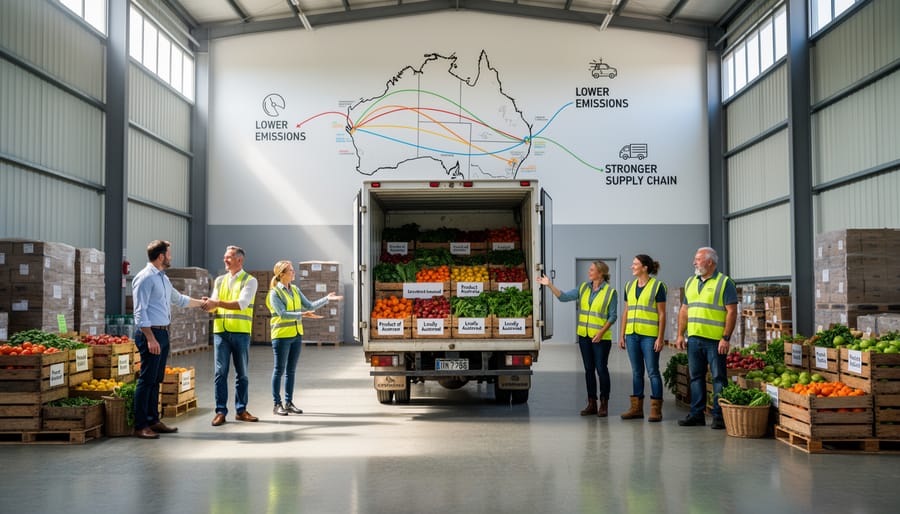
The environmental mathematics is compelling. Every product sourced from overseas suppliers travels thousands of kilometres, accumulating carbon emissions through shipping, air freight, and distribution. By contrast, partnering with Victorian, Queensland, or New South Wales suppliers can reduce your transport-related emissions by up to 80 percent. Melbourne’s Organic Food Co demonstrates this perfectly, sourcing 95 percent of their ingredients from farms within 200 kilometres, slashing their supply chain emissions while guaranteeing fresher products.
Local sourcing also strengthens community resilience. When you invest in Australian suppliers, you’re supporting local employment, keeping wealth circulating within your region, and building relationships that foster innovation. During recent supply chain disruptions, organisations with strong local networks weathered challenges far better than those dependent on international suppliers.
Perth-based construction firm BuildWest switched to locally manufactured materials in 2021. Beyond reducing their carbon footprint by 40 percent, they discovered unexpected benefits: faster delivery times, easier quality control, and collaborative relationships with suppliers who understood their sustainability goals. Their suppliers even helped develop custom solutions using recycled materials.
The transition needn’t be overwhelming. Start by mapping your current suppliers, identifying which products could realistically be sourced locally, and gradually building those relationships. The environmental and community benefits make this journey worthwhile for organisations genuinely committed to sustainable transformation.
Circular Economy Principles in Action
Circular economy principles offer Australian organizations a transformative approach to sustainability that goes beyond traditional recycling. Rather than the linear take-make-dispose model, circular thinking keeps resources in productive use for as long as possible.
Start by designing out waste from the beginning. Melbourne’s Furniture Collective demonstrates this beautifully, creating modular office furniture designed for disassembly and reuse. When selecting suppliers, ask whether products can be easily repaired, refurbished, or returned to the manufacturer at end-of-life. Companies like Interface Australia have pioneered carpet tile take-back programs, transforming old flooring into new products.
Keeping products in use longer means embracing repair, sharing, and refurbishment. Sydney-based tech firms are partnering with Social Traders to refurbish old devices for community organizations rather than discarding them. Consider implementing waste reduction strategies that prioritize maintenance and upgrade programs over replacement.
Regenerating natural systems extends beyond minimizing harm to actively restoring ecosystems. Queensland businesses are supporting regenerative agriculture in their supply chains, choosing suppliers who rebuild soil health and biodiversity. The Australian Circular Economy Hub provides industry-specific roadmaps and connections to circular suppliers nationwide, making the transition achievable for organizations of any size.
Making Sustainability Part of Your Organizational DNA
Getting Leadership Buy-In
Securing leadership support starts with speaking the language that resonates in Australian boardrooms: measurable value and competitive positioning. Rather than leading with environmental passion alone, frame sustainability as a strategic business imperative that strengthens your organisation’s foundation.
Begin by quantifying the cost savings. Energy-efficient operations can reduce utility expenses by 20-40%, while waste reduction programs often deliver immediate bottom-line improvements. Share case studies from Australian businesses that have achieved tangible financial benefits through corporate green initiatives, making the business case concrete rather than theoretical.
Risk mitigation carries significant weight with decision-makers. Australia’s evolving regulatory landscape, including emissions reporting requirements and potential carbon pricing mechanisms, means proactive organisations avoid costly compliance catch-ups. Climate-related risks also threaten supply chain continuity, with extreme weather events increasingly disrupting operations. Position sustainability as business resilience.
Highlight competitive advantages specific to our market. Australian consumers increasingly favour sustainable brands, with recent surveys showing 87% prefer purchasing from environmentally responsible companies. Government procurement policies now prioritise sustainable suppliers, opening significant contract opportunities. Major retailers are demanding supply chain transparency, making sustainability credentials essential for maintaining partnerships.
Present a phased implementation roadmap with clear milestones and metrics. Leaders appreciate structured approaches that demonstrate progress without overwhelming existing operations. When sustainability becomes synonymous with innovation, efficiency, and market positioning, buy-in follows naturally.

Empowering Your Team to Drive Change
True organizational transformation happens when sustainability becomes everyone’s responsibility, not just a directive from the top. Australian businesses leading the charge in green procurement and supply chains understand that their greatest asset isn’t technology or policy documents—it’s their people.
Creating green teams offers a practical starting point for channeling employee passion into action. These cross-functional groups bring together staff from different departments who are genuinely motivated to drive environmental change. At Melbourne-based packaging company Orora, their employee sustainability champions meet monthly to identify opportunities across procurement decisions, from sourcing recycled materials to optimizing delivery routes. The key is giving these teams real authority to propose changes and allocated time during work hours to pursue initiatives.
Training transforms enthusiasm into expertise. Rather than one-off workshops, consider embedding sustainability into existing professional development programs. Australian businesses are increasingly partnering with organizations like the Australian Packaging Covenant Organisation to provide staff with practical knowledge about circular economy principles, sustainable materials assessment, and supplier evaluation criteria. This equips your procurement and operations teams to make informed decisions that align environmental goals with business objectives.
Ownership flourishes when employees see their fingerprints on tangible outcomes. Share regular updates about how staff suggestions have reduced waste, cut emissions, or improved supplier practices. When Brisbane’s Brisbane Airport Corporation implemented an employee-driven program to eliminate single-use plastics from their supply chain, they celebrated milestones publicly and tied achievements to individual contributions.
Consider creating recognition programs that celebrate sustainability champions, whether through quarterly awards or simple shout-outs in company communications. When your team sees that environmental stewardship directly connects to professional growth and organizational values, sustainability stops being another initiative and becomes simply how we do business here.

Measuring What Matters
You can’t improve what you don’t measure, and this principle sits at the heart of meaningful organizational sustainability. For Australian businesses navigating the complexities of green procurement and supply chains, tracking the right metrics transforms sustainability from aspiration into measurable progress.
Start with metrics that align with your organization’s specific sustainability goals. For supply chains, this typically includes carbon emissions across Scope 1, 2, and increasingly, Scope 3 (those generated by your suppliers and partners). Track waste diversion rates, water consumption, and the percentage of sustainable materials in your procurement. These tangible numbers tell the story of your environmental impact and create accountability throughout your organization.
Australian businesses now have clearer pathways for sustainability reporting thanks to evolving frameworks. The National Greenhouse and Energy Reporting (NGER) scheme provides a foundation for larger organizations, while the Climate Active certification program offers credible carbon neutral certification. From 2024, many Australian companies will also need to align with international standards through climate-related financial disclosures, making robust measurement systems essential rather than optional.
For procurement teams, consider tracking supplier sustainability scores. Develop a simple rating system assessing suppliers on criteria like environmental certifications, carbon reduction initiatives, and ethical labor practices. Melbourne-based cooperative organizations have pioneered collaborative supplier assessment tools, allowing businesses to share the workload while raising industry standards collectively.
Don’t overlook qualitative measures alongside quantitative data. Employee engagement scores around sustainability initiatives, supplier collaboration stories, and innovation examples from your procurement process provide context that pure numbers cannot. These narratives build the business case for continued investment and inspire others in your community to follow suit.
Technology makes tracking simpler than ever. Cloud-based sustainability management platforms can integrate with existing procurement systems, automatically calculating emissions, tracking certifications, and generating reports. Many Australian suppliers now provide detailed sustainability data through digital platforms, removing traditional barriers to transparent supply chain measurement.
Set realistic benchmarks by connecting with industry peers through groups like the Australian Packaging Covenant Organisation or Sustainability Victoria’s networks. Understanding where you stand relative to similar organizations helps identify improvement opportunities while celebrating genuine progress. Remember, perfect measurement shouldn’t delay action. Start with accessible metrics, refine your approach continuously, and let your data guide increasingly sophisticated sustainability strategies that create lasting environmental benefits.
Common Roadblocks and How Australian Organizations Overcome Them
Let’s be honest: embarking on a sustainability journey isn’t always smooth sailing, even with the best intentions. Australian organizations face unique hurdles, but the good news is that many have already blazed trails and discovered practical solutions worth sharing.
Budget constraints top the list of challenges for most businesses. When every dollar counts, sustainability initiatives can feel like a luxury rather than a necessity. However, forward-thinking Australian companies are reframing this perspective. Take Melbourne-based packaging company BioPak, which started by identifying quick wins that actually reduced costs—like switching to LED lighting and optimizing delivery routes to cut fuel consumption. These immediate savings then funded larger sustainability investments. The key is starting small and building momentum through demonstrable returns on investment, rather than attempting a complete overhaul overnight.
Supplier resistance presents another common roadblock, particularly for businesses outside major metropolitan areas. Many Australian suppliers simply aren’t set up for sustainable alternatives yet. The solution? Collaboration and clear communication. Perth mining company Roy Hill Holdings worked directly with their regional suppliers, sharing their sustainability requirements well in advance and even providing resources to help suppliers transition. By treating suppliers as partners rather than obstacles, they’ve built a robust sustainable supply chain that benefits everyone involved.
Limited internal expertise can stop sustainability efforts before they start. Not everyone has a dedicated sustainability officer on staff, and that’s perfectly normal. Brisbane’s River City Labs tackled this by creating a peer learning network with other local businesses, sharing knowledge and resources. They also tapped into Australia’s growing pool of sustainability consultants for targeted support during crucial decision-making phases. Sometimes, admitting you need help is the smartest strategy.
Geographic isolation poses unique challenges for regional and remote Australian businesses. Limited access to sustainable suppliers and higher freight costs can feel insurmountable. Yet organizations like Broken Hill’s White Cliffs Solar Farm demonstrate that distance can actually drive innovation. By focusing on local solutions—partnering with nearby businesses, investing in renewable energy generation on-site, and building community connections—they’ve turned isolation into an advantage, creating a model that’s entirely suited to their context.
The common thread among successful Australian organizations? They view roadblocks as problems to solve creatively rather than reasons to abandon their sustainability goals. They start where they are, use what they have, and build community around shared challenges. Your organization’s path won’t look identical to anyone else’s, and that’s exactly how it should be.
Building organizational sustainability isn’t about achieving perfection overnight—it’s about embracing an ongoing journey of continuous improvement. Every Australian workplace that commits to sustainable procurement or more responsible supply chains becomes part of a growing movement that’s reshaping how we do business on this continent.
The beauty of this transformation is that you don’t need to overhaul everything at once. Start where you are. If sustainable procurement feels like the natural entry point, begin by reviewing your most frequently purchased items or engaging with one local supplier about their environmental practices. If supply chain sustainability resonates more, map out your tier-one suppliers and open conversations about their practices. Small, deliberate steps create momentum that spreads throughout your organization.
What makes this journey particularly powerful in the Australian context is our unique position as both a trading nation and one facing significant climate challenges. From the Great Barrier Reef to our urban centers, the environmental stakes are real and visible. When Australian workplaces choose sustainable practices, we’re not just following global trends—we’re protecting our own backyard while contributing to meaningful global change.
The collective impact of Australian businesses taking action cannot be overstated. Each organization that switches to recycled office supplies, partners with ethical suppliers, or demands transparency in their supply chain creates ripple effects. You influence your suppliers, who influence their suppliers, building a network of positive change.
Ready to deepen your commitment? Explore resources through organizations like the Australian Sustainable Business Council, connect with the Sustainable Procurement Pledge, or join industry-specific sustainability networks in your state. These communities offer support, share learnings, and remind us that we’re not alone in this vital work. Your journey toward organizational sustainability starts with a single step—and Australia’s sustainable future depends on workplaces like yours taking it.