
You’ve likely heard that composting is a cornerstone of sustainable living, but whispers of methane emissions, nutrient runoff, and pest problems might have you questioning whether your compost bin is actually helping the planet. Here’s the truth: composting done poorly can indeed create environmental issues, but these problems are entirely preventable when you understand what’s happening in your heap.
Across Australian backyards and community gardens, well-intentioned composters unknowingly contribute to greenhouse gas emissions when their piles become anaerobic, releasing methane rather than carbon dioxide. Others create nutrient pollution when excessive compost leaches into waterways, or attract rodents and flies that disrupt local ecosystems. These aren’t reasons to abandon composting—they’re signs that we need better practices.
The good news? When integrated with proper eco-friendly gardening practices, composting becomes one of your most powerful tools for environmental restoration. The difference between harmful and helpful composting often comes down to simple adjustments: maintaining proper aeration, balancing your green and brown materials, and managing moisture levels.
This article cuts through the confusion to address the legitimate environmental concerns surrounding composting while equipping you with practical solutions. You’ll discover which common mistakes create problems, why they occur, and exactly how to avoid them—transforming your composting practice from potentially problematic to genuinely regenerative. Because when done right, your compost heap doesn’t just reduce waste; it actively heals the soil beneath our feet.
The Dark Side of Poorly Managed Compost
Greenhouse Gas Emissions from Backyard Bins
Here’s the truth many Australian composters don’t realise: when your backyard bin lacks oxygen, it becomes a methane factory. Methane is a greenhouse gas roughly 25 times more potent than carbon dioxide, and poorly managed compost heaps can release significant amounts of it into the atmosphere.
The culprit is anaerobic decomposition, which occurs when organic matter breaks down without adequate airflow. You’ll recognise this happening if your compost smells like rotten eggs or ammonia rather than earthy soil. In these oxygen-starved conditions, microorganisms produce methane as they work through your kitchen scraps and garden waste.
The good news? This is entirely preventable. Properly aerated compost systems generate minimal methane because aerobic bacteria dominate the decomposition process, producing mainly carbon dioxide and water instead. Simple practices make all the difference: turning your compost regularly (every week or two), maintaining the right moisture balance (damp like a wrung-out sponge), and ensuring adequate air gaps by mixing green materials with dry browns.
Many community gardens across Australia are now demonstrating these techniques, showing neighbours how straightforward proper composting can be. When done correctly, composting remains one of the most effective ways to reduce your environmental footprint while enriching local soils.
When Nutrients Become Pollutants
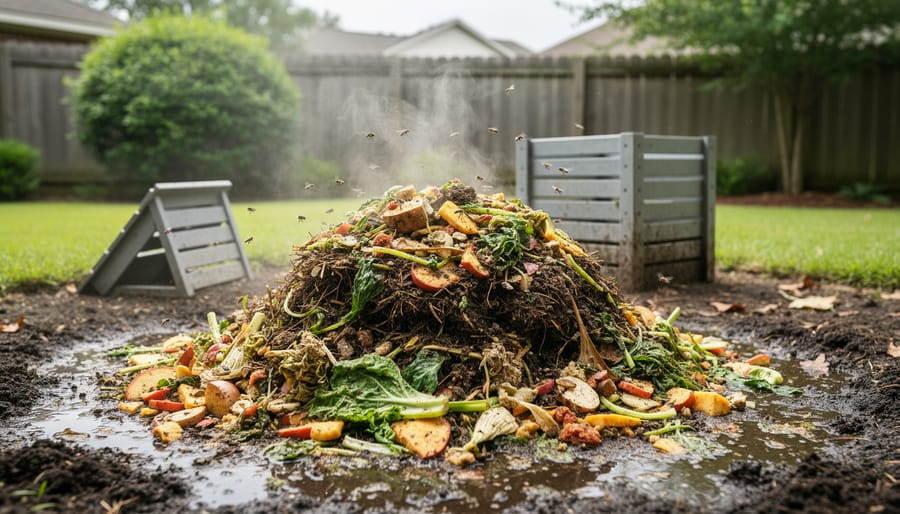
Here’s a scenario that plays out in backyards and community gardens across Australia every wet season: well-intentioned composters watch helplessly as heavy rains wash nutrient-rich liquid from their compost heaps straight into stormwater drains. What started as an environmental solution becomes an unexpected problem.
When compost sits directly on soil without proper containment, or when we’ve added too much nitrogen-rich material like fresh grass clippings and food scraps, those concentrated nutrients can leach away during downpours. This nutrient-laden runoff doesn’t just disappear; it flows into our creeks, rivers, and coastal waterways, contributing to a process called eutrophication. Essentially, the nitrogen and phosphorus that would nourish your garden instead triggers excessive algae growth in waterways, depleting oxygen levels and harming aquatic life.
This issue is particularly relevant during Queensland’s monsoonal wet season or Sydney’s peak rainfall months when a poorly positioned compost heap can release significant amounts of nutrients within hours. Brisbane’s Waterways team has noted that residential organic waste management, including compost placement, plays a role in urban waterway health.
The good news? This challenge is entirely preventable. Placing your compost bin on a well-drained base, maintaining proper carbon-to-nitrogen ratios, and ensuring adequate coverage during heavy rain periods keeps those valuable nutrients where they belong: enriching your soil, not our waterways. Community composting initiatives across Melbourne and Perth have demonstrated that with simple positioning adjustments, we can eliminate nutrient runoff while maintaining thriving compost systems.
Common Composting Mistakes That Damage Soil Health
The Immature Compost Problem
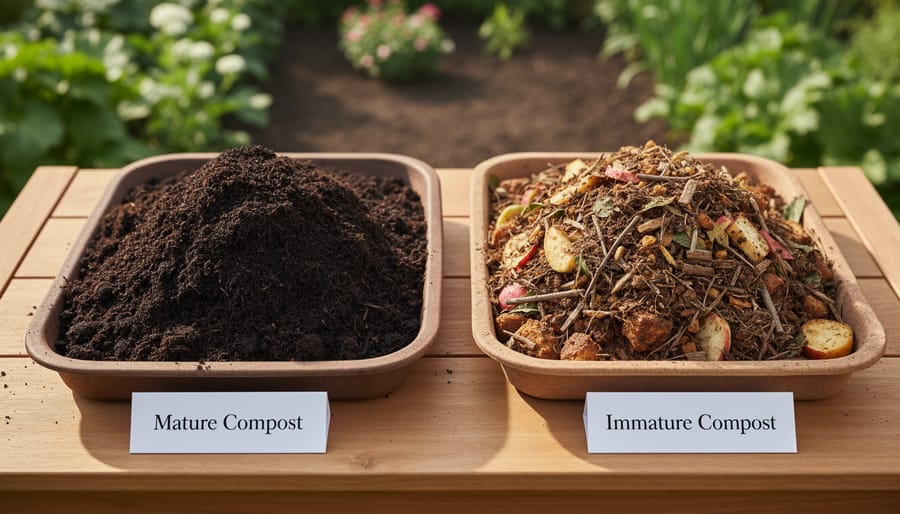
Rushing to add compost to your garden before it’s fully broken down is one of the most common mistakes Australian gardeners make, and it can actually set your plants back rather than help them thrive.
When compost hasn’t finished decomposing, it creates a problem called nitrogen robbery. The microorganisms still working to break down carbon-rich materials like woodchips or dry leaves need nitrogen to do their job, and they’ll pull it straight from your soil. Your plants then miss out on this essential nutrient just when they need it most. This is particularly problematic for hungry veggie patches and native gardens with shallow-rooted species.
Immature compost can also contain phytotoxic compounds that inhibit seed germination and stunt plant growth. If you’ve ever planted seedlings in fresh compost and watched them mysteriously wilt, this might be the culprit. These toxic substances break down as composting completes, which is why patience matters.
Australian gardeners growing tomatoes, lettuce, or native grasses are especially vulnerable to these issues. Before spreading compost on your food gardens, check that it’s dark, crumbly, and earthy-smelling with no recognizable original materials. If you’re uncertain about your compost’s readiness, it’s worth taking time to troubleshoot your compost pile before application. Finished compost transforms gardens; unfinished compost creates frustration.
Hidden Contaminants in Your Heap
Not all organic matter belongs in your compost heap, and some contaminants common in Australian backyards can cause surprising problems for both your garden and the broader environment.
One of the most concerning issues we’re seeing across Australian communities involves herbicide residues, particularly from lawn clippings. Products containing persistent herbicides like aminopyralid, picloram, and clopyralid can survive the composting process and remain active for years. When used on finished compost, these residues can devastate sensitive plants like tomatoes, beans, and native species. Many gardeners unknowingly introduce these contaminants through grass clippings from treated lawns or contaminated animal manure.
Treated pine and other chemically preserved timbers present another hidden danger. While that old fence post or decking offcut might seem like innocent carbon material, treated timbers contain copper, chromium, and arsenic compounds that leach into your compost, making it toxic to plants and soil organisms.
Australian composters also need to watch for invasive weed seeds. Species like couch grass, onion weed, and oxalis can survive in cool compost heaps, spreading aggressively when you apply the finished product. Similarly, seeds from environmental weeds like lantana or asparagus fern can hitchhike through the composting process, contributing to local biodiversity problems.
The solution isn’t to abandon composting but to become more mindful about what goes in. Check with neighbours about lawn treatments, avoid treated timber entirely, and maintain hot composting temperatures above 55°C to destroy weed seeds and pathogens effectively.
Industrial Composting vs. Home Systems: The Environmental Trade-offs
When deciding how to manage your organic waste, understanding the environmental footprint of different composting methods helps you make the most sustainable choice for your situation.
Council green waste programs and commercial composting facilities offer significant advantages through economies of scale. These systems process thousands of tonnes of organic material using sophisticated equipment that maintains optimal temperatures and oxygen levels. The result? Faster decomposition with fewer methane emissions compared to poorly managed home systems. Across Australia, councils like the City of Sydney and Brisbane City Council have invested in impressive green waste infrastructure that transforms collected material into quality compost and mulch for parks and public spaces.
However, there’s a catch. Transportation emissions can substantially reduce these benefits, particularly in sprawling suburbs where bin lorries travel considerable distances. Research suggests that if you live within a densely populated urban area with efficient collection routes, council programs typically have a lower overall carbon footprint than home composting. But for regional Australians or those in less densely serviced areas, the equation shifts.
Home composting systems shine by eliminating transportation emissions entirely. Your organic waste travels mere metres from kitchen to compost bin, with zero fuel consumption. While smaller home systems may not achieve the high temperatures that suppress pathogens and weed seeds as effectively as commercial facilities, this matters less when you’re composting your own kitchen scraps and garden waste. The end product might be slightly less refined, but it’s perfectly suitable for home gardens.
The sweet spot? Many Australian households are combining approaches. They compost suitable materials like fruit peels and garden prunings at home whilst sending problematic items like meat scraps, dairy, and diseased plants through council collections. This hybrid approach maximizes environmental benefits by reducing transportation needs while ensuring challenging materials receive proper high-temperature processing.
Consider your local context. Those with space and commitment can make home systems work brilliantly. Urban apartment dwellers might find worm farms or bokashi systems complement council services beautifully. The environmental winner isn’t always obvious, but choosing any composting method over sending organics to landfill represents meaningful progress.
How to Compost Without Environmental Harm
The Goldilocks Zone: Getting Your Carbon-to-Nitrogen Ratio Right
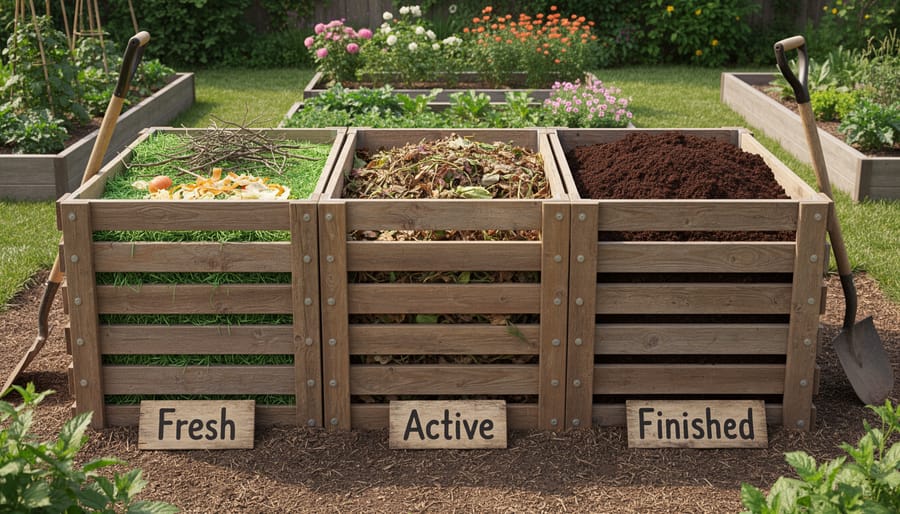
Think of composting like making the perfect cup of coffee – getting the balance right makes all the difference. The magic ratio you’re aiming for is roughly 25-30 parts carbon to 1 part nitrogen (often called the C:N ratio). This sweet spot creates the ideal conditions for aerobic decomposition, where beneficial microbes work efficiently without producing methane.
For Australian composters, this means getting creative with our native materials. Eucalyptus leaves are carbon-rich (browns), so they pair beautifully with nitrogen-rich materials like grass clippings, food scraps, or even seaweed if you’re coastal. A simple rule of thumb: for every bucket of kitchen scraps, add two to three buckets of dried leaves or shredded paper.
Here’s where many Aussie gardeners go wrong – our eucalyptus leaves can be slow to break down and tend toward acidity. Combat this by shredding them first and mixing with softer materials like native grass clippings from your lawn or vegetable garden waste. The Sydney Compost Collective found that alternating layers and turning weekly creates perfect airflow, preventing those anaerobic pockets where methane-producing bacteria thrive.
Watch for warning signs: if your compost smells like rotten eggs rather than earthy forest floor, you’ve tipped into anaerobic territory. Simply add more browns, give it a good turn, and you’ll be back on track. Getting this balance right transforms potential problems into black gold for your garden.
Temperature, Moisture, and Aeration for Australian Climates
Australia’s diverse climate zones mean composting isn’t one-size-fits-all, but understanding your local conditions helps create thriving, emissions-friendly compost systems.
In tropical Queensland and northern regions, moisture management becomes critical. The combination of heat and humidity can trigger anaerobic conditions quickly, so turn your heap weekly during wet season or consider a no-turn composting method with excellent drainage and plenty of dry brown materials. Position heaps under cover to prevent waterlogging from monsoonal rains.
Central Australian communities face opposite challenges. In arid zones, maintaining adequate moisture without wasting precious water requires regular light sprinkling and covering heaps with hessian sacks or shade cloth to reduce evaporation. Temperature extremes mean these bins work overtime in summer but slow considerably during cooler months.
Temperate Victoria and southern states enjoy ideal composting conditions most of the year. Focus on maintaining good aeration through regular turning, particularly during mild, damp winters when decomposition naturally slows. Add extra carbon materials during autumn leaf-fall to balance kitchen scraps.
Coastal communities everywhere benefit from positioning bins away from salt-laden winds and ensuring excellent drainage. Whatever your climate zone, monitoring your heap’s temperature and moisture creates compost that enriches soil rather than releasing unnecessary greenhouse gases.
What Never Goes in Your Compost Bin
Knowing what to keep out of your compost bin is just as important as understanding what belongs there. Getting this right protects our Australian environment and keeps your compost healthy and productive.
Never add meat, dairy, or oily foods to home compost systems. These materials attract possums, rats, and other wildlife, create unpleasant odours, and can harbour harmful pathogens. Many Australian councils collect these through dedicated food organics bins that use industrial composting facilities designed to handle them safely.
Diseased plants should always be excluded, as home composting doesn’t reach temperatures high enough to kill plant pathogens. That tomato plant suffering from blight or the roses with black spot need to go in your regular rubbish bin to prevent spreading disease through your garden.
Pet waste from cats and dogs poses serious health risks and should never enter compost used for food gardens. Similarly, avoid glossy magazines, treated timber, and weeds with seeds unless you’re confident your system reaches high temperatures.
Instead of composting problematic materials, look for alternatives. Many Australian councils now offer food waste collection services, or consider bokashi systems for meat and dairy. Share excess garden waste with community gardens, where larger composting operations can handle more diverse materials safely. When in doubt, it’s better to leave it out and protect both your compost and our environment.
Sustainable Alternatives and Complementary Practices
While traditional composting works brilliantly for many Australian households, it’s not always the perfect fit for everyone’s circumstances or environmental conditions. The good news is that several complementary practices can enhance your soil health journey, and sometimes they’re even more suitable than conventional composting.
Worm farming has become incredibly popular across Australian suburbs, particularly for those with limited space or living in apartments. A well-maintained worm farm processes kitchen scraps quickly without generating the methane emissions associated with poorly managed compost heaps. The liquid fertiliser produced, often called ‘worm tea’, is pure gold for native plants and veggie gardens. Plus, worm farms work year-round in most Australian climates, making them remarkably efficient.
Bokashi systems offer another fantastic alternative, especially during our hot summers when traditional compost bins can become problematic. This Japanese-inspired method uses beneficial microbes to ferment food waste in airtight containers, meaning it doesn’t attract pests and produces virtually no odour. It’s particularly valuable because it handles foods traditional composting can’t, like meat and dairy products.
For those with garden space, mulching alternatives and green manure crops deserve serious consideration. Green manures like legumes fix nitrogen naturally while improving soil structure, particularly beneficial for our often nutrient-poor Australian soils. Species such as lupins, field peas, and lablab beans thrive in various Australian regions and can be grown during the cooler months before being turned into the soil.
These methods work beautifully alongside traditional composting or as standalone practices. Consider combining approaches based on your specific situation, climate zone, and the materials you have available. The most environmentally sound choice is always the one you’ll maintain consistently.
Here’s the truth: compost isn’t bad for the environment—poorly managed compost is. When we understand the science behind decomposition and take simple steps to do it right, composting becomes one of the most powerful tools we have for building healthy soil and reducing waste across Australia. The difference between beneficial and problematic composting often comes down to knowing your carbon-to-nitrogen ratios, managing moisture levels, and choosing the right system for your space and climate.
Think of composting as a skill worth developing, much like cooking or gardening itself. You wouldn’t expect perfect results the first time you baked bread, and composting is no different. Start small, observe what works in your local conditions, and connect with community gardens or composting groups in your area. Many councils across Australia offer workshops and resources to help you succeed. By composting thoughtfully, you’re not just managing waste—you’re actively participating in soil regeneration, carbon sequestration, and building a more sustainable future for our communities. Every handful of quality compost represents a small victory for the environment.