
Along Australia’s rivers, bays and coastal waters, something remarkable is happening. Communities are carving out sanctuaries where waterways can heal, native species can thrive, and future generations can witness the natural beauty we’re fighting to preserve. These conservation zones represent more than protected areas on a map—they’re living commitments to reverse decades of degradation and protect our waterways for the wildlife and communities that depend on them.
From the Great Barrier Reef Marine Park to small creekside corridors in suburban Melbourne, conservation zones create buffer spaces where human activity takes a backseat to ecological recovery. These designated areas restrict damaging practices like intensive fishing, chemical runoff, and habitat destruction, giving stressed ecosystems the breathing room they desperately need. The results speak volumes: returning fish populations, clearer water quality, and revitalized wetlands that filter pollution naturally.
What makes conservation zones particularly powerful in the Australian context is their adaptability. They’re not one-size-fits-all solutions imposed from above, but flexible frameworks shaped by local knowledge, Indigenous land management practices, and community priorities. Whether you’re a waterfront property owner, a recreational fisher, or simply someone who values healthy rivers and coastlines, conservation zones offer a proven pathway to restoration that you can actively support and participate in.
What Are Waterway Conservation Zones?
Imagine a safety net stretched across Australia’s precious waterways – that’s essentially what waterway conservation zones are. These are designated areas along rivers, creeks, wetlands, and coastlines where nature gets priority protection, allowing ecosystems to flourish while filtering pollutants and providing habitat for countless species.
Think of conservation zones as nature’s buffer system. They work tirelessly behind the scenes, intercepting runoff before it reaches our waterways, stabilising riverbanks, and creating corridors where wildlife can safely move and thrive. For communities across Australia, these zones aren’t just environmental wins – they’re investments in cleaner water, flood protection, and spaces where future generations can connect with nature.
Australia recognises several types of waterway conservation zones, each serving unique purposes. Riparian buffers are vegetated strips along riverbanks and streams that act like natural filters, capturing sediment and nutrients before they pollute waterways. You’ll find these along countless Australian rivers, from the Murray-Darling system to small urban creeks being restored by dedicated community groups.
Wetland reserves protect these incredibly productive ecosystems that act as nature’s kidneys, purifying water while providing critical breeding grounds for birds, frogs, and fish. The Kakadu wetlands in the Northern Territory and the Macquarie Marshes in New South Wales showcase how these zones support extraordinary biodiversity while managing water quality.
Marine protected areas extend conservation efforts into coastal and ocean environments. The Great Barrier Reef Marine Park is Australia’s most famous example, but smaller marine zones along our coastline equally deserve attention. These areas protect spawning grounds, seagrass beds, and coral communities essential for healthy ocean ecosystems.
What makes conservation zones truly powerful is their accessibility. Whether you’re a coastal resident, inland farmer, or city dweller near a creek, waterway conservation zones exist in your backyard. They’re practical tools that transform how we interact with water, turning potential environmental threats into opportunities for restoration and connection.
Why Australia Desperately Needs These Protected Spaces
The Real Cost of Doing Nothing
When we choose not to protect our waterways, the consequences ripple through every aspect of Australian life. The story isn’t just about environmental loss—it’s about real people, communities, and livelihoods being fundamentally altered.
Consider the devastating Darling River fish kills of 2018-2019, where millions of native fish perished in waters choked by algal blooms and depleted oxygen levels. Images of dead Murray cod and golden perch shocked the nation, but behind those headlines were farming families who’d lived along those banks for generations, watching their connection to country disappear. Indigenous communities lost more than fish—they lost cultural practice sites where traditional knowledge had been passed down for thousands of years.
The economic impacts extend far beyond immediate cleanup costs. Queensland’s algal bloom management alone costs millions annually in monitoring, treatment, and lost tourism revenue. When waterways deteriorate, property values decline, recreational fishing industries struggle, and the burden falls heaviest on regional communities already facing economic challenges.
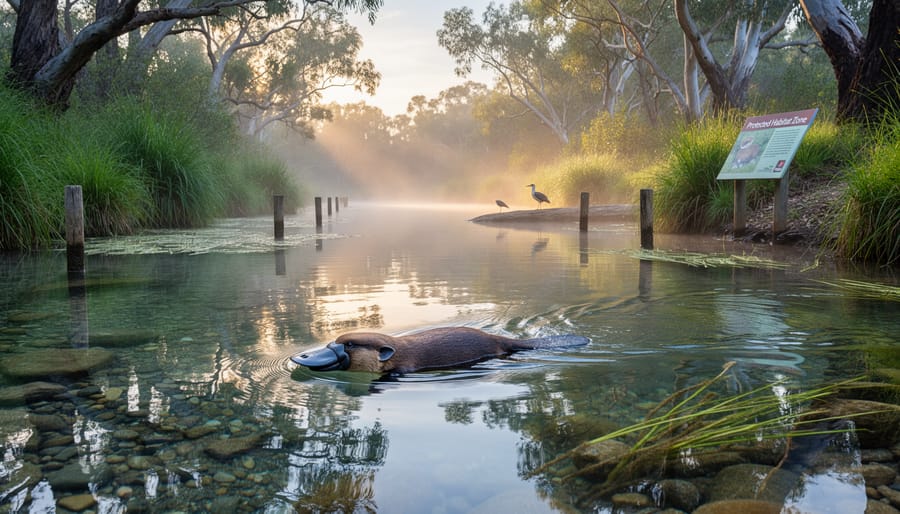
Without protected conservation zones, we’re essentially gambling with our most precious resource. Each unprotected stretch of river becomes vulnerable to runoff, pollution, and habitat destruction. Theplatypuses disappearing from Sydney’s waterways, the dugongs declining along Queensland’s coast—these aren’t just statistics. They’re indicators of ecosystems under stress, warning us that inaction carries a price tag we can measure in both dollars and irreplaceable natural heritage. The question isn’t whether we can afford to act, but whether we can afford not to.
How Conservation Zones Actually Work
The Science Behind the Success
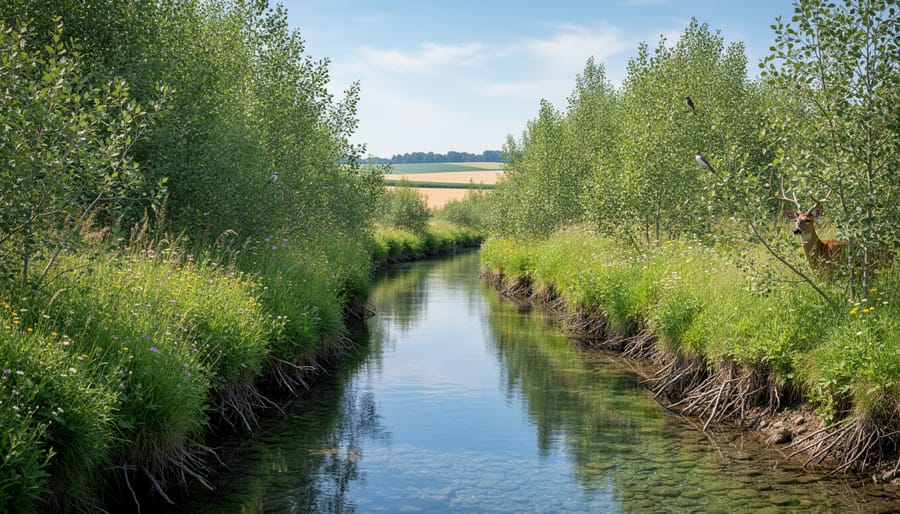
Conservation zones work like nature’s own water treatment plants, and the science backing them is remarkably elegant. When vegetated buffers line our waterways, their root systems act as living filters, capturing sediments, nutrients, and pollutants before they reach the water. Think of it as a natural sieve that catches what shouldn’t be there while allowing clean water to flow through.
Research from Griffith University has demonstrated that even a 10-metre vegetated buffer can remove up to 80% of sediment and 60% of nutrients from runoff. The plants don’t just filter, they absorb excess nitrogen and phosphorus, the very nutrients responsible for algal blooms that plague many Australian waterways.
Erosion control happens through a simple but powerful mechanism. Plant roots bind soil particles together, creating a stable bank that resists the cutting force of flowing water. Along the Murray-Darling Basin, restoration projects have shown that well-established conservation zones can reduce bank erosion by over 70% within just five years.
These zones also provide critical habitat corridors. Native vegetation offers shelter, breeding grounds, and food sources for everything from water rats to platypus. A successful project along Brisbane’s Oxley Creek demonstrated how restoring riparian zones increased native fish populations by 45% and brought back species that hadn’t been spotted in decades.
The beauty is that these ecological processes happen naturally once we give them space to work. It’s nature doing what it does best, we just need to step back and let it happen.
Australian Communities Leading the Way
Across Australia, communities are rolling up their sleeves and creating remarkable conservation zones that protect our precious waterways while strengthening local connections to country. These inspiring initiatives prove that when people come together with shared purpose, extraordinary change happens.
In the Daintree region of Far North Queensland, the Eastern Kuku Yalanji people are demonstrating how Indigenous land management practices create thriving conservation zones along the Mossman River. By combining traditional fire management, cultural burning techniques, and over 65,000 years of ecological knowledge, they’ve established buffer zones that filter sediment and nutrients before they reach the Great Barrier Reef. Local rangers work alongside community members to monitor water quality, remove invasive species, and restore native vegetation corridors. The results speak volumes: improved water clarity, returning fish populations, and a renewed sense of cultural pride that’s engaging younger generations in caring for country.
Down south in Victoria’s Gippsland region, dairy farmers are leading an agricultural revolution through the West Gippsland Catchment Management Authority’s conservation zone program. Rather than farming right up to creek edges, over 200 farmers have voluntarily created vegetated buffer strips along 400 kilometres of waterways. These zones, typically 10 to 30 metres wide, are planted with native grasses, shrubs, and trees that act as living filters. Farmer John Mitchell from Warragul shares that his conservation zone has transformed a muddy drainage line into a haven for native birds and frogs, while also reducing erosion and improving soil health on his property. The initiative has sparked a friendly competition among neighbouring farms, with many now expanding their conservation efforts beyond minimum requirements.
Melbourne’s Merri Creek provides a powerful urban example where community action has revitalised a degraded waterway. The Friends of Merri Creek, comprising volunteers from diverse backgrounds, have coordinated monthly planting days since 1989. They’ve established extensive riparian conservation zones through suburbs from Wallan to Clifton Hill, creating green corridors that support platypus, rakali (water rats), and over 170 bird species. What started with handful of dedicated locals has grown into a movement involving schools, businesses, and thousands of residents who now see the creek as a community asset worth protecting.
These stories demonstrate that conservation zones succeed when communities lead with passion, knowledge, and collective determination to create healthier waterways for everyone.
Creating Conservation Zones: What You Can Do Today
For Property Owners and Farmers
If you own property near waterways, you have a remarkable opportunity to make a lasting difference. Establishing riparian buffers—vegetated zones along your creek or river—might seem daunting, but numerous support programs make it achievable and financially viable.
Start by contacting your local Land Services or Catchment Management Authority. They’ll assess your property, recommend native species, and often connect you with free or subsidized seedlings. Many regions offer access to the National Landcare Program, which provides grants for fencing, erosion control, and revegetation projects. The Australian Government’s Environmental Stewardship Program also rewards landholders who protect significant environmental assets on their properties.
Farmers integrating conservation zones often discover unexpected benefits—reduced soil erosion, improved water quality for livestock, and natural pest control. These align beautifully with sustainable farming practices that enhance productivity while protecting the environment.
Check your state’s primary industries website for specific rebates. Victoria’s BushBank program, NSW’s Local Land Services grants, and Queensland’s Reef Assist program all offer financial support. Your local council may also provide rate rebates for conservation covenants. The investment you make today creates ecological assets that increase property value while safeguarding Australia’s precious waterways for future generations.
For Urban Residents and Businesses
Living in Australian cities doesn’t mean you can’t make a meaningful difference to waterway conservation. Urban dwellers have unique opportunities to protect and restore the precious water systems flowing through our metropolitan areas.
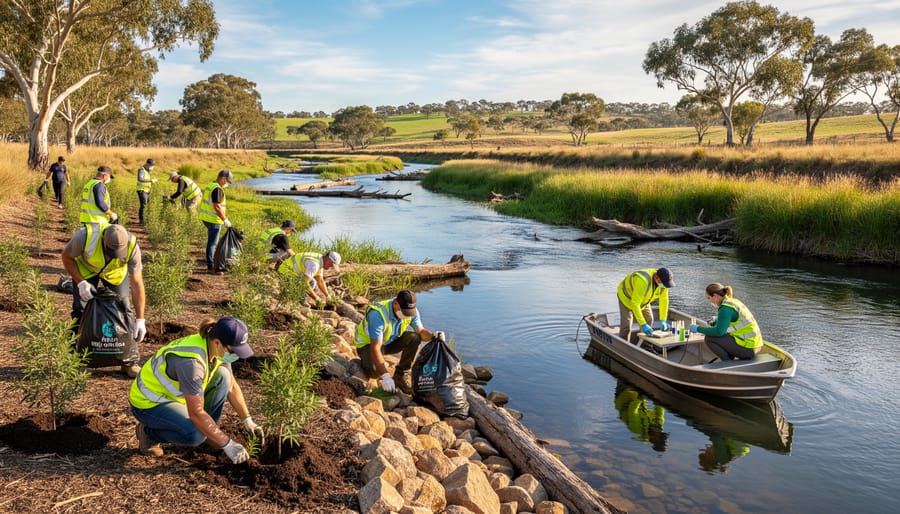
Start by connecting with your local Landcare or Catchment Management group. These community organizations actively restore urban waterways through joining revegetation groups, removing invasive weeds, and creating habitat corridors. Weekend working bees offer a chance to meet like-minded neighbours while directly improving your local creek or river system.
Business owners near waterways can become conservation champions by implementing sustainable practices. Simple steps like installing rain gardens, using permeable surfaces in car parks, and eliminating chemical runoff create immediate benefits. Some forward-thinking Australian businesses have transformed their waterfront premises into demonstration sites, inspiring customers and neighbouring properties.
Advocacy matters too. Attend council meetings to support conservation zone proposals, or start conversations about protecting neglected urban waterways in your area. Even apartment dwellers can participate by supporting local environmental groups, choosing businesses with sustainable practices, and sharing conservation stories on social media. Every voice strengthens the collective push for healthier urban waterways that benefit wildlife, communities, and future generations.
Resources and Support Across Australia
Taking action to support or create conservation zones in your waterways is easier than you might think, thanks to numerous Australian organizations ready to help. At the national level, the Department of Climate Change, Energy, the Environment and Water provides comprehensive guidelines and funding programs for waterway protection initiatives. Landcare Australia connects community groups across the country, offering practical support, training workshops, and access to grant funding for revegetation and conservation projects.
Each state has dedicated resources too. In New South Wales, Local Land Services offers technical advice and financial assistance for waterway restoration. Victorian communities can connect with the Victorian Catchment Management Authority, while Queensland’s Healthy Land and Water coordinates regional programs. Western Australia’s Department of Biodiversity, Conservation and Attractions runs targeted wetland conservation initiatives, and South Australia’s Green Adelaide provides urban waterway support.
For funding opportunities, explore the Australian Government’s National Landcare Program, which regularly opens grants for environmental restoration projects. The Ian Potter Foundation and Foundation for National Parks and Wildlife also support community-led conservation efforts.
Educational resources abound through Waterway Watch programs operating in most states, offering free water quality testing kits and citizen science training. The Australian River Restoration Centre provides technical guides and case studies, while your local council’s environmental department can connect you with nearby conservation groups and upcoming working bees. Many councils also maintain online registers of existing conservation zones, making it simple to find projects near you that welcome volunteers and new members.
The transformation of Australia’s waterways through conservation zones represents one of our most hopeful environmental stories. From the thriving fish populations returning to sections of the Murray-Darling Basin to coastal communities successfully restoring mangrove habitats, these protected areas prove that when we give nature space to heal, remarkable recovery follows. Every conservation zone, whether spanning kilometers of river or just a suburban creek section, contributes to a larger network of resilience that benefits all Australians.
What makes this movement particularly powerful is its collective nature. Indigenous rangers, suburban landholders, school groups, fishing clubs, and environmental organisations are all playing vital roles in establishing and maintaining these zones. The Glenelg River restoration showed us what’s possible when diverse groups unite around a common goal, and similar success stories are emerging across the continent. Each community that designates a conservation zone, each volunteer who plants native grasses along a riverbank, and each business that supports waterway protection adds momentum to this growing wave of positive change.
The path forward is clear and achievable. Start by connecting with your local waterway management authority or Landcare group to learn about conservation opportunities in your area. Whether you can contribute an hour monthly for monitoring or simply spread awareness among friends, your involvement matters. Australia’s waterways have sustained life for millennia, and together, we’re ensuring they’ll continue nourishing communities and ecosystems for generations to come. The future of our rivers, creeks, and wetlands shines brighter when we work as one.