
Native American cultural appropriation occurs when elements of Indigenous cultures are taken, commercialized, or misused without permission, understanding, or respect for their sacred meaning. Common examples include wearing feathered headdresses as fashion accessories, appropriating spiritual practices like smudging or sweat lodges for wellness trends, using Native imagery in sports mascots, and misrepresenting Indigenous art or music for profit. These actions strip cultural practices of their context, perpetuate harmful stereotypes, and exploit traditions that Indigenous communities have fought to protect through centuries of colonization.
Understanding these examples matters because cultural appropriation causes real harm to Native American communities. When a music festival-goer wears a Plains war bonnet as a costume, they’re reducing a sacred symbol earned through acts of bravery to a fashion statement. When wellness influencers sell “shamanic journeys” or sage-burning kits without Indigenous guidance, they’re commodifying spiritual practices while Native Americans continue to face discrimination for those same traditions. The distinction between appropriation and appreciation lies in context, consent, and benefit: appropriation takes without giving back, while genuine appreciation involves learning from and supporting Indigenous communities directly.
For Australians reading this, the parallels to Aboriginal and Torres Strait Islander cultural appropriation are clear and worth reflecting on. Both contexts involve ongoing colonization, marginalized communities fighting for recognition, and outsiders profiting from stolen cultural knowledge. This article examines specific examples across fashion, spirituality, sports, arts, and music to help you recognize appropriation when you see it. We’ll also explore how Indigenous environmental knowledge connects to sustainability efforts and how to engage respectfully with Native cultures through appreciation rather than appropriation.
Fashion and Clothing: When Traditional Dress Becomes a Costume
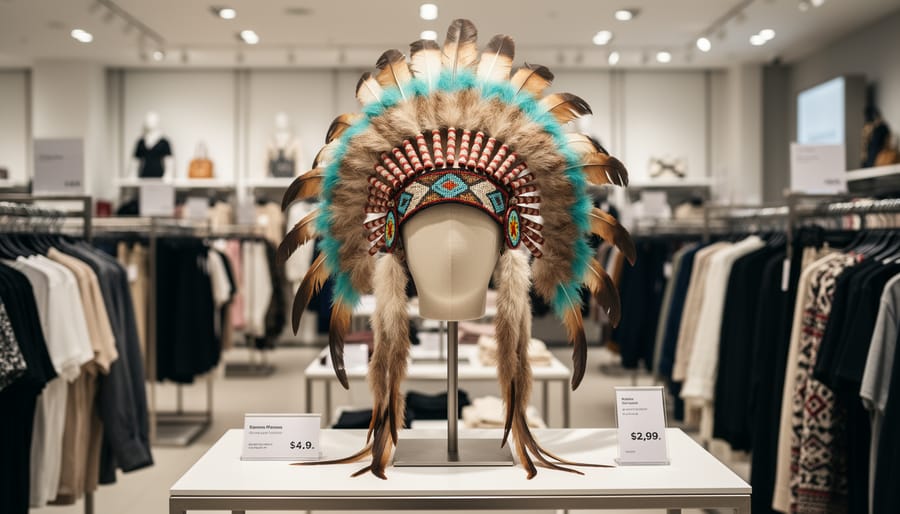
Perhaps the most visible examples of Native American cultural appropriation occur when sacred clothing and regalia are worn as fashion statements or costumes. The difference between appropriation and appreciation becomes starkly clear when ceremonial items are stripped of their cultural meaning and turned into accessories.
Feathered headdresses, known as war bonnets, remain one of the most commonly appropriated items. These sacred objects are earned through acts of bravery, leadership, and service to the community. Each feather represents a specific achievement or honour. Yet they regularly appear at music festivals, Halloween parties, and fashion shoots worn by people with no connection to the cultures they represent. When someone wears a headdress as a costume, they reduce a symbol of earned respect to a prop, ignoring the decades of service it takes to earn even a single feather in many Plains Nations traditions.
Fast fashion brands routinely co-opt “tribal” or “Navajo-inspired” patterns without permission from the communities who created them. In 2012, Urban Outfitters faced significant backlash for selling items labelled “Navajo” that had no connection to actual Navajo people. These mass-produced items typically undercut genuine Indigenous artisans who rely on their craft for income. A $20 factory-made “tribal” print dress competes directly with handwoven textiles that Indigenous makers spend weeks creating using traditional techniques passed down through generations.
Ceremonial clothing holds specific meanings tied to particular rites of passage, spiritual practices, or leadership roles. When fashion designers borrow these elements for runway shows or retail collections, they ignore the protocols around who can wear certain items, when, and why. A ribbon skirt, for example, carries significance related to womanhood and ceremony in many Indigenous cultures. Wearing one without understanding its meaning or having the right to do so constitutes appropriation.
The harm extends beyond individual offense. When sacred regalia becomes trendy, it reinforces stereotypes that Indigenous peoples exist only in the past or as aesthetic inspiration, rather than as contemporary communities with living cultures. It also normalizes the idea that Indigenous cultural property has no boundaries and can be taken freely by anyone.
Spiritual Practices: Commodifying Sacred Ceremonies
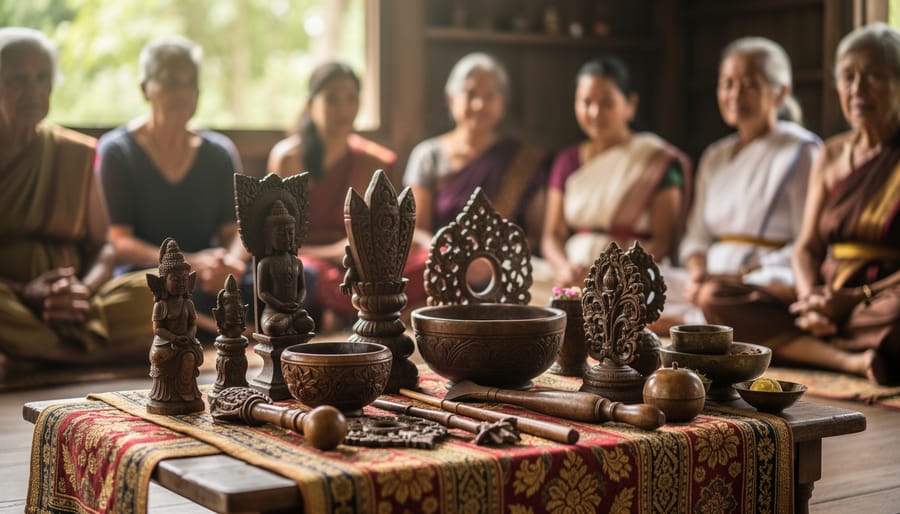
The wellness industry’s appetite for ancient wisdom has turned sacred Native American ceremonies into products you can buy for $49.95 on Instagram. Smudging ceremonies, sweat lodges, and vision quests, spiritual practices developed over thousands of years within specific cultural contexts, are now marketed as quick fixes for modern stress. The difference between genuine spiritual engagement and appropriation lies in the relationship: Indigenous ceremonies exist within intricate systems of knowledge, training, and community accountability that can’t be replicated in a weekend workshop.
Smudging ceremonies provide one of the clearest examples of spiritual appropriation. This sacred practice involves burning specific plants (often white sage, sweetgrass, or cedar) in rituals that hold deep significance within particular Nations. The ceremony isn’t simply “cleansing negative energy”, it’s connected to specific prayers, protocols, and relationships with the plants themselves. Yet non-Indigenous wellness practitioners offer smudging services and sell sage bundles without understanding these layers, often contributing to the overharvesting of white sage in California. The plants themselves become commodified, disconnected from the lands and people who have stewarded them.
Sweat lodge ceremonies represent an even more dangerous form of appropriation. These sacred purification rituals require years of training to conduct safely, with specific protocols around structure, temperature, duration, and spiritual guidance. When non-Indigenous “shamans” offer sweat lodge experiences at wellness retreats, they strip away these safeguards. In 2009, three people died at a sweat lodge ceremony in Arizona led by a self-help author with no legitimate training. The tragedy highlighted how removing ceremonies from their cultural context doesn’t just disrespect tradition, it can be lethal.
Vision quests, another profound spiritual practice, have become commercialised experiences advertised alongside yoga retreats and meditation classes. Authentic vision quests involve extended periods of fasting, isolation, and preparation under the guidance of trained elders within a community that will support the participant afterward. The practice isn’t a standalone experience but part of a lifelong relationship with culture and community. When wellness centres offer vision quest packages, they’re selling a hollow imitation that misses the entire point.
The sale of “sacred” items compounds the harm. Dreamcatchers, medicine wheels, and ceremonial objects appear in gift shops worldwide, mass-produced and divorced from their meanings. Some items should never be sold at all, certain ceremonial objects are earned through specific achievements or belong exclusively within particular Nations. When someone hangs a dreamcatcher because it looks bohemian, they’re participating in a system that treats Indigenous spirituality as aesthetic decoration rather than living practice.
Sports Mascots and Team Names
Sports teams using Native American names, imagery, and stereotypical mascots represent one of the most visible and long-standing examples of Native American cultural appropriation in mainstream society. For decades, professional and school teams have turned Indigenous peoples into caricatures, reducing rich cultures to war paint, tomahawk chops, and exaggerated headdresses for entertainment value.
The Washington NFL team’s former name (changed in 2020) and the Cleveland baseball team’s Chief Wahoo logo (retired in 2019) became international symbols of this appropriation. These weren’t respectful tributes, they were cartoonish stereotypes that flattened diverse Indigenous nations into a single, outdated image of “indians.” The Kansas City Chiefs’ tomahawk chop chant, still performed by thousands of fans in 2026, perpetuates the stereotype of Indigenous peoples as aggressive warriors frozen in time.
In Australia, while we don’t have the same history of Native American appropriation, similar issues exist with Aboriginal team names and imagery. The connection matters because appropriation operates on the same harmful logic: taking cultural symbols without permission, stripping them of context, and using them for profit or entertainment while real Indigenous communities face ongoing discrimination.
Research shows these mascots don’t honour Indigenous peoples, they actively harm them. Studies document lower self-esteem among Native youth exposed to mascot imagery, and the stereotypes reinforce biases that affect everything from hiring decisions to how seriously land rights claims are taken.
Progress has accelerated recently. By 2026, numerous US high schools and colleges have retired Native mascots following sustained Indigenous advocacy. In Australia, conversations about respectful representation have led sporting codes to develop consultation protocols with Aboriginal communities rather than making unilateral decisions about imagery.
The shift matters because it recognizes what Indigenous advocates have said all along: people aren’t mascots. When we treat cultural identity as a costume for game day, we participate in appropriation that undermines the humanity and sovereignty of living Indigenous communities.
Arts and Crafts: Profiting from Indigenous Designs
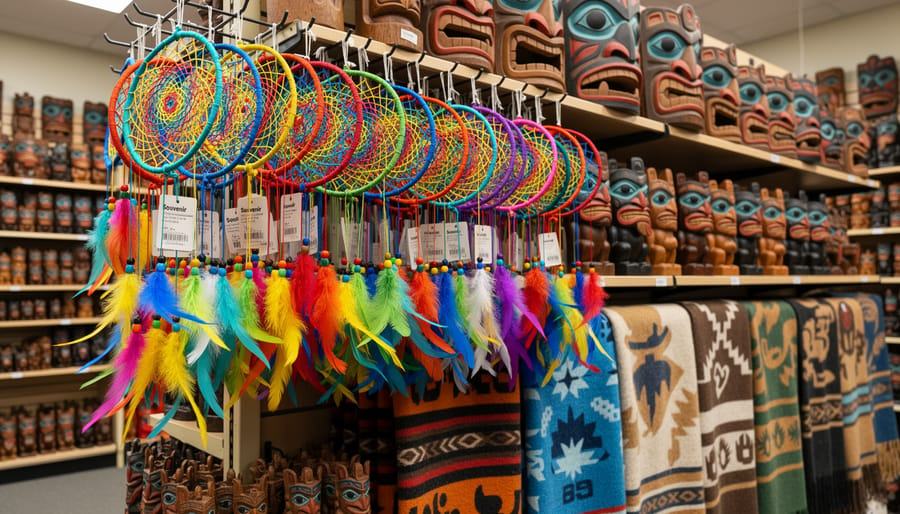
Walk through any tourist shop from Sydney to Sedona and you’ll find mass-produced dreamcatchers, ‘tribal’ jewellery, and textiles featuring what sellers vaguely label as ‘Native-inspired’ designs. These items rarely acknowledge their origins, credit Indigenous artists, or compensate the communities whose centuries-old techniques and symbols have been copied. This appropriation in arts and crafts represents both cultural theft and economic harm, stripping Indigenous artisans of income while reducing sacred and significant designs to decorative trends.
The problem starts with outright fraud. Products labelled ‘Native-made’ or ‘authentic Indian crafts’ often come from overseas factories with no Indigenous involvement whatsoever. In the United States, the Indian Arts and Crafts Act of 1990 makes it illegal to falsely market goods as Indigenous-made, yet enforcement remains patchy and fake products flood the market. These counterfeits undercut genuine Indigenous artists who depend on craft sales for their livelihoods, particularly in remote communities where art provides essential income.
Even when sellers don’t claim Indigenous authorship, they freely copy distinctive designs without permission. Navajo weaving patterns, developed over generations with specific meanings tied to landscape and story, appear on mass-market blankets and fashion accessories. Totem pole imagery, sacred to Pacific Northwest nations and representing specific family histories and spiritual connections, gets reduced to generic decoration. Traditional art forms carry deep cultural significance that disappears when they’re stripped down and reproduced:
- Navajo Weaving
- Complex textile patterns that encode stories, clan relationships, and connections to the four sacred mountains. Each design element holds specific meaning within Navajo cosmology.
- Totem Poles
- Monumental carvings by Pacific Northwest nations that record family lineages, commemorate events, and honour spiritual beings. They represent specific stories, not generic ‘tribal’ decoration.
- Beadwork Patterns
- Intricate designs created by Plains nations and others, often indicating tribal affiliation, family connections, or ceremonial purpose. Patterns are carefully taught within communities and carry cultural knowledge.
Dreamcatchers illustrate the problem particularly well. Originally an Ojibwe tradition with specific spiritual meaning related to filtering dreams and protecting children, they’ve become ubiquitous tourist trinkets made in Chinese factories. The connection between Indigenous art and sustainability gets lost entirely when these sacred objects become throwaway products divorced from their cultural context and the artisans who should create them.
The economic impact is substantial. Indigenous artists working with traditional methods cannot compete with mass-produced prices, yet they’re excluded from the very market built on their cultural heritage. When consumers choose cheap imitations, they support exploitation rather than the communities who hold genuine knowledge and rights to these designs. Authentic Indigenous art represents not just craftsmanship but living cultural traditions that deserve both respect and fair compensation.
Music and Entertainment: Borrowing Without Credit
Native American music and performance traditions regularly appear in films, video games and live entertainment, often without proper credit, consultation or compensation to the communities who created them. The pattern reveals a fundamental disrespect: taking the aesthetic appeal while ignoring the people and meanings behind it.
Hollywood provides numerous examples. Films routinely use Indigenous chants, drumming and flute music as background atmosphere to signal “mysticism” or “connection to nature,” frequently without hiring Indigenous musicians or consultants. War films and westerns particularly rely on stereotypical “tribal” music that bears little resemblance to actual ceremonial songs, which are often specific to particular nations and occasions. These sacred songs get repurposed as generic soundtracks, stripping them of their cultural context and spiritual significance.
The music festival circuit demonstrates appropriation in real time. Non-Indigenous performers don war bonnets, use synthetic “Indian chants” and incorporate bastardized versions of traditional dance movements into their performances. This “playing Indian” phenomenon treats complex cultural expressions as costumes, something to put on for dramatic effect then discard. Meanwhile, actual Indigenous musicians struggle for platform and recognition.
Video games present another frontier. Many titles use Native American imagery, music and spiritual concepts without consulting Indigenous communities or sharing profits. Characters become one-dimensional stereotypes, and ceremonial practices become power-ups or game mechanics divorced from their actual meaning and protocols.
The economic impact compounds the cultural harm. When film studios, game developers and musicians borrow freely from Indigenous traditions without payment or credit, they profit while Indigenous artists and communities, often living in poverty, receive nothing. This extraction mirrors broader patterns of taking Indigenous land, knowledge and resources without reciprocity.
The disrespect extends beyond money to representation itself. Indigenous peoples rarely control how their own music and traditions appear in media, leading to distorted portrayals that reinforce harmful stereotypes rather than reflecting the diversity and contemporary reality of Native communities.

The Environmental Connection: Indigenous Knowledge and Land Stewardship
Cultural appropriation extends far beyond fashion and entertainment into the realm of environmental knowledge and land management practices. When universities, researchers, or environmental organisations extract Indigenous ecological wisdom without proper consultation, credit, or compensation, they commit what’s sometimes called “bio-colonialism.” Native American communities have stewarded their lands for millennia using sophisticated fire management techniques, regenerative agriculture methods, and plant knowledge systems that modern science is only beginning to understand and validate.
Examples of this appropriation appear across environmental movements. Traditional ecological knowledge about controlled burning to prevent catastrophic wildfires has been documented and published by researchers without acknowledging the Indigenous communities who developed and maintained these practices for generations. Plant medicines and agricultural techniques rooted in Native American wisdom are patented or commercialised by corporations while the original knowledge holders receive nothing. Even the concept of “wilderness” that underpins much Western conservation thinking erases the active land management that Indigenous peoples practiced to create the biodiverse landscapes settlers encountered.
The deeper harm occurs when Indigenous communities are simultaneously excluded from environmental decision-making on their own ancestral lands. While their knowledge is extracted for ecological restoration projects or sustainability initiatives, Native voices are often absent from the planning tables and leadership roles. This represents the opposite of genuine sustainability, which requires reciprocity and respect, principles central to Indigenous worldviews.
In Australia, similar patterns appear with Aboriginal land management practices like cool burning and seasonal resource harvesting being adopted without proper acknowledgment or partnership. True environmental stewardship means recognising that healing the land requires working alongside Indigenous peoples as partners and leaders, not extracting their knowledge while excluding their communities from the benefits.
Moving from Appropriation to Appreciation: Practical Steps
Understanding the examples of Native American cultural appropriation we’ve explored is only valuable if it leads to meaningful change. The difference between appropriation and appreciation lies in power, permission, and purpose. Appropriation takes without asking, commodifies what’s sacred, and centres the appropriator’s desires. Appreciation, by contrast, involves listening, learning from Indigenous voices directly, and supporting Indigenous communities on their terms.
For Australians, this journey starts close to home. Before engaging with Native American cultures specifically, commit to learning about and respecting Aboriginal and Torres Strait Islander peoples whose lands you occupy. This foundation of respect translates to how you approach all Indigenous cultures globally.
Here’s how to move from appropriation to genuine appreciation:
- Educate yourself through Indigenous voices. Seek out books, films, and articles created by Indigenous authors and artists, not non-Indigenous interpreters. For Native American perspectives, look for works by authors like Robin Wall Kimmerer or Tommy Orange. For local context, prioritise Aboriginal and Torres Strait Islander creators.
- Support Indigenous-owned businesses and artists directly. When you purchase Native American jewellery, art, or crafts, buy from verified Indigenous makers, not mass-produced imitations. The same applies to Aboriginal art, purchase from Indigenous art centres or directly from artists with proper provenance.
- Acknowledge Country in Australia and understand its significance. This practice of recognising Traditional Owners isn’t performative, it’s a respectful acknowledgment of ongoing sovereignty. Learn the specific language group and Country where you live and work.
- Seek permission and context before participating in cultural practices. If you’re invited to a ceremony or cultural event, ask what’s appropriate, listen to instructions, and respect photography restrictions. Never assume access is your right.
- Amplify Indigenous voices rather than speaking over them. Share Indigenous-created content, cite Indigenous sources, and redirect attention to community leaders rather than positioning yourself as an authority on their cultures.
- Invest time in understanding history and ongoing impacts. Learn about colonisation’s effects, both in Australia and North America. Recognise that many Indigenous communities still face dispossession, discrimination, and denial of rights.
Appreciation requires ongoing commitment, not a one-off gesture. It means recognising when something isn’t yours to take or use, even when it’s easily accessible or trendy. It means understanding that some practices, symbols, and knowledge are closed, meant only for specific people within specific cultural contexts.
When you encounter Native American imagery or practices in Australian contexts, whether it’s a yoga studio offering ‘shamanic journeys’ or a fashion brand selling ‘tribal’ prints, ask critical questions. Who benefits financially? Were Indigenous people consulted? Does this perpetuate stereotypes? Your purchasing choices and participation decisions either support appropriation or challenge it.
The sustainability movement often celebrates Indigenous environmental knowledge, but genuine appreciation means supporting Indigenous land rights, opposing projects that threaten sacred sites, and advocating for Indigenous peoples to lead conservation efforts on their own territories. It means recognising that you can’t separate Indigenous wisdom from Indigenous sovereignty.
Understanding the examples of Native American cultural appropriation we’ve explored matters because genuine sustainability requires more than environmental action, it demands equity, reciprocity, and respect for the cultures that have stewarded this land for millennia. The difference between appreciation vs appropriation lies in whether we’re taking without permission or learning with humility and giving back.
As Australians building sustainable communities, we have a responsibility to examine our own relationship with Indigenous cultures here and globally. Are we commodifying sacred practices or genuinely listening to Indigenous voices? Are we crediting the sources of traditional ecological knowledge we benefit from? The path forward requires conscious choices: purchasing directly from Indigenous artisans, educating ourselves through proper channels, and challenging appropriative practices when we see them.
When you support Indigenous culture authentically, you’re not just avoiding harm, you’re actively participating in a system of reciprocity that honours both people and planet. True sustainability recognizes that environmental justice and cultural respect are inseparable. Every choice to honour rather than appropriate strengthens the communities whose wisdom we need most in facing our shared environmental challenges.