
On the hottest days when air conditioners hum across Australia’s eastern seaboard, massive cooling towers at power stations consume enough water to fill 40 Olympic swimming pools every hour. This isn’t just an environmental statistic – it’s a collision point between two of Australia’s most precious resources: reliable electricity and increasingly scarce water.
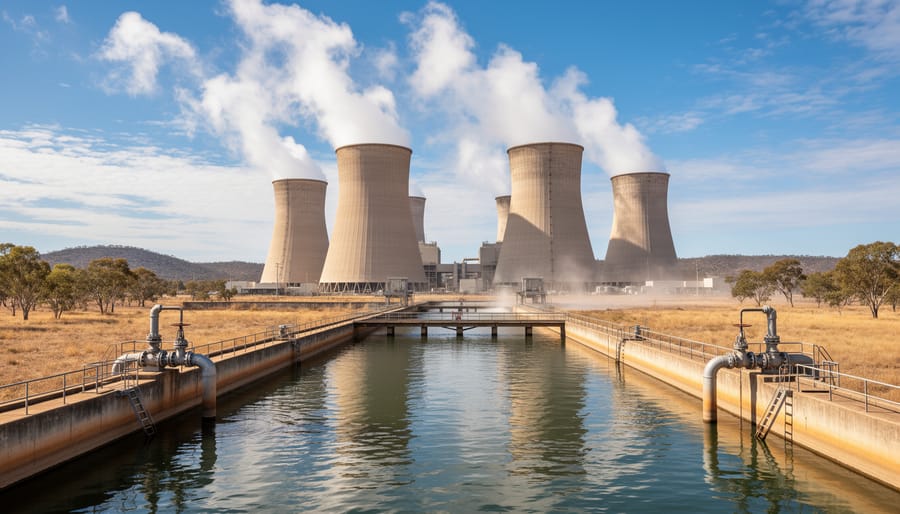
Cooling towers stand as the giants of thermal power generation, releasing enormous plumes of steam that have become iconic landmarks beside coal, gas, and even some renewable energy facilities. These structures serve a deceptively simple purpose: they cool the water that has absorbed heat from power generation turbines, allowing that water to be reused in a continuous cycle. Without them, conventional power plants simply couldn’t operate efficiently.
Yet here’s the tension Australian communities are grappling with: while our nation battles recurring droughts and water restrictions, our energy infrastructure drinks deeply from the same reserves we desperately need for agriculture, industry, and household use. A single large coal-fired power station can evaporate up to 30 million litres of water daily – water that never returns to local catchments.
This challenge isn’t distant or abstract. It affects electricity bills when water scarcity forces efficiency compromises, impacts regional communities competing for limited water allocations, and shapes the viability of our energy transition. But across Australia, innovative solutions are emerging. From dry-cooling technologies that eliminate water use entirely to hybrid systems balancing efficiency with conservation, power generators, water utilities, and communities are collaborating to rewrite how we generate electricity in a sunburnt country. Understanding this relationship between cooling towers and water security is essential for every Australian invested in our sustainable energy future.
The Water-Energy Dilemma: Why Cooling Towers Matter in Australia
How Much Water Are We Really Talking About?
Let’s put this into perspective with numbers that hit home. A single large coal-fired power plant in Australia can consume between 15 to 30 billion litres of water annually for cooling purposes. To visualise that, we’re talking about enough water to fill between 6,000 and 12,000 Olympic swimming pools every year, or roughly the annual household water usage of a city the size of Canberra.
The figures vary significantly across our states. In New South Wales, the Bayswater Power Station uses approximately 33 megalitres daily during peak summer operations. Victoria’s brown coal stations in the Latrobe Valley collectively draw massive volumes from local water sources, while Queensland’s power infrastructure along the coast relies heavily on seawater for cooling, reducing freshwater impact but creating different environmental considerations.
What makes this particularly concerning is that power plants join data centres and other water-intensive infrastructure competing for our precious water resources during increasingly severe droughts. In water-stressed regions like South Australia and parts of Western Australia, every litre counts.
Here’s the kicker: between 20 to 50 percent of that water evaporates into the atmosphere through those iconic cooling towers you see steaming against the skyline. That’s water leaving the system permanently, unavailable for agriculture, household use, or environmental flows. As our population grows and climate patterns shift, understanding these consumption rates becomes essential for planning our sustainable energy future.
The Climate Factor: Australia’s Unique Challenge
Australia’s scorching summers and prolonged dry spells create a perfect storm for power plant cooling challenges. When temperatures soar past 40°C, as they regularly do across much of the continent, cooling towers must work overtime to maintain safe operating temperatures. This isn’t just a technical problem, it’s a water crisis in the making.
During the devastating 2019-2020 Black Summer, power plants faced an impossible balancing act: keep the lights on while rivers ran low and communities desperately needed every drop. Some facilities consumed millions of litres daily through evaporation, enough water to supply several thousand homes. The situation becomes even more precarious during extended drought periods, when Australia’s water crisis forces difficult choices between electricity generation and community water security.
Across Western Australia’s Pilbara region and Queensland’s coal country, operators have learned that what works in cooler climates simply doesn’t translate here. Our unique climate demands innovative approaches, from dry-cooling technologies to strategic water recycling systems. Understanding these challenges helps us appreciate why transitioning to more sustainable energy solutions isn’t just environmentally responsible, it’s essential for our water-stressed nation’s future.
Smart Solutions: How Energy-Water Optimisation Actually Works
Dry and Hybrid Cooling Systems
Australia’s water challenges are driving remarkable innovation in power plant cooling technology. Dry and hybrid cooling systems are emerging as game-changers, dramatically reducing water consumption while maintaining efficient electricity generation.
Dry cooling systems work similarly to your car’s radiator, using air instead of water to cool steam from turbines. While they use virtually no water, they’re particularly effective in our cooler southern regions. Hybrid systems cleverly combine wet and dry cooling, switching between methods depending on temperature and water availability—essentially giving power plants the flexibility to adapt to our variable climate.
The Kogan Creek Power Station in Queensland showcases this technology brilliantly. Their hybrid system reduced water consumption by approximately 90 percent compared to traditional wet cooling towers, saving billions of litres annually in a drought-prone region. This achievement demonstrates that large-scale power generation and water conservation aren’t mutually exclusive.
South Australia’s Pelican Point Power Station also embraced hybrid cooling technology, significantly reducing its water footprint while maintaining reliable output during the state’s energy transition. These aren’t just engineering success stories—they’re community wins, preserving precious water resources for agriculture, households, and ecosystems.
The technology does come with trade-offs. Dry cooling can slightly reduce efficiency during extreme heat, and initial installation costs are higher. However, as water becomes increasingly precious across our continent, these systems represent smart, forward-thinking infrastructure. They prove Australian ingenuity is tackling the energy-water challenge head-on, creating solutions that protect both our power supply and natural resources for future generations.

Smart Monitoring and Automation
Australian power plants are embracing cutting-edge technology to tackle water efficiency challenges head-on. Smart sensors now continuously monitor water quality, temperature, and flow rates across cooling tower systems, providing operators with real-time data that was previously impossible to capture. This technology is already making waves at facilities across the country, where artificial intelligence systems analyse patterns and automatically adjust water treatment processes to minimise waste.
The results are encouraging. Plants using these intelligent systems report water savings of up to 30% while maintaining optimal performance levels. These AI-driven platforms can predict when maintenance is needed before problems occur, preventing water loss from leaks or inefficient operations. For communities concerned about water scarcity during drought periods, this represents a significant step forward.
What’s particularly exciting is how accessible this technology is becoming. Mid-sized facilities can now implement monitoring systems that were once only available to major industrial operations. This democratisation of smart technology means more Australian businesses can participate in water conservation efforts, creating a collective impact that benefits everyone. The data these systems generate also helps plants demonstrate their environmental credentials to local communities, building trust and transparency around water use practices.
Water Recycling and Reuse Initiatives
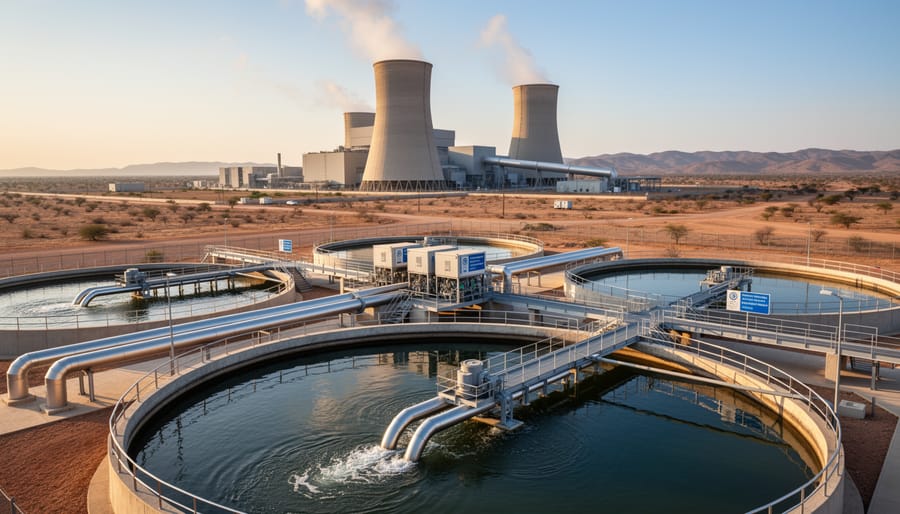
Australian power plants are increasingly turning to innovative water recycling initiatives to stretch every precious drop further. Rather than releasing treated water back into rivers, forward-thinking facilities are capturing, treating, and reusing cooling tower blowdown water multiple times before discharge.
Several Queensland and New South Wales power stations have pioneered partnerships with local wastewater treatment plants, receiving treated municipal water that would otherwise flow to the ocean. This circular approach transforms what was once considered waste into a valuable resource, reducing pressure on drinking water supplies and river systems.
At Eraring Power Station near Lake Macquarie, sophisticated reverse osmosis systems treat discharge water to near-drinking quality before it re-enters the cooling cycle. The facility reports saving millions of litres annually through this closed-loop system.
These collaborations demonstrate how industry and community can work together, turning environmental challenges into opportunities. By treating water as the precious resource it is, power plants across Australia are showing that sustainable operations and reliable energy generation can coexist, setting a benchmark for industries nationwide while protecting our water security for future generations.
Australian Success Stories: Power Plants Leading the Way
Queensland’s Water-Saving Innovations
In Queensland’s tropical climate, power plants face a unique challenge: generating electricity while battling extreme heat and limited water resources. The good news? Northern facilities are leading the charge with innovative water-saving solutions that could reshape how Australia thinks about cooling towers.
Take the Stanwell Power Station near Rockhampton, where engineers have pioneered hybrid cooling systems that slash water consumption by up to 40 percent compared to traditional methods. During the wet season, the facility captures and stores rainwater in specially designed reservoirs, creating a natural buffer against dry-spell shortages. This approach has inspired similar initiatives across the state.
Meanwhile, Townsville’s facilities are embracing smart technology, using real-time weather data and AI-driven systems to optimise cooling tower performance. When conditions allow, these plants automatically switch to air-cooled modes, preserving precious water for peak demand periods.
These innovations aren’t just technical achievements—they’re community wins. By conserving water, Queensland’s power plants free up resources for agriculture and urban use, demonstrating that industrial operations and environmental stewardship can work hand in hand. For businesses and residents across Australia, these northern pioneers prove that adapting to climate challenges creates opportunities for smarter, more sustainable infrastructure that benefits everyone.
South Australia’s Renewable Integration Approach
South Australia is leading the nation in reimagining how renewable energy facilities handle cooling requirements, demonstrating that our renewable energy transition doesn’t have to strain precious water resources. Unlike traditional coal-fired plants that rely heavily on evaporative cooling towers, SA’s solar and wind farms require virtually no water for generation. The state’s Hornsdale Power Reserve, home to the famous Tesla Big Battery, operates without any cooling towers at all, using ambient air circulation instead.
When thermal plants are necessary, South Australian facilities are pioneering dry-cooling systems that use air rather than water. The Northern Power Station’s decommissioning has freed up approximately 3.5 billion litres of water annually, now available for agriculture and communities. Meanwhile, concentrated solar thermal projects being developed in the state are exploring molten salt storage systems that dramatically reduce water consumption compared to conventional steam cooling.
This community-driven approach proves that meeting our energy needs doesn’t require choosing between power security and water conservation. South Australia shows us it’s possible to have both.
Lessons from the Murray-Darling Basin Region
In the Murray-Darling Basin, where water allocation debates have shaped communities for decades, power facilities have become unexpected leaders in water conservation. The region’s coal-fired power stations have pioneered dry cooling technologies and hybrid systems that slash water consumption by up to 90% compared to traditional wet cooling towers.
Macquarie Generation’s Bayswater Power Station, for instance, has invested heavily in water recycling infrastructure, treating and reusing wastewater multiple times before any discharge occurs. This closed-loop approach emerged from necessity but has delivered remarkable results. Local operators report that during the devastating 2017-2019 drought, these adaptive systems kept plants operational while protecting precious agricultural water allocations.
What’s particularly inspiring is how these facilities now collaborate with irrigation communities, sharing water management insights and technology. One superintendent told us their biggest lesson was simple: “Treat every drop like it’s the last available.” This mindset shift has created innovative partnerships where power stations and farmers exchange expertise on efficiency monitoring and water quality management, strengthening regional resilience together.
The Business Case: Why This Matters for Energy Prices and Jobs
When we talk about optimising cooling towers at power plants, we’re not just discussing pipes and pumps. We’re talking about real changes that affect your electricity bill, your community’s job prospects, and Australia’s energy resilience.
Here’s the connection: water is essential for keeping power plants running efficiently. When cooling systems operate at peak performance, power stations generate electricity more reliably and cost-effectively. Inefficient cooling towers force plants to work harder, consuming more fuel and driving up operational costs that ultimately flow through to consumers. For Australian households and businesses already grappling with energy affordability, every efficiency gain matters.
The water-energy nexus also creates significant employment opportunities across regional Australia. Retrofitting cooling towers, installing smart monitoring systems, and maintaining water treatment facilities requires skilled technicians, engineers, and environmental specialists. In towns like the Latrobe Valley and the Hunter Region, where power generation forms the economic backbone, these green infrastructure projects are creating pathways for workers transitioning from traditional energy roles into sustainable technology careers.
Energy security is another crucial benefit. Australia faces increasing pressure on both water and power supplies, particularly during summer peaks when demand surges. Cooling towers that operate efficiently with less water help power plants maintain output during droughts without compromising electricity supply. This reliability becomes vital as extreme weather events grow more frequent.
For businesses, particularly those in manufacturing and agriculture, stable energy prices and reliable supply directly impact competitiveness. When power plants operate efficiently, the entire supply chain benefits. Mining operations, food processors, and export industries depend on affordable, consistent electricity to remain viable in global markets.
The investment in cooling tower optimisation isn’t purely altruistic. It’s sound economics that protects jobs, stabilises energy costs, and builds resilience into our power grid. When local communities see new employment opportunities emerging from sustainability projects, the transition toward cleaner energy becomes tangible and achievable rather than abstract and threatening.
Environmental Wins: Beyond Just Water Savings
When we talk about cooling towers at power plants, water savings often steal the spotlight – and rightly so. But here’s the exciting part: the environmental benefits extend far beyond just conserving water. These innovations are creating ripples of positive change across Australian ecosystems in ways you might not expect.
Consider thermal pollution, a silent threat to our waterways. Traditional once-through cooling systems discharge heated water directly into rivers and coastal areas, raising temperatures that can devastate local aquatic life. Along Victoria’s coastline, for instance, marine species like kelp forests and abalone populations are highly sensitive to temperature changes. Modern closed-loop cooling towers dramatically reduce this thermal discharge, helping maintain the delicate balance our native species depend on.
Right here in the Murray-Darling Basin – already one of Australia’s most stressed ecosystems – every cooling tower that recirculates water instead of drawing fresh supplies makes a tangible difference. Less water extraction means healthier wetlands, stronger river red gum forests, and more reliable habitats for waterbirds like the endangered Australasian bittern. Communities along the basin are seeing firsthand how industrial water efficiency translates to environmental recovery.
There’s also a powerful connection to carbon reduction. Efficient cooling systems require less energy to operate, which means power plants can reduce their overall fuel consumption. When you multiply this across multiple facilities, the carbon savings become substantial. Some Australian operators have reported energy reductions of 15-20% through cooling optimisation alone.
The beauty of these environmental wins is that they’re interconnected. Protecting river habitats supports biodiversity. Reducing thermal pollution keeps coastal ecosystems thriving. Lowering carbon emissions helps combat the broader climate challenges affecting our entire continent. Each cooling tower upgrade represents a commitment to Australia’s environmental future – proof that industrial operations and ecosystem health can work together, not against each other.
What’s Next: The Future of Cooling in Australian Power Generation
The future of cooling in Australian power generation is already taking shape, and the good news is that innovation and commitment are accelerating across the country. As we transition toward renewable energy sources, the cooling challenge transforms from a hurdle into an opportunity for smart design and resource efficiency.
Emerging dry-cooling technologies are gaining ground at new solar thermal and renewable energy facilities, eliminating water consumption entirely while maintaining efficiency. These systems, though historically more expensive, are becoming increasingly cost-competitive as manufacturing improves and climate realities make water-dependent systems riskier. Several planned solar thermal projects in regional Australia are incorporating advanced dry-cooling from the outset, demonstrating industry recognition that water security cannot be an afterthought.
Meanwhile, innovation hubs across Australia are developing hybrid systems that adapt cooling methods to real-time conditions, switching between wet and dry cooling based on temperature, water availability, and grid demand. This flexibility represents the sweet spot between efficiency and sustainability, particularly valuable during extreme weather events when both electricity and water are under strain.
Policy developments are providing the framework for this transformation. State governments are tightening water allocation permits for new power infrastructure, while federal renewable energy targets are shifting investment toward technologies with lower water footprints. Community energy projects are also emerging as testing grounds for innovative cooling approaches, with local knowledge shaping solutions that work for specific regional conditions.
Perhaps most encouraging is the growing collaboration between power generators, water utilities, and environmental groups. What was once an industry operating in isolation now recognises that sustainable cooling requires shared expertise and collective commitment. Together, we’re building a power system that respects both our energy needs and the precious water resources that sustain Australian communities.
What You Can Do: Supporting Sustainable Energy Infrastructure
Understanding how cooling towers and power plants impact our water resources is just the first step. The real power lies in what we do with that knowledge. As Australians facing growing climate challenges, each of us can contribute to a more sustainable energy future through practical, everyday actions.
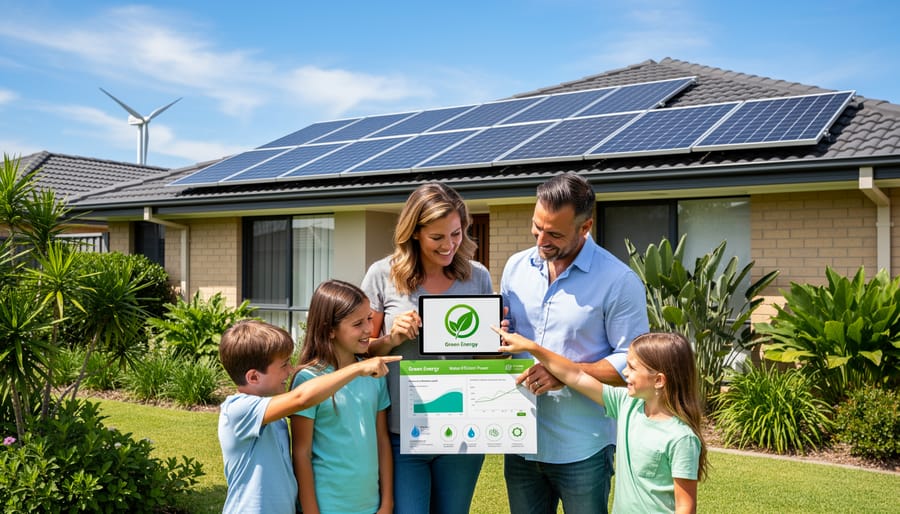
Start by choosing green energy providers that prioritize renewable sources like wind and solar, which require minimal water compared to traditional coal and gas plants. Programs like GreenPower allow you to support certified renewable energy through your existing retailer. Even switching a portion of your electricity to green options makes a measurable difference in reducing demand on water-intensive power generation.
Get involved in your local community by participating in consultations when new energy infrastructure is proposed. Your voice matters when councils and energy companies seek feedback on development applications. Organizations like the Australian Conservation Foundation and local environmental groups regularly organize community information sessions and advocacy campaigns around sustainable energy projects.
At home, understanding energy efficiency labels on appliances helps you make informed choices that reduce overall electricity demand. The more efficient we become collectively, the less pressure on our power plants and their cooling systems. Consider conducting a home energy audit through programs offered by Origin Energy, AGL, or your local council to identify where you can cut consumption.
Support policy initiatives that push for renewable energy targets and water-efficient technologies. Write to your local MP about the importance of transitioning away from water-intensive thermal power generation. Sign petitions supporting Clean Energy Finance Corporation investments in innovative cooling technologies and dry-cooling systems for existing plants.
Finally, stay informed through resources like the Clean Energy Council website and the Bureau of Meteorology’s water availability updates. Understanding the connection between your energy choices and water security empowers you to advocate effectively for change while inspiring others in your community to join the movement toward a truly sustainable energy future.
As we’ve explored throughout this discussion, cooling towers in Australia’s power plants sit at a fascinating crossroads of energy generation and water stewardship. The choices we make today about optimising this relationship will ripple through our communities for generations to come. This isn’t just about massive infrastructure and policy decisions happening somewhere beyond our reach—it’s about the tangible impact on our electricity bills, our local waterways, and the climate legacy we’re creating together.
The good news? Innovation is thriving right here on Australian soil. From drought-proof dry cooling systems being tested in regional Queensland to smart water recycling initiatives at urban power stations, engineers and sustainability experts are reimagining what’s possible. Communities across the country are stepping up too, advocating for transparency in how our energy sector uses precious water resources and supporting transitions to technologies that respect both our power needs and environmental limits.
Your role in this journey matters more than you might think. Whether you’re a business leader evaluating energy suppliers, a community member attending local council meetings, or simply someone passionate about Australia’s sustainable future, staying informed creates momentum for change. Ask questions about where your electricity comes from and how it’s produced. Support initiatives that prioritise integrated energy-water solutions. Share what you’ve learned with neighbours and colleagues.
The path toward truly sustainable power generation continues to unfold, and each of us has the opportunity to contribute to Australia’s resilience and environmental health. Stay curious, stay engaged, and let’s build this future together.