
Start with a single electric vehicle in your fleet to test operational feasibility while building internal expertise and driver confidence. Choose vehicles that complete predictable routes under 200 kilometres daily, such as delivery vans or utility vehicles servicing metropolitan areas, as these gain maximum benefit from overnight depot charging and eliminate range anxiety.
Calculate your total cost of ownership over five years, not just the upfront price tag. Electric vehicles typically cost 70% less to fuel and 50% less to maintain than their petrol counterparts, with fewer moving parts meaning reduced servicing requirements. Australian businesses are discovering substantial environmental and financial benefits that transform fleet economics, particularly as electricity costs remain more stable than volatile fuel prices.
Install smart charging infrastructure at your depot before vehicles arrive, prioritising off-peak electricity rates that can slash charging costs by up to 60%. Work with your energy provider to assess power capacity and explore demand management systems that prevent expensive peak charges while ensuring vehicles are fully charged each morning.
The transition to electric fleets represents more than environmental responsibility for Australian businesses. It’s becoming a competitive advantage. Major corporations like Australia Post and Telstra are already proving that electric vehicles perform reliably across our diverse climate and terrain, from coastal cities to inland regions. With government incentives currently available, early adopters are positioning themselves ahead of inevitable regulatory changes while immediately reducing operational costs and emissions.
Fleet electrification isn’t a distant future consideration. It’s a practical pathway available now, delivering measurable returns while contributing to Australia’s clean energy transition.
What Fleet Electrification Really Means for Your Business
Fleet electrification isn’t just about swapping a few petrol vehicles for electric ones and calling it a day. It represents a fundamental shift in how your business approaches transportation, energy management, and environmental responsibility. For Australian businesses, this transition is becoming less of a nice-to-have and more of a strategic necessity.
At its core, fleet electrification means replacing your traditional internal combustion engine vehicles with electric alternatives across your entire fleet, or substantial portions of it. This goes beyond simply purchasing an electric car for the company director. It involves strategic planning around vehicle types, charging infrastructure, energy management, and operational workflows that support your business goals while dramatically reducing your carbon footprint.
Understanding the different types of electric vehicles available helps you make informed decisions. Battery Electric Vehicles, or BEVs, run entirely on electricity stored in rechargeable batteries. They produce zero tailpipe emissions and are ideal for predictable routes with reliable charging access. Think delivery vans completing urban rounds or service vehicles with set territories across Australian cities.
Plug-in Hybrid Electric Vehicles, known as PHEVs, combine an electric motor with a traditional engine. They offer flexibility for businesses still building confidence in electric technology or operating in regions where charging infrastructure remains limited. Many Australian businesses operating across diverse terrain, from Melbourne’s suburbs to regional areas, find PHEVs a practical stepping stone.
The distinction between genuine fleet electrification and simple vehicle replacement lies in the approach. True electrification involves systematic planning: assessing your fleet’s daily operations, calculating total cost of ownership including electricity versus fuel, installing appropriate charging infrastructure, training drivers, and integrating renewable energy sources where possible. It’s about transforming your fleet into a cohesive, sustainable system rather than making isolated vehicle purchases.
For Australian businesses, this transition represents an opportunity to reduce operating costs significantly, particularly as fuel prices fluctuate, while demonstrating genuine commitment to environmental stewardship that resonates with increasingly eco-conscious customers and employees.
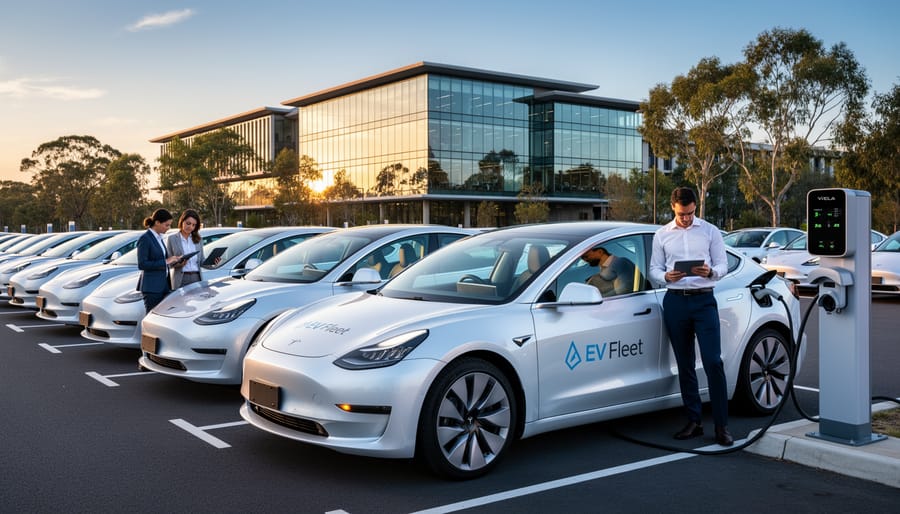
The Australian Advantage: Why Now Is the Time to Electrify
Federal and State Incentives You Can Access Today
Making the switch to electric vehicles for your fleet is more affordable than many Australian businesses realise, thanks to substantial government support available right now. Understanding these incentives can significantly reduce your upfront investment and ongoing operational costs.
At the federal level, businesses can access the Luxury Car Tax exemption for eligible electric vehicles, which applies to EVs priced below the luxury threshold. Even better, many electric vehicles used for business purposes attract Fringe Benefits Tax exemptions, potentially saving thousands of dollars annually. Fleet operators can also take advantage of instant asset write-offs and accelerated depreciation schemes, allowing you to claim deductions on EVs in the year of purchase.
State and territory governments have stepped up with their own compelling programs. Victoria offers the Zero and Low Emission Vehicle Subsidy, providing up to $3,000 for eligible vehicles. New South Wales has eliminated stamp duty on EVs under the luxury car tax threshold and offers toll relief programs. Queensland provides registration duty exemptions, while the ACT leads with perhaps the most generous stamp duty waivers and zero registration fees for electric vehicles until 2024.
Several states also run fleet-specific programs through their sustainability departments, including grants for charging infrastructure installation. These can cover up to 50 percent of installation costs for workplace charging stations.
Local councils and regional development authorities are increasingly offering co-funded programs for businesses transitioning to electric fleets, particularly in metropolitan areas. It’s worth connecting with your local business chamber or sustainability network to discover what’s available in your region. The landscape of incentives evolves regularly, with new programs announced as Australia accelerates towards its emissions reduction targets.
Australia’s Growing Charging Network
One of the biggest concerns for Australian fleet managers considering electrification is range anxiety, and fair enough given the vast distances between our cities and regional centres. The good news? Australia’s charging network is expanding faster than many realise, making fleet electrification increasingly practical across the country.
Major cities like Sydney, Melbourne, and Brisbane now have extensive public charging networks, with fast-charging stations appearing in shopping centres, car parks, and along major arterials. But what’s really exciting is the growth happening in regional areas. The push to connect capital cities with reliable fast-charging corridors is well underway, with the National Electric Vehicle Strategy supporting infrastructure development along key routes.
For fleet operators, workplace charging remains the most practical solution. Installing charging infrastructure at depots or offices means vehicles charge overnight when electricity rates are lowest, and they’re ready each morning with a full charge. Many businesses are discovering this eliminates range anxiety entirely for daily operations.
State governments are also stepping up, with grants available in several regions to support businesses installing charging infrastructure. South Australia, for instance, has been particularly proactive in supporting regional charging expansion. Combined with improving vehicle ranges now regularly exceeding 400 kilometres, the infrastructure concerns that once seemed insurmountable are becoming manageable hurdles that forward-thinking businesses are confidently clearing.
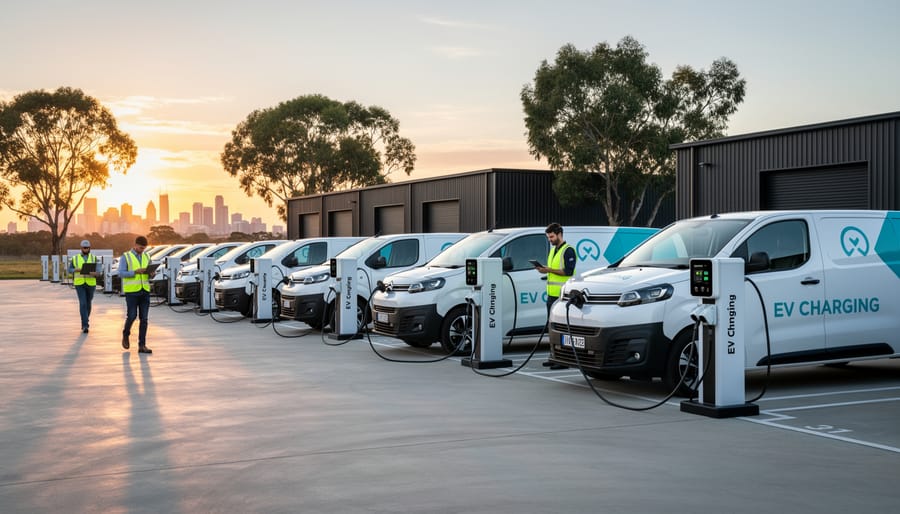
The Real Costs: What Australian Businesses Need to Know
Breaking Even: Timeline and ROI Calculations
Understanding when you’ll break even on fleet electrification helps transform this significant investment into a strategic business decision. The timeline varies considerably based on your operation’s specifics, but real Australian examples show encouraging patterns.
For small fleets, Melbourne’s Green Garden Services made the switch in 2021 with three electric vans. Their initial investment of $180,000 was $45,000 more than petrol equivalents, but they’re saving approximately $1,200 monthly on fuel and $400 on maintenance per vehicle. With government incentives reducing their upfront costs by $9,000, they’re tracking toward breaking even within four years, well within their vehicle lifecycle.
Mid-sized operations see different dynamics. Brisbane-based courier company Swift Logistics electrified 25 vehicles in their metropolitan fleet. Their payback period sits at 5.8 years, factored against their typical seven-year vehicle retention. The savings compound significantly at scale, with reduced servicing needs (no oil changes, fewer brake replacements) and lower energy costs translating to $180,000 annually across the fleet.
Rural and remote operators face longer timelines due to infrastructure challenges, often reaching break-even between seven to nine years. However, as charging networks expand and battery technology improves, these timelines are shrinking.
The key consideration isn’t just financial payback. Companies report unexpected benefits including reduced driver fatigue from quieter cabins, enhanced brand reputation attracting environmentally conscious customers, and improved staff recruitment. When calculating your ROI, factor in these intangible yet valuable outcomes alongside the numbers.
Hidden Savings You Haven’t Considered
Beyond the obvious fuel savings, fleet electrification unlocks surprising financial benefits that many Australian businesses overlook. Maintenance costs drop dramatically – electric vehicles have fewer moving parts, no oil changes, and less brake wear thanks to regenerative braking. Sydney-based courier company GreenFleet reports saving approximately $3,200 per vehicle annually on maintenance alone, money that flows straight back into their business.
Insurance premiums are quietly shifting in favour of electric fleets too. Several Australian insurers now offer discounts of 10-15% for EVs, recognising their advanced safety features and lower theft rates. This represents genuine savings that compound year after year.
The human element delivers value that’s harder to quantify but equally real. Drivers consistently report higher job satisfaction operating quiet, smooth electric vehicles. Melbourne’s City Council found driver retention improved by 23% after electrifying their fleet – reducing costly recruitment and training expenses. Your team becomes ambassadors for your sustainability commitment, attracting talent who value working for forward-thinking organisations.
Corporate reputation gains translate to tangible benefits. Australian consumers increasingly favour businesses demonstrating environmental responsibility, with 67% willing to pay premium prices for sustainable services. Fleet electrification becomes visible proof of your values, strengthening your ethical investment approach and opening doors to partnerships with like-minded organisations. Government contracts increasingly favour suppliers with strong sustainability credentials, positioning your electrified fleet as a competitive advantage in tender processes.
These hidden savings collectively create compelling financial returns that extend well beyond the fuel pump.
Environmental Impact: Beyond the Emissions
When we talk about fleet electrification in Australia, we’re looking at a transformation that goes far beyond simply swapping petrol for electricity. The environmental benefits ripple through our communities in ways that touch every breath we take and every climate goal we set as a nation.
Let’s start with the numbers that matter. Transport accounts for approximately 18% of Australia’s total greenhouse gas emissions, with light commercial vehicles and fleet operations making up a substantial portion. When a single electric delivery van replaces its diesel equivalent, it prevents roughly 4.5 tonnes of CO2 emissions annually. Now multiply that across a fleet of twenty, fifty, or two hundred vehicles, and you’re looking at a genuine climate solution unfolding on our streets.
The air quality story is equally compelling, particularly in our urban centres. Sydney, Melbourne, and Brisbane have all recorded concerning levels of nitrogen dioxide and particulate matter, largely from vehicle emissions. Electric fleet vehicles produce zero tailpipe emissions, which means cleaner air in the suburbs where delivery vans make their rounds and in city centres where taxis and ride-share vehicles cluster. For children attending schools along busy corridors and families living near major routes, this shift represents a direct health benefit.
Australia’s commitment to net-zero emissions by 2050 depends significantly on transport sector transformation. Fleet electrification represents one of the most achievable pathways forward, especially when we consider that business fleets often replace vehicles on predictable cycles, making the transition more manageable than waiting for the entire private vehicle market to shift.
The renewable energy connection strengthens this environmental case considerably. As Australia’s electricity grid continues its rapid transition toward renewables, now representing over 35% of our energy mix, electric fleet vehicles become progressively cleaner. A fleet charged with rooftop solar or through green energy agreements essentially operates on sunshine, creating a closed loop of sustainable energy use that aligns perfectly with broader sustainable business practices.
Lifecycle considerations paint an honest picture too. While battery production does carry an environmental footprint, studies specific to Australian conditions show electric vehicles offset this within two years of operation, then continue delivering environmental benefits for their entire working life, typically exceeding a decade for commercial applications.
Making the Transition: Your Step-by-Step Roadmap
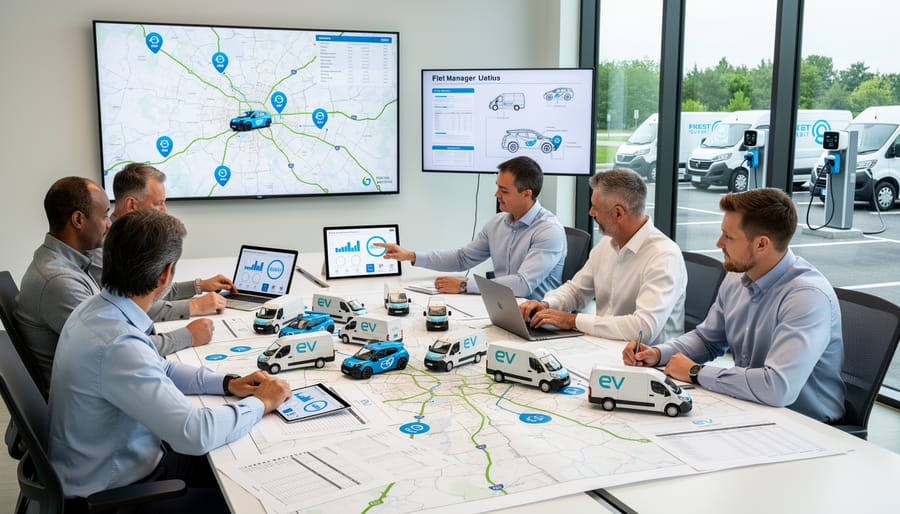
Assessing Your Fleet’s Electrification Potential
Starting your fleet electrification journey begins with smart vehicle selection. Rather than converting your entire fleet overnight, focus on identifying the best candidates that will deliver immediate returns while building your confidence with electric technology.
Begin by analysing your vehicle usage data. Vehicles with predictable daily routes under 200 kilometres are ideal first movers, as they comfortably operate within most electric vehicle ranges and return to depot for overnight charging. Delivery vans servicing metropolitan Melbourne or Sydney routes, for instance, typically fit this profile perfectly.
Consider your operational patterns too. Vehicles that idle frequently, like mobile service units or those operating in stop-start traffic, waste fuel but excel as EVs. One Brisbane council discovered their waste collection trucks, previously guzzling diesel during frequent stops, became star performers after electrification.
Temperature matters in our diverse climate. While EVs handle Sydney’s mild winters easily, extreme heat in Darwin or cold snaps in the Snowy Mountains can reduce range. Factor in seasonal variations when calculating your requirements.
Examine your existing infrastructure. Do you have adequate electrical capacity at your depot? Starting with a small pilot programme of three to five vehicles lets you test charging logistics, train drivers, and gather real-world data before scaling up. This measured approach has helped numerous Australian businesses, from Brisbane’s courier services to Perth’s maintenance fleets, transition successfully without disrupting operations.
Choosing the Right Vehicles for Australian Conditions
Australia’s diverse climate and vast distances demand careful vehicle selection for successful fleet electrification. The good news? Our market now offers compelling EV options across most fleet categories.
For light commercial needs, vehicles like the LDV eDeliver 3 and BYD T3 provide practical load capacity with ranges up to 300km, perfect for urban delivery routes. These models handle our summer heat better than early EVs, with improved thermal management systems designed for Australian conditions.
Medium-duty applications can consider the Fuso eCanter, already proving itself in Australian logistics fleets, while heavy-duty electric trucks are beginning to emerge for specific routes. Partnering with green service providers during your evaluation phase can help identify vehicles matching your operational patterns.
Key considerations include realistic range assessment, accounting for air conditioning use in our climate, regenerative braking benefits on hilly terrain, and charging infrastructure along regular routes. Many fleet managers start by electrifying predictable urban routes before tackling longer regional runs.
Don’t overlook utes and SUVs for field service teams. Models like the BYD Atto 3 offer practicality for Australian conditions, though true workhorse electric utes remain limited currently.
The Australian market evolves monthly, so working with experienced local dealers ensures you’re selecting vehicles genuinely suited to your operational reality.
Installing Charging Infrastructure That Works
Getting your charging infrastructure right from the start makes all the difference in fleet electrification success. Many Australian businesses find depot charging the most practical solution, installing stations where vehicles naturally return overnight. This approach typically requires a 7kW to 22kW charger per vehicle bay, allowing your fleet to charge during off-peak electricity periods when rates are lowest.
For businesses with employees using EVs during work hours, workplace charging stations create an additional benefit while supporting your team’s transition to electric vehicles. Consider starting with a mix of fast and standard chargers based on your fleet’s daily driving patterns and turnaround times.
The good news? You don’t need to go it alone. Partnering with established charging networks like Evie Networks, Chargefox, or NRMA gives your drivers access to public infrastructure during longer routes. Some providers offer fleet-specific programs with preferential rates and dedicated support.
Before installation, conduct an electrical capacity assessment of your premises. Upgrading your switchboard might be necessary, but many Australian states offer grants to offset these infrastructure costs. Working with an accredited installer familiar with commercial fleet requirements ensures compliance with Australian standards and optimises your setup for future expansion as your electric fleet grows.
Real Australian Success Stories
Nothing demonstrates the viability of fleet electrification quite like seeing it work in practice. Across Australia, forward-thinking businesses and councils are already reaping the rewards of making the switch, and their experiences offer valuable insights for those considering the journey.
The City of Adelaide has emerged as a regional leader in fleet electrification, with electric vehicles now comprising over 40% of their operational fleet. Starting in 2019 with just a handful of EVs, they’ve systematically replaced aging petrol vehicles with electric alternatives across waste collection, parking inspection, and community services. The council initially worried about range limitations for outer-suburban routes, but discovered that most daily operations required far less range than anticipated. Their waste collection trucks, charged overnight at depot facilities, consistently complete full routes with battery to spare. The tangible benefits have been impressive: fuel costs dropped by 65% within two years, while maintenance expenses reduced by approximately 50%. Perhaps most significantly, local air quality improved in high-traffic zones, with residents noticing reduced noise pollution during early morning waste collections.
Out in regional Queensland, family-owned logistics company FreshMove Transport tackled fleet electrification with determination despite initial skepticism. Operating delivery services across the Sunshine Coast, they introduced three electric delivery vans in 2021 to test the waters. Owner Sarah Chen admits the biggest challenge was infrastructure anxiety, particularly around charging reliability in more remote delivery areas. Their solution involved strategic planning: they mapped routes according to charging station locations and installed fast chargers at their Maroochydore depot. The lesson learned? Success required behavioral shifts from drivers accustomed to spontaneous refueling. With proper training and route optimization, their electric vans now handle 80% of regular delivery routes. The business has documented annual savings of $18,000 per vehicle in running costs, money they’ve reinvested into expanding their electric fleet to seven vehicles.
Meanwhile, Melbourne-based plumbing service Eco Plumb made headlines by converting their entire 12-vehicle fleet to electric in just 18 months. Director James Kowalski credits careful staging for their success, transitioning two vehicles every quarter while monitoring performance data. Their biggest surprise? Customer response. The distinctive electric vans became powerful marketing tools, with residential customers specifically requesting the quiet, emission-free service vehicles. This unexpected brand advantage helped offset initial capital outlay faster than projected.
These stories share common threads: careful planning, willingness to adapt operational practices, and patience during the transition period. Each organization discovered that the benefits extended well beyond environmental impact, delivering genuine financial returns and enhanced community reputation.
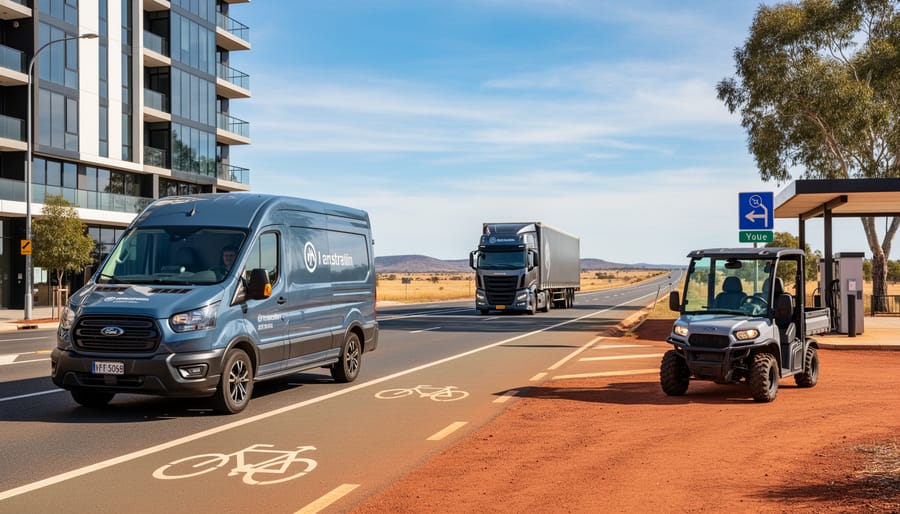
Overcoming Common Obstacles and Concerns
Making the switch to electric vehicles feels daunting for many Australian businesses, but let’s unpack these concerns together with real-world evidence from companies who’ve successfully made the transition.
Range anxiety tops the list of hesitations, yet modern EVs like the BYD Atto 3 and Tesla Model Y now offer 400-500km ranges, more than adequate for most fleet operations. Melbourne-based courier service GreenFleet found their delivery vans averaged just 120km daily, meaning they returned with charge to spare. For longer routes, Australia’s charging network has expanded dramatically, with over 3,000 public charging stations nationwide and counting.
Charging time concerns often stem from misunderstanding how fleet charging works. Unlike personal vehicles, fleet EVs charge overnight at depot facilities when vehicles aren’t working anyway. Brisbane logistics company EcoHaul installed level 2 chargers that fully replenish their vans during standard 8-hour breaks, eliminating any productivity loss. Fast chargers can also provide 80 percent charge in 30-40 minutes for urgent top-ups.
Vehicle availability has improved significantly. While waiting periods existed in 2021-2022, Australian dealerships now stock popular models like the MG ZS EV and Hyundai Ioniq 5, with commercial vans from LDV and Mercedes-Benz increasingly available. Planning your transition 12-18 months ahead ensures smooth procurement.
Resale value worries are understandable but increasingly unfounded. Battery technology advances mean modern EVs retain value well, with degradation typically under 10 percent after 200,000km. The used EV market is strengthening as more Australians seek affordable electric options, and many manufacturers now offer 8-10 year battery warranties, protecting your investment.
Grid capacity concerns are valid but manageable. Smart charging systems distribute load during off-peak hours, and renewable energy integration through solar panels reduces grid dependency. South Australia’s commercial fleet network demonstrates how coordinated charging paired with battery storage creates sustainable, grid-friendly operations.
These obstacles aren’t insurmountable barriers but solvable challenges that thousands of Australian businesses have already navigated successfully. Your journey starts with understanding your specific operational needs.
The Future of Fleet Electrification in Australia
The future of fleet electrification in Australia is accelerating faster than many anticipated, with 2024 marking a pivotal turning point. Major manufacturers are confirming Australian releases of purpose-built electric vans and utes throughout 2025-2026, addressing the longstanding gap in commercial vehicle options that has held many businesses back. Models like the Ford E-Transit Custom, Renault Master E-Tech, and BYD’s expanding commercial range will join early pioneers, giving fleet managers the variety they need to match vehicles to specific business requirements.
Infrastructure expansion is gathering momentum across the country. The federal government’s Driving the Nation fund is supporting strategic charging corridors, while state initiatives in New South Wales, Victoria, and Queensland are prioritizing commercial vehicle charging hubs. Several major service station operators have announced plans to integrate fast-charging facilities at transport corridors, recognizing that fleet vehicles represent a substantial future customer base.
Policy settings are also evolving to support fleet transitions. The fringe benefits tax exemption for electric vehicles under the luxury car tax threshold continues to make salary sacrificing EVs attractive, while conversations around emissions standards signal potential future incentives for businesses reducing fleet emissions.
Early adopters are positioning themselves advantageously. Those transitioning now are building operational knowledge, establishing relationships with charging providers, and developing expertise that will become invaluable as electrification becomes standard practice. They’re also securing their place in supply chains before demand intensifies.
Perhaps most encouraging is the emerging ecosystem of Australian businesses supporting each other through this transition. Fleet managers are sharing insights at industry forums, community charging cooperatives are forming, and local expertise in fleet electrification is growing. This collaborative spirit, distinctly Australian in character, means businesses don’t need to navigate this journey alone. The infrastructure, vehicles, and community support structures are converging to make fleet electrification not just viable, but increasingly straightforward for forward-thinking Australian businesses.
Fleet electrification represents more than just swapping petrol vehicles for electric ones—it’s about embracing a future where environmental responsibility and smart business strategy work hand in hand. Australian businesses that take this step aren’t just reducing emissions; they’re positioning themselves as leaders in a rapidly evolving market, cutting operational costs, and building stronger connections with environmentally conscious customers and communities.
The journey doesn’t require perfection from day one. Whether you start with a single electric vehicle, partner with neighboring businesses to share charging infrastructure, or commit to a phased transition plan, every step forward matters. Australian companies across sectors are already proving that fleet electrification is achievable, profitable, and genuinely impactful for our environment.
If you’re ready to explore how electric fleets can align with your sustainability goals, start by connecting with local resources. The Australian Electric Vehicle Council offers industry insights and networking opportunities, while your state government’s sustainability office can guide you through available rebates and programs. Join regional business sustainability groups to learn from others who’ve already made the transition—their experiences and practical advice can prove invaluable.
The electric future is already here in Australia. Your business can be part of this transformation, demonstrating that profitability and environmental stewardship aren’t opposing forces but powerful partners in building a better tomorrow.