
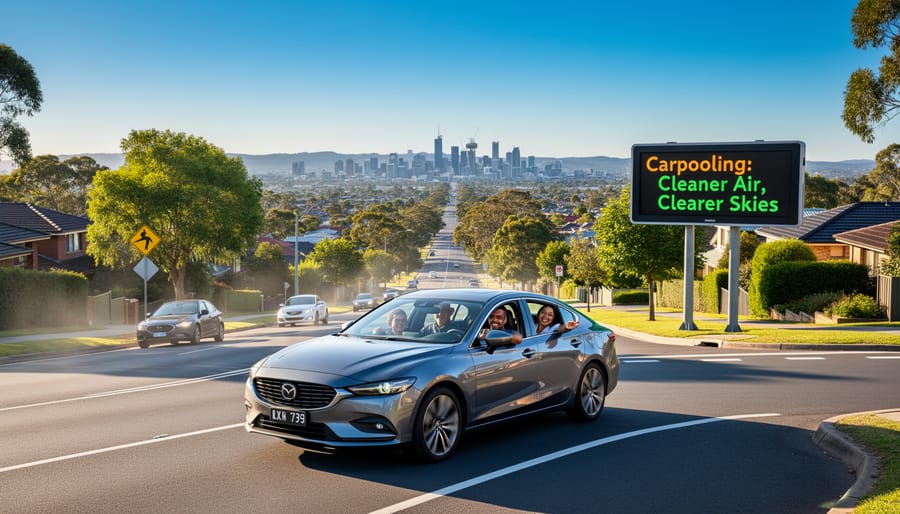
Transform your daily commute into a powerful climate action by sharing rides with neighbours, colleagues, or community members heading in the same direction. Carpooling and High Occupancy Vehicle (HOV) lanes represent one of Australia’s most underutilised tools for reducing transport emissions, which currently account for nearly 20% of our national carbon footprint.
Connect with potential carpool partners through workplace noticeboards, local Facebook groups, or dedicated apps like Liftango and GoGet Carpool to identify compatible routes and schedules. Start with just one or two shared trips per week, gradually building trust and routine that makes the arrangement sustainable long-term.
Maximise your carpool efficiency by establishing clear communication protocols about pickup times, cost-sharing arrangements, and backup plans for schedule changes. Australian carpoolers typically save between $2,000 and $5,000 annually on fuel, parking, and vehicle maintenance whilst cutting individual emissions by up to 40% compared to solo driving.
Access HOV lanes on major routes including Sydney’s M2 and Eastern Distributor, Brisbane’s Gateway Motorway, and Melbourne’s Tullamarine Freeway when travelling with two or more occupants, shaving precious minutes off peak-hour commutes. These priority lanes reward collective action with tangible time savings, making sustainable choices genuinely convenient.
The environmental impact multiplies rapidly across communities. When ten colleagues share five vehicles instead of driving ten cars, they collectively prevent approximately 20 tonnes of CO2 emissions annually, equivalent to taking four cars off the road permanently. This isn’t just personal choice; it’s community transformation that reduces congestion, improves air quality, and strengthens neighbourhood connections through shared purpose and daily interaction.
What Are HOV Lanes and Why Australia Needs More of Them
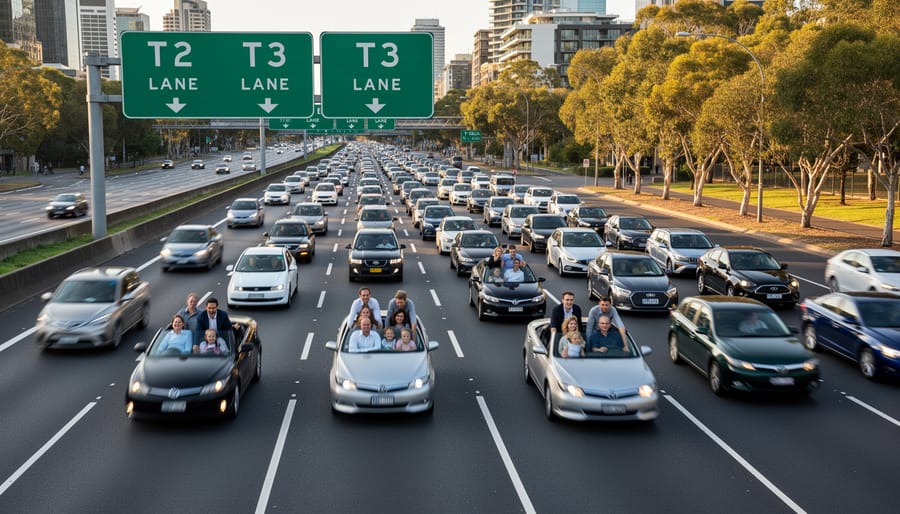
If you’ve ever driven along Sydney’s M1 or Parramatta Road during peak hour, you’ve likely noticed those special lanes marked with T2 or T3 signs. These are High Occupancy Vehicle lanes, and they’re one of Australia’s most underutilised tools in the fight against traffic congestion and carbon emissions.
HOV lanes work on a simple principle: vehicles carrying two or more people (T2) or three or more people (T3) get priority access to dedicated lanes, while single-occupant vehicles must use the remaining traffic lanes. It’s a straightforward incentive that rewards people for sharing rides, and the environmental benefits are significant.
In Sydney, where T2 and T3 lanes have been operating since the 1990s, studies show these lanes move up to 2.5 times more people per hour than regular lanes during peak periods. That’s more Australians getting where they need to go while producing fewer emissions per person. When you consider that the average Australian car trip involves just 1.2 people, the potential for improvement becomes clear.
Melbourne has been slower to embrace HOV lanes, though recent initiatives along the Eastern Freeway and CityLink are changing that landscape. Brisbane’s busways incorporate T2 and T3 restrictions on certain sections, demonstrating that different cities can adapt the concept to their unique infrastructure.
The environmental mathematics here is compelling. A single carpool vehicle carrying four commuters removes three cars from the road. If just 10 percent of Melbourne’s 2 million daily commuters shared rides, we’d eliminate 200,000 vehicle trips every day. That translates to roughly 180,000 tonnes of CO2 saved annually, equivalent to taking 38,000 cars off the road permanently.
Beyond emissions, carpooling reduces the pressure on our cities to build ever-wider roads and carparks. It creates social connections in our often isolated communities and saves individual households thousands of dollars yearly in fuel and vehicle maintenance costs.
The challenge facing Australia isn’t whether HOV lanes work, the evidence internationally and locally confirms they do. Rather, it’s about expanding their use and building the community networks that make carpooling practical and appealing. Perth, Adelaide, and regional centres have enormous opportunities to implement these systems before congestion reaches crisis levels.
When we combine dedicated infrastructure like HOV lanes with a cultural shift toward sharing rides, we create transportation systems that serve both our environmental goals and our daily needs.
The Real Environmental Impact of Carpooling
Beyond Carbon: The Ripple Effects Nobody Talks About
While we often celebrate carpooling for cutting emissions, the hidden environmental wins extend far beyond the tailpipe. Every vehicle removed from our roads through carpooling creates a cascade of positive effects that reshape our cities and communities in surprising ways.
Consider the roads beneath our tyres. Fewer cars means dramatically reduced road wear and tear, saving Australian councils millions in maintenance costs annually. That’s money redirected toward urban regeneration initiatives and community projects. In Melbourne’s western suburbs, councils have reported up to 30% less road resurfacing needed on major commuter routes where carpooling programs thrive.
Then there’s the urban heat island effect, a growing concern as our cities warm. Massive car parks absorb and radiate heat, turning suburbs into sweltering concrete jungles. When communities embrace carpooling, we need fewer parking spaces. This frees up valuable land for parks, gardens, and trees that naturally cool our neighbourhoods. Brisbane’s Fortitude Valley reclaimed three hectares of parking infrastructure last year, transforming it into green space that’s lowered local temperatures by 2-3 degrees during summer peaks.
The ripple extends to improved air quality and biodiversity. Preserved green spaces become corridors for native wildlife, while reduced asphalt means less toxic runoff polluting our waterways during storms. These interconnected benefits demonstrate how one simple choice, sharing your daily commute, helps rebuild the environmental fabric of Australian communities from the ground up.
Community Active Transportation Networks: Building Connections Beyond the Carpool
School Carpools and Walking School Buses
The morning school run accounts for nearly a quarter of peak-hour traffic in Australian cities, creating congestion that affects entire neighbourhoods. Yet this daily challenge presents a wonderful opportunity to build community connections while teaching children valuable lessons about sustainability and cooperation.
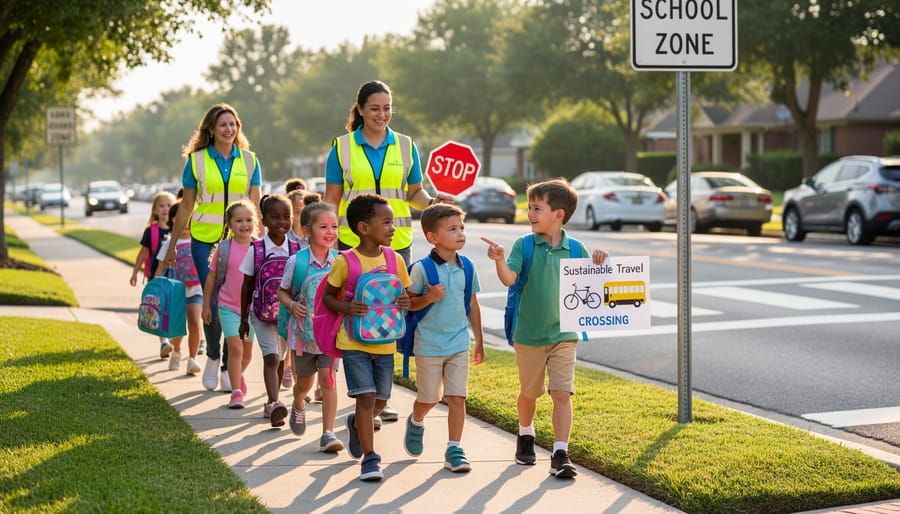
School carpools operate on a simple principle: families take turns driving groups of children to and from school, reducing the number of vehicles on the road. Walking school buses take this further, with parents rotating as ‘drivers’ who lead groups of children walking together along safe, predetermined routes. Both approaches dramatically cut emissions while creating social bonds that strengthen your local community.
In Brisbane’s Paddington, parent Emma Chen coordinates a walking school bus that’s been running for three years. “We’ve got eight families involved, and the kids absolutely love it,” she shares. “They arrive at school energised and ready to learn, and parents have built genuine friendships through the morning chats.”
Starting your own school carpool or walking bus is surprisingly straightforward. Begin by connecting with families who live nearby through your school’s communication channels or neighbourhood social media groups. Map out logical routes or carpool schedules, ensuring everyone’s comfortable with the arrangements. Most schools actively support these initiatives and can help coordinate interested families.
Safety considerations matter, of course. Walking buses work best with at least two adults supervising, high-visibility vests for everyone, and routes that avoid busy roads where possible. For carpools, ensure all drivers have appropriate insurance and child restraints.
The environmental impact adds up quickly. A carpool of four families reduces school-run emissions by 75 percent, while every child who walks instead of being driven eliminates approximately 250 kilograms of CO2 annually. These aren’t just numbers though – they’re teaching moments that show children how collective action creates meaningful change.
How to Start or Join a Carpool Network in Your Area
Getting started with carpooling in your area is easier than you might think, and the benefits extend far beyond just saving money on petrol. Whether you’re looking to reduce your carbon footprint, enjoy better company during your commute, or gain access to those time-saving HOV lanes, here’s how to connect with fellow carpoolers in your community.
Start by exploring digital platforms that have gained traction across Australia. Apps like Liftshare, Jayride, and RideShare Australia help connect drivers and passengers heading in similar directions. These platforms typically include safety features like user verification, ratings systems, and secure messaging. Many operate on a cost-sharing model where passengers contribute to fuel expenses rather than paying a commercial fare. Simply download the app, create your profile, specify your regular routes, and the platform will match you with compatible carpool partners.
Your workplace might already have carpooling initiatives you’re unaware of. Check with your HR department or sustainability coordinator about existing carpool programs. Many Australian businesses now actively encourage ride-sharing by offering preferred parking spots for carpoolers, maintaining carpool matching boards, or even providing guaranteed ride home programs for emergencies. If your workplace doesn’t have a program, consider proposing one. Start small by surveying colleagues about their interest and home locations, then use a simple shared spreadsheet or notice board to facilitate connections.
Don’t overlook the power of local community groups. Neighbourhood Facebook groups, community noticeboards at shopping centres, and local council websites often have sections dedicated to carpooling. Post your regular routes and times, being specific about start points, destinations, and flexibility. Many councils across Australia now support ride-sharing through their sustainable transport initiatives, offering resources and even hosting meet-and-greet events for potential carpool partners.
School communities present another fantastic opportunity. If you’re a parent, chat with other families at drop-off time or through school communication channels. School-run carpools can significantly reduce morning traffic congestion while building stronger community connections.
For long-term success, establish clear agreements from the start. Discuss schedules, pick-up points, cost-sharing arrangements, music preferences, and how to handle last-minute changes. Create a simple roster system that rotates driving duties fairly. Many successful carpooling groups use messaging apps like WhatsApp to coordinate daily arrangements and communicate any delays or changes.
Be flexible and patient during the adjustment period. Finding the right carpool match might take a few attempts, and that’s perfectly normal. Start with a trial period to ensure everyone’s comfortable with the arrangement before committing long-term.
Remember to check if your route includes HOV lanes or transit lanes where carpools receive priority access. This added benefit can transform your commute experience, turning frustrating peak-hour traffic into a more pleasant journey while actively contributing to cleaner air in your community.
Making It Work: Real Stories from Australian Carpoolers
Meet Sarah from Perth’s northern suburbs, who started carpooling with three neighbours on their daily 45-minute commute to the city. What began as a practical solution to rising petrol costs transformed into something unexpected. “We’ve become genuine friends,” Sarah shares. “We celebrate birthdays, swap recipes, and support each other through life’s ups and downs.” Their carpool has collectively saved over 12 tonnes of CO2 emissions in just 18 months, equivalent to planting nearly 200 trees. The group now uses their saved commute costs to support local environmental projects.
In regional Victoria, farmworker James coordinates a carpool network connecting workers from three small towns to agricultural sites. “Before our system, blokes were driving 80 kilometres each way alone every day,” he explains. The network now moves 15 workers efficiently, cutting individual fuel costs by 75 percent and reducing the strain on rural roads. Beyond the environmental benefits, James notes the carpools have strengthened community bonds across towns that rarely interacted. Workers share local knowledge, help each other during harvest pressures, and have even organised community events bringing the three towns together.
Melbourne mum Emma revolutionised the school run in her neighbourhood by creating a rotating carpool schedule with five families. “Monday mornings used to mean five cars queuing outside the school gates. Now it’s one,” she says proudly. The initiative eliminates 800 unnecessary car trips annually and has reduced congestion around the school significantly. The real magic, though, happens in the connections formed. Children have developed stronger friendships, parents coordinate playdates more easily, and families support each other with childcare during emergencies. Emma’s simple spreadsheet has evolved into a tight-knit community network that extends far beyond the morning drop-off, proving that carpooling creates ripples of positive change throughout entire neighbourhoods.

The journey toward a more sustainable Australia doesn’t require dramatic upheavals or massive lifestyle overhauls. Sometimes, the most powerful changes begin with something as simple as sharing a ride to work. Carpooling offers a rare opportunity where environmental responsibility and financial wisdom walk hand in hand. By reducing the number of vehicles on our roads, we collectively cut emissions, ease congestion, and save hundreds of dollars each month that might otherwise vanish into petrol tanks and parking fees.
Consider this your invitation to action. For just one week, commit to carpooling. Whether you connect with a neighbour heading in the same direction or join an established carpool network in your area, give it seven days. You might discover that those shared morning commutes become unexpectedly enjoyable conversations, or that the reduced stress of not navigating peak-hour traffic alone improves your entire day. Many Australians who initially tried carpooling as an experiment found themselves becoming permanent converts.
Remember, sustainable change isn’t about perfection. It’s about progress. When thousands of Australians choose to carpool, even just a few days each week, the collective impact creates cleaner air, quieter streets, and stronger community connections. Your decision to share a journey ripples outward, inspiring others and contributing to the healthier, more connected Australia we all want to create. The road to sustainability is one we travel better together.