
Rural transport connects people in regional and remote Australia to essential services, employment, and community life, yet the vast majority of these journeys still rely on private vehicles and fossil fuels. Sustainable rural transport means redesigning mobility systems around electric vehicles, shared transit, on-demand services, and active travel options that work within the realities of low population density, long distances, and limited infrastructure. The good news? Communities across the country are proving it’s possible, from electric bus trials in Tasmania to solar-powered car-sharing schemes in the Central West.
The challenges are real. Unlike cities, rural areas can’t simply add more buses or bike lanes and expect quick wins. Distances are too great, demand too dispersed, and budgets too tight. But that’s exactly why innovation is thriving in the regions. Local councils, community groups, and enterprising residents are building transport solutions tailored to their needs, blending new technology with old-fashioned cooperation. Think flexible bus routes that respond to bookings, EV charging networks powered by regional renewable energy, and volunteer driving programs that keep older residents mobile.
This shift matters for more than environmental reasons. Transport poverty is a hidden crisis in rural Australia, locking people out of jobs, healthcare, and social connection. Sustainable solutions can break that cycle while cutting emissions, supporting local economies, and building resilience against fuel price shocks. The path forward isn’t about copying urban models. It’s about empowering communities to design transport systems that reflect their strengths, from shared ownership models to integrating transport with existing rural infrastructure like agricultural cooperatives and tourism networks.
What Rural Transport Really Means in Australia
Rural transport in Australia refers to the movement of people, goods, and services across regional, remote, and rural areas, regions defined not just by distance from capital cities, but by lower population density, larger geographic spread, and different infrastructure realities. Unlike urban transport systems built around frequent public services, dense road networks, and short trip distances, rural transport operates across vast territories where the nearest town might be 50 or 100 kilometres away, and where a single bus route may need to cover hundreds of square kilometres to serve scattered communities.
- Rural Transport
- The movement of people and goods in regional and remote areas, characterized by long distances, low population density, and heavy reliance on private vehicles due to limited public transport options.
- Regional Mobility
- The ability of residents in rural and regional areas to access essential services, employment, education, and social connections through available transport modes, often requiring multi-modal solutions and community coordination.
- Transport Disadvantage
- The lack of adequate, affordable, or accessible transport options that prevents individuals, especially the elderly, young people, and those without private vehicles, from participating fully in economic and social life.
- Last-Mile Connectivity
- The final leg of a journey from a transport hub (such as a regional bus stop or train station) to the end destination, a critical challenge in rural areas where destinations are spread out and public transport endpoints may still leave travelers kilometres from home or services.
The mobility needs in rural Australia are distinctly practical and varied. Parents drive children to school buses or directly to schools that might be 30 or 40 kilometres from home. Elderly residents need transport to medical appointments in larger regional centres, sometimes requiring trips of several hours. Farmers and small business owners depend on reliable road freight access to move goods to market, while seasonal workers need affordable ways to reach employment. Unlike city commuters making predictable daily trips on fixed routes, rural residents juggle irregular schedules, long distances, and a lack of alternatives if a car breaks down or a family member can’t drive.
This geographic and demographic reality means rural transport isn’t just about moving from A to B, it’s about maintaining connection, equity, and opportunity across Australia’s vast regional landscape.
The Unique Challenges Facing Rural Transport

Rural transport in Australia confronts a set of challenges quite different from those in cities. The sheer scale is the first hurdle: distances between towns, services, and workplaces can stretch into hundreds of kilometres, making reliable, affordable mobility essential yet difficult to deliver. Low population density compounds the problem. Buses, trains, and shared services that work well in urban areas often fail to stack up financially when only a handful of passengers need a ride each day across vast regions.
This economic reality locks most rural residents into car dependency. Owning and running a vehicle becomes a necessity, not a choice, and for households already facing tight budgets, the cost of fuel, registration, insurance, and maintenance adds up quickly. Those who can’t drive or afford a car, young people, older Australians, people with disabilities, or low-income families, find themselves stranded, cut off from opportunities that urban dwellers take for granted.
Limited public transport options reinforce this cycle. Many rural towns have infrequent or non-existent bus services, and train lines, where they exist, often run on skeletal schedules. Aging infrastructure, from crumbling roads to outdated rail networks, makes the situation worse, raising safety concerns and limiting the viability of new services. The lack of investment in rural connectivity reflects a broader pattern: regional areas are often overlooked in transport planning and funding decisions.
From an environmental perspective, rural transport carries a heavy footprint. Per capita, regional Australians tend to drive more kilometres in older, less efficient vehicles, leading to higher emissions. The regional mobility and emissions challenge also ties into Australia’s freight future where long-haul routes through rural corridors generate significant carbon output.
Beyond the environmental toll, the social equity dimension is stark. Without reliable transport, accessing healthcare means delayed appointments or costly emergency visits. Students miss out on education and training opportunities. Workers can’t reach jobs or must turn down employment because they have no way to get there. Rural transport isn’t just about moving people and goods; it’s about fairness, opportunity, and keeping regional communities viable and connected.
Why Sustainable Rural Transport Matters Now
Transport in regional Australia accounts for a disproportionate share of emissions compared to metro areas, not because rural residents drive more frivolously, but because distances are vast and alternatives are scarce. When public transport is absent and essential services are hours apart, cars become the only lifeline. This dependency locks rural communities into rising fuel costs, increasing vehicle maintenance, and exposure to emissions that worsen air quality and accelerate climate change. Rethinking how regional Australia moves isn’t just an environmental imperative; it’s an economic and social one.
Economically, the shift to sustainable mobility opens doors for rural communities to build resilience and retain dollars locally. Solar-powered charging infrastructure, community-owned transport cooperatives, and demand-responsive services reduce reliance on volatile fuel markets and keep spending within the region. When a regional council invests in an electric shuttle powered by a community solar farm, the savings flow back into local services rather than disappearing into fuel bills. This creates jobs, strengthens supply chains, and makes regional living more viable for families and businesses alike.
Socially, sustainable transport addresses deep inequities. Without reliable, affordable transport, older Australians, people with disabilities, and those without a driver’s licence face isolation. A teenager in a remote town can’t access TAFE without a lift. A pensioner misses medical appointments because there’s no bus. When we design flexible, inclusive mobility solutions, rideshare networks, accessible on-demand services, safe cycling routes, we restore connection and opportunity. Rural communities thrive when people can move freely, and sustainable transport makes that freedom possible without wrecking the climate or draining household budgets.
Sustainable Solutions Reshaping Rural Mobility
Community Transport and Rideshare Models
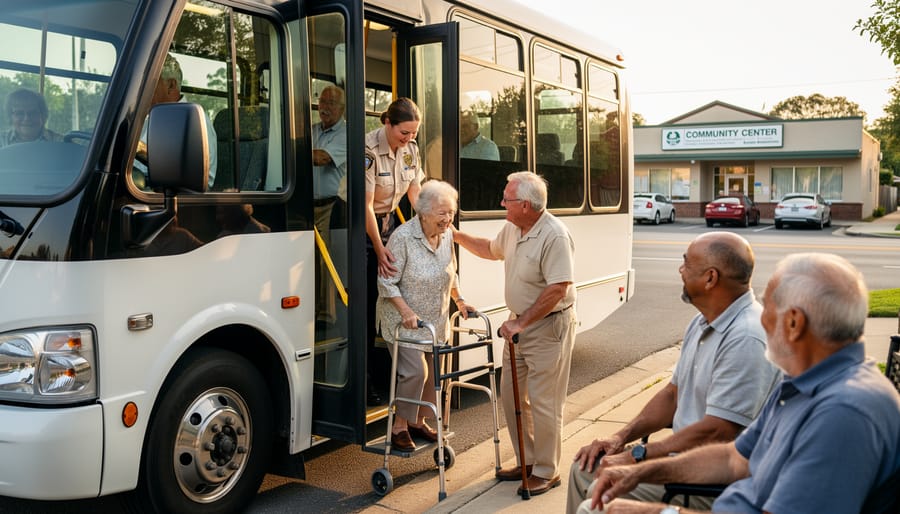
Community transport and rideshare models are proving vital for connecting people in rural Australia where conventional public transport isn’t viable. These services rely on collaboration, local knowledge, and technology to match riders with volunteers or drivers heading the same direction.
Volunteer-driven community transport programs operate across regional Australia, typically coordinated by local councils or non-profit organizations. Drivers, often retirees or community members with spare time, use their own vehicles to help residents reach medical appointments, shopping centres, or social activities. Services like Community Transport NSW and similar schemes in Queensland and Victoria charge minimal fees (often just fuel contributions) and build social connection alongside mobility.
On-demand rideshare platforms designed for low-density areas are emerging as flexible alternatives. Unlike city-based apps, these tailor routes and pricing to rural realities, longer distances, fewer drivers, and irregular demand. Platforms such as Shebah (originally women-focused) and regional trials by local governments use digital booking to coordinate rides without requiring fixed timetables or routes.
Car-pooling initiatives also reduce reliance on single-occupant vehicles. Schools, employers, and community groups in towns like Armidale and Mildura have organized car pool networks, using apps or Facebook groups to connect neighbours travelling to the same destination. This cuts costs, eases parking pressure in small town centres, and lowers emissions.
These models thrive when communities actively participate, volunteering as drivers, spreading the word, and advocating for council support to sustain and expand services.
Electric and Low-Emission Vehicle Adoption
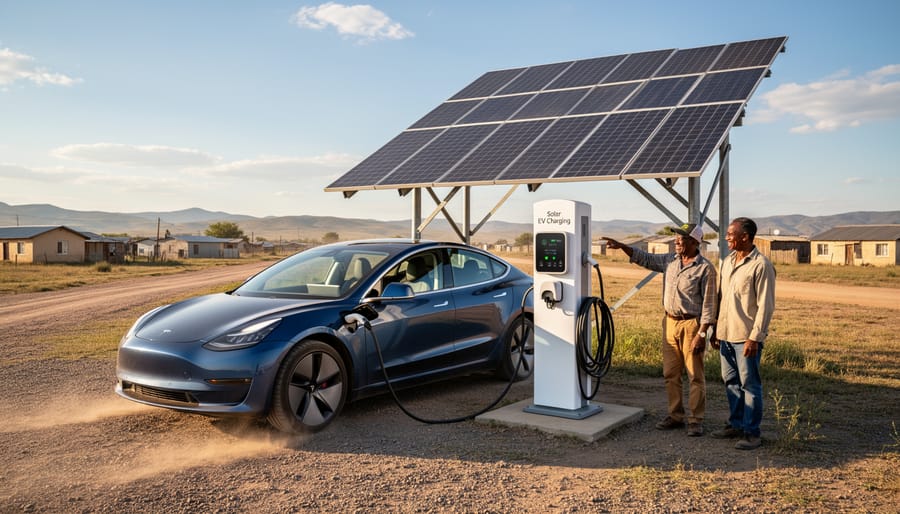
Electric vehicles are no longer just an urban proposition, rural Australians are discovering that zero-emission vehicles can handle long distances and demanding conditions surprisingly well. Modern EVs offer ranges exceeding 400 kilometres on a single charge, enough for most regional journeys, while hydrogen fuel cell vehicles promise even longer range with faster refuelling for those covering truly vast distances.
Charging infrastructure is expanding rapidly across regional Australia. The National Electric Vehicle Fast Charging Network has installed stations along major highways connecting rural centres, and many country councils are partnering with energy retailers to install charging points in town centres and tourist hubs. Home charging remains the most practical option for rural residents with solar panels, effectively fuelling vehicles with free energy during daylight hours.
Cost remains a consideration. While EVs carry higher upfront prices, lower running costs, no petrol, minimal servicing, can offset the difference over five to seven years, especially given rural drivers’ high annual kilometres. Second-hand EV markets are growing, improving accessibility.
Hydrogen vehicles and biofuel conversions offer alternatives where charging infrastructure lags or for heavy-duty applications like farm machinery and freight trucks. Several regional cooperatives are trialling locally produced biodiesel from agricultural waste, closing the loop on emissions while supporting farm incomes. The key is matching the right low-emission technology to each community’s specific needs and resources.
Active Transport: Walking and Cycling Infrastructure
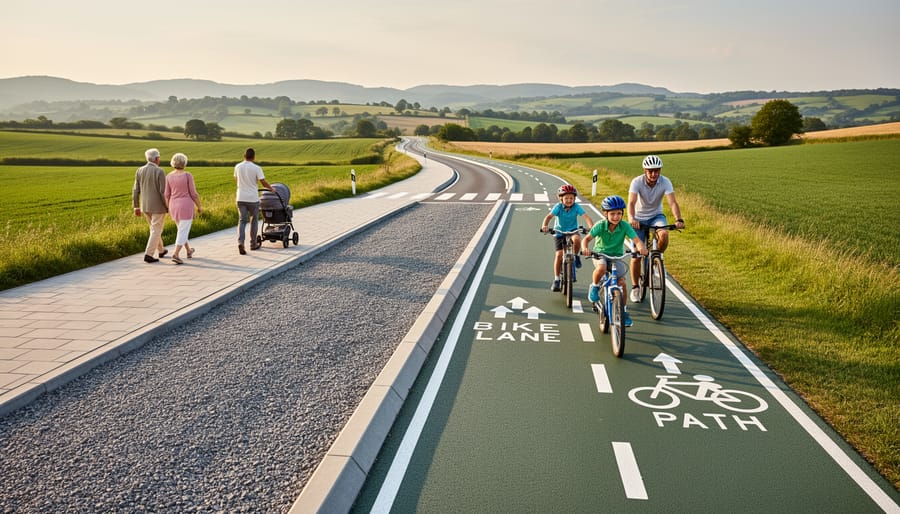
Walking and cycling can transform short trips in rural towns, school drop-offs, post office visits, bakery runs, into car-free journeys that cut emissions, boost health, and bring communities back to human scale. Yet many regional centres lack safe footpaths or bike lanes, forcing residents into vehicles even for five-minute errands.
Investment in well-lit footpaths, separated bike paths, and secure bike parking encourages more people to ride a bike or walk for local trips. E-bikes level the playing field, making longer distances and hilly terrain accessible to older adults and less confident cyclists. Some rural councils are retrofitting main streets with shared paths and installing bike racks outside shops, clinics, and schools.
Active transport won’t replace cars for long-distance travel, but it complements rideshare, public transport, and EVs beautifully, turning the first and last mile into healthy, zero-emission connections that strengthen community ties and reduce pressure on roads.
Flexible Public Transport and Demand-Responsive Services
Traditional fixed-route buses rarely work in rural Australia, where potential passengers are scattered across vast distances and demand varies wildly from day to day. That’s where flexible, demand-responsive public transport comes in, services that only run when and where people actually need them, cutting costs and carbon while keeping communities connected.
On-demand bus services and dial-a-ride schemes let passengers book a trip via phone or app, then match them with a vehicle that adjusts its route in real time. Instead of running an empty bus on a fixed loop, these systems respond to genuine demand, making it viable for councils and operators to serve low-density areas. Passengers who previously had no choice but to drive now have an affordable, convenient option to use public transport for medical appointments, shopping, or social visits.
Digital booking platforms, some purpose-built for rural settings, make coordination simple. Passengers request a pickup time and destination, the software optimizes the route, and the driver collects multiple riders heading similar directions. Several regional councils across New South Wales and Victoria have trialled these schemes, replacing underused traditional routes with flexible minibuses that adapt to community needs. Early results show higher ridership, lower operating costs, and better access for older residents and people without cars.
These systems won’t replace every private vehicle trip, but they fill a crucial gap, proof that rural public transport can work when it’s designed around real people, not outdated timetables.
Integrating Renewable Energy with Transport
Rural Australia’s abundant sunshine and open land create a natural opportunity to pair clean transport with renewable energy generation. Solar-powered electric vehicle charging stations are popping up in regional towns, often installed at community hubs, council buildings, or roadside rest areas. These setups reduce reliance on the grid and lower running costs, especially where electricity prices run high or infrastructure is thin.
Community energy cooperatives in places like Hepburn and Yackandandah are exploring how locally generated solar or wind power can support transport needs, charging community EVs, powering e-bike fleets, or feeding into shared mobility services. Some farmers are installing solar arrays to charge farm vehicles and machinery, cutting fuel bills while reducing emissions.
Battery storage paired with renewables also addresses range anxiety in remote areas, ensuring charging is available even during peak demand or grid outages. As renewable technology costs drop and rural communities look to keep energy dollars local, the synergy between clean energy and sustainable transport becomes a practical, community-led pathway, not just an environmental ideal, but an economic one too.
Australian Communities Leading the Way
Across regional Australia, local communities aren’t waiting for top-down solutions, they’re building sustainable transport systems from the ground up, proving that innovation thrives outside capital cities.
In Cowra, New South Wales, the community-run transport service has evolved beyond its original focus on elderly residents. Volunteers now coordinate shared trips for medical appointments, grocery shopping, and social activities, reducing car dependency while strengthening community bonds. The model has inspired neighbouring towns to launch similar programs, creating a network of grassroots mobility solutions across the Central West.
The Shire of Exmouth in Western Australia has embraced solar-powered EV charging infrastructure, turning abundant sunshine into fuel for residents and tourists exploring the Ningaloo Coast. The initiative demonstrates how remote communities can leapfrog traditional fuel dependence, using renewable energy to power both personal vehicles and a small fleet of shared electric bikes available for short trips around town.
Victoria’s Bendigo region has pioneered a flexible bus service that operates on-demand rather than fixed routes. Passengers book trips via a smartphone app or phone call, and the service adjusts routes in real-time to accommodate multiple riders. The system has increased public transport usage by 40% while reducing operational costs, offering a blueprint for other regional centres struggling with low-density passenger numbers.
In Tasmania’s Huon Valley, a collaboration between council, local businesses, and community groups has created safe cycling corridors connecting small towns. The project started with volunteer work parties clearing and marking shared paths, later securing council funding for formal infrastructure. Residents now cycle regularly between neighbouring communities for work and leisure, cutting short-trip car journeys substantially.
These examples share common threads: strong local leadership, willingness to experiment, and recognition that rural transport solutions must be tailored to specific community needs rather than imported wholesale from urban models.
How You Can Support and Participate
You don’t need to wait for a grand regional plan or a government announcement. Real change in rural transport often starts at the community level, with individuals stepping up, local groups organising, and small businesses making greener choices. Here’s how you can play a part.
Start by engaging with your local council. Attend community meetings, write submissions during transport planning consultations, or simply email your councillor to highlight gaps in local connectivity. Many councils are more responsive than you might think, especially when residents show genuine interest and offer practical suggestions. Ask about on-demand transport trials, EV charging stations, or safe cycling paths. Your voice can shift priorities.
Consider these practical actions:
- Volunteer with community transport services, many groups need drivers, coordinators, or admin support.
- Advocate for new or improved infrastructure, such as footpaths, bike lanes, or accessible bus stops in your town.
- Choose a low-emission vehicle when replacing your car, EVs, hybrids, or efficient small cars suited to rural distances.
- Support or initiate local carpooling networks for school runs, medical trips, or shopping.
- Participate in pilot programs testing new transport models in your region, councils often seek community input and early adopters.
- Promote active transport by cycling or walking for short trips and encouraging others to do the same.
Small businesses can also lead by example. Offer flexible delivery schedules that reduce unnecessary trips, invest in electric utes or vans, or partner with community transport providers to support employees without cars. When local enterprises adopt sustainable practices, it normalises the shift and demonstrates viability to others.
Stay informed through regional sustainability networks, local council newsletters, and community notice boards. The more connected you are, the easier it becomes to spot opportunities, whether that’s a new rideshare scheme, a grant for EV chargers, or a community meeting planning better bus routes. Rural transport improves when people care enough to get involved.
Common Questions About Rural Transport
Is sustainable transport really viable in sparsely populated rural areas?
Yes, but it requires flexible, community-driven approaches rather than one-size-fits-all solutions. Traditional fixed-route public transport struggles in low-density regions, but on-demand services, community rideshare programs, and shared vehicle schemes can work effectively when tailored to local needs. The key is matching the service model to the actual travel patterns and population density of your area, not trying to replicate urban transit systems.
How much does it cost to switch to an electric vehicle in a rural setting?
Upfront costs for EVs remain higher than conventional vehicles, though prices are falling and government incentives can help bridge the gap. Running costs are typically lower, electricity is cheaper than petrol, and maintenance requirements are reduced. The main consideration for rural drivers is charging infrastructure: installing a home charger costs between $1,500 and $3,000, and you’ll need to plan longer trips around public charging networks, which are still expanding in regional areas.
Can communities start their own transport schemes, and how?
Absolutely. Begin by surveying local transport needs, then connect with your regional council, Community Transport Organisation, or state transport department for guidance and potential funding. Many successful schemes start small, a volunteer car pool or scheduled community van, and grow based on demand.
Where can rural communities find funding for sustainable transport projects?
Look to federal programs like the Regional Connectivity Program, state government rural transport grants, and councils often have community project funding. Beyond government, community energy groups, philanthropic foundations focused on regional development, and crowd-funding for local initiatives can provide seed capital.
Are electric vehicles practical for long-distance rural travel?
Modern EVs offer ranges exceeding 400 kilometres, suitable for most regional trips, though route planning around charging stations remains essential. Plug-in hybrids provide a backup petrol engine for areas with limited charging infrastructure, while hydrogen vehicles show promise for longer-haul rural applications as refuelling networks develop.
The most common barrier isn’t technical or financial, it’s simply not knowing where to start. Reach out to neighbouring communities already running transport initiatives, attend regional sustainability forums, and don’t underestimate the power of a small pilot project to demonstrate what works in your area before scaling up.
Rural transport isn’t just about getting from A to B, it’s about keeping regional Australia alive, connected, and thriving. When communities have access to reliable, sustainable mobility options, they gain more than convenience. They secure access to healthcare, education, and employment. They reduce isolation. They cut emissions while building resilience against rising fuel costs and climate impacts.
The solutions we’ve explored aren’t distant dreams. They’re happening now, driven by local councils, community groups, and individuals who refuse to accept that rural areas must choose between connectivity and sustainability. From volunteer-run community transport services to solar-powered EV charging stations, from flexible on-demand buses to e-bike networks in regional towns, Australian communities are proving that innovation flourishes when necessity meets commitment.
The transition to greener, more equitable rural mobility won’t happen overnight, and it won’t succeed without your participation. Whether you’re advocating for better services at council meetings, volunteering with community transport, choosing a low-emission vehicle for your next purchase, or simply spreading awareness among neighbours, every action counts. Regional Australia has always been shaped by people willing to roll up their sleeves and build what’s needed.
Stay informed about pilot programs in your area. Support local initiatives. Share what works. The future of rural transport is being written right now, and you’re part of that story.