
Redirect stormwater runoff from hard surfaces into garden beds using shallow swales and rain gardens, preventing pollutants and excess nutrients from washing into local streams and estuaries. These simple earthworks capture and filter water naturally while watering your plants at the same time.
Replace thirsty lawn areas with native groundcovers like kidney weed or native violet that need minimal irrigation once established, cutting outdoor water use by up to 70 percent. Australian natives evolved to thrive in our variable rainfall patterns, making them perfectly suited to water-wise gardens that protect our waterways from unnecessary chemical runoff.
Install drip irrigation on timers set for early morning watering, delivering moisture directly to plant roots rather than losing it to evaporation or overspray onto paving. This targeted approach reduces water waste by half compared to conventional sprinklers while preventing excess runoff that carries fertilisers and pesticides into drainage systems.
Apply 75mm of mulch around plants to retain soil moisture, suppress weeds, and moderate soil temperature, dramatically reducing irrigation frequency. Organic mulches like woodchip or sugar cane break down gradually, improving soil structure and reducing the need for synthetic fertilisers that can leach into groundwater.
Your landscape choices ripple far beyond your backyard fence. Every litre saved, every native plant chosen, and every drop of runoff redirected contributes to healthier rivers, cleaner beaches, and thriving aquatic ecosystems across Australia. The connection between your garden tap and local waterway health is direct and immediate, making landscape water conservation one of the most powerful environmental actions available to everyday Australians.
Why Your Garden Matters to Australia’s Waterways
The Hidden Cost of Conventional Landscaping
Most Australian gardens are inadvertently wasting thousands of litres annually without owners even realising it. During our scorching summers, conventional lawns and irrigation systems can lose up to 50% of water through evaporation before it even reaches plant roots. When you factor in midday watering on hot days, that figure climbs even higher.
The typical suburban sprinkler system presents another challenge. Many operate on fixed timers that don’t account for rainfall or seasonal needs, leading to overwatering that not only wastes precious resources but also washes fertilisers and pollutants into our stormwater systems. Studies show that poorly designed irrigation can waste around 30-40% of water through runoff, overspray, and system leaks.
Perhaps the most significant hidden cost lies in our plant choices. Those lush exotic species we’ve traditionally favoured, from rose gardens to European hedges, evolved in climates with consistent rainfall. They demand constant watering to survive our extended dry periods. A single thirsty lawn can require up to 12,000 litres per week in summer to stay green.
The good news? Recognising these patterns is the first step toward transforming your outdoor space into a water-wise haven that actually benefits local ecosystems.
How Excess Water Damages Our Creeks and Rivers
When rain falls on our gardens and lawns, it doesn’t simply disappear into the soil. Excess water from overwatering, compacted surfaces, and impervious areas becomes runoff that flows into our storm drains, eventually reaching local creeks and rivers. Along the way, this water picks up a concerning cargo: garden fertilizers rich in nitrogen and phosphorus, pesticides, herbicides, and loose sediment from bare soil.
These pollutants trigger a chain reaction in our waterways. Excess nutrients fuel rapid algal growth, creating thick blooms that block sunlight and deplete oxygen when they decompose. The result? Fish kills and the loss of vital aquatic plants that sustain healthy ecosystems.
Consider the Yarra River in Melbourne, where urban runoff has contributed to recurring algal blooms affecting water quality for millions of residents. Similarly, the Parramatta River in Sydney has struggled with nutrient pollution from surrounding urban landscapes, requiring extensive community restoration efforts.
The sediment carried by runoff smothers stream beds where native fish like galaxias once spawned, while pesticides accumulate in the food chain, affecting everything from water bugs to platypuses. In Queensland’s waterways, agricultural and urban runoff has been identified as a major contributor to declining Great Barrier Reef health.
The encouraging news? By adopting water-wise landscaping practices, every Australian household can become part of the solution, protecting the waterways that define our communities.
Designing Water-Smart Australian Landscapes
Native Plants That Love a Dry Spell
Australia’s native plants are natural water-savers, having evolved to thrive in our challenging climate. By choosing species suited to your region, you’ll create a stunning garden that practically looks after itself while supporting local ecosystems.
For coastal gardens, consider the hardy coastal rosemary (Westringia fruticosa), which needs watering only during extended dry periods once established. The striking bottlebrush varieties (Callistemon species) bring brilliant colour while tolerating salt spray and drought. Pigface (Carpobrotus glaucescens) makes an excellent groundcover, requiring minimal water and preventing erosion along slopes.
Inland gardeners can celebrate kangaroo paw (Anigozanthos species), which survives on rainfall alone in many areas after establishment. The beautiful native grasses like wallaby grass (Austrodanthonia species) need just occasional deep watering during summer. Eremophila species, or emu bush, deliver gorgeous flowers while thriving in hot, dry conditions with water requirements as low as 10mm per week.
In tropical regions, try the vibrant grevillea varieties that attract honeyeaters while managing on natural rainfall. Lomandra longifolia creates lush texture with minimal fuss, needing water only during severe drought.
Many of these species have been cultivated through revegetation initiatives and indigenous plant knowledge passed down through generations. Local native nurseries can recommend specific varieties proven to flourish in your exact microclimate, ensuring your water-wise garden becomes a thriving habitat haven.
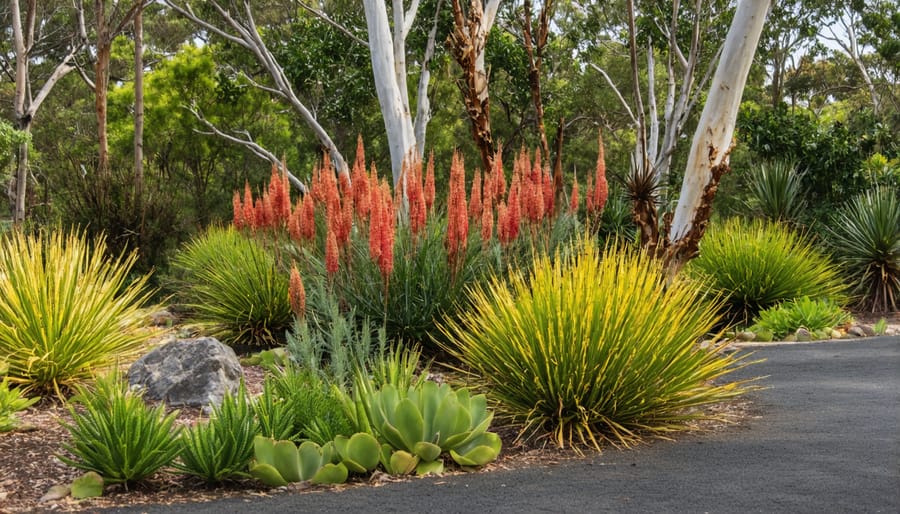
Hydrozoning: Group Plants by Thirst Level
Imagine your garden as a neighbourhood where residents have different needs. Just as you wouldn’t expect everyone to consume the same resources, plants thrive when grouped with companions sharing similar water requirements. This clever approach, called hydrozoning, transforms how we manage our gardens while dramatically reducing water waste.
Start by dividing your landscape into three distinct zones. Create a high-water zone near your home for vegetables and lush plants you’ll tend regularly. Position a moderate-water zone in visible garden beds using Australian natives like kangaroo paw and grevillea that need occasional deep watering once established. Finally, dedicate a low-water zone to drought-tolerant champions including pigface, native grasses, and eucalyptus species that practically care for themselves.
The beauty of hydrozoning lies in its simplicity. When thirsty lettuce shares space with water-efficient succulents, you’re forced to overwater one or underwater the other. By grouping similar plants together, each zone receives precisely what it needs, nothing more, nothing less.
Many Australian councils now offer free garden assessments to help residents implement hydrozoning. Community gardens across Melbourne and Sydney have reported water savings of up to 40% after reorganising beds by water requirements, proving this straightforward strategy delivers results while protecting our precious waterways from unnecessary runoff.
Mulch: Your Garden’s Water-Saving Secret Weapon
Mulching is arguably the simplest yet most powerful water conservation strategy you can employ in your garden, capable of reducing evaporation by an impressive 70% while simultaneously enriching your soil. Think of mulch as a protective blanket that shields moisture from Australia’s harsh sun and drying winds.
For Australian conditions, organic mulches like eucalyptus chips, tea tree mulch, and sugarcane bagasse work brilliantly. These locally-sourced materials break down gradually, feeding beneficial microorganisms and improving soil structure over time. Pine bark is another excellent choice, particularly in acidic-loving garden beds. In bushfire-prone areas, consider pea gravel or river pebbles around your home’s perimeter while keeping organic mulches further away.
Application technique matters enormously. Spread mulch 75-100mm deep, but keep it clear of plant stems and tree trunks to prevent rot and pest issues. Ensure the soil is thoroughly moist before applying mulch, ideally after good rain or deep watering. Refresh your mulch annually as it decomposes.
Many Australian communities organize mulch-sharing initiatives where tree-pruning waste gets chipped and distributed locally, turning a disposal problem into a water-saving solution. By mulching properly, you’re not just conserving water; you’re creating healthier, more resilient landscapes that protect our precious waterways from runoff while reducing irrigation needs dramatically.
Soil Health Equals Water Efficiency
The secret to a water-wise garden often lies beneath the surface. Healthy soil acts like a natural sponge, holding moisture where plant roots can access it while reducing the amount of water that runs off into stormwater drains and eventually our precious waterways.
Across Australian gardens, we’re seeing a growing movement toward building better soil, and the results speak for themselves. When you add compost and organic matter to your garden beds, you’re fundamentally changing how your landscape interacts with water. Organic-rich soil can hold up to 20 times its weight in water, compared to depleted, compacted soil that lets precious rainfall sheet straight off the surface.
Think of it this way: every kilogram of compost you dig into your garden is like installing a microscopic reservoir system. As the organic matter breaks down, it creates air pockets and improves soil structure, allowing water to penetrate deeply rather than pooling on top or rushing toward the street. This means your plants develop stronger, deeper root systems and become naturally more drought-tolerant.
Many community gardens throughout Sydney, Melbourne, and Brisbane are championing this approach, demonstrating that improved soil health can reduce irrigation needs by 30 to 50 percent. Start by adding a 5-10cm layer of compost to garden beds twice yearly, and you’ll notice the difference within a single growing season. Your plants will be healthier, your water bills lower, and your local waterways cleaner from reduced runoff.
Smart Irrigation Systems That Actually Work
Drip Irrigation: Precision Watering for Every Drop
Drip irrigation delivers water directly to plant roots, reducing wastage by up to 90% compared to traditional sprinklers while protecting waterways from runoff. This precision approach has transformed thousands of Australian gardens into water-wise havens.
The beauty of drip systems lies in their flexibility. A basic setup includes a pressure regulator, filter, mainline tubing, and emitters or drippers that release water slowly where it’s needed most. Many Perth and Adelaide gardeners report halving their water bills within the first season, with plants thriving from consistent, targeted hydration.
Installation needn’t break the bank. DIY kits start around $150 for small gardens, with expandable systems growing alongside your landscape. Weekend warriors can typically install a basic system in a few hours using readily available components from hardware stores. For larger properties, professional installation costs between $500-2000 but often pays for itself through reduced water costs and healthier plants.
Maintenance is surprisingly simple. Check filters monthly, flush lines seasonally, and inspect emitters for blockages. Most systems last 5-10 years with minimal care. Consider adding a timer for effortless automation, and remember that mulching around drip lines maximizes efficiency by reducing evaporation. Your local water authority may even offer rebates, making this investment even more accessible.
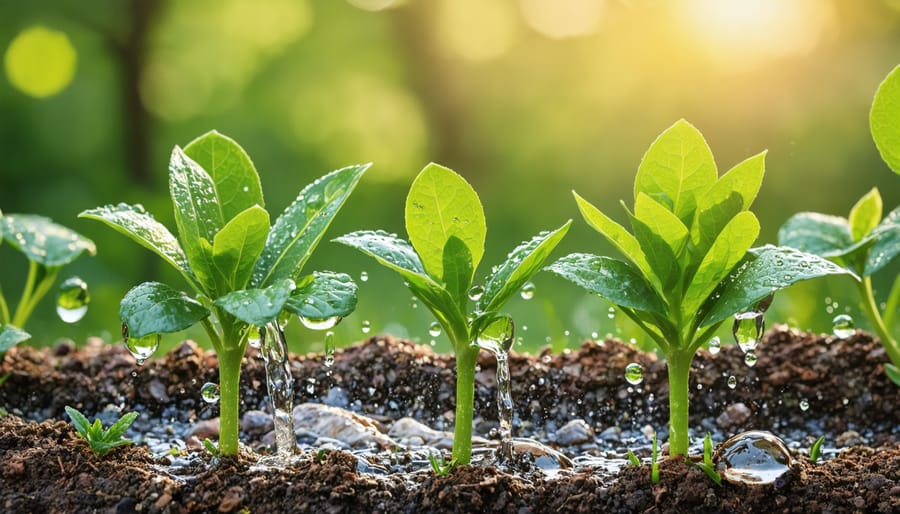
Smart Controllers That Read the Weather
Imagine your irrigation system checking the weather forecast before deciding whether to water your garden. That’s exactly what smart controllers do, and they’re transforming how Australian households and businesses manage outdoor water use.
These clever devices use either soil moisture sensors or real-time weather data to determine when your landscape actually needs watering. Weather-responsive controllers connect to local Bureau of Meteorology stations, adjusting schedules based on rainfall, temperature, and humidity. If rain is forecast or has recently fallen, the system simply skips that watering cycle. Sensor-based models take readings directly from your soil, only activating when moisture levels drop below optimal thresholds.
The savings are impressive. Melbourne Water reports that homes using smart controllers reduce irrigation water use by 30-50% compared to traditional timers. One Sydney community garden slashed their quarterly water bill by $800 after installing weather-responsive technology, while maintaining healthier plants through more targeted watering.
Most Australian councils now offer rebates on smart controllers, making them surprisingly affordable. The technology pays for itself within 12-18 months through reduced water bills, while preventing runoff that carries pollutants into our precious waterways. It’s automation that actually works with nature rather than against it.
When to Water (And When Not To)
Timing your watering makes all the difference between nourishing your garden and wasting precious water. Across Australia, early morning watering (between 4am and 9am) delivers the best results. At this time, temperatures are cooler, winds are calmer, and your plants can absorb moisture before the day’s heat triggers evaporation. Your local waterways benefit too, as efficient watering means less runoff carrying fertilisers and pesticides into streams.
Evening watering might seem convenient after work, but it can leave foliage damp overnight, inviting fungal diseases in humid climates like Brisbane and coastal NSW. However, if you’re in Perth or Adelaide during a scorching summer, late afternoon watering beats missing it entirely.
Here’s where many Australians get it wrong: frequent shallow watering creates weak, surface-level roots. Instead, water deeply but less often, encouraging roots to grow downward where moisture lingers. A weekly deep soak beats daily sprinkles every time. During Melbourne’s cooler months or Sydney’s winter, you might only need fortnightly watering for established natives.
Your climate zone matters enormously. Darwin gardeners face different challenges than Hobart residents. Check your local water restrictions and adjust accordingly. Remember, established native gardens often thrive on rainfall alone once their roots are deep, reducing your irrigation needs to near zero and protecting our precious waterways from unnecessary runoff.
Capturing and Using Every Drop: Rainwater and Greywater
Rainwater Tanks for Australian Homes
Rainwater tanks have become increasingly popular across Australian suburbs, with many households discovering they can harvest thousands of litres annually from their roofs. For garden irrigation purposes, a 2,000 to 5,000-litre tank suits most average suburban blocks, while larger properties may benefit from 10,000 litres or more. Consider your roof catchment area—a standard home roof can collect around 60 litres per square metre during just 10mm of rainfall.
Installation requires thoughtful planning. Position tanks close to downpipes and garden beds to minimise plumbing costs and water pressure loss. Many Australian councils now mandate tanks for new homes, and checking local regulations before installation ensures compliance. Ensure your base is level and sturdy—concrete slabs work well for larger tanks, while smaller systems can sit on compacted gravel or paving.
Maintenance is straightforward but essential. Clean gutters and first-flush diverters quarterly to keep debris out. Check for mosquito breeding, inspect overflow pipes, and give the tank interior a professional clean every few years. Most systems last decades with minimal care.
Connecting rainwater to drip irrigation or soaker hoses creates an efficient, sustainable watering system. Gravity-fed systems work beautifully for garden beds below tank height, while pumps suit more complex layouts. The investment quickly pays off through reduced mains water bills and healthier gardens during dry spells.
Many Australian states offer generous rebates for rainwater tank installation—check your local water authority’s website for current schemes. Some communities report savings of 40% on water bills while nurturing thriving native gardens, proving that smart water harvesting benefits both your wallet and the environment.
Greywater Systems Done Safely
Greywater systems offer Australian households a practical way to recycle up to 70% of their household water while nourishing gardens and protecting our precious waterways from unnecessary demand. Before starting, it’s essential to understand that regulations vary significantly across states. In New South Wales and Victoria, simple laundry-to-garden systems require no approval, while Queensland and South Australia have specific guidelines around greywater diversion. Western Australia requires permits for most systems, so checking with your local council is always the first step.
The beauty of greywater lies in its simplicity. A basic diversion system can redirect water from your washing machine or shower directly to garden beds through simple plumbing modifications. These systems work best when you choose low-sodium, phosphorus-free detergents and avoid fabric softeners that can harm plants and soil.
Not all plants thrive on greywater, but many Australian natives are remarkably tolerant. Grevilleas, bottlebrush, kangaroo paw, and lomandra handle greywater beautifully, while fruit trees like citrus actually benefit from the nutrients. Avoid using greywater on vegetables you’ll eat raw, and never store it for more than 24 hours as bacteria multiply rapidly.
For those wanting more sophisticated systems, treatment options include filtration units and reed bed systems that further purify water before it reaches your garden. Many Melbourne suburbs have embraced community-scale greywater projects, demonstrating how collective action amplifies water conservation efforts. Remember, every bucket of greywater redirected to your garden is water saved from our rivers and aquifers.
Reducing Runoff and Filtering What Leaves Your Property
Rain Gardens: Beautiful Biofilters
Rain gardens are nature’s elegant solution to stormwater runoff, transforming what might become polluted waterway flow into filtered, clean water. These purposefully designed depressions capture rainwater from roofs, driveways, and lawns, allowing it to slowly infiltrate while plants and soil naturally filter out pollutants like oils, fertilizers, and sediments.
For Australian conditions, selecting hardy native plants ensures your rain garden thrives while supporting local biodiversity. Consider lomandra varieties, kangaroo paw, native violets, and sedges like Carex appressa. These species tolerate both wet and dry periods while requiring minimal maintenance once established.
Basic design starts with identifying where water naturally flows on your property. Position your rain garden at least three metres from building foundations in a spot that receives runoff. Dig a shallow basin approximately 150-300mm deep with gently sloping sides, then layer with sandy loam topped with mulch to prevent erosion.
Melbourne’s Merri Creek community has embraced rain gardens through neighbourhood projects, creating interconnected biofilters that significantly reduce pollutant loads entering local waterways. Similar initiatives across Brisbane and Adelaide demonstrate how collective action amplifies impact. Rain gardens complement broader ecological restoration efforts, proving that beautiful landscaping and environmental stewardship go hand in hand. Start small with one garden, then expand as you witness the transformation.
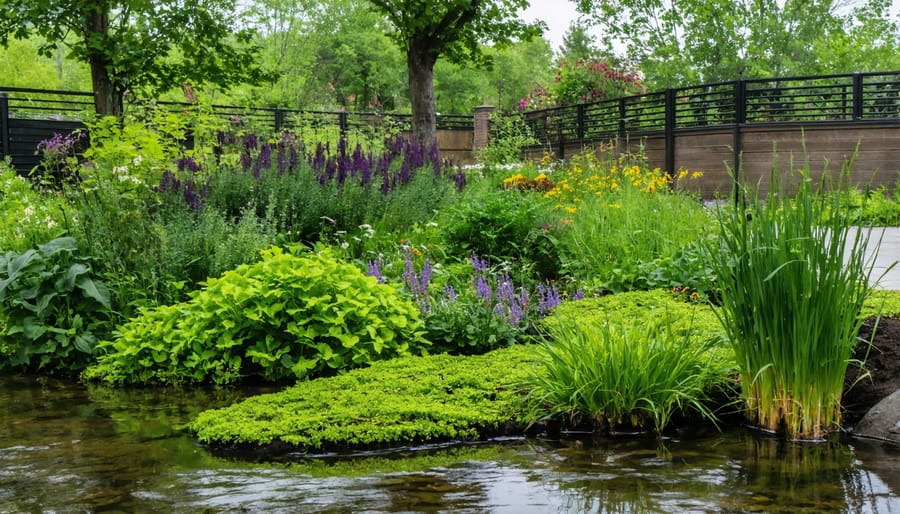
Permeable Surfaces and Swales
Traditional concrete driveways and paved areas create impermeable barriers that prevent rainfall from naturally soaking into the ground. Instead, water rushes across these hard surfaces, collecting pollutants like oil, fertilisers, and debris before flowing directly into stormwater drains and eventually our precious waterways. This not only wastes valuable water but also degrades water quality in local creeks, rivers, and coastal areas.
Switching to permeable surfaces offers a simple yet powerful solution. Permeable pavers, widely available across Australia, feature gaps that allow water to filter through into the soil below. They’re perfect for driveways, pathways, and entertaining areas, combining functionality with environmental benefits. Gravel paths work beautifully in garden settings, providing excellent drainage while creating attractive, low-maintenance walkways that suit our diverse Australian landscapes.
Vegetated swales take water management a step further. These shallow, gently sloping channels planted with hardy native grasses and sedges capture and slow runoff from roofs and paved areas. As water moves through the swale, it gradually infiltrates the soil while plants filter out pollutants. Melbourne’s growing network of raingardens demonstrates how communities are embracing these features, transforming stormwater problems into landscaping assets.
By choosing permeable surfaces, you’re not just conserving water—you’re actively protecting the health of your local waterways while creating resilient, climate-smart outdoor spaces.
Community Success Stories Across Australia
Right across Australia, communities are proving that landscape water conservation isn’t just theory—it’s creating real, measurable change for our precious waterways.
In Melbourne’s western suburbs, the Moonee Ponds Creek Coordination Committee worked with local residents to transform water-hungry nature strips into native garden beds featuring kangaroo paw and coastal rosemary. Within two years, stormwater runoff decreased by 35 percent in participating streets, while water quality testing showed significant reductions in nutrient pollution entering the creek. What started with 20 households has now inspired over 400 families to join the movement.
Brisbane City Council’s Oxley Creek Catchment Association took a different approach, offering free rainwater tank installations to properties in flood-prone areas. The program installed 300 tanks across the suburb of Rocklea, capturing an estimated 15 million litres annually that would have otherwise rushed into stormwater drains. Local resident Maria Chen shares, “My 5,000-litre tank handles all my garden watering now, and during the last big storm, I watched my neighbours’ yards flood while mine stayed dry. It’s protecting both my property and our local waterways.”
On South Australia’s Fleurieu Peninsula, the Onkaparinga Council partnered with local businesses to retrofit commercial landscapes with water-wise irrigation systems and drought-tolerant natives. The McCracken Country Club replaced their thirsty lawn areas with native grasses, reducing irrigation needs by 60 percent while creating habitat corridors connecting to the nearby creek system. Their water bills dropped dramatically, proving conservation makes economic sense too.
Perhaps most inspiring is the tiny NSW town of Uralla, where primary school students initiated a community-wide rain garden project. Working with their council, they’ve installed 12 bioswales throughout town centres and parks, filtering runoff before it reaches Kentucky Creek. Their measurements show a 40 percent reduction in sediment loads, and neighbouring communities are now replicating their student-led model.
These stories share a common thread: when communities act together on landscape water conservation, the benefits multiply far beyond individual properties, creating healthier waterways for everyone.
Every Australian household has the power to make a real difference to our precious waterways, starting right in their own backyard. The connection between your garden and the health of local creeks, rivers, and bays isn’t abstract—every litre of water you save, every native plant you add, and every drop of runoff you prevent from carrying pollutants downstream creates tangible environmental benefits. The beauty of landscape water conservation is that you don’t need to transform your entire property overnight or invest thousands of dollars to see results.
Start with just one simple change this weekend. Perhaps it’s redirecting a downpipe to water your garden beds, swapping out a thirsty exotic plant for a hardy native alternative, or adjusting your irrigation timer to water during cooler hours. That single action becomes a building block for greater transformation, and before you know it, your water-wise garden will be thriving while using a fraction of the resources.
You’re not alone in this journey. Thousands of Australians across our communities are rethinking their relationship with water and landscapes. Through community involvement, we share knowledge, celebrate successes, and inspire each other to keep pushing forward. Your neighbours, local councils, and environmental groups are ready to support you with advice, resources, and encouragement. Together, we’re creating a movement that protects our waterways for future generations while creating beautiful, resilient gardens that reflect our unique Australian environment.