
Between your balcony railing and that sunny patch beside the driveway lies untapped potential for fresh herbs, crisp salad greens, and vine-ripened tomatoes—no sprawling backyard required. Urban gardening transforms concrete jungles into productive green spaces, but doing it sustainably means working with Australia’s unique climate challenges rather than against them.
Start by assessing your available sunlight hours and microclimate zones—even a west-facing apartment balcony in Brisbane offers different growing conditions than a south-facing courtyard in Melbourne. Match your plant selections to these conditions instead of fighting them with excessive water or artificial interventions. Install water-efficient drip irrigation systems or self-watering containers that reduce consumption by up to 70% compared to traditional watering methods, addressing our continent’s ongoing water scarcity while keeping your plants thriving.
Embrace vertical growing techniques using wall-mounted planters, trellises, or stacked container systems that maximize limited square footage. These space-smart solutions let you cultivate diverse crops in areas you’d otherwise leave empty. Build soil health through composting kitchen scraps and using Australian native mulches, creating a closed-loop system that mirrors sustainable food production principles right at home.
Connect with local community gardens and seed-sharing networks across Australian cities—from Canberra to Perth, these grassroots initiatives provide knowledge exchange, region-specific advice, and proof that sustainable urban growing isn’t just possible, it’s becoming a movement reshaping how we feed ourselves and strengthen neighborhood connections simultaneously.
Why Urban Gardens Matter More Than Ever
In Australian cities where supermarket tomatoes have travelled over 1,500 kilometres on average, growing your own food isn’t just satisfying – it’s a powerful climate action. Urban gardens are becoming vital green infrastructure that addresses multiple challenges our cities face, from scorching summers to disconnected communities.
The environmental benefits start with food miles and environmental impact. When you harvest basil from your balcony or tomatoes from a community plot, you’re eliminating transport emissions entirely. That’s reducing your carbon footprint with every meal. But the benefits extend far beyond your dinner plate.
Urban gardens actively combat the heat island effect that makes Australian cities unbearable during summer. In Melbourne’s inner suburbs, residents who’ve transformed concrete courtyards into productive gardens report temperature drops of up to 5 degrees. Green spaces, even small ones, absorb heat while concrete radiates it back. Every vertical garden, balcony planter, or nature strip veggie patch contributes to cooling our neighbourhoods.
Then there’s biodiversity. Sydney gardener Maria transformed her tiny terrace garden into a haven for native bees and butterflies by intercropping vegetables with indigenous flowering plants. She’s not alone – urban gardens across Australia are creating stepping stones of habitat that help native species survive in built-up areas.
The social dimension matters just as much. Community gardens in Brisbane’s West End have become gathering places where new migrants share traditional seeds and gardening wisdom with long-time locals. These spaces build resilience through shared knowledge and genuine connection, something many of us crave in increasingly isolated urban environments.
Finally, there’s compelling evidence for mental health benefits. Getting your hands in soil, watching seedlings emerge, and nurturing living things provides what researchers call “green therapy.” Perth office workers participating in lunchtime gardening programs report reduced stress and improved focus.
Urban gardening isn’t just a hobby – it’s a practical response to the challenges of sustainable city living, one garden bed at a time.
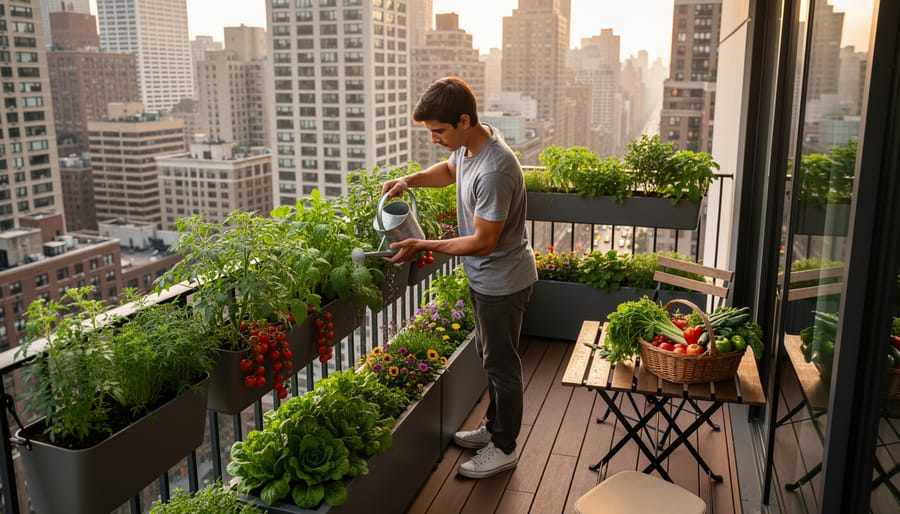
Starting Small: Assessing Your Urban Space
Understanding Your Australian Climate Zone
Australia’s diverse climate zones mean there’s no one-size-fits-all approach to urban gardening, but that’s actually exciting news for your sustainable growing journey. From tropical Darwin to temperate Melbourne, understanding your local conditions transforms potential challenges into opportunities for thriving gardens.
Start by identifying whether you’re in a tropical, subtropical, arid, temperate, or cool climate zone. Each region has distinct seasonal patterns that determine what grows best and when. In Sydney’s subtropical climate, for instance, you might harvest tomatoes well into autumn, while Melbourne gardeners focus on cool-season crops during the same period. This local knowledge helps you work with nature rather than against it.
Choose plants suited to your zone’s rainfall patterns and temperature extremes. Native Australian plants often excel in urban gardens because they’ve evolved to handle local conditions, requiring less water and maintenance. Combine these with climate-appropriate edibles and you’ll create resilient, productive spaces that naturally align with sustainable principles.
Your neighbours and local community gardens are invaluable resources here. They’ve already learned which varieties flourish in your specific microclimate, saving you time and reducing waste from failed experiments. This community wisdom, passed between urban gardeners, builds collective knowledge that strengthens food security across our cities while minimizing environmental impact.
Making Peace with Renters’ Restrictions
Renting doesn’t mean surrendering your green thumbs to the landlord’s rules. Across Australian cities, renters are discovering clever ways to cultivate thriving gardens while keeping their bond intact, and the solutions are more accessible than you might think.
The secret lies in embracing mobility. Container gardening transforms any balcony, courtyard, or sunny windowsill into productive growing space without a single screw in the wall. Large fabric grow bags work beautifully for vegetables and herbs, while stacking pots vertically maximizes limited footprints. Melbourne renter Sarah Jenkins grows tomatoes, basil, and lettuce in recycled wooden crates on her apartment balcony, yielding enough salad greens for her household year-round.
For vertical spaces, freestanding trellises and tension-rod systems create instant climbing gardens without permanent fixtures. These portable structures support beans, peas, and passionfruit while remaining completely removable when you relocate. Command hooks rated for outdoor use can hold lightweight hanging planters, leaving no damage behind.
Water-wise considerations matter especially in Australian conditions. Self-watering containers with built-in reservoirs reduce maintenance while conserving water, perfect for renters managing unpredictable schedules. Position drip trays strategically to protect surfaces and capture excess moisture for reuse.
Community gardens offer another pathway when personal space feels limiting. Brisbane, Sydney, and Perth have thriving networks of shared plots where renters cultivate produce alongside neighbors, building connections while growing sustainably. Many local councils maintain waiting lists worth joining, creating opportunities beyond your rental’s boundaries.
The beauty of portable systems extends beyond practicality. When you eventually move, your entire garden relocates with you, maintaining momentum toward food security and environmental stewardship regardless of address changes.
Building Healthy Soil in Containers and Small Beds
The Compost Revolution: Turning Kitchen Waste Into Black Gold
Transforming your kitchen scraps into nutrient-rich compost is perhaps the most satisfying cycle you’ll witness in your urban garden. Every banana peel and coffee ground becomes tomorrow’s thriving tomato plant, and the best part? You don’t need a sprawling backyard to make it happen.
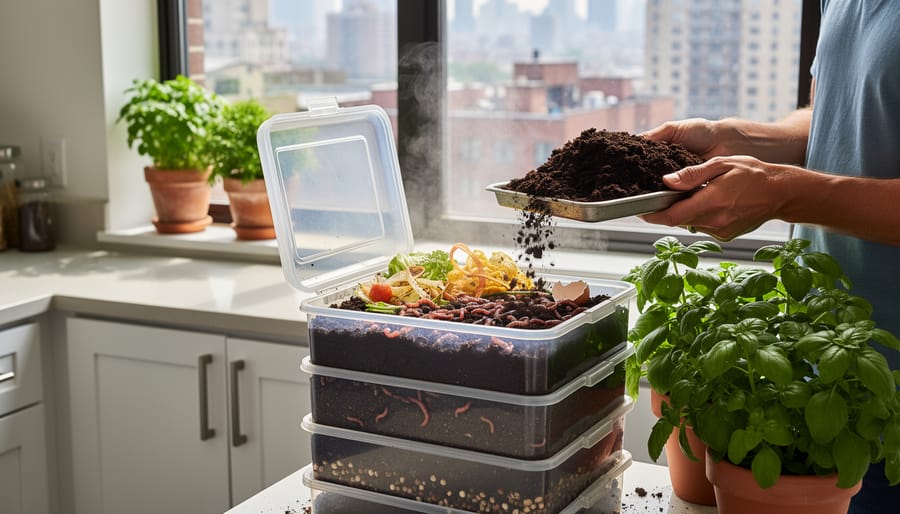
For apartment dwellers, the bokashi system is a game-changer. This Japanese method uses a special bran to ferment food waste in sealed buckets, meaning no smells and no fruit flies. Melbourne gardener Sarah Chen started her bokashi journey in a one-bedroom flat and now processes all her kitchen waste in just two 20-litre buckets that fit neatly under her sink. The fermented material can then be buried in pots or garden beds, breaking down completely within weeks.
Worm farms are another compact champion for small spaces. A well-maintained worm farm on your balcony will happily munch through vegetable scraps, producing liquid fertiliser and castings that your plants absolutely adore. The key in Australia’s variable climate is location: during Brisbane’s humid summers, position your farm in shade and ensure good airflow. In cooler Melbourne winters, a sunny spot keeps your wriggly workers active.
Common hiccups are easily solved. If your compost smells like ammonia, you’ve added too many nitrogen-rich greens like grass clippings. Balance it with carbon-rich browns such as shredded newspaper or dry leaves. Fruit flies invading your bokashi? Always cover fresh scraps with a layer of bran and ensure the lid seals tightly.
For those with a courtyard or small garden, a tumbling composter offers the perfect middle ground, producing usable compost in just 6-8 weeks with regular turning. Whatever system you choose, you’re joining thousands of Australians diverting waste from landfill while creating something genuinely precious for your urban oasis.
Worm Farms: Your Tiny Waste-Processing Team
Meet your new waste-processing team: worms! These hardworking decomposers transform kitchen scraps into nutrient-rich castings, perfect for nourishing your urban garden. Setting up a worm farm is surprisingly simple, even in compact Australian apartments.
Start with a dedicated worm farm bin or create a DIY version using stacked polystyrene boxes with drainage holes. Add bedding material like shredded newspaper, cardboard, and coconut coir, then introduce composting worms – red wrigglers or tiger worms work brilliantly in our climate. Feed them vegetable scraps, coffee grounds, and crushed eggshells, but avoid citrus, onions, and meat which can create odours and attract pests.
Here’s where Australian summers demand attention. Worms thrive between 15-25°C but struggle in extreme heat. Position your farm in the shadiest spot available – under a shaded veranda, inside a cool laundry, or beneath dense plants. During heatwaves, drape wet hessian over the bin and freeze water bottles to nestle inside for emergency cooling.
Harvesting is the rewarding part. After three to six months, push finished castings to one side and add fresh bedding to the other – worms migrate naturally, leaving you with pure gold for your garden. Many Melbourne and Sydney community gardens now run worm farm workshops, sharing local knowledge and spare worms among neighbours. It’s sustainability made simple.
Water Wisdom: Sustainable Irrigation for Urban Gardeners
Greywater Systems That Work in the City
Your shower, washing machine, and kitchen sink produce hundreds of litres of water weekly that could nourish your urban garden instead of disappearing down the drain. Greywater systems offer Australian city gardeners a brilliant way to reduce water bills while keeping plants thriving, but navigating the rules requires some know-how.
In Australia, greywater regulations vary by state, though most permit simple systems without approval. Generally, you can manually bucketing water from showers, baths, and washing machines directly onto ornamental gardens and fruit trees. This immediate reuse method works perfectly for apartment dwellers with balcony gardens or courtyard spaces. Just keep a bucket in your shower to collect water while it warms up, then use it on non-edible plants that same day.
For vegetable gardens, exercise caution. Most Australian states recommend using greywater only on fruit trees rather than vegetables eaten raw, though applying it beneath mulch around established plants generally poses minimal risk. Always choose plant-friendly, biodegradable soaps and detergents, avoiding products with high sodium or boron content that can damage soil over time.
More permanent greywater systems, like diversion devices from laundry outlets, typically require plumber installation and council approval in urban areas. Melbourne’s inner suburbs have seen fantastic uptake of these systems, with community gardens demonstrating safe, compliant installations that inspire neighbouring households.
Remember the golden rules: never store greywater longer than 24 hours, keep it subsurface when possible, and rotate application areas. Your garden will flourish, your water bill will shrink, and you’ll join thousands of Australians making every drop count.
Wicking Beds and Self-Watering Solutions
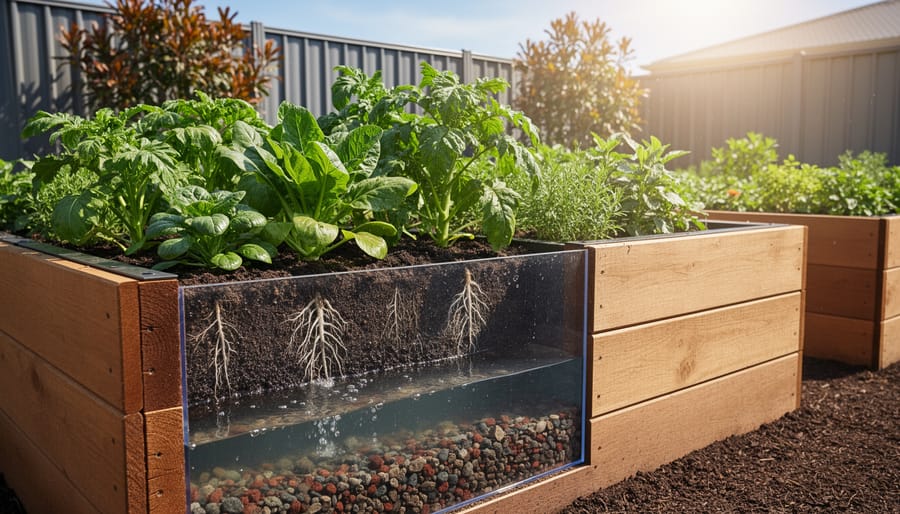
Wicking beds are transforming how urban gardeners tackle Australia’s harsh summers and unpredictable water restrictions. This ingenious self-watering system draws moisture upward through capillary action, keeping soil consistently hydrated while using up to 50% less water than traditional garden beds.
The basic design involves a reservoir at the base of your garden bed, separated from the soil by a permeable layer. As plants draw water from the soil, the moisture is replenished from below, creating an efficient closed-loop system. For busy Australians juggling work and family commitments, this means watering just once or twice weekly instead of daily.
Melbourne community gardener Sarah Chen shares her success: “During last summer’s 40-degree heatwave, my tomatoes thrived in wicking beds while neighbours’ conventional gardens struggled. I filled the reservoir weekly, and that was it.”
You can build wicking beds using recycled materials like old bathtubs or repurposed IBCs, making them budget-friendly and environmentally sound. Start small with a single raised bed featuring a pond liner, agricultural pipe for filling, and overflow drainage. Position them in sunny spots where Australian natives or vegetables can flourish with minimal intervention.
This approach perfectly suits our climate extremes while freeing up precious time for other sustainability projects in your urban oasis.
Choosing Plants That Thrive (and Give Back)
Australian Native Edibles for Urban Spaces
Imagine stepping into your courtyard and harvesting warrigal greens for tonight’s salad, or picking native finger limes that thrive with minimal fuss. Australian native edibles aren’t just a gardening trend—they’re a practical solution for urban food growing that honours the wisdom of 60,000 years of land stewardship while tackling our modern water constraints.
Native food plants have evolved specifically for Australian conditions, meaning they’re naturally adapted to our variable rainfall, intense sun, and diverse climate zones. A Tasmanian pepper bush in Melbourne or a Davidson plum in Brisbane will typically need far less water than exotic herbs and fruit trees, making them perfect companions for water-wise urban gardens.
Take the midyim berry, for example. This groundcover produces sweet purple berries while requiring virtually no maintenance once established. Similarly, native mint varieties like river mint grow prolifically in shaded spots where traditional herbs struggle, and they bring unique flavour profiles to your kitchen that you simply can’t buy at the supermarket.
Beyond the practical benefits, growing native edibles creates habitat for local birds, bees, and beneficial insects. When your lemon myrtle flowers, you’re not just cultivating a fragrant herb—you’re providing nectar for native pollinators and strengthening the urban ecosystem around you.
Starting doesn’t require expertise. Many community gardens across Australia now include dedicated native food sections where you can learn from experienced growers, share cuttings, and discover which species suit your specific microclimate. This connection to Country through cultivation creates something deeper than just food production—it builds understanding and respect for the land beneath our cities.
Vertical Growing: When Floor Space Runs Out
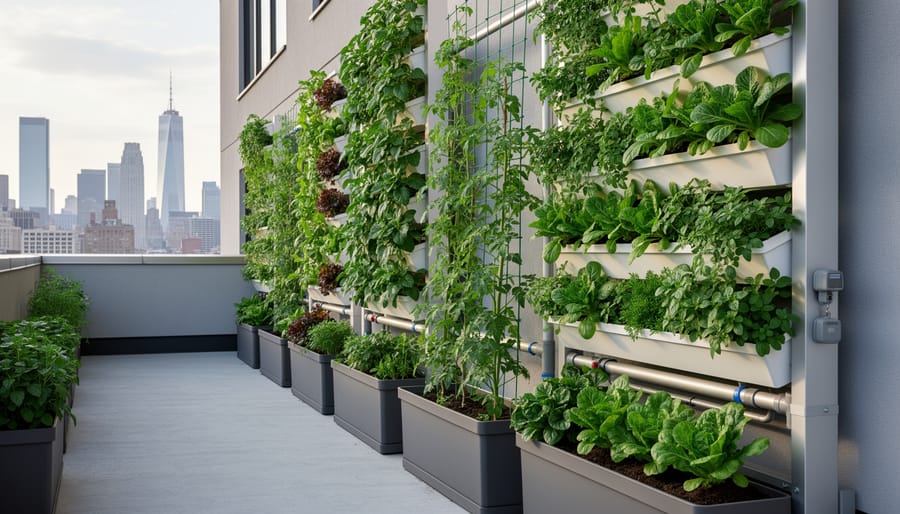
When your balcony or courtyard feels cramped, look up. Vertical growing transforms walls, fences, and unused vertical surfaces into productive gardens, perfectly suited to Australian urban spaces where every square metre counts.
Start simple with climbing vegetables like beans, peas, and cherry tomatoes on trellises or wire frames. A single trellis against a sunny wall can yield kilograms of produce throughout the growing season. Many Australian gardeners are discovering that cucumbers and squash grown vertically not only save space but also reduce pest problems and make harvesting easier.
Pocket planters and living walls take vertical growing further. These modular systems attach directly to walls and work brilliantly for herbs, strawberries, and leafy greens. Choose systems with built-in water reservoirs to manage our dry conditions efficiently. Position them where they’ll receive morning sun, especially in hotter regions, to prevent afternoon scorching.
Hanging baskets aren’t just decorative. Fill them with trailing tomatoes, herbs, or edible flowers, maximizing the growing zone above head height. Stacking planters create tower gardens perfect for strawberries or lettuce, fitting into corners that would otherwise go unused.
The Melbourne community garden at Collingwood Children’s Farm demonstrates this beautifully, with vertical systems producing abundance in minimal footprint. Their approach shows that thinking vertically isn’t just practical, it’s essential for sustainable urban food production.
Closing the Loop: Zero-Waste Urban Gardening
Creating a truly sustainable urban garden means moving beyond just growing plants – it’s about building a self-sustaining ecosystem that reduces waste and reliance on external resources. The good news? Australian urban gardeners are already leading the way in closing the loop.
Start with seed saving, an incredibly rewarding practice that connects you to generations of gardeners before you. Heritage tomatoes, beans, and lettuce are excellent beginner choices for Australian climates. Simply allow your healthiest plants to go to seed, collect and dry the seeds thoroughly, then store them in paper envelopes in a cool, dark spot. You’ll not only save money but also develop varieties perfectly adapted to your microclimate.
Propagation extends this principle further. Many herbs like basil, rosemary, and mint grow readily from cuttings placed in water, while succulents and sweet potato slips can fill entire garden beds from just one parent plant. This circular approach transforms one purchase into endless abundance.
Natural pest management keeps your garden chemical-free and balanced. Companion planting – like basil with tomatoes or marigolds throughout your beds – repels unwanted visitors while attracting beneficial insects. A shallow dish of beer deals with snails organically, while encouraging native birds and creating habitat for lizards brings natural predators into your space.
The real magic happens when you connect with your local gardening community. Seed swaps and cutting exchanges are flourishing across Australian cities, from Brisbane to Melbourne. Community gardens, local Facebook groups, and neighbourhood tool libraries allow you to share resources, knowledge, and excess produce. These connections transform individual efforts into collective impact, making sustainable gardening not just possible but genuinely enjoyable. Your garden becomes part of something bigger – a living network of urban growers reimagining what cities can be.
Connecting with Your Urban Gardening Community
You don’t have to garden alone. Across Australia, vibrant communities are transforming urban spaces through collective green action, proving that when gardeners unite, individual efforts multiply into meaningful change.
Community gardens have flourished in cities from Melbourne to Brisbane, creating shared spaces where knowledge, seeds, and harvests circulate freely. Sydney’s Addison Road Community Garden, for instance, has connected diverse neighbours for over 30 years, while Perth’s Piney Lakes Community Garden demonstrates how collective spaces can thrive even in water-scarce environments. These gardens offer more than produce—they’re living classrooms where experienced growers mentor beginners and cultural food traditions are celebrated and preserved.
Local gardening groups provide invaluable support for urban growers. The Australian City Farms and Community Gardens Network connects hundreds of projects nationwide, while groups like Permaculture Melbourne and Brisbane Organic Growers offer workshops, plant swaps, and seasonal guidance tailored to your climate zone. Many councils now actively support these initiatives as part of broader urban sustainability initiatives.
Online communities have also revolutionised how Australian gardeners connect. Facebook groups like Australian Food Garden share hyperlocal advice, while apps such as ShareWaste connect composters with neighbours who have organic waste, creating closed-loop systems that benefit everyone.
Seed libraries, emerging in libraries and community centres across Australia, allow gardeners to borrow heritage seeds, grow them out, and return seeds from their harvest—preserving biodiversity while building food sovereignty. The Seed Savers Network maintains thousands of varieties adapted to Australian conditions, ensuring our urban gardens remain resilient and diverse for generations to come.
The beauty of sustainable urban gardening lies in its simplicity. You don’t need hectares of land or expert knowledge to begin your journey toward growing fresh food and creating vibrant green spaces. Whether you’re starting with a single pot of herbs on your balcony or transforming a forgotten corner of your courtyard, every small step contributes to something much larger.
Across Australian cities, thousands of urban gardeners are proving that space constraints needn’t limit your impact. These individual efforts are collectively transforming our urban landscape, reducing food miles, supporting native pollinators, and building stronger community connections. When you choose to grow even a handful of vegetables, you’re joining a movement that’s reshaping how we think about food security and environmental stewardship in our cities.
The most important step is simply to start. Choose one sustainable practice that resonates with you, perhaps water-wise irrigation or composting kitchen scraps, and build from there. Your garden will evolve alongside your skills and confidence, becoming a living testament to what’s possible when we work with nature rather than against it.
So take that first step today. Your future self, your community, and the environment will thank you for it.