
Long before modern environmental movements emerged, the Aztec civilization mastered sustainability practices that today’s Australia desperately needs. Their ingenious chinampas—floating gardens built on lake systems—produced up to seven harvests annually while purifying water and creating wildlife habitats, offering a blueprint for our drought-prone continent’s food security challenges.
The Aztecs operated on a circular economy centuries before the term existed. Every scrap of organic matter returned to the soil, human waste fertilized crops, and communities shared resources through sophisticated trading networks that eliminated waste. Their approach wasn’t just environmental—it was survival wisdom refined over generations, proving that abundance and ecological balance can coexist.
Today, as Australian communities grapple with water scarcity, soil degradation, and climate adaptation, Aztec knowledge systems provide tested solutions. Their revegetation techniques transformed volcanic landscapes into fertile grounds. Their water management systems—including aqueducts and rainwater harvesting—sustained millions in challenging environments remarkably similar to Australia’s inland regions.
However, engaging with Indigenous Aztec wisdom requires respect and understanding. This isn’t about cherry-picking attractive practices while ignoring the cultural context that made them work. It’s about recognizing that Indigenous peoples worldwide, including Australia’s First Nations, have developed sophisticated environmental relationships over millennia.
This exploration of Aztec sustainable practices aims to inspire Australian households, community groups, and businesses to adopt time-tested approaches while acknowledging their cultural origins. The Aztecs demonstrated that thriving communities build resilience through cooperation with nature rather than domination of it—a lesson our modern world urgently needs to relearn as we face unprecedented environmental challenges ahead.
The Aztec Philosophy of Balance: Respecting Earth’s Cycles
Understanding Nepantla: Living Between Worlds
The Aztecs lived by a profound philosophy called nepantla – the concept of existing in the space between worlds, finding balance where seemingly opposing forces meet. This wasn’t just philosophical musing; it shaped how they approached every aspect of life, particularly their relationship with the natural world.
Imagine standing at the intersection where human ambition meets environmental limits, where progress encounters preservation. This is nepantla, and the Aztecs understood that thriving meant respecting this delicate balance rather than pushing past it. They recognized that human communities couldn’t flourish by depleting resources, but rather by working within nature’s boundaries.
For us here in Australia, this ancient wisdom offers a compelling framework for contemporary sustainable living. Just as the Aztecs calibrated their agricultural practices to work with seasonal cycles and water availability, we too can align our consumption patterns with what our environment can genuinely sustain. Think of nepantla as finding that sweet spot where modern convenience meets ecological responsibility.
This mindset challenges the either-or thinking that often paralyzes sustainability efforts. You don’t have to choose between comfort and conservation – nepantla teaches us to inhabit both spaces simultaneously. Australian communities are already embracing this balance through initiatives that blend innovation with environmental stewardship, proving that living between worlds isn’t about compromise but about discovering creative solutions that honor both human needs and planetary health. The Aztecs showed us it’s possible to build thriving societies while nurturing the land that sustains them.
Chinampa Agriculture: The Original Regenerative Farming
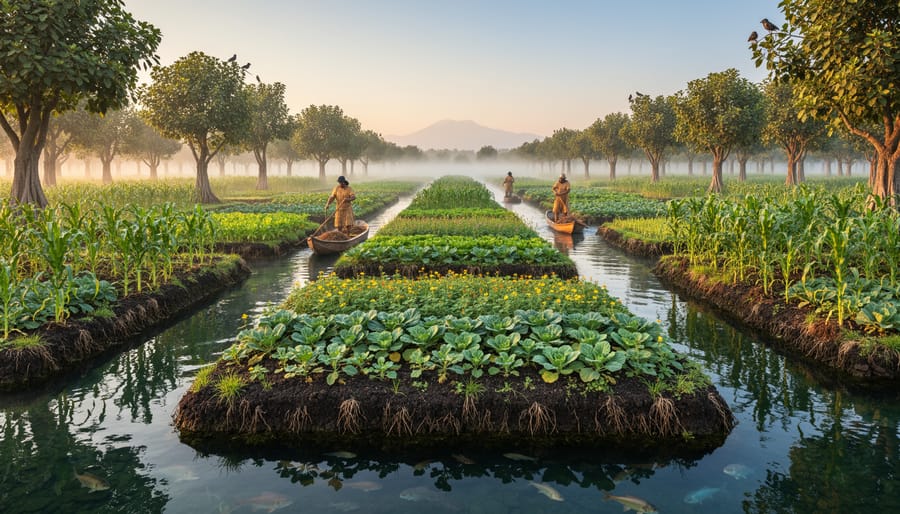
Lessons for Australian Home Gardens and Community Projects
The good news? You don’t need Mexico’s volcanic lake system to harness chinampa wisdom in your Australian backyard. Community gardens and urban farming projects across the country are already adapting these ancient principles with remarkable success.
Start small by thinking about water retention and layering. In Melbourne, the Collingwood Children’s Farm has created raised garden beds that mirror chinampa design, using composted materials layered with soil to create moisture-retentive growing spaces. The principle is simple: build up rather than dig down, allowing plant roots to access different nutrient layers while maintaining consistent moisture levels. This approach proves particularly valuable during Australia’s dry seasons.
Brisbane’s Northey Street City Farm demonstrates how chinampa-inspired water management works in subtropical conditions. Their system captures and slowly releases water through layered organic matter, reducing irrigation needs by approximately 40 percent compared to conventional beds. The technique involves creating growing mounds surrounded by shallow water channels, adapted for Australian conditions where flooding isn’t constant but water conservation remains critical.
For home gardeners, consider creating a mini-chinampa system using recycled materials. Stack alternating layers of woody mulch, green waste, and quality soil in raised beds positioned near greywater sources. Several Sydney community gardens now incorporate this method, reporting improved soil health and reduced water consumption.
The Perth Urban Landcare Group has adapted floating garden concepts for community education, demonstrating how ancient techniques address modern urban challenges. Their project shows that Indigenous knowledge systems, when applied respectfully and contextually, offer practical solutions for Australian growing conditions.
The key lesson from Aztec agriculture isn’t about copying exact methods but understanding underlying principles: work with water rather than against it, build soil health through layering, and create self-sustaining systems that minimize external inputs while maximizing productivity.
Zero-Waste Living: Aztec Style
Sacred Reciprocity and Resource Management
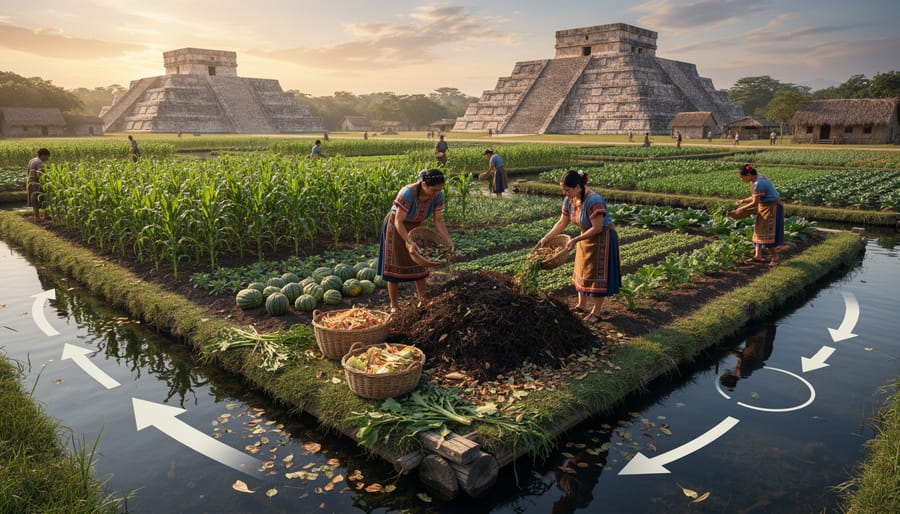
The Aztec worldview was built on a profound understanding of balance – they believed everything taken from the earth required something given back. This principle of sacred reciprocity, or ayni, wasn’t just spiritual philosophy; it was practical resource management that kept their civilization thriving for centuries.
The Aztecs approached consumption with remarkable mindfulness. Every part of a harvested plant or hunted animal served a purpose. Corn husks became tamale wrappers, then animal feed, and finally compost. Bones transformed into tools and musical instruments. What we’d call waste simply didn’t exist in their vocabulary because everything cycled back into usefulness.
This circular thinking offers powerful lessons for Australian households today. Rather than viewing items as disposable, the Aztec approach asks: how can this serve multiple purposes before returning to the earth? That glass jar becomes storage, then a plant propagator. Food scraps nourish your garden, which feeds your family, completing the circle.
Australian communities are already embracing this wisdom through repair cafes, tool libraries, and community composting programs. These initiatives mirror the Aztec understanding that resources are communal treasures, not individual commodities to discard carelessly.
The urgency is clear – Australians generate over 67 million tonnes of waste annually. By adopting the Aztec principle of reciprocity, we’re not just reducing bins; we’re reshaping our relationship with everything we consume. It starts with one simple question before each purchase or disposal: what can I give back?
Water as Sacred: Ancient Solutions for Modern Scarcity
Aqueducts, Reservoirs, and Rainwater Systems
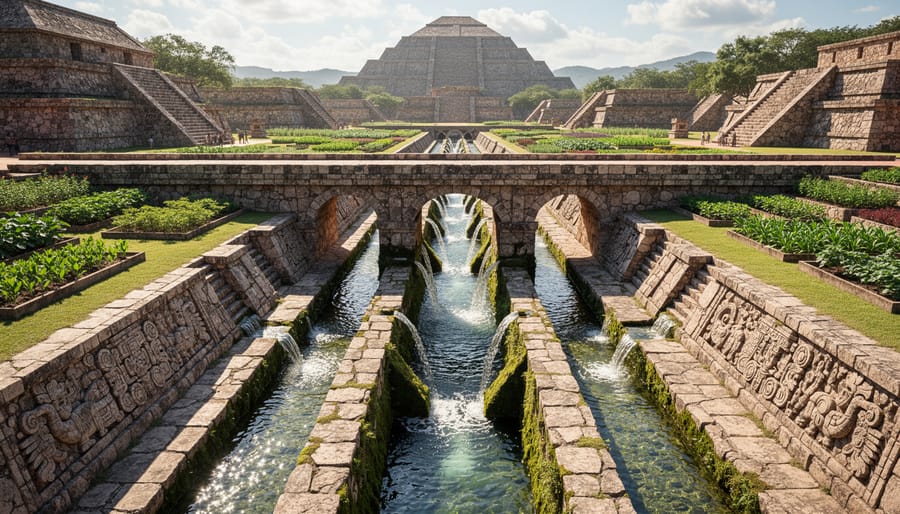
The Aztec civilization developed remarkable water management systems between 1300-1521 CE that remain surprisingly relevant for Australian communities grappling with drought and water scarcity today. Their capital, Tenochtitlan, was built on an island in Lake Texcoco, which meant the Aztecs became masters of water engineering out of necessity.
Their sophisticated aqueduct system transported fresh spring water from Chapultepec, over five kilometres away, using dual channels that allowed maintenance on one while the other operated. This redundancy principle is something modern Australian planners are rediscovering. The Aztecs also constructed massive reservoirs and dikes to separate freshwater from the brackish lake waters, creating a controlled water supply that sustained a population of 200,000 people.
What’s particularly inspiring for Australian households is the Aztec approach to rainwater harvesting. Every building in Tenochtitlan incorporated water collection systems, with rooftop channels directing rainfall into household cisterns. This decentralized approach meant communities weren’t solely dependent on central infrastructure, a concept that aligns perfectly with contemporary water conservation strategies being adopted across suburban Australia.
The Aztecs also pioneered greywater systems, reusing domestic water for their famous chinampa gardens. They understood that water could serve multiple purposes before being released back into the environment, a principle that’s gaining traction in Australian eco-homes today.
For communities facing increasingly unpredictable rainfall patterns, these ancient innovations offer practical blueprints. Installing household rainwater tanks, creating neighbourhood water-sharing systems, and implementing greywater recycling aren’t just modern solutions—they’re time-tested approaches refined by Indigenous ingenuity centuries ago. The Aztec experience proves that water security comes from respecting this precious resource and designing systems that work with, rather than against, natural cycles.
Appreciating Without Appropriating: Respectful Cultural Learning
Supporting Contemporary Indigenous Communities
Learning from Aztec wisdom means recognizing that Indigenous knowledge systems continue to thrive today. The most meaningful way to honour these traditions is by supporting Indigenous communities who are actively stewarding their lands and waters using ancestral practices.
In Mexico, numerous Indigenous-led organizations are revitalizing chinampa farming systems around Mexico City, demonstrating how traditional agriculture can feed growing populations while preserving biodiversity. These initiatives deserve our financial support and international recognition for their climate-positive work.
Here in Australia, we have extraordinary opportunities to engage with Indigenous land management practices that have sustained Country for over 65,000 years. Aboriginal and Torres Strait Islander communities lead sophisticated cultural burning programs, water management projects, and regenerative agriculture initiatives that mirror the holistic thinking of Aztec environmental practices.
Consider these practical actions: purchase products from Indigenous social enterprises, attend cultural education programs led by Indigenous educators, and advocate for Indigenous land rights and self-determination. When businesses partner with Indigenous communities, ensure arrangements are genuinely collaborative, with fair compensation and respect for cultural protocols.
Many Australian organizations now offer Indigenous-guided nature experiences and bush tucker workshops, providing ethical ways to learn directly from knowledge holders. Remember that Indigenous peoples are not relics of the past but innovative leaders in contemporary sustainability movements. By supporting their work today, we acknowledge that the wisdom that sustained civilizations like the Aztecs remains vital for addressing our current environmental challenges.
Bringing Aztec-Inspired Practices Into Your Sustainable Life
Ready to weave ancient Aztec wisdom into your everyday sustainable living? Let’s explore practical ways to honour these time-tested principles while respecting their cultural origins and adapting them to Australian conditions.
Start small with your own backyard chinampa-inspired garden. While you won’t recreate floating gardens, you can adopt the underlying principles of composting, companion planting, and maximising space efficiency. Create raised garden beds using recycled materials, incorporate native Australian plants alongside your vegetables, and establish a closed-loop system where kitchen scraps become compost that feeds your soil. This mirrors the Aztec zero-waste philosophy while celebrating local biodiversity.
Water conservation is crucial in our sun-baked continent. Draw inspiration from Aztec rainwater harvesting by installing rain barrels or more sophisticated greywater systems. Consider how water can serve multiple purposes before returning to the earth, just as the Aztecs channeled water through their agricultural systems. Every drop counts during Australian droughts.
Community connection transforms individual actions into collective impact. Join or establish urban regeneration initiatives in your neighbourhood where knowledge-sharing becomes central. Organise seed-swapping events, community composting programmes, or shared garden spaces that echo the Aztec tradition of collective land stewardship. These gatherings create opportunities to learn from both ancient wisdom and contemporary sustainable practices.
Partner with local Aboriginal and Torres Strait Islander communities to understand how Indigenous Australian practices align with or differ from Aztec approaches. This respectful collaboration enriches everyone’s understanding while avoiding cultural appropriation. Remember, we’re not copying ceremonies or spiritual practices, but learning from practical environmental stewardship principles.
Document your journey and share what works in Australian conditions. Whether through social media, community workshops, or neighbourhood conversations, your experiences help others begin their sustainable living adventure. The Aztecs understood that knowledge grows when shared across generations, and your story contributes to this ongoing legacy of environmental care.

The Indigenous Aztec people developed sophisticated environmental systems over centuries, demonstrating that sustainable living isn’t a modern invention but rather ancient wisdom we’re rediscovering. Their chinampa agricultural systems, holistic water management, and zero-waste practices offer us proven blueprints for addressing today’s climate challenges right here in Australia.
As we face increasingly severe droughts, bushfires, and environmental pressures across our continent, we can draw inspiration from these time-tested approaches. The Aztec understanding that humans are part of nature, not separate from it, mirrors the deep ecological knowledge of Australia’s own First Nations peoples. This perspective shift alone can transform how we approach sustainability in our communities and businesses.
However, learning from Indigenous wisdom requires more than simply adopting techniques. It demands genuine respect, proper acknowledgment, and active support for Indigenous communities both globally and locally. When we apply lessons from Aztec agricultural methods or waste reduction practices, we must do so with humility and a commitment to honouring the cultures that developed them.
The path forward involves listening to Indigenous voices, supporting land rights and cultural preservation, and recognizing that these aren’t just historical curiosities but living knowledge systems. By embracing these principles alongside our Australian First Nations’ teachings, we can build truly sustainable practices that work with our unique landscapes and ecosystems. The solutions to our environmental challenges already exist within Indigenous knowledge. Our responsibility is to approach them with respect, implement them thoughtfully, and ensure Indigenous communities benefit from sharing their ancestral wisdom.