
The Australian sustainability market has reached a tipping point, with 87% of consumers now considering environmental impact when making purchasing decisions. This isn’t just a passing trend – it’s a fundamental shift reshaping how businesses operate and how we all shop. From Melbourne cafes to Sydney supermarkets, the numbers tell a compelling story: eco-conscious spending has grown by 32% in the past two years alone, with younger Australians leading the charge but every demographic showing measurable change.
Understanding these statistics matters whether you’re a business owner adapting to new consumer expectations, a marketer crafting campaigns that resonate, or simply someone curious about where Australia stands in the global sustainability movement. The data reveals surprising patterns about who’s buying sustainable products, how much they’re willing to pay, and what motivates their choices. Regional differences show coastal communities outpacing inland areas by 18%, while spending habits vary dramatically across age groups and income brackets.
These aren’t abstract numbers – they represent real Australians making daily decisions that collectively reshape our environmental footprint. The statistics demonstrate both remarkable progress and significant opportunity gaps, showing where our community excels and where we need focused effort. Armed with this data, businesses can make smarter strategic decisions, and individuals can understand their role in Australia’s broader sustainability journey.
The Australian Green Consumer Revolution: Key Numbers
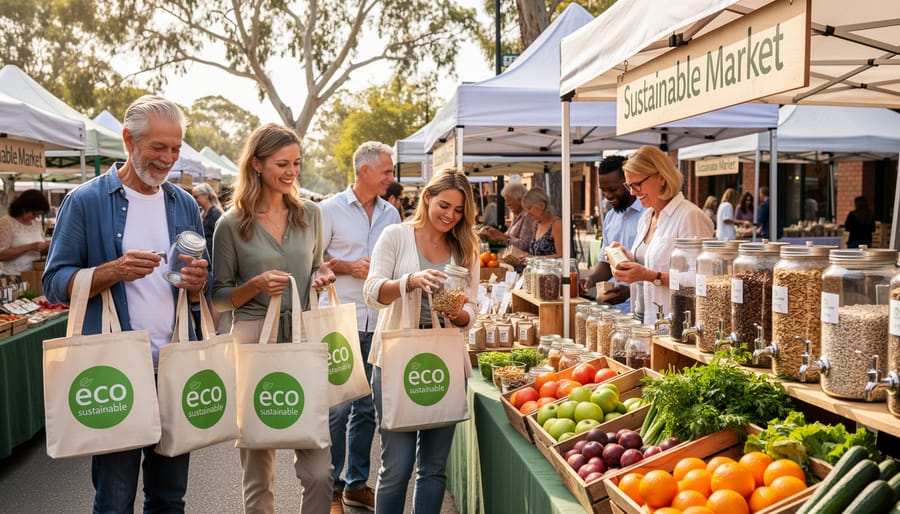
How Many Australians Actually Buy Green?
The green movement is gaining real traction across Australia, with everyday people making conscious choices that add up to significant change. Recent research reveals that 64% of Australian consumers now consider environmental impact when making purchasing decisions, showing we’re well beyond early adopter territory.
But there’s an interesting split in commitment levels. While about one-third of Australians actively seek out eco-friendly products regularly, another third makes occasional green purchases when convenient. The remaining third remains largely uncommitted, though this group is shrinking year on year.
When we look at frequency, approximately 28% of Australian shoppers prioritize sustainable options for most or all purchases, even when it costs more. Another 36% buy green products monthly, particularly for household essentials like cleaning supplies and personal care items. These aren’t just statistics on a page; they represent millions of Australians making daily choices that collectively reduce our environmental footprint.
Perhaps most encouraging is the upward trend. Five years ago, only 42% of Australians factored sustainability into their buying decisions. The 22-percentage-point jump demonstrates our communities are embracing environmental responsibility, creating momentum that businesses simply cannot ignore.
The Money Behind the Movement
Australia’s green economy is experiencing remarkable financial growth, reflecting our collective shift towards sustainable living. The sustainable products market reached an impressive $23.8 billion in 2023, with projections suggesting it will surge to $34.5 billion by 2027. This represents a compound annual growth rate of 9.7%, significantly outpacing traditional consumer sectors.
Australian households are putting their money where their values are, with the average eco-conscious consumer now spending $2,800 annually on sustainable products and services. This includes everything from renewable energy installations to organic groceries and ethical fashion. Interestingly, 68% of Australian shoppers report they’re willing to pay a premium of up to 15% for products with verified environmental credentials.
The renewable energy sector alone has attracted over $14 billion in investment over the past two years, creating thousands of jobs across regional and metropolitan areas. Meanwhile, the organic food market has grown to $2.6 billion, with farmers’ markets and local food cooperatives strengthening community connections while supporting sustainable agriculture.
These spending patterns demonstrate that environmental action isn’t just about individual choices. It’s building a robust economic foundation that benefits communities, creates employment opportunities, and proves that sustainability and prosperity can thrive together across Australia.
What Drives Australians to Choose Eco-Friendly Products
Top Reasons Australian Consumers Go Green
What’s driving Australians to embrace greener choices? Recent research reveals the powerful motivations behind our growing eco-conscious movement, and the numbers tell an inspiring story of community-wide commitment to positive change.
Climate change concerns top the list, with 67% of Australian consumers citing environmental impact as their primary reason for choosing sustainable products. This isn’t surprising given our direct experience with bushfires, coral bleaching, and extreme weather events. We’re not just reading about climate change in distant headlines – we’re living it, and that personal connection is transforming shopping trolleys across the nation.
Plastic pollution follows closely at 58%, reflecting our collective alarm at images of marine life affected by waste and the mounting evidence from our own beaches and waterways. Many Aussies report that seeing plastic accumulation in their local environments sparked their journey toward sustainable alternatives.
Health consciousness drives 52% of green purchasing decisions, as consumers increasingly connect environmental wellbeing with personal health. The understanding that what’s good for the planet often benefits our bodies resonates particularly strongly with families making choices about food, cleaning products, and personal care items.
Community impact motivates 41% of eco-friendly consumers, highlighting our distinctly Australian value of mateship and collective responsibility. These consumers view their purchases as votes for the kind of communities they want to build – cleaner, healthier, and more resilient for future generations.
These motivations often overlap, creating powerful momentum as Australians recognise that individual choices contribute to meaningful collective change.
The Trust Factor: What Makes Aussies Believe a Brand
Trust is the cornerstone of the green marketplace, and Australian consumers are becoming increasingly savvy about which brands genuinely walk the walk. Recent data shows that 67% of Australians express concern about brands making misleading environmental claims, with greenwashing awareness reaching an all-time high across the country.
So what actually builds trust? Third-party certifications carry significant weight, with 73% of Australian shoppers more likely to purchase products displaying recognised eco-labels such as the Australian Certified Organic mark, Fair Trade certification, or the Carbon Neutral certification. These stamps of approval provide the credibility that simple packaging claims cannot match.
Transparency matters enormously to our community. Studies reveal that 81% of Australians want brands to provide detailed information about their environmental practices, including supply chain details and specific sustainability targets. Vague terms like “natural” or “eco-friendly” without supporting evidence no longer cut it with informed shoppers.
Interestingly, 58% of Australian consumers trust smaller, local businesses more than multinational corporations when it comes to environmental claims. This preference reflects our community’s appreciation for businesses they can connect with directly and whose practices they can verify firsthand.
The message is clear: Australian consumers reward authenticity. Brands that demonstrate genuine commitment through verified certifications, transparent reporting, and consistent action build lasting trust in our increasingly conscious marketplace.
Where Australian Eco-Consumers Are Spending Their Dollars
Food and Groceries: The Biggest Green Category
Australian grocery shopping habits are undergoing a remarkable transformation, with food choices becoming the cornerstone of eco-conscious living. Recent data shows that 67% of Australian consumers actively seek out organic produce when shopping, with the organic food market growing by 12.6% annually. This shift reflects a deeper understanding of how our daily food choices impact both personal health and environmental wellbeing.
Local produce has captured the hearts of Australian shoppers, with 73% preferring to buy from local farmers and suppliers when available. This preference supports regional communities while reducing transportation emissions. The plant-based revolution is equally impressive, with sales of plant-based alternatives increasing by 46% over the past two years, and one in three Australians now regularly incorporating meat-free options into their diets.
Perhaps most encouraging is the growing commitment to avoiding excessive packaging, with 58% of shoppers actively choosing package-free or minimal packaging options. Bulk food stores and farmers markets are experiencing renewed popularity, demonstrating that Australians are ready to embrace practical solutions that reduce waste while supporting sustainable food systems.
Fashion, Beauty, and Personal Care
Australian fashion lovers are embracing sustainability like never before, with compelling data showing a significant shift in consumer behaviour. Recent research reveals that 67% of Australian consumers now consider sustainability when purchasing clothing, while the cruelty-free beauty market has grown by 32% over the past two years.
The secondhand market is booming, with Australians spending over $2.4 billion annually on pre-loved fashion items. Online platforms and community op shops have made sustainable shopping more accessible, particularly among younger demographics. Millennials and Gen Z consumers lead the charge, with 78% actively seeking out vintage and secondhand pieces.
In personal care, 71% of Australian shoppers now prioritise products free from animal testing, while 54% specifically look for natural or organic ingredients. The refill station movement has gained traction too, with beauty and personal care refills reducing packaging waste by an estimated 40% among participating households. Local Australian brands championing ethical production have seen sales increase by 45%, demonstrating that conscious consumers are willing to support businesses aligned with their values while building a more sustainable future together.
Home, Energy, and Transport
Australian households are leading a quiet revolution in sustainable living, with impressive numbers backing the shift toward energy efficiency and cleaner transport. Recent data shows that 73% of Australian homeowners now consider energy efficiency a top priority when replacing household appliances, with LED lighting adoption reaching nearly universal levels in metropolitan areas.
The renewable energy sector tells an equally encouraging story. Over 3.4 million Australian homes have installed rooftop solar panels as of 2023, representing roughly one in three households. This grassroots movement has positioned Australia as a global leader in residential solar uptake, with communities across Queensland and South Australia setting particularly impressive benchmarks.
Transport preferences are transforming too. Electric vehicle interest has surged, with sales increasing by 65% year-on-year, though still representing just 3.8% of new car sales. Perhaps more significantly, 42% of Australians surveyed indicated they’d consider an EV for their next vehicle purchase, signaling substantial future growth.
Meanwhile, the home products market reflects evolving values, with 58% of consumers actively seeking eco-certified cleaning products and 61% purchasing recycled products for everyday household needs. These statistics demonstrate that sustainability is becoming embedded in daily decision-making across Australian communities.
The Price Question: What Australians Will (and Won’t) Pay
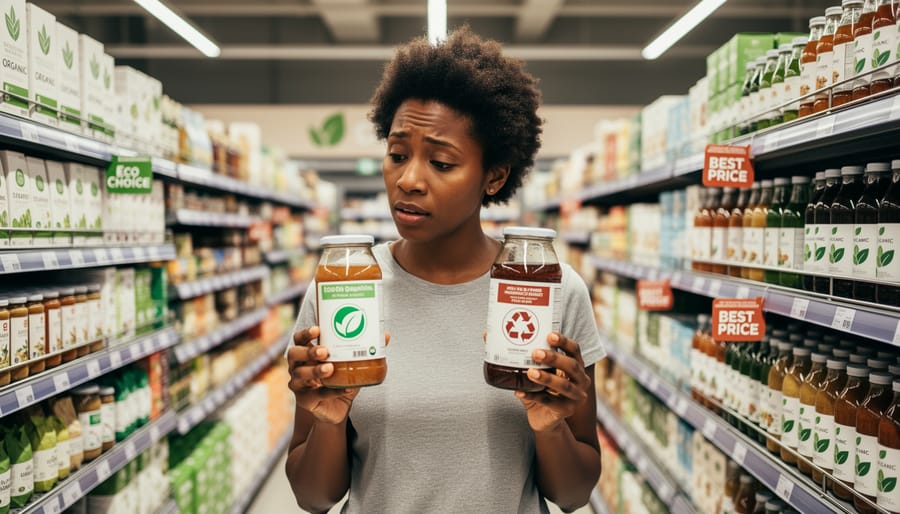
The Green Premium Gap
Here’s something encouraging: Australian consumers are increasingly willing to back their environmental values with their wallets. Recent data shows that 68% of Australians are prepared to pay more for sustainable products, though the premium they’ll accept varies significantly across different categories.
When it comes to food and beverages, Aussie shoppers demonstrate the strongest commitment, with 73% willing to pay extra for organic or sustainably sourced options. The acceptable premium here typically ranges between 5-15% above conventional alternatives. Personal care products follow closely, with 67% of consumers open to price increases averaging 8-12%.
The willingness to pay more drops slightly for fashion and homewares, where approximately 58% accept premiums, though younger consumers aged 18-34 push this figure up to 65% in these categories. Electronics see the lowest acceptance at 45%, likely reflecting the already high price points in this sector.
Demographics paint an interesting picture across our communities. Women show higher willingness to pay premiums than men (72% versus 63%), while households earning over $100,000 annually are 40% more likely to consistently choose eco-friendly options regardless of cost.
Location matters too. Metro Australians in Sydney and Melbourne demonstrate greater price flexibility at 71%, compared to 62% in regional areas. However, regional communities often show stronger commitment when products align with local values like water conservation and native habitat protection.
These figures reveal that while price sensitivity exists, there’s genuine momentum behind sustainable purchasing across diverse Australian communities.
When Price Beats Principles
Let’s be honest about the elephant in the room: good intentions don’t always survive the checkout counter. While 73% of Australian consumers say they want to buy sustainably, only 44% follow through with their wallets. The primary culprit? Price sensitivity remains the biggest barrier, with research showing that 60% of Australians consider eco-friendly products too expensive compared to conventional alternatives.
The cost gap is particularly pronounced in our market, where sustainable options can command premiums of 20-50% above standard products. For households managing tight budgets amid rising living costs, that difference matters enormously. Additionally, 38% of Australian shoppers report difficulty finding sustainable alternatives in their local stores, a challenge especially acute in regional and remote communities.
Interestingly, younger Australians aged 18-34 are more willing to pay premium prices for sustainable goods, yet they’re also the demographic most likely to face budget constraints. This creates a frustrating paradox where environmental values clash with financial reality. The encouraging news? When sustainable products are competitively priced and readily available, purchase rates jump significantly, suggesting that addressing these barriers through innovation and community support could unlock massive change in Australian consumer behaviour.
Generational Divides: Who’s Leading Australia’s Green Movement
Gen Z and Millennials: The Sustainability Champions
Australia’s younger generations are driving remarkable change in the sustainability movement, with their purchasing power backing their environmental values. Recent data shows that 73% of Australian millennials are willing to pay more for sustainable products, while Gen Z leads with an impressive 81% prioritising eco-friendly options when shopping.
What sets these sustainability champions apart is their expectation for brand accountability. Around 68% of young Australians actively research a company’s environmental credentials before making purchases, and they’re not afraid to switch brands if values don’t align. This generation demands transparency, with 76% stating they’ve boycotted brands due to poor environmental practices.
Social media plays a pivotal role in shaping these purchasing decisions. Instagram and TikTok have become powerful platforms for environmental awareness, with 64% of Gen Z discovering sustainable brands through social channels. User-generated content showcasing eco-friendly choices creates a ripple effect, inspiring others within their communities to make conscious decisions.
These statistics reveal an encouraging trend: younger Australians aren’t just talking about sustainability, they’re actively investing in it. For businesses, this represents both a challenge and an opportunity to meet the expectations of a generation ready to reward genuine environmental commitment with their loyalty and spending power.
Gen X and Boomers: The Surprising Statistics
Here’s a revelation that might surprise you: Gen X and Baby Boomers are quietly leading the charge in several key sustainability areas. While younger generations often dominate the conversation around climate action, recent Australian data tells a more nuanced story.
Boomers are significantly more likely to repair items rather than replace them, with 68% regularly fixing household goods compared to just 42% of millennials. This repair-first mindset prevents tonnes of waste from reaching landfills annually. Similarly, Gen X Australians demonstrate the highest rates of home composting at 47%, turning kitchen scraps into garden gold rather than methane-producing landfill waste.
Where older generations lag is in embracing newer sustainable technologies and services. Only 23% of Boomers regularly choose plant-based meal options, and they’re less likely to use sustainable delivery services or support circular economy platforms. Electric vehicle adoption also skews younger, with Boomers representing just 15% of EV purchasers despite having greater purchasing power.
The takeaway? Every generation brings valuable sustainability practices to the table. Boomers and Gen X excel at traditional conservation methods like repairing, reducing consumption, and growing food. When these time-tested habits combine with younger Australians’ enthusiasm for innovation, we create a powerful intergenerational movement toward a truly sustainable future.
The Reality Check: Intention Versus Action
The Say-Do Gap in Numbers
Here’s the reality check we all need: Australians are brilliant at talking green, but our shopping trolleys often tell a different story. Research from Roy Morgan reveals that while 87% of Australian consumers express concern about environmental issues, only 23% consistently purchase eco-friendly products. That’s a gap wide enough to drive a ute through.
This phenomenon, known as the say-do gap, shows up everywhere. A 2023 study by CHOICE found that 64% of Australians claim they’d pay more for sustainable products, yet actual sales data shows eco-friendly alternatives typically capture less than 15% of market share in most product categories. The disconnect becomes even clearer when we look at online behaviour: environmental keywords dominate our search history, but conversion rates for sustainable products lag behind conventional options by nearly 40%.
What’s happening in our own backyard? Australian supermarket data reveals fascinating patterns. Despite 72% of shoppers telling researchers they prioritise sustainability, single-use plastic bag consumption only decreased by 30% in states without mandatory bans. Similarly, while organic food sales are growing at 12% annually, they still represent just 2.8% of total grocery expenditure.
The gap isn’t about hypocrisy though. Most Aussies genuinely care. The challenge lies in convenience, cost perception, and confusion about what truly makes a difference. When sustainable options are priced 20-30% higher and require extra effort to find, good intentions often hit practical roadblocks. Understanding this gap isn’t about pointing fingers; it’s about recognising the barriers our community faces and working together to bridge them through better accessibility, clearer information, and more affordable sustainable choices.
What These Numbers Mean for Australian Businesses
The statistics paint a clear picture: Australian consumers are actively seeking sustainable options, and businesses that respond will thrive. With 87% of Australians wanting to purchase more sustainably, the market opportunity is significant. However, meeting this demand requires genuine commitment rather than surface-level greenwashing.
Start by auditing your current practices. Where does waste occur in your operations? Can packaging be reduced or switched to compostable alternatives? Many successful Australian companies have discovered that sustainability improvements often reduce costs while attracting customers. For instance, switching to minimal packaging not only appeals to eco-conscious shoppers but typically lowers material expenses.
Transparency builds trust. The data shows consumers are willing to pay premium prices for sustainable products, but they need proof of your environmental claims. Share your sustainability journey openly, including challenges and progress. Document your supply chain, highlight local partnerships, and be specific about environmental benefits. Phrases like “eco-friendly” without backing evidence no longer satisfy informed shoppers.
Consider the demographic insights when targeting your messaging. Younger Australians particularly value sustainability, but the statistics reveal interest spans all age groups. Tailor communications to different segments while maintaining consistent environmental standards across your business.
The regional differences matter too. Urban consumers may prioritise packaging reduction and carbon footprint, while regional customers often focus on local sourcing and community impact. Understanding your specific customer base helps you address their primary environmental concerns effectively.
Remember that 73% of consumers research sustainability claims before purchasing. Make information easily accessible on your website, social media, and product labels. QR codes linking to detailed sustainability reports work well for bridging the gap between limited packaging space and comprehensive transparency.
Finally, join the conversation. Engage with local sustainability networks, participate in community environmental initiatives, and share knowledge with other businesses. The Australian market rewards authentic commitment to environmental stewardship, creating lasting customer loyalty that extends far beyond individual transactions.
The statistics paint an inspiring picture: eco-friendly consumer behaviour in Australia isn’t just growing, it’s accelerating. From the 87% of Australians who actively consider environmental impact in their purchasing decisions to the remarkable surge in sustainable product sales, the data confirms we’re witnessing a fundamental shift in how Australians shop, live, and engage with the planet.
What makes this movement particularly powerful is its diversity. Whether it’s Gen Z driving demand for ethical fashion, families choosing renewable energy, or businesses responding to consumer pressure with genuine sustainable practices, every demographic is contributing to this positive change. The numbers show that sustainability has moved from the margins to the mainstream, with Australian consumers voting with their wallets for a healthier future.
For businesses, these statistics represent both opportunity and responsibility. The market is clearly signalling what it values, and companies that authentically embrace sustainability are seeing the rewards. For individuals, the data proves you’re not alone in caring about environmental impact. Every sustainable choice you make joins millions of others across Australia creating meaningful change.
The path forward is clear: let’s harness this momentum together. Join local sustainability groups, support Australian businesses genuinely committed to environmental responsibility, and continue making conscious choices in your daily life. Our collective actions are already reshaping the market. By staying informed, engaged, and active in our communities, we can ensure this positive trajectory continues, building a truly sustainable Australia for generations to come.