
Energy efficiency in warehouses refers to the strategic reduction of power consumption across lighting, heating, cooling, and equipment operations while maintaining or improving productivity and storage conditions. For Australian warehouse operators managing facilities in climates ranging from Darwin’s tropical heat to Melbourne’s temperature swings, this means cutting energy costs that can represent up to 30% of total operational expenses while reducing carbon emissions and improving working conditions.
The opportunity is substantial. Australian warehouses collectively consume over 15,000 gigawatt-hours annually, much of it wasted through outdated lighting systems, poorly sealed loading docks, and inefficient HVAC units running around the clock. Yet facilities that implement comprehensive efficiency measures typically see energy bills drop by 20 to 40%, with payback periods often under three years. Some operators have slashed consumption by half.
What makes warehouse energy efficiency particularly compelling in 2026 is the convergence of rising electricity prices, tightening environmental regulations, and improved technology accessibility. LED lighting now costs a fraction of what it did five years ago. Smart sensors can automatically adjust heating and cooling based on real occupancy. Solar panels paired with battery storage are transforming warehouses from energy consumers into partial producers, particularly valuable across Australia’s sun-rich regions.
This article breaks down how energy efficiency works in warehouse environments, explores the core systems and technologies available, and provides practical implementation pathways suited to Australian conditions. Whether you’re managing a small distribution center in regional Queensland or a massive logistics hub in Western Sydney, understanding these principles can transform your facility’s energy profile and your bottom line. The Australian warehouse sector is quietly leading a shift toward sustainable operations, and the tools to participate have never been more accessible or affordable.
Understanding Energy Efficiency in Warehouses
Energy efficiency in warehouses refers to the strategic reduction of energy consumption per unit of operational output, whether that’s per square metre of storage space, per tonne of goods moved, or per dollar of revenue generated. For Australian warehouse operators, this means achieving the same or better operational performance while consuming less electricity for lighting, climate control, material handling, and facility management systems.
The relationship between energy use and warehouse operations is direct and measurable. A typical Australian warehouse consumes between 50 and 150 kilowatt-hours per square metre annually, though this varies significantly based on factors like climate zone, building age, automation level, and the nature of goods stored. Temperature-controlled facilities for perishables can consume three to five times more energy than ambient storage warehouses. These consumption patterns directly translate to operational costs, energy typically represents 15 to 25 percent of total warehouse operating expenses in Australia.
- Energy Efficiency Ratio (EER)
- A measure of how much cooling or heating output a system provides per unit of energy consumed, with higher numbers indicating better efficiency.
- Energy Intensity
- The amount of energy used per unit of activity or space, typically measured in kWh per square metre or per tonne of throughput in warehouse contexts.
- Thermal Envelope
- The barrier between conditioned interior space and the outside environment, including walls, roof, doors, and insulation that determines how much energy is needed for climate control.
- NABERS Rating
- The National Australian Built Environment Rating System score that benchmarks a building’s energy performance against similar facilities across Australia.
Understanding baseline consumption is the starting point for improvement. Most Australian warehouses operate with legacy systems installed decades ago when energy costs were lower and environmental considerations less pressing. A standard 10,000-square-metre warehouse in Sydney might use 120,000 kWh annually just for lighting and basic HVAC, generating roughly 100 tonnes of carbon emissions and costing around $30,000 in electricity bills.
The environmental impact extends beyond operational costs. Warehouses collectively account for a significant portion of Australia’s commercial building emissions, making efficiency improvements in this sector crucial for meeting national climate targets. Every kilowatt-hour saved reduces both carbon footprint and operating expenses, a dual benefit that makes warehouse energy efficiency both environmentally responsible and economically sound.
How Energy Efficiency Works in Warehouse Operations
Energy Flow and Consumption Patterns
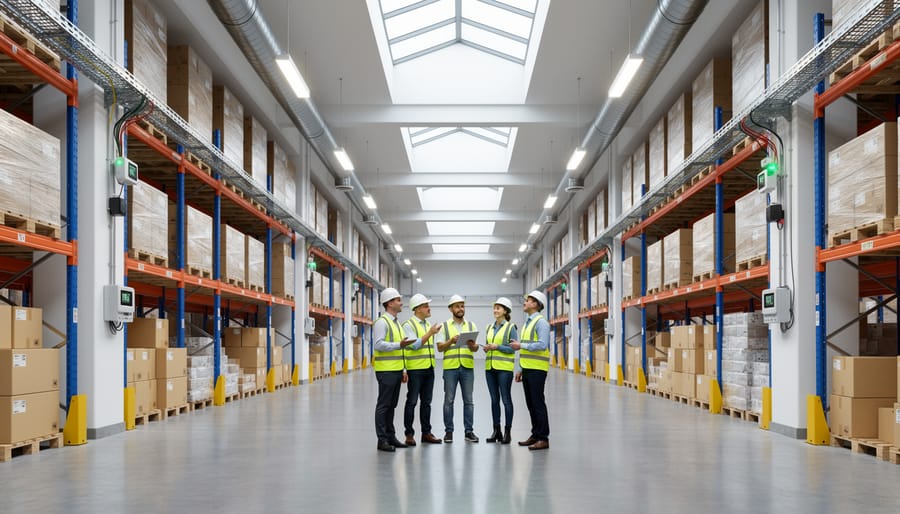
Energy moves through a warehouse in distinct pathways, each contributing to the facility’s total consumption. HVAC systems typically account for the largest share, drawing power continuously to maintain temperature and air quality across vast floor spaces. Lighting follows as the second major consumer, operating throughout operational hours and often in areas that remain unoccupied. Material handling equipment, forklifts, conveyors, pallet jacks, and automated systems, creates intermittent but substantial demand, spiking during peak activity periods.
These systems don’t operate in isolation. When a forklift charges overnight, it adds to the baseload. When multiple bay doors open during summer afternoons, HVAC demand surges to compensate for heat intrusion. Lighting that runs during daylight hours wastes energy that natural light could provide.
Consumption patterns follow predictable rhythms. Daytime operations see peak demand between 9am and 4pm when all systems run simultaneously. Overnight periods reveal baseload consumption from security lighting, climate control in temperature-sensitive zones, and equipment on standby. Seasonal variations prove significant in Australian warehouses: summer months strain cooling systems, particularly in northern regions, whilst southern facilities face modest heating demands in winter.
Weekend and holiday patterns differ markedly from weekdays. A warehouse operating Monday to Friday might consume 30% of its weekday energy on Saturdays when only skeleton staff work, yet still burn power for basic climate control and security systems. Understanding these patterns reveals where efficiency gains matter most, targeting the largest consumers during peak periods delivers the greatest impact on both costs and emissions.
The Role of Building Design and Insulation
A warehouse’s physical structure determines how hard its systems must work to maintain operational conditions. In Australia, where temperatures span from tropical Darwin to temperate Melbourne, the building envelope, walls, roof, floor, and openings, either traps heat or bleeds it away, directly impacting the energy efficiency in warehouses nationwide.
Insulation quality makes the difference between a stable interior and a thermal roller coaster. Warehouses with inadequate roof insulation can experience internal temperatures 15-20 degrees higher than outside on summer days, forcing HVAC systems into continuous overdrive. Bulk insulation in walls and roofs (rated by R-value) slows heat transfer, while reflective foil insulation under metal roofing deflects radiant heat before it penetrates the space. In northern Australian facilities, combining both types cuts cooling loads by 30-40 percent.
Roof colour matters more than most operators realize. Light-coloured or “cool roof” coatings reflect solar radiation rather than absorbing it, keeping the building skin 20-30 degrees cooler and reducing the thermal burden on everything inside. The concrete slab beneath also acts as thermal mass: well-insulated underneath, it moderates temperature swings and reduces peak loads.
Air leakage through loading dock seals, roller doors, and poorly sealed joints can account for 20 percent of total energy waste. Upgrading dock shelters, installing high-speed doors, and sealing penetrations prevents conditioned air from escaping and unconditioned air from flooding in. Strategic placement of windows and skylights introduces natural light while minimizing unwanted solar gain when paired with UV-filtering glazing.
Types and Components of Warehouse Energy Efficiency Systems
Lighting Systems and Natural Light Integration
Lighting typically accounts for 20-30% of a warehouse’s total energy consumption, making it one of the most cost-effective areas for efficiency improvements. LED technology has transformed warehouse lighting, using up to 75% less energy than traditional high-intensity discharge (HID) fixtures while delivering better light quality and longer lifespans of 50,000+ hours.
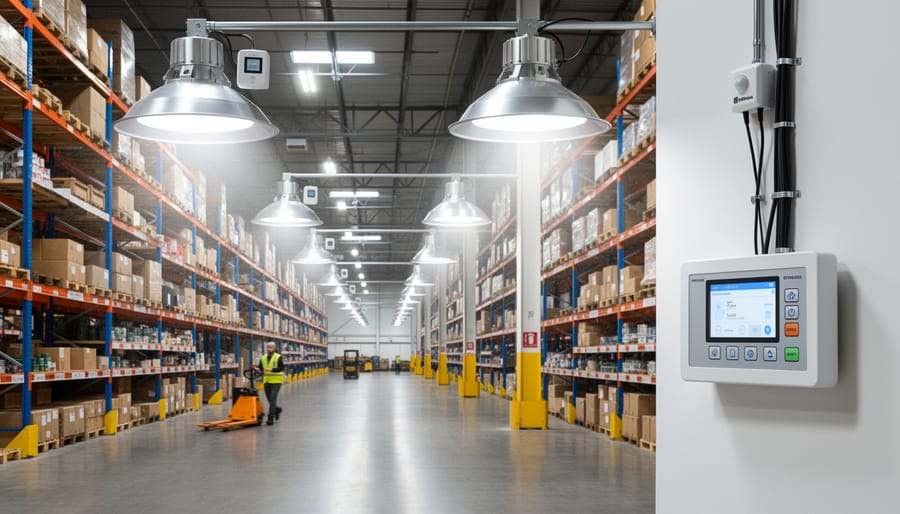
Motion sensors take LED efficiency further by ensuring lights activate only when workers or equipment enter a zone, cutting unnecessary consumption during quiet periods. In large warehouses, sensor-controlled lighting can reduce energy use by an additional 30-50% compared to always-on systems.
Daylight harvesting systems use sensors to automatically dim artificial lights when natural sunlight provides adequate illumination through skylights or clerestory windows. In Australian warehouses with ample sun exposure, these systems can slash daytime lighting costs by 40-60%. Translucent roofing panels and strategically placed skylights maximize natural light penetration without compromising insulation or creating heat gain issues.
Smart lighting controls integrate these technologies into a single platform, allowing warehouse managers to program zones, schedule dimming patterns, and monitor consumption in real-time. Many systems now connect to building management platforms, enabling optimization based on occupancy patterns, seasonal sunlight variations, and operational shifts, particularly valuable for 24-hour distribution centres adapting to Australia’s e-commerce growth.
HVAC and Climate Control Solutions
HVAC systems typically account for 30-50% of a warehouse’s total energy consumption, making them a prime target for efficiency upgrades. In Australia’s diverse climate zones, from tropical Darwin to temperate Melbourne, the right climate control strategy can dramatically reduce operating costs while maintaining comfortable working conditions.
Modern energy-efficient HVAC solutions start with zoning strategies that divide warehouses into separate temperature-controlled areas. Rather than conditioning an entire 10,000-square-metre space uniformly, you heat or cool only active zones where staff work or temperature-sensitive goods are stored. This targeted approach can cut HVAC energy use by 20-40%.
Demand-controlled ventilation (DCV) uses CO2 sensors and occupancy detectors to adjust fresh air intake based on actual need. When fewer workers are present or forklift activity drops, the system automatically reduces ventilation rates, saving energy without compromising air quality.
For Australian warehouses, evaporative cooling offers particular advantages in dry inland regions like Western Sydney or Adelaide’s northern suburbs. These systems use water evaporation to cool air, consuming up to 75% less electricity than conventional air conditioning, and they’re most effective in low-humidity climates. Pair evaporative cooling with ceiling fans to circulate cooled air efficiently throughout high-bay spaces.
High-efficiency heat pumps provide both heating and cooling with superior performance in moderate climates, while variable refrigerant flow (VRF) systems allow precise temperature control across multiple zones simultaneously.
Renewable Energy Integration
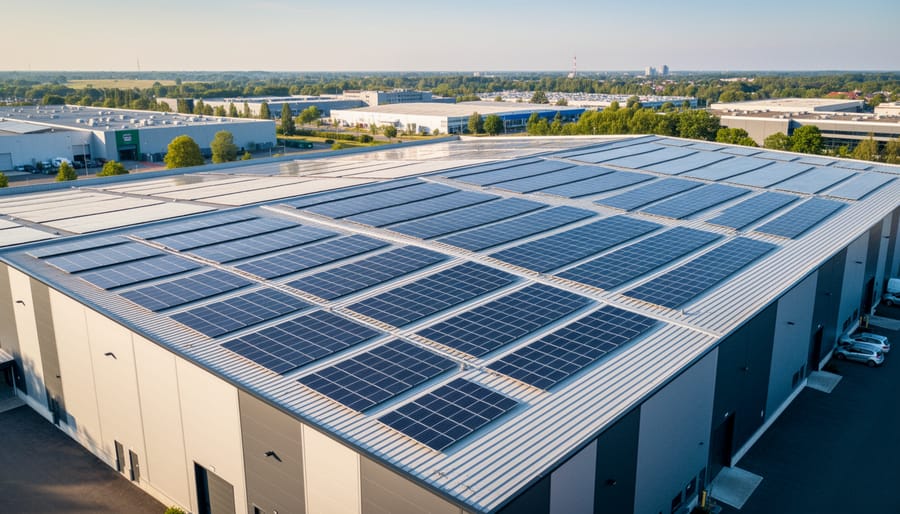
Large warehouse roofs offer ideal conditions for solar installations, with expansive unshaded surfaces that can accommodate substantial photovoltaic arrays. In Australia’s sunny climate, a typical warehouse roof system can offset 30-50% of daytime energy consumption, directly reducing grid reliance during peak demand hours. Solar panels convert sunlight into electricity that powers lighting, HVAC systems, and material handling equipment, lowering operational costs while advancing overall energy efficiency in warehouses.
Battery storage systems capture excess solar generation for use during evening shifts or cloudy periods. Modern lithium-ion battery installations provide 4-8 hours of backup power for critical warehouse operations, smoothing out energy demand and enabling participation in grid services that generate additional revenue. These systems also buffer against electricity price volatility, a growing concern for Australian businesses.
Grid integration options include feed-in tariffs that credit warehouses for exporting surplus solar energy, and demand response programs that pay facilities to reduce consumption during peak periods. Virtual power plant arrangements let multiple warehouses pool their renewable capacity, strengthening local energy networks while maximizing the financial returns from renewable investments. Together, solar panels, batteries, and smart grid connections form a comprehensive renewable energy strategy that enhances warehouse energy efficiency while supporting Australia’s transition to cleaner power.
Material Handling and Equipment Efficiency
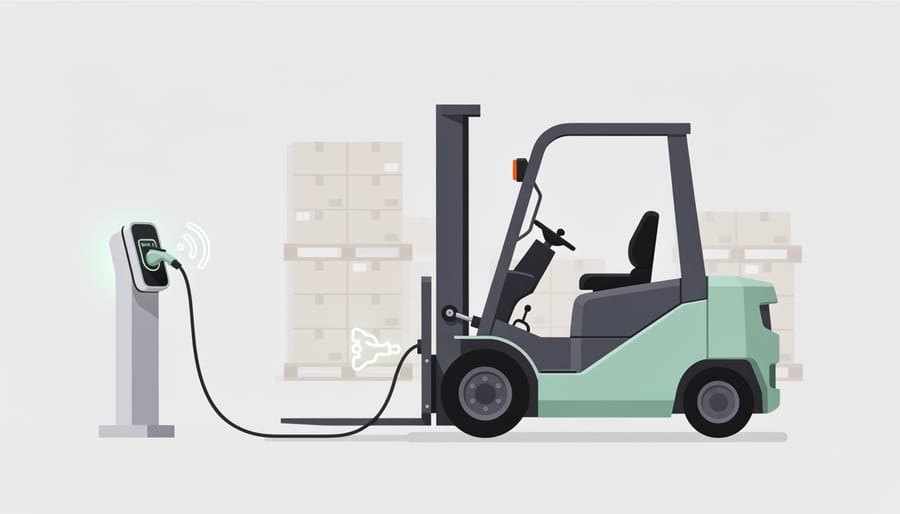
Switching from diesel or LPG forklifts to electric models cuts both emissions and running costs, electricity typically costs less per hour of operation, and electric units need fewer oil changes and mechanical repairs. Modern lithium-ion batteries charge faster and last longer than older lead-acid types, meaning less downtime between shifts.
Automated guided vehicles and robotic systems reduce energy waste by following optimized routes and operating only when needed. Unlike manual equipment that might idle between tasks, automated systems power down during slack periods and restart on demand. Conveyor belts fitted with variable frequency drives adjust motor speed to match throughput, drawing less power when moving lighter loads or running at reduced capacity.
Charging infrastructure deserves careful planning. Installing time-of-use meters lets you charge during off-peak electricity windows when rates drop. Solar-powered charging stations, increasingly common on Australian warehouse roofs, supply daytime energy directly to battery banks without drawing from the grid. Centralizing charge points in well-ventilated areas also improves safety and simplifies maintenance schedules. Regular equipment audits identify aging units that consume more power than necessary, replacing a single inefficient forklift can save thousands of kilowatt-hours annually while improving operator comfort and load handling precision.
Practical Uses and Applications
Energy efficiency strategies translate into measurable improvements across every warehouse category in Australia. From small family-run storage facilities in regional areas to massive distribution hubs servicing the eastern seaboard, operators are discovering that these principles adapt remarkably well to different scales and operational needs.
Cold storage facilities represent one of the most energy-intensive warehouse types, yet they’ve achieved some of the most dramatic efficiency gains. Brisbane’s Gateway Cold Storage reduced energy consumption by 43% through a combination of LED lighting upgrades, improved door seals, and variable-speed compressors on refrigeration units. The facility also installed motion sensors that automatically adjust lighting and cooling intensity in zones based on activity levels, cutting unnecessary energy use during quiet periods.
Distribution centers handling ambient goods face different challenges but equally promising opportunities. Linfox’s Melbourne distribution hub integrated solar panels across its 15,000-square-meter roof, generating 1.2 megawatts during peak production hours. Combined with skylights that reduce daytime lighting needs and electric forklifts charged during off-peak tariff periods, the facility now operates at 68% renewable energy. These green initiatives have sparked a wave of similar projects across Australian logistics networks.
Specific applications vary by warehouse type:
- Cold storage facilities prioritize insulation upgrades, efficient refrigeration systems, and rapid-closure doors
- Distribution centers focus on solar integration, electric material handling equipment, and automated climate zoning
- E-commerce fulfillment warehouses emphasize smart lighting with motion detection and optimized conveyor belt systems
- Manufacturing warehouses combine process heat recovery, demand-controlled ventilation, and high-efficiency motors
Community-led initiatives are accelerating adoption across smaller operators. The Western Sydney Warehouse Collective shares resources for group purchasing of LED upgrades and solar installations, reducing costs through bulk procurement. Member facilities report average energy reductions of 31% within the first year, with shared learnings helping newcomers avoid common implementation mistakes. This collaborative approach proves particularly valuable for operators without dedicated sustainability teams, demonstrating that energy efficiency isn’t exclusive to large enterprises with substantial capital budgets.
Implementing Energy Efficiency: A Practical Approach
Starting your warehouse efficiency journey doesn’t require a complete overhaul on day one. Most Australian operators find success by taking a methodical approach that builds momentum through quick wins while planning larger investments.
Begin with a professional energy audit. Many state governments offer subsidised or free assessments through programs like the NSW Energy Savings Scheme or Victorian Energy Upgrades. These audits identify your biggest energy drains and calculate potential savings. If you’re managing a smaller facility, consider bringing in energy efficiency specialists who understand warehouse operations and can spot opportunities you might miss.
Your audit results will reveal where energy escapes most rapidly. Prioritise upgrades based on payback period rather than total cost. LED lighting retrofits typically recoup investment within 18 months and require minimal downtime. Fixing air leaks around roller doors costs little but can slash heating and cooling loads by 15-20%. High-impact, low-cost measures create immediate savings that fund larger projects.
Once you’ve tackled the obvious wins, develop a three-year roadmap for major infrastructure upgrades. Solar installations make particular sense in Australia’s high-UV environment, many warehouses see 4-6 year paybacks on rooftop systems, especially when paired with battery storage to capture excess generation. HVAC replacement ranks next, followed by automated systems that optimise material handling.
Government support is more generous than most operators realise. The Federal Government’s Business Energy Advice Program connects you with experts at no cost. State-based schemes offer substantial rebates: Queensland’s Business Energy Savings and Transformation program can cover up to 50% of eligible upgrade costs. The Australian Renewable Energy Agency provides grants for innovative projects that demonstrate replicable efficiency gains.
Track your progress from day one. Install sub-metering to monitor energy use by zone and system. This granular data helps you spot anomalies before they become expensive problems. Compare monthly consumption against production output to calculate energy intensity, a more meaningful metric than raw kilowatt-hours.
Share your results with staff. When warehouse teams see how behavioural changes like remembering to power down unused conveyor sections translate to lower bills and reduced environmental impact, they become active participants rather than passive observers. Many Australian facilities run internal competitions between shifts to drive engagement, with winning teams sharing in efficiency bonuses.
Common Questions About Warehouse Energy Efficiency
Most Australian warehouse operators weigh similar concerns when exploring efficiency improvements, and understanding the real costs, returns and practical hurdles makes the difference between taking action and letting sustainability efforts failing.
What’s the typical payback period for warehouse energy efficiency upgrades?
LED lighting retrofits usually pay for themselves within 1-3 years, while HVAC improvements typically return your investment in 3-7 years. Solar installations on warehouse roofs often achieve payback in 4-8 years, depending on system size and your energy rates.
Are there government rebates available in Australia?
Yes, the federal government’s Energy Savings Scheme in NSW and Victorian Energy Upgrades program offer rebates and incentives for qualifying improvements. Many state and territory programs also support solar installations and energy management systems for commercial properties.
Should I focus on retrofitting my existing warehouse or wait for a new build?
Retrofitting delivers immediate savings and doesn’t require waiting years for new construction. Many efficiency measures work brilliantly in existing facilities, and you can stage improvements based on your budget rather than committing to a massive upfront investment.
How do seasonal factors affect warehouse energy efficiency in Australia?
Summer cooling demands create peak loads in most Australian warehouses, particularly in Queensland and Western Australia. Winter heating is less intense except in southern regions, so prioritize cooling efficiency, thermal insulation, and peak demand management for year-round savings.
The compliance landscape concerns smaller operators especially. Current building codes in Australia don’t mandate retrofits for existing warehouses, but if you’re expanding or making major renovations, you’ll need to meet National Construction Code energy efficiency provisions. Commercial building disclosure requirements apply when selling or leasing spaces over 1,000 square meters, creating a commercial incentive to improve your energy rating before transactions.
Implementation challenges often center on operational disruption. You can’t shut down a working warehouse for weeks while contractors replace lighting or HVAC systems. Smart operators schedule upgrades in stages, starting with areas that don’t disrupt daily operations, like roof-mounted solar during weekends or lighting zones during quiet shifts. Equipment compatibility matters too, particularly when integrating new energy management systems with older material handling gear or existing building management systems.
Financing questions come up constantly. Beyond direct government rebates, green loans through the Clean Energy Finance Corporation offer favorable terms for efficiency projects, and some energy retailers provide on-bill financing where you repay the upgrade cost through your electricity savings. This removes the barrier of upfront capital while delivering immediate operational benefits.
Energy efficiency in warehouses represents far more than a cost-cutting measure, it’s a practical pathway toward environmental stewardship that delivers tangible benefits to your bottom line and our shared climate future. Australian warehouse operators who’ve embraced these strategies report energy cost reductions of 20-50% while simultaneously cutting their carbon footprint. That’s real money staying in your business and real emissions kept out of our atmosphere.
The beauty of warehouse energy efficiency lies in its scalability. Whether you manage a 500-square-metre storage facility in regional Queensland or a 50,000-square-metre distribution hub in Melbourne’s west, there’s an entry point that fits your operation. Start with the quick wins, LED lighting upgrades, motion sensors, and sealing air leaks, then build toward comprehensive strategies including solar integration and fleet electrification. Many Australian businesses discover that becoming carbon neutral becomes achievable once warehouse efficiency forms part of their broader sustainability framework.
This isn’t a journey you need to take alone. Australia’s growing community of sustainability-focused businesses shares knowledge, celebrates wins, and troubleshoots challenges together. Local councils, industry associations, and business networks across the country offer support, from technical advice to group purchasing programs that make upgrades more affordable.
The warehouse sector’s energy transformation connects directly to broader Energy Efficiency at Work initiatives reshaping Australian industry. Every kilowatt-hour you save, every solar panel you install, and every efficient practice you adopt contributes to a collective shift toward sustainable business operations.
Now’s the time to act. Conduct that energy audit you’ve been postponing, explore available incentives, and take your first concrete step. Your warehouse can become a model of efficiency, proof that environmental responsibility and business success aren’t opposing goals, but complementary achievements worth pursuing together.