
**Understand exactly where your energy dollars disappear each quarter.** Australian households spend an average of $1,600-$2,400 annually on electricity and gas, yet most families can’t pinpoint which appliances and systems are driving these costs. Your heating and cooling system typically devours 40% of your energy bill, followed by your hot water system at 25%, and appliances like fridges, washing machines, and entertainment systems claiming another 30%. The remaining 5% powers your lighting—the smallest slice, yet often the most visible.
This breakdown isn’t just numbers on a spreadsheet; it’s your roadmap to meaningful savings. When you know your air conditioner costs more to run than every light bulb combined, you shift your focus from switching off lamps to installing ceiling fans and improving insulation. When you realize your electric hot water system runs continuously, you consider solar hot water or timer controls. Every percentage point represents real dollars you can redirect toward what matters—whether that’s family experiences, paying down debt, or investing in renewable energy upgrades that benefit both your wallet and our planet.
Let’s transform this awareness into action.
The Real Cost of Running Your Australian Home
If you’re like most Australian households, your energy bill probably arrives with a mixture of dread and confusion. You know the number seems high, but understanding *why* can feel like decoding a mystery. Here’s the reality: the average Australian household consumes around 18-20 kilowatt-hours of electricity per day, translating to annual costs that have climbed significantly in recent years.
As of 2024, typical Australian households face electricity bills ranging from $1,500 to $2,500 annually, depending on location and household size. With energy prices increasing by approximately 20-25% in some states over the past year alone, understanding where your energy dollars are going has never been more crucial.
Your energy bill isn’t just one big expense—it’s a collection of smaller costs from various appliances and systems working throughout your home. Heating and cooling typically dominate, accounting for 40% of household energy consumption. Water heating follows at around 21%, while refrigeration, lighting, and cooking each claim their share of the pie.
Why does this breakdown matter? Because knowledge is power—quite literally in this case. When you understand that running your air conditioner on those sweltering Sydney summer days or keeping your heater blazing through Melbourne’s winter can account for nearly half your bill, you’re equipped to make informed choices. Small adjustments to how you use these energy-hungry appliances can translate into hundreds of dollars saved annually.
Beyond your wallet, there’s another compelling reason to care: our collective environmental footprint. Australian households contribute approximately 20% of the nation’s greenhouse gas emissions through energy consumption. By understanding and reducing our home energy use, we’re not just lightening our financial load—we’re participating in a community-wide effort to create a more sustainable future for all Australians.
Your Home’s Biggest Energy Guzzlers

Heating and Cooling: The Silent Bill Killer
Here’s your silent budget villain: heating and cooling systems typically devour around 40% of your household energy bill—making them the single largest energy expense for most Australian homes. That’s roughly $600-800 annually for the average family, though many of us are paying considerably more without realising it.
Why do HVAC systems demand so much power? Your air conditioner or heater works overtime to maintain comfortable temperatures against Australia’s dramatic climate extremes. These systems draw significant electricity to run compressors, fans, and heating elements—often for hours on end during peak seasons.
Your postcode matters enormously. Queensland households might see summer cooling costs skyrocket to 50-60% of their total energy use during those sweltering December-to-March months, when air conditioners battle 35°C-plus temperatures and humidity that makes everything feel even hotter. Meanwhile, Victorian families face the opposite challenge—winter heating can account for similar proportions of energy bills as they combat frosty mornings and single-digit temperatures from June through August.
This climate diversity means there’s no one-size-fits-all approach. A Brisbane family investing in better ceiling insulation and strategic shade trees will see different savings compared to a Melbourne household upgrading to efficient heating solutions or sealing drafty windows.
Understanding your regional climate patterns empowers smarter decisions. Tasmanians benefit most from investing in heating efficiency, while Darwin residents should prioritise cooling strategies. The beauty? Many improvements—like insulation, window treatments, and programmable thermostats—benefit households nationwide by reducing the workload on whatever system you’re running. When you’re spending nearly half your energy budget on temperature control, even modest improvements deliver substantial savings while reducing your environmental footprint.
Hot Water: Your Second-Biggest Expense
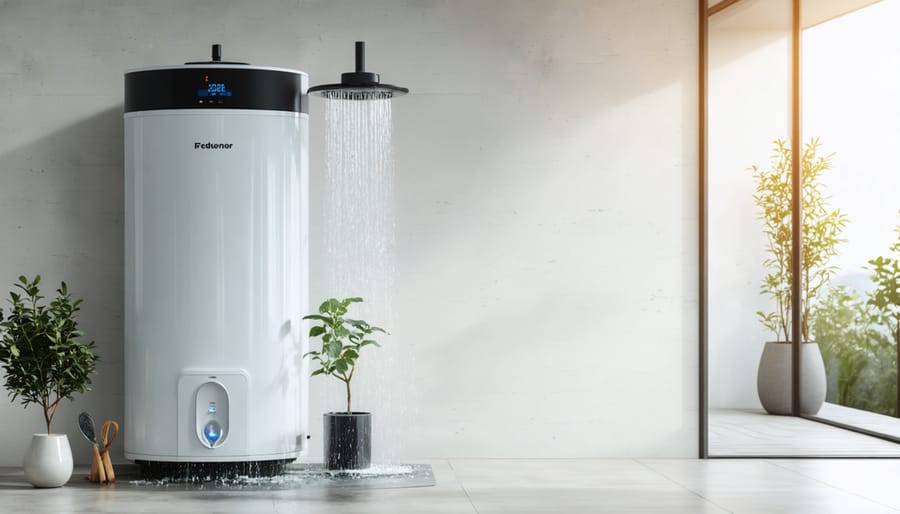
After heating and cooling, your hot water system is likely your household’s second-biggest energy guzzler, typically accounting for around 21% of your total energy use. That’s a significant chunk of your power bill—and your carbon footprint—making it a prime target for energy savings.
The type of system you’re running makes an enormous difference. Traditional electric storage systems are the most common across Australian homes, but they’re also the least efficient, particularly if they’re heating water during peak electricity periods. Gas systems offer better running costs and lower emissions in most states, though this varies depending on your electricity’s energy mix. The real game-changer? Solar hot water systems, which harness our abundant Australian sunshine to dramatically slash both energy consumption and costs—often by up to 70%.
Family size plays a crucial role in hot water consumption too. A couple might use around 100-150 litres daily, while a family of four can easily push past 200 litres, especially with teenagers enjoying lengthy showers. The good news is that Australian households are increasingly recognising this as an opportunity rather than a burden.
Simple changes like shorter showers, cold water washing, and installing water-efficient fixtures can reduce consumption significantly. Combined with upgrading to an efficient system, many families are finding they can halve their hot water energy use while maintaining comfort—a win for both household budgets and our shared environmental goals.
Appliances That Quietly Drain Your Wallet
Your hardworking appliances might be costing you more than you realise, even when they’re sitting idle. Let’s explore which household helpers are quietly inflating your energy bills.
**The Kitchen Power Players**
Your refrigerator runs 24/7, accounting for roughly 7-8% of the average Australian home’s energy consumption. Older models can consume up to 1,400 kWh annually, whilst newer energy-efficient fridges use less than 400 kWh. That’s a potential $280 yearly difference in running costs! Position your fridge away from heat sources and ensure door seals are tight—simple actions that can reduce consumption by up to 15%.
Cooking appliances contribute another 4-5% of household energy use. Electric ovens are particularly hungry, consuming around 2-2.4 kWh per hour of use. Meanwhile, your dishwasher typically uses 1-2 kWh per cycle, making cold-water eco-modes a smart choice that can halve energy consumption.
**Laundry Day Expenses**
Washing machines account for approximately 3% of home energy use, but it’s the dryer that’s the real wallet-drainer at 4-5%. A single clothes dryer cycle can cost between 50 cents to $1.50, depending on your model and energy rates. That Brisbane sunshine? It’s free! Line-drying your clothes could save Australian households $200-$500 annually.
**The Phantom Power Problem**
Here’s something many Aussies overlook: standby power drain. Entertainment systems, gaming consoles, and set-top boxes collectively waste around 3-4% of household energy whilst on standby mode. That television “sleeping” rather than truly off? It’s still drawing 10-20 watts continuously. Across an Australian household’s multiple devices, phantom power can cost $100-$200 yearly—money literally vanishing into thin air.
Lighting: Small Changes, Big Impact
While lighting accounts for approximately 7% of household energy consumption—a relatively modest slice of the pie—it represents one of the easiest wins in your energy-saving journey. The transformation happening in Australian homes right now is nothing short of remarkable.
Remember those old incandescent bulbs that heated up your rooms almost as much as they lit them? They converted roughly 90% of their energy into heat rather than light. The shift to LED technology has been a game-changer for households across Australia. LEDs use up to 75% less energy than their incandescent predecessors and last up to 25 times longer, meaning fewer replacements and significantly lower running costs.
Many Australian communities have embraced this change enthusiastically. Local councils from Brisbane to Perth have run LED swap programs, helping residents make the transition affordably. The upfront cost—once a barrier—has dropped dramatically, with quality LED bulbs now available for just a few dollars.
The beauty of lighting upgrades is their immediate impact. Switch out your five most-used bulbs, and you’ll notice the difference on your next power bill. It’s a small step that delivers big results, proving that sustainable living doesn’t always require major lifestyle changes—sometimes it’s as simple as changing a light bulb.
The Phantom Power Problem
Your TV, microwave, and phone chargers might be “off,” but they’re still drawing power—and costing you money. This sneaky phenomenon, called standby power or phantom load, accounts for roughly 3-10% of a typical Australian household’s electricity use. Think about it: that’s potentially $100-$200 a year just keeping devices in ready mode! Across millions of Aussie homes, we’re collectively wasting enough energy to power entire suburbs. The good news? Switching off appliances at the wall takes seconds and creates immediate savings. Together, we can turn this invisible drain into visible action—one power point at a time.
How Your Daily Habits Shape Your Energy Footprint
Your daily rhythm tells a unique energy story. A young professional working from their Bondi apartment uses power differently than a family of five in suburban Perth, or a retired couple in Townsville. Understanding these patterns is the first step toward making meaningful changes.
**Family households** typically see morning and evening energy spikes—breakfast routines, multiple showers, and the dinner rush when ovens, stovetops, and dishwashers all compete for attention. School holidays amplify daytime consumption as kids stay home, running air conditioning, gaming consoles, and streaming devices. In Melbourne, a family’s winter heating might account for 40% of their bill, while a Darwin family’s year-round cooling dominates their consumption profile.
**Singles and couples** often have concentrated usage patterns. If you’re working from home, your weekday consumption mirrors traditional peak hours, but shifts earlier as you brew that first coffee and power up your laptop. Evening entertainment—streaming the latest series while cooking dinner—creates predictable spikes. Weekend habits, like long hot showers or extended cooking sessions, can significantly impact your monthly total.
**Retirees** typically maintain steadier, all-day consumption. With more time at home, heating and cooling become crucial comfort factors, particularly during extreme weather. Many Queensland retirees discover their air conditioning runs consistently through humid summers, while Tasmanian households face substantial winter heating costs.
Australia’s climate diversity means your location dramatically shapes your energy footprint. Northern households battle tropical heat and humidity year-round, while southern regions experience four distinct seasons. Perth residents face scorching summer afternoons that push air conditioners to their limits, while Canberra’s winter mornings demand robust heating.
The good news? Once you recognise your household’s unique patterns, you can cultivate energy saving habits that genuinely work for your lifestyle. Small adjustments—timing your washing machine to off-peak hours or adjusting your thermostat by just two degrees—compound into substantial savings, both financially and environmentally.
Smart Strategies to Cut Each Energy Category
Cooling and Heating Smarter
For most Australian households, finding your comfort zone doesn’t mean cranking the thermostat to extremes. During summer, aim for 24-27°C for cooling, and 18-20°C for winter heating—each degree beyond these ranges can increase energy use by up to 10%. Your ceiling fans are year-round allies: run them anticlockwise in summer to create a cooling breeze, and clockwise in winter to gently push warm air downward.
Zoning systems let you heat or cool only occupied rooms, avoiding waste in empty spaces—a game-changer for larger homes. The real foundation of efficiency, though, starts with proper insulation and weatherproofing. Prioritise ceiling insulation first (where up to 35% of heat escapes), followed by draughty doors and windows.
Great news: you’re not alone in this journey. State and federal government rebate programs can significantly reduce upgrade costs. Victoria’s Energy Upgrades program, NSW’s Energy Savings Scheme, and similar initiatives across other states offer rebates on insulation, efficient heating systems, and smart thermostats. Check your state’s energy authority website—these rebates mean investing in comfort shouldn’t break the bank, while building a more sustainable home for our shared future.
Hot Water Efficiency Wins
Your hot water system doesn’t need to work overtime to keep your household comfortable. Start with a simple temperature check—lowering your thermostat to 60°C delivers perfectly warm showers while cutting energy waste by up to 15%. Many Australian families discover this sweet spot reduces bills without anyone noticing the difference.
Installing a timer transforms your system’s efficiency overnight. Setting it to heat water during off-peak periods (typically 10pm-7am in most states) can slash costs by 30-40%. Pair this with low-flow shower heads—readily available at Bunnings for under $30—and you’re looking at an additional 20% reduction in hot water energy use.
Here’s where it gets exciting: older systems guzzle energy unnecessarily. If your hot water unit is over 10 years old, upgrading to a heat pump or solar system could cut your hot water energy consumption by 60-75%. Right now, the federal government offers Small-scale Technology Certificates (STCs) worth $500-$1,000, while many state schemes provide additional rebates. Victoria’s Solar Homes program, for instance, offers rebates up to $1,000 for heat pump installations.
Check your state’s energy authority website to discover what rebates you’re eligible for—the savings often cover half the upgrade cost, making sustainable choices surprisingly affordable.
Appliance and Lighting Quick Fixes
Small changes to how you use appliances and lighting can make a surprisingly big difference to your energy bills—and our collective environmental impact. Start by looking for the Energy Star rating label when purchasing new appliances. In Australia, more stars means greater efficiency, with a 6-star fridge using roughly half the energy of a 2-star model over its lifetime.
Your laundry routine offers easy wins: washing clothes in cold water cuts energy use by up to 90% per load, as heating water is the main energy drain. Most modern detergents work brilliantly in cold water anyway. Take it further by line drying whenever possible—Australia’s abundant sunshine makes tumble dryers largely unnecessary, saving around $200 annually for the average household.
Lighting deserves attention too. Swapping old bulbs for LEDs reduces lighting energy use by 75%, and they last years longer. One Sydney community group coordinated a bulk LED purchase, helping dozens of families upgrade affordably while reducing neighbourhood energy demand.
Finally, consider timing. If you have solar panels or access to off-peak rates, run dishwashers and washing machines during these windows. This strategy works brilliantly alongside solar panel optimization, using your own clean energy when it’s most abundant.
Tracking Your Progress: Simple Monitoring Tools
Understanding your energy consumption is the first step toward meaningful change, and thankfully, Australians have access to excellent monitoring tools that make tracking surprisingly straightforward.
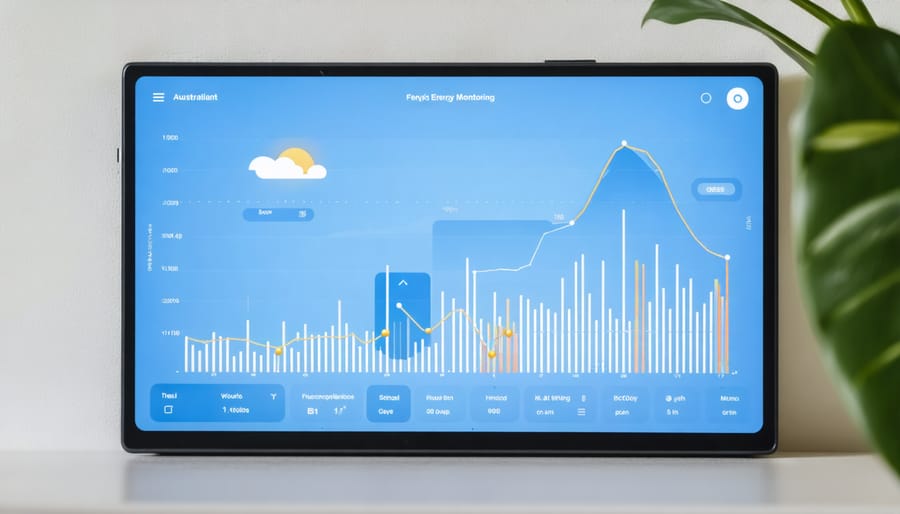
**Smart meters** are your starting point. Most Australian households now have these installed, automatically recording your energy use in 30-minute intervals. Contact your electricity retailer to access your data through their online portal or app—many offer free energy dashboards that break down your consumption by time of day, helping you spot those energy-hungry habits.
**Energy monitoring apps** have transformed how we engage with electricity use. Apps like Powershop, AGL’s app, and Origin’s digital platform don’t just show bills—they provide real-time insights, usage comparisons with similar households, and personalised tips. Some even send alerts when you’re consuming more than usual, turning energy awareness into a daily habit rather than a quarterly surprise.
For those wanting deeper insights, plug-in energy monitors (available from hardware stores for around $30-50) measure individual appliance consumption. Simply plug one between your appliance and the wall socket to discover whether your old fridge is secretly draining your budget.
**State-based programs** offer additional support. Victoria’s Victorian Energy Compare helps residents find better deals while comparing their usage, while NSW’s Energy Switch program provides similar comparison services. South Australian households can access free energy assessments through government initiatives, and Queensland’s PeakSmart program offers incentives for managing air conditioning during peak demand.
Many councils now run community energy programs where neighbours compare notes and collectively reduce consumption—turning sustainability into a shared journey rather than a solitary challenge.
What Australian Households Are Already Achieving
Right across Australia, households are proving that significant energy reductions aren’t just possible—they’re happening right now. These stories show what’s achievable when communities come together with practical knowledge and determination.
In Brunswick, Melbourne, the “Better Blocks” initiative helped 40 households reduce their combined energy consumption by 28% over 18 months. Participants attended quarterly energy audits and shared tips through a community WhatsApp group. Sarah, a participant and mother of three, discovered her second fridge in the garage was costing her $180 annually. “I never thought about it,” she admits. “We unplugged it and haven’t looked back.”
The Sunshine Coast’s “Cool Communities” program achieved remarkable results by focusing on air conditioning—the biggest energy drain for Queensland homes. Through education about ceiling fans, window shading, and strategic cooling, participating households cut cooling costs by up to 40% while maintaining comfort through summer.
Tasmania’s “Warm Homes Winter Challenge” demonstrated that even in Australia’s coldest regions, smart heating practices make a difference. Over 200 households reduced winter heating energy by an average of 22% through simple changes: blocking draughts, using door snakes, and heating only occupied rooms.
What’s inspiring about these initiatives isn’t just the numbers—it’s the ripple effect. When one household makes changes, neighbours notice and follow suit. Community Facebook groups buzz with shared wins and practical advice tailored to local conditions.
These success stories prove a vital point: you don’t need expensive renovations or solar installations to make meaningful progress. Most participating households achieved 20-30% reductions through behavioural changes and minor improvements costing under $200. That’s a realistic, achievable target for Australian households ready to take action.
Understanding where your energy goes is the first step toward meaningful change—and the good news is, even small adjustments create ripples that grow into waves. By grasping your home energy breakdown, you’re not just trimming your power bill; you’re actively participating in Australia’s transition toward a sustainable future. Every degree you adjust your thermostat, every load of washing done in cold water, and every LED bulb you install adds up over months and years.
The beauty of this knowledge is that it transforms you from a passive consumer into an empowered decision-maker. You’re now equipped to prioritize upgrades that deliver real returns, whether that’s insulating your ceiling or finally replacing that ancient second fridge in the garage.
But here’s where it gets truly exciting: when your neighbours, your street, and your community make similar shifts, the collective impact becomes extraordinary. Imagine entire suburbs reducing their evening peak demand, easing pressure on the grid during heatwaves, and collectively cutting emissions. Your individual actions, multiplied across communities, create the Australia we want to see—one powered by conscious choices and shared commitment to our environment.