
The Murray-Darling Basin sprawls across one million square kilometers of southeastern Australia, producing one-third of our nation’s food supply while sustaining over two million people and countless ecosystems. Yet this mighty river system faces its greatest challenge: a water crisis decades in the making that threatens farmers, communities, and the environment alike.
Understanding what’s happening in the Basin isn’t just about reading headlines. It’s about recognizing how interconnected our water future truly is. From the cotton farms of Queensland to the almond orchards of Victoria, from the ancient red gums lining the riverbanks to the pelicans at the Coorong, every drop of water tells a story of competing needs and difficult choices.
The science reveals confronting truths: over-allocation of water licenses, prolonged drought intensified by climate change, and ecosystems pushed to breaking point. Fish kills numbering in the millions have shocked Australians into action, while entire communities watch their livelihoods dry up.
But here’s what gives us hope: Australians are responding. The Murray-Darling Basin Plan represents one of the world’s most ambitious water management reforms, backed by rigorous hydrological science and AU$13 billion in investment. Communities are pioneering water-efficient farming techniques, scientists are developing innovative monitoring systems, and everyday Australians are demanding accountability.
This crisis demands we understand both the complexity of water policy and our role in shaping sustainable solutions. Together, we can ensure the Basin thrives for generations to come.
The Murray-Darling Basin: Australia’s Lifeline Under Pressure
More Than Just a River System
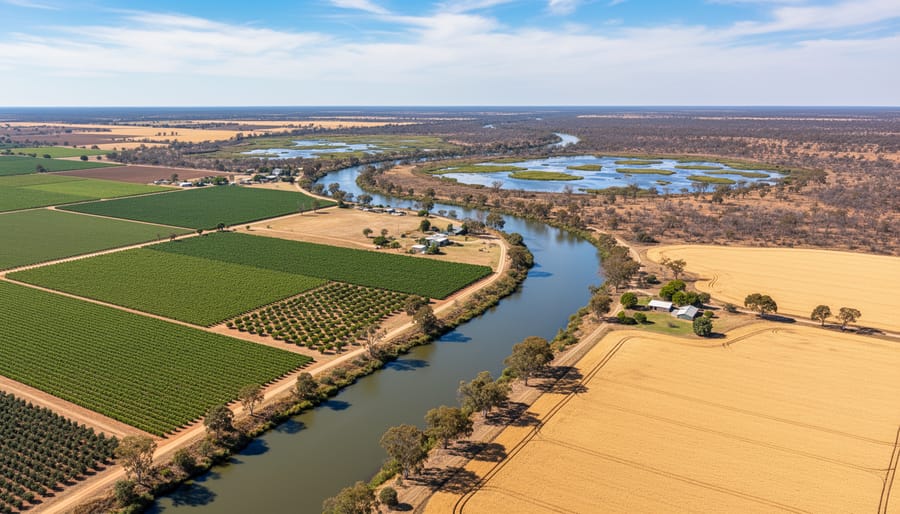
Stretching across more than one million square kilometres—roughly 14% of Australia’s landmass—the Murray-Darling Basin is truly a national treasure that touches the lives of over 2.2 million Australians. This vast river system weaves through Queensland, New South Wales, Victoria, South Australia, and the Australian Capital Territory, creating a lifeline for communities that range from bustling regional centres to small country towns.
The Basin isn’t just impressive in scale; it’s the heartbeat of Australia’s food production. Communities across the region work together to produce an astounding array of agricultural goods that feed both our nation and the world. The Basin contributes around 40% of Australia’s agricultural output, with local farmers growing everything from rice and cotton to citrus fruits, stone fruits, grapes, and vegetables. Pastoral communities raise cattle and sheep across the region’s grasslands, while dairy farmers in irrigation districts produce quality milk and cheese.
The economic story is equally compelling. The Basin generates approximately 40 billion dollars annually for the Australian economy, supporting not just farmers but entire communities built around agricultural industries, tourism, and natural resource management. From the fruit packers in Mildura to the rice mill workers in the Riverina, from hospitality businesses along the river towns to the environmental scientists working on restoration projects, the Basin supports diverse livelihoods and brings communities together around a shared resource that demands our collective care and wisdom.
The Environmental Heartbeat
The Murray-Darling Basin pulses with life, supporting some of Australia’s most remarkable ecosystems. Stretching across one million square kilometres, this vast network of rivers, wetlands, and floodplains creates a green ribbon through our sunburnt country, sustaining over 35 endangered species and 98 species of waterbirds.
The Basin’s wetlands act as natural filters and nurseries, purifying water while providing critical breeding grounds for native fish like Murray cod and golden perch. These wetlands also store carbon and buffer against floods, demonstrating nature’s ingenious design when left to function properly.
For Aboriginal communities, the Basin represents more than 40,000 years of continuous connection. The rivers are living ancestors, with each waterway holding deep cultural significance through songlines, creation stories, and traditional ecological knowledge that has sustainably managed these waterways for millennia. Communities like the Nari Nari and Ngarrindjeri peoples continue to serve as custodians, offering vital insights into water management that modern science is only beginning to fully appreciate.
Here’s what makes this particularly relevant to us all: healthy river systems directly enable sustainable agriculture. When wetlands thrive, they naturally regulate water flow, reduce salinity, and maintain soil health. Farmers working alongside these natural systems often discover improved productivity with less artificial input. The Basin teaches us that environmental health and agricultural prosperity aren’t opposing forces but interconnected partners. By protecting the ecological heartbeat, we’re simultaneously safeguarding our farming future and honouring the ancient wisdom that has sustained this landscape since time immemorial.
The Water Crisis: Understanding What Went Wrong
A Century of Over-Extraction
For much of the 20th century, the Murray-Darling Basin was seen as Australia’s agricultural frontier, a place where water could transform dry land into productive farms. Between the 1950s and 1990s, irrigation infrastructure expanded rapidly across the Basin. Governments allocated water licences generously, driven by post-war optimism and a vision of national prosperity through agriculture. Cotton, rice, and fruit orchards flourished, and entire communities built their livelihoods around what seemed like an endless water supply.
The challenge was that many of these decisions were made without comprehensive understanding of the Basin’s natural water cycles or ecological limits. Scientists now recognise that water allocations often exceeded what the river system could sustainably provide, even in average rainfall years. When you combine historical over-allocation with the intensifying droughts of the early 2000s and recent years, the compounding effects became impossible to ignore.
Rivers stopped flowing to the sea for extended periods. Wetlands that had supported bird populations for millennia dried up. Native fish species faced catastrophic declines, with some populations dropping by over 90 percent. The lower lakes near the river’s mouth turned acidic as water levels dropped, exposing ancient clay soils.
This wasn’t the result of deliberate harm but rather decisions made with incomplete knowledge and genuine intentions to build thriving regional communities. Understanding this history helps us approach today’s challenges with both urgency and compassion, recognising that sustainable solutions must honour both environmental needs and the people who depend on the Basin for their futures.
Climate Change Hits Hard
The Murray-Darling Basin’s water challenges aren’t just about policy debates or competing interests. Climate change has fundamentally altered the equation, making water scarcity more severe and unpredictable than ever before.
Since the late 1990s, the Basin has experienced what climate scientists call the Millennium Drought, followed by increasingly irregular rainfall patterns. Australian Bureau of Meteorology data shows that average rainfall across the southern Basin has declined by approximately 12% since the mid-1990s, while temperatures have risen by more than 1 degree Celsius. This combination creates a double punch: less water falling from the sky, and more evaporating from our rivers, reservoirs, and soil.
The numbers tell a sobering story. Research from CSIRO projects that by 2030, water availability in the Basin could decrease by another 10-20% under moderate climate scenarios. Some tributaries, particularly in the southern regions, have seen flow reductions of up to 40% compared to historical averages. When rivers run low, everything from irrigation schedules to wetland health feels the impact.
But here’s where community resilience shines through. Farmers, water managers, and environmental groups across the Basin are pioneering adaptive strategies, from precision irrigation technologies to collaborative water-sharing agreements. These innovations demonstrate that while we can’t control the weather, we can control how we respond. Understanding these climate realities helps us appreciate why every drop counts and why working together on solutions has never been more critical for our shared future.
The Murray-Darling Basin Plan: How Australia Is Fighting Back
The Science Behind the Plan
Understanding how scientists manage Australia’s most vital river system starts with a simple concept: imagine your household water tank. You need to know how much water comes in, how much you use, and how much must stay in reserve for emergencies. The Murray-Darling Basin operates on this same principle, just on a massive scale.
Scientists developed sustainable diversion limits by first measuring the Basin’s natural water flow patterns over decades. Think of it like tracking your bank account, where rainfall is your income and water extraction is your spending. The goal is ensuring we never go into debt with nature. Through sophisticated computer modelling and on-ground monitoring, researchers determined how much water could be safely diverted for agriculture and towns while maintaining river health.
Environmental water requirements work similarly to ensuring your garden gets enough water to survive. Rivers need minimum flows to support native fish breeding, maintain wetlands where waterbirds nest, and flush out salt build-up. Scientists calculated these needs by studying what healthy river systems look like, then working backwards to determine the water volumes required.
The monitoring system across the Basin is remarkably sophisticated yet beautifully simple in concept. Thousands of gauging stations act like health checkups for our rivers, continuously measuring water levels, flow rates, and quality. Satellite technology tracks wetland conditions, while fish counters similar to supermarket sensors record species movements through fishways.
What makes this approach powerful is combining hard data with local knowledge. Community members who’ve lived along these rivers for generations work alongside scientists, contributing observations that high-tech equipment might miss. Together, they’re creating a living picture of Basin health that guides adaptive management decisions, ensuring this precious water resource sustains both communities and ecosystems for future generations.
Water Buy-Backs and Efficiency Projects
Recognising that water scarcity requires both immediate action and long-term solutions, Australian governments have implemented two primary mechanisms to restore balance to the Murray-Darling Basin: direct water purchases and infrastructure efficiency programs.
The Commonwealth Environmental Water Holder now manages Australia’s largest water portfolio, acquired through strategic buybacks from willing sellers. Since 2008, over $3 billion has been invested in purchasing water entitlements, returning precious flows to stressed river systems and wetlands. This innovative resource management approach allows farmers to maintain productive operations while reducing overall extraction.
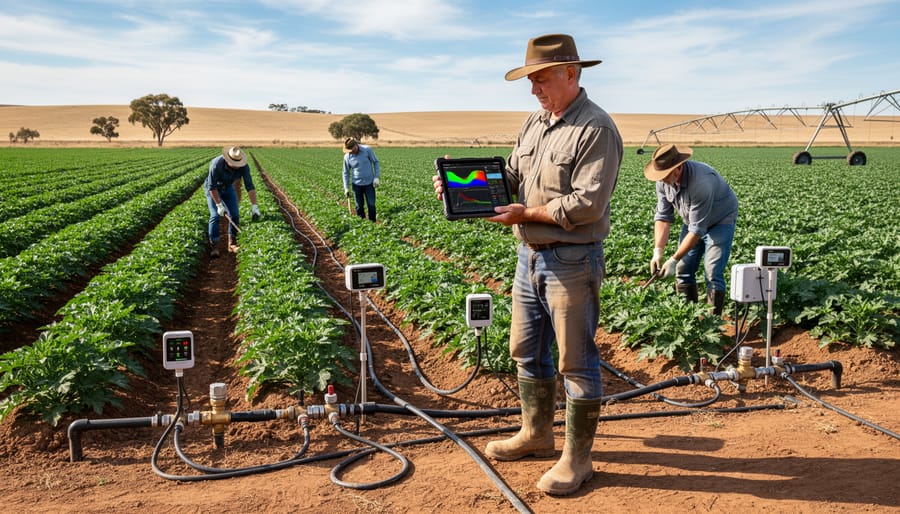
Infrastructure upgrades complement these purchases, helping irrigators achieve more with less. Modern drip irrigation systems, soil moisture sensors, and automated scheduling tools have transformed water efficiency across the Basin. In the Murrumbidgee region, farmers have reduced water use by up to 40 percent while maintaining crop yields through precision agriculture techniques.
Community-led initiatives showcase the power of local action. The Gwydir Valley’s innovative environmental watering program demonstrates how graziers and conservationists can collaborate, using recovered water to rejuvenate floodplains whilst supporting sustainable livestock production. Meanwhile, cotton growers in Queensland have pioneered laser levelling and tailwater recycling systems that prevent wastage and improve productivity.
The Sunraysia region offers another inspiring example, where horticulturists have embraced advanced monitoring technology and mulching practices, cutting water consumption significantly while producing premium table grapes and citrus. These farm innovations prove that environmental stewardship and agricultural success aren’t mutually exclusive.
Despite challenges and ongoing debates about program implementation, these combined approaches represent Australia’s commitment to healing one of our most vital natural assets. Success requires continued investment, community participation, and willingness to adapt farming practices for a more water-secure future.
Real Stories: Communities Adapting and Innovating
Farmers Leading the Way
Across the Murray-Darling Basin, a growing community of farmers is proving that agricultural success and water conservation can go hand in hand. These innovators are transforming traditional farming into a blueprint for resilience in Australia’s driest inhabited continent.
Take the Henderson family near Griffith, who’ve cut their water use by 40% while maintaining citrus yields. Their secret? Precision drip irrigation paired with soil moisture sensors that deliver water exactly where and when it’s needed. “We’re not just saving water, we’re growing healthier trees,” explains third-generation farmer Sarah Henderson. “The technology pays for itself in three seasons.”
Further north, cotton growers are embracing drought-resistant crop varieties developed specifically for Australian conditions. These plants thrive on 30% less water while producing comparable fibre quality. Combined with laser-levelled fields that eliminate water wastage through runoff, these sustainable practices are reshaping what’s possible in water-scarce environments.
Regenerative agriculture is also gaining momentum. Farmers practicing rotational grazing and cover cropping are discovering that healthier soil acts like a sponge, holding moisture longer and reducing irrigation demands. The bonus? Improved biodiversity and carbon sequestration.
These pioneers aren’t working in isolation. Through local landcare groups and innovation networks, they’re sharing knowledge and proving that economic viability and environmental stewardship aren’t competing goals. Their success stories offer hope and practical pathways for the entire agricultural community facing similar water challenges.
Indigenous Water Management Wisdom
For over 60,000 years, Aboriginal peoples have sustainably managed the waterways of what’s now called the Murray-Darling Basin. Today, their wisdom is finally gaining the recognition it deserves in modern water policy, offering hope for the Basin’s future.
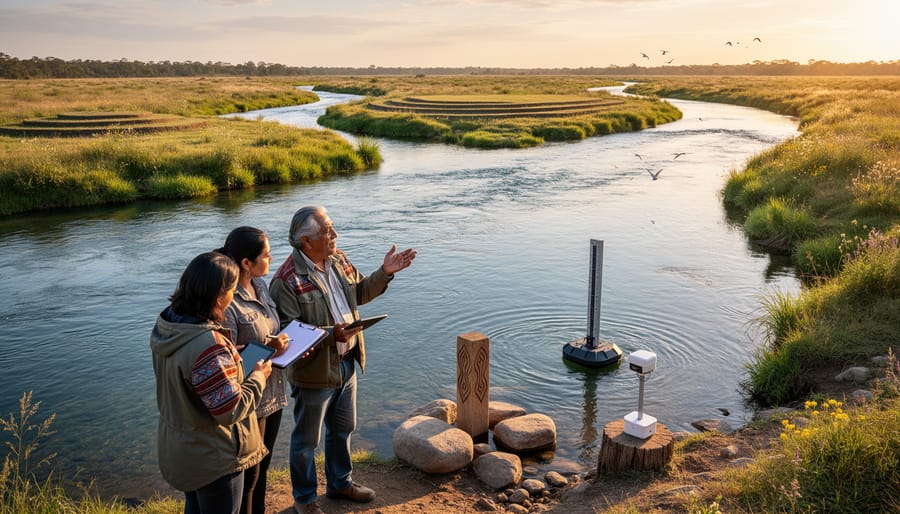
Traditional Owners across the Basin hold deep knowledge about water’s cultural, spiritual, and ecological significance. Unlike Western approaches that often view water purely as a resource, Indigenous perspectives understand water as a living entity interconnected with Country, community, and all living things. This holistic understanding is proving invaluable as we confront the Basin’s environmental challenges.
Cultural flows represent a groundbreaking step forward. These water allocations allow Traditional Owners to manage water for cultural, spiritual, and environmental purposes, supporting ceremonies, native plant regeneration, and fish breeding grounds. Communities like the Yorta Yorta Nation and Ngarrindjeri people are now using cultural water entitlements to restore wetlands and revive traditional practices that enhance biodiversity.
The recognition of Indigenous water rights marks a significant shift in Basin governance. The Northern Basin Aboriginal Nations and Murray Lower Darling Rivers Indigenous Nations are actively participating in water planning decisions, bringing generations of ecological knowledge to the table. Their involvement isn’t just about fairness; it’s practical wisdom that complements scientific approaches, much like circular economy approaches that value regeneration over extraction.
By listening to and empowering Traditional Owners, we’re not just acknowledging past injustices; we’re accessing proven strategies for sustainable water management that could secure the Basin’s future for all Australians.
The Ongoing Challenges and Controversies
Despite genuine efforts to restore balance, the Murray-Darling Basin Plan continues to navigate complex waters. Understanding these challenges helps us appreciate why progress sometimes feels frustratingly slow, while recognising the very real competing needs at play.
Water recovery targets remain a central point of tension. The Basin Plan aimed to return 2,750 gigalitres annually to the environment, yet by 2024, achieving this goal through a mix of buybacks and infrastructure improvements has proven more difficult than anticipated. Some communities, particularly in the southern Basin, have felt the economic impact of reduced water allocations keenly, while environmental groups argue the recovered volumes still fall short of what science indicates the rivers actually need.
Compliance has emerged as another significant hurdle. Past instances of unauthorised water extraction, sometimes termed “water theft,” have understandably eroded trust among Basin communities. While monitoring systems have improved substantially, ensuring fair access across four states and one territory, each with different historical arrangements, remains an ongoing balancing act.
The social cost of reform deserves acknowledgment too. Farming families who’ve worked their land for generations face genuine uncertainty about their futures. Meanwhile, First Nations communities are increasingly vocal about their largely overlooked role in Basin management, despite millennia of sustainable water stewardship.
Climate change adds another layer of complexity that wasn’t fully anticipated when the Plan launched. Prolonged droughts and reduced rainfall mean there’s often simply less water to allocate, intensifying competition between environmental flows, agriculture, and town supplies.
Rather than viewing these challenges as failures, many communities are treating them as opportunities for adaptive management. Local water user groups, environmental organisations, and farmers are increasingly working together on practical solutions, from innovative irrigation techniques to collaborative revegetation projects. This grassroots cooperation, though it rarely makes headlines, represents the kind of community-driven sustainability that ultimately creates lasting change across the Basin.
What Every Australian Can Do to Help
Supporting Sustainable Food Choices
Every purchase we make sends a ripple through the Murray-Darling Basin. By choosing products from farms that prioritize water efficiency, we directly support sustainable agriculture and help secure the Basin’s future.
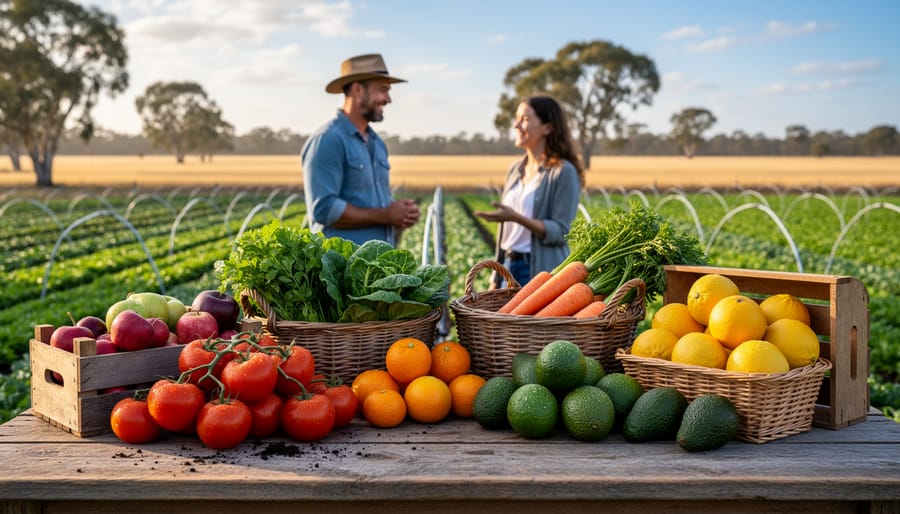
Start by seeking out seasonal Australian produce, which naturally requires less irrigation than out-of-season crops. Local farmers’ markets are treasure troves of information, where growers can share their water management practices directly. Look for certifications like Freshcare or organic labels that indicate responsible farming methods.
Many Australian producers now proudly display their water stewardship credentials. Cotton growers in the Basin, for instance, have reduced water use by 40 percent over recent decades through innovation. Supporting these pioneers through your purchasing choices creates market demand for ethical water use.
Consider joining community-supported agriculture programs that connect you directly with Basin farmers committed to regenerative practices. Apps like Farmers Pick and Good Fish help identify sustainably sourced products, making conscious shopping easier than ever. When dining out, ask restaurants about their sourcing practices. Your questions create awareness and encourage businesses to prioritize sustainability, building a community-wide culture of water responsibility.
Join the Conversation and Take Action
You can make a real difference in the Murray-Darling Basin’s future, and getting involved is easier than you might think. Start by connecting with organizations like the Inland Rivers Network or Waterkeepers Australia, who run community advocacy programs and regular river health monitoring days. These groups welcome volunteers for citizen science projects, where you can help collect water quality data that directly informs management decisions.
Consider joining your local Landcare group to participate in revegetation projects along waterways, restoring native habitats that improve water quality and ecosystem resilience. Many councils across the Basin also run consultation sessions on water allocation plans, giving you a direct voice in policy development.
For businesses, the Murray-Darling Basin Authority offers partnerships and resources to improve water efficiency practices. Your choices at home matter too – reducing water consumption, supporting regenerative agriculture, and choosing products from certified sustainable farms all contribute to Basin health.
Water stewardship naturally connects to broader sustainable living practices like waste reduction and energy conservation. By embracing these interconnected approaches, you’re joining thousands of Australians building a more resilient future for our most precious river system. Every action counts, and together we’re creating meaningful change.
The future of the Murray-Darling Basin isn’t written in stone—it’s being shaped right now by the collective choices we make as a nation. From innovative water management technologies to Indigenous-led conservation initiatives, we’ve seen glimpses of what’s possible when communities, scientists, policymakers, and landholders work together. The challenges are significant, but so is Australia’s capacity for resilience and ingenuity.
Every action counts in this crucial ecosystem. Whether you’re a farmer adopting precision irrigation, a business implementing water-saving measures, or a household making conscious consumption choices, you’re contributing to the Basin’s recovery. Local community groups across the Basin region are achieving remarkable results through revegetation projects, waterway monitoring, and advocacy efforts—proving that grassroots action creates lasting change.
The health of the Murray-Darling Basin directly impacts Australia’s food security, regional economies, and environmental heritage. It’s a bellwether for how we’ll manage our most precious resources in an increasingly uncertain climate. By staying informed, supporting sustainable practices, and holding ourselves accountable to science-based solutions, we’re investing in a future where both people and nature can thrive.
Take the next step today. Connect with a local Landcare group, support businesses committed to water stewardship, or simply share what you’ve learned about the Basin with your community. Together, we’re not just protecting a river system—we’re securing Australia’s sustainable future for generations to come.