
Every glass of water from your tap travels through kilometres of ageing pipes before reaching your home, collecting sediment, chlorine by-products, and potentially harmful contaminants along the way. For Australian households increasingly concerned about water quality and environmental impact, in-line water filtration systems offer a comprehensive solution that protects every tap in your home while reducing reliance on bottled water.
Unlike under-sink or countertop filters that address only a single point of use, in-line systems integrate directly into your main water supply, treating all incoming water before it branches throughout your property. This whole-house approach means cleaner water for drinking, cooking, showering, and even your washing machine and dishwasher, extending appliance lifespan while reducing scale buildup and chemical exposure.
The technology behind these systems has evolved significantly, with Australian homeowners now choosing between multi-stage filtration, reverse osmosis, or UV purification depending on local water conditions and specific concerns. From sediment-heavy rural bore water to chlorine-treated metropolitan supplies, the right in-line system addresses your unique water profile while eliminating the ongoing plastic waste of bottled water alternatives.
While the upfront investment might seem substantial, hidden costs of inferior water quality add up quickly through bottled water purchases, appliance repairs, and skin sensitivities from chemical-laden shower water. Understanding these systems, their true operational costs, and proper selection criteria empowers you to make an informed decision that benefits both your household and Australia’s environmental future.
What Makes In-Line Water Filtration Different from Other Home Systems
How In-Line Systems Actually Work
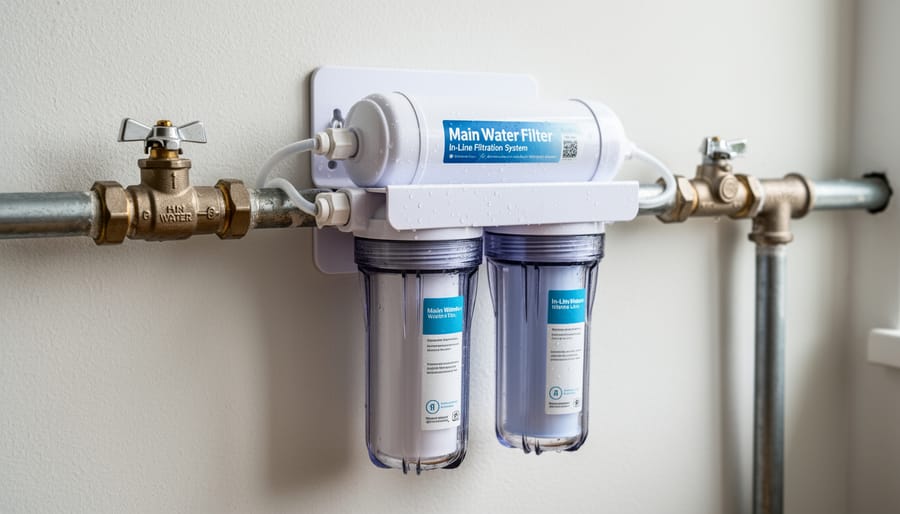
Unlike under-sink or pitcher filters that treat water at a single point, in-line systems work right where your main water supply enters your home—typically near the water metre. Think of it as creating a protective barrier for your entire household water network.
Here’s how the process unfolds: As water flows from the street into your property, it first passes through the in-line filtration unit before branching out to every tap, shower, and appliance in your home. The system uses multi-stage filtration—often combining sediment filters, activated carbon, and sometimes more advanced media—to remove contaminants, chlorine, sediments, and other unwanted substances.
The beauty of this approach is its simplicity. Once installed, filtered water automatically reaches every water outlet without you needing to think about it. Whether you’re filling a glass in the kitchen, running a bath, or doing laundry, you’re using filtered water. This whole-house coverage makes in-line systems particularly valuable for Australian homes dealing with hard water or chlorine-heavy municipal supplies.
Compared to other water filtration options, in-line systems offer the most comprehensive protection while reducing plastic waste from bottled water—a win for both your household and our environment.
The Real-World Difference for Australian Homes
Australian water faces unique challenges that vary dramatically across our vast continent. From Sydney’s heavily chlorinated supply to Perth’s high mineral content, and regional areas dealing with sediment and agricultural runoff, our water quality issues demand comprehensive solutions rather than quick fixes.
Here’s where in-line systems truly shine for Aussie households. While a simple tap filter might reduce chlorine taste, it won’t capture the sediment particles common in older suburban pipes or the trace contaminants entering our waterways. In-line filtration systems work at every outlet, addressing multiple issues simultaneously. They intercept chlorine before it evaporates in your hot shower, capture rust and sediment that degrades appliances, and provide consistent protection against emerging contaminants that concern many Australian communities.
Take Brisbane’s intermittent sediment issues during storm events, or Melbourne’s variable chlorine levels. A comprehensive in-line system adapts to these fluctuations, protecting your entire home rather than leaving gaps. Regional Australians dealing with bore water particularly benefit, as multi-stage filtration tackles hardness, iron staining, and biological concerns that single-point filters simply can’t manage. This whole-home approach means your family, your appliances, and even your garden receive consistently filtered water, creating genuine peace of mind that partial solutions never quite deliver.
The Hidden Costs Your Current Water Setup Is Creating
What Hard Water and Contaminants Do to Your Appliances
Hard water and contaminants silently wage war on your home’s appliances, costing Australian households hundreds, sometimes thousands, of dollars annually. Let’s look at what’s really happening behind the scenes.
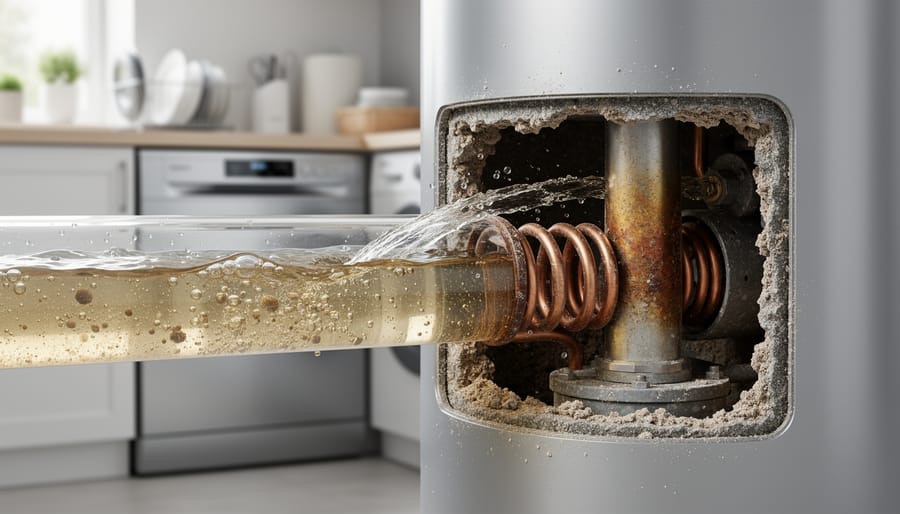
Your hot water system faces perhaps the harshest assault. Mineral buildup forms a crusty layer inside the tank and heating elements, forcing them to work harder and reducing efficiency by up to 30%. The average Australian hot water system replacement costs between $800 and $3,500, with hard water typically cutting lifespan from 12 years down to just 7 or 8.
Washing machines and dishwashers suffer similar fates. Scale accumulates in pipes, pumps, and heating elements, leading to poor performance and premature failure. Replacement costs range from $600 for basic washing machines to $2,000 for quality dishwashers. Many families don’t realize that investing in efficient appliances and fixtures means little when hard water undermines their performance from day one.
Even your beloved coffee maker isn’t safe. That white chalky buildup you’ve noticed? It’s minerals clogging internal components, affecting taste and shortening the machine’s life considerably.
The good news? In-line filtration systems tackle these issues at the source, protecting your entire home while extending appliance lifespans significantly. Your community of fellow Australians who’ve made the switch report substantial savings and noticeably better appliance performance.
The Plastic Waste Problem Nobody Talks About
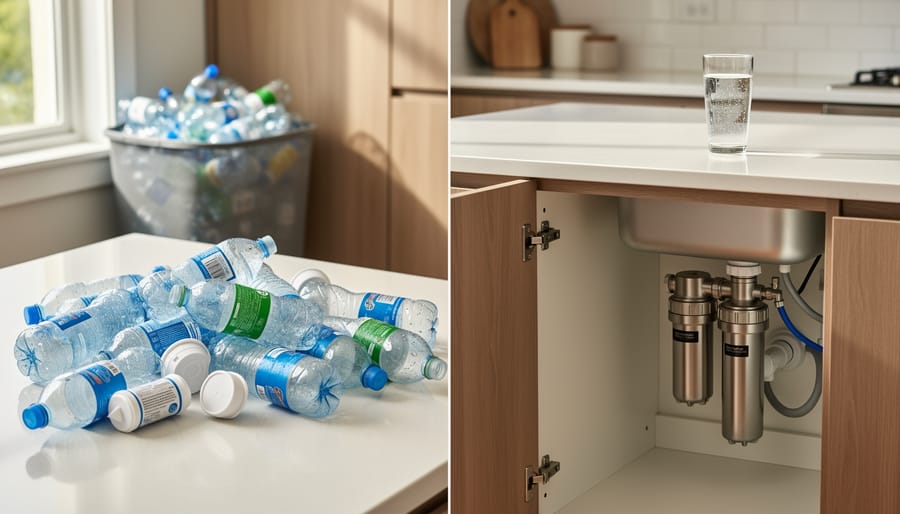
Here’s something most Australians don’t realise: we bin over 373 million plastic water bottles every single year, and only about 36% actually make it to recycling. The rest end up in landfill or, heartbreakingly, in our oceans and waterways. That’s roughly 15 bottles per person every month contributing to a problem we rarely see but desperately need to address.
But bottled water isn’t the only culprit in our kitchens. Those convenient filter jugs sitting on our benchtops? Their disposable cartridges create an estimated 6 million pieces of plastic waste annually across Australia. Each cartridge typically lasts just two months before joining the mounting pile in our tips.
The beauty of in-line filtration systems lies in their remarkable longevity. A single whole-house filter cartridge can replace hundreds of plastic bottles and dozens of jug filters, lasting anywhere from 6 to 12 months depending on your water usage. When you multiply this across Australian households, we’re looking at preventing tonnes of unnecessary plastic from entering our waste stream.
Making the switch isn’t just about cleaner water for your family. It’s about joining a growing community of Australians who understand that small, practical changes in our homes create ripples of positive environmental impact across our sunburnt country.
Choosing the Right In-Line System for Your Australian Home
Matching Filtration Technology to Your Water Source
Choosing the right filtration technology depends entirely on your local water quality, and Australian households face remarkably different challenges across regions. Let’s match the solution to your situation.
Sediment filters work brilliantly for rural properties dealing with bore water or areas prone to pipe sediment. These mechanical filters trap particles like sand, rust, and dirt before they reach your taps. Many Queensland and New South Wales rural communities rely on these as their first line of defence, particularly when paired with water tank systems.
Carbon filters excel at removing chlorine, improving taste and odour while reducing chemical contaminants. They’re perfect for metropolitan areas like Melbourne and Sydney where treated municipal water contains significant chlorine levels. Your morning coffee genuinely tastes better, and you’ll notice the difference immediately.
UV systems provide chemical-free disinfection, making them ideal for households concerned about bacteria and viruses. Remote communities in Western Australia and Northern Territory often combine UV treatment with sediment filtration for comprehensive protection without ongoing chemical costs.
Multi-stage systems combine these technologies, offering the most thorough protection. A typical three-stage setup might include sediment filtration, carbon absorption, and UV sterilisation. While representing a higher initial investment, these systems suit diverse water challenges from agricultural runoff in coastal regions to mineral-heavy bore water inland.
Consider getting your water tested through local community health centres before investing. Understanding your specific contaminants ensures you’re not over-engineering your solution or missing critical protection your family needs.
Sizing Your System Without Overspending
Getting the right size system isn’t about buying the biggest option available – it’s about matching your household’s actual needs without wasting money or resources. Let’s break this down in practical terms for Australian homes.
Start by calculating your peak water flow requirements. A typical Australian household uses around 340 litres per person daily, but what matters for sizing is peak demand – those mornings when someone’s showering while the washing machine runs and the kettle boils. For a family of four, you’ll generally need a system handling 40-60 litres per minute. Smaller households (1-2 people) can manage perfectly with 20-30 litres per minute capacity.
Understanding micron ratings helps you avoid over-engineering too. A 5-micron filter removes sediment, rust and most parasites – adequate for most suburban Australian homes on town water. Rural properties with bore or tank water might need 1-micron filtration, but going finer than necessary just means more frequent filter changes and higher costs without real benefit.
Here’s a practical guide: 1-2 person households work well with compact single-cartridge systems; families of 3-4 typically need dual-cartridge setups; and homes with 5 or more people benefit from whole-house systems with multiple stages. Don’t let suppliers convince you otherwise – these configurations handle Australian conditions brilliantly.
Remember, our community of sustainable households proves that right-sizing saves both money and environmental impact. You’re investing in clean water and planetary health simultaneously, so choose wisely but don’t overthink it. Match your actual usage, and you’ll avoid the regret of overspending on unnecessary capacity.
Installation and Maintenance: Simpler Than You Think
DIY Installation for the Moderately Handy
For those comfortable with basic DIY projects, installing an in-line water filter can be a rewarding weekend task that contributes to your home’s sustainability. However, understanding Australian plumbing regulations is crucial before you begin.
You’ll need an adjustable wrench, pipe cutter, Teflon tape, and a bucket for water drainage. Most cartridge-style filters come with clear instructions and compression fittings that don’t require soldering. The basic process involves shutting off your main water supply, draining the line, cutting the pipe at your chosen location, and installing the filter housing using the provided connectors.
Here’s the catch: in Australia, any work on your property’s main water supply typically requires a licensed plumber under state and territory regulations. While you can legally replace filter cartridges yourself, the initial installation often falls into regulated territory. This protects our community’s water quality and prevents costly mistakes that could affect neighbouring properties.
Consider partnering with a plumber experienced in sustainable plumbing installations for the initial setup. Many will install the system while teaching you maintenance basics, empowering you to handle cartridge changes independently. This approach ensures compliance while building your skills and confidence for future maintenance tasks, creating a perfect balance between professional expertise and DIY sustainability.
The Maintenance Schedule That Actually Works
Here’s the good news that’ll make your decision easier: maintaining an inline water filtration system is refreshingly straightforward, especially compared to juggling multiple filter jugs or under-sink units throughout your home.
Most Australian households can expect to replace their primary sediment filter every 6-12 months, depending on your local water quality. The activated carbon filter typically lasts 12-18 months, while more advanced options like reverse osmosis membranes can go 2-3 years between changes. You’re looking at an annual maintenance cost of roughly $150-$400 for a typical household—compare that to constantly replacing pitcher filters or bottled water purchases.
The real beauty? One system, one maintenance schedule. Instead of tracking filters in your kitchen, bathroom, and laundry separately, you’ve got a single point of care. Many systems now include smart monitoring that alerts you when replacement is due, taking the guesswork out entirely.
Community members in Melbourne’s western suburbs have shared that the initial learning curve is minimal—most filter changes take less than 15 minutes once you’ve done it the first time. Local suppliers often provide installation support and ongoing guidance, connecting you with others in your area who’ve made the switch. Over a five-year period, you’ll invest significantly less time and money compared to maintaining separate point-of-use systems, while protecting every tap in your home.
Real Stories from Australian Households Who Made the Switch
When Sarah Chen’s family moved to their new home in Western Sydney, they quickly discovered what many locals already knew – the water tasted distinctly of chlorine and left stubborn mineral deposits on their kettle within weeks. After installing an in-line filtration system, Sarah noticed her children stopped requesting bottled water and actually enjoyed drinking straight from the tap. “It’s made such a difference to our daily routine,” she shares. “Plus, we’ve saved nearly $80 a month on bottled water, which adds up to almost $1,000 annually for our family of four.”
In regional Queensland, the Morrison family faced different challenges. Living on a rural property near Toowoomba, their bore water contained elevated sediment levels that shortened the lifespan of their appliances. Within six months of installing their in-line system, they noticed their washing machine running more efficiently and their coffee machine no longer requiring frequent descaling. “We thought we’d just have to accept it as part of rural living,” admits James Morrison, “but the system has genuinely improved our quality of life and probably saved us from replacing our hot water system prematurely.”
Melbourne resident Priya Kapoor chose an in-line system specifically for environmental reasons after calculating her household was discarding approximately 300 plastic bottles each year. “I wanted my kids to see us making responsible choices,” she explains. “The installation was straightforward, and knowing we’re reducing our plastic waste while ensuring clean drinking water feels like we’re contributing to something bigger than ourselves.”
These families represent a growing community of Australians recognizing that clean water shouldn’t come at the expense of our environment or budget. Their experiences demonstrate how in-line systems address diverse regional water challenges while aligning with sustainable living values that many Australian households increasingly prioritize.
The Environmental Impact You’ll Create (In a Good Way)
Making the switch to an in-line water filtration system creates measurable environmental benefits that extend far beyond your home. Let’s break down the real impact you’ll make as part of Australia’s growing sustainability movement.
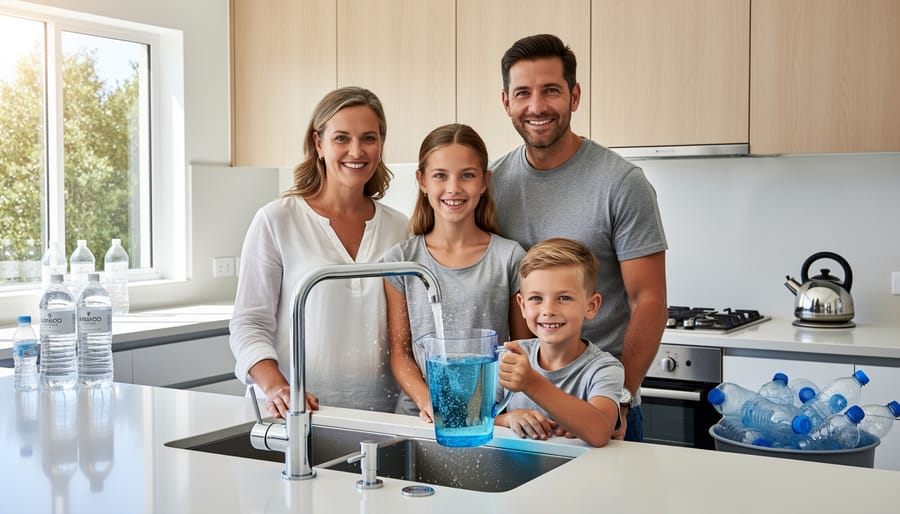
The most immediate change? Eliminating single-use plastic bottles from your household. The average Australian family consuming bottled water uses approximately 600 plastic bottles annually. By filtering your tap water instead, you’re preventing these bottles from entering landfills or, worse, our oceans and waterways. Across a typical household lifespan of your filtration system—around 10 to 15 years—that’s potentially 9,000 bottles diverted from waste streams.
Transport emissions tell another compelling story. Bottled water travels an average of 1,500 kilometers before reaching Australian homes, requiring significant fossil fuel consumption. When you generate clean drinking water right at your tap, you’re cutting out this entire transportation chain. If every household in a suburb like Manly eliminated bottled water, the collective reduction in delivery truck emissions would be equivalent to taking dozens of cars off the road annually.
Your filtration system also supports broader water efficiency practices by extending appliance lifespans. Filtered water reduces mineral buildup in kettles, coffee machines, and washing machines, meaning these items work more efficiently and last longer. This translates to less manufacturing demand and reduced electronic waste—both significant environmental wins.
These individual choices align perfectly with Australia’s National Waste Policy goals and state-level plastic reduction targets. By investing in home filtration, you’re not just making a purchase; you’re joining thousands of Australians actively reshaping our water consumption patterns toward a more sustainable future.
Making the switch to an in-line water filtration system represents more than a household upgrade—it’s a meaningful step toward a healthier home and a healthier planet. By reducing your reliance on bottled water, you’ll save thousands of dollars over the system’s lifespan while preventing countless plastic bottles from entering our oceans and landfills. The environmental mathematics are compelling: if just 10,000 Australian households adopted in-line filtration, we’d collectively eliminate over 50 million plastic bottles annually.
Your journey begins with a simple step: test your current water quality. Many local councils offer free or low-cost testing services, giving you the baseline knowledge to choose a filtration system tailored to your specific needs. Whether you’re dealing with chlorine taste, sediment concerns, or mineral imbalances, there’s an in-line solution designed for your situation.
Consider this an invitation to join a growing movement of Australians who understand that sustainable living doesn’t require sacrifice—it rewards us with better health, lower costs, and the satisfaction of contributing to something larger than ourselves. When we collectively embrace solutions like in-line filtration, we’re not just transforming individual homes; we’re reshaping our national relationship with water, plastic, and environmental stewardship. The change starts at home, but its ripple effects reach far beyond our taps.