
Stand at your local farmers market at sunrise, and you’ll witness something remarkable: farmers who’ve spent decades nurturing soil health, protecting biodiversity, and building resilient food systems—often without an organic certification in sight. Meanwhile, organic mangoes flown 15,000 kilometres from South America sit in supermarket aisles bearing pristine green labels. This disconnect reveals an uncomfortable truth many Australian shoppers are discovering: the organic label alone doesn’t guarantee environmental sustainability.
The relationship between organic farming and true food sustainability is far more nuanced than marketing suggests. While organic practices eliminate synthetic pesticides and promote soil health—critical environmental wins—they represent just one piece of a complex sustainability puzzle that includes transport emissions, water usage, land efficiency, packaging waste, and local economic resilience.
Across Australia, from Queensland’s Sunshine Coast to Victoria’s Yarra Valley, a growing movement of farmers, researchers, and conscious consumers are redefining what sustainable food really means. They’re asking harder questions: Is certified organic lettuce trucked 2,000 kilometres more sustainable than conventionally grown greens from a regenerative farm 20 kilometres away? Does supporting your local biodynamic grower matter more than buying imported organic quinoa?
This guide cuts through the greenwashing to help you navigate these complex choices with confidence and clarity.
The Organic Label Doesn’t Tell the Whole Sustainability Story
What Organic Certification Actually Guarantees
When you spot that certified organic label at your local farmers market or supermarket, you’re looking at products that have met rigorous standards set by Australian Certified Organic (ACO) or similar accredited certifiers operating under the National Standard for Organic and Bio-Dynamic Produce. Here’s what’s actually guaranteed: no synthetic pesticides or fertilisers, no genetically modified organisms, and strict regulations around animal welfare including access to outdoors and limits on antibiotic use.
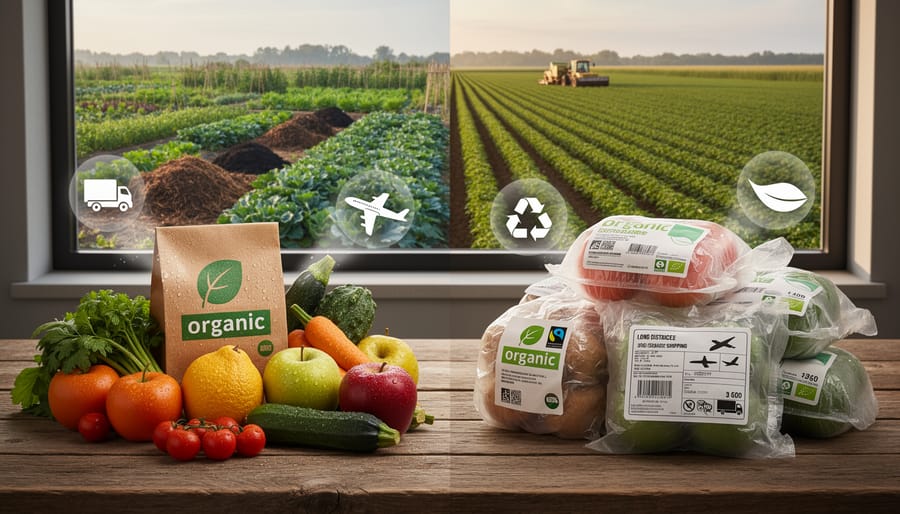
But here’s where misconceptions creep in. While organic certification ensures these specific practices, it doesn’t automatically guarantee carbon neutrality, minimal food miles, or ethical labour conditions. A certified organic tomato flown from overseas still carries a hefty carbon footprint, whilst a conventional tomato from a local regenerative farm down the road might actually be the more sustainable choice overall.
Australian organic standards do require farmers to maintain soil health through crop rotation and composting, which builds long-term sustainability into the system. They also prohibit certain practices that damage ecosystems. However, certification doesn’t measure water usage efficiency or packaging waste, both crucial sustainability factors.
The takeaway? Organic certification is valuable, particularly for reducing chemical exposure and supporting better farming practices. It’s a meaningful tool in your sustainable shopping toolkit, especially when combined with other considerations like seasonality, local sourcing, and minimal packaging. Think of it as one important piece of the puzzle rather than the complete sustainability solution many Australians assume it to be.
The Missing Pieces: Transport, Packaging, and Scale
Here’s a reality check that might surprise you: that certified organic mango flown from Peru to your Brisbane supermarket could carry a larger environmental footprint than conventional mangoes grown just down the road in Bowen. The missing pieces in the organic sustainability puzzle are transport, packaging, and scale.
Consider this common scenario at Australian supermarkets. You’re faced with two choices: organic apples imported from Europe, wrapped in individual plastic sleeves and foam netting, versus locally grown conventional apples from Orange, NSW, sold loose or in minimal packaging. The organic label looks appealing, but those thousands of kilometres travelled and excessive packaging materials tell a different environmental story.
Transport emissions can completely overshadow the benefits of organic farming methods. When organic produce travels by air freight or refrigerated shipping containers across oceans, the carbon cost accumulates rapidly. A 2019 study found that food transportation can account for up to 11% of total food system emissions in Australia.
Packaging presents another paradox. Because organic produce often travels further and requires protection to maintain its premium value, it frequently arrives in more packaging than local alternatives. Those plastic clamshells and individual wrappings create waste that contradicts sustainability goals.
Scale matters too. Large-scale organic operations, while maintaining certification standards, may lack the biodiversity and soil health practices of smaller regenerative farms. Meanwhile, some conventional farmers near Melbourne and Adelaide are pioneering low-input methods that rival organic environmental benefits.
The takeaway? Think beyond the organic label. Prioritise local and seasonal first, then consider organic certification as one factor among many in your sustainable shopping decisions.
When Organic Food Genuinely Supports Environmental Sustainability
Protecting Australia’s Precious Waterways and Soil
Australia’s iconic waterways face mounting pressure from agricultural runoff, but organic farming offers a lifeline for these precious ecosystems. When you choose organic produce, you’re supporting farming practices that protect the Great Barrier Reef from the nitrogen and pesticide pollution that threatens its delicate coral systems. The conventional agriculture feeding into Queensland’s coastal catchments contributes significantly to reef degradation, whereas organic farms eliminate synthetic chemicals from entering these watersheds entirely.
The Murray-Darling Basin, Australia’s food bowl, has suffered decades of chemical accumulation in its soils and waterways. Organic farmers working within this vital system are demonstrating that productive agriculture doesn’t require toxic inputs. By avoiding synthetic pesticides and fertilisers, they prevent approximately 90% of the chemical load that would otherwise leach into rivers, supporting healthier fish populations and cleaner drinking water for communities downstream.
Beyond water quality, organic practices rebuild soil health through composting, crop rotation, and cover cropping. Australian organic farms have shown soil carbon increases of up to 30% compared to conventional neighbours, creating a living ecosystem beneath our feet rather than depleted dirt. This matters enormously during drought, as healthy soil retains moisture far more effectively.
Community-supported agriculture initiatives across Australia are proving that protecting waterways and regenerating soil creates win-win outcomes. When Bundaberg organic growers reduced chemical use, local waterways recovered visibly within seasons. These aren’t abstract environmental wins – they’re tangible improvements you help create every time you choose organic, building resilience into the landscapes that sustain us all.
Supporting Biodiversity in Agricultural Landscapes
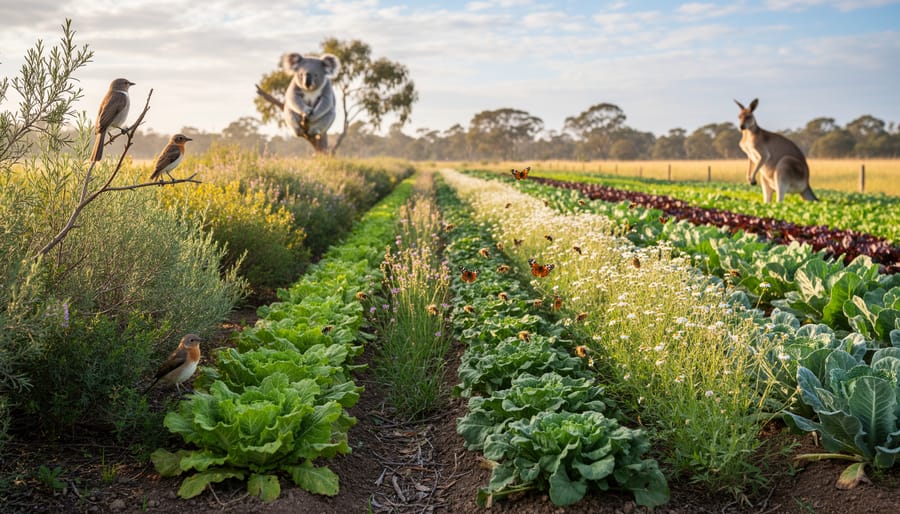
Organic farming creates vital refuges for Australia’s unique wildlife, transforming agricultural land into thriving ecosystems. Across regions from the Riverina to the Atherton Tablelands, organic farms support 30% more species on average compared to conventional operations, providing safe havens for native birds, beneficial insects, and small mammals.
The absence of synthetic pesticides proves transformative for pollinator populations. Australian native bees, butterflies, and even honeyeaters flourish on organic properties where diverse flowering crops and hedgerows offer year-round nutrition. These pollinators don’t just benefit the farm—they strengthen surrounding bushland ecosystems too.
Progressive organic farmers are pioneering habitat corridors, planting native vegetation strips that connect fragmented wildlife populations across the landscape. In Queensland’s Lockyer Valley, organic growers have established networks of corridors allowing koalas and other species to move safely between remnant forests. These living bridges combat the isolation that threatens many Australian species.
Community-supported agriculture initiatives are amplifying these efforts, with consumers directly funding biodiversity projects on the farms that grow their food. When you choose organic from local producers, you’re not just buying vegetables—you’re investing in habitat restoration and species protection. This collaborative approach demonstrates how food choices ripple outward, creating landscapes where agriculture and biodiversity coexist harmoniously.
The Climate Connection: Carbon Sequestration and Emissions
Here’s where organic farming truly shines in addressing climate change. Australian organic farms are becoming unlikely climate heroes by storing carbon in their soil rather than releasing it into the atmosphere. When farmers skip synthetic fertilizers and pesticides, they’re doing more than protecting biodiversity – they’re actively fighting global warming.
Healthy organic soil acts like a carbon sponge. Through composting, cover cropping, and reduced tillage, organic farmers build soil rich in organic matter that locks away atmospheric carbon for years. This directly reduces the environmental impact of food choices we make daily.
The climate benefits extend beyond the paddock. Synthetic fertilizer production is incredibly energy-intensive, accounting for roughly 2% of global energy use. By choosing organic, Australian consumers support farming methods that bypass these emissions entirely. These carbon sequestration strategies might seem small-scale, but collectively they’re powerful tools in our climate action toolkit, proving that every shopping decision contributes to a cooler future.
Making Truly Sustainable Organic Choices as an Australian Consumer
Prioritise Local and Seasonal Organic Produce
Choosing local and seasonal organic produce creates a powerful multiplier effect for sustainability. When you purchase organic apples from Stanthorpe in Queensland during autumn rather than imported varieties, you’re supporting Australian growers while dramatically reducing transport emissions. Food miles matter, but the calculation isn’t always straightforward. A tomato grown locally in a heated greenhouse might actually carry a larger carbon footprint than one transported from warmer climates, which is why seasonal timing matters enormously.
Start by familiarising yourself with Australia’s diverse growing seasons. Tropical North Queensland delivers mangoes and bananas year-round, while Victoria’s temperate climate produces magnificent stone fruits in summer and brassicas through winter. Visit your local farmers market and chat with growers directly. They’ll share not just what’s currently harvesting, but also introduce you to heritage varieties you won’t find in supermarkets. These conversations build community connections that strengthen our local food systems.
Most Australian capital cities now host certified organic markets weekly. Melbourne’s Collingwood Children’s Farm Market, Sydney’s Eveleigh Farmers’ Market, and Brisbane’s West End Markets showcase regional organic producers. Many offer farm-gate sales and box delivery schemes, creating direct pathways between growers and your kitchen.
Check packaging for Australian Certified Organic logos and origin statements. When organic Australian options aren’t available, weigh up your priorities. Sometimes a conventional local product makes more environmental sense than organic produce flown across continents. Download seasonal produce charts specific to your state, keep them on your phone, and transform shopping into an intentional practice that celebrates Australia’s agricultural rhythms.
Look for Regenerative and Certified Sustainable Practices
While organic certification provides a solid foundation, several Australian farms are embracing practices that take environmental stewardship even further. Regenerative organic farming, for instance, focuses on actively improving soil health, enhancing biodiversity, and sequestering carbon rather than simply maintaining existing conditions. These farmers are essentially healing the land while producing food.
In Australia, look for certifications like Demeter Biodynamic, which requires holistic farm management incorporating lunar cycles and on-farm biodiversity. Regenerative Organic Certified (ROC) is gaining traction here too, combining organic standards with soil health metrics, animal welfare, and social fairness requirements. Some Australian producers are also pursuing carbon neutral certification, demonstrating their commitment to measuring and offsetting their complete environmental footprint.
These certifications aren’t just labels—they represent farming communities dedicated to leaving the land better than they found it. When shopping, ask your local farmers’ market vendors about their soil-building practices, even if they don’t carry formal certification. Many smaller Australian farms practice regenerative methods but can’t afford certification costs. Their story matters just as much as the stamp on the package, and these conversations strengthen the connection between growers and conscious consumers working together toward genuine sustainability.
The Power of Direct Relationships: Farmers Markets and CSAs
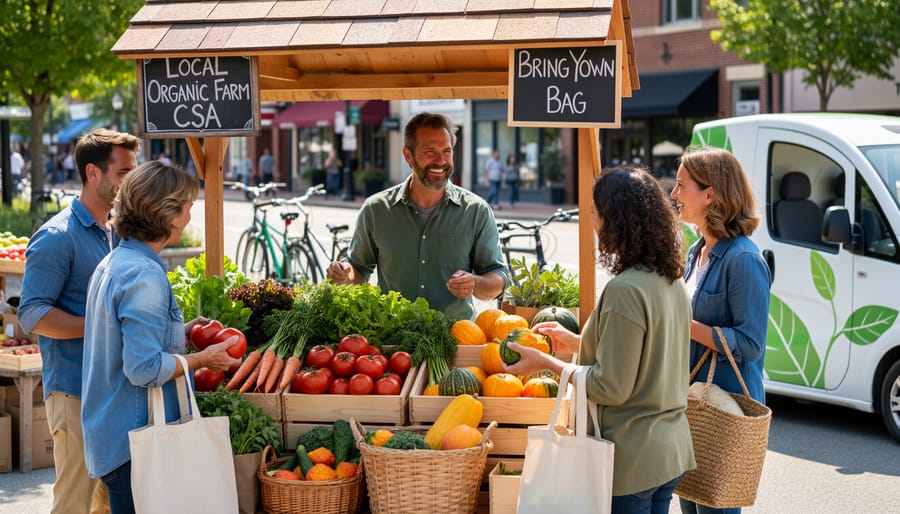
Stepping into a bustling farmers market or joining a Community Supported Agriculture program creates something supermarkets can’t replicate: a direct relationship with the people growing your food. Across Australia, these community-driven initiatives are transforming how we access organic produce while dramatically reducing environmental impact.
CSA programs connect you directly with organic farms. Members typically purchase a seasonal share upfront, receiving weekly boxes of whatever’s been harvested. This model eliminates packaging waste, cuts transport emissions, and helps farmers plan sustainably without market uncertainty. Melbourne’s CERES Fair Food and Brisbane’s Organic Growers Co-operative have pioneered successful CSA models that now inspire similar programs nationwide.
Farmers markets offer another powerful alternative. With over 150 certified farmers markets across Australia, you can meet growers face-to-face, ask about their practices, and purchase produce that’s often been picked within 24 hours. There’s no packaging, minimal transport, and your dollars support local organic farmers directly rather than filtering through distribution chains.
Many farms also welcome direct purchasing, offering gate sales or delivery subscriptions. This approach typically means lower prices than retail, fresher produce, and the satisfaction of knowing exactly where your food originates. Start by searching for organic farms near you through directories like Australian Organic or local community food networks.

Beyond Organic: A Holistic Approach to Sustainable Food Consumption
Reducing Food Waste Matters More Than You Think
Here’s a sobering reality: Australians discard around 7.6 million tonnes of food annually, generating more greenhouse gas emissions than our entire aviation industry. When food decomposes in landfill, it releases methane, a greenhouse gas 25 times more potent than carbon dioxide. The environmental cost? Approximately 17.5 million tonnes of CO2 equivalent each year.
This matters deeply when considering organic food sustainability. While choosing organic produce supports better farming practices, wasting it negates those environmental benefits entirely. A conventional apple eaten is far better for the planet than an organic one thrown away. The production, transport, and decomposition of wasted food all contribute to our carbon footprint, regardless of how it was grown.
The encouraging news is that Australian communities are tackling this challenge together. Grassroots initiatives like community fridges, food rescue organisations such as OzHarvest, and innovative apps connecting surplus food with local consumers are flourishing nationwide. At home, simple practices make a genuine difference: meal planning before shopping, embracing imperfect produce, storing food correctly to extend freshness, and composting unavoidable scraps.
When we prevent waste, we honour the resources, energy, and people involved in bringing food to our tables. It’s sustainability in action, accessible to everyone regardless of budget.
Plant-Forward Eating and Sustainable Protein Choices
Your food choices create ripples far beyond your dinner plate. While organic certification matters, what you eat often carries greater environmental weight than how it’s grown. Australian research reveals that plant-based diets can reduce food-related emissions by up to 73%, even when comparing conventional plant foods to organic meat.
Here’s the reality: producing one kilogram of beef generates approximately 27 kilograms of greenhouse gases, regardless of farming method. Meanwhile, organic lentils or chickpeas produce less than one kilogram. This doesn’t mean abandoning meat entirely, but rather embracing a plant-forward approach where vegetables, legumes, and grains take centre stage.
Aussie farmers are leading innovative protein solutions. Consider supporting local producers of organic tempeh from Byron Bay, regeneratively-grown quinoa from Tasmania, or native wattleseed. When you do choose animal protein, opt for organic Australian lamb or grass-fed beef from regenerative farms, consumed in smaller, more mindful portions.
Community gardens across Melbourne and Perth are demonstrating how growing your own beans, herbs, and vegetables combines organic principles with zero food miles. These plant-based alternatives aren’t about perfection but progress, creating delicious meals while nurturing both your health and the environment.
Supporting Sustainable Food Systems in Your Community
Across Australia, communities are proving that supporting sustainable food systems starts at the grassroots level. Food cooperatives like Melbourne’s CERES Fair Food and Sydney’s Food Connect are reconnecting urban consumers with regional organic farmers, cutting food miles while ensuring fair prices for growers. These community-supported agriculture programs deliver fresh, seasonal produce directly to your neighbourhood, building relationships between those who grow food and those who eat it.
Urban farming projects are transforming unused spaces into productive gardens. Initiatives like Perth’s Urban Orchard and Brisbane’s Northey Street City Farm demonstrate how communities can grow organic food while teaching sustainable practices. Many councils now offer community garden plots where residents share knowledge, seeds, and harvests.
You can amplify this impact through advocacy. Support campaigns pushing for stronger organic standards, reduced pesticide use in public spaces, and funding for regenerative agriculture research. Join organisations like the Australian Food Sovereignty Alliance or attend local council meetings to voice support for urban agriculture initiatives. Every conversation, petition signature, and attended workshop strengthens Australia’s transition toward resilient, organic-focused food systems that nourish communities and country alike.
Real Stories: Australian Farmers and Consumers Leading the Way
Across Australia, farmers and communities are proving that sustainable organic food isn’t just theory—it’s happening right now, creating ripples of positive change.
In the Yarra Valley, Victoria, Honeybee Organic Farm has transformed 12 hectares into a thriving example of regenerative organic agriculture. Owner Sarah Mitchell doesn’t just avoid synthetic chemicals; she’s building soil health through diverse crop rotations, integrating heritage breed chickens that naturally control pests, and creating habitat corridors for native wildlife. “We measure our success by earthworm counts and bird species, not just yield,” Sarah explains. Her farm now supplies weekly veggie boxes to 200 local families and has become a teaching ground for aspiring organic farmers. The result? Soil carbon levels have increased by 40% in five years, and the farm sequesters more carbon than it emits.
Meanwhile, in Western Australia’s southwest, the Margaret River Food Collective is reimagining how communities access sustainable food. This cooperative of 15 organic farms and 300 member families has eliminated the need for long-distance transport and excessive packaging. Members volunteer at farms in exchange for fresh produce, creating genuine connections between growers and eaters. “My kids now understand that tomatoes don’t naturally come in plastic,” shares member James Chen. “They’ve learned seasonality, composting, and why organic matters—not from lectures, but from getting their hands dirty.”
In Brisbane’s inner suburbs, the Northside Food Co-op demonstrates urban sustainability in action. This volunteer-run cooperative sources exclusively from certified organic farms within 250 kilometres, ensuring freshness while supporting regional growers. They’ve diverted thousands of kilograms from landfill through their zero-waste bulk buying system and composting program.
These stories remind us that sustainable organic food isn’t just about what we avoid—it’s about what we build together: healthier soil, stronger communities, and a food system that genuinely nurtures both people and planet.
Organic food isn’t a magic solution, but it’s a valuable tool in your sustainability toolkit. The real power lies in your willingness to ask questions and think critically about where your food comes from. When you chat with farmers at your local market, choose certified organic products from farms practising regenerative methods, or support community food initiatives, you’re contributing to meaningful change.
Remember, sustainable eating isn’t about perfection—it’s about progress. Sometimes the most sustainable choice is the locally grown conventional apple rather than the imported organic one. Other times, choosing organic protects precious Australian soil and waterways for future generations.
Australia’s sustainable food movement is gathering remarkable momentum, with innovative farmers, passionate communities, and conscious consumers driving transformation across the country. Your informed choices, however small they might seem, ripple outward. Together, we’re building a food system that nourishes both people and planet. Start where you are, use what you have, and trust that every mindful decision matters in creating the sustainable future we all want to see.