
Australian workplaces generate approximately 2.5 million tonnes of food waste annually, with commercial kitchens and catering services contributing a staggering proportion of this environmental burden. Yet within this challenge lies an extraordinary opportunity: foodservice operations that embrace sustainability don’t just reduce their environmental footprint—they cut costs, attract talent, and strengthen their community standing.
The transformation begins with understanding that sustainable foodservice isn’t about sacrificing quality or convenience. It’s about reimagining how we source, prepare, serve, and dispose of food in ways that honour our planet while enhancing the workplace experience. From bustling corporate campuses in Sydney to regional office parks in Bendigo, Australian businesses are discovering that environmental responsibility and excellent catering go hand in hand.
The evidence is compelling. Workplaces that implement comprehensive sustainability programs in their foodservice operations report average cost savings of 15-20% through reduced waste, lower energy consumption, and streamlined procurement. Employees increasingly expect their employers to demonstrate genuine environmental commitment—and the daily ritual of workplace dining offers tangible proof of those values in action.
This shift requires more than swapping plastic cutlery for bamboo alternatives. True foodservice sustainability encompasses everything from supporting local regenerative farms to designing waste systems that divert 90% of materials from landfill. It means questioning the entire supply chain, rethinking portion sizes, and building partnerships with suppliers who share your environmental vision.
Whether you’re just beginning your sustainability journey or looking to elevate existing initiatives, the path forward combines practical strategies with genuine commitment. The Australian businesses leading this movement prove that environmental stewardship and exceptional foodservice aren’t competing priorities—they’re inseparable elements of a thriving, future-focused workplace.
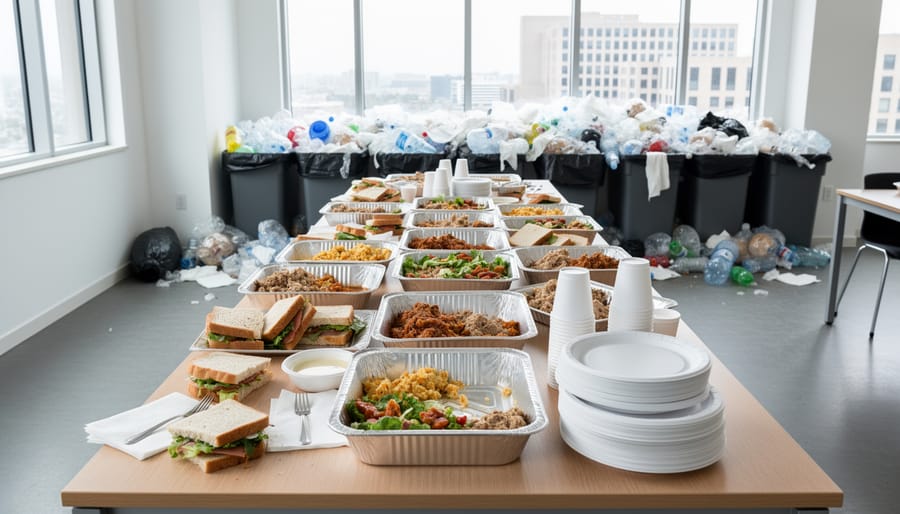
The True Cost of Business-as-Usual Workplace Catering
Where Workplace Food Waste Really Happens
Understanding where food waste occurs in your workplace is the first step toward meaningful change. Australian workplaces generate an estimated 1.2 million tonnes of food waste annually, with corporate catering contributing significantly to this figure. The good news? Most of this waste happens at predictable points where you can intervene.
Over-ordering remains the primary culprit in workplace foodservice waste. Many caterers and facilities managers order based on headcount rather than actual consumption patterns, leading to excess food that goes uneaten. Research from sustainability consultants across Melbourne and Sydney shows that workplace events typically see 20-30% of catered food go to waste simply because of inaccurate forecasting.
Portion sizes present another challenge. Standard catering portions often exceed what people actually consume, especially during breakfast meetings and afternoon tea services. When plates arrive already laden with food, employees have no choice but to leave what they can’t finish.
Expired stock in workplace kitchens and cafeterias tells its own story. Milk, bread, and prepared foods often reach their use-by dates before being consumed, particularly over weekends and holiday periods. Without proper stock rotation systems, these items quietly accumulate in bins.
Plate waste, what employees leave uneaten, accounts for approximately 35% of workplace food waste according to Australian Environmental Protection Authority data. This happens when meetings run over scheduled times, dietary preferences aren’t accommodated, or food simply doesn’t appeal to employees.
Recognising these waste points empowers your organisation to target improvements where they’ll make the biggest difference.
The Packaging Problem Nobody Talks About
Every working day, Australian workplaces generate a staggering amount of packaging waste that most of us never think twice about. That morning coffee cup, the plastic cutlery from your lunch delivery, the takeaway containers from the office canteen – they all add up. Research shows that Australian food services produce over 67,000 tonnes of single-use plastic packaging annually, with workplace catering contributing a significant portion.
The real challenge lies in items that seem recyclable but aren’t. Those black plastic containers from your favourite lunch spot? They can’t be detected by recycling machinery. The coffee cup with a plastic lid? Different materials that require separation. These items bypass recycling facilities and head straight to landfill, or worse, find their way into our waterways and oceans.
The impact extends beyond bins and beaches. When integrated into effective office waste management strategies, addressing packaging waste can significantly reduce your workplace’s environmental footprint. The good news? Australian businesses are increasingly recognising this hidden problem and taking action. From reusable container programs to partnerships with suppliers using compostable packaging, practical solutions are emerging that make reducing packaging waste both achievable and cost-effective for workplaces of all sizes.
Building a Sustainable Workplace Food System From the Ground Up
Smart Sourcing: Local, Seasonal, and Ethical
The foundation of any sustainable foodservice operation starts with where your ingredients come from. By partnering with local Australian farmers and suppliers, you’re not just reducing your carbon footprint through lower food miles—you’re investing in your community and getting fresher, more nutritious produce for your workplace catering.
Start by exploring farmers markets in your area or connecting with regional food hubs that aggregate products from multiple local growers. Many Australian cities now have farm-to-business programs specifically designed to help foodservice operators source directly from producers. Take the story of a Melbourne tech company that transformed their cafeteria by partnering with three nearby farms in the Yarra Valley. Not only did their food waste decrease by 30 percent due to fresher ingredients lasting longer, but staff engagement soared as employees connected with the farmers through quarterly visits.
Seasonal eating is your secret weapon for both sustainability and cost savings. When you align your menu with what’s naturally growing, you reduce the energy required for greenhouse cultivation and cold storage. Create relationships with your suppliers where they can notify you of upcoming harvests, allowing your kitchen team to plan menus around abundance rather than scarcity.
For proteins, consider the environmental impact of your choices. Australian-raised chicken and sustainably caught seafood generally have lower carbon footprints than red meat. When you do serve beef or lamb, seek out regenerative agriculture producers who are actively improving soil health. Organizations like the Australian Food Sovereignty Alliance maintain directories of ethical producers committed to sustainable practices.
Building strong supplier relationships takes time, but the payoff is immense. Regular communication, fair pricing agreements, and commitment to long-term partnerships create stability for farmers while ensuring consistent quality for your foodservice operation.
Menu Design That Cuts Waste and Carbon
Your menu choices can be one of your most powerful tools for reducing workplace catering’s environmental impact. The good news? Sustainable eating doesn’t mean sacrificing flavour or satisfaction.
Plant-forward menu planning puts vegetables, legumes, and grains at the centre of the plate, with animal proteins playing a supporting role rather than starring. This approach naturally aligns with carbon neutral operations, as plant-based meals typically generate 50-75% fewer emissions than red meat-heavy dishes. You don’t need to go fully vegetarian either. Simply offering two appealing plant-based options alongside one meat dish can dramatically shift consumption patterns.
When meat does feature, consider nose-to-tail cooking practices that honour the whole animal and reduce waste. Pulled pork from shoulder cuts, chicken thigh curries, or beef cheek stews are both delicious and sustainable. Australian caterers like Cornersmith in Sydney have built entire menus around this philosophy, proving that waste reduction can be genuinely craveable.
Flexibility matters too. Design menus that easily accommodate various dietary requirements without creating separate waste streams. A build-your-own bowl station or modular menu components mean one base preparation serves multiple needs.
The secret to success? Make sustainable options the default, not the alternative. When plant-forward dishes are the most convenient, beautifully presented, and flavourful choices available, your team will naturally gravitate toward them. Trial different options, gather feedback, and celebrate the meals that become workplace favourites. You’re building new habits, one delicious lunch at a time.
Eliminating Single-Use Everything
The journey away from single-use items might seem daunting, but Australian workplaces are proving it’s entirely achievable with the right systems in place.
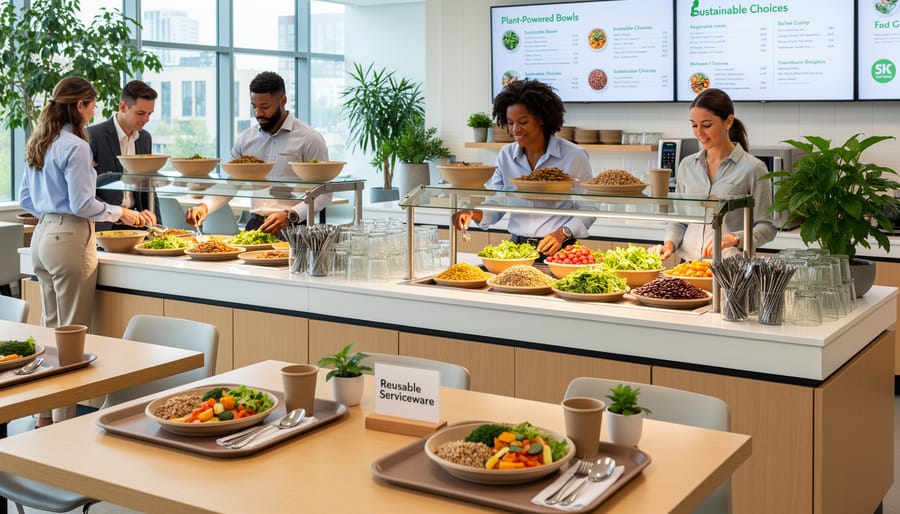
Start by introducing reusable serviceware systems. Many Melbourne and Sydney offices have partnered with companies like Returnr and Green Caffeen, which provide deposit-based reusable cup and container schemes. Employees borrow a container, use it, and return it to participating venues or workplace collection points. The system works brilliantly because it removes the burden of remembering to bring items from home whilst eliminating waste. Some workplaces have gone further, investing in their own commercial dishwashers and quality crockery, treating their staff café like a proper restaurant.
When disposables are unavoidable for events or takeaway situations, compostable alternatives made from bagasse, bamboo, or cornstarch offer a better option than conventional plastics. However, these only work if your workplace has access to commercial composting, so verify this before making the switch. Like other sustainable office products, quality matters, so source certified compostable items.
Encourage a BYO culture through incentive programs. Brisbane’s Energex offers staff a 50-cent discount on café purchases when they bring reusable cups and containers. Combined with communications highlighting the environmental impact, these small financial nudges create lasting behavioural change.
Managing the logistics requires clear signage, convenient washing stations, and regular communication. Assign a sustainability champion to oversee the transition, gather feedback, and troubleshoot issues. The initial adjustment period typically lasts just a few weeks before reusables become the new normal.
Turning Food Scraps Into Resources
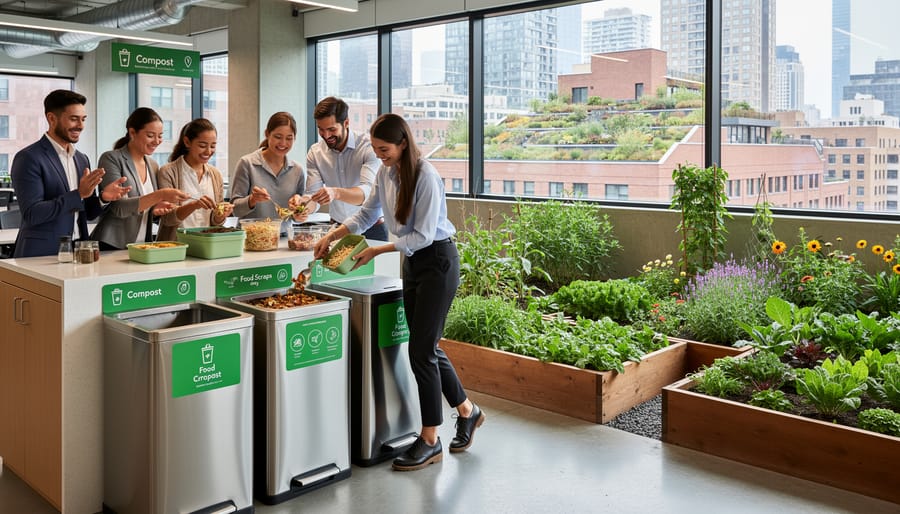
Every workplace kitchen generates food scraps, but what if those potato peels and coffee grounds became valuable resources instead of landfill contributions? Australian businesses are discovering that food waste isn’t really waste at all – it’s an opportunity waiting to be transformed.
Starting a composting system in your workplace doesn’t require a massive outdoor space. Compact worm farms and bokashi bins work brilliantly in urban kitchens, breaking down organic matter into nutrient-rich soil that can nourish office plants or community gardens. Melbourne’s CERES Environment Park offers workshops specifically designed for workplace composting, helping teams understand the basics and avoid common pitfalls like odour issues or pest attraction.
For businesses generating larger volumes, partnering with commercial composting services makes perfect sense. Companies like Goterra and Return Organics operate across Sydney, Melbourne, Brisbane, and Perth, collecting organic waste and processing it into high-grade compost. These services often provide detailed reporting, helping you track exactly how much waste you’ve diverted from landfill – data that looks fantastic in your sustainability reports.
Food that’s perfectly edible but surplus to your needs deserves a better fate than the bin. OzHarvest operates in every Australian state, collecting quality excess food from businesses and redistributing it to charities feeding people in need. Since 2004, they’ve rescued over 250 million meals. Similarly, SecondBite and Foodbank connect businesses with local community organisations, turning your surplus sandwiches or fresh produce into meals for Australians experiencing food insecurity.
Getting creative with trimmings also makes a difference. Vegetable scraps become flavourful stocks, stale bread transforms into croutons or breadcrumbs, and citrus peels can be dried for cleaning solutions. These simple practices reduce waste while cutting costs and inspiring your team to think differently about food’s full potential.
Making It Work: Implementation Strategies for Australian Workplaces
Starting Small and Building Momentum
The journey to sustainability doesn’t require a complete overhaul overnight. Australian businesses are finding success by starting with manageable changes that build confidence and demonstrate value before expanding further.
Begin with a pilot program in one area of your operation. Perhaps start with eliminating single-use plastics from your staff kitchen, or trial composting food scraps for just one month. Melbourne’s Envato tested reusable container systems with a single team before rolling it out company-wide, allowing them to work through logistical challenges on a smaller scale.
Quick wins create momentum and staff buy-in. Simple swaps like switching to Australian-owned Who Gives A Crap toilet paper or introducing Keep Cup discounts show immediate, visible change. These early successes help you secure budget approval for larger initiatives down the track.
Consider a phased rollout over six to twelve months. Month one might focus on waste reduction, month two on sourcing local produce, and month three on energy efficiency in food preparation areas. This approach prevents overwhelming your team and allows you to measure impact at each stage.
Remember, every major sustainability program in Australia started with a single committed person taking one small step. Your workplace’s journey begins exactly where you are today, not where you think you should be.
Getting Your Team on Board
Transforming your foodservice operations starts with the people who make it happen every day. Your team’s enthusiasm and commitment can turn sustainability goals into everyday reality.
Begin by identifying passionate individuals who can become sustainability champions within your workplace. These advocates help spread the message, answer questions, and keep momentum going when challenges arise. Consider forming a green team that meets regularly to share ideas and track progress.
Education is your foundation. Run engaging workshops that connect environmental actions to tangible outcomes. Share Australian success stories, like Melbourne cafeterias reducing waste by 70% through simple changes, to inspire your crew. Make training interactive through cooking demonstrations featuring local, seasonal ingredients or waste-sorting challenges with friendly competition between departments.
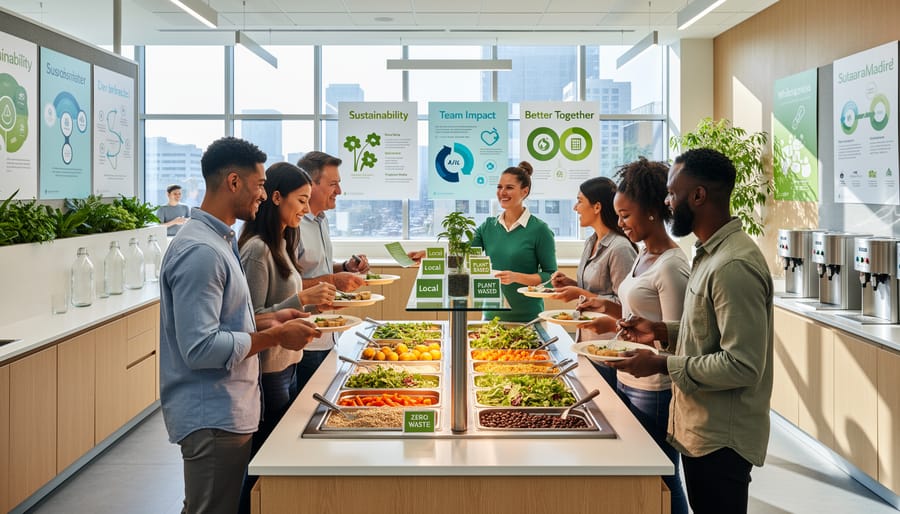
Create visible reminders of your sustainability journey. Display progress charts showing reductions in food waste or single-use plastics. Celebrate wins together, whether it’s composting milestones or securing a new local supplier partnership.
Remember, change doesn’t happen overnight. Foster open dialogue where staff can voice concerns and suggest improvements. When your team understands the why behind each initiative and feels ownership of the outcomes, sustainable practices become second nature rather than added tasks.
Tracking Your Impact
Measuring your sustainability progress doesn’t need to be complicated. Start by establishing simple baseline metrics: weigh your food waste for one week, track energy bills, and calculate current packaging volumes. Many Australian foodservice operators find success using the Australian Food Pact’s free waste measurement toolkit, which provides standardised templates for tracking reduction targets.
For carbon footprint calculations, the Climate Active Carbon Neutral Standard offers an Australian-specific framework that many businesses recognise and trust. The online calculator helps you measure emissions from food procurement, energy use, and waste disposal, translating your efforts into tangible environmental savings.
Cost tracking is equally important and often the most compelling story for stakeholders. Document savings from reduced waste disposal fees, lower purchasing costs through better inventory management, and energy bill reductions. One Melbourne cafe saved $8,000 annually simply by tracking and addressing their coffee ground waste.
Share your wins with your team and customers through regular updates. Create a simple sustainability dashboard in your staff area showing monthly progress, or share quarterly achievements on social media. Planet Ark’s Business Sustainability Hub offers excellent resources for communicating your environmental commitments effectively. Remember, celebrating small victories builds momentum and engages your entire community in the journey toward greater sustainability.
Australian Businesses Leading the Way
Across Australia, forward-thinking businesses are proving that sustainable workplace catering isn’t just an aspiration—it’s an achievable reality delivering tangible benefits. These pioneers are showing how corporate sustainability initiatives can transform daily operations while strengthening community connections.
Melbourne-based technology company Envato has revolutionized its staff kitchen by partnering exclusively with local suppliers within a 100-kilometer radius. Their on-site café sources organic produce from urban farms in Footscray and Brunswick, reducing food miles while supporting Melbourne’s growing urban agriculture movement. The challenge? Seasonal menu planning required their catering team to develop flexibility and creativity. The results speak volumes: a 60 percent reduction in food-related carbon emissions and zero food waste to landfill through a composting partnership with local community gardens. Staff engagement has soared, with employees volunteering at partner farms during team-building days.
In Sydney, the engineering firm GHD implemented a comprehensive sustainable catering program across their offices, focusing on eliminating single-use plastics and minimizing meat-heavy menus. They introduced a “Meatless Monday” initiative that evolved into three plant-based days weekly after positive staff feedback. By partnering with social enterprise catering company Thank You Catering, they’ve redirected funds to support clean water projects while providing employment opportunities for disadvantaged communities. The initial resistance from employees accustomed to traditional catering melted away once they experienced the quality and variety of plant-forward options. GHD now reports annual savings of 15,000 dollars in waste management costs alone.
Brisbane’s CPEC Group took a different approach, establishing a rooftop garden that supplies 30 percent of their kitchen’s fresh herbs and vegetables. This living laboratory educates staff about food production while creating a peaceful green space in the CBD. Their partnership with local indigenous food suppliers has introduced native ingredients to workplace menus, celebrating Australian heritage while reducing environmental impact.
These success stories demonstrate that sustainable workplace catering strengthens businesses, communities, and our environment simultaneously.
Creating a sustainable workplace foodservice isn’t just good for the planet—it’s a win for your business, your team, and the broader Australian community. The evidence is clear: from reduced operating costs to improved employee satisfaction and a lighter environmental footprint, the benefits extend far beyond the lunchroom. Whether you’re a small Sydney startup or a sprawling Melbourne corporate office, the path to sustainability starts with a single step.
The beauty of this journey is that perfection isn’t the goal—progress is. Start with one change that resonates with your workplace. Perhaps it’s switching to a local caterer who prioritizes seasonal ingredients, introducing a composting system, or simply reducing single-use plastics in your kitchen. Each decision, no matter how modest it may seem, contributes to a larger movement reshaping how Australian businesses approach food.
Remember, you’re not alone in this. Across the country, workplaces are making similar commitments, creating a collective impact that’s already transforming our food systems. The conversations happening in your office today—about where food comes from, how it’s packaged, and what happens to the waste—are rippling through supply chains and inspiring others to follow suit.
The time to act is now. Your workplace has the power to be part of Australia’s sustainable future. Take that first step today, and watch how quickly positive change takes root.