
Australian businesses waste an average of 30% of their energy and 20% of their water through inefficient systems, outdated equipment, and poor operational practices—losses that translate directly to thousands of dollars vanishing from your bottom line each year. Energy and water efficiency consulting identifies these hidden drains on your resources and transforms them into competitive advantages, combining technical audits with tailored implementation strategies that deliver measurable returns within months, not years.
The consulting process begins with comprehensive site assessments using thermal imaging, flow monitoring, and energy logging to pinpoint exactly where your business is hemorrhaging resources. Consultants then develop prioritized action plans that balance quick wins—like optimizing HVAC schedules or fixing leaks—with strategic upgrades such as equipment replacements or process redesigns. What sets professional consulting apart from DIY approaches is the specialist knowledge of Australian climate zones, industry-specific regulations, and access to government rebate programs that can offset 30-70% of implementation costs.
Real results speak louder than promises. Melbourne manufacturer Precision Components reduced energy costs by $47,000 annually after consultants identified motor inefficiencies and recommended variable speed drives. A Perth hospitality group cut water usage by 35% across five venues through targeted fixture upgrades and staff training programs, achieving payback in just 14 months. These aren’t isolated success stories—they’re becoming the competitive baseline as Australian businesses face rising utility costs and increased stakeholder expectations around environmental performance.
Whether you’re managing a small retail operation or overseeing multi-site industrial facilities, efficiency consulting offers clear pathways to reduced operating costs, enhanced sustainability credentials, and improved resilience against future price volatility. The question isn’t whether you can afford to invest in efficiency consulting—it’s whether you can afford to keep ignoring the opportunities hiding in your utility bills.
Why Australian Businesses Are Turning to Energy and Water Efficiency Consultants
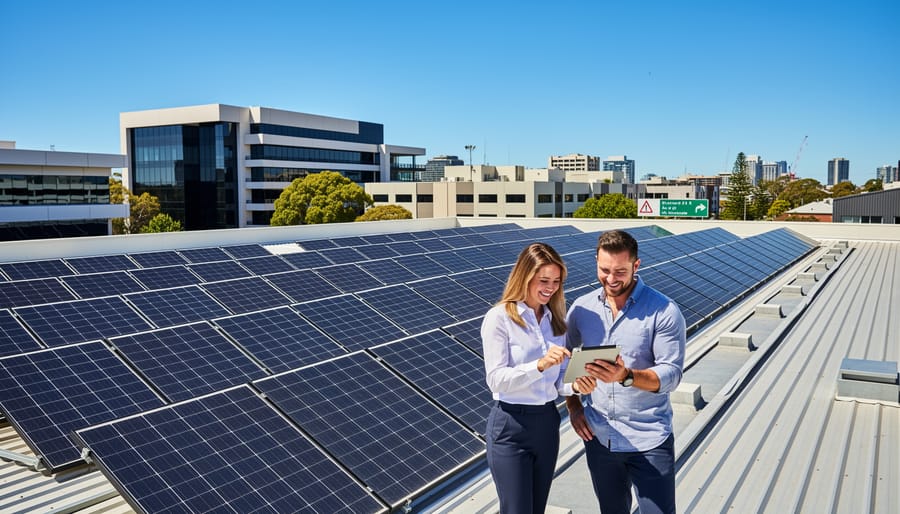
The True Cost of Business Inefficiency in 2024
The financial drain of inefficient resource use affects Australian businesses far more than most owners realize. Let’s put some real numbers to this hidden cost across different sectors.
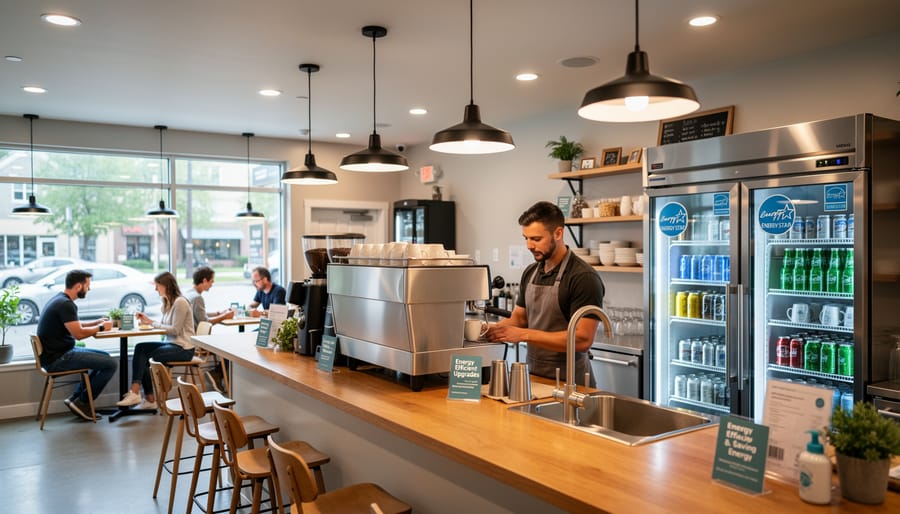
For a typical Australian café or restaurant, inefficient equipment and practices can waste upwards of $12,000 annually. A Melbourne hospitality group recently discovered their older dishwashers were using 40% more water than necessary, while poorly maintained refrigeration units were driving up electricity bills by $400 monthly. Simple upgrades helped them reduce energy costs by nearly 35%.
Manufacturing facilities face even steeper losses. A Queensland food processing plant found they were losing $45,000 yearly through compressed air leaks alone, while inefficient cooling systems added another $30,000 to their bottom line. These aren’t isolated cases – industry data suggests Australian manufacturers collectively lose millions through preventable inefficiencies.
Retail businesses aren’t immune either. A Sydney retail chain with twelve stores discovered their lighting and HVAC systems were costing them $8,000 extra per location annually. Office spaces typically waste 20-30% of their energy budget through after-hours equipment usage and inefficient climate control.
The good news? Unlike many business expenses, these losses are entirely recoverable. Every dollar wasted represents an opportunity for savings that flow straight to your bottom line. Understanding your specific inefficiencies is the crucial first step toward reclaiming these funds while reducing your environmental footprint.
Beyond Compliance: The Business Case for Going Further
Meeting minimum compliance standards might tick regulatory boxes, but it’s really just the starting point. Australian businesses that embrace proactive efficiency measures are discovering compelling financial returns while positioning themselves ahead of the curve. The numbers tell a powerful story: companies investing in comprehensive energy and water audits typically see 15-30% reduction in utility costs within the first year, with payback periods often under three years.
Beyond the bottom line, there’s significant brand value at stake. Today’s customers, employees, and investors increasingly favour businesses demonstrating genuine environmental commitment. When your company actively reduces its footprint through strategic carbon mitigation strategies and resource efficiency, you’re building trust and differentiation in a competitive marketplace.
Perhaps most importantly, forward-thinking efficiency investments prepare you for inevitable regulatory tightening. Rather than scrambling when new standards arrive, businesses already operating above baseline requirements enjoy smoother transitions and avoid costly retrofits. Professional consultants help identify these future-proofing opportunities, ensuring your investments deliver value both today and tomorrow. In Australia’s evolving sustainability landscape, going beyond compliance isn’t just good ethics, it’s smart business strategy that protects margins while strengthening your market position.
What Energy and Water Efficiency Consulting Actually Involves
The Discovery Phase: Understanding Your Business’s Unique Footprint
Every business has its own unique energy and water story, and understanding yours begins with a thorough discovery phase. Professional consultants start by conducting comprehensive audits of your premises, examining everything from lighting systems and HVAC units to water fixtures and production processes. They’ll walk through your facility with specialized monitoring equipment, collecting detailed data on consumption patterns throughout different times of day and operational cycles.
This isn’t just about reading your utility bills. Consultants dig deeper, analyzing how your business compares against industry benchmarks specific to Australian conditions and standards. A Brisbane café, for instance, will be measured against similar hospitality venues in subtropical climates, while a Perth manufacturer gets benchmarked against comparable industrial operations.
During this phase, consultants look for the low-hanging fruit – those quick wins that deliver immediate savings – alongside longer-term efficiency opportunities. They’ll identify equipment running inefficiently, water leaks you didn’t know existed, and operational practices that inadvertently waste resources. Many businesses discover they’re spending 20-40% more than necessary on utilities simply because nobody had taken the time to look closely.
The beauty of this discovery process is that it’s tailored entirely to your circumstances. Whether you’re a small retail shop or a large manufacturing plant, consultants work with your team to understand your operational constraints and priorities, ensuring recommendations fit your reality, not just theoretical ideals.
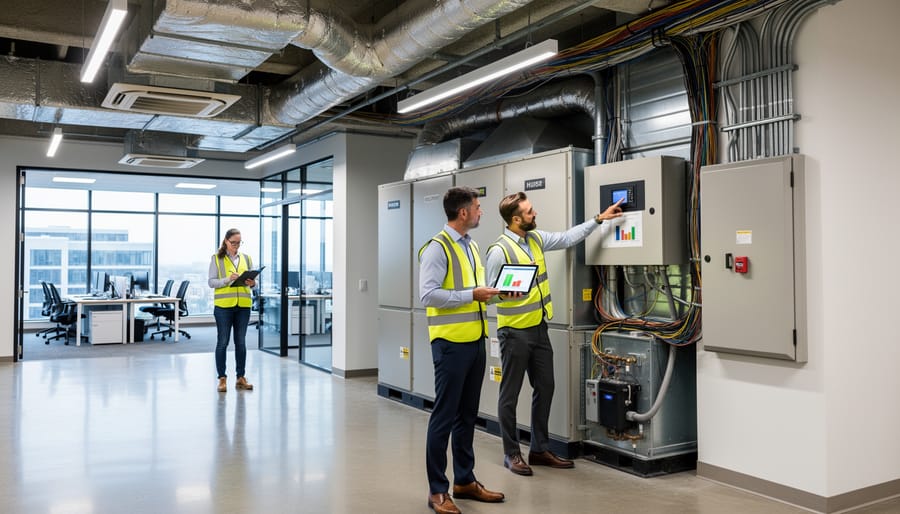
Custom Solutions, Not Cookie-Cutter Fixes
Every Australian business has unique energy and water needs, and the best consultants recognise this from day one. Rather than arriving with a predetermined checklist, they take time to understand your specific operations, budget constraints, and sustainability goals before crafting tailored recommendations.
A Melbourne café might benefit most from installing flow restrictors on taps and upgrading to energy-efficient coffee machines, while a Brisbane manufacturing facility could see greater returns from heat recovery systems and closed-loop water recycling. The approach varies dramatically based on your industry, existing infrastructure, and growth plans.
Good consultants also consider your team’s capacity for change. A family-run Perth warehouse might need simple, low-maintenance solutions they can implement gradually, whereas a Sydney corporate office with dedicated facilities staff could manage more complex building management systems.
Budget flexibility matters too. Consultants worth their salt will prioritise quick wins that pay for themselves within months, then map out longer-term investments that align with your financial planning cycles. They’ll show you multiple pathways to efficiency, not just the most expensive option. This personalised approach means you’re investing in solutions that actually work for your business, creating lasting change rather than temporary fixes that gather dust.
Implementation Support and Staff Training
The real magic happens when efficient systems meet engaged people. Australian consultants understand that even the best technology fails without proper adoption, which is why they prioritize comprehensive training programs that bring your entire team along for the journey.
Your consultant will design tailored training sessions that speak directly to different roles within your organization. Maintenance teams learn optimal equipment settings, office staff discover simple daily habits that compound into significant savings, and managers receive dashboards to track progress and celebrate wins together.
Behavior change programs transform efficiency from a top-down directive into a shared mission. Many Australian businesses have found success with friendly competitions between departments, visual displays showing real-time water and energy use, and recognition systems that spotlight sustainability champions. These initiatives tap into our natural community spirit while driving measurable results.
Implementation support extends beyond the initial rollout too. Consultants typically provide ongoing check-ins during the critical first months, troubleshooting issues before they derail progress and adjusting strategies based on what’s actually working in your unique environment. This hands-on partnership ensures your investment delivers lasting change rather than temporary enthusiasm that fades once the consultant leaves.
Real Results: What Australian Businesses Are Achieving
Small Business Transformations
Real Australian businesses are already reaping the rewards of energy and water efficiency consulting, proving that transformation is within reach for enterprises of all sizes.
The Grind Café in Brunswick, Melbourne, partnered with local consultants to address their soaring utility bills. Through installing a heat pump hot water system, upgrading to commercial-grade energy-efficient espresso machines, and implementing water-saving tap aerators, they reduced energy consumption by 35% and water use by 28%. The café owner, Sarah, reports saving approximately $4,200 annually while proudly displaying their sustainability credentials to environmentally conscious customers.
Over in Brisbane, Coastal Threads boutique discovered that their outdated air conditioning was consuming nearly 40% of their total energy. Their consultant recommended zoned cooling, LED lighting throughout the store, and smart sensors that adjust climate control based on foot traffic. Within eight months, they’d recovered their investment costs and now save $3,600 yearly.
Meanwhile, Perth-based artisan soap manufacturer Little Lather reduced water consumption by 42% through recycling rinse water and installing flow restrictors. Combined with solar panel installation recommended by their consultant, they’ve slashed operating costs by $5,800 annually. These savings have allowed them to invest in organic ingredients and expand their product line, demonstrating how efficiency improvements can fuel business growth while protecting our precious Australian resources.
Medium to Large Enterprise Impact
For medium to large enterprises, energy and water efficiency consulting delivers transformational change that ripples far beyond individual facilities. When a manufacturer with multiple sites reduces water consumption by 40%, or a retail chain cuts energy costs across 200 stores, the environmental and economic benefits multiply exponentially.
These larger-scale implementations often achieve remarkable outcomes. A Brisbane-based food processing company recently partnered with efficiency consultants to overhaul their operations across three facilities, resulting in annual savings of $850,000 and reducing their carbon footprint equivalent to taking 400 cars off the road. The investment paid for itself within 18 months, while strengthening their brand reputation among increasingly eco-conscious consumers.
What makes enterprise-level consulting particularly powerful is the holistic approach. Consultants don’t just address isolated issues – they redesign entire systems, integrate renewable energy sources, implement sophisticated monitoring technology, and create cultures of sustainability across organisations. Some forward-thinking companies are even working toward zero energy efficiency targets for new builds and major renovations.
The community impact shouldn’t be overlooked either. Large employers implementing efficiency measures inspire their supply chains, influence industry standards, and demonstrate leadership that encourages other businesses to follow suit. They’re also better positioned to weather energy price volatility and regulatory changes, creating more stable employment and stronger local economies. When enterprises commit to sustainability, they’re not just reducing their operational costs – they’re helping build a more resilient, environmentally responsible Australia for everyone.
The Quick Wins Your Business Can Implement Today
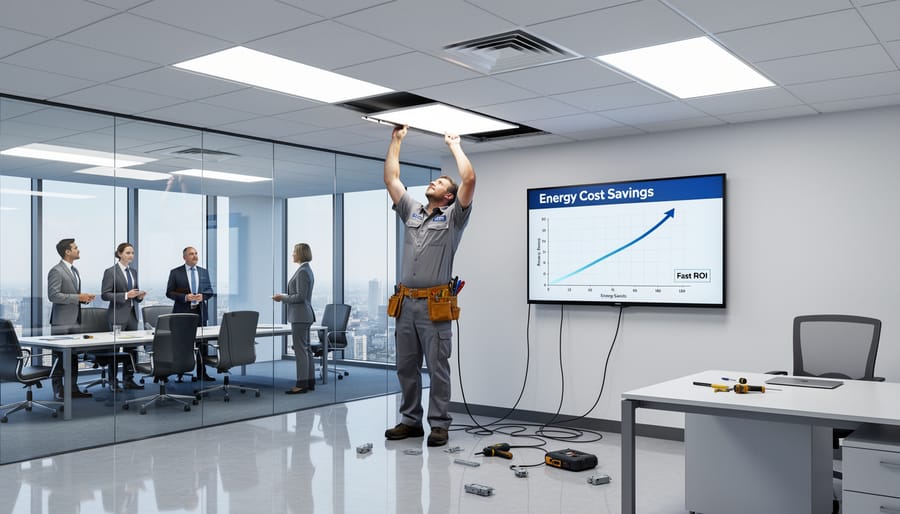
Low-Cost, High-Impact Energy Efficiency Measures
You don’t need a massive budget to start seeing real savings on your energy bills. Many Australian businesses discover that simple, strategic changes deliver impressive returns within months, not years.
LED lighting upgrades remain the quickest win, with businesses typically recovering costs within 12-18 months while slashing lighting energy use by up to 80%. One Melbourne café reduced their monthly electricity bill by $340 simply by switching to LEDs throughout their premises.
HVAC optimization often reveals hidden savings too. Regular maintenance, programmable thermostats, and adjusting temperature settings by just 1-2 degrees can reduce heating and cooling costs by 10-15%. Consider scheduling equipment to run only during operating hours – a Brisbane warehouse saved $4,200 annually by programming their air conditioning to switch off outside business hours.
Smart power boards eliminate phantom loads from equipment left on standby, while weather-stripping doors and windows prevents costly air leakage. For businesses investing in renewable energy, efficient solar energy storage maximizes the value of every kilowatt generated.
Don’t underestimate behavioral changes either. Engaging your team through energy awareness campaigns and simple reminders creates a culture of efficiency that costs nothing but delivers ongoing benefits. These practical steps prove sustainability and profitability go hand-in-hand for Australian businesses.
Water Conservation Strategies Every Business Should Know
Water is one of Australia’s most precious resources, and smart businesses are discovering that conservation isn’t just environmentally responsible—it’s financially savvy too. Whether you’re running a café in Melbourne or managing a manufacturing facility in Brisbane, simple strategies can deliver impressive savings.
Start with the basics: leak detection. A dripping tap might seem trivial, but it can waste thousands of litres annually. Regular audits, sometimes conducted alongside a business consultant specialising in efficiency, can identify hidden leaks in pipes, toilets, and irrigation systems before they drain your budget.
Fixture upgrades offer quick wins. Installing water-efficient taps, dual-flush toilets, and low-flow showerheads can reduce consumption by up to 40% without compromising functionality. Many Australian councils offer rebates for these upgrades, making the transition even more affordable.
Rainwater harvesting is gaining momentum across commercial properties. Even a modest system can supply toilet flushing, garden irrigation, or cooling tower needs, reducing mains water dependency during our increasingly frequent dry spells.
For businesses with manufacturing or processing operations, water recycling systems can transform wastewater into a valuable resource. From cooling water reuse to greywater systems for landscaping, these solutions create circular water economies within your operations.
The beauty of these strategies is their scalability—every business can start somewhere, building momentum toward meaningful water stewardship.
Choosing the Right Efficiency Consultant for Your Australian Business
Essential Qualifications and Experience
When choosing an energy and water efficiency consultant, you’re not just hiring an expert – you’re selecting a partner who’ll help shape your business’s sustainable future. Here’s what credentials and experience truly matter.
Look for consultants holding relevant Australian certifications. The Certified Energy Manager (CEM) qualification through the Association of Energy Engineers demonstrates technical expertise, while membership with the Clean Energy Council signals commitment to renewable energy standards. Many top consultants also hold building or engineering qualifications specific to energy efficiency.
Industry experience is crucial. A consultant who’s worked extensively with businesses similar to yours will understand your unique challenges. If you run a hospitality venue, they should know the water demands of commercial kitchens. Manufacturing clients need someone familiar with industrial equipment efficiency. Ask potential consultants for case studies from your sector – the best ones will have documented results they’re proud to share.
Track record matters more than promises. Request references from at least three Australian businesses they’ve worked with in the past two years. What percentage of projected savings did they actually achieve? Were they responsive and practical throughout the process? Did they help secure available rebates and incentives?
Finally, seek consultants who emphasize collaboration. The most successful projects happen when consultants work alongside your team, building internal capability rather than creating dependency. Your ideal consultant should empower your business community to maintain and improve efficiency long after the initial engagement ends.
Questions to Ask Before You Commit
Before partnering with an energy and water efficiency consultant, it’s essential to ask the right questions to ensure they’re the right fit for your business. Start by exploring their methodology: How do they conduct audits? What technology and measurement tools do they use? Understanding their approach helps you gauge whether they’ll provide thorough, evidence-based recommendations.
Ask about realistic timelines for both the assessment phase and implementation of improvements. A quality consultant will provide clear milestones rather than vague promises. Inquire about guarantees or performance metrics too. Will they stand behind their recommendations with projected savings estimates? Some consultants even offer shared-savings models where they’re invested in your success.
Don’t forget to discuss ongoing support. Will they help you monitor results after implementation? Do they provide training for your team to maintain efficiency gains? Many businesses find the greatest value comes from consultants who stick around to ensure changes deliver lasting results.
Finally, ask about their experience with Australian businesses in your sector. Have they worked with similar-sized operations? Can they navigate local rebate programs and compliance requirements? Request references from other Australian companies and specific examples of savings they’ve achieved. Remember, you’re not just hiring expertise, you’re choosing a partner in your sustainability journey, so finding someone who understands your unique challenges makes all the difference.
Funding and Incentives Available to Australian Businesses
Good news – making efficiency upgrades doesn’t mean shouldering the full cost alone. Right across Australia, governments and utilities are genuinely invested in helping businesses reduce their environmental footprint, and they’re backing this commitment with real financial support.
At the federal level, the Australian Government’s Energy Efficient Communities Program periodically offers grants for eligible businesses looking to upgrade equipment and systems. These programs change regularly, so it’s worth checking in with your energy consultant who typically stays current on available opportunities. Many businesses have successfully secured thousands of dollars through these initiatives, making substantial upgrades far more affordable than anticipated.
State and territory governments also run their own rebate schemes, each tailored to regional needs. Victorian businesses can tap into the Victorian Energy Upgrades program, which provides certificates that reduce the upfront cost of efficiency improvements. In New South Wales, the Energy Savings Scheme operates similarly, while South Australia offers incentives through Retailer Energy Productivity Scheme. Queensland, Western Australia, and other territories maintain their own programs, often targeting specific industries or equipment types.
Water utilities across Australia likewise offer rebates for businesses installing water-efficient fixtures, upgrading irrigation systems, or implementing recycling solutions. Sydney Water, Melbourne Water, and their counterparts elsewhere regularly run business programs that can cover substantial portions of upgrade costs.
Beyond grants and rebates, financing sustainable upgrades through green loans and specialized business finance options makes the transition even smoother. Many lenders now recognize that efficiency improvements deliver measurable returns, making them attractive propositions.
Here’s the practical reality: navigating this landscape feels overwhelming when you’re running a business. This is where energy and water efficiency consultants truly earn their keep. They know which programs apply to your situation, help complete applications, and ensure you’re maximizing available support. Many businesses discover that combining multiple funding sources means their efficiency projects become genuinely cost-neutral or even cash-positive from day one.
The support exists – you just need the right guidance to access it effectively.
The path to a more efficient, sustainable business doesn’t require a complete overhaul overnight. What matters most is taking that first step, whether it’s a simple lighting audit, fixing those leaking taps you’ve been meaning to address, or reaching out to a consultant for an initial conversation. Every journey toward sustainability begins with a single action, and Australian businesses of all sizes are discovering that these changes deliver real financial returns alongside environmental benefits.
When you improve your energy and water efficiency, you’re doing more than reducing operational costs. You’re contributing to a collective effort that strengthens our communities and protects the Australian environment we all cherish. Every kilowatt-hour saved means less strain on our energy grid during those scorching summer months. Every litre conserved helps safeguard our water resources for future generations facing an increasingly unpredictable climate.
The consulting support available today makes this transition smoother than ever. From government rebates to experienced advisors who understand Australian conditions, you’re not navigating this alone. Many consultants offer free initial assessments, providing a risk-free opportunity to understand your potential savings.
The businesses thriving today are those that view efficiency not as an expense, but as an investment in resilience and reputation. Your customers, employees, and community notice these commitments to sustainability, and they matter more than ever.
Ready to explore what’s possible for your business? Start with a conversation. The positive changes you make today create ripples that extend far beyond your bottom line.