
Every Australian workplace generates electronic waste, from outdated computers to spent printer cartridges, yet fewer than 15% of businesses have formal recycling programs in place. The good news? Leading organizations across the country are proving that effective e-waste management isn’t just environmentally responsible—it’s surprisingly straightforward to implement.
Transform your workplace’s approach to office waste recycling by learning from businesses already making a difference. Melbourne-based companies are partnering with certified recyclers to collect old monitors and smartphones, while Sydney offices have introduced drop-off points for batteries and cables that employees can access daily. Brisbane organizations are even generating revenue by selling refurbished equipment through specialist electronics resellers.
These aren’t isolated success stories from massive corporations with unlimited budgets. Small accounting firms, local councils, and medium-sized retailers are discovering that e-waste recycling is both achievable and beneficial. Whether you’re managing a team of five or five hundred, practical solutions exist for every category of electronic waste your office produces.
This article walks you through real examples from Australian workplaces that have successfully tackled their e-waste challenges. You’ll discover which recycling methods work best for different types of electronics, how to establish partnerships with certified processors, and the steps needed to build a program your entire team will embrace. Let’s turn those drawers full of old chargers and obsolete devices into opportunities for positive environmental impact.
Understanding E-Waste in the Australian Office Environment
What Counts as Office E-Waste?
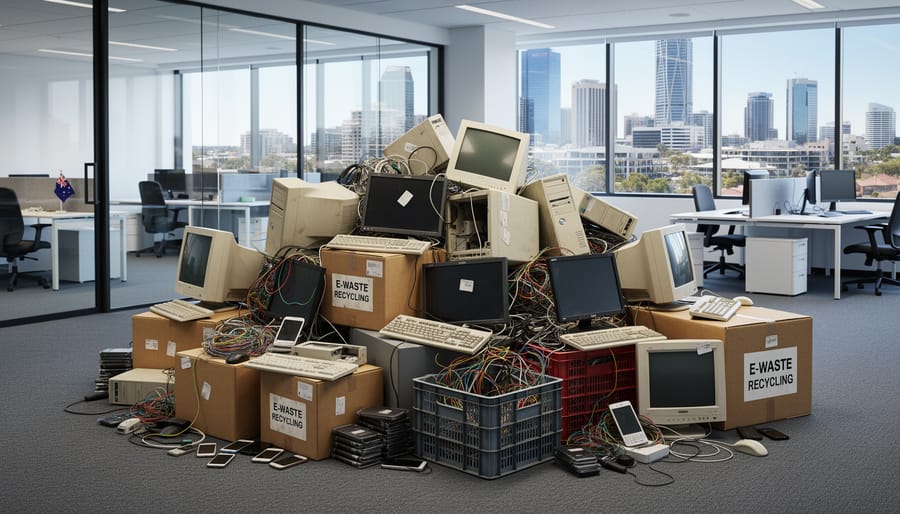
You’d be surprised how many items sitting around your Australian office qualify as e-waste. The obvious culprits include desktop computers, laptops, monitors, and printers that have reached the end of their useful life. But there’s so much more hiding in drawers and storage cupboards.
Think about all those mobile phones, desk phones, and tablets your team has upgraded over the years. Keyboards, computer mice, and external hard drives also belong in this category. Your office kitchen might harbour old microwaves or coffee machines with electronic components, whilst meeting rooms often contain projectors and outdated presentation equipment.
Don’t overlook the smaller items that accumulate quickly: USB drives, chargers, power adapters, batteries of all sizes, and tangled masses of cables collecting dust. Server equipment, modems, routers, and networking gear from your IT room definitely count too. Even items like digital cameras, calculators, and old security card readers need proper disposal.
The key is recognizing that anything with a circuit board, plug, or battery requires specialized recycling. These items contain valuable materials like copper, gold, and rare earth elements that can be recovered and reused. They also contain hazardous substances that shouldn’t end up in Australian landfills. By identifying what counts as e-waste in your workplace, you’re taking the first step toward implementing effective recycling practices that benefit our communities and environment.
Why Australian Offices Struggle with E-Waste
Australian workplaces face unique hurdles when managing electronic waste, despite our nation’s growing commitment to sustainability. One major challenge is the breakneck pace of technology upgrades. Many offices refresh their equipment every 2-3 years to stay competitive, creating mountains of discarded laptops, monitors, and mobile devices that often end up forgotten in storage rooms.
Awareness gaps compound the problem. While most Australian businesses understand general recycling, many remain unaware of specialized e-waste programs or the environmental hazards lurking in old electronics. A 2023 survey found that nearly 40% of small to medium businesses don’t have dedicated e-waste disposal policies.
Regional infrastructure presents another barrier. While Sydney and Melbourne boast robust recycling networks, businesses in rural and regional Australia sometimes struggle to access convenient drop-off points or collection services. This geographical challenge can make responsible disposal feel like an overwhelming task.
Cost concerns also play a role. Some workplaces hesitate to invest in proper e-waste management, viewing it as an unnecessary expense rather than an environmental responsibility and potential cost-saving opportunity through equipment refurbishment.
The encouraging news? These challenges are entirely surmountable with the right knowledge and community support.
Real-World E-Waste Recycling Examples from Australian Offices
Computer and Monitor Recycling Programs
Australian businesses are discovering that recycling computers and monitors doesn’t have to be complicated when you partner with the right organizations. Programs like TechCollect and MobileMuster have made it remarkably straightforward for offices across the country to responsibly dispose of outdated technology while supporting community initiatives.
TechCollect operates over 400 drop-off points nationwide, offering free recycling services for businesses of all sizes. Melbourne-based accounting firm Henderson & Partners recently worked with TechCollect to retire 50 old desktop computers, ensuring every component was processed according to Australian environmental standards. The entire process took just one phone call to arrange collection.
MobileMuster specializes in mobile phones and accessories, providing prepaid satchels for offices to collect devices from staff. Sydney marketing agency Bright Ideas organized a company-wide mobile phone drive, collecting 87 old phones that were either refurbished for reuse or responsibly recycled, diverting toxic materials from landfill.
Many Australian businesses are also embracing manufacturer take-back schemes. Dell’s Reconnect program partners with organizations to refurbish donated computers for community groups, while HP offers trade-in services with credit toward new purchases. Brisbane-based architecture firm Studio Green recently donated 30 functioning monitors to a local community center through Dell’s program, giving the equipment a second life while claiming a tax deduction.
The key is choosing certified recyclers who follow e-Stewards or R2 standards, ensuring your e-waste genuinely contributes to environmental protection rather than ending up in developing countries.
Mobile Phone and Tablet Collection Initiatives
Mobile phones and tablets represent one of the fastest-growing e-waste streams, yet they’re also among the easiest to recycle effectively. Many Australian workplaces are already leading the way with inspiring initiatives that you can replicate in your own office.
Melbourne’s Telstra flagship store runs quarterly collection drives where employees and customers can drop off old devices. In 2023 alone, they diverted over 3,000 phones from landfill. The program partners with Mobile Muster, Australia’s official mobile phone recycling scheme, which operates through all major carriers including Optus and Vodafone. These programs accept phones, batteries, chargers, and accessories at thousands of collection points nationwide, making participation remarkably simple.
Sydney-based architecture firm Bates Smart took their initiative further by partnering with social enterprise Good360. They collected 47 old tablets from staff upgrades and, after professional data wiping, donated them to remote Indigenous communities in the Northern Territory for educational purposes. This approach gave devices a second life while supporting digital inclusion.
Brisbane accounting firm PKF also implemented a “Tech for Good” program, collecting unused work phones quarterly. Within 18 months, they’ve repurposed 82 devices through charity partnerships and recycled the remainder responsibly.
These success stories demonstrate that meaningful change doesn’t require massive resources—just commitment and the right partnerships. Consider starting small with a single collection drive and building from there.
Printer and Toner Cartridge Recovery
Australian offices are discovering that toner cartridge recycling can be surprisingly straightforward when you tap into existing programs. Major manufacturers like HP Planet Partners, Canon’s Cartridge Return Program, and Epson’s take-back scheme offer free postage-paid return labels, making it effortless to divert these items from landfill. Simply collect used cartridges in a designated box and request collection when full.
Melbourne-based accounting firm Thompson & Associates partnered with Cartridges 4 Planet Ark, which refurbishes compatible cartridges while donating proceeds to environmental projects. Meanwhile, Brisbane’s Northside Community Centre runs a cartridge collection drive where local businesses drop off empties, generating funds for youth programs while keeping plastics and heavy metals out of waste streams.
Third-party services like Close the Loop and Planet Ark’s Cartridge Collective operate nationwide collection points, often collaborating with schools and charities. These programs create a circular economy where your office waste becomes someone else’s resource, strengthening community connections while tackling environmental challenges together. The key is choosing a program that aligns with your values and committing to consistent participation.
Battery and Small Electronics Recycling
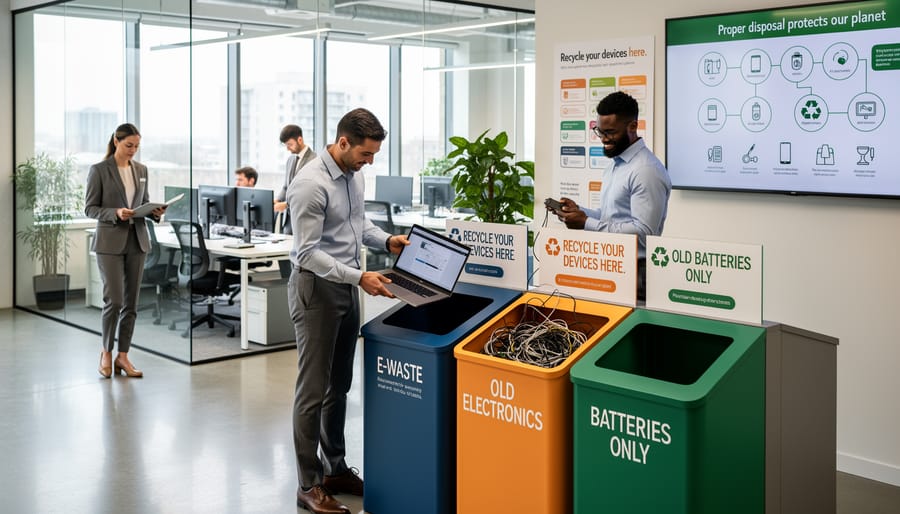
Setting up dedicated battery collection points around your office creates an easy-to-use system that prevents these items from ending up in landfill. Many Australian workplaces place clearly labelled containers near printers, kitchen areas, or reception desks where team members naturally congregate. These bins can collect everything from AA batteries to button cells from hearing aids and watches.
Services like Batteriesplus offer specialized collection programs for businesses, providing containers and regular pickups that ensure proper processing. Many local councils across Australia also run free battery drop-off programs at community centres and libraries, making disposal convenient for smaller offices without formal contracts.
Smaller e-waste items often slip through the cracks, but they’re just as important to manage responsibly. Create separate collection points for keyboards, mice, cables, phone chargers, and USB drives that have reached end-of-life. These accessories contain valuable materials like copper and plastic that can be recovered and reused. Partner with local e-waste recyclers who accept mixed electronics, or participate in community collection days where residents and businesses can drop off these items together, strengthening your connection to sustainable neighbourhood initiatives.
Step-by-Step: Setting Up Your Office E-Waste Recycling System
Conducting an E-Waste Audit
Before you can improve your office’s e-waste recycling efforts, you need to understand what you’re currently dealing with. Think of an e-waste audit as a health check for your workplace’s electronics consumption. It’s a straightforward process that reveals surprising insights about what’s accumulating in cupboards and desk drawers.
Start by walking through your office and documenting every electronic item being discarded or stored unused. Many Australian businesses discover they’re sitting on a goldmine of old mobile phones, keyboards, mice, and outdated laptops. Create a simple spreadsheet listing each item type, quantity, and condition. This becomes your baseline for measuring progress.
Next, track your e-waste generation over three months. How many devices are you replacing? What’s their average lifespan? Melbourne-based sustainability consultant Sarah Chen found her company was discarding 30 functional monitors annually simply because they weren’t matching new computers—a pattern they’d never noticed without tracking.
Involve your team in the audit process. Encourage staff to report unused electronics gathering dust at their workstations. This community approach not only provides accurate data but builds awareness and buy-in for future recycling initiatives. Once you’ve established these baseline metrics, you’ll have a clear picture of where to focus your recycling efforts.
Finding Certified E-Waste Recyclers in Your Area
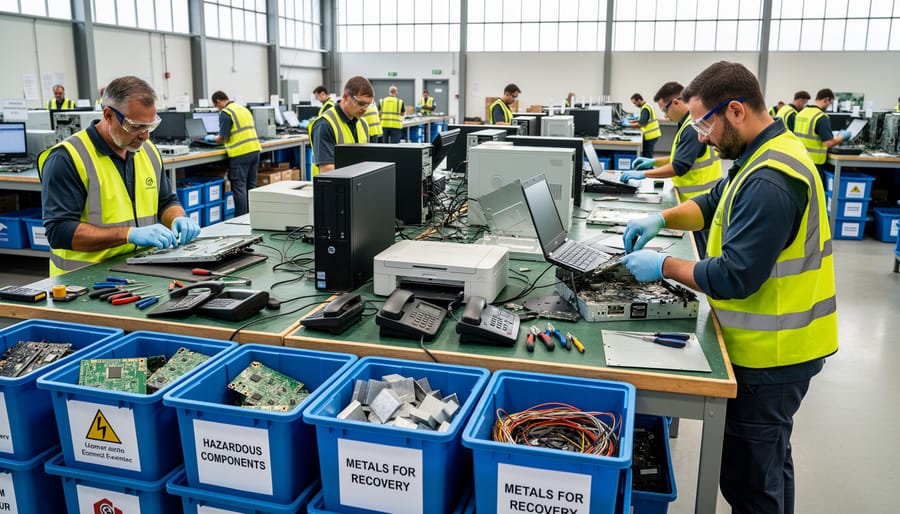
Finding a trustworthy e-waste recycler in your area doesn’t have to be complicated. Start by searching for facilities accredited with the e-Stewards or R2 (Responsible Recycling) certifications—these international standards ensure proper handling of hazardous materials and data security. In Australia, look for recyclers registered with TechCollect or the National Television and Computer Recycling Scheme, which guarantee compliance with national environmental standards.
Your local council website often maintains updated lists of certified drop-off points and collection events across all states and territories. Many community recycling centres now partner with certified processors, making responsible disposal incredibly convenient. Before committing to a recycler, ask about their downstream processes—reputable operators will transparently explain how they dismantle, sort, and process materials.
For businesses, consider joining networks like the Australian Circular Economy Hub, where members share vetted recycler recommendations. Don’t hesitate to request facility tours or certifications from potential partners. Remember, legitimate recyclers never charge excessive fees for standard items and should provide documentation confirming proper disposal. By choosing certified partners, you’re not just protecting the environment—you’re supporting Australian businesses committed to genuine sustainability and keeping valuable materials within our circular economy.
Creating Collection Points and Staff Engagement
Setting up an effective e-waste collection program starts with creating visible, accessible collection points throughout your workplace. Choose high-traffic areas like break rooms, reception areas, or near printers where staff naturally congregate. Clearly label bins with visual guides showing what’s accepted—old phones, keyboards, cables, batteries, and small electronics. Melbourne-based accounting firm GreenLedger placed bright green collection boxes on each floor, making participation effortless for their 200 employees.
Communication is crucial for success. Launch your program with an all-staff email explaining why e-waste recycling matters and how it connects to broader corporate green initiatives. Share compelling local statistics: Australians generate 200,000 tonnes of e-waste annually, yet only 10% gets properly recycled. Consider appointing sustainability champions across departments who can answer questions and keep enthusiasm alive.
Maintain momentum by celebrating milestones—share quarterly updates showing how many devices you’ve diverted from landfill. Sydney startup TechCollective gamified their program, offering small rewards when collection targets were met. Regular reminders through newsletters, posters, and team meetings ensure the program stays top-of-mind, transforming e-waste recycling from a one-off initiative into an embedded workplace practice.
Beyond Recycling: Extending the Life of Office Electronics
Refurbishment and Donation Programs
Australian offices are discovering that old electronics don’t have to end up in landfill—they can create meaningful social impact instead. Refurbishment programs offer a brilliant alternative where outdated but functional equipment gets a second life helping those who need it most.
Melbourne-based social enterprise Substation33 exemplifies this approach perfectly. They partner with businesses to collect used computers, refurbish them to working condition, and distribute them to disadvantaged communities, schools, and nonprofit organizations. A recent partnership with a Sydney law firm diverted 200 computers from landfill while providing digital access to students in regional NSW who couldn’t afford devices for remote learning.
Similar programs operate nationwide, with organizations like Tech2Give in Brisbane and Computerbank across multiple states bridging the digital divide. The benefits extend beyond environmental responsibility—businesses can claim tax deductions for donated equipment while tracking their social impact through recipient stories and usage reports.
Community centers and local schools often welcome functional equipment donations directly, particularly tablets and laptops for educational programs. Before donating, ensure all data is professionally wiped and obtain donation receipts for tax purposes. These partnerships transform electronic waste into community assets, creating connections that strengthen both environmental and social sustainability.
Preventative Strategies to Reduce E-Waste
The best e-waste solution is preventing it from happening in the first place. Australian businesses are leading the way by rethinking how they purchase and maintain technology.
Start by implementing sustainable procurement policies that prioritize longevity over disposability. Melbourne-based accounting firm GreenLedger, for example, now chooses laptops and devices with modular designs that can be easily repaired and upgraded. This simple shift extended their equipment lifecycle from three to seven years, slashing their e-waste generation by 60 percent.
Regular maintenance programs make a remarkable difference too. Perth’s City Council established an in-house IT maintenance team that performs quarterly check-ups on all office equipment, preventing premature failures and identifying upgrade opportunities before complete replacements become necessary.
When purchasing new technology, look for products with high repairability scores and readily available spare parts. Right to Repair advocates across Australia are making this easier, with companies like Fairphone gaining traction in the local market.
Community repair cafes are popping up in suburbs from Brisbane to Adelaide, offering free workshops where locals learn basic electronics maintenance. These grassroots initiatives not only reduce waste but build valuable skills and strengthen neighborhood connections, proving that prevention truly is the most sustainable solution.
Australian E-Waste Regulations and Support Programs
Australia’s regulatory landscape around e-waste has evolved significantly in recent years, creating a supportive framework for businesses ready to make a difference. Understanding these programs can help your workplace access valuable resources while staying compliant with environmental responsibilities.
The National Television and Computer Recycling Scheme stands as Australia’s cornerstone e-waste initiative, requiring manufacturers and importers to fund the collection and recycling of old televisions, computers, printers, and computer products. This scheme means many drop-off points across the country accept these items free of charge, making it easier for businesses to dispose of outdated equipment responsibly.
Several state-based programs complement national efforts. Victoria’s e-waste landfill ban, introduced in 2019, prohibits electronic waste from ending up in general rubbish bins, pushing businesses toward proper recycling channels. South Australia offers the Recycling Activity License system, ensuring e-waste recyclers meet strict environmental standards. These regional initiatives demonstrate how different parts of Australia are tackling the challenge with locally relevant solutions.
Government grants and support programs regularly become available to help businesses transition to circular economy practices. The Australian Government’s Recycling Modernisation Fund has allocated millions toward improving recycling infrastructure, including e-waste processing facilities. Your business might qualify for financial assistance when implementing comprehensive e-waste management systems.
Planet Ark’s Business Recycling program provides free resources, including signage templates and staff education materials specifically designed for Australian workplaces. TechCollect, Australia’s official computer recycling program, offers customized collection services for businesses with larger volumes of e-waste.
Local councils also play a crucial role, with many organizing regular e-waste collection events and maintaining permanent drop-off locations. Connecting with your local council’s sustainability team can unlock additional support tailored to your area’s specific needs and challenges.
The journey toward effective office e-waste recycling isn’t just an environmental responsibility—it’s an opportunity that delivers tangible benefits for your business and our shared Australian future. Every printer cartridge diverted from landfill, every outdated laptop refurbished for community use, and every mobile phone properly recycled represents a small victory in the larger battle against electronic waste.
The examples we’ve explored demonstrate that businesses of all sizes across Australia are already making remarkable strides. From Melbourne startups implementing device trade-in programs to Sydney enterprises partnering with social enterprises for equipment refurbishment, these success stories prove that sustainable e-waste management is both achievable and rewarding. The environmental impact speaks for itself—reduced toxic contamination, conserved natural resources, and significantly lower carbon emissions that contribute to broader sustainability goals.
Your first step can begin today. Start with a simple audit of unused electronics in your office, identify a certified e-waste recycler in your area, or designate a collection point for old devices. These modest actions create momentum that transforms workplace culture and inspires colleagues to embrace sustainable practices.
Together, Australian businesses have the collective power to revolutionize how we handle electronic waste. Join the growing community of forward-thinking organisations choosing responsible recycling. Your commitment today shapes a cleaner, more sustainable tomorrow for all Australians.