
Across Australia’s vast landscapes, thousands of sensors are quietly documenting the pulse of our ecosystems, tracking everything from soil moisture in the Mallee to bird migrations along the Great Dividing Range. National ecological observatory networks represent coordinated systems of monitoring sites that collect standardized, long-term data about our environment, creating an unprecedented picture of how ecosystems function and change over time.
Think of these networks as the vital signs monitors for our natural world. Just as doctors track heart rate and blood pressure to understand human health, ecological observatories measure rainfall patterns, temperature fluctuations, species populations, and vegetation changes to assess ecosystem wellbeing. The data flows continuously from remote wilderness areas and urban green spaces alike, building a comprehensive record that helps scientists predict droughts, track invasive species, and understand climate impacts before they become crises.
Australia’s contribution to this global effort includes initiatives like the Terrestrial Ecosystem Research Network (TERN), which operates monitoring stations from Kakadu’s wetlands to Tasmania’s alpine zones. These aren’t just research facilities; they’re community resources that inform conservation decisions affecting the places where you bushwalk, birdwatch, and explore.
For environmentally conscious Australians, understanding these networks transforms how we think about connecting with nature. Every observation you make during a nature walk potentially contributes to these vast datasets through citizen science programs. When you report a koala sighting or document flowering times in your local reserve, you’re joining a continent-wide effort to protect biodiversity.
The beauty of ecological observatory networks lies in their democratic nature: the data belongs to everyone, informing smarter land management and empowering communities to advocate for their local environments with scientific evidence.
What is the National Ecological Observatory Network?
The Power of Standardised Data Collection
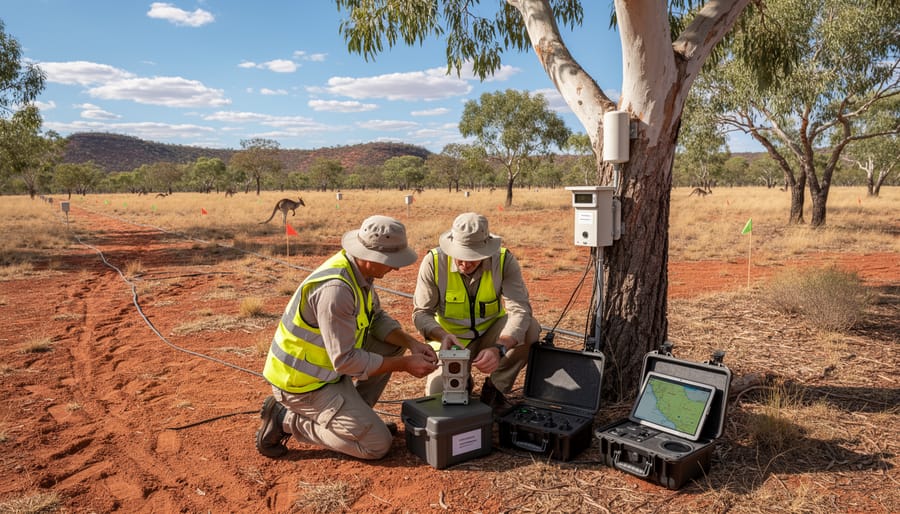
Imagine researchers across Australia’s diverse landscapes—from tropical rainforests to arid deserts—all speaking the same scientific language. That’s the remarkable strength of standardised data collection in ecological observatory networks. When scientists use identical methods to measure temperature, rainfall, soil composition, and species populations across different sites, they create datasets that reveal patterns impossible to spot from a single location.
Australia’s Terrestrial Ecosystem Research Network (TERN) exemplifies this approach brilliantly. Since 2009, TERN has coordinated research across the continent, ensuring that data collected in Tasmania’s cool temperate forests can be meaningfully compared with observations from Queensland’s tropical wetlands. This consistency transforms individual snapshots into a comprehensive story about how our ecosystems respond to climate change, drought, and other environmental pressures.
The beauty of this system? When community groups and citizen scientists follow these same standardised protocols, their observations contribute to this national picture. Your backyard bird count or local revegetation monitoring, when conducted using recognised methods, becomes part of a larger conversation about Australia’s ecological health. This shared approach doesn’t just benefit researchers—it empowers everyday Australians to contribute meaningfully to understanding and protecting our unique environment for generations to come.
From Local Observations to Continental Insights
Individual observations at one location tell us part of the story, but connecting these pieces across a continent reveals transformative insights about our wildlife. Australia’s vast landscapes make this particularly powerful. When researchers began linking koala sightings across Queensland and New South Wales through coordinated monitoring programs, they discovered migration patterns that single-site studies had completely missed. These movements, triggered by seasonal eucalypt flowering cycles, occurred across hundreds of kilometres, information that fundamentally changed conservation strategies.
Similarly, networked bird monitoring across southeastern Australia revealed that superb fairy-wrens weren’t just declining in isolated pockets as initially thought, but showing continent-wide population shifts in response to changing rainfall patterns. This bigger picture emerged only when community volunteers and researchers shared their observations through connected platforms, transforming scattered data points into meaningful conservation intelligence.
These networks create something remarkable: they turn our collective curiosity into scientific understanding. Whether you’re a backyard birdwatcher in Perth or a bushwalker in Tasmania, your observations contribute to mapping how species respond to environmental change across our entire continent, revealing patterns that benefit everyone working toward a healthier Australian environment.
Australia’s Growing Wildlife Observation Networks
TERN: Australia’s Ecological Monitoring Backbone
Australia’s ecological story is being written right now, and the Terrestrial Ecosystem Research Network (TERN) is helping document every chapter. As our national ecological observatory network, TERN operates across the continent, from the wet tropics of Queensland to the ancient landscapes of Western Australia, gathering vital information about how our unique ecosystems are changing and adapting.
Think of TERN as Australia’s environmental health monitor, collecting data from over 500 sites through a network of researchers, sensors, and community scientists. What makes this particularly exciting for everyday Australians is that all this information is freely accessible. Whether you’re passionate about monitoring the recovery of bushfire-affected areas, tracking seasonal changes in your local wetlands, or understanding how drought impacts native vegetation, TERN’s data portal opens these insights to everyone.
The network measures everything from soil carbon levels and vegetation health to wildlife population trends and climate patterns. This comprehensive approach means communities can make informed decisions about local conservation projects, landholders can better understand their properties’ ecological value, and schools can access real-world data for environmental education.
For those eager to contribute, TERN partners with citizen science initiatives that welcome volunteers to help collect observations, particularly in remote areas where professional monitoring stations are sparse. By participating, you’re not just observing Australia’s environment; you’re actively helping protect it for future generations. This collaborative approach strengthens our collective understanding of the land we share and care for.
Community-Powered Observation Platforms
Across Australia, everyday people are becoming the eyes and ears of ecological monitoring through innovative community-powered observation platforms. These citizen science programs transform casual nature enthusiasts into vital contributors to national biodiversity research, creating datasets that rival professional scientific networks in scope and value.
FrogID has revolutionised how Australians help monitor amphibian populations. Simply by recording frog calls on a smartphone app during evening walks or backyard visits, participants have contributed over 700,000 validated records since 2017. Museum scientists use these recordings to track species distribution, breeding patterns, and responses to environmental change across the continent. What makes this particularly powerful is that frogs serve as sensitive indicators of ecosystem health, making every submitted call a meaningful data point in understanding Australia’s environmental story.
Birdata, managed by BirdLife Australia, connects birdwatchers nationwide in documenting avian diversity. Whether you’re spotting rosellas in your suburban garden or observing seabirds along coastal habitats, your observations feed into critical conservation planning. The platform has helped identify population declines, track seasonal migrations, and inform habitat protection decisions.
Queensland’s WildNet system demonstrates how state-based initiatives complement national efforts, enabling residents to report wildlife sightings that guide land management and conservation priorities.
These platforms share a common strength: they make scientific contribution accessible to everyone, regardless of expertise. Your five-minute backyard observation can fill crucial knowledge gaps, especially in remote or under-studied regions where professional monitoring proves challenging. By participating, you’re not just watching wildlife; you’re actively shaping Australia’s conservation future through collective action.
Why Eco-Conscious Observation Matters More Than Ever
Tracking Climate Change Impacts on Australian Species
Networked ecological data is revealing remarkable changes across Australia’s unique ecosystems, painting a vivid picture of how our native species are responding to a shifting climate. Through coordinated monitoring sites spanning the continent, researchers are documenting shifts that would have remained invisible through isolated studies alone.
Take the eastern rosella, for instance. Long-term data from community scientists and research stations shows this colorful parrot expanding its range southward into Tasmania at an accelerating rate, with breeding now occurring in areas that were previously too cold. Similarly, monitoring networks along the Great Barrier Reef have documented tropical fish species moving hundreds of kilometers south along the Queensland coast, seeking cooler waters as ocean temperatures rise.
Perhaps most concerning are the changes in breeding patterns. Networked weather stations and wildlife cameras reveal that many Australian bird species, including honeyeaters and fairy-wrens, are now nesting weeks earlier than they did two decades ago. While some species adapt successfully, others face mismatches between peak food availability and chick-rearing periods, creating new survival challenges.
These insights emerge only through sustained, coordinated observation across vast distances. When local communities, research institutions, and citizen scientists share data through common platforms, patterns invisible to any single observer become clear, helping conservation efforts target resources where they’re needed most effectively.
Early Warning Systems for Ecosystem Threats
Australia’s collaborative observation networks are becoming our first line of defence against environmental threats, catching problems while solutions are still within reach. When observers across the country share their sightings and data, patterns emerge that single organisations might miss entirely.
Take the recent success in Queensland, where coordinated citizen observations helped detect a new myrtle rust outbreak weeks earlier than traditional monitoring would have achieved. Community members trained in basic identification techniques noticed unusual leaf spots during routine nature walks and reported them through the state’s observation network. This early detection allowed rapid response teams to contain the spread before it reached critical koala habitat.
Similarly, networks monitoring waterways across Victoria have identified invasive species movements, giving land managers precious time to implement control measures. The key lies in consistency—regular observations from diverse locations create baseline data that makes anomalies stand out immediately.
For everyday Australians, participating is straightforward and rewarding. By joining local BioBlitz events or contributing to platforms like iNaturalist Australia, you’re adding vital datapoints to these early warning systems. Even while minimising your impact during bushwalks, photographing unusual plant conditions or unfamiliar species can trigger important investigations. Your observations, combined with thousands of others, create a living map of ecosystem health that helps protect Australia’s unique biodiversity before threats spiral into crises.
How to Practice Eco-Conscious Wildlife Observation
Observation Ethics: Minimising Your Impact
When you’re out in the field contributing to ecological monitoring, your presence matters—let’s make sure it’s a positive one. Observing without disturbing wildlife is fundamental to ethical citizen science. In Australia, this means maintaining at least 40 metres from nesting sites and 100 metres from marine mammals like dolphins and whales.
Always stick to designated paths and boardwalks, especially in sensitive ecosystems like wetlands and alpine areas. When venturing into bushland, your footsteps can compact soil and damage fragile plant communities—imagine hundreds of observers doing the same. Respecting habitats ensures these sites remain viable for long-term monitoring.
Keep noise levels low, leave no trace of your visit, and never feed wildlife or remove natural materials. If you’re photographing species, avoid using flash photography or playing calls to attract birds. Remember, Parks Australia and state agencies often provide specific guidelines for each location—check before you go. Your mindful approach helps protect the very ecosystems you’re passionate about studying, creating better data while preserving nature for future community scientists.
Tools and Techniques for Quality Data Collection
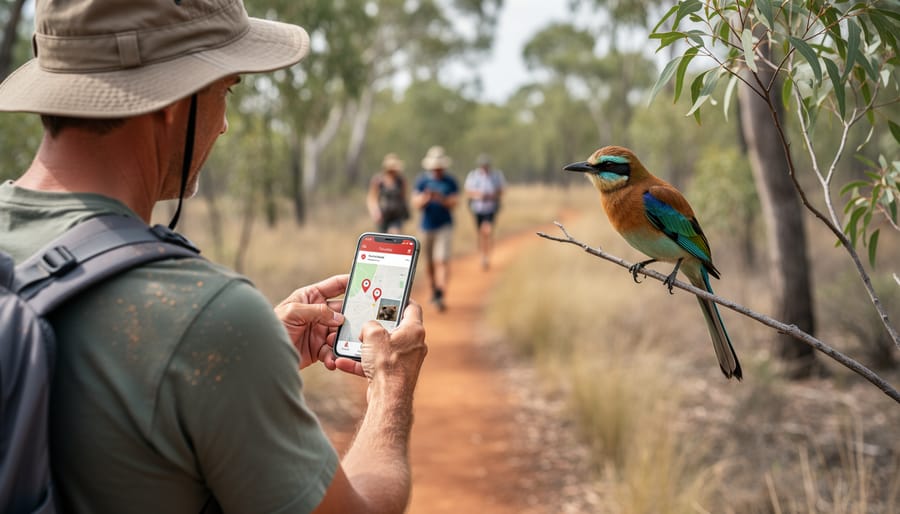
Getting started with quality data collection is easier than you might think, especially with Australia’s excellent free resources at your fingertips. The cornerstone tool for many Australian citizen scientists is iNaturalist Australia, a mobile app that helps you identify plants and animals through photo recognition while automatically recording GPS coordinates and timestamps. Simply snap a photo of what you’ve spotted, and the app suggests identifications that are then verified by the community and expert researchers.
For bird enthusiasts, BirdLife Australia’s Birdata app streamlines your observations into a format researchers can use, with built-in species lists and behavior recording features. The Atlas of Living Australia also offers fantastic identification guides and the ability to contribute your sightings directly to national databases.
When recording observations, remember the golden rule: accuracy over quantity. Note the date, time, exact location, weather conditions, and habitat type. Take clear photos from multiple angles when possible, and avoid disturbing the wildlife you’re documenting. Many apps now include fields for noting animal behavior, which provides valuable context for researchers studying ecological patterns.
These tools transform your nature walks into meaningful scientific contributions, connecting you with a vibrant community of Australians passionate about protecting our unique ecosystems. Every observation counts toward building a clearer picture of our changing environment.
Making Your Observations Count
Ready to turn your wildlife observations into valuable scientific data? Australian platforms like iNaturalist Australia and Birdata make it incredibly simple. When you spot something interesting during your bushwalk or while you find local natural areas, snap a clear photo showing key identifying features like colours, patterns, and size relative to surroundings. Note the exact location, date, and habitat type—scientists particularly value this contextual information.
Don’t worry if you’re uncertain about species identification. The beauty of these platforms lies in their community verification process, where experienced naturalists and researchers review submissions. Upload your observation with your best guess, and experts will help confirm or correct it. Focus on capturing multiple angles and distinctive features—a bird’s beak shape, a plant’s leaf arrangement, or an insect’s wing pattern.
Scientists especially need repeated observations from the same locations over time, as this reveals population trends and ecological changes. Your regular weekend walks to the same park could provide crucial longitudinal data. Every verified observation strengthens Australia’s ecological understanding, helping protect the unique biodiversity we all cherish.
Real Impact: Australian Success Stories from Networked Observation
When people come together to observe and record what they see in nature, remarkable things happen. Across Australia, coordinated ecological observation networks have already delivered inspiring conservation wins that demonstrate the power of collective action.
In Tasmania’s remote southwest, systematic monitoring by community scientists led to the rediscovery of the orange-bellied parrot at previously unknown feeding sites. This tiny migratory bird, critically endangered with fewer than 50 individuals in the wild, now benefits from targeted habitat protection informed directly by observer data. Local landholders worked with conservation groups to preserve crucial coastal saltmarsh areas identified through the network, creating safe corridors that increased the species’ survival chances.
Queensland’s reef observation network provides another powerful example. When coordinated monitoring revealed concerning coral bleaching patterns spreading faster than official surveys detected, the data prompted immediate marine park management responses. Community observers documented recovery rates across hundreds of sites, information that proved essential for adaptive management strategies now protecting these vital ecosystems.
In the Murray-Darling Basin, networked wetland observations helped reverse declining waterbird populations. Farmers, Indigenous rangers, and citizen scientists contributed sightings that mapped critical breeding habitats during flood events. Their collective data influenced water allocation decisions, ensuring environmental flows reached key sites at crucial times. Within three years, breeding events increased by 40 percent for several threatened species.
Perhaps most inspiring is how these networks strengthen community connection to Country. The Yuin Nation’s coastal monitoring program combines traditional ecological knowledge with contemporary observation methods, protecting cultural sites while tracking species recovery. Their approach now guides similar initiatives across Australia, proving that when communities actively participate in ecological observation, everyone benefits. Your observations, added to this growing network, contribute to these tangible conservation outcomes.
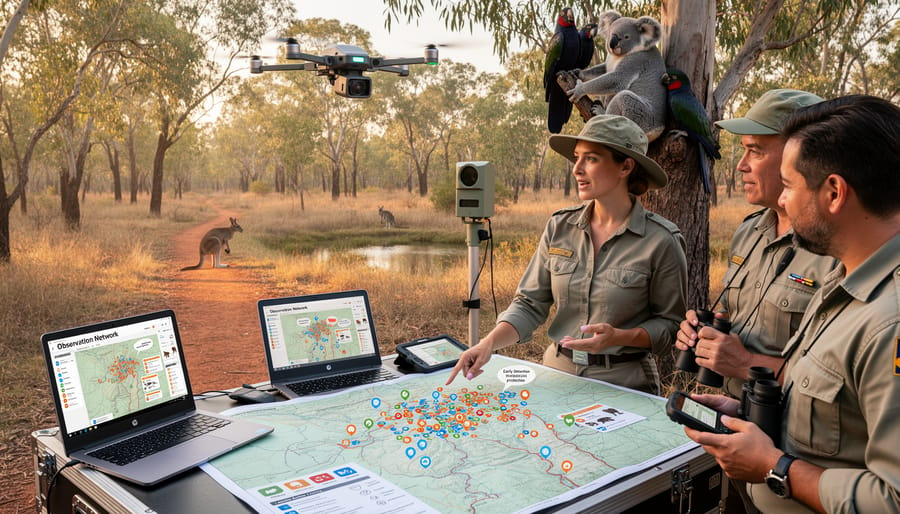
Every observation you make, every sighting you record, and every moment you spend connecting with Australia’s remarkable wildlife contributes to something far greater than a personal experience. Through national ecological observatory networks, your simple act of watching a cockatoo visit your garden or spotting a wallaby on a bushwalk becomes part of a continent-wide conservation effort. These networks transform individual curiosity into collective action, creating a living tapestry of data that helps scientists understand and protect our unique ecosystems.
The beauty of these networks lies in their accessibility. Whether you’re a seasoned naturalist or simply someone who enjoys your local park, you can participate. Join established programs, download citizen science apps, or connect with community conservation groups in your area. Share your observations, attend local biodiversity monitoring events, and embrace eco-conscious practices in your daily life that support wildlife habitats.
The urgency is real, but so is the hope. Australia’s wildlife faces unprecedented challenges, yet we possess something powerful: a passionate community ready to act. Together, we’re not just observers but guardians of our natural heritage. Your participation matters now, today. Let’s build a future where our children inherit thriving ecosystems, vibrant wildlife populations, and a nation that values every creature sharing our extraordinary landscape.