
Every day, Australian water utilities pump billions of litres across vast distances, consuming enormous amounts of electricity in the process. Yet hidden within this essential infrastructure lies an often-overlooked opportunity: the same water flowing through pipes and cascading from reservoirs can generate clean, renewable energy while reducing operational costs.
Water hydro energy, or hydropower integrated into water utility operations, transforms gravity and water pressure into electricity at treatment plants, pipelines, and storage facilities. This isn’t about building massive dams. Instead, utilities across Australia are installing small turbines in existing infrastructure where water naturally flows downhill, converting what was once wasted energy into power that runs pumps, treatment facilities, and even feeds the grid.
The potential is substantial. Water utilities rank among Australia’s largest energy consumers, with some spending over 30 percent of their operating budgets on electricity. By capturing energy from their own water systems, forward-thinking utilities in Sydney, Melbourne, and regional centres are cutting emissions, slashing power bills, and strengthening energy security during peak demand periods.
This approach delivers a dual benefit rarely found in renewable energy projects: generating clean electricity while improving water system efficiency. Pressure reduction valves that once dissipated energy as heat now drive micro-turbines. Reservoirs positioned on hillsides become mini power stations during routine water distribution.
For Australian communities committed to net-zero targets and sustainable operations, hydro energy integration represents a practical, proven pathway. The technology exists, the water is already flowing, and pioneering utilities have demonstrated the model works. The question isn’t whether water and energy optimisation makes sense, but how quickly we can scale these solutions across the nation’s water networks.
The Energy Paradox of Water Utilities
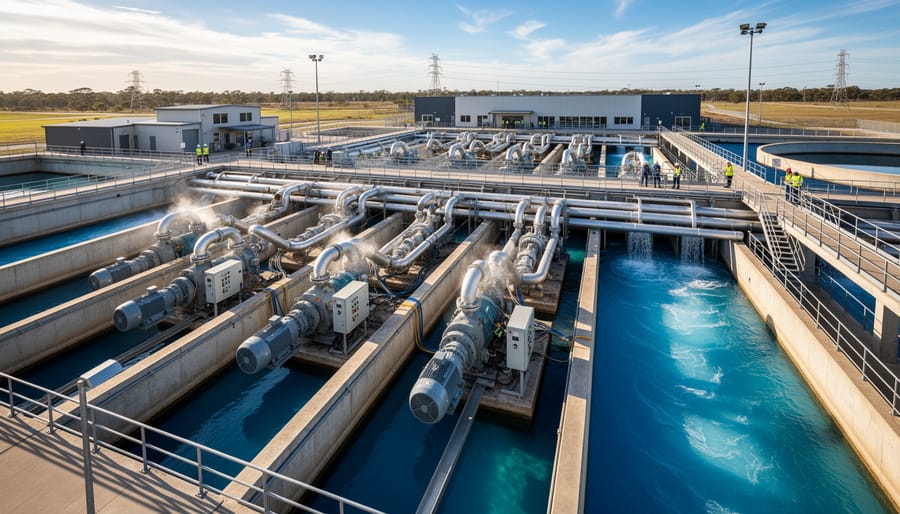
Where Water Utilities Consume the Most Energy
Understanding where energy disappears in the water supply chain is the first step toward reclaiming it. For Australian water utilities, the energy story unfolds across four major chapters, each with its own consumption profile and opportunity for innovation.
Pumping operations claim the largest share of the energy pie, typically accounting for 50-70% of total utility consumption. Every time water moves uphill to reservoirs or travels long distances through our sprawling cities and regional networks, powerful pumps work around the clock. In Queensland’s South East region, for instance, pumping water from treatment plants to elevated storage tanks consumes enough electricity annually to power thousands of homes.
Treatment processes follow closely behind, using 20-30% of energy budgets to purify water for safe drinking. Chemical dosing, filtration, and UV disinfection all demand considerable power, particularly in larger metropolitan treatment facilities serving communities like Sydney and Melbourne.
Then there are energy-intensive desalination processes, which can consume five to ten times more energy per kilolitre than conventional treatment. Our coastal desalination plants in Perth, Adelaide, and Sydney represent some of the highest energy users in the sector, though emerging technologies are steadily improving their efficiency.
Distribution networks round out the picture, with booster pumps maintaining pressure throughout sprawling pipe systems, ensuring reliable flow from the Murray-Darling Basin to urban taps. Together, these processes present exciting opportunities for energy recovery and optimization across Australia’s water infrastructure.
The Cost to Communities and the Environment
The reality is stark: water utilities across Australia consume roughly 13,000 gigawatt-hours of electricity annually, representing one of the most significant operational expenses for local councils and water authorities. For regional communities like Wagga Wagga and Toowoomba, energy costs can account for up to 40% of their total water service budget—funds that could otherwise support infrastructure upgrades or community programs.
This energy dependency carries a hefty environmental price tag too. Traditional grid-powered water operations contribute approximately 5 million tonnes of carbon emissions each year, working against Australia’s commitment to net-zero by 2050. When droughts intensify pumping needs or heatwaves spike demand, these figures climb even higher, creating a double burden on both community finances and our climate goals.
The encouraging news? These costs represent an enormous opportunity. Forward-thinking water utilities are already demonstrating that strategic energy optimisation—including hydropower integration within existing infrastructure—can slash both expenses and emissions dramatically. Communities investing in these solutions today aren’t just reducing their carbon footprint; they’re protecting ratepayers from volatile energy prices while building resilience for future generations. The question isn’t whether we can afford to act, but whether we can afford not to.
Hydropower in Water Infrastructure: Capturing Wasted Energy
How Hydro Energy Works in Urban Water Systems
Picture the water flowing through the pipes beneath your street right now. In most urban systems, that water carries tremendous pressure as it travels from elevated reservoirs to your tap. Traditionally, water utilities have used pressure-reducing valves to slow this flow down before it reaches homes and businesses—essentially wasting the energy built up through gravity and pumping. But what if we could capture that energy instead?
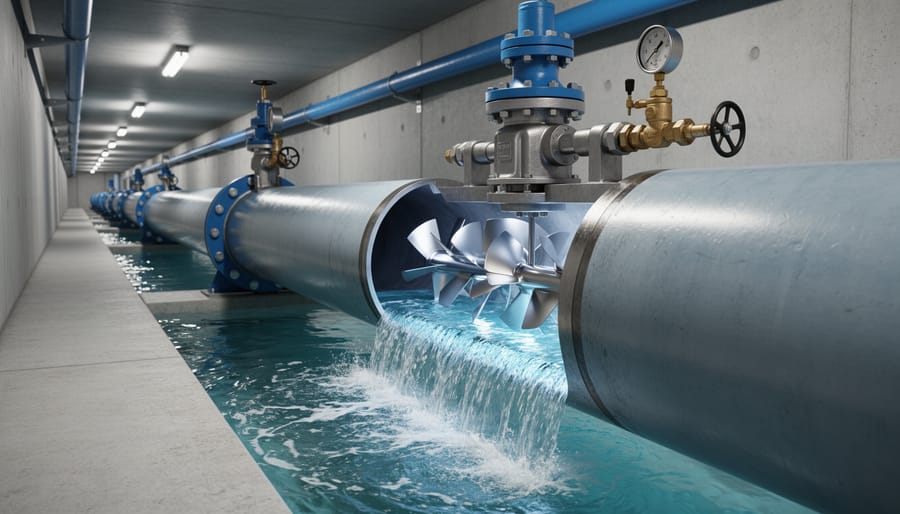
This is where micro-hydro turbines come into play, transforming ordinary water infrastructure into clean energy generators. These compact devices, often no larger than a washing machine, install directly into existing water pipelines. As water rushes through, it spins the turbine blades, generating electricity in much the same way a traditional hydroelectric dam works—just on a smaller, more localised scale.
Australian water utilities are increasingly recognising two prime opportunities for these systems. The first involves pressure reduction points, where water naturally needs to be slowed down anyway. Instead of throttling that pressure with a valve, a turbine harnesses it productively. The second opportunity exists in gravity-fed systems, where water flows downhill from storage to treatment facilities or distribution networks. The steeper the descent, the greater the energy potential.
The beauty of this technology lies in its simplicity. There’s no need for additional water sources or environmental disruption—the same water destined for your morning shower simply does double duty, generating renewable electricity on its journey. For communities across Australia, from Sydney’s coastal suburbs to Adelaide’s hills, this represents a practical pathway to reduce grid reliance while maintaining reliable water services. The infrastructure is already there; we’re simply learning to work smarter with what flows through it.
Types of Hydro Systems for Water Utilities
Australian water utilities have remarkable opportunities to capture energy from water already flowing through their infrastructure. Three main hydro systems offer practical pathways for different operational scales, turning everyday water management into renewable energy generation.
In-conduit turbines represent perhaps the most accessible starting point for many utilities. These compact systems install directly into existing water pipelines, capturing energy from water moving through the distribution network without requiring dams or significant infrastructure changes. Across regional Victoria and New South Wales, several councils have successfully retrofitted in-conduit turbines into gravity-fed water mains, generating clean electricity while water travels downhill to towns and communities. The beauty of this approach lies in its simplicity—the water’s already moving, so why not harvest that energy?
Pump-as-turbine systems offer an ingenious solution for utilities operating with variable demand. Standard water pumps can actually run in reverse during high-flow periods, converting excess pressure into electricity rather than wasting it through pressure-reducing valves. This dual-purpose equipment significantly reduces capital costs compared to dedicated turbine installations, making it particularly attractive for medium-sized utilities watching their budgets. Several Queensland water treatment plants have embraced this technology, demonstrating how existing infrastructure can work smarter, not harder.
Reservoir release installations suit larger utilities with storage dams and regular discharge operations. By installing turbines at controlled release points, utilities generate substantial power whenever water flows downstream for environmental releases or supply purposes. The Snowy Mountains Scheme famously demonstrates this principle at scale, though smaller reservoir operators throughout Tasmania and South Australia are increasingly adopting similar approaches tailored to their local conditions, creating community-owned renewable energy while maintaining essential water services.
Australian Water Utilities Leading the Way
Sydney Water’s Hydropower Innovations
Sydney Water is leading the charge in transforming everyday water infrastructure into clean energy generators. Across the greater Sydney region, the utility has installed innovative hydro turbines that capture energy from water flowing through their existing pipes and treatment facilities—turning gravity and pressure into renewable electricity.
At their Prospect Water Filtration Plant, Sydney Water installed micro-hydro turbines that now generate enough power to supply approximately 600 homes annually. This clever system harnesses the natural pressure as water descends through the treatment process, converting what was once wasted energy into a valuable resource. Similarly, their Woronora facility captures energy from water flowing downhill through the distribution network, producing around 1.5 million kilowatt-hours each year.
The results speak volumes: these installations have reduced Sydney Water’s grid electricity consumption by over 3%, cutting operational costs while preventing thousands of tonnes of carbon emissions annually. What makes this particularly inspiring is the scalability—these systems require no dams or environmental disruption, simply smart engineering applied to infrastructure already in place.
For Australian water utilities considering similar projects, Sydney Water’s success demonstrates that hydropower innovation isn’t limited to massive installations. It’s about recognising opportunity in everyday operations and acting on it.
Regional Success Stories
Across regional Australia, communities are discovering that hydro energy isn’t just for massive dam projects. In Victoria’s Goulburn Valley, the small town of Shepparton integrated micro-hydro turbines into their existing irrigation channels, generating enough clean electricity to power 150 homes while maintaining water flow for local farms. This innovative approach demonstrates how existing water infrastructure can be retrofitted without disrupting agricultural operations.
Queensland’s Toowoomba Regional Council took a different path, installing turbines within their water treatment plant’s gravity-fed distribution system. As treated water flows downhill to the city, it spins turbines that offset 30 percent of the facility’s energy costs. The system paid for itself within seven years and has inspired similar energy-saving initiatives across the state.
Meanwhile, Western Australia’s Busselton Water harvested energy from pressure reduction valves that previously wasted hydraulic potential. These compact turbines now generate 400 megawatt-hours annually while extending pipe lifespan by reducing water hammer effects.
What makes these projects particularly exciting is their scalability. Whether serving populations of 2,000 or 200,000, the technology adapts to local conditions. Regional councils report that community enthusiasm grows when residents see their water bills funding renewable energy rather than fossil fuels, creating a virtuous cycle of investment in sustainable infrastructure.
Community and Environmental Benefits Realised
Across Australia, water utilities integrating hydropower are delivering impressive results. The City of Sydney’s Potts Hill Water Reservoir project generates enough renewable energy annually to power approximately 1,600 homes while reducing carbon emissions by around 2,500 tonnes each year. In regional Victoria, similar installations have cut operational energy costs by up to 40%, with savings redirected into community infrastructure upgrades and reduced water rates.
These projects demonstrate tangible environmental wins: every megawatt-hour generated through water infrastructure replaces grid electricity, often sourced from fossil fuels. Communities near these installations benefit from job creation during construction phases and ongoing maintenance roles. Perhaps most significantly, these initiatives prove that water utilities can transform from energy consumers into energy producers, contributing to Australia’s renewable energy targets while maintaining essential services. The financial savings achieved mean ratepayers experience less price pressure, making sustainability economically accessible for all Australians.
Optimising Both Energy and Water Simultaneously
Smart Monitoring and AI-Driven Efficiency
Australian water utilities are increasingly turning to smart monitoring systems and artificial intelligence to squeeze every drop of efficiency from their operations. These digital tools act like a sophisticated brain for water infrastructure, constantly analysing thousands of data points to find the sweet spot between energy use, water quality, and reliable delivery to communities.
In practice, sensors throughout the water network feed real-time information about flow rates, pressure levels, and energy consumption into AI-powered platforms. These systems can predict demand patterns based on weather forecasts, time of day, and historical usage, then automatically adjust pumping schedules to maximise the use of renewable energy when it’s most abundant and cheapest. For example, they might ramp up water treatment during midday when solar generation peaks, storing treated water for evening demand.
Several Victorian and South Australian water authorities have already adopted these technologies, achieving energy savings of 15-25 percent while maintaining excellent water quality standards. The beauty of this approach is that it works alongside existing hydropower installations, creating an integrated system where water treatment, storage, and energy generation work in harmony. For communities, this means more reliable water services with a lighter environmental footprint and lower operational costs that can translate into more stable pricing.

Solar, Biogas, and Hydro: The Renewable Trifecta
Australian water utilities are discovering that the path to energy independence isn’t a solo journey—it’s about orchestrating multiple renewable sources to create resilient, self-sufficient operations. This integrated approach is already delivering impressive results across the country.
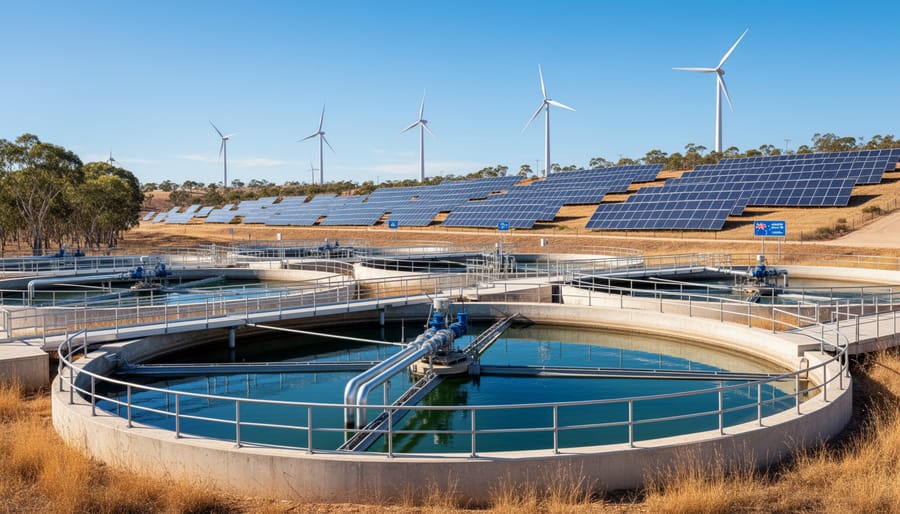
Take Sydney Water’s Malabar Resource Recovery Facility, where wastewater treatment doubles as an energy powerhouse. The facility combines biogas from sewage treatment with solar panels across its expansive grounds, generating enough renewable energy to power the equivalent of 6,000 homes annually. When paired with micro-hydro systems that capture energy from water flowing through the treatment process, the site demonstrates how utilities can transform everyday operations into clean energy generators.
South Australia’s SA Water has embraced this trifecta model at several sites, installing solar arrays alongside biogas digesters and pressure-reducing hydro turbines. The result? Some facilities now operate as net energy producers, feeding surplus renewable power back into the grid during peak sunshine hours while biogas provides consistent baseload generation.
The beauty of this combined approach lies in its reliability. Solar delivers during daylight hours, biogas provides steady round-the-clock generation, and hydro captures energy from water movements that happen regardless of weather conditions. Together, they smooth out the peaks and troughs that challenge single-source renewable systems.
For regional utilities considering this path, the message from early adopters is clear: start small, identify your strongest renewable resource first, then layer in complementary sources as opportunities arise. Community water corporations in Victoria are already proving that even modest-sized utilities can achieve remarkable energy independence through thoughtful renewable integration.
Barriers and How Communities Are Overcoming Them
Funding and Investment Models That Work
Australian water utilities exploring hydro energy integration have access to diverse funding pathways that make implementation financially viable. The Clean Energy Finance Corporation (CEFC) offers concessional loans and co-investment opportunities specifically for infrastructure projects combining water management with renewable energy generation. Many utilities across Queensland and New South Wales have successfully leveraged these programs to offset upfront capital costs.
State-based initiatives provide additional support, with programs like Victoria’s Renewable Energy Target Scheme offering rebates for energy-efficient infrastructure upgrades. The Australian Renewable Energy Agency (ARENA) has also funded pioneering pilot projects, demonstrating how government backing can de-risk innovative approaches.
What’s particularly exciting is the emergence of community-backed financing models. Several regional water authorities have partnered with local councils and environmental groups to secure matched funding, creating shared ownership models that strengthen community connection to sustainable infrastructure. Power purchase agreements (PPAs) are another proven approach, allowing utilities to secure guaranteed energy prices while private investors fund installation costs.
For smaller utilities concerned about financial barriers, group procurement initiatives are gaining momentum. By pooling resources with neighbouring councils, communities can achieve economies of scale, making hydro energy systems accessible even with limited budgets. These collaborative approaches demonstrate that transitioning to sustainable water-energy solutions is achievable across diverse utility sizes and budgets.
Technical Retrofitting in Aging Infrastructure
Australia’s aging water infrastructure presents a unique opportunity rather than just a maintenance challenge. Many dams, weirs, and pipeline networks built decades ago can be retrofitted with modern micro-hydro turbines without requiring complete overhauls. Communities across regional Victoria and New South Wales are already demonstrating how existing pressure-reducing valves in water supply systems can be replaced with inline turbines that generate electricity while maintaining water flow and pressure.
The key is working with what’s already there. Existing infrastructure means established water rights, proven flow patterns, and community acceptance—removing significant barriers to new projects. Local councils in Tasmania have successfully installed compact turbines at water treatment facilities, converting excess pressure into clean energy that powers their operations. These retrofits typically take weeks rather than years, minimising disruption to essential water services.
The beauty of this approach lies in its scalability. Even modest installations can offset facility energy costs, while larger systems may generate surplus power for the grid. Australian engineering firms now specialise in assessing existing water assets and identifying retrofit opportunities, making the process increasingly accessible for utilities of all sizes.
What This Means for Your Community
The expansion of hydroelectric systems within water utilities creates tangible benefits that reach beyond infrastructure improvements, directly touching your household and neighbourhood. As more Australian water authorities embrace energy-water optimisation, communities are already seeing real changes in their day-to-day lives.
Lower operational costs from self-generated hydropower often translate to more stable water pricing, helping shield households from volatile energy market fluctuations. When Sydney Water and similar utilities reduce their grid dependency, those savings create breathing room in budgets that might otherwise drive rate increases. This matters especially as Australia’s water challenges intensify and infrastructure demands grow.
Local emissions reductions from these initiatives contribute directly to your council’s climate targets. When your water utility generates clean energy from existing pipelines, it’s helping your community meet sustainability commitments without requiring additional land or disrupting natural habitats. This progress matters for future planning approvals and access to green infrastructure funding.
Community resilience strengthens when water systems become more energy-independent. During extreme weather events or grid disruptions, utilities with on-site generation maintain more reliable operations, ensuring continued water supply when you need it most.
You can amplify this momentum by engaging with your local water authority’s consultation processes and sustainability reports. Ask your council representatives about their energy-water optimisation plans. Support community groups advocating for renewable integration in municipal infrastructure. When businesses demonstrate interest, utilities take notice and often accelerate implementation timelines.
Consider attending public forums where water utilities present infrastructure plans. Your questions about renewable energy integration signal community priorities and can influence decision-making. Even simple actions, like sharing success stories from pioneering utilities with your networks, help build the social license needed for wider adoption across Australia’s water sector.
Australia stands at an exciting crossroads where our water infrastructure can become powerful allies in the renewable energy transition. The stories emerging from utilities across the country—from Canberra’s innovative micro-hydro systems to regional water treatment plants generating their own clean power—demonstrate that transformation is already underway. These aren’t distant possibilities; they’re practical solutions being implemented by communities just like yours.
The path forward requires all of us to play a part. Start by reaching out to your local water utility to learn about their energy initiatives and sustainability plans. When infrastructure investments come up for community consideration, champion projects that integrate renewable energy generation with essential water services. These dual-purpose investments deliver environmental benefits while potentially reducing long-term operational costs.
Think of every water treatment plant, reservoir, and pipeline network as a potential renewable energy hub waiting to be activated. The technology exists, the knowledge is growing, and Australian expertise in both water management and renewable energy positions us perfectly to lead this integration.
Your engagement matters. Whether you’re a business owner exploring sustainable partnerships, a community member attending local council meetings, or simply someone who cares about our environmental future, your voice strengthens the momentum toward smarter, cleaner infrastructure. Together, we can ensure that every drop of water flowing through our systems contributes not just to hydration and sanitation, but to powering a sustainable Australia for generations to come.