
Understand how the G20 Sustainable Finance Working Group creates pathways for financing sustainable startups by establishing international frameworks that influence Australian banks, investment funds, and government programs. Review the working group’s Sustainable Finance Roadmap and Transition Finance Framework, which set global standards that Australian financial institutions adopt when designing green lending products and impact investment criteria. Connect with local partners like Clean Energy Finance Corporation (CEFC) and regional sustainability hubs that translate G20 principles into accessible funding programs specifically for Australian eco-entrepreneurs.
The G20 Sustainable Finance Working Group might sound like another distant international committee, but it’s reshaping how money flows to green businesses right here in Australia. Formed in 2021, this collaborative initiative brings together finance ministers and central banks from the world’s largest economies to tackle a pressing question: how do we redirect trillions of dollars toward projects that heal rather than harm our planet?
For Australian entrepreneurs with sustainability at their core, this matters profoundly. The working group develops practical tools like taxonomies that define what qualifies as sustainable investment, disclosure frameworks that help businesses communicate their environmental impact, and transition finance guidelines that support companies moving toward greener operations. These aren’t just policy documents gathering dust; they’re blueprints that Australian financial institutions use to design loans, grants, and investment products.
The ripple effect reaches your local community. When the G20 establishes clearer definitions and reduced risks around sustainable finance, Australian lenders gain confidence to back innovative green startups, solar installation businesses, regenerative farming ventures, and circular economy initiatives. Understanding this connection empowers you to speak the language of sustainable finance and access opportunities that might otherwise remain hidden behind complex international frameworks.
What the G20 Sustainable Finance Working Group Actually Does

The Working Group’s Mission for 2024-2025
Right now, the G20 Sustainable Finance Working Group is rolling out initiatives that could reshape how Australian startups access capital for climate-positive ventures. For 2024-2025, their mission centres on three game-changing priorities that matter deeply to entrepreneurs here at home.
First up is developing harmonised green taxonomies – essentially a common language that helps investors worldwide identify genuinely sustainable projects. Think of it as creating a universal standard that makes it easier for your renewable energy startup or circular economy business to attract international investment without getting lost in translation between different countries’ definitions of “green.”
The second priority is transition finance, which recognises that not every business starts out perfectly sustainable. This initiative supports companies in hard-to-decarbonise sectors like manufacturing and agriculture as they shift towards lower emissions. For Australian founders working on agricultural technology or industrial innovations, this means accessing funding specifically designed to support your journey towards sustainability, rather than requiring you to be carbon-neutral from day one.
Finally, the Working Group is strengthening frameworks that make it simpler for smaller enterprises to tap into sustainable finance markets. They’re pushing for streamlined reporting requirements and creating pathways that connect impact-driven startups with institutional investors actively seeking climate solutions.
These aren’t just policy papers gathering dust in Geneva – they’re creating real momentum that flows through to Australian financial institutions, venture capital firms, and government programs. When global standards align, capital flows more freely towards businesses solving environmental challenges, and that includes yours.
Why This Matters for Australian Sustainable Startups
How G20 Frameworks Shape Australian Policy
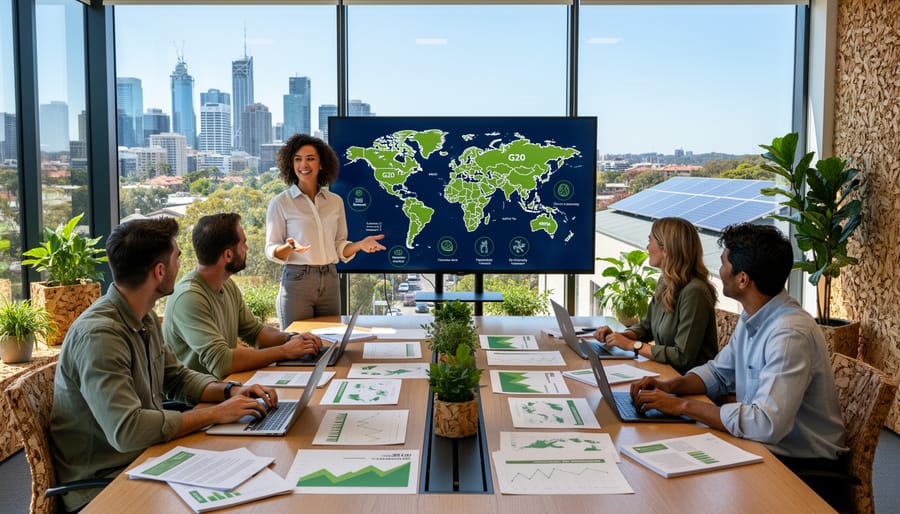
When the G20 Sustainable Finance Working Group develops its frameworks and recommendations, these aren’t just theoretical documents gathering dust in filing cabinets. They create real ripples that flow down to shape how Australia funds and supports sustainable initiatives right here at home.
Think of it as a cascading effect. The G20 establishes international standards for sustainable finance, and Australian regulators and policymakers use these blueprints to design programs that actually put money in the hands of businesses and communities working towards a greener future. The Australian Sustainable Finance Institute regularly translates these global frameworks into practical guidance that local financial institutions can implement.
One of the most tangible examples is the Clean Energy Finance Corporation (CEFC), which operates with a clear mandate influenced by international sustainable finance principles. This government-owned entity has invested over $10 billion in renewable energy, energy efficiency, and low emissions technologies across Australia. When you see solar farms sprouting across Queensland or innovative battery storage projects in South Australia, there’s often CEFC financing behind them, directly influenced by the standards the G20 helped establish.
State governments have followed suit too. New South Wales, Victoria, and Queensland have all launched their own sustainable finance initiatives, from green bonds to dedicated climate investment funds. These programs often mirror the taxonomy and reporting standards championed by the G20 working group, making it easier for Australian startups to access funding that meets internationally recognised sustainability criteria.
What this means for you is that when your sustainable business aligns with G20-endorsed principles around environmental impact and transparency, you’re not just ticking boxes. You’re positioning yourself to tap into a growing network of finance opportunities specifically designed to support the transition to a cleaner economy.
Five Ways the G20’s Work Opens Funding Pathways
Green Bonds and Blended Finance Instruments
Green bonds and blended finance instruments might sound complex, but they’re essentially clever financial tools that the G20 is working to standardise and simplify for businesses like yours. Think of green bonds as loans specifically earmarked for environmental projects—solar installations, energy efficiency upgrades, or sustainable agriculture ventures. Blended finance combines public and private funding to reduce risk for investors while supporting projects that deliver both profit and planet-positive outcomes.
Here’s where it gets exciting for Australian startups: G20-backed standards are creating universal guidelines that make these instruments more trustworthy and accessible. Instead of navigating confusing, region-specific requirements, you’re working with internationally recognised frameworks that investors understand and trust.
Take Melbourne’s ClearVue Technologies, which developed energy-generating glass windows. By aligning with these standardised frameworks, similar Australian cleantech ventures can access green bond markets previously dominated by massive corporations. Brisbane-based solar companies and regenerative farming cooperatives across regional Australia are also tapping into blended finance arrangements, where government support reduces upfront risk while private capital scales their impact.
The G20’s push for harmonised standards means your sustainable startup doesn’t need a team of finance lawyers to participate—just a genuine commitment to environmental outcomes and transparent reporting. These tools are increasingly designed with smaller innovators in mind, turning global finance into local opportunity.
Impact Investment Standards
For Australian startups seeking impact investment, standardized sustainability metrics have become powerful tools to unlock funding opportunities. The G20’s work on harmonized reporting frameworks means investors worldwide can now compare environmental and social impacts using common measurements, creating a level playing field for emerging ventures.
Think of these standards as a universal language that helps your startup communicate its genuine sustainability achievements. When Melbourne’s renewable energy startups or Sydney’s circular economy businesses use verified metrics aligned with G20 frameworks, they’re instantly more attractive to institutional investors managing billions in impact funds. These investors need reliable data to justify their decisions, and standardized metrics provide exactly that proof.
The beauty of this system, enhanced by fintech innovations, is accessibility. You don’t need expensive consultants to demonstrate impact anymore. Digital platforms now help Australian startups track and report sustainability metrics automatically, from carbon reduction to social outcomes. This transparency builds trust with impact investors who previously struggled to verify green credentials, opening doors to funding that rewards authentic environmental commitment alongside financial returns.
Transition Finance Opportunities
One of the most exciting developments from the G20 Sustainable Finance Working Group is the growing recognition that transition finance is essential for achieving climate goals. Rather than only backing businesses that are already green, this approach supports traditional industries on their journey toward sustainability. For Australian entrepreneurs, this opens remarkable doors.
Mining companies adopting renewable energy, agricultural businesses implementing regenerative practices, or manufacturers reducing emissions can now access dedicated funding streams. The beauty of transition finance is its realistic approach—it acknowledges that change takes time and resources.
Several Australian financial institutions are already responding to G20 frameworks by creating transition-focused investment products. The Commonwealth Bank and NAB have launched specific funds supporting businesses in carbon-intensive sectors as they pivot toward cleaner operations. Community-based initiatives are also emerging, connecting local businesses with impact investors who understand the challenges of transformation.
This isn’t about perfection from day one; it’s about supporting the practical steps that create lasting change. Whether you’re helping a family farm shift to sustainable practices or developing technology to reduce industrial waste, transition finance could provide the backing your vision needs.
Enhanced Credibility with International Investors
When your sustainable startup aligns with G20 frameworks, you’re speaking a language that international investors already understand and trust. Think of it as having a globally recognized stamp of quality on your environmental credentials.
Australian startups demonstrating alignment with the G20 Sustainable Finance Working Group’s principles are finding doors opening with overseas investors who prioritize standardized, transparent sustainability metrics. These frameworks provide a common vocabulary that transcends borders, making it easier for venture capitalists in Singapore, impact investors in Europe, or green funds in North America to assess your business confidently.
For your startup, this means implementing recognized reporting standards and sustainability taxonomies championed by the G20 becomes more than compliance—it’s a strategic advantage. International investors face countless pitches, but when they see familiar frameworks they’ve endorsed at the G20 level, decision-making becomes faster and more favorable.
The practical benefit? You’re not starting from scratch explaining your environmental impact. Instead, you’re joining a growing community of Australian businesses gaining competitive edge in the global marketplace by demonstrating measurable commitment to sustainability goals that matter worldwide.
Access to Technical Assistance Programs
The good news for Australian sustainable startups is that you’re not navigating this journey alone. The G20 Sustainable Finance Working Group has helped establish technical assistance programs designed specifically to help early-stage ventures become investment-ready. These programs connect entrepreneurs with mentorship, financial modelling expertise, and guidance on meeting international sustainability standards.
In Australia, organisations like the Clean Energy Finance Corporation and impact investment networks offer capacity-building workshops that align with G20 principles. These initiatives help you refine your business model, understand environmental reporting requirements, and develop compelling investment proposals that resonate with both traditional and impact investors.
Many programs focus on the practical skills sustainable entrepreneurs need most: building robust financial projections, measuring environmental impact using recognised frameworks, and effectively communicating your value proposition to potential funders. Some also provide one-on-one advisory support to help you navigate compliance requirements and prepare for due diligence processes. By tapping into these resources, you’re joining a growing community of purpose-driven businesses transforming global sustainability commitments into local action.
Real Stories: Australian Startups Already Benefiting
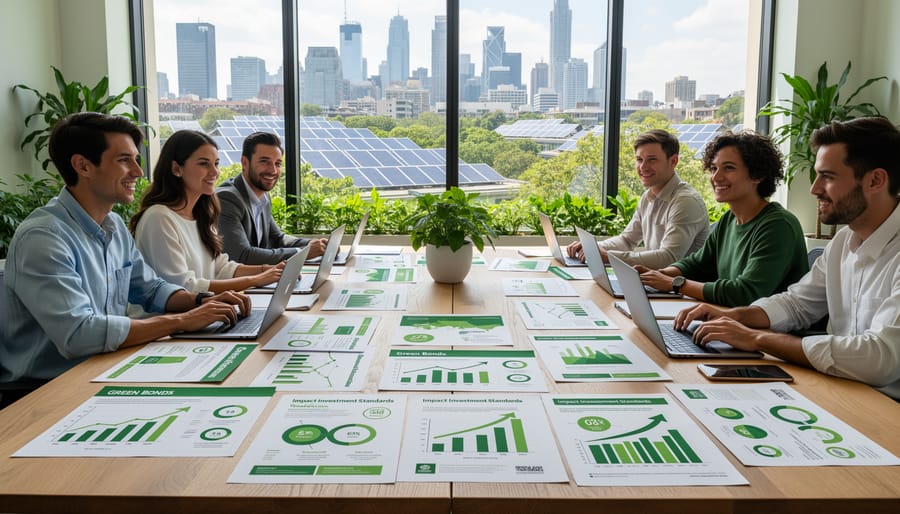
The impact of G20 sustainable finance frameworks isn’t just theoretical—it’s already changing the game for Australian sustainable startups who are tapping into new funding streams and support systems.
Take Melbourne-based SolarShare, a community solar initiative that’s making renewable energy accessible to renters and apartment dwellers. When traditional banks hesitated, SolarShare secured green bond financing aligned with G20 climate risk disclosure standards. By meeting internationally recognised sustainability criteria, they unlocked $4.2 million in funding from impact investors who specifically sought projects meeting G20-endorsed environmental benchmarks. Today, they’re powering over 2,000 households across Victoria with clean energy.
Then there’s Brisbane’s ReefGen, a marine technology startup developing biodegradable alternatives to fishing nets. They successfully attracted venture capital from a fund that follows G20 sustainable finance principles, which prioritise measurable environmental impact alongside financial returns. The G20’s emphasis on transparent sustainability reporting actually worked in ReefGen’s favour—their detailed impact metrics impressed investors looking for projects aligned with global standards. They’ve now expanded operations across three states, preventing an estimated 15 tonnes of plastic waste from entering Australian waters annually.
Perth’s AgriCycle offers another inspiring example. This circular economy startup transforms agricultural waste into biopackaging materials. When applying for government grants, their alignment with G20 sustainable development goals strengthened their application considerably. Program administrators increasingly favour projects that demonstrate compatibility with international frameworks, and AgriCycle’s clear connection to global sustainability standards helped them secure $850,000 in seed funding.
These stories share a common thread: understanding and aligning with G20-influenced frameworks opened doors that might otherwise have remained closed. For Australian entrepreneurs with genuine sustainability missions, these international standards aren’t barriers—they’re bridges to opportunity, connecting local innovation with global capital seeking measurable environmental impact.
Making Your Startup G20-Ready
Understanding Sustainability Reporting Standards
The G20 Sustainable Finance Working Group champions global frameworks that make sustainability reporting clearer and more consistent, and here’s the exciting part: Australian startups can get ahead by adopting these early. The most prominent framework is the Task Force on Climate-related Financial Disclosures (TCFD), which helps businesses transparently report their climate risks and opportunities. Think of it as a common language that investors worldwide understand.
For startups, embracing these sustainability standards early isn’t just about compliance. It positions you as investment-ready from day one. Australian ventures that align with TCFD recommendations find it easier to attract both domestic and international green finance because investors can quickly assess your climate credentials.
The good news? You don’t need a massive team to start. Begin with simple steps like measuring your carbon footprint, identifying climate-related risks to your business model, and documenting your sustainability goals. Many Australian business networks offer free workshops and resources to help startups understand these frameworks. By building sustainability reporting into your foundations now, you’re creating transparency that resonates with conscious consumers and positions your startup within the global sustainable finance ecosystem the G20 is actively nurturing.
Building Your Impact Metrics
Measuring your environmental impact doesn’t have to feel overwhelming. Think of it as telling your sustainability story with numbers that matter. Australian businesses seeking finance aligned with G20 principles need metrics that speak the international language of sustainable development.
Start with the basics that align with global frameworks. Track your carbon footprint using readily available calculators designed for Australian businesses, measuring emissions across operations, transport, and supply chains. Document water usage, waste reduction percentages, and energy efficiency improvements. These tangible metrics resonate with investors familiar with G20 standards.
Consider adopting recognized frameworks like the Task Force on Climate-related Financial Disclosures (TCFD) or the Global Reporting Initiative (GRI). While these sound technical, they’re essentially structured ways to share your progress. Many Australian sustainability consultants can help translate these frameworks into practical tools for small to medium enterprises.
Keep records of community impact too. How many local jobs have you created? What partnerships with Indigenous communities have you forged? Document renewable energy transitions and circular economy practices. These qualitative stories, supported by quantitative data, create a compelling case for sustainable finance opportunities emerging from G20 initiatives, positioning your venture as investment-ready in the growing green economy.
Challenges and What Still Needs to Change
While the G20’s sustainable finance frameworks are creating momentum globally, Australian entrepreneurs still face real hurdles in accessing this capital. The challenge isn’t about lack of opportunity, but rather navigating a system that wasn’t originally designed with early-stage startups in mind.
One significant barrier is what locals in Melbourne’s startup community call “the documentation mountain.” Many sustainable finance initiatives require extensive environmental impact assessments, carbon accounting, and regulatory compliance reports that established corporations manage easily but can overwhelm bootstrapped startups. For a three-person renewable energy startup in Brisbane, spending weeks preparing documentation for funding applications means weeks not spent building their solution.
Access remains another genuine concern. While major financial institutions increasingly offer green finance products, they often require established revenue streams or substantial collateral. Early-stage ventures with brilliant climate solutions but limited operating history find themselves caught in a classic catch-22: needing funding to prove their model, but needing a proven model to access funding.
The geographic divide persists too. Sydney and Melbourne entrepreneurs enjoy better access to sustainable finance networks and advisory support than their counterparts in regional areas. A circular economy startup in rural Tasmania faces different connectivity challenges than one based in capital cities.
What needs to change? We need simplified application processes tailored for startups, stronger intermediary organisations that bridge the gap between global frameworks and local entrepreneurs, and expanded support beyond capital cities. The good news? Australian advocacy groups are actively pushing for these improvements, and some government programs are beginning to acknowledge these gaps. The framework exists, but we’re still building the bridges that make it truly accessible to every innovator with a sustainable solution.

The G20 Sustainable Finance Working Group might operate on the global stage, but its ripple effects reach right into the heart of Australia’s sustainable startup ecosystem. Every framework developed, every green taxonomy refined, and every financing mechanism championed creates tangible pathways for Australian entrepreneurs committed to building a more sustainable future.
As we’ve explored, Australia sits at a unique crossroads – benefiting from international sustainable finance flows while contributing our own innovations in renewable energy, circular economy solutions, and climate adaptation technologies. The frameworks being shaped today are opening doors that simply didn’t exist five years ago, and the momentum is only building.
Now it’s your turn to act. Stay informed about policy developments that affect sustainable finance in Australia. Connect with your local sustainability networks and business communities – whether that’s through industry associations, coworking spaces focused on green businesses, or online forums dedicated to sustainable entrepreneurship. These connections often prove invaluable when navigating funding opportunities or understanding regulatory changes.
Position your startup to seize emerging opportunities by ensuring your sustainability credentials are well-documented and aligned with international standards. Think about how your business addresses the UN Sustainable Development Goals and how you measure your environmental impact.
Most importantly, remember that you’re part of a growing movement. Every sustainable business launched, every green innovation developed, and every conscious choice made contributes to Australia’s transition toward a more sustainable economy. The global frameworks exist – now it’s time to put them into action right here at home.