
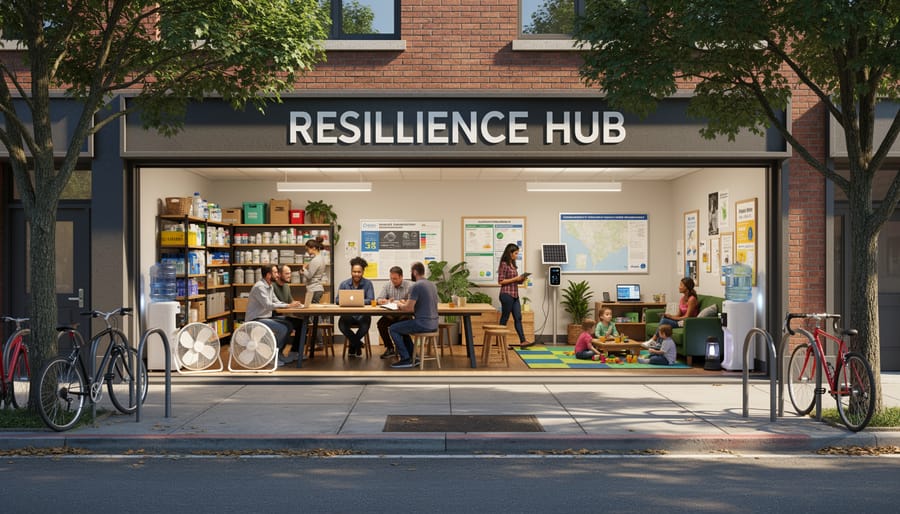
Community resilience hubs are neighbourhood-based facilities that serve dual purposes: social gathering spaces during calm times and critical support centres when climate disasters strike. These hubs strengthen local networks through regular programs and workshops, then activate as coordination points for emergency shelter, supplies, and communications when floods, fires, or heatwaves hit.
Across Australia in 2026, these hubs are transforming how communities prepare for and respond to climate extremes. Rather than waiting for top-down disaster relief, neighbourhoods are building their own capacity through shared resources, local knowledge, and collective action. A resilience hub might operate as a community garden, workshop space, or meeting hall most days, stocked with backup power, water filtration, first aid supplies, and communication equipment that becomes essential when grid systems fail.
The model works because it builds trust and connection before crisis arrives. When your neighbours already know where to gather, who has medical training, and which elderly residents need checking on, response times shrink and fewer people fall through the cracks. Recent climate events have proven this approach saves lives and speeds recovery.
What makes resilience hubs different from traditional emergency centres is their everyday presence in the community. They’re not dusty facilities that open once disaster strikes. They’re living spaces where people already gather for repair workshops, skill shares, and mutual support, creating the social fabric that becomes critical infrastructure when emergencies unfold.
What Makes a Community Resilience Hub
Physical Infrastructure and Design
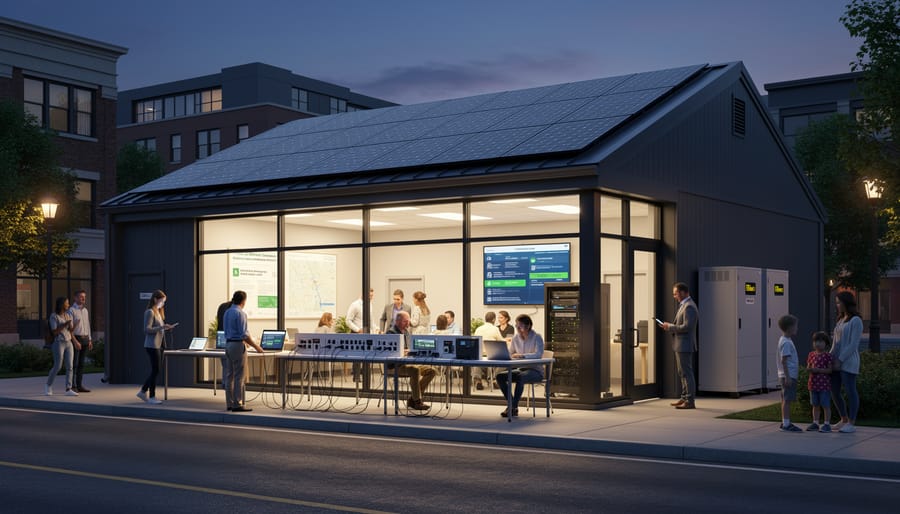
A resilient hub’s physical design reflects the climate challenges it addresses. Effective hubs incorporate cooling spaces with insulated walls and high-efficiency ventilation systems that maintain comfortable temperatures during extreme heat events, following principles from community preparedness guidance for heat health. Backup power systems, typically solar panels paired with battery storage, keep essential services running when the grid fails, while rainwater tanks and storage systems help communities save water and maintain supplies during droughts or infrastructure disruptions.
Australian hubs prioritise fire-resistant construction using steel frames, non-combustible cladding, and ember-proof vents in bushfire-prone regions. Communication infrastructure includes satellite phones or two-way radios for when mobile networks collapse, alongside community noticeboards and digital screens. Accessible design ensures everyone can enter and use facilities, with ramps, wide doorways, accessible toilets, and clear wayfinding. The most functional hubs balance these technical features with welcoming spaces that encourage daily use, comfortable seating, community kitchens, and adaptable rooms that shift from yoga classes to emergency shelter when needed.
Community Networks and Mutual Aid
The social fabric woven through regular hub activities becomes the safety net during crisis. When neighbours meet weekly for repair cafes, community meals, or skill-sharing workshops, they’re doing more than fixing appliances or learning to preserve food, they’re mapping who has which skills, who lives alone, who needs extra support during emergencies.
Mutual aid networks thrive on this everyday reciprocity. The person teaching bread-making one month might need help clearing storm debris the next. Regular volunteers learn the community’s geography intimately: which streets flood first, where elderly residents live, who has mobility challenges. This knowledge proves invaluable when formal emergency services are stretched thin.
Hubs coordinate these networks through simple systems, volunteer rosters, skill registers, neighbourhood contact lists, that activate rapidly when disasters strike. The pensioner who runs weekend craft sessions becomes a welfare check coordinator during heatwaves. The local tradesperson leading tool library sessions mobilises repair teams after storms.
Crisis capacity grows from trust built through ordinary moments. Communities that share resources and solve problems together before disasters hit respond faster, more equitably, and with genuine care when the stakes rise.
How Resilience Hubs Respond to Climate Challenges
Extreme Heat and Heatwave Response
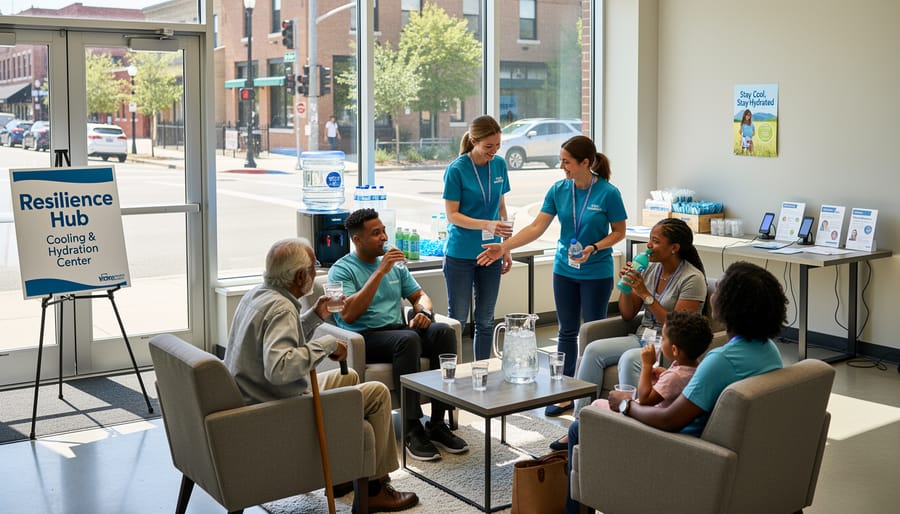
During extreme heat events, resilience hubs transform into lifesaving cooling centres that protect vulnerable community members when temperatures soar. These spaces maintain comfortable temperatures through efficient cooling systems powered by backup solar batteries, ensuring refuge remains available even during grid failures or electricity shutdowns.
Hub volunteers conduct proactive welfare checks on elderly residents, people with chronic health conditions, and socially isolated neighbours who may not seek help independently. Using contact lists developed through everyday hub activities, teams phone or visit vulnerable individuals, offering transport to the cooling centre and monitoring for heat-related illness symptoms.
Hubs distribute free water bottles, provide electrolyte drinks, and offer light refreshments while sharing critical information about heatwave duration, cooling strategies at home, and warning signs of heat stress. Many coordinate with local health services to station nurses during peak heat days, enabling immediate assessment of concerning symptoms.
The outreach component proves crucial: research shows isolated individuals often don’t recognise their own heat vulnerability or hesitate to ask for help. Hub networks built on existing relationships create trusted pathways for support, turning community connection into concrete protection when temperatures become dangerous.
Bushfire Preparedness and Recovery
During fire season, resilience hubs become critical coordination points well before smoke appears on the horizon. They host preparation workshops where neighbours share defensible-space techniques and vulnerable residents identify safe evacuation routes together. When fire threatens, hubs activate as information centres disseminating real-time updates from emergency services while local knowledge networks track who needs transport or has livestock to move.
As flames approach, hubs support structured evacuation centre response by coordinating community members who’ve already built relationships during calmer months. They know which elderly residents live alone, which families have young children, and who needs medication access. This social mapping proves invaluable when official systems become overwhelmed.
After the fire passes, hubs shift to recovery mode. They distribute donated supplies, coordinate volunteer clean-up teams, and provide spaces where traumatised community members process loss together. The same buildings that hosted cooking classes months earlier now facilitate insurance workshops and mental health check-ins. Recovery stretches across months, and hubs sustain support networks through this long haul, connecting affected residents with practical assistance and emotional solidarity when initial emergency attention fades.
Flood and Storm Support
When floodwaters rise or severe storms hit, resilience hubs become lifelines for cut-off communities. These centres activate as emergency shelters when homes flood, providing dry refuge, bedding, and hot meals for displaced residents. Hub volunteers coordinate supply distribution, sandbags before the event, clean water and essentials during it, often when conventional services can’t reach affected areas.
Communication becomes critical when phone towers fail and roads close. Hubs equipped with satellite internet and backup power serve as information centres, connecting isolated residents with emergency services and worried family members. They become the place people know to go for accurate updates about road closures, water levels, and safety warnings.
Recovery begins at the hub too. Communities gather to organise clean-up crews, share equipment like pumps and generators, and coordinate check-ins on vulnerable neighbours. This collective response often proves faster and more effective than waiting for external assistance alone. The social connections built through hubs mean people already know who needs help, who has relevant skills, and how to mobilise quickly.
Beyond immediate crisis response, hubs foster longer-term thinking about flood prevention, supporting healthy waterways management and efforts to protect our coast from increasing storm intensity. This upstream focus reduces future impacts while building community knowledge about living with water-related climate risks.
Resilience Hubs Across Australia
Communities across Australia are translating the resilience hub concept into spaces that reflect their unique climate challenges and local character. These aren’t cookie-cutter facilities but living examples of how Australian ingenuity adapts shared principles to diverse settings.
In Western Sydney, where heatwaves regularly push temperatures above 40 degrees, several local councils have transformed community centres into dedicated cooling hubs. The centres in suburbs like Penrith and Liverpool stay open extended hours during extreme heat days, offering air-conditioned respite, free water, and check-ins with vulnerable residents. What makes them work is the year-round programming, regular seniors’ activities, youth programs, and community dinners, that means locals already know the space and feel comfortable showing up when they need help.
Regional Victoria has seen different approaches emerge from its bushfire experience. Towns like Mallacoota and Buchan, shaped by the 2019-20 fire season, developed community centres that double as fire-ready coordination points. These spaces maintain emergency communication equipment, host regular CFA meetings, and run community preparedness workshops throughout the year. The relationships built during monthly community dinners proved invaluable when fires threatened again, creating networks where neighbours checked on each other without waiting for official alerts.
Several Australian communities have developed distinct resilience hub models:
- Penrith and Liverpool (Western Sydney): Extended-hours cooling centres with year-round seniors and youth programs, activated during extreme heat with health service coordination
- Mallacoota and Buchan (Regional Victoria): Fire-ready community centres with emergency communications, CFA partnerships, and monthly community gatherings building neighbour networks
- Lismore and Northern Rivers (NSW): Flood-response hubs with elevated emergency supplies, community recovery coordination, and cultural connection spaces for First Nations communities
- Adelaide Hills (South Australia): Multi-hazard hubs combining bushfire preparation, heatwave response, and local food security through community gardens and preserving workshops
- Darwin and northern suburbs (Northern Territory): Cyclone-resilient community centres with backup power, water storage, and year-round programs addressing heat and isolation in dispersed communities
In flood-prone Northern Rivers NSW, communities like Lismore rebuilt their approach after devastating 2022 floods. Local hubs now maintain elevated emergency supplies, coordinate community recovery efforts, and create spaces where residents process shared trauma while planning better preparedness. Several integrate cultural connection spaces for First Nations communities, recognising that resilience means maintaining cultural practices alongside physical safety.
What unites these diverse examples is the recognition that resilience infrastructure only works when communities actively use and shape it. The most successful hubs aren’t emergency-only facilities but spaces woven into daily community life.
Starting a Resilience Hub in Your Community
Assessing Community Needs and Climate Risks
Before launching a resilience hub, take time to understand what your community genuinely needs. This assessment grounds your hub in local realities rather than assumptions about what “should” work.
Start by examining your area’s specific climate risks. Review your council’s climate adaptation plan and emergency management data to identify which hazards, extreme heat, flooding, bushfire, coastal erosion, pose the greatest threats to your neighbourhood. Local emergency services and SES volunteers often have detailed knowledge about recurring vulnerabilities that don’t make headlines.
A practical assessment process follows these steps:
- Map climate hazards specific to your area using council data, Bureau of Meteorology records, and local emergency service reports
- Identify at-risk populations including elderly residents living alone, people with disabilities, recent migrants, and those in housing stress
- Catalogue existing community assets, accessible buildings, backup power sources, community organisations, skilled volunteers, and communication networks
- Survey community members about their concerns, capacities, and gaps in current support during emergencies and everyday challenges
Walk your neighbourhood with fresh eyes. Which streets flood first? Where do older residents gather? Which buildings have solar panels or generators? Talk with long-time locals who remember past emergencies, their institutional knowledge reveals patterns that data misses.
This groundwork ensures your hub addresses real needs rather than replicating services that already exist or missing the populations most vulnerable during climate events.
Building Partnerships and Governance
Successful resilience hubs emerge from genuine partnerships, not single organisations working alone. Start by convening stakeholders who bring different strengths: your local council offers venues and emergency planning expertise, community organisations provide trusted connections to diverse residents, emergency services contribute crisis response knowledge, health providers identify vulnerable populations, and local businesses can supply resources or facilities.
These conversations work best when community representatives sit at the centre, setting priorities while institutional partners provide support. Establishing a steering committee with community members holding decision-making power, supported by advisory roles from councils and agencies, keeps the hub responsive to actual local needs rather than institutional agendas.
Consider governance structures that balance community leadership with sustainable operation. Some hubs form incorporated associations, others partner with existing community organisations, while some operate as council-supported but community-governed initiatives. The community project principles that sustain long-term initiatives apply here: shared decision-making, transparent communication, and distributed leadership prevent burnout and maintain community ownership.
Document partnership agreements clearly, who provides what, when facilities activate during emergencies, insurance responsibilities, and ongoing coordination. Written memorandums of understanding create clarity while preserving flexibility as your hub evolves.
Securing Funding and Resources
Securing adequate funding is often the biggest hurdle for nascent resilience hubs, but Australian communities have multiple pathways to explore. Start by approaching your local council, many now allocate grants specifically for climate adaptation and community infrastructure projects. State emergency management programs increasingly recognise the preventative value of resilience hubs and offer funding for facilities that strengthen community preparedness.
Look beyond obvious sources. Climate adaptation funds at both state and federal levels support projects that reduce vulnerability to extreme weather. Community organisations and foundations focused on social equity or environmental sustainability may align with hub objectives. Some communities successfully access health promotion grants by emphasising heatwave protection and vulnerable population support.
Don’t overlook in-kind contributions and volunteer coordination. Local businesses might donate materials, space, or services. Sporting clubs or community centres could share facilities. Building a robust volunteer network reduces operational costs while strengthening the social connections that make hubs effective. Many successful hubs operate on modest budgets because communities pool resources, share skills, and contribute what they can, whether money, time, expertise, or physical assets.
Activating Everyday Community Connection
Regular hub activity keeps resilience networks strong when calm weather prevails. Weekly community dinners, repair cafes where neighbours fix household items together, or sustainability workshops create the familiarity that transforms strangers into mutual support systems. Consider hosting skill-shares like food preservation, first aid training, or sessions where community members can join a revegetation group working on local climate adaptation projects. These gatherings serve double duty: they provide immediate value through learning and connection while quietly building the trust networks that activate instantly when heatwaves or floods strike. The most resilient hubs buzz with weekly life, not just emergency response.
The Role of Mutual Aid in Hub Success
Mutual aid transforms resilience hubs from emergency infrastructure into living networks of reciprocal care. Where traditional emergency management flows from institutions downward, mutual aid operates horizontally, neighbours helping neighbours based on shared needs rather than service delivery models. This distinction shapes everything from how hubs respond during crises to how they build community strength between emergencies.
At successful hubs, mutual aid starts small and practical. A parent shares surplus seedlings from their garden while learning composting from another member. Someone with carpentry skills helps repair a community notice board; in return, they receive language tutoring. These everyday exchanges build trust and familiarity that prove invaluable when a heatwave strikes or floods threaten. People already know who has specific skills, who needs checking on, and how to coordinate without waiting for official direction.
Resource pooling through mutual aid extends hub capacity far beyond formal budgets. Communities share tools, transport, bulk-bought emergency supplies, and knowledge about accessing support systems. During the 2024 Brisbane floods, mutual aid networks coordinated boat rescues and supply distribution hours before official channels mobilised, simply because neighbours knew each other’s capabilities and needs.
The reciprocal nature matters. Unlike charity, which can create dependency, mutual aid recognises that everyone has something to contribute and everyone needs support sometimes. This creates equity and dignity within hub networks. A retiree checking on isolated neighbours during extreme heat receives help with digital literacy in quieter months. Everyone participates as both giver and receiver.
This reciprocity builds social infrastructure that endures beyond individual emergencies, creating communities genuinely capable of supporting themselves through whatever climate challenges emerge.
Common Questions About Resilience Hubs
Who can use a resilience hub?
Resilience hubs are open to everyone in the community, with particular focus on reaching vulnerable populations including elderly residents, people with disabilities, those experiencing isolation, and families with young children. There’s no membership requirement or cost to access hub services during emergencies or everyday activities.
How are resilience hubs funded?
Most Australian hubs operate through a mix of local council support, state emergency management grants, climate adaptation funding programs, and community fundraising. Many also rely on in-kind contributions like donated space, volunteer time, and partnerships with local businesses that provide resources or services.
Can existing buildings become resilience hubs, or do we need purpose-built infrastructure?
Existing community centres, libraries, sports clubs, and faith halls can all function as resilience hubs with relatively modest upgrades like backup power, water storage, or improved cooling systems. Purpose-built facilities aren’t necessary to start, though strategic improvements enhance effectiveness during climate events.
How do resilience hubs work with official emergency services?
Hubs complement rather than replace emergency services by serving as community coordination points, sharing locally relevant information, and providing neighbourhood-level support that larger systems can’t deliver. Effective hubs establish relationships with councils, SES, health services, and fire agencies before emergencies occur, creating clear communication pathways and defined roles during activations.
A common concern is time commitment. Participating in a resilience hub can mean anything from attending occasional community events to joining a coordination committee. Even informal involvement, like knowing your hub’s location or checking on a neighbour during a heatwave, contributes to community resilience. Hubs succeed through distributed effort rather than demanding constant availability from a few dedicated people.
You don’t need special qualifications to get involved. While some coordination roles benefit from skills in emergency management, community development, or communication, most hub activities rely on everyday capabilities like listening, organising, spreading information, or offering practical help. The strength of resilience hubs lies in bringing together diverse community members who contribute what they can, when they can.
Community resilience hubs aren’t just emergency infrastructure, they’re living proof that climate adaptation works best when it’s built from the ground up. These spaces strengthen neighbourhoods through everyday connection while creating the networks and resources communities need when extreme weather strikes. From cooling centres during heatwaves to coordination points during floods, hubs demonstrate how local action can address Australia’s biggest climate challenges.
The beauty of resilience hubs lies in their accessibility. You don’t need millions in funding or years of planning to start building community capacity. A conversation with neighbours, a partnership with your local council, or activating an existing community space can be the first step. Across Australia, communities are proving that the most effective climate responses come from people who know their neighbourhoods best.
As climate impacts intensify, our greatest asset isn’t technology or infrastructure alone, it’s each other. The relationships we build today, the knowledge we share, and the mutual support networks we create will determine how well we weather tomorrow’s challenges. Whether you join an existing hub or help create one, you’re contributing to a resilient Australia built on community strength.