
Switching from plastic to sustainable packaging doesn’t require an overhaul of your entire operation. Eight practical alternatives already exist in the Australian market that balance environmental responsibility with real-world functionality, from compostable containers made of sugarcane bagasse to reusable stainless steel tiffins that eliminate single-use waste entirely.
The packaging crisis hitting Australian landfills and waterways has reached a tipping point. Australians generate 2.5 million tonnes of plastic waste each year, and food packaging accounts for nearly a third of that figure. Yet the solution isn’t a distant dream. Small cafes in Melbourne, community event organizers in Brisbane, and home cooks across the country are already making the shift, proving that eco-friendly packaging works at every scale.
What makes these eight options stand out is their availability here in Australia, practical performance under typical conditions (hot soups, greasy foods, cold salads), and clear end-of-life paths that actually close the loop. Each one addresses a specific packaging need, from takeaway containers to produce wrap, with transparent trade-offs on cost, durability, and disposal requirements.
The transition starts with understanding what works for your context. A food truck serving hot meals faces different constraints than a home baker wrapping biscuits for school fetes. This guide walks through each option with Australian suppliers, cost benchmarks, and the honest limitations you need to know before committing.
Why Sustainable Food Packaging Matters for Australia
Australia generates over 2.5 million tonnes of plastic packaging waste annually, with food containers and wraps representing a significant portion that ends up in landfills or, worse, our oceans. Single-use food packaging contributes substantially to the carbon footprint of our food system, from petroleum-based production through to methane emissions as it breaks down in landfill over hundreds of years. Coastal communities witness the direct impact: plastic fragments washing up on beaches, harming marine life and disrupting ecosystems that many Australians cherish.
The good news is that momentum is building. State governments are introducing bans on problematic single-use plastics, while major retailers are ditching plastic packaging in favour of compostable and recyclable options. Consumer demand is driving this shift, research shows that over 80% of Australians actively seek products with sustainable packaging and will pay a premium for them.
Community initiatives are flourishing across the country. Local farmers’ markets encourage customers to bring reusable containers, zero-waste stores are opening in suburbs and regional towns, and neighbourhood composting programs are accepting food packaging alongside food scraps. This collective movement demonstrates that sustainable packaging is not just an environmental necessity but an opportunity to strengthen community connections and create a healthier future for the next generation.
How We Chose These Packaging Solutions
We selected these eight packaging solutions based on five clear criteria that matter to Australian households and businesses making the switch.
First, availability, every option can be sourced within Australia through local suppliers, online retailers, or community networks. Second, end-of-life impact, each solution is either compostable, recyclable through existing infrastructure, or reusable multiple times. Third, food safety, all materials meet Australian standards for direct food contact and protect products during storage and transport.
Fourth, cost-effectiveness, we prioritized solutions accessible to small cafes, market stallholders, and home kitchens, not just large corporations with sustainability budgets. Fifth, proven adoption, these aren’t experimental concepts. Each idea is already used by Australian businesses, community groups, and eco-conscious households.
This isn’t a product testing exercise. We’ve curated practical, field-tested alternatives that real people in your situation have successfully implemented. Some require minimal investment and instant change, while others involve longer transitions, but all represent genuine steps away from single-use plastics.
1. Compostable Plant-Based Containers
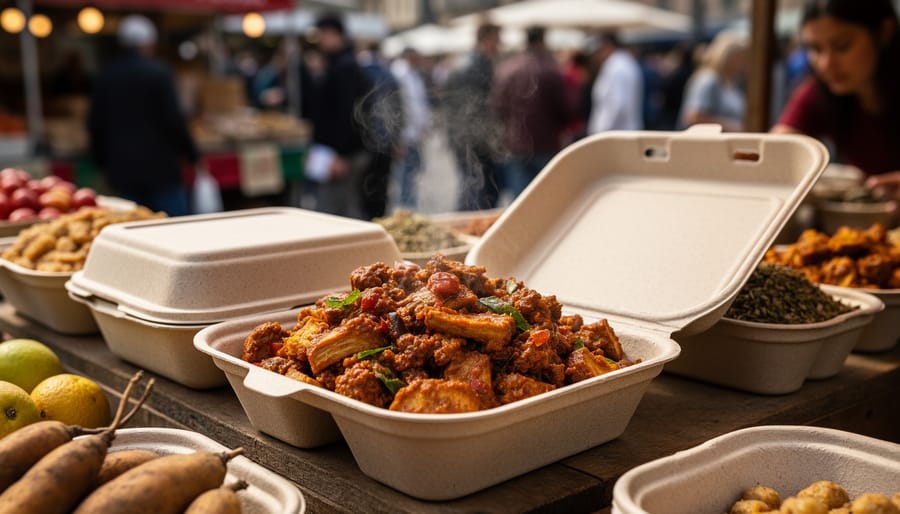
Compostable plant-based containers have become the workhorse alternative for cafes, market vendors and caterers across Australia. These containers transform agricultural waste, sugarcane fiber (bagasse), palm leaves, wheat straw, even fallen bamboo, into sturdy food-safe packaging that performs like conventional plastic or polystyrene, then breaks down completely when you’re done.
Bagasse containers are particularly popular. After sugar mills extract juice from cane stalks, the leftover pulp gets molded into plates, bowls, clamshell boxes and trays. The result is heat-resistant packaging that handles hot chips, curries and grilled meats without buckling, yet remains lightweight and grease-resistant. Palm leaf plates offer a rustic aesthetic, each piece is unique, heat-pressed from naturally fallen leaves, making them favorites at farmers’ markets and eco-conscious events. Wheat straw products, a byproduct of grain harvesting, provide a smooth finish ideal for sushi trays and salad containers.
You’ll find these containers at Australian suppliers like BioPak, The Compostable Co., and local packaging wholesalers in most capital cities. Many community composting hubs and council green-waste programs accept certified compostable packaging (look for AS 5810 or EN 13432 certification marks), where they’ll break down within 90-180 days alongside food scraps.
When sourcing, buy in bulk through community food co-ops or join with neighboring vendors to reduce per-unit costs. Check that products are certified compostable, not just “biodegradable”, the certification guarantees they’ll decompose properly. Educate your customers with clear bin signage: “Compost this container with your food waste.”
2. Beeswax and Vegan Food Wraps
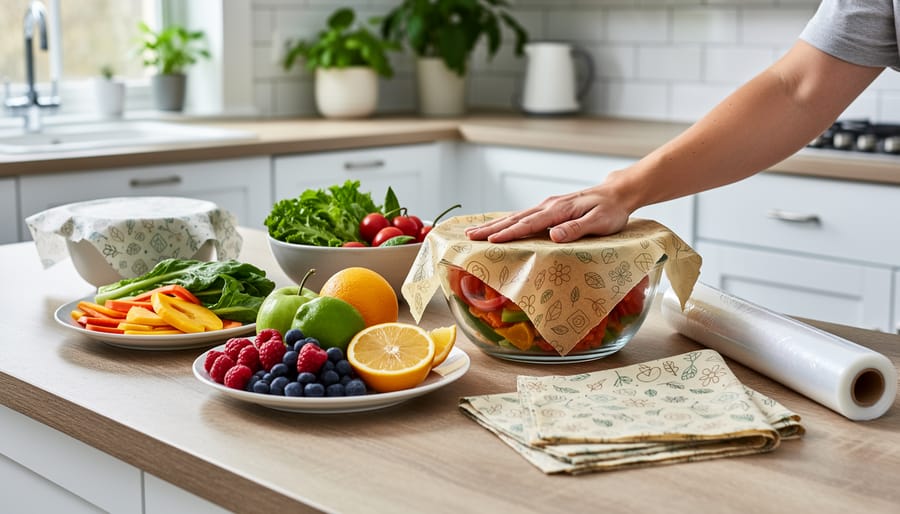
Beeswax and vegan food wraps offer a washable, reusable alternative to plastic cling film that homes, farmers’ markets, and artisan food vendors across Australia are embracing. These wraps consist of cotton fabric coated with beeswax, jojoba oil, and tree resin, or plant-based wax blends for vegan options using candelilla and soy wax. The coating creates a tacky, mouldable surface that seals around bowls, wraps cheese or fresh produce, and holds sandwiches together.
A single wrap replaces hundreds of metres of disposable plastic over its lifespan, typically lasting six to twelve months with regular use. The breathable fabric prevents moisture build-up, keeping vegetables crisper than sealed plastic. They work brilliantly for covering leftovers, wrapping baked goods at market stalls, or packing lunches, though they’re not suitable for raw meat or high-heat applications.
Several Australian makers produce quality wraps, including Melbourne-based collectives and small regional businesses using organic cotton. You can also make your own by brushing melted beeswax onto fabric squares, then setting with heat, a simple project for community workshops. Look for makers who purchase recycled products and buy paper responsibly for their packaging.
Care is straightforward: rinse in cool water with mild soap, air dry flat, and avoid hot water which melts the wax coating. Store folded or rolled. When they eventually wear out, cut them into firelighters or compost the natural fabric.
3. Recycled Paper and Cardboard Packaging
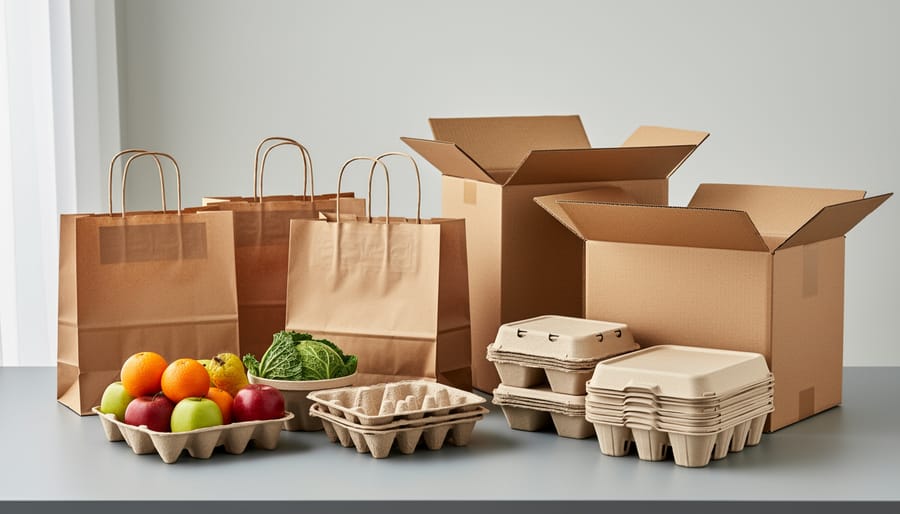
Recycled paper and cardboard packaging taps into Australia’s established waste collection systems, making it one of the most accessible eco-friendly options for food businesses and home users. These materials, paper bags, corrugated boxes, and molded pulp trays, are typically made from 70-100% post-consumer waste, giving discarded newspapers and cardboard a second life before they’re recycled again through your council’s yellow bin.
This packaging excels for dry and semi-dry foods. Bakeries use recycled paper bags for bread and pastries, while greengrocers pack fruit and vegetables in cardboard produce boxes. Molded pulp trays, formed from recycled paper pulp, cradle eggs, berries, and delicate items without the environmental cost of plastic clamshells. Cafes favour recycled cardboard cake boxes and sandwich wraps that customers recognize and know how to dispose of correctly.
The grease factor matters here. Basic recycled paper works beautifully for dry goods but struggles with oily foods. Some suppliers offer biodegradable water-based or plant-wax coatings that repel moisture and grease while remaining compostable. Avoid packaging with plastic laminate linings, these can’t enter standard recycling streams and undermine the circular economy benefit.
Australian suppliers like BioPak, Detpak, and The Compostable Cup Company stock recycled paper packaging in bulk quantities. Smaller food businesses and community groups can access better prices through cooperative purchasing networks such as Food Connect or local farmers’ market collectives. Many councils also maintain lists of approved packaging suppliers for zero-waste events, worth checking before your next community gathering or market stall.
4. Reusable Glass and Stainless Steel Containers
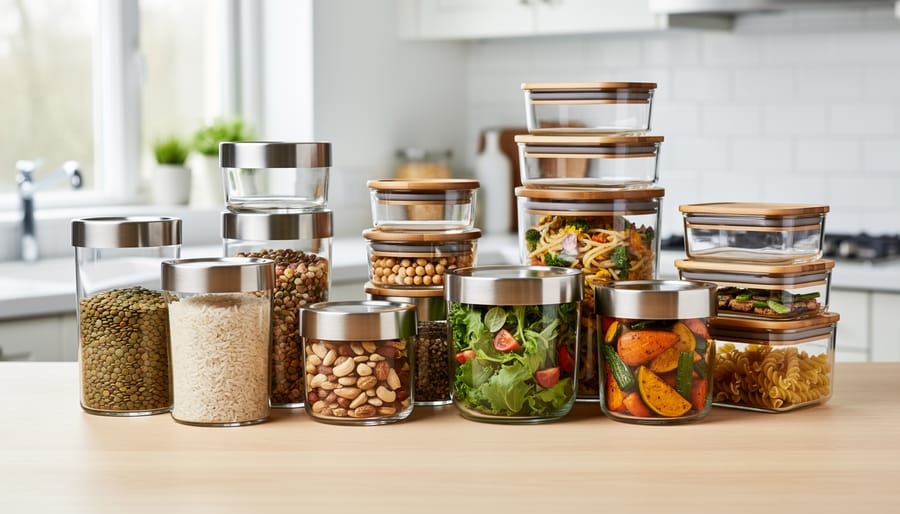
Glass jars, stainless steel tiffins, and durable food-grade containers represent the gold standard for zero-waste food packaging. Unlike single-use options, these materials can be washed and reused hundreds of times without degrading, eliminating packaging waste entirely. Glass preserves food freshness without leaching chemicals, while stainless steel offers lightweight durability ideal for transport. Both are non-toxic, recyclable at end-of-life, and actually improve the presentation of artisan foods, from preserves to bulk grains.
The main barrier is upfront cost. Quality glass containers and stainless steel lunch boxes require initial investment that exceeds disposable packaging budgets. Weight also matters for delivery services and market vendors hauling products to multiple locations. However, these costs balance out over time through elimination of ongoing packaging purchases.
Australian businesses are pioneering container-return models that make reusables accessible. Cafes in Melbourne and Sydney now offer discounts when customers bring their own containers for takeaway, while bulk stores like The Source Bulk Foods across multiple states provide jar-borrowing programs. Community food co-ops in Brisbane and Adelaide run container swap stations where members exchange clean jars rather than buying new ones. Some farmers’ markets operate deposit schemes where customers pay a small refundable fee per container, returning them on their next visit.
For home users, transitioning to glass meal prep containers cuts through plastic clutter while keeping leftovers fresh longer. Stainless steel bento boxes work brilliantly for packed lunches and picnics. The shift requires changing habits around convenience, but the payoff is permanent elimination of cling film, zip-lock bags, and takeaway containers from your waste stream.
5. Edible Packaging Solutions
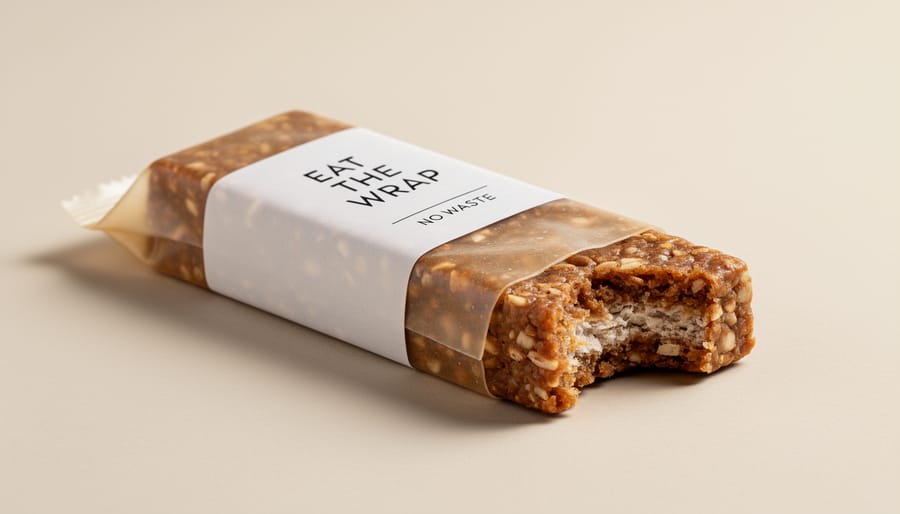
Edible packaging turns the waste problem on its head, instead of disposing of packaging, you simply eat it. Made from ingredients like seaweed, rice starch, or potato peel, these films and coatings are completely biodegradable and often nutritious. You’ll find edible cups at festivals that taste like wafer cones, seaweed wrappers for individual snacks, and invisible coatings on apples or citrus that extend shelf life while remaining safe to consume.
Australian innovators are making strides in this space. Melbourne-based researchers at RMIT have developed seaweed films strong enough to replace soft plastics in food wrapping, while Queensland startups are experimenting with cassava-based edible pouches for sauces and condiments. These solutions work particularly well for single-serve applications, think portion-controlled seasonings, drink sachets, or sample-sized treats at markets where the packaging disappears with the product.
The technology is still emerging, so expect higher costs and limited availability compared to conventional options. Edible packaging suits niche applications rather than bulk everyday use, and some formulations require specific storage conditions to prevent premature breakdown. Yet for forward-thinking cafes, event organizers, or artisan food producers wanting a wow factor, edible packaging offers a genuine conversation starter. It demonstrates commitment to innovation while eliminating waste entirely. As production scales up and more Australian manufacturers enter the market, these solutions will become increasingly viable for mainstream food businesses.
6. Mushroom and Mycelium Packaging
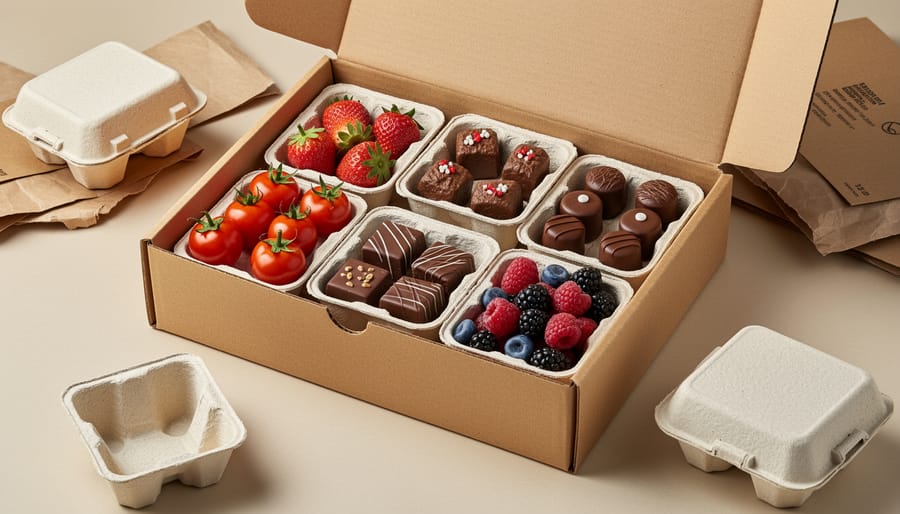
Mushroom and mycelium packaging offers one of nature’s most elegant solutions to the packaging waste problem. Made by feeding agricultural waste, like hemp fiber, corn husks, or sawdust, to mycelium (the root structure of mushrooms), this material grows into custom molds over just a few days, requiring minimal energy and zero synthetic chemicals.
The process is remarkably simple: manufacturers pack the agricultural waste and mycelium into molds shaped for specific products, then let nature do the work. The mycelium binds the waste materials together into a solid, protective form. Once dried to halt growth, the packaging is ready to use, no plastic binders, no petrochemicals, just biological engineering at work.
For food businesses, mycelium packaging excels at protecting fragile items during shipping. Artisan food producers across Australia use molded mycelium inserts to cushion glass jars, delicate chocolates, and specialty products. It’s particularly popular with small-scale suppliers slashing waste from their operations while enhancing their eco-credentials.
When its protective job is done, mycelium packaging can go straight into your home compost bin or garden bed. It breaks down completely within 30 to 90 days, returning nutrients to the soil without leaving microplastics or toxins behind. Several Australian companies and community projects are experimenting with growing mycelium packaging locally, reducing transport emissions and creating circular systems where one farm’s waste becomes another business’s packaging solution.
7. Cornstarch and PLA Bioplastics
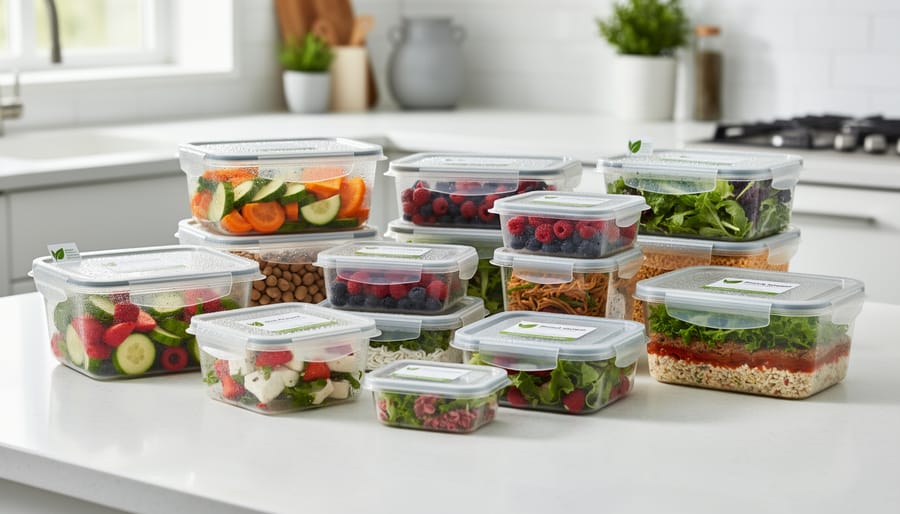
Cornstarch and PLA (polylactic acid) bioplastics offer a plant-based alternative that mimics the clarity, flexibility and durability of conventional petroleum-based plastics. Derived from fermented corn starch or sugarcane, these bioplastics work well for cold food containers, salad bowls, deli lids and single-use cutlery. They’ve gained traction with Australian cafes and food courts that want to move away from fossil-fuel plastics without sacrificing convenience or presentation.
The material’s biggest advantage is familiarity: customers recognise the look and feel, which reduces confusion at point of sale. PLA cups hold iced drinks securely, and cornstarch clamshells protect sandwiches and pastries during transport. For businesses already using plastic packaging, swapping to PLA often requires no change in equipment or workflow.
However, there’s a critical disposal caveat. Despite being labelled “compostable”, PLA and cornstarch packaging require commercial composting facilities that reach temperatures above 60°C to break down properly. Tossed into a home compost bin, they’ll sit intact for years. Placed in a standard recycling bin, they contaminate the plastic stream and can ruin entire batches of recyclate.
Australia’s commercial composting infrastructure remains patchy. Melbourne, Sydney and Adelaide have FOGO (food organics and garden organics) collection services that accept certified bioplastics in some suburbs, but regional areas often lack access. If your council doesn’t offer this service, packaging ends up in landfill, where it produces methane just like conventional plastic.
To use PLA responsibly, communicate clearly with customers. Label bins at events, train staff on sorting, and consider whether reusables or paper alternatives might better suit your context. If you do choose bioplastics, source from suppliers who provide transparent disposal guidance and partner with verified composting facilities. Choosing cornstarch packaging to avoid excessive packaging makes sense only when the end-of-life pathway genuinely exists in your community.
8. Banana Leaf and Natural Fiber Wraps
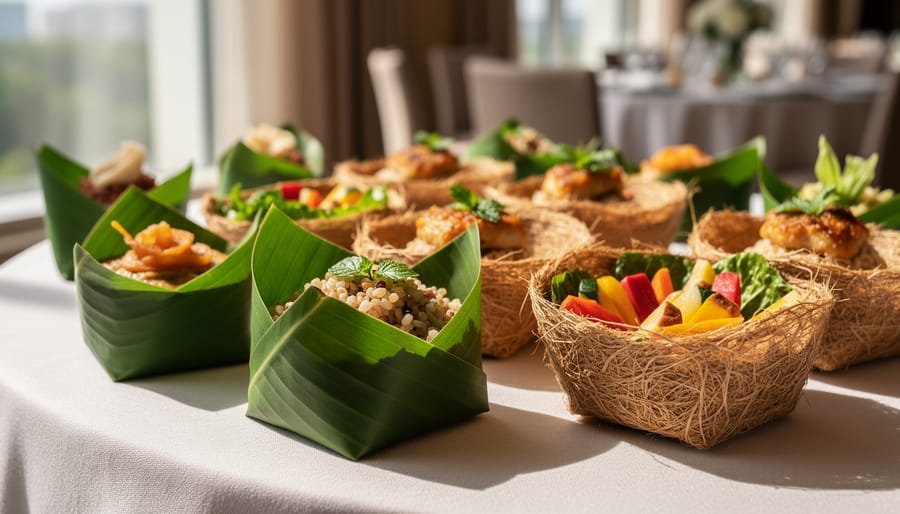
Banana leaves and natural fiber wraps bring time-honored, zero-waste packaging into modern Australian food culture. Used for centuries across Southeast Asia, India, and the Pacific, these materials are experiencing a resurgence in multicultural communities and sustainability-focused cafes nationwide.
Banana leaves offer a completely natural, compostable wrapping solution that requires no processing beyond harvesting and cleaning. They’re ideal for steamed rice parcels, grilled fish, Thai-style curries, and Indonesian snacks. The leaves impart a subtle, pleasant aroma to food while their waxy surface provides moisture resistance. Beyond functionality, they deliver striking visual appeal at farmers’ markets, cultural festivals, and wedding catering, where presentation matters as much as sustainability.
In Australia, fresh banana leaves can be sourced from Asian grocers in major cities, with frozen options available for regional areas. Bamboo sheaths and palm fronds offer similar benefits and may be more accessible through specialty suppliers or foraging in appropriate locations (always with permission). Home gardeners with established banana plants can harvest their own leaves, cutting mature outer leaves without damaging the plant.
Preparation is straightforward: wipe leaves clean, briefly pass over a flame or hot water to increase pliability, then fold or secure with natural twine. After use, they break down rapidly in compost bins or green waste collections. For food businesses, training staff in simple folding techniques takes minimal time and creates a memorable, authentic customer experience that celebrates cultural heritage while eliminating plastic waste entirely.
Making the Switch: Practical Steps for Aussie Households and Businesses
Switching to sustainable food packaging doesn’t require an overnight overhaul. Start by auditing your current packaging use, identify the highest-volume items or the worst environmental offenders, then replace those first. A café might swap plastic takeaway cups for compostable alternatives before tackling food containers, while a home kitchen could begin with reusable wraps for everyday lunches.
Cost concerns are real, but bulk purchasing through community co-ops or business buying groups significantly reduces unit prices. Many local councils across Australia offer grants or rebates for small businesses adopting waste-reduction practices, check your council’s sustainability programs or Business Environment Network connections. Some councils also run free workshops on transitioning to eco-friendly operations.
Customer education smooths the transition. Clear signage explaining how to dispose of compostable packaging, deposit-return schemes for reusable containers, or simple table cards about your sustainability choices build understanding and loyalty. Shoppers increasingly seek out businesses aligned with their values, so transparent communication becomes a marketing strength, not just an environmental duty.
To get started, tackle these practical first steps:
- Audit your packaging: list what you use most and where waste is highest
- Choose one or two items to replace immediately (start small, build confidence)
- Source locally: contact Australian suppliers or community co-ops for bulk discounts
- Check council grants and business support programs in your area
- Educate staff and customers with clear disposal instructions
- Track your progress: measure waste reduction to celebrate wins and refine approach
Momentum builds as habits shift. What feels unfamiliar at first becomes routine within weeks, and early wins create confidence to expand. Connect with other businesses or households making the change, sharing supplier contacts, troubleshooting challenges, and celebrating progress together strengthens the community movement toward genuinely sustainable food packaging across Australia.
Frequently Asked Questions
Is eco-friendly food packaging more expensive than conventional options?
Upfront costs are often higher, but prices have dropped significantly as demand grows. Buying in bulk through community co-ops or direct from Australian manufacturers can bring costs closer to conventional packaging, especially for businesses ordering larger quantities.
Where can I buy eco-friendly packaging in Australia?
Many online suppliers like Biome, The Sustainable Collective, and Oz Pak deliver nationwide. For local options, check your city’s zero-waste shops, farmers’ markets, and hospitality supply stores that now stock compostable ranges.
Can I compost bioplastics like PLA at home?
No. PLA and cornstarch bioplastics need commercial composting facilities with high temperatures to break down properly. Putting them in home compost bins won’t work, and they contaminate standard recycling streams. Check FOGO bin acceptance with your local council.
Are these packaging options safe for hot food?
Most plant-based containers handle hot foods well, particularly bagasse and molded pulp options rated for heat. Always check manufacturer specifications, as some materials like beeswax wraps aren’t suitable for hot items, and certain bioplastics soften above 60 degrees Celsius.
How do I help customers dispose of packaging correctly?
Clear labeling makes a huge difference. Use signage at point of sale, print disposal instructions directly on packaging, and provide dedicated bins if you’re running an event. Share simple infographics on social media showing what goes in compost, recycling, or waste bins.
These questions reflect the real concerns Aussie households and small food businesses face when making the switch. Cost worries often ease once you explore bulk purchasing through local networks or connect with other businesses to share supplier contacts. The confusion around bioplastic disposal is one of the biggest barriers, so being upfront about commercial composting requirements prevents well-meaning customers from contaminating their home compost or recycling.
For businesses, customer education isn’t just good practice, it builds trust and positions your brand as genuinely committed to sustainability rather than greenwashing. Simple steps like training staff to explain packaging choices and creating visual guides for disposal demonstrate you’ve thought through the full lifecycle, not just the sale.
Switching to eco-friendly food packaging isn’t about perfection, it’s about progress. Whether you run a bustling café in Melbourne, organize community events in Perth, or simply pack school lunches at home, you now have eight practical, proven alternatives that reduce waste while keeping food safe and fresh.
The beauty of this movement is how it’s growing across Australia. Small businesses are pioneering reusable container schemes, farmers’ markets are embracing compostable wraps, and community composting hubs are making proper disposal easier than ever. You’re not alone in this shift.
Start with one idea that fits your situation. Try beeswax wraps for the kitchen, swap to plant-based containers for your next event, or support a local supplier experimenting with mushroom packaging. Share what works with your network, ask questions, and celebrate the wins.
Every compostable bowl, reusable jar, and natural-fiber wrap chips away at the mountains of plastic clogging our landfills and oceans. Your choices ripple outward, inspiring others and building momentum for a healthier, cleaner Australia for the generations coming up behind us.