
A solar cooperative pools the buying power of households and businesses to negotiate better prices on solar panels, batteries, and installation, making renewable energy more affordable and accessible for everyone involved. These community-driven initiatives, often launched through coordinated Solarize campaigns, bring neighbours together to slash costs by 15-30% compared to individual purchases while building local renewable energy momentum across Australia.
The model is straightforward. A group of residents partners with a vetted solar installer to offer a standardised package at a pre-negotiated group rate. The more people who sign up, the lower the per-household cost becomes. This approach removes the intimidation of comparing quotes alone, vets quality installers through community scrutiny, and creates a supportive network of solar owners who share knowledge and troubleshooting tips long after installation.
Australia has seen remarkable success with solar cooperatives in recent years, particularly in regional areas where energy costs bite hardest and community ties run deep. These initiatives honour the collaborative spirit embedded in local Indigenous culture where collective action and shared resources have sustained communities for millennia. From suburban street-level campaigns to town-wide renewable energy transitions, Australians are discovering that going solar together delivers benefits no household can achieve alone.
Whether you’re weighing the financial case for rooftop panels, seeking trusted installer recommendations, or wondering how to rally your street around clean energy, understanding solar cooperatives opens a practical pathway to affordable renewable power and genuine community connection.
What Is a Solar Cooperative?

A solar cooperative is a member-owned organisation where everyday Australians pool their money and effort to collectively invest in, build, and run solar energy projects. Unlike traditional energy companies driven by shareholder profits, cooperatives operate on a fundamentally different principle: they’re owned and controlled by the people who use them. Each member has an equal say in how the cooperative runs, one member, one vote, regardless of how much they’ve invested.
This democratic structure sets cooperatives apart. When you join a solar cooperative, you’re not just a customer; you’re a co-owner with voting rights on major decisions, from which solar projects to develop to how surplus revenue gets used. The cooperative might install solar panels on community buildings, schools, or develop a solar farm that feeds clean energy into the grid. Members typically buy shares or pay a membership fee to join, and those funds become the capital that makes projects happen.
The financial model works differently too. Any profits or energy credits generated flow back to members as dividends, bill credits, or reinvestment in more renewable projects, rather than disappearing into the pockets of external investors. This means the economic benefits of solar energy stay local, creating a cycle where community wealth builds community infrastructure.
Cooperatives also open solar access to people who can’t install panels on their own homes, renters, apartment dwellers, or those with shaded roofs. By owning a share in a community solar project, you still benefit from clean energy generation and cost savings without needing your own rooftop. The cooperative handles everything from site selection and installation to maintenance and grid connection, spreading both the work and the rewards across the membership. It’s collective action turning clean energy from an individual purchase into a shared community asset.
How Solar Cooperatives Work in Australia
Membership and Governance
Joining a solar cooperative typically begins with purchasing a membership share, which grants you ownership in the organisation and a voice in its direction. In Australia, membership fees vary widely, from as little as $20 for a symbolic stake to several thousand dollars for cooperatives funding larger solar installations. Some cooperatives offer tiered membership options, allowing members to invest more for greater project participation while maintaining equal voting rights.
The defining feature is democratic governance: one member, one vote, regardless of investment size. This levels the playing field between individuals, community groups, and businesses, ensuring decisions reflect the community’s values rather than the largest wallets. Members vote on major choices, which solar projects to pursue, how to distribute surplus energy credits, whether to expand membership, at annual general meetings or through member resolutions.
Unlike traditional energy companies where shareholders chase maximum profit and decisions happen behind closed doors, cooperatives prioritise member benefit and transparency. Financial reports are shared openly, board members are elected from the membership, and you can propose initiatives yourself. This hands-on involvement transforms members from passive consumers into active stewards of their local energy future.
Financing and Project Development
Raising capital is the first hurdle for any solar cooperative, and most tackle it through a blend of member contributions, community bonds, grants, and cooperative loans. Members typically buy shares when joining, ranging from a few hundred to several thousand dollars depending on the project’s scale, which forms the equity base. Many cooperatives also issue community bonds or debentures, allowing locals to lend money at a modest fixed return, spreading the investment load beyond core members. Government grants (such as state renewable energy programs or community energy grants) and low-interest loans from ethical lenders or green banks fill gaps, especially in early-stage projects where upfront costs are high.
Once funds are secured, the project development cycle kicks off with site assessment: the cooperative evaluates potential locations for solar arrays, considering roof space on community buildings, vacant land, or partnering with farmers for ground-mounted installations. Technical feasibility studies check solar resource, shading, grid connection capacity, and planning approvals. After selecting a site, the cooperative tenders for equipment and installers, often bundling multiple projects to secure bulk discounts. Installation follows, then grid connection applications and compliance checks with the local network operator. Finally, the system goes live, feeding power into the grid or directly offsetting community buildings’ usage, and generating revenue through feed-in tariffs or power purchase agreements. The entire cycle, from concept to operation, typically takes twelve to eighteen months, though smaller rooftop projects can move faster.
The Role of Solarize Campaigns
Solarize campaigns offer a grassroots pathway to solar that sits alongside cooperatives, creating its own ripple effect across Australian neighbourhoods. These time-limited, community-driven initiatives harness collective buying power to slash installation costs and make rooftop solar accessible to more households in a single postcode or local council area.
Here’s how they work: a local group, often a sustainability committee, neighbourhood association, or environmental organisation, partners with one or more pre-vetted solar installers through a competitive tender process. The installer agrees to tiered pricing: the more households sign up during the campaign window (typically three to six months), the lower the per-system cost for everyone. It’s bulk-buying applied to clean energy, and the savings can be substantial, often 10-30% below typical retail quotes.
What sets Solarize apart is the community organising that underpins it. Volunteers run information sessions at community halls, libraries, and sports clubs, explaining solar basics, debunking myths, and walking neighbours through the numbers. This peer-to-peer education builds confidence, especially for people intimidated by the sales process or uncertain about system sizing and payback periods. Because the installer is chosen collectively and pricing is transparent, trust replaces the usual suspicion around solar sales pitches.
The campaign model creates urgency and momentum. As more households commit, prices drop and fence-sitters get nudged off the fence. Installations are coordinated in waves across participating streets, turning solar adoption into a visible, shared community achievement rather than isolated rooftop decisions.
While cooperatives focus on collective ownership of large-scale projects, Solarize campaigns empower individuals to own their own systems at a reduced cost. The two approaches complement each other beautifully: Solarize campaigns can feed interested participants toward cooperative membership, and cooperatives can organise Solarize efforts to expand local solar uptake and demonstrate community leadership on climate action.
Benefits of Joining a Solar Cooperative
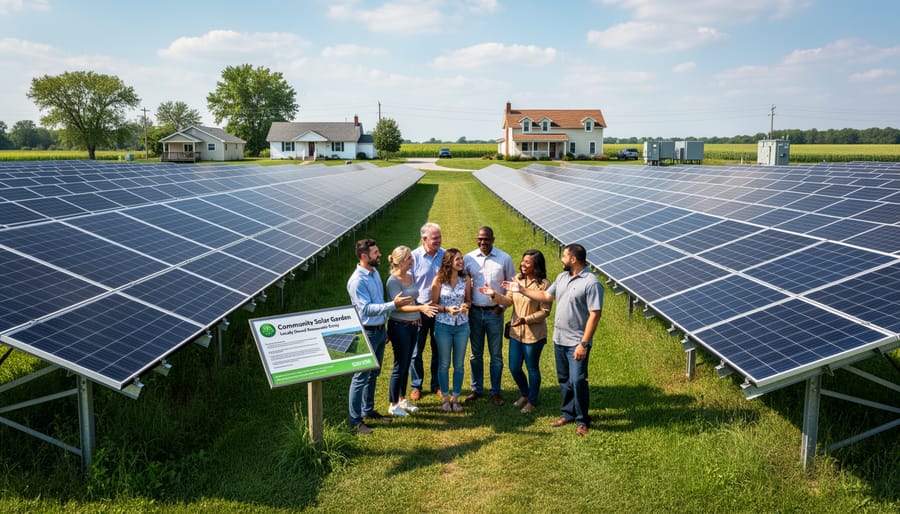
Joining a solar cooperative opens doors that traditional energy models keep firmly shut. For renters, apartment dwellers, and anyone without a sun-soaked roof, cooperatives provide a pathway to solar ownership that would otherwise remain out of reach. Instead of being locked out by circumstance, you can buy into a share of a community solar array and receive credits or returns based on the energy it produces.
The financial case stacks up quickly. Members typically see returns through reduced electricity bills, dividend payments, or both, depending on the cooperative’s structure. These aren’t windfalls for distant shareholders, they flow back to the people who live, work, and spend money in the community. Over time, the modest membership fee pays itself off while you continue benefiting from clean energy without the upfront cost of a private installation.
Beyond your bank account, cooperatives strengthen local economies. Projects create jobs for Australian installers, electricians, and project managers. Equipment gets procured, maintained, and eventually upgraded by local businesses. The money circulates within the region rather than disappearing offshore.
There’s a deeper shift at play, too. Energy sovereignty matters. When your community owns its generation, you’re less vulnerable to price shocks, supply disruptions, and decisions made in distant boardrooms. Cooperatives build resilience, physical infrastructure backed by social capital and collective problem-solving.
Every kilowatt-hour generated displaces fossil fuels, cutting emissions at scale. When you multiply individual rooftop potential across dozens or hundreds of members, the climate impact becomes substantial.
Perhaps most surprisingly, cooperatives rebuild something we’ve lost: genuine community connection. Members gather at meetings, vote on projects, learn together, and share a tangible common purpose. You’re not just a customer paying a bill, you’re a co-owner shaping your energy future alongside your neighbours. That sense of agency and belonging might be the most valuable return of all.
Australian Solar Cooperatives in Action
Across Australia, solar cooperatives are proving that community-owned renewable energy works. From suburban rooftops to regional solar farms, these member-led organisations are turning shared vision into tangible energy projects that power homes, create local jobs, and return benefits to participants.
| Cooperative | Location | Project Type | Membership Model | Key Outcomes |
|---|---|---|---|---|
| Repower Shoalhaven | NSW South Coast | Community solar farm | Share purchase ($500 minimum) | 2MW capacity, 700+ members, 5% annual returns |
| Pingala Community Solar | Inner Sydney | Rooftop installations on community buildings | Individual or group leases | 50+ rooftop systems, accessible solar for renters |
| Community Power Agency | Victoria (regional) | Multiple community solar gardens | Panel ownership ($500, $2,000) | 8 operational projects, partnerships with councils |
| Enova Energy | Northern NSW | Retailer with community ownership | Member-shareholders | 20,000 customers, profits fund local sustainability projects |
These cooperatives demonstrate different approaches suited to their regions. Repower Shoalhaven leverages rural land for utility-scale solar, offering members steady financial returns alongside emissions reductions. Pingala focuses on dense urban areas where rooftop access is limited, installing systems on schools and community centres that members can lease panels from, similar to how urban regeneration projects revitalise shared spaces.
Regional Victoria’s Community Power Agency partners with local councils to develop solar gardens on underutilised public land, creating accessible entry points for households and small businesses. Members own individual panels within larger arrays, receiving credits on their electricity bills proportional to their share of generation.
What ties these diverse models together is democratic governance, local reinvestment, and the principle that clean energy belongs in community hands. Some cooperatives also support broader environmental initiatives, funding everything from energy efficiency programs to revegetation groups multiplying their positive impact beyond kilowatt-hours generated.
Getting Started: How to Join or Launch a Solar Cooperative
Ready to join the solar cooperative movement? Start by searching the Community Power Agency’s online directory or your state’s community energy network, organisations like Renew’s Community Energy Network in Victoria or Community Power Agency nationally maintain lists of active cooperatives. Contact groups in your region to learn about membership opportunities, upcoming projects, and how their model works.
When evaluating a cooperative, ask about their track record, current projects, and financial transparency. Review their governing documents to understand decision-making processes, member rights, and how returns are calculated. Check whether they’ve delivered on past projects and speak with existing members about their experience. Look for clear communication, realistic projections, and alignment with your values around community ownership and clean energy.
If no cooperative exists nearby, you can start one. Begin by gathering a core group of committed locals who share the vision, applying principles of community project success from the outset helps avoid common pitfalls. Connect with established cooperatives for mentorship and consider joining the Business Council of Co-operatives and Mutuals for guidance on registration and governance.
Register as a cooperative with your state’s fair trading or consumer affairs body, which involves drafting rules, appointing directors, and meeting legislative requirements. Familiarise yourself with energy market regulations through the Australian Energy Market Operator and your state’s electricity network rules. Many cooperatives engage legal and energy consultants to navigate grid connection requirements and retail arrangements.
The Community Power Agency offers startup resources, model rules, and feasibility templates. State-based programs sometimes provide seed funding for community energy initiatives. Starting small, perhaps with a single rooftop project, builds capability before tackling larger solar gardens. Patience and persistence matter, but the growing network of Australian cooperatives proves it’s achievable when communities come together with shared purpose.
Common Questions About Solar Cooperatives
Who can join a solar cooperative in Australia?
Most cooperatives are open to anyone within their service area, homeowners, renters, businesses, and community organisations can all become members. You don’t need to own a suitable roof or have technical expertise, just a commitment to supporting community-owned renewable energy.
What are the typical costs and how do I receive benefits?
Membership usually involves purchasing shares (ranging from a few hundred to a few thousand dollars depending on the cooperative) or paying an annual fee. Benefits come as reduced electricity bills if you’re directly consuming the energy, dividends from energy sales, or a combination of both, distributed according to each cooperative’s specific model.
What happens if I move house?
Your membership and shares remain yours, you can continue receiving benefits even after moving, transfer your membership to someone at your new address if the cooperative operates there, or sell your shares back to the cooperative or another member according to the cooperative’s rules.
Are solar cooperatives eligible for government incentives?
Yes, many cooperatives can access the same federal incentives as individual households, including Small-scale Technology Certificates under the renewable energy target. Some states offer additional grants or support specifically for community energy projects, though eligibility varies by location and project scale.
Cooperatives connect to the grid like any solar installation, selling excess energy to retailers or directly to the market depending on their size and agreements. Most work with energy retailers to handle billing and energy trading, though larger cooperatives may become retailers themselves. The main risks are similar to any investment: project delays, lower-than-expected energy yields due to weather or technical issues, and changes in energy market prices or policy settings. However, the cooperative structure spreads these risks across many members, and the long operational life of solar installations (25+ years) typically smooths out short-term fluctuations. Democratic governance means you’ll have a voice in how risks are managed and projects are developed.
Solar cooperatives and Solarize campaigns represent more than alternative ways to access clean energy, they’re a fundamental shift in how Australians can participate in the renewable transition. By pooling resources, sharing ownership, and making decisions together, communities are proving that energy democracy isn’t just possible; it’s already happening across the country.
These models break down barriers that have kept solar out of reach for renters, apartment dwellers, and those without suitable rooftops. They turn individual aspirations into collective power, creating local jobs, keeping financial returns within communities, and building resilience against energy market volatility. Every cooperative formed and every Solarize campaign launched strengthens the case for community-led renewable energy.
Whether you’re ready to join an existing cooperative, gather neighbours for a Solarize campaign, or explore starting something new in your area, the pathway forward is clearer than ever. Australia’s clean energy future doesn’t have to be built by distant corporations or centralised utilities alone. It can be shaped by communities working together, owning their energy infrastructure, and sharing the benefits.
The opportunity to be part of this movement is here now. Your community might be the next one powering itself with sunshine, owned by the people who live there.