
Australian hospitals waste an average of 300 litres of water per square meter annually—water that could serve entire communities facing Australia’s water challenges. Water Usage Effectiveness (WUE) measures exactly how much water your healthcare facility consumes beyond essential medical needs, giving you a clear benchmark to slash costs and environmental impact simultaneously.
Think of WUE as your facility’s water fitness score. Just as a gym tracks your progress, WUE quantifies litres used per patient day or per square meter, revealing hidden leaks in cooling towers, sterilization systems, and outdated equipment draining resources. A WUE rating above 50 litres per square meter signals urgent inefficiency—yet most Australian hospitals operate between 80-120 litres, leaving massive room for improvement.
The beauty of focusing on WUE lies in its dual benefit: every litre saved cuts both water bills and energy costs for heating and pumping. Melbourne’s Box Hill Hospital reduced their WUE by 35% in eighteen months, saving $180,000 annually through simple fixes like pressure optimization and rainwater harvesting. These aren’t complex engineering marvels—they’re practical upgrades any facility can implement starting today.
Whether you manage a small regional clinic or a major metropolitan hospital, understanding and improving your WUE isn’t just environmental responsibility—it’s smart business that protects your bottom line while safeguarding precious water resources for future generations.
What Is Water Usage Effectiveness (WUE) and Why Should Hospitals Care?
The Energy-Water Nexus in Healthcare Facilities
In Australian healthcare facilities, water and energy systems work hand-in-hand like dance partners – when one moves, the other follows. Understanding this connection is crucial for any hospital serious about improving their Water Usage Effectiveness metrics.
Consider what happens when you turn on a hot water tap in a hospital ward. That seemingly simple action triggers both water consumption and the energy needed to heat it. Multiply this across sterilisation units processing surgical instruments, commercial laundries washing hundreds of kilograms of linen daily, and the picture becomes clear: these systems are inseparable.
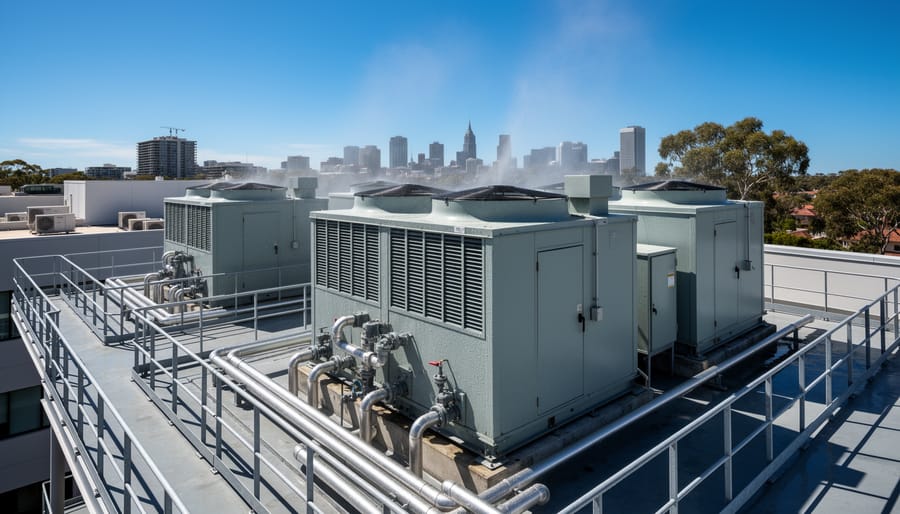
HVAC systems present perhaps the most dramatic example of this nexus. Cooling towers at facilities like Royal Melbourne Hospital can evaporate thousands of litres daily whilst consuming massive amounts of electricity to run chillers and pumps. When a facility optimises only for energy savings by reducing cooling tower cycles, water consumption often skyrockets due to increased blowdown requirements. Conversely, minimising water use without considering energy impacts can lead to scaling, reduced heat transfer efficiency, and higher power bills.
Sterilisation departments face similar trade-offs. Autoclave systems require both heated water and steam generation, typically consuming 150-200 litres per cycle. Many facilities have discovered that upgrading to modern, efficient sterilisers simultaneously cuts water use by 40% and energy consumption by 30% – a perfect example of integrated thinking.
The challenge many Australian healthcare administrators face is departmental silos. When engineering teams focus solely on energy metrics whilst operations staff track water usage independently, opportunities for combined savings slip through the cracks. A Sydney hospital recently learned this lesson when their new energy-efficient boilers actually increased water waste because the systems weren’t designed holistically.
The solution lies in measuring and managing both resources together, which is precisely where comprehensive WUE strategies deliver remarkable results for our healthcare community.
Where Australian Hospitals Lose Water and Energy (And Don’t Even Know It)
Cooling Systems: The Biggest Hidden Water Drain
When most of us think about water waste in healthcare facilities, we picture dripping taps or inefficient toilets. But the real culprit is often hiding in plain sight, humming away on rooftops and in basement mechanical rooms. Cooling systems represent the single largest water drain in Australian hospitals, particularly during our scorching summer months when air conditioning systems work overtime to maintain comfortable temperatures for patients and staff.
Evaporative cooling towers are the primary offenders. These systems work by evaporating water to remove heat from buildings, and while they’re energy-efficient, they’re incredibly water-hungry. A medium-sized hospital cooling tower can evaporate up to 500,000 litres weekly during peak summer periods. That’s enough water for approximately 50 Australian households for an entire week, disappearing into thin air.
Consider the Royal Brisbane and Women’s Hospital, which identified that their cooling systems were consuming 40 percent of the facility’s total water use before implementing water-energy optimization strategies. The real waste happens through bleed-off, where concentrated minerals must be continuously flushed from the system, and through inefficient cycles of concentration.
Many facilities also struggle with poorly maintained systems. A small leak in a cooling tower can waste 50,000 litres monthly, often going unnoticed because the water simply evaporates. Outdated controls mean systems frequently run at full capacity regardless of actual cooling demand, and without proper monitoring, facilities have no visibility into consumption patterns.
The challenge intensifies during Australian summers when temperatures regularly exceed 35 degrees Celsius across much of the country, pushing cooling systems to their absolute limits precisely when water restrictions become most likely.
Sterilization and Laundry Operations
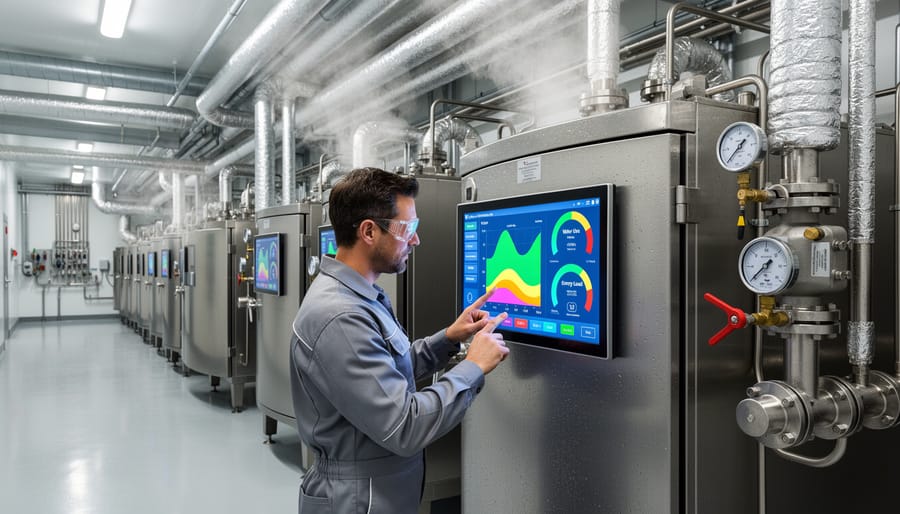
Behind the scenes of every Australian hospital, two water-intensive operations run constantly: sterilization units processing surgical instruments and commercial laundry facilities handling mountains of linen. Together, these services can account for 15-20% of a hospital’s total water consumption, yet they’re often overlooked in sustainability audits.
Let’s start with sterilization. Autoclaves and washer-disinfectors require both water and significant energy to heat that water to temperatures exceeding 90°C. Many older units operate on single-pass cooling systems, meaning water flows through once and straight down the drain. A typical washer-disinfector might use 100-150 litres per cycle, running 10-20 times daily. That’s potentially 3,000 litres daily from just one machine, with much of that being hot water that’s literally money and energy washing away.
Commercial hospital laundries face similar challenges. Processing contaminated linens demands high temperatures and multiple rinse cycles, with older tunnel washers consuming up to 15 litres per kilogram of laundry. A mid-sized hospital processing 2,000 kilograms daily could use 30,000 litres just for laundry operations.
The inefficiencies compound when we consider water heating. Many facilities still rely on constantly running hot water loops to ensure immediate availability, wasting both water and the considerable energy invested in heating it. Additionally, steam leaks in older sterilization equipment often go unnoticed, representing another hidden water and energy drain.
The encouraging news? Australian hospitals addressing these inefficiencies are seeing remarkable returns through relatively straightforward improvements.
The Overlooked Contributors
While cooling systems often dominate the water efficiency conversation in Australian hospitals, several quieter contributors deserve equal attention. Kitchen facilities represent a significant drain, with commercial dishwashers, pre-rinse spray valves, and food preparation areas consuming thousands of litres daily. Many healthcare facilities still operate with older equipment that uses double or triple the water of modern, efficient alternatives.
Patient care services add substantial demand through laundries processing endless loads of linens, bedding, and clinical textiles. A single 200-bed facility might launder over 1,000 kilograms of materials daily. Similarly, sterilization departments require continuous water flow for equipment cleaning and autoclaves, often running on outdated systems installed decades ago.
Outdoor irrigation presents another challenge, particularly for facilities maintaining gardens for patient wellbeing. Without smart controllers or moisture sensors, these systems frequently overwater during wet seasons or run during peak evaporation hours.
Perhaps the most insidious contributor is aging plumbing infrastructure. Hidden leaks in underground pipes, deteriorating fixtures, and corroded joints silently waste precious water around the clock. One Melbourne hospital discovered through a water audit that 15 percent of their consumption disappeared through undetected leaks, costing them thousands annually while straining local water resources unnecessarily.
Practical Strategies to Improve WUE in Australian Hospital Settings
Low-Cost Immediate Actions
You don’t need a massive capital investment to start improving your water usage effectiveness. Many Australian healthcare facilities have discovered that simple, strategic interventions can deliver impressive results within months, not years. These quick wins build momentum and prove the value of WUE improvements to stakeholders who might be hesitant about larger commitments.
Start with leak detection, which consistently delivers the fastest return on investment. A Melbourne community health centre discovered they were losing 40,000 litres weekly through a series of small toilet cistern leaks. By implementing a simple monthly checking routine using food colouring tablets in cisterns, they identified and fixed issues before they became costly problems. The total investment was under $500, but annual savings exceeded $8,000.
Water flow restrictors represent another low-hanging fruit. Installing aerators on taps and low-flow showerheads in patient bathrooms typically costs between $15-50 per fixture but can reduce water consumption by 30-50 percent at each point. A regional Queensland hospital fitted 120 taps with aerators over two weekends, spending $3,600 and saving approximately $18,000 annually.
Don’t underestimate the power of awareness. A Tasmanian aged care facility created a simple staff engagement program featuring water-saving tips in break rooms and monthly conservation challenges between departments. Combined with installing basic sub-meters to track usage by area, they achieved a 15 percent reduction in water use within six months, purely through behavioural changes and heightened awareness.
Finally, optimize your maintenance schedules. Aligning cooling tower cleaning, landscape irrigation system checks, and equipment servicing into coordinated schedules prevents water waste and extends equipment life. This organizational change costs nothing but staff time yet delivers ongoing efficiency improvements that compound over time.
Mid-Range Technology Upgrades
For hospitals and large facilities ready to make a meaningful leap in water efficiency, mid-range technology upgrades offer the sweet spot between investment and impact. These solutions typically pay for themselves within three to five years while delivering substantial reductions in both water consumption and operational costs.
High-efficiency equipment replacements form the foundation of this tier. Modern cooling towers with variable-speed drives and drift eliminators can reduce water usage by up to 30% compared to older models. When paired with energy reduction approaches, these upgrades create compound savings that significantly improve your facility’s bottom line.
Heat recovery systems represent another game-changer, particularly in Australian hospitals where cooling demands are substantial. These systems capture waste heat from chillers and medical equipment, repurposing it for hot water generation. Melbourne’s Box Hill Hospital successfully implemented this technology, reducing their gas consumption by 22% while simultaneously lowering water heating requirements.
Rainwater harvesting systems sized for commercial applications can supply significant volumes for non-potable uses. A 50,000-litre system might cost between $15,000 and $30,000 installed, yet can offset thousands of litres of mains water monthly, particularly valuable during drought conditions affecting many Australian regions.
Greywater recycling systems purpose-built for cooling tower makeup water offer impressive returns. These systems treat wastewater from hand basins and showers to cooling tower standards, reducing reliance on potable water by 40-60% in typical hospital applications.
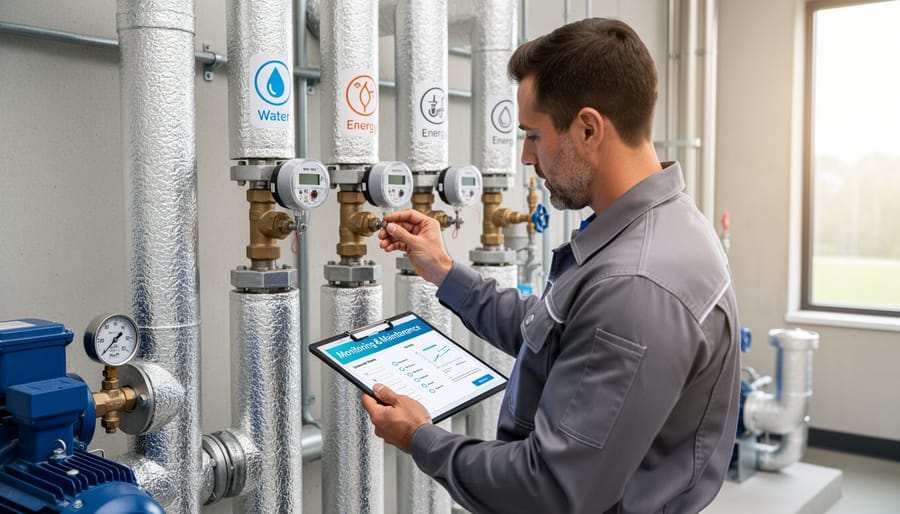
Smart building management systems tie everything together, using real-time monitoring and automated controls to optimize water use across all systems. These platforms identify inefficiencies immediately, enabling rapid responses that prevent waste. Perth’s Fiona Stanley Hospital reduced water consumption by 35% through integrated smart systems, demonstrating what’s achievable with coordinated mid-range investments.
Major Infrastructure Transformations
When incremental improvements aren’t enough to meet your water reduction targets, it’s time to consider transformative infrastructure changes. While these projects require significant upfront investment, Australian healthcare facilities are discovering they deliver substantial long-term savings alongside dramatic environmental benefits.
Alternative cooling technologies represent one of the most impactful transformations available. Traditional cooling towers consume enormous quantities of water through evaporation, but dry coolers eliminate this loss entirely by using air-based heat exchange. Brisbane’s Mater Hospital demonstrated this approach beautifully, reducing water consumption by 45% after installing hybrid cooling systems that switch between wet and dry modes based on temperature and humidity conditions. Adiabatic systems offer a middle ground, using minimal water misting only during peak heat periods while maintaining efficiency.
Cogeneration plants create another game-changing opportunity by simultaneously producing electricity and useful heat from a single fuel source. Several Melbourne hospitals have embraced this technology, capturing waste heat for hot water systems and sterilization processes. The dual benefit reduces both water heating energy and the cooling load from heat rejection.
Complete HVAC overhauls might seem daunting, but they’re increasingly viable with modern financing options. New-generation systems integrate smart sensors, variable speed drives, and optimized water flow that can slash consumption by 30-50% compared to equipment installed just fifteen years ago.
Perhaps most exciting are integrated water-energy management platforms that create a unified dashboard for monitoring and controlling all building systems. These platforms use artificial intelligence to identify inefficiencies humans might miss, automatically adjusting operations to minimize waste. Sydney’s Royal Prince Alfred Hospital implemented such a system, achieving water savings that paid back their investment within four years whilst building a resilient foundation for future sustainability goals.
Success Stories: Australian Hospitals Leading the Way
Across Australia, forward-thinking hospitals are proving that exceptional patient care and environmental responsibility go hand in hand. These success stories demonstrate that measurable water efficiency improvements are not only achievable but financially rewarding.
The Royal Melbourne Hospital embarked on an ambitious water reduction program in 2021, installing smart monitoring systems throughout their 50,000-square-metre facility. By identifying and repairing hidden leaks in their aging infrastructure and upgrading cooling tower technology, they reduced water consumption by 32% within eighteen months. This translated to annual savings of $180,000 and over 85 million litres of water conserved. The project faced initial resistance from some departments concerned about disruption to patient services, but careful planning ensured all upgrades occurred during off-peak hours. The financial savings now fund their community health outreach programs, creating a lasting positive impact beyond the hospital walls.
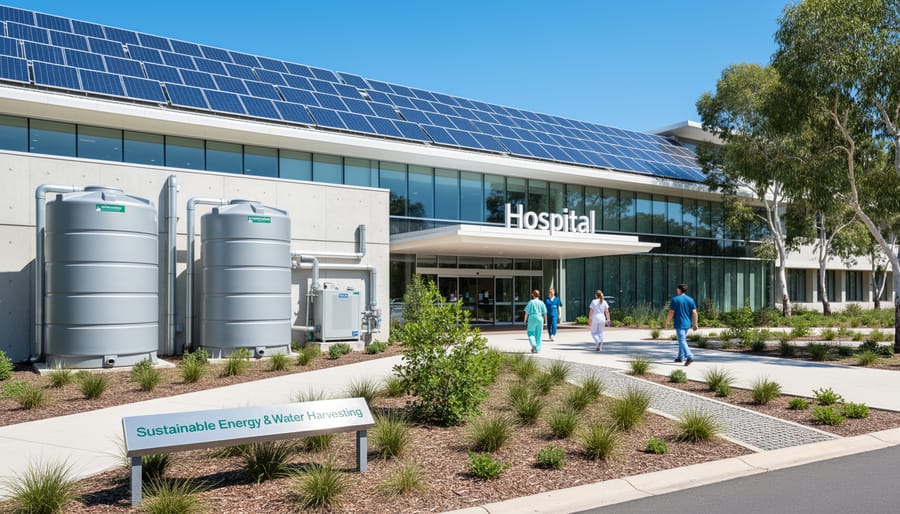
In regional Queensland, Toowoomba Hospital took a different approach that resonates with their drought-affected community. They implemented a comprehensive rainwater harvesting system in 2020, collecting water from expansive roof areas to supply non-potable uses including toilet flushing, irrigation, and cooling systems. Combined with water-efficient fixtures and staff education programs, their WUE score improved from 2.8 to 1.6 within two years. The hospital saved approximately $95,000 annually while becoming a beacon of water stewardship in their region. Local schools now visit to learn about sustainable water management, strengthening community connections and inspiring the next generation of environmental champions.
Perth’s Fiona Stanley Hospital showcased how new facilities can integrate water efficiency from the ground up. Designed with recycled water systems, drought-tolerant landscaping, and state-of-the-art sterilization equipment requiring 40% less water than conventional models, they achieved a WUE of 1.4, setting a new benchmark for Australian healthcare facilities. Their success mirrors similar efficiency improvements seen in other water-intensive Australian facilities.
These hospitals prove that whether you’re retrofitting heritage buildings or designing new facilities, improving water efficiency delivers triple benefits: reduced operational costs, enhanced environmental credentials, and strengthened community relationships. Their journeys offer practical roadmaps for other healthcare facilities ready to take action.
Funding and Support Available for Hospital Sustainability Projects
Australian healthcare facilities have access to a growing range of funding opportunities designed to support water-energy optimization projects, making sustainability initiatives more financially accessible than ever before.
At the federal level, the Australian Government’s Clean Energy Finance Corporation offers tailored financing solutions for large-scale hospital infrastructure upgrades, including water efficiency technologies. The Business Energy Advice Program provides free assessments that can identify water-related energy savings opportunities, helping facilities understand their potential ROI before committing funds.
State-based programs offer particularly generous support. In New South Wales, the Energy Savings Scheme and Water Efficiency Program provide financial incentives for hospitals implementing qualifying water conservation measures. Victorian healthcare facilities can access grants through Sustainability Victoria’s Resource Efficiency Program, which has previously funded water recycling systems and cooling tower upgrades in major hospitals. Queensland’s Business Energy Savers Program extends rebates for water-efficient equipment that reduces energy consumption.
Your local water utility represents an often-overlooked funding partner. Sydney Water, Melbourne Water, and other metropolitan utilities offer business partnership programs providing technical advice, rebates on water-efficient appliances, and sometimes co-funding for innovative projects. These utilities understand that healthcare facilities are major water users and are often eager to collaborate on demonstration projects that can showcase best practices.
The Australian Healthcare and Hospitals Association connects members with emerging funding opportunities and can facilitate knowledge-sharing between facilities that have successfully secured grants. Many hospitals have also benefited from forming consortiums with neighboring healthcare facilities to apply for larger infrastructure grants, spreading costs while maximizing impact.
The key is starting conversations early. Most funding programs require detailed proposals demonstrating measurable outcomes, so engaging with potential funding partners during your initial WUE assessment ensures your project aligns with available opportunities.
Getting Started: Your Hospital’s WUE Action Plan
Starting your hospital’s WUE journey doesn’t require a complete infrastructure overhaul or a massive budget. In fact, the most successful programs across Australian healthcare facilities began with simple, strategic steps that built confidence and demonstrated value to stakeholders.
Begin with a baseline assessment. Walk through your facility with a simple checklist, noting water-intensive areas like cooling towers, sterilization units, laundries, and kitchens. Many Australian hospitals have found success using free online water auditing tools provided by state government sustainability programs. Document current usage patterns through utility bills from the past 12 months to establish your starting point. This initial data becomes your foundation for measuring progress and celebrating wins.
Next, assemble your WUE team. You don’t need everyone at once – start small with facilities management, finance, and perhaps one clinical champion who understands operational needs. At Royal Melbourne Hospital, their initial working group consisted of just three people who met monthly. They grew the team organically as early successes generated interest from other departments.
Identify quick wins that demonstrate immediate value. Installing aerators on taps, fixing obvious leaks, or adjusting cooling tower cycles often delivers 10-15 percent water savings within weeks. These visible results build momentum and secure buy-in for larger initiatives. Perth’s Fiona Stanley Hospital started with cooling tower optimization, saving 30 million litres annually before tackling more complex projects.
Set realistic targets aligned with your hospital’s capacity. Rather than aiming for industry-leading benchmarks immediately, focus on 10-15 percent improvement in the first year. This achievable goal keeps teams motivated while establishing measurement systems and identifying barriers.
Finally, communicate progress regularly. Share water savings translated into meaningful terms – Olympic swimming pools saved, or community supply preserved during drought conditions. Queensland hospitals successfully engaged staff by displaying real-time water usage dashboards in common areas, turning conservation into a shared mission that resonated with everyone’s values around community stewardship and environmental responsibility.
Improving water usage effectiveness in Australian hospitals represents far more than a financial or regulatory checkbox—it’s an opportunity for our healthcare institutions to embody the very principles of wellbeing they promote. As climate change intensifies droughts and water scarcity across our continent, hospitals that prioritize WUE demonstrate genuine environmental stewardship, setting a powerful example for their communities and the broader healthcare sector.
When hospitals reduce water waste, they’re not just cutting operational costs; they’re building resilience against future climate challenges that will inevitably impact service delivery. Every litre conserved today strengthens our capacity to care for patients tomorrow, particularly in regional areas where water security remains precarious. This is preventative medicine applied to our planet—treating the cause rather than just the symptoms.
The beautiful part? Many of the solutions we’ve explored don’t require massive capital investment or years of planning. Simple behavioral changes, staff engagement programs, and incremental equipment upgrades can yield immediate results. Australian hospitals like those in Queensland and Victoria have proven that significant water savings are achievable with commitment and practical action.
Your role in this transformation matters. Whether you’re a sustainability manager ready to champion a new initiative, an administrator reviewing infrastructure upgrades, or a healthcare professional passionate about environmental health, you have the power to drive change. Start the conversation with your team this week. Request a water audit. Champion one improvement project. Together, we can ensure our hospitals heal both people and planet.