
Imagine borrowing a power drill for the weekend instead of buying one that’ll gather dust in your garage for years. Community library networks—also called tool libraries or share sheds—make this everyday reality across Australia, connecting neighbours who lend and borrow equipment, tools, sporting gear, and household items they only need occasionally. These grassroots networks operate on a simple membership model where local residents access thousands of dollars worth of equipment for a modest annual fee, transforming how communities consume and share resources.
The environmental impact is remarkable. When twenty households share one lawn aerator instead of each purchasing their own, we collectively prevent nineteen items from being manufactured, packaged, shipped, and eventually discarded. This reduces embodied carbon emissions, conserves raw materials, and diverts waste from landfills. Australian tool libraries report that each shared item replaces an average of fifteen individual purchases, multiplying the positive environmental outcomes with every transaction.
Beyond promoting sustainable living, these networks rebuild the social fabric of our communities. Members connect with neighbours, learn new skills through workshops, and discover the joy of collaborative consumption. From Brisbane’s Share Sheds to Melbourne’s community tool libraries, Australians are proving that access trumps ownership, creating resilient local networks that benefit both people and planet. Whether you’re seeking to join an existing network or start one in your neighbourhood, community library networks offer a practical pathway toward living more sustainably while strengthening the bonds that make communities thrive.
What Is a Community Tool Library Network?
Imagine having access to a power drill, camping gear, or a hedge trimmer exactly when you need it, without the expense of purchasing or the guilt of it gathering dust in your garage. That’s the beauty of a community tool library network, and it’s transforming how Australians think about ownership and sustainability.
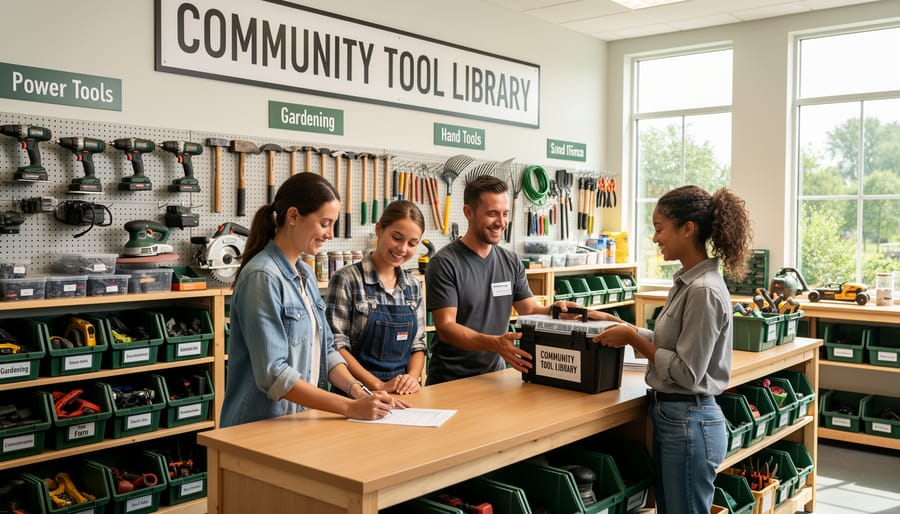
A community tool library operates much like your local book library, but instead of borrowing novels, members access practical items like garden equipment, power tools, sporting gear, kitchen appliances, and even party supplies. These networks are built on a simple yet powerful principle: why should every household own items that sit unused 95% of the time when we can share resources and reduce waste together?
Here’s how they typically work. Community members pay a modest annual membership fee, often between $30 and $100, which gives them access to an inventory of hundreds or even thousands of items. You browse the catalogue online or in person, reserve what you need, collect it for a specified loan period, and return it when you’re done. It’s straightforward, affordable, and remarkably effective at reducing consumption.
What sets these networks apart from traditional libraries is their focus on functional, everyday items that support sustainable living. The Melbourne Tool Library, for instance, offers everything from carpet cleaners and tile cutters to camping equipment and sewing machines. Meanwhile, the Brisbane Tool Library in West End has become a community hub where neighbours connect over shared projects and skills workshops.
These initiatives are sprouting across Australia, from Sydney’s Inner West Tool Library to smaller regional operations in places like the Sunshine Coast and Hobart. Each reflects the unique needs of its community while championing the same core values: reducing waste, saving money, building connections, and proving that we don’t need to own everything to live well. The scope is expanding too, with some libraries now including musical instruments, baby equipment, and even educational resources, demonstrating that the sharing economy has limitless potential when communities come together.
The Environmental Case for Sharing Tools
Breaking the Buy-Use-Store-Dispose Cycle
Every year, Australians send millions of tonnes of perfectly usable tools and equipment to landfill, often because items are purchased for single projects and then left to gather dust. Tool libraries are changing this wasteful pattern by offering a practical alternative to ownership. When you borrow a power drill for a weekend renovation or a camping kit for your annual trip, you’re actively preventing another new item from being manufactured, packaged, and eventually discarded.
The environmental mathematics are compelling. A single hedge trimmer borrowed by twenty households replaces twenty individual purchases, dramatically reducing the raw materials, energy, and carbon emissions associated with production. Melbourne’s Share Shed reports that their 800 members collectively prevent an estimated 15 tonnes of consumer goods from entering landfills annually.
This sharing model extends the life cycle of tools significantly. Rather than languishing unused in garages across the suburb, items remain in active circulation, maintained properly and used to their full potential. When tools do reach end-of-life, library networks often facilitate responsible recycling or repurposing, ensuring materials stay in circulation rather than becoming waste. For Australian communities facing growing landfill challenges, tool libraries represent a tangible solution that benefits both your wallet and the environment.
The Hidden Carbon Cost of Idle Tools
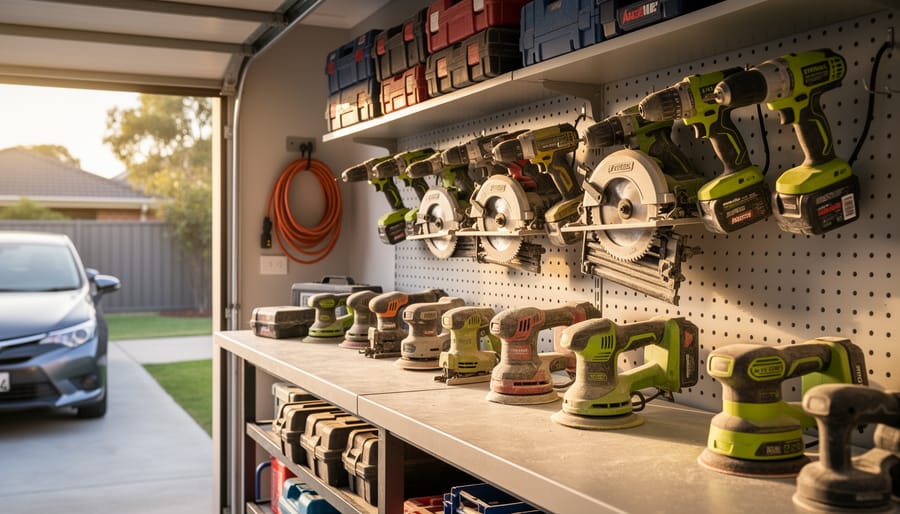
Consider this: the average Australian household owns a power drill that’s used for just 12 to 15 minutes over its entire lifetime. That cordless drill gathering dust in your garage? It’s part of a much larger story about consumption and carbon emissions that rarely gets told.
Every tool manufactured requires substantial resources. A single power drill demands raw materials like steel, copper, and lithium for batteries, plus the energy-intensive processes of mining, manufacturing, and global shipping. When we multiply this across millions of households, each owning near-identical tools that sit idle 95% of the time, the environmental toll becomes staggering.
Research shows that manufacturing accounts for approximately 80% of a tool’s total carbon footprint. Yet in Australian homes, these tools spend most of their existence in storage, representing embodied carbon locked away in rarely-touched equipment. We’re essentially paying twice: once at purchase, and again through the ongoing environmental cost of items that provide minimal return on their resource investment.
The storage space itself tells another story. Spare rooms, garages, and sheds filled with underused equipment represent construction materials and energy that could serve better purposes. When we consider that neighbours often own duplicate sets of the same tools, the inefficiency becomes clear.
This pattern isn’t just wasteful; it’s an opportunity. By recognising how our current approach to tool ownership contributes to unnecessary carbon emissions, we can embrace smarter alternatives that benefit both our communities and the environment. Community tool libraries offer a practical solution, transforming how we access what we need while dramatically reducing our collective environmental footprint.
How Community Tool Libraries Work in Practice
Membership and Access Models
Australian tool libraries embrace diverse membership models that reflect their unique community values and operational needs. Many grassroots initiatives operate on a completely free basis, relying on volunteer coordination and community donations to keep tools accessible to everyone. This approach removes financial barriers and strengthens neighbourhood connections, though it may limit the range of tools available.
Other networks have adopted modest annual membership fees, typically ranging from $20 to $100, which help cover insurance, maintenance, and storage costs while remaining affordable. Some libraries offer sliding scale fees or hardship provisions, ensuring no one misses out due to financial constraints.
Several established tool libraries use subscription-based models with tiered options. Members might pay $50 annually for basic access or $150 for premium memberships including priority bookings and extended loan periods. These fees enable libraries to expand their tool collections and offer equipment maintenance workshops.
Community centres and local councils sometimes integrate tool libraries into existing facilities, providing free access to residents while absorbing operational costs. This model demonstrates how local government can champion circular economy principles and reduce household consumption. Whatever the structure, the goal remains constant: making quality tools accessible while building resilient, sustainable communities across Australia.
What You Can Borrow (Beyond Just Power Tools)
The beauty of community tool libraries lies in their remarkable diversity. While power drills and circular saws form the foundation, Australian tool libraries have evolved into treasure troves of practical items that serve countless purposes throughout the year.
Garden enthusiasts can borrow everything from rotary hoes and hedge trimmers to wheelbarrows and composting equipment. Many libraries stock sustainable gardening equipment like mulchers and soil testing kits, helping you create thriving outdoor spaces without the hefty investment.
Planning a celebration? Party essentials including marquees, trestle tables, folding chairs, sound systems, and even chocolate fountains are commonly available. Camping gear forms another popular category, with tents, portable stoves, and hiking equipment ready for weekend adventures.
Specialist items make these libraries genuinely valuable. Think carpet cleaners for spring cleaning, tile cutters for renovation projects, bike repair stands, sewing machines, food dehydrators, and even musical instruments. Some libraries offer sports equipment, craft supplies, and educational resources for children.
This sharing model means accessing what you need precisely when you need it, without cluttering your home or draining your wallet. It’s community resourcefulness at its finest, making sustainable living remarkably practical.
Keeping It All Running: Maintenance and Responsibility
The magic behind thriving tool libraries lies in their maintenance systems and shared responsibility models. Most Australian tool libraries operate on a simple principle: members contribute a small annual fee that covers repairs, replacements, and basic upkeep. Many also encourage borrowers to return tools clean and in working order, fostering a culture of collective care.
Melbourne’s Library of Things employs volunteer maintenance coordinators who inspect returned items and perform minor repairs, while professional servicing gets outsourced for complex equipment. They’ve found that clear borrowing guidelines and member education sessions dramatically reduce damage rates. Some libraries implement a deposit system or require brief training sessions for power tools, ensuring users feel confident and responsible.
When tools do break, most libraries treat it as a learning opportunity rather than punishment. Members simply report issues, and the community works together to restore items. This collaborative approach builds trust and accountability, transforming borrowing into genuine community participation. It’s proof that when Australians pool resources and share responsibility, sustainable systems naturally emerge and flourish.
Australian Community Tool Libraries Leading the Way
Melbourne’s Sharing Revolution
Melbourne is leading Australia’s sharing revolution with innovative tool libraries that are transforming how communities access resources. The Melbourne Tool Library, one of the city’s pioneering initiatives, has helped thousands of residents borrow everything from power drills to pasta makers, preventing countless unnecessary purchases. Members report saving hundreds of dollars annually while dramatically reducing their environmental footprint. Similarly, the Share Shed in Brunswick has created a thriving hub where neighbours connect over borrowed camping gear and gardening equipment. These spaces have become more than just lending facilities; they’re community gathering points where skills are shared, repair workshops flourish, and friendships form. The impact extends beyond individual savings, with Melbourne’s tool libraries collectively diverting tonnes of potential waste from landfills each year while fostering a culture of collaboration over consumption that’s inspiring similar initiatives across Victoria.
Sydney’s Growing Network
Sydney’s community tool library scene is thriving, with initiatives like the Inner West Tool Library leading the charge since 2019. Starting from a single garage in Marrickville, this network has grown to serve thousands of members across multiple suburbs, offering everything from power drills to pasta makers. What makes Sydney’s approach particularly impressive is the collaborative spirit between different sharing hubs. Libraries in Newtown, Dulwich Hill, and Glebe regularly coordinate to ensure members can access the widest possible range of equipment. This interconnected model means a gardener in Leichhardt can borrow a rotary hoe from Marrickville, while a DIY enthusiast in Balmain accesses specialty tools from Newtown. The network has prevented an estimated 15 tonnes of tools from ending up in landfill while saving members over $200,000 in purchasing costs. Community workshops and repair cafes further strengthen these connections, creating spaces where neighbours share skills alongside tools.
Regional and Rural Success Stories
Tool libraries aren’t just thriving in capital cities – they’re proving remarkably adaptable to regional and rural Australia’s unique challenges. Take Bendigo’s ReShare Shed, which launched in 2021 with an initial collection of just 50 items. Within eighteen months, they’d grown to over 300 tools and 400 members, proving that regional communities are eager for sustainable sharing solutions.
In Ballarat, the local tool library has partnered with community gardens and men’s sheds, creating a network that shares not just equipment but knowledge across generations. Their most borrowed items? Post hole diggers and wood chippers – tools perfectly suited to properties with larger yards.
What makes these regional success stories particularly inspiring is their adaptability. Many operate from repurposed spaces like former corner shops or community halls, keeping overhead costs minimal. Some use flexible opening hours, including evening sessions when residents finish work, while others implement mobile hubs that rotate between neighbouring towns.
The environmental impact is significant too. By preventing duplicate purchases across small communities where everyone might previously have bought their own whipper snipper or pressure washer, these libraries are reducing waste whilst strengthening the social fabric that makes regional Australia special.
Beyond Tools: The Social Fabric of Sharing Networks
When you borrow a drop saw from your local tool library, you’re not just collecting equipment – you’re tapping into something far more valuable: a network of people who care about community and sustainability. Across Australian suburbs, tool libraries are quietly weaving connections between neighbours who might otherwise never meet, transforming the simple act of sharing into something that strengthens the social fabric of entire neighbourhoods.
Take Melbourne’s Share Shed members who gather for monthly skill-sharing sessions. What starts as learning to use a particular tool often evolves into conversations about home projects, recommendations for local tradespeople, or offers to help with larger jobs. These interactions combat the social isolation that has become increasingly common in urban areas, particularly after recent years highlighted how disconnected we’ve become.
Tool libraries naturally foster mentorship. Experienced DIY enthusiasts share knowledge with beginners, retirees pass down decades of practical skills to younger generations, and people from diverse backgrounds find common ground through making and fixing. This intergenerational exchange preserves practical wisdom that might otherwise disappear in our throwaway culture.
The benefits extend beyond individual friendships. Communities with active tool libraries demonstrate greater resilience during challenging times. When neighbours already know each other through a sharing network, they’re more likely to support one another during crises, share resources during shortages, and collaborate on community improvements. These networks complement broader urban regeneration initiatives by creating grassroots connections that make neighbourhoods stronger from within.
For many Australians, especially those who’ve recently moved or feel disconnected from their community, tool libraries offer a welcoming entry point. There’s no pressure, no awkward small talk – just a shared interest in practical skills and sustainable living. Members report feeling more invested in their local area, more confident tackling projects, and genuinely excited about contributing to something bigger than themselves. That sense of belonging proves just as valuable as any borrowed drill or ladder.

Starting Your Own Community Tool Library
First Steps: Gauging Community Interest
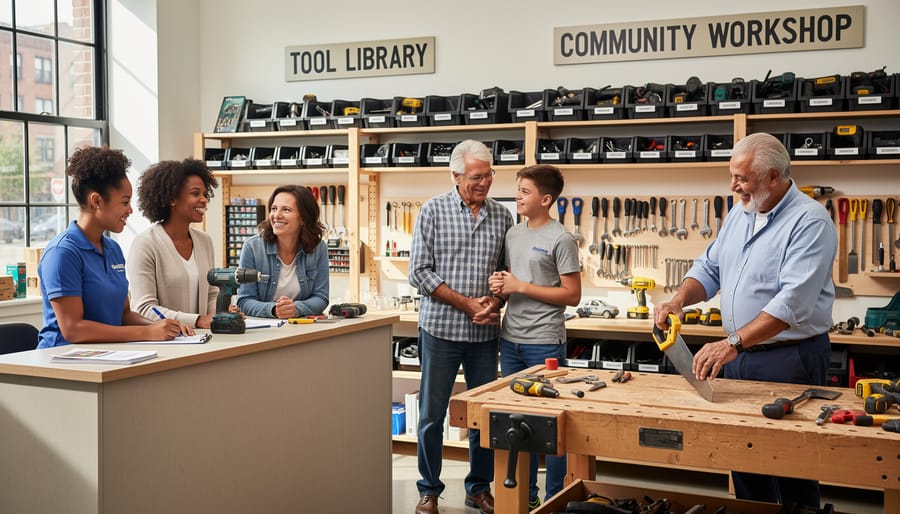
Starting a community library network begins with understanding your neighbourhood’s appetite for sharing. Begin by chatting with neighbours at local markets, community gardens, or online neighbourhood groups about the concept. Share stories about how tool libraries reduce waste and save money while building connections. You might be surprised how many people have drills gathering dust or hedge trimmers used once yearly.
Create a simple online survey through free platforms asking what tools locals would borrow versus buy, and gauge interest in volunteering. Similar to other community-driven environmental initiatives, success relies on passionate founding members. Aim to gather five to ten committed individuals who can contribute different skills like organisation, community engagement, or practical trades knowledge.
Host an informal gathering at a local café or park to discuss the vision. This founding team will shape your library’s direction, identify potential locations, and tap into existing community networks to build momentum.
Funding and Resources for Australian Initiatives
Starting a community library network in Australia doesn’t have to be financially daunting. Local council grants are often the first port of call, with many municipalities offering community development funding specifically for sustainability initiatives and sharing economy projects. Organizations like the Foundation for Rural and Regional Renewal and Sustainability Victoria regularly provide grants that align perfectly with tool library objectives.
Community fundraising has proven remarkably successful for Australian initiatives. The Brisbane Tool Library, for example, began with a crowdfunding campaign that tapped into local enthusiasm for reducing waste. Combining membership fees with modest fundraising events creates sustainable ongoing revenue while building community connection.
Don’t overlook corporate partnerships either. Hardware stores, equipment manufacturers, and environmentally focused businesses often support tool libraries through donated items, discounted tools, or sponsorship arrangements. These partnerships make business sense too, as companies increasingly seek authentic sustainability credentials.
State government community grants through departments of environment and sustainability are worth exploring, particularly when your proposal emphasizes waste reduction and circular economy benefits. The key is demonstrating how your initiative addresses local environmental challenges while building community resilience. With creativity and persistence, adequate funding is genuinely within reach for passionate community groups ready to make sharing the new normal.
Insurance, Liability, and Legal Framework
Setting up or joining a tool library in Australia requires understanding some practical legal considerations, though they needn’t be overwhelming. Most community tool libraries operate under incorporated association structures, which provide legal protection for organisers and members while maintaining the grassroots community spirit that makes these initiatives special.
Public liability insurance is essential and typically covers member injuries or damage during tool borrowing. Many Australian councils offer support or insurance pathways for community groups, making this more accessible than you might expect. The good news is that several established networks have already navigated these waters and often share templates and guidance with new initiatives.
Membership agreements clearly outline responsibilities around tool care, safety, and return schedules, protecting both the library and borrowers. These agreements also address liability if borrowed equipment causes injury due to misuse. Australian Consumer Law still applies, so tools must be maintained in safe working condition.
For those starting fresh, connecting with existing networks like the Melbourne Tool Library or Brisbane Tool Library can provide invaluable insights into practical legal frameworks that work. Remember, hundreds of Australian community libraries already operate successfully within these structures, proving that legal compliance supports rather than hinders building stronger, more sustainable communities.
Overcoming Common Challenges
Starting a community tool library is exciting, but it’s natural to have concerns. The good news? Australian tool libraries have already navigated these challenges and developed practical solutions that work.
Theft and loss are often the first worries that come up. Melbourne’s Share Shed found that losses are surprisingly minimal when members pay a modest annual fee and provide identification. This small commitment creates accountability while keeping access affordable. Most tool libraries report loss rates under 2%, comparable to regular libraries. The key is building genuine community connections where members feel ownership and responsibility for shared resources.
Damage to tools happens, but it’s manageable. Brisbane Tool Library addresses this by conducting quick condition checks during returns and maintaining a repair fund from membership fees. Many libraries also run repair workshops, turning damaged tools into learning opportunities rather than losses. Members appreciate the transparency, and most tools withstand normal wear remarkably well.
Fairness in access can feel tricky, especially for popular items. Booking systems with reasonable loan periods solve this beautifully. Perth’s tool library uses a simple online calendar where everyone can reserve items weeks ahead. During peak times like spring gardening season, they limit high-demand tools to shorter loans, ensuring more members benefit.
Financial sustainability worries many startup groups. The solution lies in diverse revenue streams. Successful Australian tool libraries combine modest membership fees, occasional workshops, local council grants, and community fundraising. Starting small with donated tools keeps initial costs low, and many libraries become self-sustaining within two years.
These challenges aren’t roadblocks; they’re opportunities to build stronger community connections. Australian tool libraries prove that with thoughtful planning and member engagement, these networks thrive and grow.
The Future of Sharing in Australia
The future of tool libraries across Australia looks remarkably promising, with community networks positioned to play an increasingly vital role in our transition toward a circular economy. As more Australians embrace sustainable living, these sharing networks are evolving from grassroots initiatives into essential community infrastructure.
Technology is already transforming how we access shared resources. Digital platforms are making it easier than ever to browse available tools, book items in advance, and coordinate pickups through smartphone apps. Some forward-thinking libraries are experimenting with smart lockers for 24-hour access and RFID tracking systems to streamline borrowing. These innovations remove traditional barriers while maintaining the personal connection that makes community libraries special.
Expansion is happening organically as neighbours witness the success of existing networks. Regional towns are establishing their first tool libraries, recognizing that sharing makes even more sense in communities where everyone knows each other. We’re also seeing exciting diversification beyond tools, with some networks incorporating camping gear, party supplies, and even specialist photography equipment.
The integration with repair cafes and makerspaces creates vibrant community hubs where Australians can borrow, learn, and fix rather than constantly buying new. This shift represents more than environmental responsibility; it’s about rebuilding connection in an increasingly isolated society.
As climate challenges intensify, tool libraries demonstrate practical solutions that save money while reducing consumption. The potential for growth is enormous. Imagine networks spanning entire regions, connected through shared catalogs, making thousands of items accessible to every household. This future isn’t distant; it’s being built right now by communities across Australia who understand that sharing isn’t just sustainable, it’s transformative.
Community tool libraries represent more than just a smart way to access equipment when you need it. They’re living proof that we can build a more sustainable Australia by embracing the power of sharing. Every drill borrowed instead of bought, every ladder shared between neighbours, and every workshop tool checked out represents resources saved, waste avoided, and carbon emissions reduced. These networks strengthen the fabric of our communities, creating spaces where Australians connect, learn practical skills, and support one another while collectively reducing our environmental footprint.
The beauty of tool libraries lies in their simplicity and scalability. Whether you’re in Melbourne, Brisbane, or a regional town, the principle remains the same: together, we have everything we need. From the established ShareShed in Perth to grassroots initiatives sprouting across suburbs nationwide, Australians are already proving this model works brilliantly in our unique context.
Now it’s your turn to be part of this movement. Search for a tool library in your area and sign up today. If one doesn’t exist near you, consider the remarkable opportunity to start one. Gather interested neighbours, approach your local council about space, or partner with existing community groups. The resources and support networks are available to help you succeed.
By choosing to share rather than individually own, we’re not just making an environmental statement. We’re investing in resilient communities, fostering connections, and building the sustainable future our country needs. Together, through these simple acts of sharing, we’re creating lasting change for generations of Australians to come.