
Observe how water moves across your land during rain—where it pools, where it flows, where it soaks in—then work with these patterns rather than against them by positioning gardens in natural collection points and using swales to guide runoff where plants need it most. Notice which areas of your outdoor space receive morning sun versus afternoon shade, feel the direction of prevailing winds, and identify microclimates created by existing trees or structures, because these observations form the foundation for placing plants where they’ll thrive without constant intervention.
Start by spending regular time immersing yourself in nature within your local area—bushland reserves, coastal areas, or even remnant vegetation in urban pockets—to understand which native plants naturally grow together, how they layer from ground covers to canopy, and what wildlife they support. Take photographs, sketch relationships between species, and note seasonal changes to build a living reference library specific to your region.
Design in layers that mirror Australian bush structure: groundcovers that protect soil and retain moisture, mid-story shrubs that provide habitat and windbreaks, and taller trees that offer canopy shade and cooling. This approach creates resilient ecosystems that require minimal water once established while supporting native birds, insects, and lizards that naturally manage pests.
Consider your site’s natural materials—local stone, fallen timber, or clay soil—as design elements rather than problems to fix. A sun-baked slope in Western Sydney or sandy coastal soil in Queensland isn’t a limitation but an opportunity to work with conditions that certain native species have adapted to over millennia, reducing your need for soil amendments, irrigation systems, and ongoing maintenance while creating spaces that feel authentically connected to place.
What ‘Designing with Nature’ Really Means
From Control to Collaboration
For generations, Australians approached land management with a conqueror’s mentality—clearing, flattening, and reshaping landscapes to suit our vision. We bulldozed bushland for pristine lawns, straightened meandering creeks, and planted exotic species that demanded constant intervention. This control-focused approach stemmed from European colonial traditions that viewed nature as something to be tamed rather than understood.
But our native ecosystems tell a different story. They’ve evolved over millions of years to thrive in Australia’s unique conditions—poor soils, irregular rainfall, and intense heat. When we fight against these natural patterns, we create spaces that require endless water, fertilizers, and maintenance while displacing the wildlife that once called these areas home.
The shift to collaboration means observing how nature already solves problems in your local area. Notice how native grasses survive summer droughts, or how certain trees create microclimates that shelter smaller plants. This approach of working with natural ecosystems rather than against them creates resilient spaces that actually improve over time with minimal input.
This mindset shift matters urgently for Australian landscapes facing climate pressures. Our fragile ecosystems need partners, not dominators. When we collaborate with nature’s existing intelligence, we create spaces that support biodiversity, conserve precious water, and reconnect us to the country beneath our feet. It’s not about returning to wilderness, but about designing spaces where both people and nature can flourish together.
Learning from Indigenous Stewardship
Before European settlement, Aboriginal and Torres Strait Islander peoples shaped Australia’s landscapes through sophisticated environmental practices refined over more than 60,000 years. These traditional land management techniques offer profound lessons for anyone looking to design with nature today, demonstrating that human intervention can actually enhance ecological health when done with deep knowledge and respect.
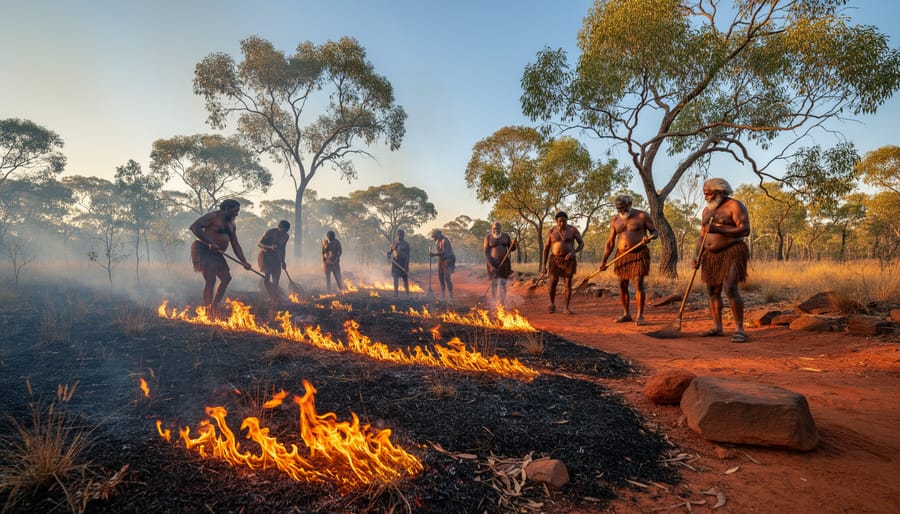
Cultural burning, or cool burning, stands as one of the most significant examples. Unlike the devastating bushfires we’ve grown accustomed to, these carefully managed fires occurred during cooler months, reducing fuel loads while encouraging new growth and maintaining biodiversity. The mosaic patterns created across Country supported diverse habitats, protected water sources, and prevented catastrophic blazes. Today, we’re witnessing a powerful resurgence of these practices, with Indigenous fire practitioners sharing knowledge with land management agencies across Australia, from Arnhem Land to Victoria’s grasslands.
Water management provides another striking example. Aboriginal peoples understood catchments as interconnected systems, maintaining wetlands, creating channels, and protecting riparian zones in ways that sustained abundance for countless generations. Fish traps at Brewarrina, some of the world’s oldest human-made structures, demonstrate engineering that worked with water flows rather than against them.
For modern Australians reimagining their gardens, farms, or community spaces, these principles translate beautifully. Observe your land through seasons before making changes. Work with natural water flows instead of forcing drainage. Create diversity rather than monocultures. Allow fire-adapted plants their place in the landscape. Perhaps most importantly, recognize that caring for Country isn’t about leaving nature untouched, but about developing a relationship of reciprocity where your presence contributes to ecological flourishing.
This is designing with nature at its most time-tested and resilient.
Reading Your Local Landscape
Water Tells the Story
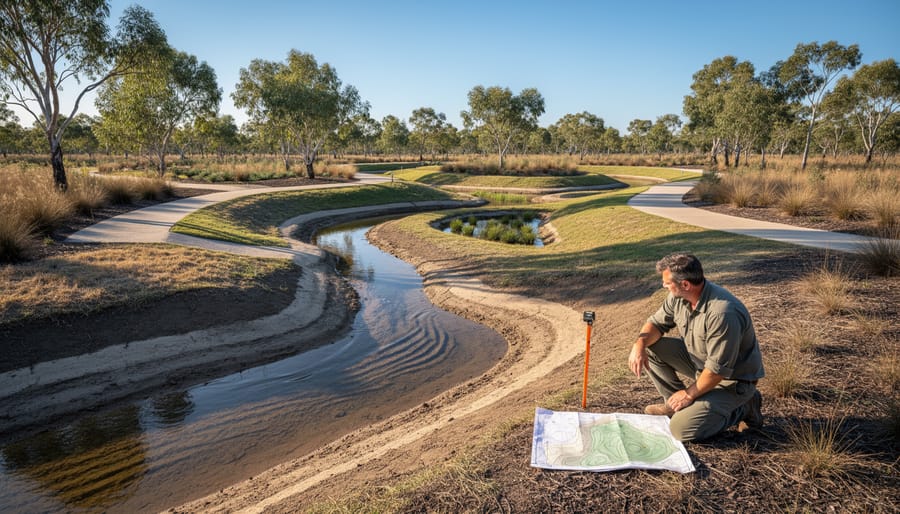
Water is perhaps the most honest storyteller in your landscape. Before making any design decisions, spend time observing how water moves through your space during different seasons and weather events. Where does it pool after rain? Which areas dry out quickly? These patterns reveal vital information about soil types, drainage, and the microclimates within your garden.
In Australian landscapes, understanding water flow is especially crucial given our variable climate patterns. Many properties across the country experience seasonal creek systems that remain dry for months before transforming into flowing waterways during wet periods. Rather than fighting these natural patterns, successful nature-based design works with them. Consider how Indigenous Australians have read and responded to these water stories for thousands of years, positioning camps and pathways according to seasonal water availability.
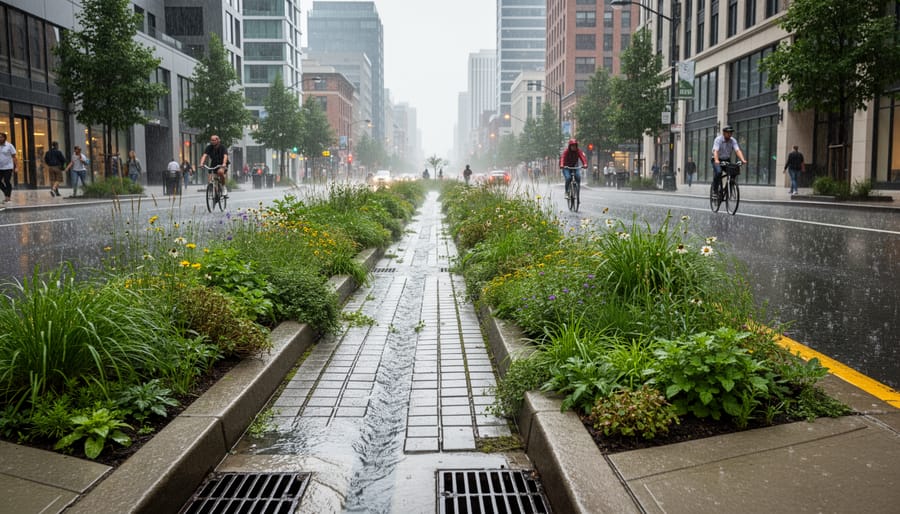
Water-sensitive urban design principles offer practical approaches for residential spaces. Simple techniques like creating swales along contour lines can slow water movement, allowing it to infiltrate rather than rush away. Rain gardens positioned at natural low points capture and filter stormwater, supporting moisture-loving native plants while reducing runoff. Even observing which areas of your lawn stay greener longest indicates underground moisture zones perfect for establishing garden beds.
Start by walking your property during and immediately after rain. Take photos, make notes, and map the patterns you observe. This water story will guide your plant selection, path placement, and garden bed design, ensuring you’re collaborating with nature’s existing systems rather than imposing plans that require constant intervention. Your landscape will thank you with healthier plants and reduced maintenance needs.
Native Plants as Your Design Blueprint
Before bringing in new plants or redesigning your space, take time to read what nature has already written. The native vegetation growing around your property functions as a living blueprint, revealing crucial information about soil moisture, drainage patterns, sun exposure, and local ecosystem health. By observing what thrives naturally, you’ll save money, reduce maintenance, and create designs that work with your environment rather than against it.
Start by connecting with natural landscapes in your region to understand what healthy native communities look like. Then examine your own site. In Australian contexts, certain plants act as valuable indicators. Finding lomandra or kangaroo grass suggests well-drained soils, while paperbark trees signal moist or periodically wet conditions. Bottlebrush and grevillea indicate areas with good sun exposure and lighter soils, whilst native violets often appear in shadier spots with richer organic matter.
Notice where plants cluster together naturally. This companion planting happens because species share similar needs and often support each other. Document these patterns with photos across different seasons, noting which areas stay green through summer and where plants struggle.
Your local bush regeneration group or council’s bushcare program can help identify species specific to your area. Many community groups run free plant identification walks, connecting you with experienced locals who understand your particular landscape. This knowledge becomes your foundation for creating resilient, low-maintenance designs that enhance rather than compete with existing ecosystems.
Bringing Nature-Based Design into Your Space
Work with Contours and Slopes
Australia’s diverse landscapes teach us a fundamental truth: water flows downhill, and soil follows. Rather than battling these natural forces with expensive retaining walls and drainage systems, smart design works alongside topography to create resilient, low-maintenance spaces.
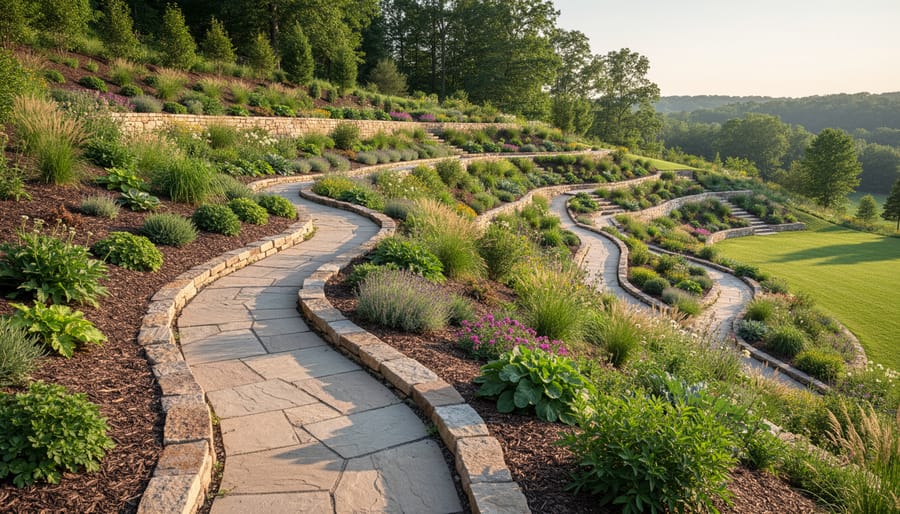
Start by observing how water moves across your property during heavy rain. Those natural pathways become opportunities. In Brisbane’s hilly suburbs, gardeners are transforming problem slopes into productive terraces, creating level planting beds that slow water flow and capture nutrients. Each terrace acts like a stepping stone, giving water time to soak in rather than rush away, taking precious topsoil with it.
For paths and walkways, following contour lines creates gentle, accessible routes that feel naturally inviting. A winding path that respects the lay of the land requires less cut-and-fill than forcing a straight line through undulating terrain. You’ll save money, preserve existing trees whose roots stabilise slopes, and create a more interesting journey through your space.
Water harvesting becomes remarkably simple when you work with gravity. Position swales (shallow ditches following contour lines) above garden beds to catch and slowly release rainfall. Melbourne community gardens are using this technique to extend moisture availability weeks beyond the last rain, reducing irrigation needs by up to 60 percent.
The key is patience in observation. Spend time watching your land through different seasons before making major changes. Natural systems have spent millennia finding equilibrium; our role is to enhance rather than disrupt these patterns.
Create Habitat Corridors
Wildlife doesn’t recognise property boundaries, and neither should our gardens. Habitat corridors are continuous pathways of vegetation that allow native animals to move safely between green spaces, find food, and maintain healthy populations. In Australian suburbs and rural areas, these corridors are becoming lifelines for species struggling with fragmented landscapes.
Creating habitat corridors starts with understanding what already exists. Look beyond your fence line. Does your neighbour have a cluster of native trees? Is there a creek line or remnant bushland nearby? Your property could be the missing link connecting these vital spaces.
In Brisbane’s western suburbs, residents along Moggill Creek have transformed their backyards into a continuous wildlife corridor by coordinating their plantings. They’ve chosen local species like lilly pillies, banksias, and grevilleas that provide food year-round. Now sugar gliders travel safely along this green highway, moving between feeding sites without crossing dangerous roads.
For rural properties, corridors might follow fence lines or connect paddocks to creeks. A sheep grazing property near Armidale established shelterbelts with native grasses and shrubs, creating movement pathways for small mammals and reptiles while also reducing erosion and providing stock shelter.
Start small. Plant a hedge of native shrubs along your boundary, or work with your street to establish roadside plantings. Even a narrow strip of appropriate vegetation, just a few metres wide, can support local wildlife. When we design these connections thoughtfully, we’re not just gardening – we’re rebuilding the natural networks that sustain Australian biodiversity.
Choose Materials That Belong
The materials you choose tell a story about your connection to place. When designing outdoor spaces that truly belong in the Australian landscape, look first to what’s beneath your feet and growing around you. Local sandstone, bluestone, and granite don’t just reduce transport emissions – they carry the colours and textures that have shaped our communities for generations.
Consider timber from sustainably managed Australian forests like spotted gum or ironbark. These hardwoods weather beautifully in our climate, developing a silvered patina that feels like it’s always been there. When you source materials within your region, you’re also supporting local quarries and timber mills, strengthening the network of businesses committed to responsible practices.
Rethinking concrete is another powerful step. While sometimes necessary, exploring alternatives like stabilised earth, recycled aggregate, or permeable paving reduces both embodied carbon and heat island effects. A Melbourne community garden recently transformed their pathways using crushed local rock mixed with clay – creating surfaces that allow water to filter naturally while matching the surrounding bushland palette. The result feels less like construction and more like revealing what was always meant to be there.
Real Australian Projects Making It Happen
Urban Rewilding in Australian Cities
Australian cities are embracing nature-based design in exciting ways that demonstrate how urban environments can thrive alongside native ecosystems. These projects offer inspiration for anyone looking to incorporate natural principles into their own spaces.
Melbourne’s Merri Creek restoration project stands as a remarkable example of urban rewilding in action. This 70-kilometre green corridor connects urban green spaces through suburbs, providing habitat for native wildlife while offering walking and cycling paths for residents. The project has successfully reintroduced native plant species and created billabongs that manage stormwater naturally, showing how infrastructure and ecology can work together.
Sydney’s Green Grid initiative is transforming the city’s approach to public spaces by creating interconnected networks of parks, streets, and waterways. Rain gardens in suburbs like Randwick capture and filter stormwater runoff, reducing pressure on drainage systems while supporting native plants and pollinators. These gardens demonstrate how small-scale interventions can create significant environmental benefits.
Brisbane’s habitat corridors program links fragmented bushland patches across the city, allowing wildlife to move safely between areas. Community groups actively participate in revegetation efforts, planting thousands of native trees and shrubs annually. This collaborative approach strengthens neighbourhood connections while restoring ecosystem function.
These examples show that urban rewilding works at multiple scales, from individual rain gardens to city-wide corridor networks. Each project demonstrates practical ways to design with nature rather than against it, creating spaces that benefit both people and wildlife.
Rural Regeneration Stories
Across Australia, innovative landholders are proving that working with nature creates resilient, productive landscapes. These stories show what’s possible when we shift from battling the environment to partnering with it.
In the New England tablelands of New South Wales, the Jones family transformed degraded grazing land into a thriving regenerative farm. By observing water flow patterns during storms, they installed swales (shallow channels) along contour lines to slow and spread rainfall. Within three years, dried creek beds began flowing again, native grasses returned, and soil carbon levels increased by 40 percent. Their cattle now graze healthier pastures while the land stores more water for drought periods.
Meanwhile, a community group in South Australia’s Adelaide Hills tackled erosion and water scarcity by establishing food forests using local native species alongside productive fruit trees. They studied which plants naturally grew together in the region, mimicking these partnerships in their design. The layered planting now provides habitat for native birds that control pests, while deep-rooted trees access water and nutrients for companion plants. Local families harvest fresh produce while restoration happens simultaneously.
In Victoria’s Gippsland region, dairy farmers adopted wetland restoration to manage nutrient runoff. By creating constructed wetlands that mirror natural billabongs, they filter water naturally before it reaches waterways while creating wildlife habitat. The system requires minimal maintenance because it works with natural processes rather than against them.
These examples demonstrate that nature-based design isn’t about pristine wilderness; it’s about observing, adapting, and creating systems where both people and nature flourish together.
Overcoming Common Challenges
When Nature and Regulations Clash
Navigating regulations doesn’t mean abandoning your nature-based design dreams. Many Australian councils are increasingly supportive of sustainable approaches, particularly when you demonstrate how your plans manage stormwater, reduce urban heat, or support local biodiversity. Start by researching your local council’s environmental initiatives. Many have native plant lists, water-sensitive urban design guidelines, or sustainability rebate programs that can work in your favour.
When facing building codes or HOA restrictions, focus on meeting the intent behind the rules rather than fighting them. If bushfire regulations require vegetation setbacks, consider using strategic native plantings in safer zones while creating habitat corridors. Heritage overlays might restrict certain changes, but often allow nature-based solutions that complement existing character.
Document your approach professionally. Councils respond well to plans showing environmental benefits like reduced runoff or temperature moderation. Include photos of similar successful projects and reference relevant Australian standards.
Connect with local environmental groups or Landcare networks who’ve navigated similar challenges. They often know which council officers are most supportive and can provide letters backing your approach. Remember, regulations exist for safety and community wellbeing. When your nature-based design addresses these same goals, approval becomes much more achievable. Sometimes the conversation itself helps shift thinking toward more sustainable standards for everyone.
Patience in a Quick-Fix Culture
In our instant-gratification world, one of the greatest challenges in designing with nature is accepting that meaningful transformation doesn’t happen overnight. When you plant native grasses or establish a pond ecosystem, you’re not creating a finished product—you’re beginning a relationship that will evolve over seasons and years.
Across Australian communities, successful nature-based projects share a common thread: patience paired with purpose. A revegetation project in Melbourne’s western suburbs took three years before the first native birds returned consistently, but now, five years on, it’s a thriving habitat corridor. The local community learned to celebrate small wins—the first seedlings breaking through, the appearance of beneficial insects, the gradual knitting together of plant communities.
This doesn’t mean accepting slow progress without engagement. Document changes through photos and observations. Notice when butterflies start visiting your native plantings or when water begins pooling differently after installing swales. These incremental shifts are nature’s feedback, showing your design is working.
Set realistic expectations from the start. Most Australian native plantings need at least two to three growing seasons to establish properly. Soil regeneration can take even longer. Rather than viewing this as delay, recognise it as investment—you’re building resilience that will compound over time, creating landscapes that become more functional and beautiful with each passing year.
Designing with nature isn’t about perfection or complete lifestyle overhauls. It’s about recognising that every choice to work alongside natural systems, rather than against them, creates ripples of positive change for our environment and our own wellbeing. When we invite nature into our spaces and decisions, we’re not just creating greener gardens or more sustainable homes. We’re building resilience, reducing our ecological footprint, and reconnecting with the rhythms that sustain all life.
The beauty of this approach lies in its accessibility. You don’t need a sprawling property or specialist knowledge to begin. Start by observing the natural patterns in your own backyard or balcony. Notice where water flows, which areas receive sun or shade, and what native plants thrive nearby. These observations become your design guide, leading you toward solutions that require less maintenance, fewer resources, and deliver greater long-term benefits.
Across Australia, community initiatives are making nature-based design increasingly accessible. Local Landcare groups, native plant nurseries, and council sustainability programs offer workshops, plant swaps, and shared knowledge. These connections transform individual efforts into collective impact, much like the slow and local approaches that strengthen our communities while treading lightly on the earth.
The path forward doesn’t demand grand gestures. It asks for curiosity, willingness to learn from the landscape around you, and trust in nature’s proven systems. Whether you’re planning a native garden bed, implementing water-wise practices, or simply choosing plants that support local wildlife, your contribution matters. Together, we’re creating spaces where both people and nature flourish.