
You can enjoy Australia’s rivers, lakes, estuaries and coastlines without harming them, and it takes less gear and effort than most people expect. Low-impact blue environment time comes down to four habits: choose activities that leave the water and its edges as you found them, carry out everything you carry in, give wildlife space, and check conditions before you go. Most of it can be learned in a single weekend, and none of it needs specialist skills.
Think of a paddle along a mangrove-lined estuary, a swim at a quiet river bend, or an early walk along the tideline. These are some of the simplest ways to immerse in nature and they’re also places where small choices add up. A dropped bottle cap, a trampled dune or a dog off-lead near nesting shorebirds can ripple through a fragile system far faster than you’d think.
The good news is that healthy waterways are a shared project, and Australians are already good at it. Landcare groups, Clean Up Australia events, local Coastcare crews and citizen science programs welcome newcomers every year.
This guide walks you through what low-impact really means, the tools you’ll need, the safety warnings worth taking seriously, a simple step-by-step process, and how to check you’re getting it right.
Why Blue Environments Matter and What Low-Impact Really Means
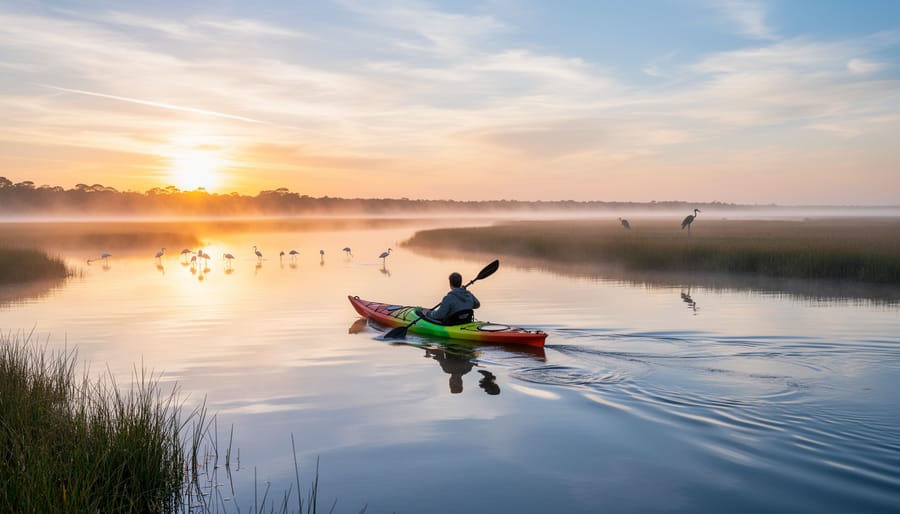
What Counts as a Blue Environment in Australia
Australia’s blue environments come in more shapes than most of us realise, and each one has its own quirks.
Freshwater rivers and creeks are the most familiar. Their banks can erode quickly when trampled, and a muddy boot print at the wrong spot can send soil straight into the water. Lakes and dams offer calm paddling, though their still water warms up fast and can be slow to recover from pollution.
Then there are estuaries, the places where a river meets the sea and fresh and salty water mix. They’re nurseries for fish and feeding grounds for wading birds, so they’re best enjoyed quietly and at a distance. Mangroves, the salt-tolerant trees lining many tropical and subtropical estuaries, hold shorelines together, but their breathing roots are easily damaged by foot traffic.
Wetlands act like natural sponges, filtering water and sheltering frogs, ducks and migratory birds. Sheltered coastal bays are the gentlest way into the sea, yet their seagrass beds are surprisingly delicate and can be scarred by anchors and propellers.
Knowing what makes each place sensitive is the first step to treading lightly.
Low-Impact Waterway Activities Worth Trying
Paddle-Powered Adventures: Kayaking, Canoeing and Paddleboarding
Paddle craft are one of the gentlest ways to explore blue environments. With no engine, there’s no fuel, no exhaust and very little noise, so you can glide past a heron without sending it flapping off. They also count as brilliant eco-friendly outdoor exercise giving your shoulders and core a workout while your footprint stays tiny.
A few habits keep that footprint light:
– Give nesting birds plenty of room. If a bird changes its behaviour, calls out or leaves its perch, you’re too close, so ease off and drift away.
– Stay out of shallow seagrass beds. Paddles and keels can tear the roots, and these meadows shelter young fish and feed dugongs and turtles.
– Launch and land at established access points. Dragging a craft across soft banks or dunes causes erosion that takes years to heal.
– Keep your wake small and your voice low, especially around mangroves and wetlands at dawn and dusk when wildlife is most active.
Beginners can start with a calm, sheltered stretch and build confidence from there.
Swimming, Snorkelling and Shoreline Wildlife Watching
Getting in the water, or simply sitting beside it, can be just as gentle as paddling. The trick is to move slowly and let the place set the pace.
Start with sun protection. Many Australians are already reaching for mineral sunscreens with zinc oxide, which sit on the skin rather than dissolving into the water. A long-sleeved rashie and a hat cut down how much you need in the first place, and they’re kinder to sensitive skin too.
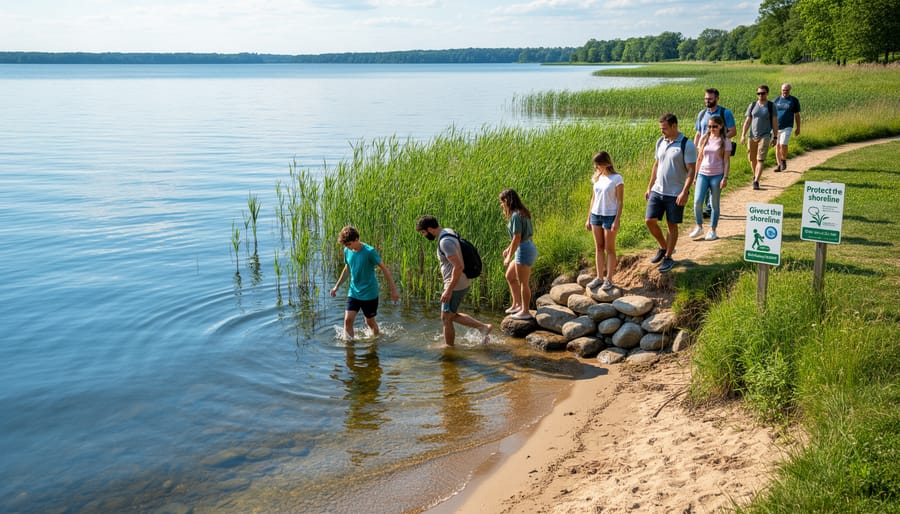
Choose designated entry points, such as signed beach access tracks, boat ramps or established swimming spots. Cutting across dunes or scrambling down a creek bank strips away the plants that hold the soil together, so a few extra steps on the marked path really do help.
When you’re snorkelling, keep your fins off the bottom and your hands to yourself, since seagrass and coral are easily damaged. For shoreline wildlife watching, stay well back from nesting birds and resting seals or sea lions. If an animal changes its behaviour because of you, you’re too close. Binoculars let you enjoy the show from a comfortable distance.
Tools and Materials for a Lighter-Footprint Day on the Water
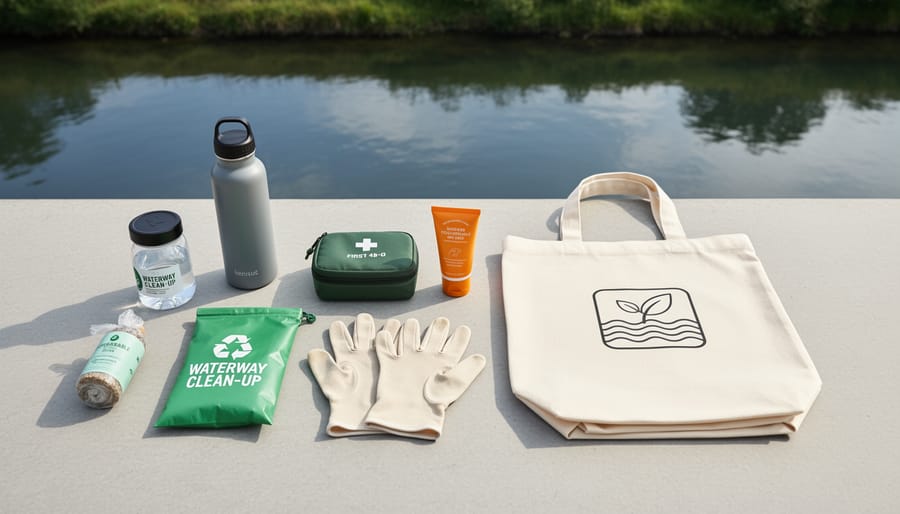
A lighter-footprint day on the water starts with what you carry. The aim isn’t to buy more gear, it’s to bring the right gear and make it last. Before you head out, sort your kit into three groups.
- Safety gear: a well-fitted lifejacket (PFD) for every person, a craft suited to your skill and the waterway, and a whistle or phone in a waterproof pouch.
- Eco extras: a reusable water bottle, a food container with a lid, a spare rubbish bag for litter you find, and reef-safe or mineral sunscreen.
- Comfort and navigation: quick-dry clothing, a dry bag for valuables, a hat, and a waterway map or local access guide.
Fit matters more than brand when it comes to lifejackets. It should sit snugly, not ride up past your chin when you lift the shoulders, and be rated for your activity. Check the buckles and straps before each trip, and replace any that are worn or faded.
You don’t need to own everything on that list. Many paddle clubs, community groups and local outdoor shops hire or lend out kayaks, canoes, paddleboards and PFDs, which keeps unused gear out of garages and landfill. It’s also a friendly way to try an activity before committing, and you’ll often pick up local tips on launch points and conditions along the way.
Pack a small bag for litter, too. Picking up a few bits of rubbish as you go is one of the easiest ways to give back. If you’re hoping to spot birds or other animals from the water, bring a little patience and learn how to watch wildlife responsibly so your visit leaves them undisturbed.
Safety Warnings and When to Call Off Your Paddle
Most low-impact outings go smoothly, but a calm head and a quick check beforehand make all the difference. Before every trip, look up your local council, parks service and water authority notices. They’ll flag closures, algae alerts and flood warnings that no amount of experience can spot from the carpark.
Start with the weather. Check the forecast for wind, storms and heat, and if you’re on the coast, look at tide times and swell. A gentle morning paddle can turn into a hard slog against a strong afternoon sea breeze, so plan your return leg with the wind in mind. On rivers, check flow levels. Water can run fast and carry debris for days after heavy rain, so it’s smart to wait until things settle down.
Water quality matters too. Blue-green algae blooms can occur in warm, still lakes, dams and slow rivers, and they can make people and pets unwell.
Other risks depend on where you are. In northern Australia, take crocodile warning signs seriously and stay well away from the water’s edge in marked areas. In tropical waters, marine stingers can be present in the warmer months, so check local advice and wear a stinger suit where recommended. Closer to home, cold water can cause a sudden gasp reflex and make swimming difficult, even on a warm day, so wear your lifejacket and dress for the water temperature, not the air.
Finally, protect yourself from the sun. Bring water, a hat and sun-safe clothing, and head back early if you feel overheated or tired. Respect closures and signage, too. They’re there to keep you safe and to protect sensitive habitat, and following them is part of enjoying these places responsibly.
How to Plan and Enjoy a Low-Impact Waterway Outing, Step by Step
Before You Launch: Planning and Preparation
A good paddle starts well before you reach the water. Begin by choosing a spot that suits your skill level and keeps pressure off sensitive areas, and a simple way to find local blue spaces is to ask your council or a nearby paddle club. Next, check current conditions and any notices about closures, algae or water quality. Finally, pack reusable gear: a refillable bottle, a rubbish bag, mineral sunscreen and a well-fitted lifejacket. A few minutes of preparation makes the whole day lighter on the water.
On and After the Water: Respectful Habits
Once you’re on the water, the goal is simple: be a quiet guest. Keep a respectful distance from birds, seals and turtles, and if an animal changes its behaviour because of you, you’re too close. Use designated launch points and tracks so banks, dunes and seagrass stay intact. Afterwards, check, clean and dry your boat, paddle, lifejacket and shoes, scrubbing off mud and pulling away any plant fragments. This small habit stops weeds, pest fish and microscopic hitchhikers travelling from one waterway to the next, keeping your favourite spots healthy.
Getting Involved: Community Waterway Groups and Initiatives
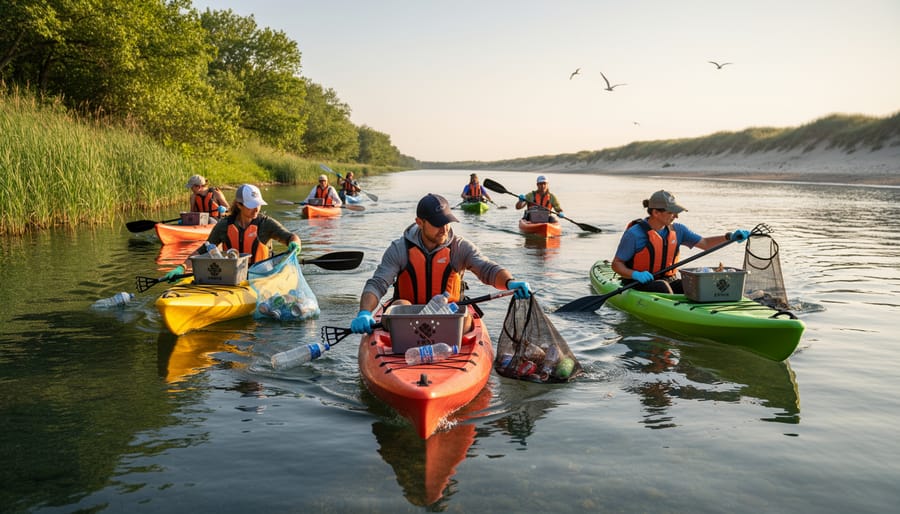
Enjoying the water is a great start, and looking after it together is where it gets really rewarding. Australia has a long tradition of community groups caring for rivers, wetlands and coastlines, and most of them welcome beginners with open arms.
Clean Up Australia Day is the best-known example, but it’s far from the only one. Local Landcare and Coastcare groups run regular planting days, weed removal and dune restoration, often with tools and morning tea provided. Waterwatch programs train volunteers to test things like water clarity and pH in their own creek or river, giving councils and catchment managers valuable local data. Many paddle clubs also schedule clean-up outings, so you can combine a morning on the water with hauling out litter that’s hard to reach from the bank.
If you enjoy noticing wildlife while you paddle or walk the shoreline, citizen science is another easy way in. You can join wildlife monitoring projects that turn your bird, frog or fish sightings into records scientists can actually use.
The best way to find your people is to look locally. Search for your catchment management authority, your local council’s environment page or a nearby Landcare network, and see what’s on in your area. Dates and programs change, so it pays to check directly rather than rely on a fixed calendar.
Small actions add up quickly. One rubbish bag, one water test or one logged sighting might feel modest, yet repeated by a community over months and years, it helps keep your local waterway healthy for everyone who loves it.
Checking Your Impact and Next Steps
A Quick Post-Trip Impact Check
Before you pack the car, take two minutes to look back over your outing. It’s a simple habit that keeps your footprint light and your waterway welcoming for the next visitor.
Ask yourself a few quick questions:
– Did every bit of rubbish come home with me, including any litter I found along the way?
– Are the banks, dunes and launch point as undisturbed as when I arrived?
– Did I keep a respectful distance from nesting birds and other wildlife?
– Have I rinsed and dried my craft and gear so weeds and pests don’t hitch a ride to the next waterway?
– Did I stay on established tracks and access points?
If you can tick most of these, you’ve done well. Anything you missed is simply a gentle reminder for next time.
Common Questions About Low-Impact Waterway Recreation
Do I need a licence to paddle a kayak or paddleboard?
For most small, human-powered craft, you don’t need a licence in Australia. Rules do vary by state and by waterway, though. Some national parks, drinking water catchments and marine parks have their own conditions, and a few require permits or ban certain craft entirely. A quick check of your local council, parks or water authority website before you head out will sort it.
Is sunscreen really a problem for waterways?
Some ingredients can harm aquatic life, especially in sheltered, shallow spots where lots of people swim. Mineral-based sunscreens are a popular choice, and long-sleeve rash vests cut down how much you need in the first place.
Can I bring my dog?
Plenty of waterways welcome dogs, but many wetlands, beaches and nesting areas don’t. Look for signage, keep your dog on a lead where required, and pick up after them so nutrients and bacteria stay out of the water.
What if I spot something unusual, like a sick animal or a strange algal bloom?
Keep your distance and don’t touch it. Report it to your local council, state environment agency or wildlife rescue group. Your observation could help protect the whole catchment.
Can I take part if I’m a complete beginner?
Absolutely. Local paddle clubs, Landcare groups and community outfitters often run beginner-friendly outings, and joining one is a lovely way to learn safe, respectful habits alongside friendly locals.
Enjoying our blue environments and looking after them really do go hand in hand. Each time you launch from a proper access point, give nesting birds some space, and carry out every scrap you brought in (plus a bit of someone else’s), you help keep Australian rivers, wetlands and coastlines healthy for the next paddler, swimmer or wildlife watcher.
You don’t need a big plan or fancy gear to begin. Pick one activity from this guide, whether that’s an early paddle on a local creek or a slow snorkel in a sheltered bay, and try it this month. Check conditions, pack your reusable gear, and take a friend along if you can.
Then take it one step further. Look up a Landcare, Coastcare or Waterwatch group in your own catchment, or join a clean-up outing with a nearby paddle club. Plenty of people are already out there caring for our waterways, and they’d love the company.
Small, kind outings add up. Together, we can keep our waterways good to look at, good to swim in, and full of life.