
Switch to an EV2-A electricity tariff and you could slash your home charging costs by up to 70% compared to standard residential rates. These specialized time-of-use plans, available from most Australian energy retailers, offer significantly reduced per-kilowatt-hour rates during off-peak hours—typically between 9pm and 7am—making overnight charging remarkably affordable for the growing community of EV owners across the country.
The mathematics are compelling: while standard rates hover around 25-35 cents per kilowatt-hour, EV2-A off-peak rates can drop as low as 8-12 cents. For an average Australian driving 15,000 kilometers annually, that translates to annual savings of $600-$900 on charging costs alone. A typical Tesla Model 3 or Hyundai Ioniq 5 charged exclusively during off-peak periods costs roughly $3-$5 to fully replenish, comparable to what you’d spend on a single coffee.
However, accessing these rates requires a dedicated EV charging circuit with a separate meter—an upfront investment of $800-$1,500 for installation. You’ll also need confirmation that your vehicle qualifies under your retailer’s definition of an eligible electric vehicle, and in some states, approval from your distributor network.
The transition represents more than personal savings. By concentrating charging demand during off-peak hours, EV2-A tariffs help stabilize Australia’s electricity grid, reduce strain on infrastructure during peak periods, and maximize the utilization of renewable energy generated overnight by wind farms across our southern states.
What Are EV2-A Rates and Why They Matter for Australian EV Owners
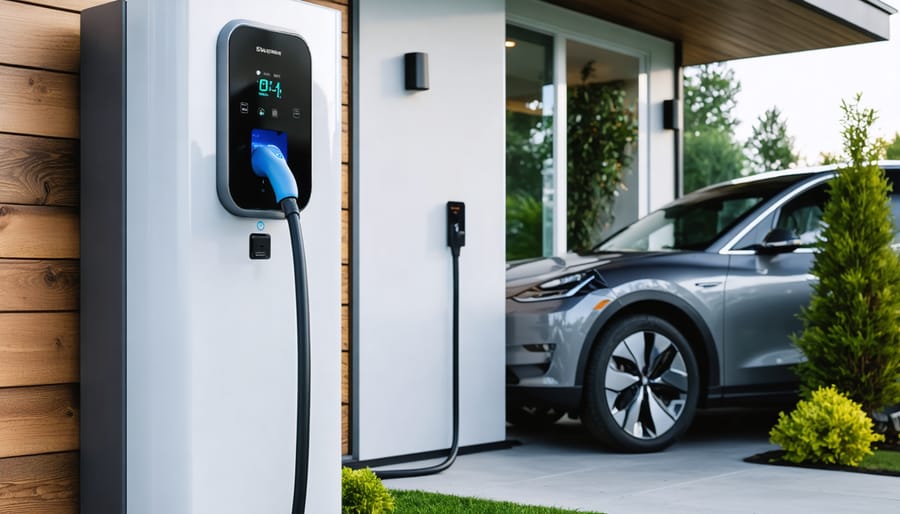
How EV2-A Rates Compare to Standard Tariffs
The difference between standard electricity rates and EV2-A tariffs can be substantial, making a real impact on your household budget while supporting your sustainable transport choices.
Under typical Australian residential tariffs, electricity costs between 25-35 cents per kilowatt-hour during peak periods. If you’re charging a standard electric vehicle with a 60kWh battery from near-empty, that single charge could cost you around $15-21. For someone charging twice weekly, that’s roughly $1,560-2,184 annually.
Now compare this to EV2-A rates, which typically offer overnight charging at 8-12 cents per kilowatt-hour. That same 60kWh charge drops to just $4.80-7.20, slashing your costs by more than half. Over a year of regular charging, you’re looking at approximately $500-750 in electricity costs, representing annual savings of $1,000-1,400.
Let’s put this in perspective with a real household example. The Mitchell family in Brisbane switched to EV2-A rates last year. Previously spending around $150 monthly on home charging with their standard tariff, they now pay approximately $60 monthly during off-peak hours. That’s $1,080 saved annually, money they’ve redirected toward solar panel installation.
These savings compound when you consider reducing your electricity costs across your entire household. The more you shift energy-intensive activities to off-peak periods, the greater your financial benefit.
For families driving 15,000 kilometres annually, the EV2-A advantage becomes even clearer. You’re not just choosing cleaner transport; you’re making a financially smart decision that benefits both your wallet and Australia’s energy transition.
Which Australian States and Retailers Offer EV2-A
EV2-A rates aren’t available everywhere yet, but the rollout is steadily expanding across Australia as more households embrace electric vehicles. Understanding where you can access these specialized tariffs will help you plan your transition to more affordable home charging.
Currently, New South Wales and Victoria lead the charge with the widest availability of EV2-A plans. These states have embraced time-of-use tariffs more broadly, making it easier for EV owners to access dedicated charging rates. South Australia and Queensland are following closely behind, with several major retailers now offering EV-specific plans in these markets. Unfortunately, Western Australia, Tasmania, and the Northern Territory have more limited options, though this is gradually changing as EV adoption increases in these regions.
Among the major retailers, AGL has been a frontrunner in offering EV2-A plans across NSW and Victoria, with rates typically dropping to between 8 and 12 cents per kilowatt-hour during off-peak periods. Origin Energy provides similar offerings in these states, often bundling EV plans with solar feed-in tariffs for households generating their own renewable energy. Energy Australia has also entered the space, particularly focusing on customers who are choosing renewable electricity as part of their overall sustainability commitment.
Regional variations in pricing are significant. Metropolitan areas generally see more competitive rates due to higher EV adoption and greater competition among retailers. Rural and regional customers might find fewer options, though community energy retailers are increasingly filling this gap with innovative solutions tailored to local needs.
It’s worth checking with your current electricity provider first, as they may offer loyalty benefits or simplified switching processes. Many retailers also provide online calculators to estimate your potential savings based on your expected charging patterns, making it easier to compare options specific to your situation.
The Technical Requirements: What You Need to Access EV2-A Rates
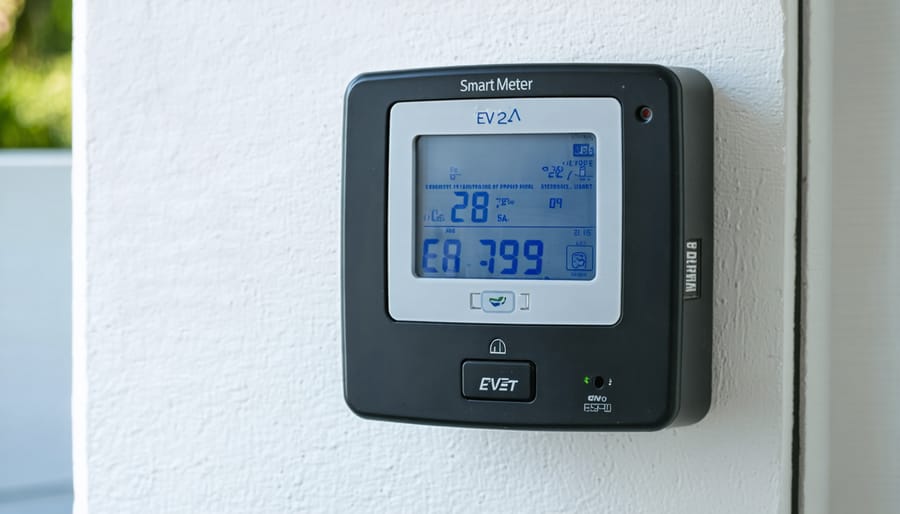
Separate Metering and Smart Meters
Here’s the thing about accessing those fantastic EV2-A rates – your electricity retailer needs to accurately measure when you’re charging your vehicle, and that’s where separate metering comes into play. Think of it as creating a dedicated lane for your EV charging data to travel through.
Most Australian homes will require either a separate meter installed specifically for your EV charger, or a sub-meter that sits downstream from your main meter. This isn’t just bureaucratic red tape – it’s actually protecting you by ensuring you only pay those lower off-peak rates for your vehicle charging, not for accidentally running your dishwasher at the same time.
The good news? If you’re in a state with smart meter rollout already in place, like Victoria, you’re ahead of the game. Smart meters can often be configured to track multiple tariffs without requiring additional hardware, making the transition smoother and more cost-effective. However, in other states like Queensland or New South Wales, you might need that dedicated meter installation.
Installation typically involves your electricity distributor (not your retailer – yes, they’re different) sending out a technician to set up the metering equipment. This process can take anywhere from two to six weeks, depending on your location and the complexity of your home’s electrical setup. Many households across Australia are finding this initial investment worthwhile, with the metering costs usually recovered within the first year through charging savings alone.
Your electrician will coordinate with your distributor to ensure everything meets Australian standards and connects properly to your home charging setup.
Compatible EV Chargers and Installation
The good news for Australian EV drivers is that most Level 2 home charging units are compatible with EV2-A rates, making the transition straightforward. Popular brands like Zappi, Wallbox, Tesla Wall Connector, and Ocular already installed in thousands of Australian homes work perfectly with these tariffs. The key isn’t the charger brand itself, but having a dedicated circuit with a separate meter or smart meter that can track your charging consumption independently.
When installing an EV home charger, you’ll need a licensed electrician to ensure compliance with Australian Standard AS/NZS 3000 for electrical installations. Your electrician will assess whether your home’s switchboard can handle the additional load (typically 7.4kW for single-phase or up to 22kW for three-phase properties). Most installations require a dedicated circuit breaker and, crucially for EV2-A rates, either a sub-meter or smart meter capable of recording time-of-use data.
Typical installation costs range from $1,200 to $2,500, depending on the distance from your switchboard to the charging location and whether any electrical upgrades are needed. However, Australian households can significantly offset these costs through available rebates. Many state governments offer incentives, with Victorian residents accessing up to $1,000 back, while some energy retailers provide additional rebates when you switch to their EV2-A plans.
Your energy retailer will need to verify your installation meets their requirements before activating EV2-A rates. This usually involves submitting photos or an electrician’s compliance certificate. The entire process, from booking your electrician to having your new tariff activated, typically takes two to three weeks. The investment pays dividends quickly, with most households recouping installation costs through energy savings within the first year.
Maximising Your Savings: Smart Charging Strategies with EV2-A
Off-Peak Charging Windows in Australia
Across Australia, off-peak charging windows represent your golden opportunity to maximize savings with EV2-A rates. Most electricity networks designate off-peak periods between 10pm and 7am on weekdays, though times can vary between states and providers. In New South Wales, networks like Ausgrid and Endeavour Energy typically offer their lowest rates during these late-night hours, while Victorian networks may extend off-peak periods slightly differently. Queensland’s Energex network often includes weekend afternoons as shoulder periods with moderate rates.
Understanding your specific network’s timing is crucial for developing energy-saving habits that align with your charging needs. The beauty of modern EVs is that most come equipped with built-in scheduling functions accessible through your vehicle’s touchscreen or companion smartphone app. Simply plug in your car when you arrive home, then set it to begin charging at your off-peak start time, typically 10pm.
Popular apps like Tesla’s mobile interface, the MyBMW app, or third-party solutions such as ChargeHQ allow you to program charging schedules that automatically activate during your lowest-rate periods. Many Australian EV owners in online communities report setting their charging to complete by 6am, ensuring their battery reaches the desired level before morning off-peak rates expire.
Some smart home energy management systems can even integrate with your EV charger, automatically optimizing charging times based on real-time electricity pricing. This set-and-forget approach means you’ll consistently capture maximum savings without daily intervention, making sustainable choices effortlessly part of your routine.
Pairing EV2-A Rates with Solar Power
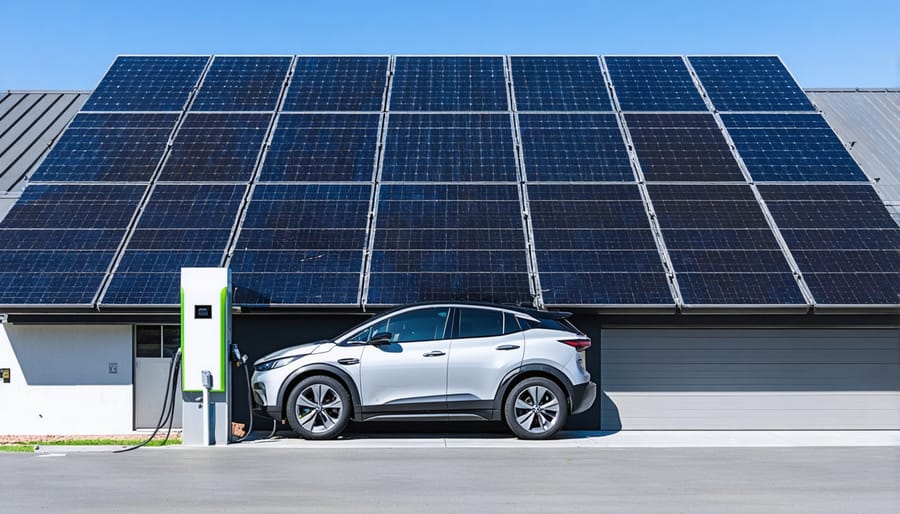
For Australian households embracing both solar power and electric vehicles, EV2-A rates create an exceptional opportunity to maximize sustainability while minimizing costs. The synergy between these technologies transforms your home into a truly integrated clean energy hub.
The ideal scenario involves charging your EV during off-peak periods using grid electricity at discounted EV2-A rates, while your solar panels power your home during daylight hours. However, maximizing your solar panels requires strategic thinking about when and how you charge.
Many solar households find success with a hybrid approach. If you work from home or have flexible charging schedules, you might top up your EV during sunny midday periods when solar generation peaks. Then, schedule your main charging session for overnight off-peak periods at around 8 cents per kilowatt-hour. This strategy prevents exporting excess solar energy to the grid at low feed-in tariff rates while still accessing cheap overnight charging.
Battery storage systems add another dimension to this equation. Home batteries can store excess solar energy generated during the day, potentially allowing you to charge your EV with stored solar power during evening peak periods, avoiding higher rates altogether. While the upfront investment is substantial, the long-term savings become significant when you consider both household consumption and EV charging needs.
Communities across Australia are discovering that combining solar, batteries, and EV2-A rates can reduce total energy costs by 60 to 70 percent compared to standard tariffs without solar. The key lies in smart energy management, using timers and scheduling features to automatically shift charging to optimal periods. Your electricity retailer can often provide consumption data helping you fine-tune your charging strategy for maximum benefit.
Is EV2-A Right for Your Household?
Calculating Your Potential Savings
Understanding your potential savings with EV2-A rates doesn’t require a degree in mathematics. Let’s walk through a straightforward framework that reflects typical Australian driving patterns and helps you see the real-world impact on your wallet.
Start by gathering three key pieces of information: your average weekly driving distance, your EV’s battery capacity, and your current electricity rate per kilowatt-hour. Most Australians drive between 200-300 kilometres weekly, and the average EV consumes roughly 15-20 kWh per 100 kilometres.
Here’s a worked example for a Melbourne family with a Tesla Model 3. Sarah drives approximately 250 kilometres weekly, and her EV uses 16 kWh per 100 kilometres. That’s 40 kWh of charging needed each week. On her standard residential rate of 30 cents per kWh, she’d pay 12 dollars weekly, or around 624 dollars annually.
By switching to an EV2-A rate charging overnight at 8 cents per kWh, Sarah’s weekly cost drops to just 3.20 dollars, saving approximately 457 dollars each year. For a family running two EVs, those savings quickly double.
Consider another scenario: Mark from Brisbane has a Nissan Leaf with a smaller 40 kWh battery. He drives 150 kilometres weekly, using about 24 kWh. His annual savings by moving from a 28-cent standard rate to a 9-cent off-peak rate amount to roughly 237 dollars.
The formula is simple: calculate your weekly kWh consumption, multiply by 52 weeks, then compare the cost difference between your current rate and the EV2-A off-peak rate. Most households discover savings between 200 and 600 dollars annually, money that could fund your next road trip while supporting Australia’s clean energy transition. Every charging session becomes a small victory for both your budget and our environment.
When Standard Rates Might Be Better
While EV2-A rates offer fantastic savings for many Australian EV owners, it’s important to recognize they’re not the perfect fit for everyone. Making an informed choice means honestly assessing your circumstances.
If you’re a low-kilometre driver who only charges once or twice a week, the savings from off-peak rates might not offset any additional service fees or meter costs associated with switching tariffs. For instance, someone driving just 50 kilometres weekly might save only a few dollars monthly, which could be negligible compared to standard rates.
Households with solar systems need to carefully consider their setup too. If you’ve optimized your system to charge during sunny daylight hours when your panels generate excess power, switching to time-of-use rates could actually increase costs. You’d be using expensive peak-rate grid power at night instead of your free solar energy during the day. However, some clever Aussie households are finding hybrid approaches work well, combining solar charging when possible with overnight top-ups during super off-peak periods.
Similarly, if your lifestyle or work arrangements mean you genuinely need to charge during peak hours regularly, EV2-A rates won’t deliver the benefits they promise. Shift workers, for example, might find their charging patterns don’t align with off-peak windows.
The good news is that most energy retailers are happy to run the numbers with you before switching. Take advantage of their usage calculators and have an honest chat about your driving patterns. Our growing EV community thrives on informed choices that genuinely work for individual circumstances, not one-size-fits-all solutions.
Making the Switch: How to Get Started with EV2-A
Ready to unlock those cheaper overnight charging rates? Making the switch to EV2-A is simpler than you might think, and you’ll be joining thousands of Australian households already saving on their home charging costs.
Start by checking your eligibility. Most electricity retailers across New South Wales, Queensland, South Australia, and the ACT offer EV2-A tariffs, though availability varies by network. Contact your current electricity provider first – they may already offer this tariff, making the transition seamless without changing retailers. If they don’t, this is a perfect opportunity to shop around and compare offerings from different providers who do.
Once you’ve selected your retailer, the application process typically requires proof of EV ownership (registration papers work perfectly) and confirmation that you have a dedicated EV charging circuit. Don’t worry if you haven’t installed your home charger yet – many retailers will approve your application pending installation, letting you coordinate everything efficiently.
The technical side involves having a licensed electrician install a separate meter or sub-meter specifically for your EV charging. This dedicated circuit ensures you’re only charged the lower EV2-A rates for actual vehicle charging, not your entire household consumption. Your chosen retailer can often recommend approved electricians familiar with EV2-A installations, or check with your local community EV groups for trusted recommendations.
Installation usually takes just a few hours, and costs vary between 800 to 2,000 dollars depending on your home’s existing electrical setup and the distance from your meter box to your charging location. While this seems significant upfront, remember those savings of 600 to 1,200 dollars annually mean you’ll likely recoup this investment within two years.
Once everything’s connected and approved, you’ll typically see the new rates reflected on your next billing cycle. Many Australian EV owners report the entire process taking just two to four weeks from initial contact to first charge on their new tariff. The sooner you start, the sooner you’ll begin saving while supporting Australia’s clean energy transition.
Making the switch to EV2-A rates represents more than just a smart financial decision – it’s a commitment to Australia’s clean energy future. By charging your electric vehicle during off-peak hours, you’re actively reducing pressure on our electricity grid while cutting your household costs significantly. The savings can add up to hundreds of dollars annually, making sustainable transport even more accessible for Australian families.
Now’s the time to take action. Contact your electricity retailer to explore EV2-A options in your area, and don’t be shy about asking questions – you’ll often find others in your neighbourhood are on the same journey. Share your experiences with fellow EV owners through local community groups or online forums; these conversations help build collective knowledge and encourage more Australians to embrace electric mobility.
Every EV charged at home using optimized rates strengthens our transition toward renewable energy. Your choice today contributes to cleaner air, reduced emissions, and a more sustainable transport system for future generations. Check your eligibility, compare providers, and join the growing community of Australians making environmentally conscious choices that benefit both their wallets and our planet. Together, we’re driving the change Australia needs.