
A sustainable food system includes producers who prioritise regenerative agriculture, distributors who minimise waste and emissions, and retailers who maintain transparent supply chains while supporting local communities. For Australian businesses in 2026, selecting sustainable partners means evaluating providers across six core criteria: environmental stewardship, fair labour practices, economic viability, minimal food waste, community impact, and traceability from paddock to plate.
The landscape has shifted dramatically. Where once sustainability was a marketing add-on, it’s now a fundamental business requirement that affects everything from supply chain resilience to customer loyalty. Australian businesses searching for sustainable food providers face a practical challenge: how do you separate genuine commitment from greenwashing when everyone claims to be eco-friendly?
This guide addresses that exact problem. You’ll discover the non-negotiable elements that define sustainable food systems, compare different provider types operating across Australia, and learn which buying factors actually matter when you’re signing contracts. We’ll walk through specific recommendations for different business sizes, expose the most common mistakes that undermine sustainability goals, and provide an implementation framework that works whether you’re running a café in Hobart or managing procurement for a corporate cafeteria in Sydney.
The reality is straightforward: your food sourcing decisions create ripples throughout Australian communities and ecosystems. Understanding what sustainability truly requires, and how to identify providers who deliver it, positions your business to thrive while contributing to food systems that can sustain us all.
What Makes a Food Service Provider Truly Sustainable
A genuinely sustainable food service provider operates differently from the mainstream, embedding environmental and social responsibility into every aspect of their business. Rather than paying lip service to green claims, these providers demonstrate concrete practices across six core areas that define what a sustainable food system includes.
Sourcing practices form the foundation. Truly sustainable providers prioritize local and seasonal ingredients, reducing transport emissions while supporting regional farmers. They establish direct relationships with growers who use regenerative agriculture methods, building soil health rather than depleting it. These providers can tell you exactly where your spinach was grown and how the dairy farm manages its herd. Many rely on ecosystem services like natural pest control and soil fertility, working with nature instead of against it through chemical-intensive methods.
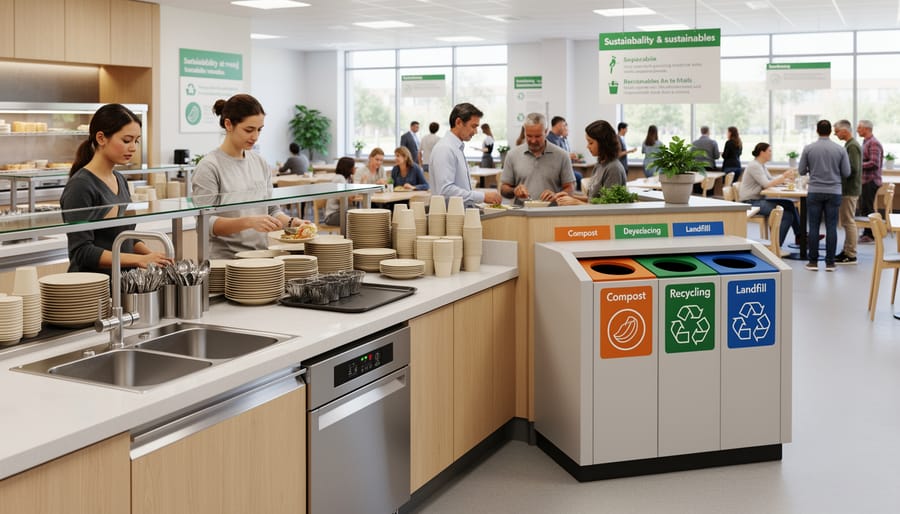
Waste management separates the committed from the superficial. Australia’s national target to halve food waste by 2030 drives serious providers to implement comprehensive waste systems. Look for operations that capture organic waste for composting, repurpose surplus food through donation programs, and design menus that use whole ingredients to minimize scraps. The best providers measure waste by weight, set reduction targets, and can show you their progress over time.
Carbon footprint accountability matters more each year. Forward-thinking providers track and report emissions across their operations, from refrigeration systems to delivery vehicles. They calculate the embodied carbon in their food choices, favoring plant-forward menus and responsibly raised proteins over high-emission options. Some offset unavoidable emissions through verified Australian projects, though reduction always comes before offsetting.
When evaluating potential providers, assess these essential criteria:
- Energy-efficient equipment and renewable energy procurement for facilities
- Third-party certifications like Organic, Fair Trade, or Carbon Neutral status that validate claims
- Transparent supply chain documentation showing farm origins and transport methods
- Measurable waste diversion rates with clear reduction goals and timelines
- Worker welfare standards including fair wages and safe working conditions
- Community engagement through local partnerships and social programs
Packaging choices reveal priorities. Sustainable providers eliminate single-use plastics wherever possible, opting for compostable materials, reusable containers, or bulk delivery systems. They design packaging for end-of-life, ensuring materials can actually be composted or recycled in Australian facilities rather than simply carrying a green logo.
Water usage often gets overlooked but carries significant impact. Water-efficient commercial kitchens install low-flow equipment, capture and reuse water where appropriate, and source ingredients from farms with responsible irrigation practices. In drought-prone Australia, water stewardship demonstrates genuine environmental commitment.
Social responsibility extends beyond environmental metrics. Ethical providers pay living wages, support indigenous food producers, invest in staff training, and contribute to food security programs in their communities. They recognize that sustainability encompasses both planetary and human wellbeing.
Types of Sustainable Food Service Providers in Australia
Farm-to-Table and Local Food Providers
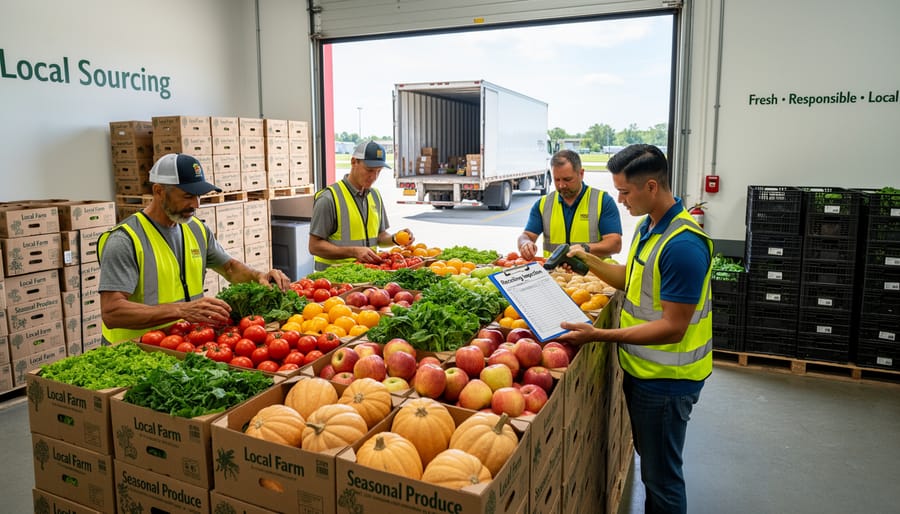
Farm-to-table providers connect Australian businesses directly with regional growers, cutting out intermediaries and shrinking the distance food travels from field to plate. These services typically work with networks of farms within a defined radius, often 200 to 400 kilometres, ensuring produce arrives fresher and retains more nutrients than produce shipped across continents.
Look for providers who can name their partner farms and specify harvest-to-delivery timeframes. The best operators maintain year-round relationships with growers rather than cherry-picking suppliers seasonally, which supports farming communities through consistent income. Many offer menu planning that adapts to what’s currently abundant, reducing waste while showcasing regional variety.
In Victoria’s Mornington Peninsula, providers might source stone fruit and leafy greens from nearby orchards and market gardens. Queensland operators often tap into tropical fruit networks and coastal fisheries. Western Australia’s wheat belt and wine regions support different supply chains entirely.
This model strengthens regional food security and keeps money circulating within local economies. You’ll typically pay a premium, roughly 15 to 30 percent above conventional wholesalers, but you’re funding transparent supply chains and genuinely supporting Australian growers who maintain the land for future generations.
Certified Organic and Regenerative Agriculture Suppliers
Certified organic suppliers operate under strict standards that prohibit synthetic pesticides, herbicides, and genetically modified organisms. In Australia, look for Australian Certified Organic (ACO) or NASAA Organic certification, these verify that farming methods protect soil health, biodiversity, and water quality while producing nutritious food without harmful chemical residues.
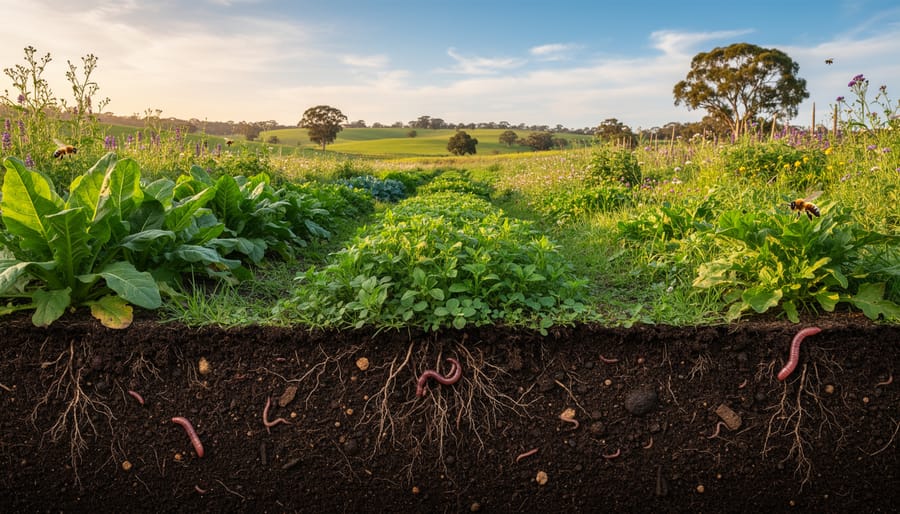
Regenerative agriculture suppliers take sustainability further. Rather than simply maintaining the status quo, they actively restore ecosystems through practices like rotational grazing, cover cropping, and composting. These methods rebuild topsoil, sequester carbon, increase water retention, and create habitats for native species. The result? Food production that improves land condition over time instead of depleting it.
When evaluating these providers, ask about their certification bodies and request evidence of regenerative practices. Some suppliers hold both organic certification and participate in programs like Carbon Neutral or Landscape Positive verification. These dual-certified providers offer the strongest guarantee that your food purchases support genuine environmental regeneration.
Many regenerative suppliers maintain direct relationships with farmers, allowing them to share detailed information about land management practices and measurable ecological improvements, transparency that sets them apart from conventional wholesalers.
Zero-Waste and Circular Economy Services
Zero-waste food service providers represent the cutting edge of sustainable food systems in Australia, operating on the principle that waste is a design flaw rather than an inevitable byproduct. These businesses structure their entire operations around circular economy principles, where materials continuously cycle back into productive use instead of ending in landfill.
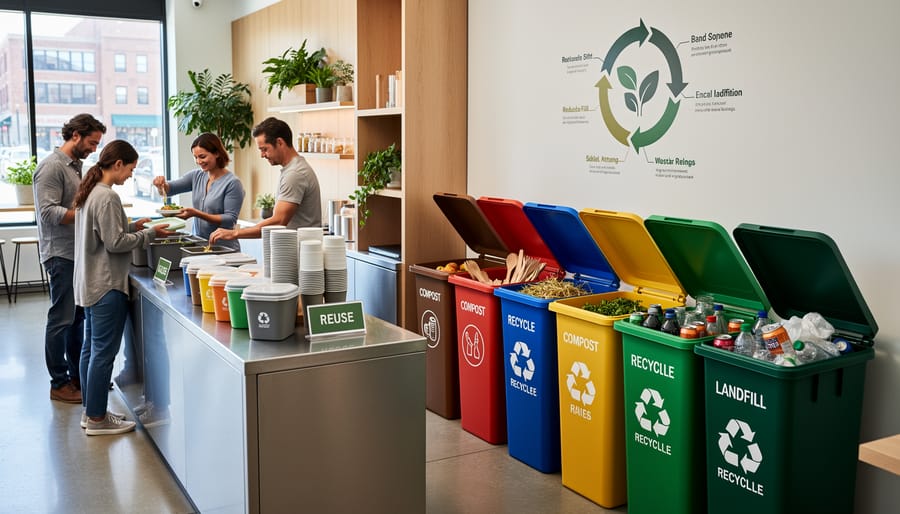
The most comprehensive zero-waste providers implement multiple strategies simultaneously. They source ingredients with minimal packaging, often working directly with farmers who collect and reuse containers. Their kitchens separate organic waste for industrial composting or on-site processing, transforming food scraps into nutrient-rich soil amendments that return to farms. Many have eliminated single-use items entirely, using returnable containers made from stainless steel or glass that customers send back after use.
Closed-loop systems take this further by partnering with waste processors, farms, and other businesses to create complete material cycles. For example, a provider might collect coffee grounds from corporate clients, send them to mushroom farms for growing substrate, then source those mushrooms for meals, with spent substrate returning to vegetable farms as compost.
These services suit organizations with strong sustainability commitments and the operational capacity to participate in return systems. While they typically cost more upfront, the waste savings and environmental impact make them increasingly attractive to universities, progressive corporations, and government facilities aiming for zero-waste targets.
Essential Factors When Choosing Your Sustainable Food Partner

Certifications and Third-Party Verification
Certifications cut through marketing spin and provide independent verification of a provider’s sustainability claims. In Australia, look for Australian Certified Organic (ACO)the country’s largest certifier covering organic production, processing and handling. ACO certification means food meets national organic standards without synthetic pesticides, herbicides or GMOs.
Fair Trade certification ensures farmers receive fair prices and work under safe conditions. While more common for coffee, tea and chocolate, Fair Trade principles increasingly apply to broader food supply chains. Providers with this certification support equitable trading relationships, particularly with developing countries.
For climate impact, Climate Active certification (formerly Carbon Neutral) demonstrates a provider has measured, reduced and offset their carbon emissions according to rigorous government standards. This matters because food systems contribute roughly one-quarter of global greenhouse gas emissions.
Certified B Corporation status indicates a company meets high standards of social and environmental performance, transparency and accountability. It’s not food-specific but shows commitment to stakeholder responsibility beyond profit.
Regional certifications like Sustainable Table and Planet Ark recognize businesses implementing comprehensive environmental practices. Waste-focused providers might hold Zero Waste certifications or participate in the Australian Packaging Covenant.
Don’t just tick boxes. Ask providers which certifications they hold, who audits them, when their last audit occurred, and whether you can view certificates. Legitimate providers welcome these questions. Multiple certifications across different sustainability dimensions, organic farming, fair trade, carbon neutrality, waste reduction, signal deeper commitment than marketing slogans alone.
Supply Chain Transparency and Traceability
When evaluating a food service provider’s sustainability credentials, their willingness and ability to trace products back to the source speaks volumes. A genuinely sustainable provider should answer “Where does this come from?” without hesitation.
Start by asking specific questions: Which farms supplied last month’s vegetables? What certifications do your meat suppliers hold? How far does your seafood travel from catch to delivery? Providers confident in their supply chains will share detailed sourcing maps, farm names, and growing methods. Vague responses like “from local suppliers” or “sustainably sourced” without evidence suggest weak traceability.
Request documentation that backs up their claims. Look for batch tracking systems that link each ingredient to its origin, harvest dates, and transport routes. Many Australian providers now use blockchain or digital platforms that let you scan a product code and see its entire journey. This technology eliminates guesswork and prevents greenwashing.
Transport transparency matters equally. Ask whether goods move direct from farm to your facility or pass through multiple distribution centres, racking up food miles and carbon emissions. Providers committed to sustainability will map their logistics clearly, showing consolidation points and cold chain management.
The best partnerships involve site visits. Reputable providers welcome clients to tour supplier farms or processing facilities, demonstrating their practices firsthand. If a provider resists transparency or can’t provide origin details within 48 hours, that’s your signal to keep searching. True traceability isn’t optional, it’s the foundation of accountable, sustainable food service.
Cost Considerations and Long-Term Value
Switching to sustainable food services often comes with higher upfront costs, expect to pay 10-25% more than conventional providers initially, but the real measure lies in long-term value rather than sticker shock. Factor in reduced waste disposal fees, improved employee health and productivity, enhanced brand reputation, and potential tax incentives for environmental initiatives when calculating your total investment. Many Australian businesses find that composting programs and reduced packaging offset portions of the premium within the first year.
Build your budget by requesting itemized quotes that separate food costs from sustainability services like waste auditing or supply chain reporting, allowing you to see exactly what you’re paying for. Ask providers about volume discounts, seasonal pricing variations, and whether they offer tiered service levels that let you start small and scale up. Compare at least three providers using a consistent evaluation framework that weighs quality, sustainability metrics, and service reliability alongside price, the cheapest option rarely delivers the environmental outcomes you need.
The ROI extends beyond dollars: when you choose green providers you’re investing in resilience against supply chain disruptions, future-proofing against stricter environmental regulations, and meeting growing stakeholder expectations for corporate responsibility. Track metrics like waste diverted from landfill, carbon emissions reduced, and percentage of local ingredients sourced to demonstrate tangible impact and justify the investment to decision-makers.
Top Sustainable Food Service Providers for Australian Businesses in 2026
Australia’s sustainable food service landscape offers diverse providers tailored to different organisational needs. While every business will have unique requirements, these categories represent the most reliable options across the country, each excelling in specific contexts.
For Corporate Catering and Office Food Services
Providers like Eadon Consulting, FoodConnect Melbourne, and Harvest Food Distribution have built strong reputations serving Australian businesses seeking sustainable daily catering. These companies prioritise local sourcing relationships with farmers within 200-300 kilometres of major cities, reducing food miles whilst supporting regional agriculture. Their model typically includes seasonal menu rotation that follows Australian growing cycles, waste tracking systems that measure compostable versus landfill outputs, and transparent reporting on carbon footprint per meal served. They’re ideal for businesses requiring consistent daily service where sustainability reporting matters for ESG goals.
For Healthcare and Aged Care Facilities
Healthcare providers need particular attention to dietary requirements alongside sustainability commitments. Services such as Providoor and regional hospital suppliers with sustainability certifications excel here. These providers understand the complexity of allergen management, modified textures, and nutritional requirements whilst maintaining organic certification for produce and ethical meat sourcing. They’re equipped to handle high-volume meal preparation with minimal packaging waste through reusable containers and established collection systems.
For Educational Institutions
Schools and universities benefit from providers experienced in educating communities whilst delivering sustainable food. Many regional cooperatives and social enterprises specialise in this space, combining farm education programmes with meal services. These providers often include student engagement components, farm visits, waste audits, or cooking workshops, that extend sustainability impact beyond the cafeteria. Their strength lies in building food literacy alongside nutrition.
For Small Businesses and Events
- Boutique caterers with zero-waste credentials: Excellent for one-off events requiring impressive sustainability credentials and creative menu design
- Farmers market collectives: Provide direct relationships with multiple producers, ideal for cafes and restaurants wanting diverse, hyperlocal ingredients
- Organic produce box services with commercial accounts: Cost-effective for small offices and hospitality venues needing regular deliveries without bulk minimums
- Specialty providers focusing on rescued food: Perfect for businesses prioritising waste reduction and willing to adapt menus around available surplus produce
When evaluating specific providers within these categories, request case studies from similar organisations, ask about their approach to seasonal disruptions, and clarify how they handle contract flexibility. The best sustainable provider for your needs will demonstrate proven experience with your sector, transparent communication about challenges as well as successes, and willingness to collaborate on continuous improvement rather than presenting sustainability as a fixed achievement.
Most established providers offer trial periods or pilot programmes, allowing you to test compatibility before committing to long-term contracts. This approach reduces risk whilst ensuring the provider’s sustainability practices align with your organisation’s actual operations rather than just policies.
Common Mistakes to Avoid When Selecting a Food Service Provider
Choosing a sustainable food service provider is straightforward in theory, but Australian businesses often stumble over the same preventable errors. Understanding these pitfalls upfront saves time, money, and the frustration of discovering you’ve partnered with someone whose sustainability credentials don’t match the marketing.
The most common mistake? Letting price alone drive your decision. Sustainable providers may cost more initially, but when you factor in reduced waste disposal fees, improved staff morale, and alignment with customer expectations the true value emerges. Cheap options often cut corners on the very practices that make a food system sustainable.
Many businesses also accept sustainability claims at face value without verification. A provider might tout “local sourcing” while importing 70% of ingredients or claim “eco-friendly packaging” that’s only marginally better than conventional options. Always request documentation: certifications, supply chain maps, waste audit reports. If they can’t or won’t provide evidence, that’s your answer.
Overlooking local and regional providers is another missed opportunity. Businesses sometimes default to large national suppliers without exploring smaller operators who source from nearby farms, reducing transport emissions and supporting regional economies. These relationships often offer flexibility and customization that big contracts lack.
Contract rigidity catches many organizations off guard. Signing long-term agreements without flexibility clauses means you’re stuck if the provider’s practices drift or your sustainability goals evolve. Insist on performance reviews, exit provisions tied to unmet sustainability benchmarks, and the ability to adjust service levels.
Waste management capabilities deserve scrutiny beyond what’s mentioned in proposals. Does the provider actually measure food waste? Do they compost organics or just claim to? Can they handle your specific waste streams, from coffee grounds to packaging materials? Without proper systems, waste simply transfers from your site to theirs.
Finally, excluding stakeholders from the selection process creates resistance later. Kitchen staff, facilities managers, and even employees who’ll be eating the food have valuable insights. They’ll spot impractical elements you might miss, and involvement builds buy-in. A green service provider might look perfect on paper but fail in daily operations if those doing the work weren’t consulted.
These mistakes share a common thread: rushing the decision or focusing too narrowly. Take time, dig deeper, and involve the right people.
Making the Transition to a Sustainable Food Service Provider
Switching to a sustainable food service provider requires careful planning, not a rushed decision. Start with a thorough needs assessment: map your current food volumes, service frequency, delivery requirements, and existing sustainability performance. Document what’s working and what isn’t, then identify your non-negotiables, whether that’s local sourcing, zero-waste packaging, or carbon-neutral delivery.
Bring your team into the conversation early. Engage kitchen staff, facility managers, sustainability officers, and end users to understand their concerns and priorities. Staff who’ll work with the new provider daily often spot practical issues leadership misses. Share your vision for the transition, explain how it connects to broader sustainability goals and invite feedback that shapes your provider criteria.
When negotiating contracts, build sustainability commitments directly into the agreement. Specify sourcing percentages from local or certified suppliers, waste diversion targets, packaging standards, and reporting requirements. Include performance review clauses tied to environmental metrics, not just cost and quality. Request quarterly sustainability reports with verifiable data on carbon emissions, waste volumes, and supply chain practices.
Set measurable targets from day one. Define what success looks like at three months, six months, and one year, whether that’s reducing food waste by 30 percent, sourcing 60 percent locally, or eliminating single-use plastics. Track these metrics consistently using data your provider supplies and your own observations.
Monitor performance rigorously. Schedule regular check-ins to review sustainability reports, address issues promptly, and adjust practices as needed. Walk through deliveries occasionally to verify packaging claims. Talk to your team about what’s improved and what hasn’t. If you avoid wrong provider choices through thorough vetting, the transition should show measurable environmental gains within the first quarter, proof you’ve made the right call.
What to Look For
– Estimated section: ~160 words
– No internal links required
– Focus: buying/decision factors for selecting sustainable food service providers
—
When evaluating potential food service providers, start with their sourcing philosophy. Ask where they obtain ingredients, what percentage comes from Australian farms within 300 kilometres, and how they verify ethical production standards. Concrete answers matter more than vague sustainability statements.
Examine their waste infrastructure. A genuine commitment means comprehensive systems: composting programs for organic waste, partnerships with food rescue organizations, reusable or genuinely compostable packaging, and measurable diversion rates. Request their waste audit data.
Transparency should be non-negotiable. Providers worth partnering with readily share supplier lists, carbon footprint calculations, and certification documents. They’ll discuss challenges openly rather than presenting a perfect image.
Consider operational alignment with your sustainability goals. Can they accommodate dietary requirements while maintaining sustainable practices? Do they offer menu flexibility as seasonal availability shifts? Will they collaborate on reducing food waste specific to your venue’s patterns?
Finally, assess their staff training and cultural commitment. Sustainability shouldn’t rest with one enthusiastic manager, it needs to permeate the organization. Inquire about employee education programs, fair wages, and how sustainability metrics influence their business decisions and menu development.
Main Options Compared
Australian businesses choosing sustainable food service providers typically evaluate three main models, each with distinct advantages depending on operational needs and sustainability priorities.
Local farm partnerships connect you directly with regional producers, delivering seasonal ingredients with minimal transport emissions. These arrangements excel in freshness and community impact but require flexible menus that adapt to harvest cycles. They’re ideal for restaurants and cafes wanting authentic provenance stories and strong local connections.
Certified sustainable distributors aggregate products from verified sources, offering convenience alongside credibility through organic, fair trade, or carbon-neutral certifications. You get broader selection and consistent supply, though the supply chain involves more intermediaries. Corporate caterers and institutions benefit from their reliability and compliance documentation.
Zero-waste specialist services prioritise circular systems with reusable packaging, composting programs, and closed-loop operations. While potentially more expensive initially, they deliver measurable waste reduction and align with ambitious environmental targets. They suit organizations with strong public sustainability commitments.
The right choice depends on balancing menu flexibility, budget constraints, and which sustainability metrics matter most to your stakeholders.
Choosing a sustainable food service provider isn’t just a purchasing decision, it’s an investment in Australia’s environmental future and a statement about the values your business stands for. Every meal served through a genuinely sustainable provider reduces waste in landfills, supports regenerative farming practices, cuts carbon emissions from transport, and strengthens local food networks across our regions. When businesses collectively shift toward providers who prioritize sustainability, the ripple effects extend far beyond individual organizations. You’re contributing to healthier ecosystems, more resilient farming communities, and a food system that can sustain future generations of Australians.
The providers you’ve explored in this guide represent real options available right now. Start your assessment by revisiting your organization’s sustainability goals and matching them against the criteria we’ve discussed, certifications, supply chain transparency, waste management capabilities, and local sourcing commitments. Don’t let perfect become the enemy of good; even incremental improvements in your food service sustainability create meaningful impact when multiplied across Australia’s business community.
How much more does a sustainable food service provider typically cost?
Sustainable providers often charge 10-20% more upfront, but many businesses find costs balance out through reduced waste disposal fees, improved employee satisfaction, and stronger brand reputation.
How can I verify a provider’s sustainability claims?
Ask for third-party certifications like Organic, Carbon Neutral, or B Corp status, request supply chain documentation, and speak with current clients about their experience with the provider’s practices.
What if no provider in my area meets all sustainability criteria?
Prioritize the factors most aligned with your goals, then work with your chosen provider to develop an improvement roadmap over time. Transparency and willingness to improve matter as much as current practices.
The transition to sustainable food service requires commitment, but you’re not alone in this journey. Australian businesses across sectors are proving that responsible food sourcing strengthens rather than compromises operational success. Take that first step today, reach out to providers, ask the tough questions, and begin building a partnership that nourishes both people and planet.