
Schedule a comprehensive energy audit with an accredited assessor to identify exactly where your current HVAC system wastes energy—most Australian homes lose 25-40% of heating and cooling through poor insulation, duct leakage, and inefficient equipment. Request thermal imaging during your audit to pinpoint heat transfer problems invisible to the naked eye, giving you a prioritised roadmap for retrofits that deliver the biggest environmental and financial returns.
Replace single-speed systems with inverter technology heat pumps that adjust output to match your precise needs rather than cycling on and off wastefully. These systems use 30-50% less electricity than conventional units while maintaining consistent temperatures, and they’re particularly effective in Australia’s diverse climate zones from Darwin’s tropics to Melbourne’s temperate swings.
Upgrade your ductwork with properly sealed, insulated channels that prevent conditioned air from escaping into roof cavities and wall spaces. Leaking ducts force your system to work harder, increasing both energy consumption and greenhouse gas emissions—sealing them typically improves efficiency by 20% and pays for itself within two to three years through reduced power bills.
Install smart thermostats and zone control systems that heat or cool only occupied spaces during necessary hours, eliminating the wasteful practice of conditioning empty rooms. These devices learn your patterns, adjust automatically for weather changes, and give you remote control through smartphone apps, cutting energy use by up to 23% according to Australian field studies.
The transformation from conventional to eco-friendly HVAC isn’t just about environmental responsibility—it’s about joining thousands of Australian households and businesses already enjoying lower operating costs, improved indoor comfort, and reduced carbon footprints. Your retrofit journey starts with understanding what you have, then systematically upgrading to what’s possible.
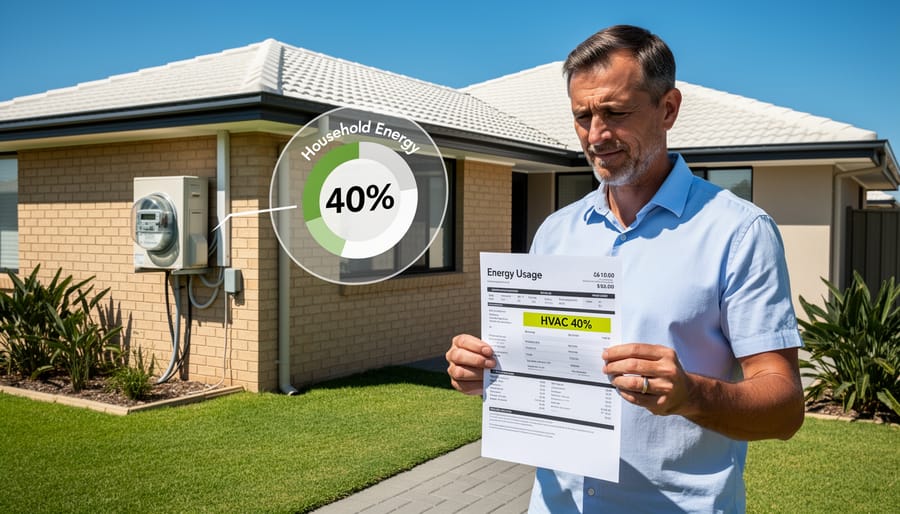
The Real Cost of Conventional HVAC in Australia
How Australian Climate Zones Affect Your HVAC Footprint
Australia’s diverse climate zones create distinct HVAC challenges that directly impact your environmental footprint. Understanding your local conditions is the first step toward choosing the right eco-friendly solution.
In tropical North Queensland and the Northern Territory, cooling dominates energy consumption year-round. High humidity makes conventional air conditioners work overtime, but this creates perfect opportunities for energy-efficient alternatives. Heat pump systems with dehumidification features and properly sized units can slash energy use by up to 40%. Communities in Darwin and Cairns are increasingly adopting ceiling fans combined with strategic natural ventilation, reducing reliance on refrigerated cooling during milder periods.
Subtropical regions like Brisbane and coastal New South Wales face dual demands, requiring both heating and cooling throughout the year. Reverse-cycle heat pumps shine here, offering efficient temperature control in both directions. Local businesses are discovering that zoning systems, which heat or cool only occupied spaces, dramatically reduce their carbon footprint while maintaining comfort.
Temperate zones including Melbourne and Adelaide experience pronounced seasonal shifts. While heating needs increase during winter, modern ducted systems with smart thermostats allow precise control. Households in these areas are embracing ground-source heat pumps that leverage stable underground temperatures, achieving remarkable efficiency regardless of surface conditions.
The key insight? There’s no one-size-fits-all eco-friendly HVAC solution for Australia. Your climate zone determines which technologies deliver maximum environmental and financial benefits. Working with local specialists who understand regional conditions ensures your retrofit investment creates lasting positive impact for both your comfort and our shared environment.
What Makes an HVAC System Truly Eco-Friendly
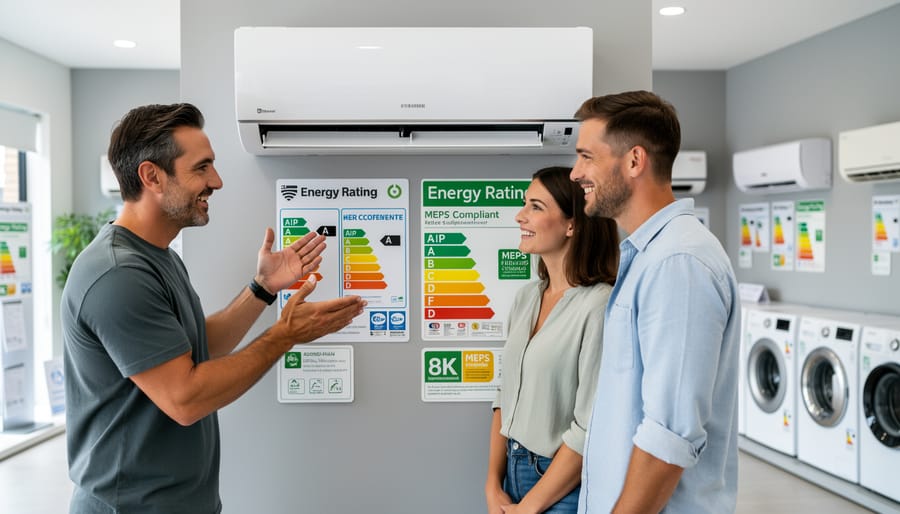
Energy Star Ratings and MEPS Standards Explained
When you’re shopping for a new HVAC system in Australia, those energy labels aren’t just decoration—they’re your roadmap to smarter, more sustainable choices. Understanding these ratings empowers you to make decisions that benefit both your hip pocket and our environment.
The Energy Star rating system uses a simple 1 to 10-star scale, where more stars mean better energy efficiency. You’ll find these distinctive blue and red labels on heating and cooling systems throughout Australia. A system with 6 stars or above is considered highly efficient and will significantly reduce your energy consumption compared to older models.
Equally important are the Minimum Energy Performance Standards (MEPS), which set the baseline that all new appliances must meet before they can be sold in Australia. Think of MEPS as the floor—no system can go below this standard—while Energy Star ratings show you how far above that floor you’re reaching.
When choosing your eco-friendly HVAC system, look beyond just the star rating. Check the energy output figures listed on the label, which show the actual kilowatts used for heating and cooling. Compare these numbers across different models within your budget range. Also note the system’s capacity—an oversized unit might have high star ratings but wastes energy if it’s too powerful for your space.
These labels represent Australia’s commitment to reducing household emissions, and by choosing high-performing systems, you’re joining thousands of households making our communities more sustainable. Every star matters, not just for today’s energy bill, but for the Australia we’re building together.
The Refrigerant Revolution: Why It Matters
For decades, Australian homes and businesses relied on refrigerants that were silently damaging our atmosphere. The old guard, including R22 and R410A, contributed significantly to global warming, with some having a warming potential thousands of times greater than carbon dioxide. The good news? We’re witnessing a genuine refrigerant revolution that’s transforming how we cool our spaces.
Modern eco-friendly HVAC systems now use alternatives like R32, which slashes global warming potential by roughly 68% compared to its predecessor. Even more exciting are natural refrigerants such as R290 (propane), R600a (isobutane), and CO2-based systems, which have minimal environmental impact and are gaining traction across Australia’s commercial sector.
This shift isn’t just about swapping one gas for another. These newer refrigerants often work more efficiently, meaning your system uses less energy to achieve the same comfort level. Many Australian councils and businesses are already making the switch, discovering that environmental responsibility and operational savings go hand in hand.
When planning your HVAC retrofit, asking about refrigerant type is essential. While upgrading might seem daunting, you’re not just reducing your carbon footprint; you’re future-proofing your investment as stricter regulations phase out harmful refrigerants. Together, we’re creating cleaner air for future generations.
Energy Audits: Your First Step to HVAC Transformation
What Auditors Look for in Your HVAC System
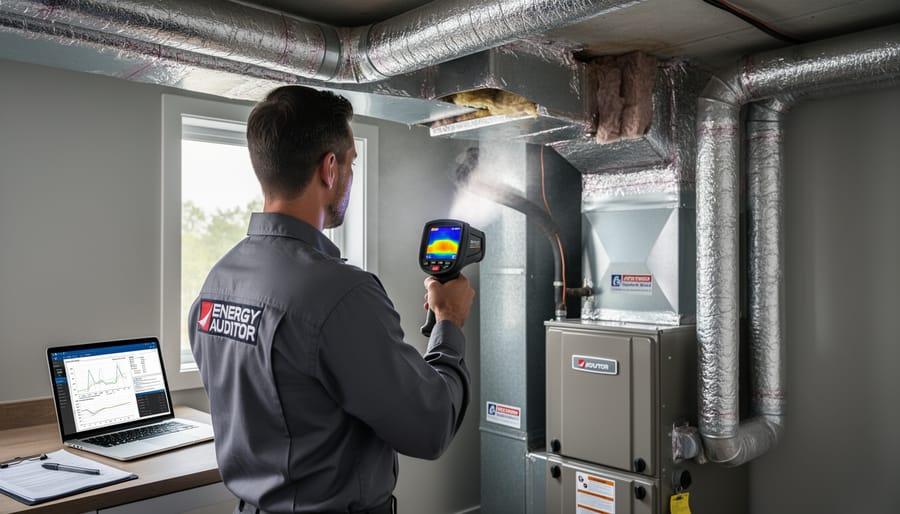
When an energy auditor arrives at your property, they’re essentially becoming a detective for your HVAC system, uncovering the hidden inefficiencies that quietly drain your energy and budget. Understanding what they examine helps you appreciate the thoroughness of the process and empowers you to identify potential issues yourself.
The first focus is typically ductwork, where Australian homes often lose between 20-30% of conditioned air through leaks and poor connections. Auditors use specialized equipment to measure airflow and identify gaps where your precious cooled or heated air escapes into roof cavities or wall spaces. They’ll check whether ducts are properly sealed and insulated, particularly important in our extreme climate where uninsulated ducts in hot roof spaces can significantly reduce efficiency.
System sizing comes next, and this is where many properties reveal a common problem. An oversized unit cycles on and off frequently, wasting energy and failing to properly dehumidify in humid regions. Undersized systems run constantly, struggling to maintain comfort. Auditors calculate the correct capacity based on your property’s actual requirements, factoring in our specific climate zones across the country.
Thermostat placement receives careful scrutiny too. Is it mounted near heat sources like windows or appliances? This affects temperature readings and system performance. Auditors also assess insulation levels throughout your property, examining walls, ceilings, and floors to ensure your HVAC system isn’t working overtime compensating for poor building envelope performance.
Finally, they’ll evaluate air filter condition, refrigerant levels, and overall system age to provide a comprehensive picture of your HVAC efficiency and potential upgrade pathways.
Reading Your Energy Audit Report
Your energy audit report is essentially a roadmap to a more efficient, comfortable home or workplace. When you receive it, look first for the HVAC-specific recommendations, which typically appear as prioritised actions based on potential energy savings and payback periods.
Most Australian auditors rank improvements using a simple traffic light system: green for quick wins like sealing ductwork (often delivering 20-30% efficiency gains), amber for medium-term investments such as upgrading to inverter air conditioning systems, and red for major overhauls like complete system replacements. Pay close attention to the cost-benefit analysis section, which breaks down estimated implementation costs against projected annual savings. A ducted reverse cycle heat pump might seem expensive upfront, but if your report shows it’ll pay for itself within five years while slashing your carbon footprint, it’s worth serious consideration.
Don’t overlook the smaller recommendations either. Simple fixes like adjusting thermostat settings, cleaning filters regularly, or installing ceiling fans can collectively make a substantial difference. Many audit reports also highlight eligibility for local rebates and incentives, helping make larger retrofits more accessible. If technical terms feel overwhelming, contact your auditor for clarification. They’re there to help you understand every recommendation, ensuring you can confidently prioritise actions that align with both your budget and sustainability goals.
Eco-Friendly HVAC Retrofit Options for Australian Homes and Businesses
Quick Wins: Low-Cost Retrofits That Make a Difference
You don’t need to break the bank to make your HVAC system more environmentally friendly. Some of the most effective changes cost relatively little but deliver impressive efficiency gains right from day one.
Starting with programmable thermostats is perhaps the easiest win. These clever devices learn your schedule and automatically adjust temperatures when you’re asleep or away, cutting energy waste by up to 15%. Many Australian households have found that investing around $150 in a quality programmable thermostat pays for itself within months through reduced electricity bills.
Duct sealing is another game-changer that often gets overlooked. Leaky ducts can waste up to 30% of your conditioned air before it even reaches you. A professional can seal your ductwork using mastic or specialised tape, significantly improving efficiency. For the DIY enthusiasts out there, accessible sections can be tackled yourself with proper materials from your local hardware store.
Don’t underestimate the power of upgrading your air filters either. High-efficiency filters not only improve air quality but also reduce strain on your system. Switching to a higher-grade filter and committing to regular changes every three months can reduce energy consumption by 5-10%.
Zone control systems offer targeted comfort by dividing your space into different temperature zones. This means you’re not cooling or heating unused rooms, which makes particular sense in larger Australian homes where certain areas might sit empty during the day. Installing motorised dampers costs between $1,500-$3,000 but can slash energy use by 20-30%, making it a worthwhile investment for many households seeking both comfort and sustainability.
Major Upgrades: High-Efficiency Systems Worth the Investment
When you’re ready to move beyond minor tweaks and embrace a complete transformation of your home’s climate control, several high-efficiency systems stand out as game-changers for Australian conditions. These investments require more upfront capital, but they’re reshaping how communities across the country think about heating and cooling.
Reverse cycle air conditioning has become Australia’s favourite for good reason. These systems heat in winter and cool in summer, delivering up to three times more energy than they consume by transferring heat rather than generating it. Modern units can achieve energy efficiency ratings exceeding 5 stars, significantly reducing both power bills and carbon footprints compared to traditional systems.
Ducted heat pumps take this concept further, distributing conditioned air throughout your entire home via a concealed network. While installation requires more planning, the zoning capabilities mean you’re only heating or cooling occupied spaces. A family in Adelaide recently shared how their ducted system cut energy use by 45 percent compared to their old gas heater and separate air conditioners.
For our drier climates, evaporative cooling remains a brilliant option. These systems use water evaporation to naturally cool air, consuming up to 75 percent less electricity than refrigerated cooling. They work beautifully across South Australia, Western Australia, and inland regions where humidity stays low, adding the bonus of fresh air circulation.
Geothermal systems represent the ultimate efficiency investment. By tapping into stable underground temperatures, these systems provide heating and cooling with minimal energy input. Though installation costs are higher and require suitable land, operating costs can be slashed by up to 70 percent. Several Australian farms and larger properties have pioneered this technology, proving its viability for our conditions while inspiring neighbouring communities to explore similar solutions.
Solar Integration: Powering Your HVAC with Sunshine
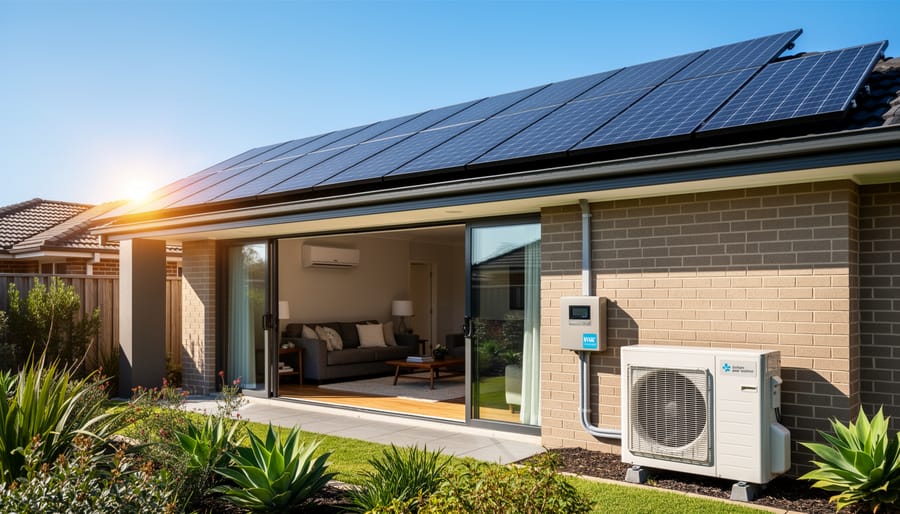
Imagine your HVAC system running entirely on sunshine – it’s not just possible, it’s becoming increasingly common across Australian homes and businesses. Solar integration represents one of the most powerful ways to transform your heating and cooling from an energy drain into a sustainable solution.
Pairing your HVAC with solar panels creates a natural synergy. Air conditioning typically works hardest during sunny days when solar panels generate peak power. This means you’re using clean, renewable energy precisely when you need it most. Many Australian households are discovering that their daytime cooling costs can drop to virtually zero with properly sized solar arrays.
Battery storage takes this concept even further. By storing excess solar energy generated during the day, you can power your HVAC throughout the evening and night without drawing from the grid. This complete energy independence is particularly appealing for businesses looking to future-proof their operations and reduce vulnerability to rising electricity costs.
The investment often pays for itself faster than you might expect. With federal rebates and state-based incentives, combined with the savings on energy bills, many Australians see returns within five to seven years. These energy efficiency upgrades also increase property value and demonstrate genuine commitment to sustainability.
Start by getting a solar assessment that considers your HVAC’s energy requirements. A qualified installer can design a system that matches your cooling and heating patterns, ensuring you maximise renewable energy use year-round.
Financial Incentives and Rebates for Eco-Friendly HVAC in Australia
Making the switch to eco-friendly HVAC doesn’t have to strain your budget. Right across Australia, governments are backing sustainability with meaningful financial support, recognising that upgrading to efficient heating and cooling systems benefits everyone through reduced emissions and lower energy demand.
In Victoria, the Victorian Energy Upgrades program is a game-changer for households and businesses alike. This scheme allows accredited providers to offer discounted or even free upgrades to energy-efficient heating and cooling systems. You’ll work with registered installers who handle the paperwork, making the process refreshingly straightforward. Victorians have already saved millions through this program, and the community impact extends beyond individual homes to create market momentum for sustainable technologies.
New South Wales residents can tap into the Energy Savings Scheme, which operates similarly by providing financial incentives through certificates traded by energy retailers. The scheme covers reverse-cycle air conditioners, ducted systems, and other efficient HVAC equipment. Many installers offer upfront discounts based on these certificates, reducing your out-of-pocket costs immediately.
Queensland’s Affordable Energy Plan and various solar rebate programs can help offset costs when pairing solar panels with efficient HVAC systems, creating a powerful combination for energy independence. South Australia, Western Australia, and other territories each offer region-specific programs worth investigating through your state energy authority.
At the federal level, the Small-scale Renewable Energy Scheme supports solar installations that can power your efficient HVAC system, while various business grants encourage commercial upgrades. The Clean Energy Finance Corporation also provides low-interest loans for substantial energy efficiency projects.
Consider these incentives as more than just rebates, they’re a sustainable investment in your property’s value and our collective environmental future. Many Australians discover that combining available rebates with long-term energy savings means their eco-friendly HVAC upgrade pays for itself within just a few years, all while contributing to Australia’s renewable energy transition.
Real Stories: Australian Businesses and Households Making the Switch
Across Australia, forward-thinking homes and businesses are proving that eco-friendly HVAC retrofits deliver real results. Here are their stories.
The Melbourne Family Who Cut Cooling Costs by 65%
When the Patterson family in Footscray noticed their energy bills climbing each summer, they commissioned an energy audit that revealed their 15-year-old ducted air conditioning system was draining both their wallet and the environment. The biggest challenge? Upfront costs seemed daunting for a young family on a budget.
Working with a local HVAC specialist, they installed a zoned inverter system paired with improved ceiling insulation. The results exceeded expectations: their summer electricity bills dropped by 65%, and the system paid for itself within three years through energy savings and Victorian Energy Upgrades rebates. “We’re cooling our home more effectively while using less energy. It feels brilliant knowing we’re doing our part,” says Emma Patterson.
Brisbane Café Embraces Sustainable Operations
Riverside Brew in Brisbane faced a common hospitality challenge: maintaining comfortable indoor temperatures for customers without astronomical running costs. Their old system struggled during Queensland’s humid summers, running constantly and contributing significantly to their carbon footprint.
After conducting a comprehensive energy assessment, owner Marcus Chen invested in a modern VRF (Variable Refrigerant Flow) system with heat recovery. This technology captures waste heat from cooling areas and redirects it where needed. Combined with motion sensors and smart thermostats, the café now maintains perfect comfort levels while reducing energy consumption by 48%. “Customers appreciate our commitment to sustainable business practices, and our operating costs have dropped dramatically,” Marcus reports.
Adelaide Office Building’s Green Transformation
The Prospect Business Centre transformed its aging HVAC infrastructure through a staged retrofit approach. Managing 12 tenancies, the building owners faced complexity in coordinating upgrades without disrupting operations.
They implemented the retrofit floor-by-floor over 18 months, installing high-efficiency heat pumps and upgrading to R32 refrigerant. Smart building management systems now optimize performance across all zones. The outcome? A 52% reduction in HVAC-related emissions and significantly improved tenant satisfaction. Their success demonstrates that even large-scale commercial retrofits are achievable with proper planning and phased implementation.
Choosing the Right Eco-Friendly HVAC Professional
Finding the right professional to install your eco-friendly HVAC system is just as important as choosing the technology itself. The best equipment won’t deliver promised energy savings if it’s poorly installed or incorrectly sized for your space. When choosing the right contractor, you’re investing in both immediate performance and long-term sustainability outcomes.
Start by verifying credentials specific to energy-efficient installations. Look for the ARC tick, which indicates proper refrigerant handling training, essential for preventing greenhouse gas emissions during installation and maintenance. Confirm they hold current electrical licenses and relevant qualifications for the systems you’re considering. Membership in professional bodies like the Australian Institute of Refrigeration, Air Conditioning and Heating demonstrates commitment to industry standards.
Ask potential contractors about their experience with energy-efficient systems. How many similar installations have they completed? Can they provide references from Australian homeowners or businesses who’ve achieved significant energy reductions? Request detailed quotes that explain system sizing calculations, not just equipment costs. A quality contractor will conduct a thorough assessment of your property’s thermal envelope, insulation, and specific cooling or heating needs.
Don’t hesitate to inquire about post-installation support and maintenance plans. Regular servicing keeps eco-friendly systems running at peak efficiency. When interviewing green service providers, gauge their understanding of available rebates and incentives, they should help you navigate these opportunities.
Remember, the cheapest quote rarely delivers the best value. Quality installation ensures your eco-friendly HVAC system performs as designed, delivering the energy savings and environmental benefits you’re seeking while supporting Australia’s transition to a cleaner future.
The time to act on eco-friendly HVAC retrofits is now. As Australia faces increasingly warm summers and rising energy costs, upgrading your heating and cooling systems isn’t just an environmental choice—it’s a smart investment in your comfort, your budget, and our shared future. The beauty of this transition is that you don’t need to do everything at once. Starting with a professional energy audit gives you a clear roadmap, showing exactly where your system is losing efficiency and which upgrades will deliver the greatest impact.
Whether you’re a homeowner looking to slash those quarterly electricity bills or a business owner seeking to demonstrate environmental leadership, the pathway forward is clearer than ever. With government rebates and incentives available across many Australian states, the financial barriers have never been lower. Modern technologies like inverter air conditioners, smart thermostats, and zoned systems offer remarkable efficiency improvements that pay for themselves over time.
But here’s what makes this journey truly exciting: when you choose to retrofit your HVAC system, you’re joining a growing community of Australians who understand that sustainability starts at home. Imagine entire neighbourhoods, shopping districts, and industrial areas transformed through collective action. Each upgraded system reduces strain on our electricity grid, lowers carbon emissions, and demonstrates that practical environmental responsibility is within everyone’s reach.
Take that first step today. Schedule an energy audit, explore your retrofit options, and become part of Australia’s sustainable future. Together, we’re not just cooling our homes—we’re building a cooler planet.