
Beneath your feet lies Australia’s hidden water wealth—vast underground reservoirs called aquifers that store more freshwater than all our visible rivers, lakes, and dams combined. Right now, you’re likely connected to groundwater in ways you haven’t considered: it supplies drinking water to 70% of rural Australians, irrigates the food on your table, and sustains ecosystems from the Murray-Darling Basin to the Great Artesian Basin spanning 1.7 million square kilometres beneath our inland.
Yet this invisible resource faces mounting pressure. Over-extraction in some regions has dropped water tables by metres, while climate change reduces natural recharge rates. Meanwhile, contamination threats from agriculture, mining, and urban development put groundwater quality at risk for generations to come.
Understanding aquifers isn’t just for scientists and policymakers—it’s essential for every Australian who values water security. These underground systems function as nature’s own storage tanks, filtering water through layers of sand, gravel, and porous rock over decades or even millennia. When we pump water faster than rainfall and surface water can replenish these reserves, we’re essentially borrowing from our children’s water supply.
The encouraging news? Communities across Australia are pioneering sustainable groundwater management. From managed aquifer recharge projects capturing stormwater in Adelaide to Indigenous-led water planning in remote Queensland, practical solutions exist. Whether you’re a farmer, business owner, council member, or concerned citizen, your choices and voice matter in protecting this critical resource.
This article reveals how aquifers work in Australia’s unique geological context, why sustainable management demands urgent attention, and specific actions you can take to become part of the solution.
What Lives Beneath: Understanding Australian Aquifers
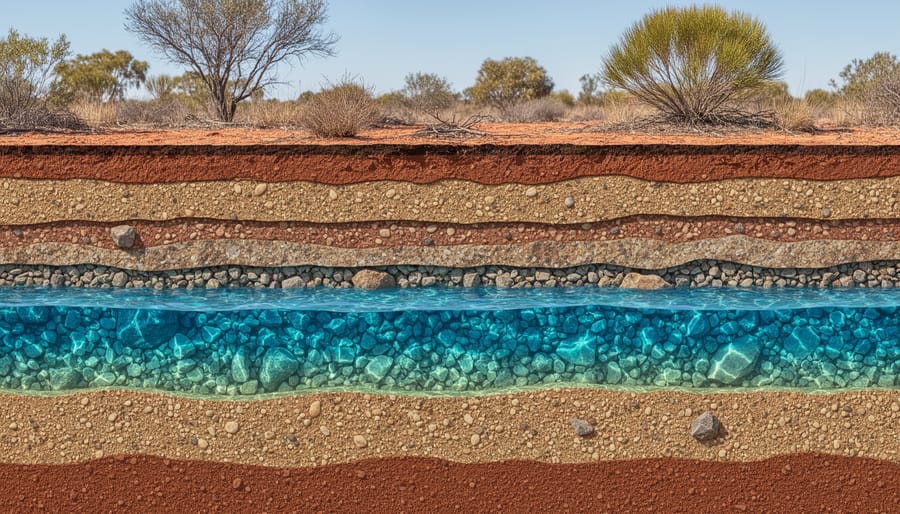
The Great Artesian Basin: Australia’s Underground Ocean
Beneath the red earth of inland Australia lies something extraordinary: the Great Artesian Basin, one of the world’s largest underground water reservoirs. Spanning 1.7 million square kilometres across Queensland, New South Wales, South Australia, and the Northern Territory, this ancient aquifer system covers roughly 22% of our continent. To put that in perspective, it’s larger than the entire state of Queensland.
This underground ocean stores approximately 65,000 cubic kilometres of water, some of which has been slowly filtering through rock layers for over two million years. For remote communities, pastoral stations, and towns across outback Australia, it’s not just important – it’s lifeline infrastructure. The Basin supports over 180,000 people directly and sustains agricultural production worth billions annually.
What makes this aquifer truly remarkable is how it naturally flows to the surface through artesian pressure in some locations, requiring no pumping. However, this precious resource faces mounting pressures from agricultural demand, mining operations, and climate variability. Traditional bore systems have historically wasted significant water through uncontrolled flows and leaking infrastructure.
The good news? Communities across the Basin are stepping up. Through the Great Artesian Basin Sustainability Initiative, landholders have capped thousands of bores and replaced open drains with pipes, saving over 200 billion litres annually. These collaborative efforts demonstrate how when we understand our groundwater’s true value, practical solutions emerge that benefit everyone.
Your Local Aquifer Matters Too
From Perth to Brisbane, your community relies on groundwater systems you might never have seen but definitely depend on. Western Australia’s Gnangara Mound supplies drinking water to over a million people, while Queensland’s Great Artesian Basin stretches beneath the outback, supporting remote communities and livestock across four states. In Victoria, the Eastern Aquifer underpins agricultural prosperity, and South Australia’s limestone aquifers keep the Adelaide region flowing.
These aren’t just geological features on a map. They’re living systems that directly impact your daily life, from the water pressure in your shower to your local economy’s resilience during drought. The Murray-Darling Basin aquifers support critical food production security, while coastal aquifers from Sydney to Melbourne face increasing pressure from population growth and climate change.
Understanding your local aquifer means recognizing its limits and possibilities. Is your region over-extracting? Are there recharge programs in place? These questions matter because sustainable groundwater management starts with communities who know what lies beneath their feet and why protecting it ensures water security for generations ahead.
The Invisible Lifeline: Who Depends on Our Groundwater
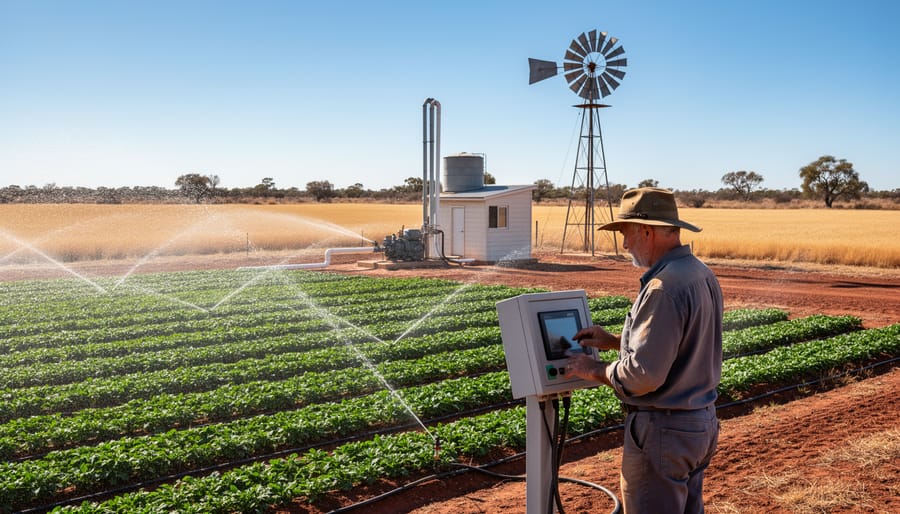
From Farm Gates to Dinner Plates
Beneath the sun-soaked fields of the Murray-Darling Basin and across the Great Artesian Basin, groundwater quietly sustains the food that reaches our tables. Around 30% of Australia’s agricultural production depends on groundwater, making aquifers the invisible backbone of our food security.
Take the Lockyer Valley in Queensland, where family farms have tapped into groundwater for generations to grow lettuce, broccoli, and tomatoes that fill supermarket shelves across eastern Australia. In South Australia’s Riverland region, citrus and almond growers rely on groundwater to supplement river water, particularly during drought years when surface supplies dwindle. These aren’t isolated cases—groundwater supports dairy farms in Victoria’s Goulburn Valley, cotton producers in northern New South Wales, and vegetable growers in Western Australia’s Swan Valley.
The connection between aquifers and rural resilience runs deep. When drought grips the land and rivers run low, groundwater often provides the lifeline that keeps farms operating and communities thriving. However, this dependence brings responsibility. The agricultural water challenges we face today require innovative thinking from both producers and consumers.
Progressive farmers are leading the charge with precision irrigation systems, soil moisture monitoring, and crop selection that matches available water resources. Their efforts demonstrate that protecting groundwater isn’t about choosing between farming and conservation—it’s about ensuring both can flourish together, keeping fresh Australian produce on our plates for generations to come.
Towns Running on Underground Rivers
Across Australia’s vast interior and remote regions, entire communities draw every drop of their drinking water from ancient underground reserves. Towns like Broken Hill in far western New South Wales rely almost exclusively on the Great Artesian Basin, their taps connected directly to water that fell as rain thousands of years ago. Similarly, Alice Springs sources approximately 95% of its water from the Amadeus Basin aquifer, making groundwater the lifeblood of this Red Centre community of 25,000 people.
These towns face distinctive challenges that urban Australians rarely consider. Lightning Ridge, famous for its opal mining, must carefully manage bore water extraction to prevent depletion and maintain water quality. The town’s aquifer recharges slowly in this semi-arid climate, meaning today’s usage directly impacts tomorrow’s availability. Coober Pedy, another mining community, faces similar pressures, with residents and businesses drawing from underground sources in one of Australia’s driest regions.
The stakes are particularly high during drought periods. When surface water disappears, these communities have no backup plan beyond their aquifers. Kalgoorlie-Boulder demonstrated this vulnerability during extended dry spells, prompting innovative water recycling initiatives and stricter bore management protocols.
These communities aren’t just passive users though. Many have become groundwater stewardship champions, implementing water-wise practices and monitoring programs that urban centres could learn from. Their survival depends on understanding and respecting the underground rivers beneath their feet, making them essential partners in Australia’s groundwater conservation story.
The Perfect Storm: Threats Facing Australian Aquifers
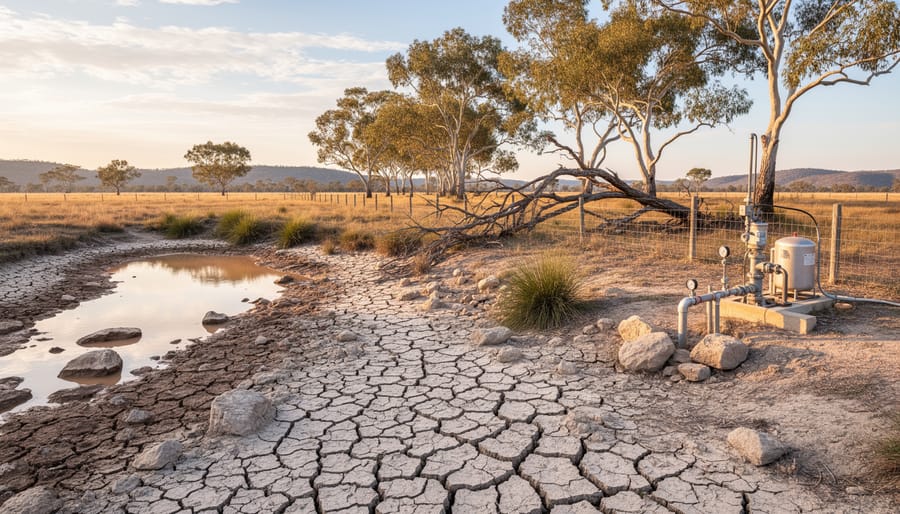
Over-extraction: Taking More Than Nature Can Give
Imagine turning on your tap and hearing only a hollow gurgle. Across Australia, this scenario is becoming reality for communities extracting groundwater faster than rainfall can replenish it. Over-extraction happens when we withdraw more water than aquifers can naturally restore, creating an imbalance that ripples through entire ecosystems.
The Great Artesian Basin, Australia’s largest groundwater resource, has lost significant pressure over the past century due to uncapped bores and excessive pumping. In Queensland’s Darling Downs, intensive irrigation has caused water tables to drop by over 80 metres in some areas, affecting both agricultural viability and neighbouring properties.
Watch for these warning signs in your community: wells needing deeper drilling, springs and creeks drying up during usual flow periods, and increased salinity in pumped water. Regional Victoria’s groundwater-dependent ecosystems show how stressed aquifers affect river red gums and native vegetation, which rely on consistent water table levels.
The encouraging news? Many Australian communities are reversing these trends through collaborative management. Local water users in South Australia’s Barossa Valley have voluntarily reduced extraction, allowing aquifers to recover while maintaining agricultural productivity. Together, we can ensure groundwater remains abundant for future generations by understanding our collective impact and supporting sustainable extraction limits.
Climate Change and the Recharge Crisis
Australia’s climate story is shifting beneath our feet—quite literally. Our ancient aquifers evolved over millennia to recharge during predictable wet seasons, but changing rainfall patterns are disrupting this delicate balance. Across much of the continent, Bureau of Meteorology data shows rainfall becoming more erratic: intense downpours followed by prolonged dry spells. While heavy rain might seem beneficial, it often runs off before soaking deep into aquifers, especially on sun-hardened ground.
Southern Australia has experienced a 15% decline in cool-season rainfall since the 1990s, directly reducing recharge to critical aquifers like the Murray-Darling Basin’s groundwater systems. Meanwhile, northern regions face more intense wet seasons compressed into shorter periods—water rushes past rather than percolating down. These shifts create a double challenge: communities draw more groundwater during extended droughts while aquifers receive less natural replenishment.
Climate projections suggest this trend will intensify, amplifying existing water scarcity impacts across agricultural and urban areas. Understanding this connection helps us appreciate why managed aquifer recharge projects and water-sensitive urban design are becoming essential tools in securing Australia’s groundwater future.
Contamination: When Our Water Becomes Unsafe
Our groundwater faces growing threats that demand our attention and action. Agricultural runoff containing pesticides and fertilisers increasingly seeps into aquifers across rural Australia, particularly in intensive farming regions like the Murray-Darling Basin. Industrial sites, meanwhile, can leak heavy metals and chemicals into underlying water sources, creating long-term contamination challenges.
A particularly concerning development is the spread of PFAS (per- and polyfluoroalkyl substances), often called “forever chemicals” because they don’t break down naturally. Communities near former Defence bases and industrial areas, including Katherine in the Northern Territory and Oakey in Queensland, have faced PFAS contamination in their groundwater supplies, affecting drinking water and agricultural land.
These threats ripple through entire communities. When aquifers become contaminated, towns lose access to clean water, farmers can’t irrigate crops safely, and ecosystems dependent on groundwater suffer. The cost of remediation often runs into millions, creating financial burdens for councils and residents.
The encouraging news? Community monitoring programs are making a real difference. Across Australia, local environmental groups work with scientists to test water quality, identify contamination early, and advocate for stronger protections. Your involvement in these initiatives strengthens our collective capacity to safeguard this precious resource.
How Australia Governs the Ground Below
Water Plans and Licenses: The Rules That Protect Our Aquifers
Australia’s groundwater is managed through a comprehensive system of water sharing plans and licenses, designed to ensure this precious resource remains available for future generations. Think of it as a community agreement that balances the needs of farmers, towns, industries, and the environment itself.
Under the National Water Initiative, each state administers groundwater through Water Sharing Plans that set extraction limits based on scientific assessments of what each aquifer can sustainably provide. These plans determine how much water can be drawn annually without depleting the source or harming dependent ecosystems like rivers and wetlands.
To access groundwater, users typically need a license or allocation. In New South Wales, for example, a farmer wanting to irrigate crops must apply for a groundwater license tied to a specific aquifer. The license specifies annual extraction limits, monitoring requirements, and sometimes even the depth and location of bores. This ensures everyone gets their fair share while protecting the resource.
The system has real community impacts. When the Lower Murrumbidgee groundwater zone showed signs of over-extraction, authorities reduced allocations, prompting irrigators to adopt more efficient technologies like drip irrigation systems. While initially challenging, these changes helped stabilize water levels and secure long-term access for the entire community.
For landowners, understanding your local water sharing plan is essential. Many regional councils offer workshops explaining licensing requirements and sustainable extraction practices, creating opportunities for neighbours to share knowledge and support each other in responsible groundwater stewardship.
When Science Meets Policy: Monitoring and Management
Across Australia, a sophisticated network of monitoring stations keeps watch over our hidden water reserves. From remote bores in the Great Artesian Basin to urban monitoring wells in Perth’s coastal aquifers, scientists track water levels, quality, and flow patterns to build a comprehensive picture of aquifer health. This data becomes the foundation for informed decision-making, guiding everything from farm water allocations to urban planning decisions.
The Bureau of Meteorology, state water departments, and research institutions work together to compile this information into accessible formats. Real-time groundwater data helps farmers plan irrigation, alerts authorities to potential contamination events, and tracks the long-term impacts of climate variability. In South Australia’s Eyre Peninsula, for instance, continuous monitoring helped communities adapt their water use during extended dry periods, preventing aquifer depletion.
What makes Australia’s approach particularly powerful is the growing role of community science. Landholders report changes in bore water levels and quality, providing ground-truth observations that complement technical measurements. In regional Victoria, farmers participating in local water stewardship programs share their bore data, creating detailed local pictures that inform collective management decisions.
This collaboration between professional scientists and community observers creates a responsive, adaptive management system. When communities understand the science and see their observations valued in policy decisions, they become active partners in protecting these vital resources. Your observations matter, whether you’re a landholder monitoring a farm bore or a concerned citizen noting changes in local springs.
Real Solutions Working Right Now
Managed Aquifer Recharge: Banking Water Underground
Imagine nature’s own water savings account – that’s essentially what managed aquifer recharge (MAR) is all about. This clever approach captures water when it’s plentiful, stores it underground in aquifers, and withdraws it during drier times. It’s innovative resource management at its finest, and Australian communities are leading the way.
In South Australia’s Adelaide Plains, one of the country’s largest MAR schemes has been operating since the 1990s. Here, stormwater and treated wastewater are redirected into underground aquifers rather than flowing out to sea. The result? Over 30 billion litres of water banked annually, helping secure water supplies for horticulture, viticulture, and urban green spaces.
The technology works through various methods. Injection wells pump water directly into aquifers, while infiltration basins allow water to percolate naturally through soil layers, which also acts as a natural filter. Perth’s urban water management now includes multiple MAR sites that capture excess rainfall, turning what was once considered a drainage problem into a water security solution.
Western Australia’s Managed Aquifer Recharge Strategy demonstrates how forward-thinking policy supports these projects. The state aims to recharge 115 billion litres annually by 2030, buffering against climate variability.
These aren’t just large-scale government projects either. Some agricultural businesses and councils are exploring smaller MAR systems, recognising that underground storage loses far less water to evaporation than surface dams – a crucial advantage in our sunburnt country.
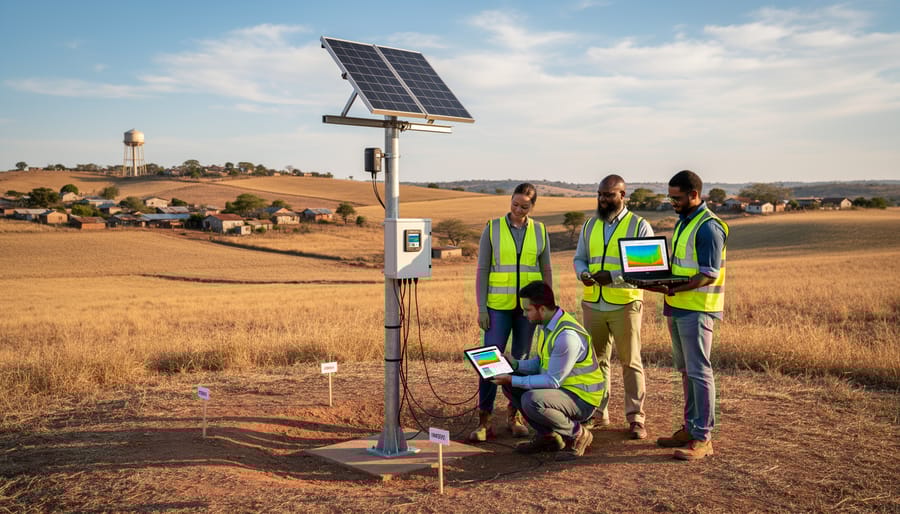
Communities Taking Control of Their Water Future
Across Australia, communities are stepping up to protect their groundwater resources through innovative local initiatives and time-honoured practices. These efforts demonstrate that effective water stewardship begins at the grassroots level.
In Victoria’s Goulburn Valley, irrigator groups have established collaborative monitoring programs, sharing data and adjusting extraction rates collectively during drought periods. This cooperative approach has maintained aquifer levels while sustaining agricultural productivity, proving that neighbours working together can achieve what regulations alone cannot.
Indigenous communities are leading the way in holistic water management. Traditional Owners across the Murray-Darling Basin are revitalising cultural burning practices that improve groundwater recharge by maintaining healthy vegetation patterns. In the Northern Territory, Aboriginal ranger programs monitor remote aquifers using both cutting-edge technology and generations of cultural knowledge about seasonal water flows and underground water sources.
Community groups like Waterkeepers Australia are empowering local residents to become citizen scientists, testing groundwater quality and reporting contamination risks. In Perth, suburban households have formed neighbourhood water-sharing networks, collectively managing bores and implementing sustainable water practices that reduce pressure on the Gnangara Mound aquifer.
Regional Landcare groups are tackling recharge issues head-on, planting native vegetation corridors that channel rainfall into aquifers and prevent soil erosion. These volunteer-driven projects across Queensland, New South Wales, and South Australia show how dedicated communities can reverse groundwater decline through coordinated revegetation efforts.
These inspiring examples prove that protecting groundwater isn’t just about policy—it’s about people taking ownership of their water future.
Your Role in Protecting Australia’s Groundwater
For Property Owners and Farmers
For those managing rural properties, understanding your groundwater is like knowing your land’s heartbeat. Regular bore maintenance isn’t just about keeping the water flowing—it’s about protecting a precious resource for future generations.
Start by monitoring your water table levels and quality. Many farmers across regional Australia are discovering that simple observation logs can reveal patterns that save both water and money. If you notice changes in flow rates or water clarity, it might signal aquifer stress before it becomes critical.
Consider efficient irrigation systems like drip lines or moisture sensors that deliver water precisely where needed. The Murray-Darling Basin communities have shown how targeted efficiency improvements can reduce groundwater extraction by up to 30 percent without impacting productivity.
Your state’s water authority offers bore licensing information and often provides free workshops on sustainable groundwater management. Connect with your local Landcare group—they’re wonderful resources for sharing practical knowledge about water-saving techniques suited to your region’s specific conditions.
Remember to keep accurate records of your water use. This not only helps with compliance but also lets you track improvements and share successes with neighbouring properties. Together, we’re building a more water-secure future for rural Australia.
For Urban Australians
Living in Australian cities doesn’t disconnect us from groundwater – quite the opposite. Every time we turn on a tap in Perth, Adelaide, or Canberra, there’s a good chance groundwater is flowing through. Our daily choices create ripples that extend deep underground, and the wonderful news is that city dwellers hold significant power to protect these vital resources.
Start in your own backyard by reducing water waste. Shorter showers, fixing leaky taps, and choosing water-efficient appliances all decrease the demand on aquifers. When you landscape, consider native Australian plants that thrive without excessive watering. These choices might seem small, but across millions of urban households, they create substantial change.
Your voice matters enormously in groundwater protection. Stay informed about local water management plans and participate in community consultations. When councils propose new developments, ask questions about groundwater impacts. Support businesses and councils committed to sustainable water practices – your purchasing power and civic engagement shape policy directions.
Consider joining or supporting community groups focused on water conservation. From Sydney to Darwin, passionate Australians are building coalitions that influence decision-makers and drive real change. Share what you learn about groundwater with friends, family, and colleagues. Conversations around dinner tables and office kitchens spark awareness that grows into action.
Remember, groundwater security isn’t just a rural concern – it’s urban Australia’s insurance policy against drought and climate uncertainty. When we collectively advocate for sustainable management, we’re protecting not just water, but the future resilience of every Australian community.
Remember that farmer in regional New South Wales, checking the bore that sustains their family’s livelihood? Thanks to communities across Australia embracing sustainable groundwater management, that scene is becoming increasingly hopeful. From the Northern Territory’s collaborative Indigenous water management programs to Victoria’s innovative aquifer recharge projects, Australians are proving that protecting our underground water reserves isn’t just possible – it’s already happening.
The journey toward sustainable groundwater use is one we’re all part of, whether we’re irrigators, urban residents, business owners, or simply people who care about Australia’s future. Every water-wise decision, from installing efficient irrigation systems to supporting policies that prioritize aquifer health, creates ripples of positive change. When a Perth household captures rainwater to reduce groundwater dependence, or when a Queensland farming cooperative shares knowledge about groundwater levels, they’re contributing to something far greater than themselves.
Our aquifers have sustained this continent for millions of years, providing resilience through droughts and supporting life in the driest inhabited continent on Earth. Now it’s our turn to sustain them. The good news? You don’t need to be a hydrologist or policymaker to make a difference. Start conversations in your community, learn about your local aquifer, reduce your water footprint, and advocate for sustainable practices in your workplace. Together, we’re not just protecting water underground – we’re securing the foundation of Australian life for generations to come. The future of our groundwater starts with choices we make today, and that future is brighter when we make them together.